
Donacia tuberculata
This record describes Donacia tuberculata (species). Recorded family: Chrysomelidae. Recorded order: Coleoptera.
Identification and Appearance
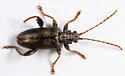
| Feature | Description |
|---|---|
| Additional details | Unusual for the subgenus in lacking strongly confluent punctuation of the pronotum, and elytral apex indistinctly truncate. |
| Pronotum | Pronotum much wider across the anterior calli than across the base. |
| Pronotum | Pronotum with indistinct median sulcus, indistinct basal sulcus, and a pair of raised oblique calli on either side of midline just behind anterior pronotal margin. Anterolateral callus rather acutely raised, with deep arcuate sulcus. Basolateral callus also narrow, elongate, sharply raised. Femora mostly pale with subapical obfuscation in most specimens, but also varies to almost entirely dark. Tibiae pale. Antennal segments entirely pale to bibolored. Metafemoral tooth varies from absent to distinct and acute. Epimeral area of pronotum with pubescence only indistinctly extending above the coxa. |
| Elytra | Elytra very strongly rugose, strial punctures confused apically. Pygidium of male emarginate, female rounded. |
Classification
- Kingdom
- Animalia
- Phylum
- Arthropoda
- Class
- Insecta
- Order
- Coleoptera (Beetles)
- Suborder
- Polyphaga
- Superfamily
- Chrysomeloidea
- Family
- Chrysomelidae (Leaf Beetles)
- Subfamily
- Donaciinae
- Tribe
- Plateumarini
- Genus
- Donacia
Imported taxonomy record. Source availability varies; see the source references and editorial policy below.
Habitat and Range
Geographic Range
Texas to Florida, north to New England
Diet and Behavior
Diet: Specimens collected at Ochlockonee River State Park were on Sparganium lancifolium
Additional species information
Species notes from the sources
Etymology: Pronotum is strongly tuberculate, quite unique
About Primitive Winged Insects: the wider group
Order-level background for Coleoptera, the group containing Donacia tuberculata. Species-specific details appear above.
Group overview
Coleoptera is the largest order of insects with over 400,000 described species, representing ~25% of all known animal species and ~40% of all insects. In the U.S. alone, nearly 30,000 beetle species have been identified.
Ecological role of the group
Beetles are prominent decomposers, especially in forests, breaking down dead wood and recycling nutrients. As predators, they reduce populations of pest insects. Many species are also important pollinators of flowering plants.
Economic and practical significance of the group
Beetles have major economic significance: leaf beetles (Chrysomelidae) and weevils (Curculionoidea) are among the most destructive agricultural pests globally, costing billions annually, while predatory species like ladybugs provide natural pest control.
Recorded sources for this group: Britannica, Smithsonian, NCSU Entomology. Imported estimates may describe particular regions or reporting periods.
Photos of Donacia tuberculata (5)
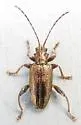
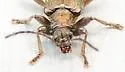
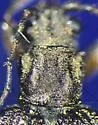
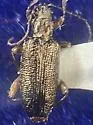
Photo credits: Contributed by Brad Barnd; Additional contributions by Ingolf
Frequently Asked Questions About Donacia tuberculata
What is Donacia tuberculata?
Donacia tuberculata is a species in the family Chrysomelidae, within the order Coleoptera.
How do you identify Donacia tuberculata?
| Feature | Description |
|---|---|
| Additional details | Unusual for the subgenus in lacking strongly confluent punctuation of the pronotum, and elytral apex indistinctly truncate. |
| Pronotum | Pronotum much wider across the anterior calli than across the base. |
| Pronotum | Pronotum with indistinct median sulcus, indistinct basal sulcus, and a pair of raised oblique calli on either side of midline just behind anterior pronotal margin. Anterolateral callus rather acutely raised, with deep arcuate sulcus. Basolateral callus also narrow, elongate, sharply raised. Femora mostly pale with subapical obfuscation in most specimens, but also varies to almost entirely dark. Tibiae pale. Antennal segments entirely pale to bibolored. Metafemoral tooth varies from absent to distinct and acute. Epimeral area of pronotum with pubescence only indistinctly extending above the coxa. |
| Elytra | Elytra very strongly rugose, strial punctures confused apically. Pygidium of male emarginate, female rounded. |
Where is Donacia tuberculata found?
Range: Texas to Florida, north to New England
What does Donacia tuberculata eat?
The diet of the Donacia tuberculata includes Specimens collected at Ochlockonee River State Park were on Sparganium lancifolium.