
Family Ground Beetles (Carabidae)
Carabidae is a family in the order Coleoptera. Browse 1,800 named species recorded in this family, or open an individual profile for its available identification and natural-history information.
Guides
Species in Carabidae (1,800)
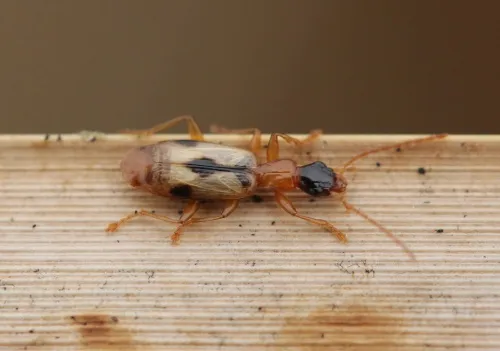
Demetrias imperialis
Demetrias imperialis
Length 5 to 5.5 mm. A distinctive ground beetle. It has straw brown elytra with dark/blackish markings. This is a rare species in our area and good photographs are required to support records. Uncommon in Britain and classed Nationally notable B. Mai
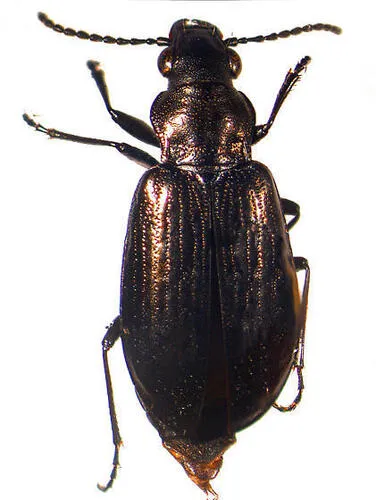
Diacheila arctica
Diacheila arctica
Identification: Black with brassy, coppery or greenish lustre, mandibles, tibiae and often tarsi reddish brown. Slenderer, more parallel-sided than polita . Prothorax with lateral carina, sides slightly sinuate in basal half. Elytra with regular rows
Dicaelus crenatus
Dicaelus crenatus
Identification: last key couplet: Elytral intervals smooth, without small setigerous punctures bearing short hairs, striae with relatively large punctures, pronotum either not beaded laterally, or beaded in apical ~1/3 Type Locality: Louisiana
Dicaelus dilatatus
Dicaelus dilatatus
Identification: robust, dull black, elytra deeply striated, humeral carina extends for ~1/3 length of elytra; 2 pairs of lateral pronotal setae
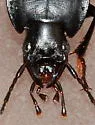
Dicaelus elongatus
Dicaelus elongatus
Identification: Similar to D. dilatatus , but smaller, with longer humeral carina (2/3 elytral length), and 3 or more pairs of lateral setae on the pronotum the sole member of the elongatus group
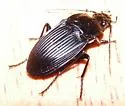
Dicaelus politus
Dicaelus politus
Identification: among Dicaelus , this one most resembles "Pterostichus", is smallest (<15 mm), shiniest, and lacking humeral carina
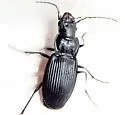
Dicaelus teter
Dicaelus teter
Identification: Lateral extension of right mandible combined with carinate elytra and lack of tubercle on left mandible distinguish this species.
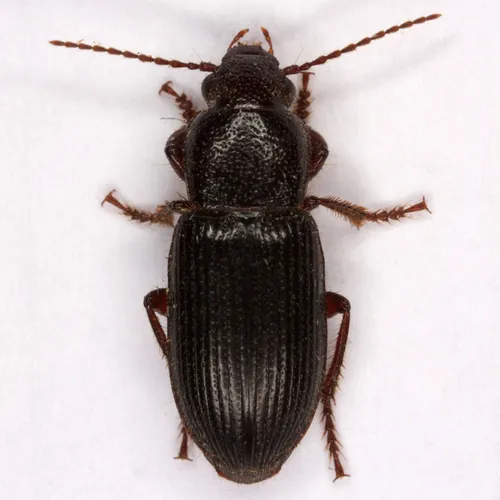
Dicheirus piceus
Dicheirus piceus
Dicheirus piceus is a species of ground beetle in the family Carabidae. It is found in North America.
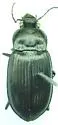
Diplocheila impressicollis
Diplocheila impressicollis
Identification: Elytral striae 7 fine to absent and distinct hind pronotal angles.
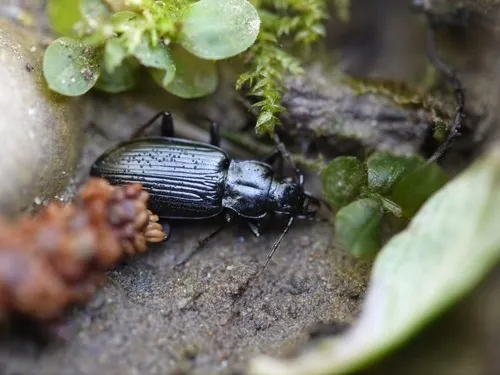
Diplous californicus
Diplous californicus
Diplous californicus is a species of ground beetle in the family Carabidae. It is found in North America.
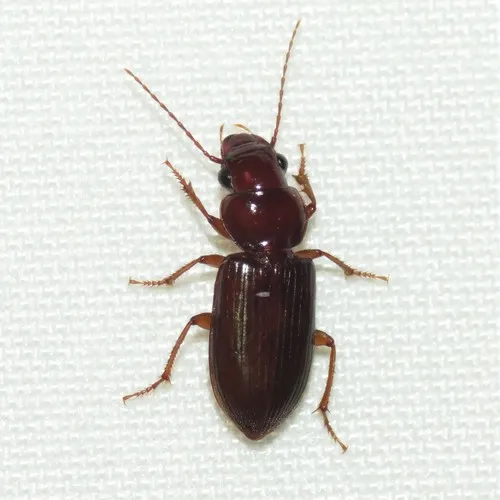
Discoderus (Senalius) cordicollis
Discoderus cordicollis
Discoderus cordicollis is a species of ground beetle in the family Carabidae. It is found in North America.
Discoderus discoderoides
Discoderus discoderoides
Type locality: Esperanza Ranch, near Brownsville, Cameron Co., Texas. ( 3 )
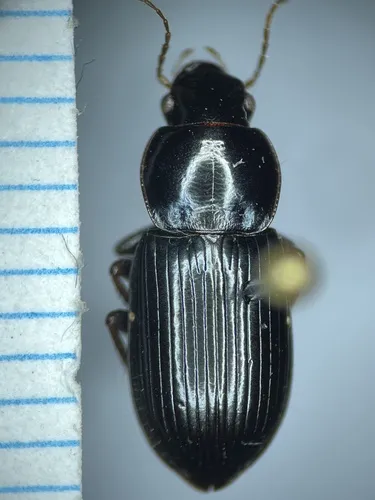
Discoderus robustus
Discoderus robustus
Discoderus robustus is a species of ground beetle in the family Carabidae. It is found in North America.
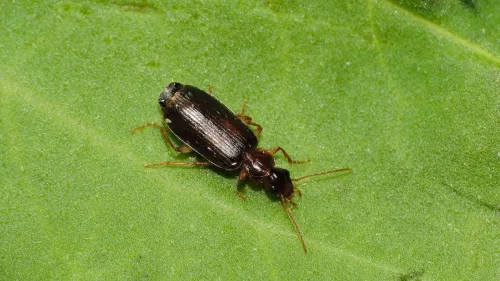
Dromius meridionalis
Dromius meridionalis
It is an arboreal species found on a variety of tree species such as Sycamore, Horse-chestnut and Spruce where it can often be located under bark. Fairly frequent and widespread in the southern half of Britain. No additional images available for this
Dromius piceus
Dromius piceus
Identification: Flat uniformly brown elytra; lateral margins of pronotum translucent; claws denticulate
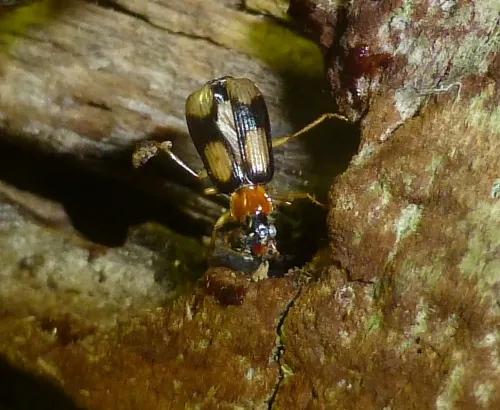
Dromius quadrimaculatus
Dromius quadrimaculatus
Length 5 to 6 mm. This beetle has a blackish head, but a shiny red pronotum. The legs and antennae are pale straw coloured. The dark elytra show two large pale patches on each and are sharply truncate leaving the terminal abdominal segment exposed. G
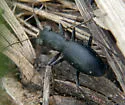
Loamy-ground Tiger Beetle
Dromochorus belfragei
Identification: The dorsal coloration of this species is brown to black with no elytral maculations. Male labrum is black with the central diamond-shaped portion ivory colored. The female labrum is metallic black. Apparently affected by the invasive
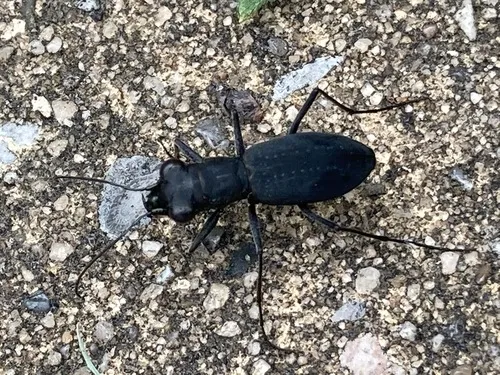
Pygmy Dromo Tiger Beetle 0
Dromochorus minimus
Identification: Elytra dark ash-grey, sometimes with frosty blue reflections. can be separated from all other species, by the presence of a frosted or ashy grey to beige dorsum, sometimes with blue reflections, in conjunction with labial palpi that a
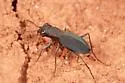
Cajun Tiger Beetle
Dromochorus pilatei
Dromochorus pilatei, the cajun tiger beetle, is a species of flashy tiger beetle in the family Carabidae. It is found in North America.
Frosted Dromo Tiger Beetle
Dromochorus pruininus
Identification: The elytral surface is smoother and more velvet-like than in belfragei . Male labrum is black with the central diamond-shaped portion ivory colored. The female labrum is metallic black.
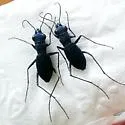
Velvet Tiger Beetle
Dromochorus velutinigrens
Identification: elytra without small pits, labrum dark Type locality: 10 km east of Riviera, Kleberg Co., Texas
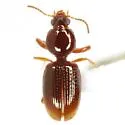
Dyschirius abbreviatus
Dyschirius abbreviatus
Identification: characterized by combination of elytra without discal setigerous punctures + pronotum with lateral bead very short anteriorly. (PW Messer, 2.i.2013) According to Whitehead (1970: 185), specimens of D. darlingtoni Kult from Mexico are
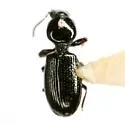
Dyschirius alticola
Dyschirius alticola
Dyschirius alticola is a species of ground beetle in the subfamily Scaritinae. It was described by Lindroth in 1961.
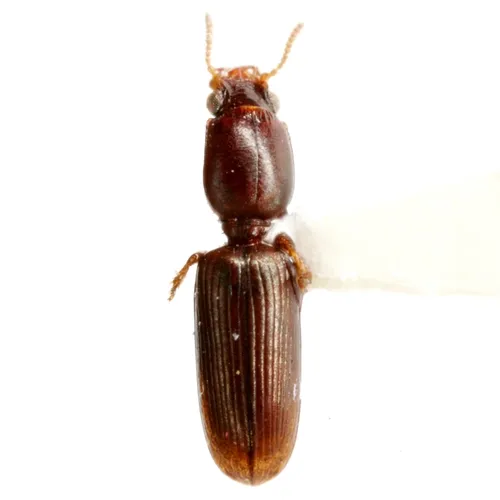
Dyschirius exochus
Dyschirius exochus
Dyschirius exochus is a species of ground beetle in the subfamily Scaritinae. It was described by Whitehead in 1970.
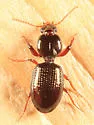
Dyschirius globulosus
Dyschirius globulosus
Identification: indistinguishable from D. longulus based on external morphology
Dyschirius longulus 0
Dyschirius longulus
Dyschirius longulus is a species of ground beetle in the subfamily Scaritinae. It was described by Leconte in 1850.
Dyschirius politus
Dyschirius politus
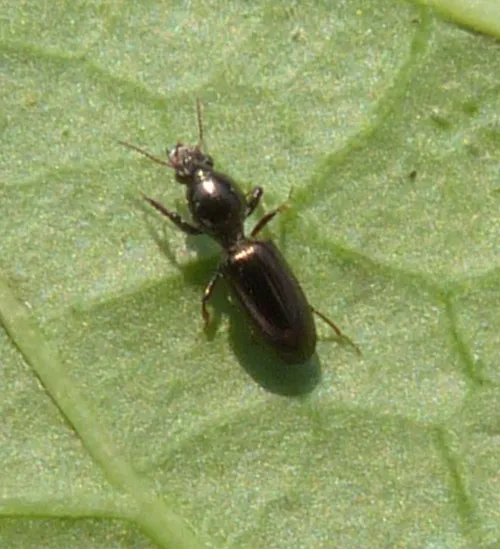
A small (4 to 5mm), bronze black burrowing ground beetle. Prefers sandy places often on the coast. It is predatory on rove beetles of the genus Bledius.
Dyschirius quadrimaculatus 0
Dyschirius quadrimaculatus
Dyschirius quadrimaculatus is a species of ground beetle in the subfamily Scaritinae. It was described by Lindroth in 1961.
Dyschirius terminatus
Dyschirius terminatus
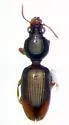
Dyschirius terminatus is a species of ground beetle in the subfamily Scaritinae. It was described by Leconte in 1848.
Ega laetula
Ega laetula
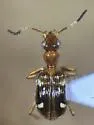
Identification: Elytral striae continue down the entire elytra Type Locality: ad flumina Colorado et Gila
Elaphrus cupreus
Elaphrus cupreus
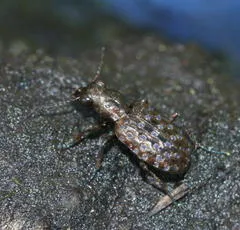
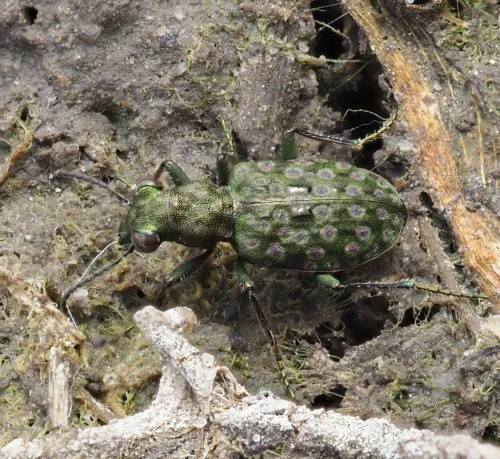
Length 8 or 9 mm. Bronze with conspicuous purple ocellate depressions on the elytra. Antennae are black, tibiae are brown and the rest of the legs are black but often with metallic, usually bluish, reflections. The head is wider than the quadrate pro
Elaphrus riparius
Elaphrus riparius
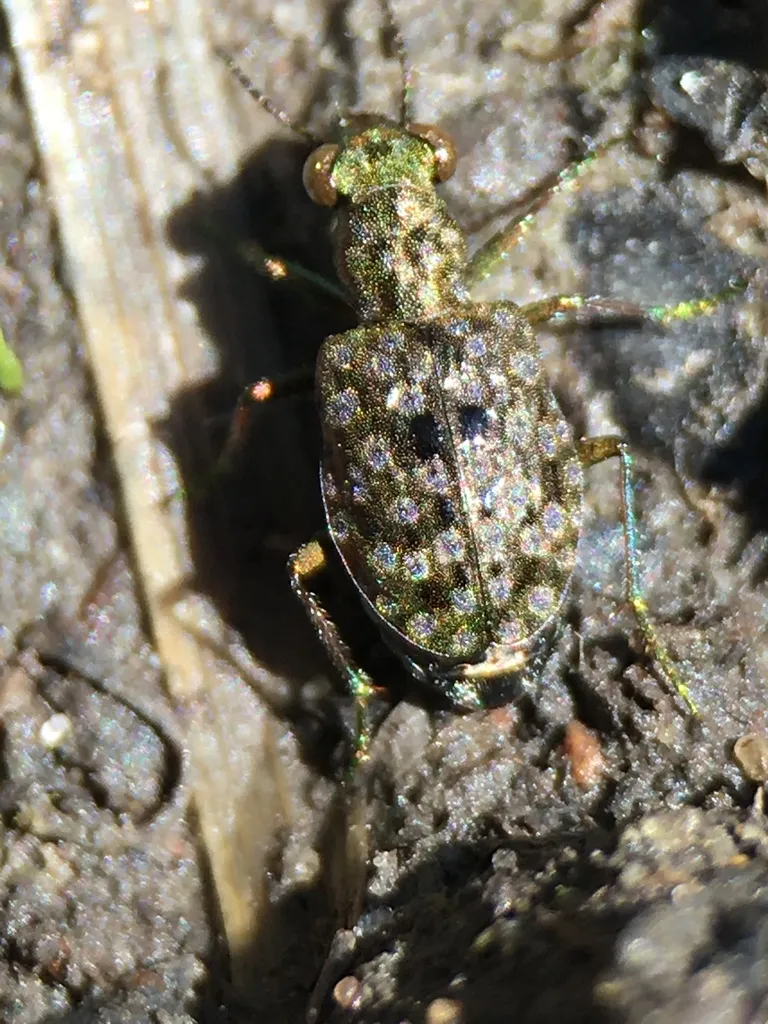
Length 6.5 to 7.5 mm. Metallic green elytra with pale lilac markings and a pair of round violet depressions that appear to be edged with silver in strong light. Legs long, femora metallic green, strongly microsculptured, tibiae red but darkened and m
Shore Ground Beetle
Elaphrus ruscarius
Elaphrus ruscarius is a species of ground beetle in the subfamily Elaphrinae. It was described by Say in 1834.
Elaphrus viridis
Elaphrus viridis
Identification: Bright metallic green, with no or reduced circular pits on the elytra federally threatened species as of 8.viii.1980 under the Endangered Species Act; on California's "Special Animals" list The development of the Central Valley for ag
Whitish Tiger Beetle
Ellipsoptera gratiosa
Identification: distinctive: brownish-bronze; large white maculations covering most of the dorsum
Coastal Tiger Beetle
Ellipsoptera hamata
Identification: Det. M. A. Quinn, 2010 Common at lights
Moustached Tiger Beetle
Ellipsoptera hirtilabris
Identification: Dorsum coppery with maculations over much of the elytra. White setae cover much of the head and pronotum.
Ghost Tiger Beetle
Ellipsoptera lepida
Ghost Tiger Beetle (Ellipsoptera lepida) is a species in the family Carabidae, commonly known as ground beetles, belonging to the order Coleoptera (Beetles). It is classified within the subfamily Cicindelinae, tribe Cicindelini, suborder Adephaga. Th
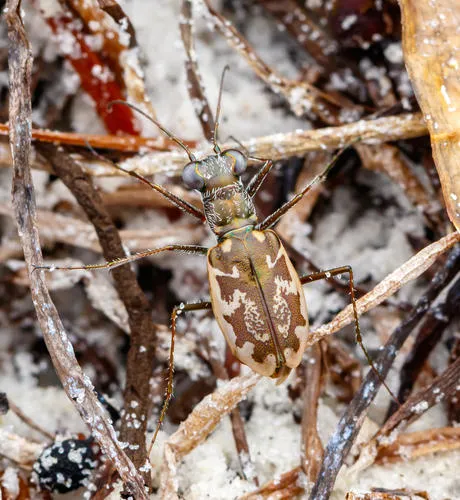
Margined Tiger Beetle
Ellipsoptera marginata
Identification: Dorsum brown-bronze to green-bronze. Head and pronotum dull greenish black. Elytral maculations complete, usually with basal dot and humeral and apical dots. Male shows diagnostic extra ventral tooth on right mandible, lacking in male
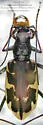
Puritan Tiger Beetle
Ellipsoptera puritana
Identification: “Above greenish bronze with maculations connected along the elytral edge by a broad white line. The inner end of the middle band is usually eroded or ragged. Below it is copper colored. Closely related and similar to C. macra, most in
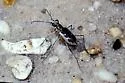
White Sand Tiger Beetle
Ellipsoptera wapleri
Identification: “Above dark brown with the maculations coalesced into a broad white band along the edge of the elytra. Below it is metallic green with dense, white hairlike setae covering the sides of the abdomen, thorax, and cheeks of the head. Simi
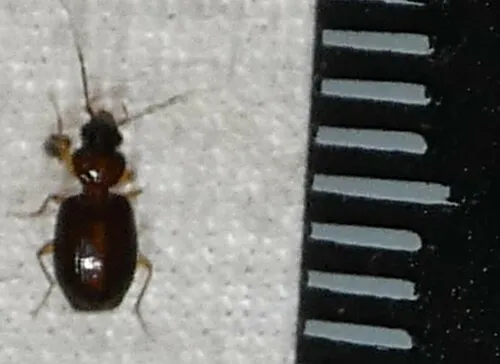
Eucaerus varicornis
Eucaerus varicornis
Identification: Holotype The key in erroneously states "antennomeres 6‒11 white, contrasted markedly with more or less piceous antennomeres 1‒5". Actually, antennomeres 7‒11 are white; 1‒6, piceous
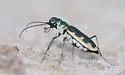
Cream-edged Tiger Beetle
Eunota circumpicta
Identification: Above red or copper brown, sometimes green or blue with a continuous white band along the edge of the elytra. The underside is metallic green/blue with white setae along the sides of the abdomen. Important food source of Asilid flies
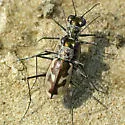
Gulfshore Tiger Beetle
Eunota pamphila
Usually active early in the morning. Larva unknown.
Euphorticus pubescens
Euphorticus pubescens
Euphorticus pubescens (Euphorticus pubescens) is a species in the family Carabidae, commonly known as ground beetles, belonging to the order Coleoptera (Beetles). It is classified within the subfamily Harpalinae, tribe Lachnophorini, suborder Adephag
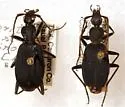
Galerita (Galerita) aequinoctialis
Galerita aequinoctialis
the only member of the nominate subgenus in our fauna; the subgenus (>80 spp.) is primarily pantropical in distribution ( 4 ) Texas Parks and Wildlife considers this sp. a SGCN ( 5 )
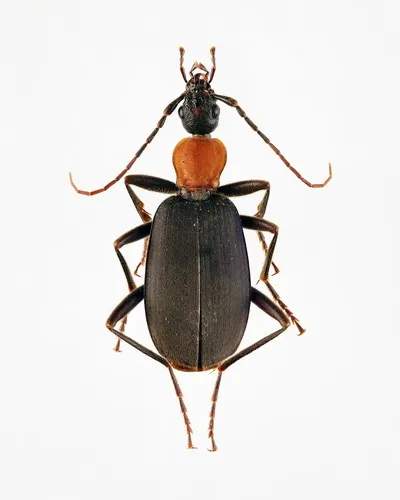
Galerita atripes
Galerita atripes
Identification: Elytra bright, azure blue. Legs black eyes not prominent: Type locality: Fort Riley, Kansas
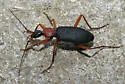
Galerita bicolor
Galerita bicolor
Identification: Can be separated from similar spp. based on shape of head and/or pronotum bicolor janus
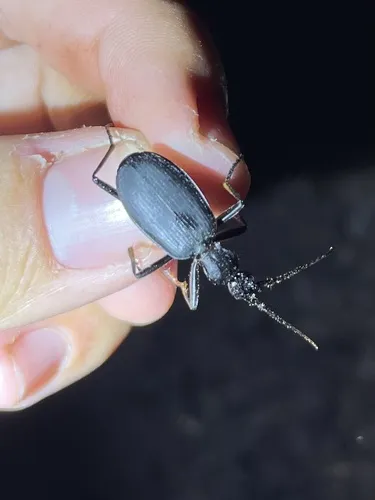
Galerita forreri
Galerita forreri
Galerita forreri is a species of ground beetle in the family Carabidae. It is found in North America.
Galerita lecontei
Galerita lecontei
Identification: The range of this subspecies is disjunct: there is an eastern component ranging from Virginia to southwestern Kentucky (Trigg County, Foster F. Purrington pers. comm. 2011) southwards to southern Florida and South Bimini Island in the
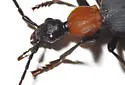
Galerita mexicana
Galerita mexicana
Identification: Elytra dark blue; appendages black. eyes prominent: compare G. atripes (sc US to AZ): - uncommon
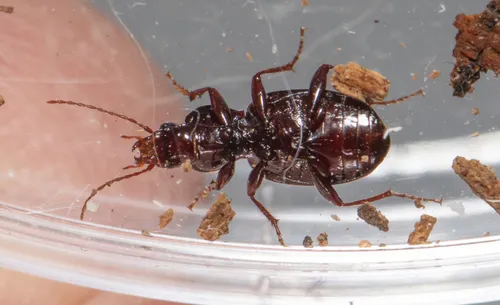
Gastrellarius honestus
Gastrellarius honestus
Identification: Some clues that help distinguish this pterostichine include: only one pair of supraorbital setae and only one pair of setigerous punctures on dorsal elytra.
Gastrellarius unicarum
Gastrellarius unicarum
Identification: Head with 2 setigerous punctures over each eye (only 1 in G. honestus ), base of pronotum distinctly narrower than apex, elytral striae impunctate or barely punctate .
Gehringia olympica
Gehringia olympica
Gehringia olympica (Gehringia olympica) is a species in the family Carabidae, commonly known as ground beetles, belonging to the order Coleoptera (Beetles). It is classified within the subfamily Gehringiinae, suborder Adephaga. This species belongs t
Geopinus incrassatus
Geopinus incrassatus
Identification: easily recognized on its large size, clumsy appearance, and depigmented body ; foretibia fossorial, expanded distally into a blade-like structure Det. B. Barnd, 2011 Adults fly at night and come to lights
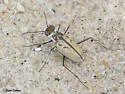
Eastern Beach Tiger Beetle
Habroscelimorpha dorsalis
Identification: Dorsal Coloration: white elytra with greenish-bronze complete maculations. One subspecies, C. d. dorsalis , is federally listed as threatened
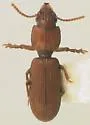
Halocoryza arenaria
Halocoryza arenaria
Halocoryza arenaria is a species of brown coloured ground beetle in the subfamily Scaritinae which was described by Darlington in 1939.
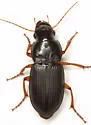
Harpalus actiosus
Harpalus actiosus
Identification: Det. P. W. Messer, 2013 (by microscopic examination) Characteristic combination: This combination rules out the two most similar species: H. protractus and H. vagans (formerly H. longicollis ).
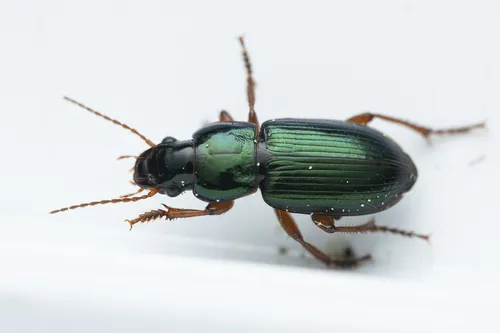
Harpalus affinis
Harpalus affinis
Length 8.5 to12 mm. the male is a handsome and normally shiny ground beetle which may have a metallic sheen of blue, green, maroon or black. Only the male is metallic - the female is dull black.The elytra are pubescent only along the margins. It is c
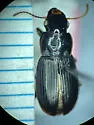
Harpalus atrichatus
Harpalus atrichatus
Identification: Labrum uniformly pale, tarsi somewhat pale
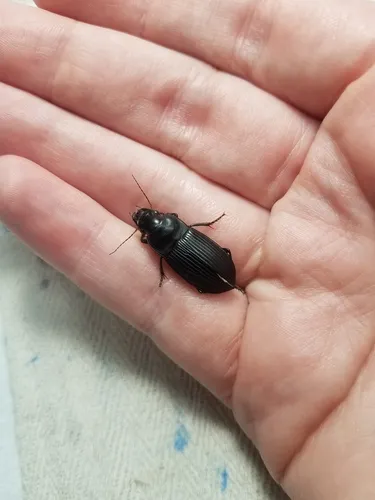
Murky Ground Beetle
Harpalus caliginosus
Identification: Literature says head distinctly punctate, otherwise externally little different from Harpalus katiae which has head impunctate. In females the last tergite (pygidium) demonstrates an angulated apex with abrupt upturn of the margin at
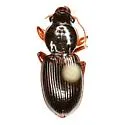
Harpalus cohni
Harpalus cohni
Identification: Males are easily distinguished from other Glanodes males by the shining elytra with no microsculpture on intervals[Cite:1612651,195] Type locality: Marfa, Presidio Co., Texas
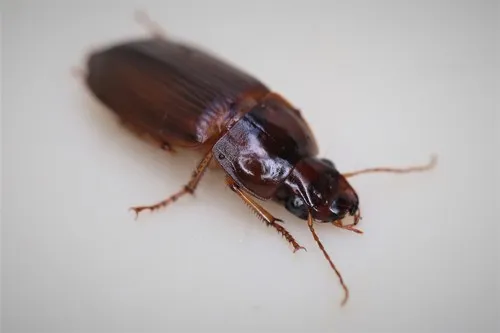
Harpalus faunus
Harpalus faunus
Harpalus faunus is a species of ground beetle in the subfamily Harpalinae. It was described by Say in 1823.
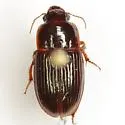
Harpalus gravis
Harpalus gravis
Identification: "Brownish mid-sized shiny " Harpalus " showing squarish pronotum with sharp hind angles" - PWMesser
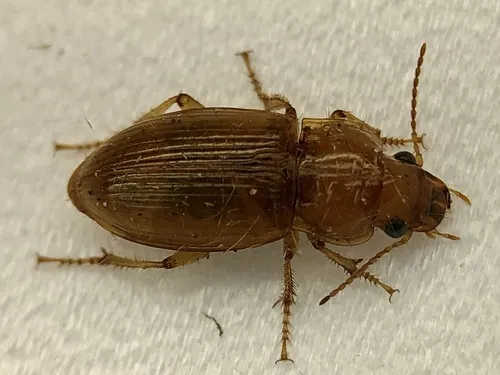
Harpalus indianus
Harpalus indianus
Harpalus indianus is a species of ground beetle in the subfamily Harpalinae. It was described by Csiki in 1932.
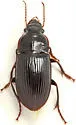
Harpalus katiae
Harpalus katiae
Identification: head impunctate, otherwise very smilar to H. caliginosus
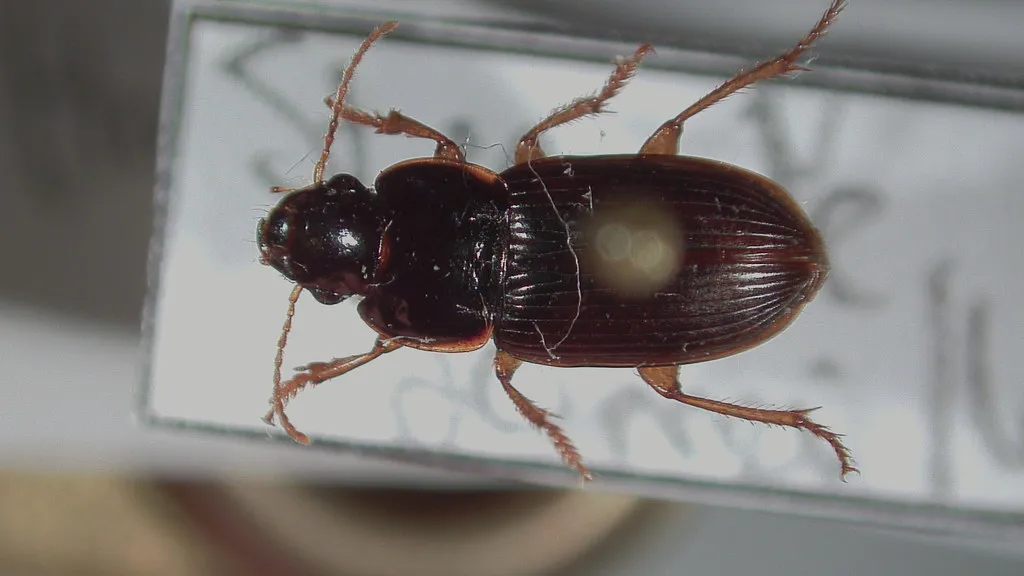
Harpalus megacephalus 0
Harpalus megacephalus
Harpalus megacephalus is a species of ground beetle in the subfamily Harpalinae. It was described by Leconte in 1848.
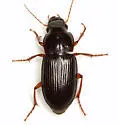
Harpalus paratus
Harpalus paratus
Identification: Det. P. W. Messer, 2013 (based on microscopic examination of this specimen) Distinguished from juxatapostional species in Ball & Anderson (1962) by combination of: The latter diagnostic character I find especially useful. Other large
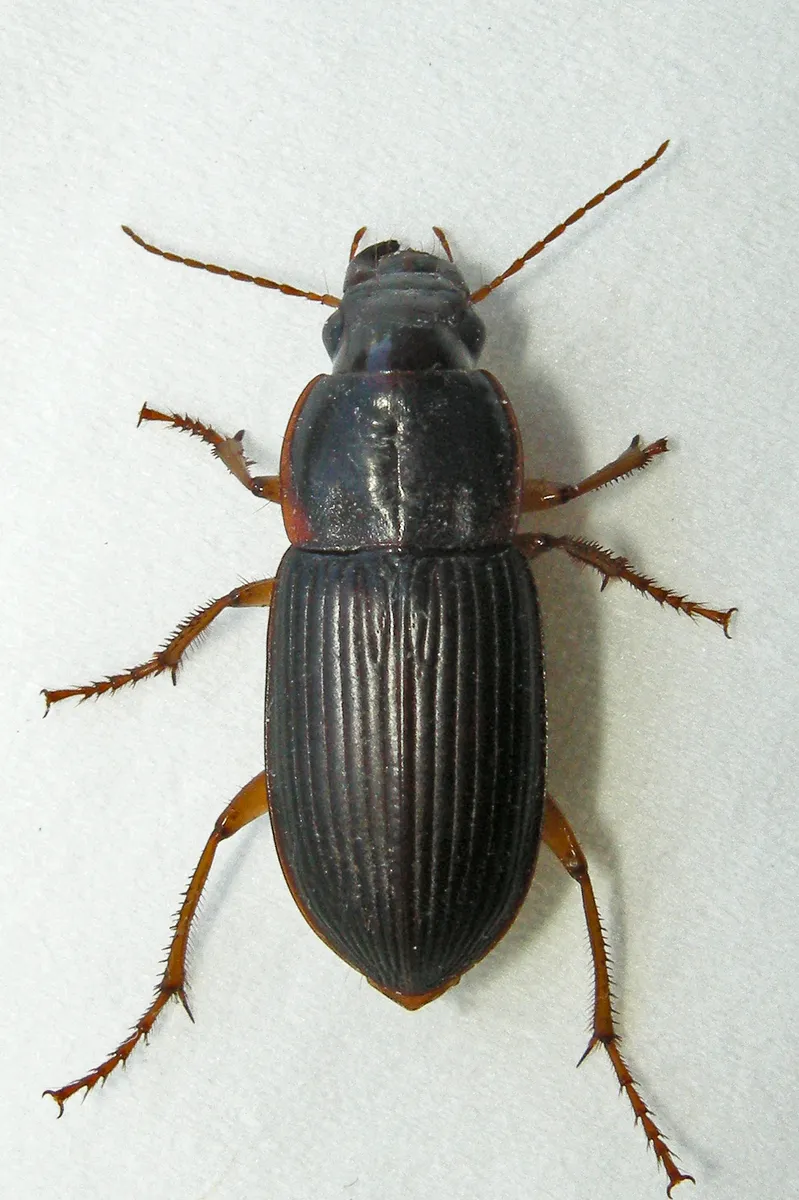
Pennsylvania Dingy Ground Beetle
Harpalus pensylvanicus
Note the single n in pensylvanicus . Note that a similar species, H. texanus Casey, occurs in the southeastern United States, and it is usually indistinguishable externally from H. pensylvanicus . See the discussion Harpalus pensylvanicus vs H. texan
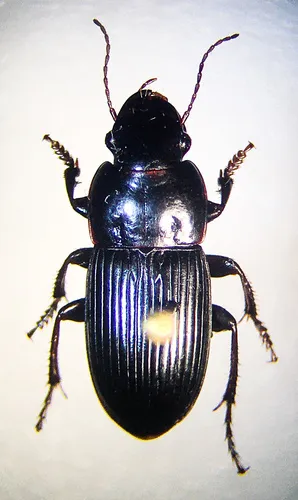
Harpalus providens
Harpalus providens
Harpalus providens is a species of ground beetle in the subfamily Harpalinae. It was described by Casey in 1914.
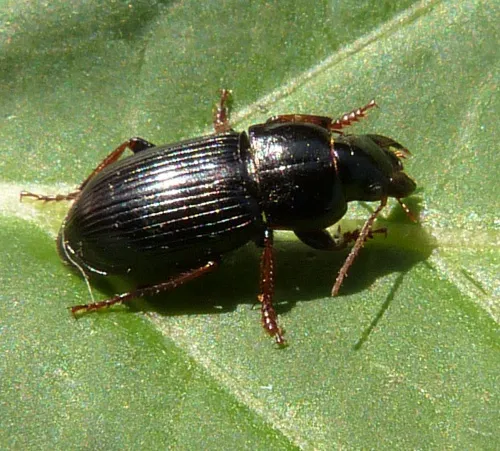
Harpalus rubripes
Harpalus rubripes
A medium-sized (8.5 to 12 mm) ground beetle which may be green or black in colour. Often found on dry or gravelly ground with sparse vegetation such as post industrial sites. March to September, peaking from April to June. Widespread but local in Eng
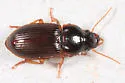
Harpalus somnulentus
Harpalus somnulentus
Identification: Elytra with single pair of dorsal punctures near posterior and a tiny but distinct tooth at each humerus (shoulder), pronotum with somewhat rounded hind angles and punctures along base, and legs completely pale.
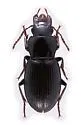
Harpalus spadiceus
Harpalus spadiceus
Identification: single setigerous pore on the 3d interval and short hind wings; two morphs of adults:
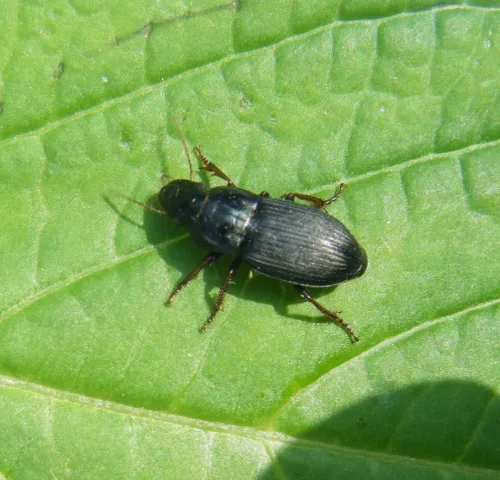
Harpalus tardus
Harpalus tardus
A ground beetle found on dry, sandy or gravelly ground. Widespread in Britain, but often coastal. No additional images available for this species.
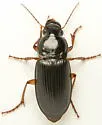
Harpalus texanus
Harpalus texanus
Identification: PWM update 2025. Very similar to H. pensylvanicus . Reliable ID should be based on examination of the internal sac of the aedeagus --see Ball & Anderson (1962). Otherwise, one can evaluate the more accessible apex of the aedeagus.
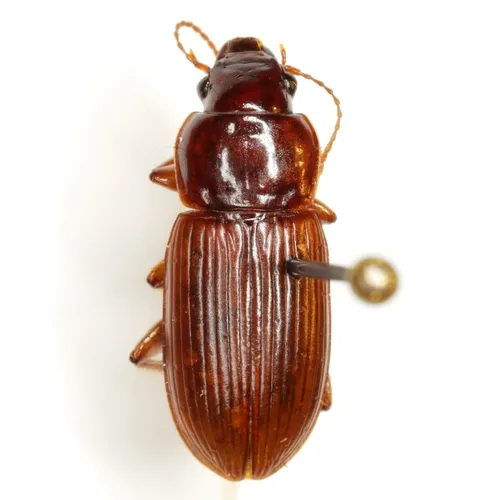
Hartonymus hoodi
Hartonymus hoodi
Type Locality: Topeka, Illinois (where the sp. was "rather abundant") (Casey 1914)
Helluomorphoides ferrugineus
Helluomorphoides ferrugineus
Identification: Except by the form of the antennae, this species almost exactly resembles H. praeustus ; the thorax is, however, less narrowed posteriorly. Type Locality: Brownsville, Cameron County, Texas
Hyboptera auxiliadora
Hyboptera auxiliadora
Identification: Sides of pronotum broadly reflexed throughout; neck broad. Elytral ground color black, surface with scattered metallic or brassy reflections; interval 5 with 6 tubercles. (Erwin 2004) Described by Terry Erwin from Bentsen-RGV State Pa
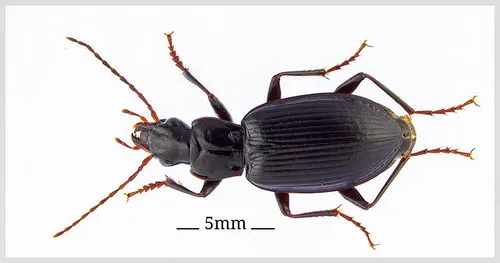
Laemostenus (Laemostenus) complanatus
Laemostenus complanatus
Laemostenus complanatus is a species of ground beetle native to Europe....
Laemostenus (Pristonychus) terricola
Laemostenus terricola
Laemostenus terricola is a species of ground beetle native to Europe....
Lebia abdominalis
Lebia abdominalis
Identification: Thorax narrowly margined. our only species with both a strongly constricted neck and narrow pronotal margins (emphasis added); superficially similar in color to viridipennis also, yellow on legs is generally paler and black on legs ge
Lebia analis
Lebia analis
Identification: The dark (usually almost black) striated frons and the pale abdomen combine to distinguish analis from all our other Lebia except scalpta . Where these two overlap in TX the elytral pattern of scalpta is distinctive (fig. 26). In AZ t
Lebia arizonica
Lebia arizonica
Identification: See BugGuide's Info page for Lebia tuckeri regarding the distinction between these two similar species. Type locality: Huachuca Mountains, Cochise Co., Arizona
Lebia balli
Lebia balli
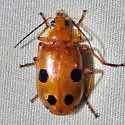
Identification: similar to L. quadrinotata Chaudoir
Lebia bilineata
Lebia bilineata
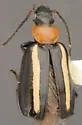
Identification: each elytron usually with only one pale vitta, sometimes two when epipleuron pale
Lebia bitaeniata
Lebia bitaeniata
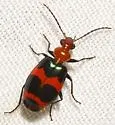
Identification: Head - metallic or pale Prothorax - Entirely pale Elytra - Disc metallic with pale fasciae (fig. 22) - Fig. 22 the only member of bitaeniata group in our fauna
Lebia bivittata
Lebia bivittata
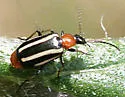
Lebia bivittata (Lebia bivittata) is a species in the family Carabidae, commonly known as ground beetles, belonging to the order Coleoptera (Beetles). It is classified within the subfamily Harpalinae, tribe Lebiini, suborder Adephaga. This species be
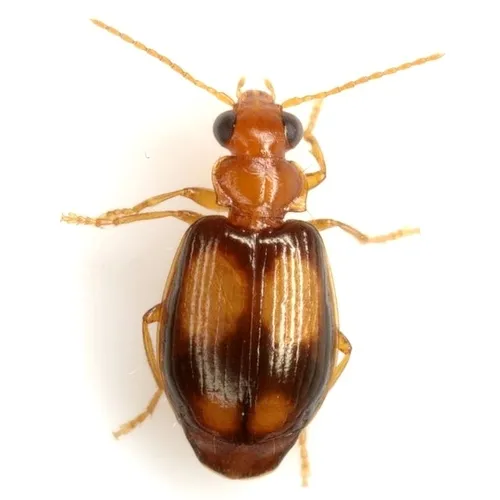
Lebia bumeliae
Lebia bumeliae
Identification: The color pattern, vaulted elytra, and small size distinguish this species from any others within its range - Det. E. G. Riley, 2009 Fig. 43. Lebia ornata Type locality: Brownsville, Cameron Co., Texas
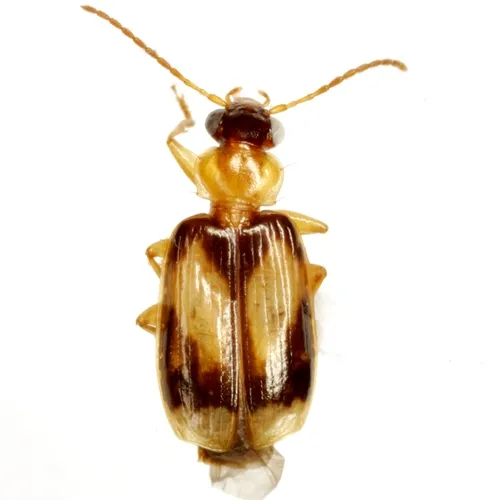
Lebia calliope
Lebia calliope
Identification: Elytra - Disc dark with pale markings (fig. 47) - Fig. 47 Casey's Type Casey's type, coll'ed by Wickham, from Brownsville, TX
Lebia collaris
Lebia collaris
Identification: Elytral entirely dark except for lateral margin; frons equally dark; abdomen pale, darkening apically There appears to be no important variation in collaris . the only member of collaris group in our fauna
Lebia cyanipennis
Lebia cyanipennis
Identification: two color forms: a dark form with the prothorax dark like the frons, and a light form with prothorax pale (intermediate specimens occur). In most specimens from SK-AB-MT which always seem to be the pale form, the frons is reddish brow
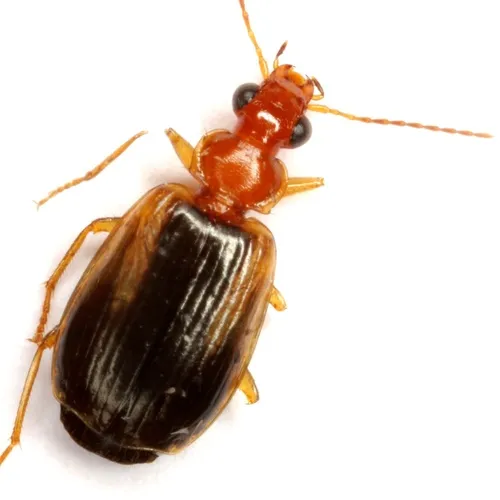
Lebia cymindoides
Lebia cymindoides
Identification: large rufo-testaceous humeral spot - typical pattern Variation - The extent of the pale elytral markings varies from entirely absent (except for the lateral margins) to covering the anterior three fourths of the lateral areas of the d
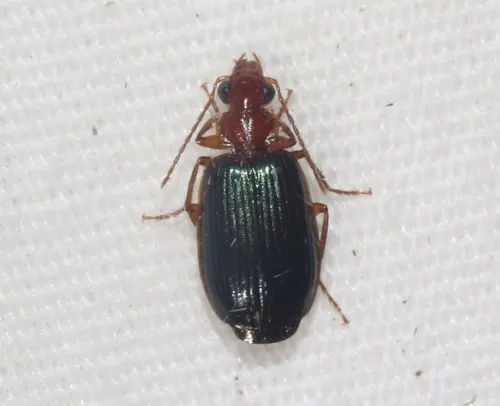
Lebia deceptrix
Lebia deceptrix
Identification: The elytral disc is typically bright blue, rarely with a greenish tinge. Type Locality: Pena Blanca, Santa Cruz Co., Ariz., 4000', August 11, 1960, at light, G. E. Ball family and R.B. Madge.
Lebia esurialis
Lebia esurialis
Identification: Elytra - Disc dark with extensive pale markings (fig. 46) Det. E. G. Riley, 2010 Type Locality: Brownsville, Cameron Co., TX
Lebia fuscata
Lebia fuscata
Identification: Variation: In most specimens the postmedian fascia is wide but often reduced or absent in larger individuals most closely resembles L. ornata , from which can be distinguished by complete basal ridge and by the shape of the pale apica
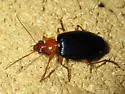
Lebia grandis
Lebia grandis
Identification: cannot be separated externally from some southwestern spp. Adults active primarily at night. Used as biocontrol ( 5 )
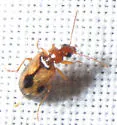
Lebia guttula
Lebia guttula
Identification: Holotype can be distinguished by elytral pattern from all our spp. except dark specimens of L. abdita , from which it can be distinguished by entirely dark abdomen and smoother frons L. guttula
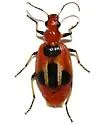
Lebia histrionica
Lebia histrionica
Identification: The only other species with a pale head and black-tipped femora occurring in the range of L. histrionica north of Mexico is L. vittata ; the two can easily be separated by elytral patterns
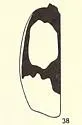
Lebia insulata 0
Lebia insulata
Identification: easily recognized by its elytral pattern. The only other species in which the pattern is similar (especially in the shape of the pale apical marking of the elytra) are fuscata and subrugosa , both allopatric to insulata . Fig. 38. Leb
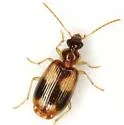
Lebia lobulata
Lebia lobulata
Identification: Typical pattern as in fig. 42 , dark pronotum, and pale areas of elytra are tan vs. pale orange - Fig. 42 Det. E. G. Riley, 2000