
Family Ground Beetles (Carabidae)
Carabidae is a family in the order Coleoptera. Browse 1,800 named species recorded in this family, or open an individual profile for its available identification and natural-history information.
Guides
Species in Carabidae (1,800)
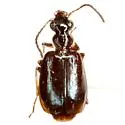
Lebia marginicollis
Lebia marginicollis
Identification: our only Lebia with the elytra metallic and the rest of the body dark except for pale pronotal margins
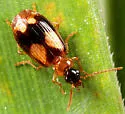
Lebia ornata
Lebia ornata
Identification: Elytra - Disc dark with pale markings (figs. 43-45) or entirely dark ( 3 ) , edges of pale basal elytral spots are generally smooth, not jagged as in fuscata - typical; - southern pale form (note lateral scapular vitta) and dark forms
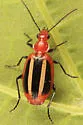
Lebia pectita
Lebia pectita
Identification: The pale head and black-tipped femora separate L. pectita from all eastern spp. except L. vittata ; the non-furcate, black, sutural vitta and the incomplete basal ridge of the elytra of pectita distinguish these two Det. Peter W. Mess
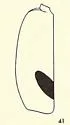
Lebia perpallida 0
Lebia perpallida
Identification: Fig. 41. Lebia perpallida Type Locality: Pena Blanca (4000’), Santa Cruz Co., Arizona
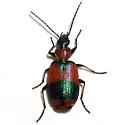
Lebia pulchella
Lebia pulchella
Identification: - eastern forms - Arizona forms the only member of pulchella group in our fauna
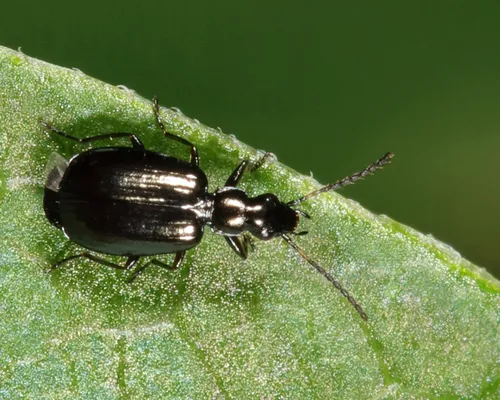
Lebia pumila
Lebia pumila
Identification: Overall dark, with antennomere 3 usually pale; legs pale or dark (the latter resemble the non-metallic form of L. viridis ) the only member of the pumila group in our fauna
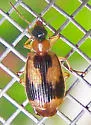
Lebia scalpta
Lebia scalpta
Identification: Elytra - Disc dark with pale markings, either patterned as in fig. 26 or lateral vitta reduced and pattern approaching that of analis (fig. 25). - Det. T.L. Erwin, 2010 Fig. 26. Lebia scalpta , Texas form the only member of scalpta gr
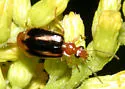
Lebia solea
Lebia solea
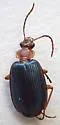
Identification: elytral pattern variable; readily distinguished from the rest of our Lebia by the combination of strongly constricted neck, basally widened pronotal margins, and frons striated only on lateral thirds
Lebia subdola
Lebia subdola
Type Locality: Madera Cn, Sta. Rita Mts., Sta. Cruz Co., Ariz. VIII 3, 60, 5000' - 5800', G. E. Ball family and R. B. Madge collectors.
Lebia subrugosa
Lebia subrugosa
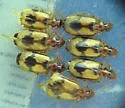
Identification: The head and pronotum are usually pale [reddish] but are infuscated [brownish] in some specimens. can usually be distinguished from the other pale sw.US species by the lateral dark vitta on the elytra; specimens with this vitta reduce
Lebia tricolor
Lebia tricolor
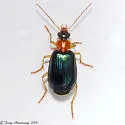
Identification: Palpi and antennae pale , there appears to be no marked variation in tricolor .
Lebia tuckeri
Lebia tuckeri
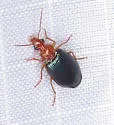
Identification: very similar to rufopleura [restricted to TX]; among Lebia s.str. spp. occurring in sw. US from w. TX to so. CA only tuckeri and arizonica have metallic green elytra and a pale head and pronotum: in tuckeri the metepisternum is usuall
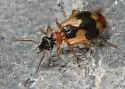
Lebia variegata
Lebia variegata
Identification: Det. T.L. Erwin, 2011 (from photo) This new US record has not been corroborated by a spmn.
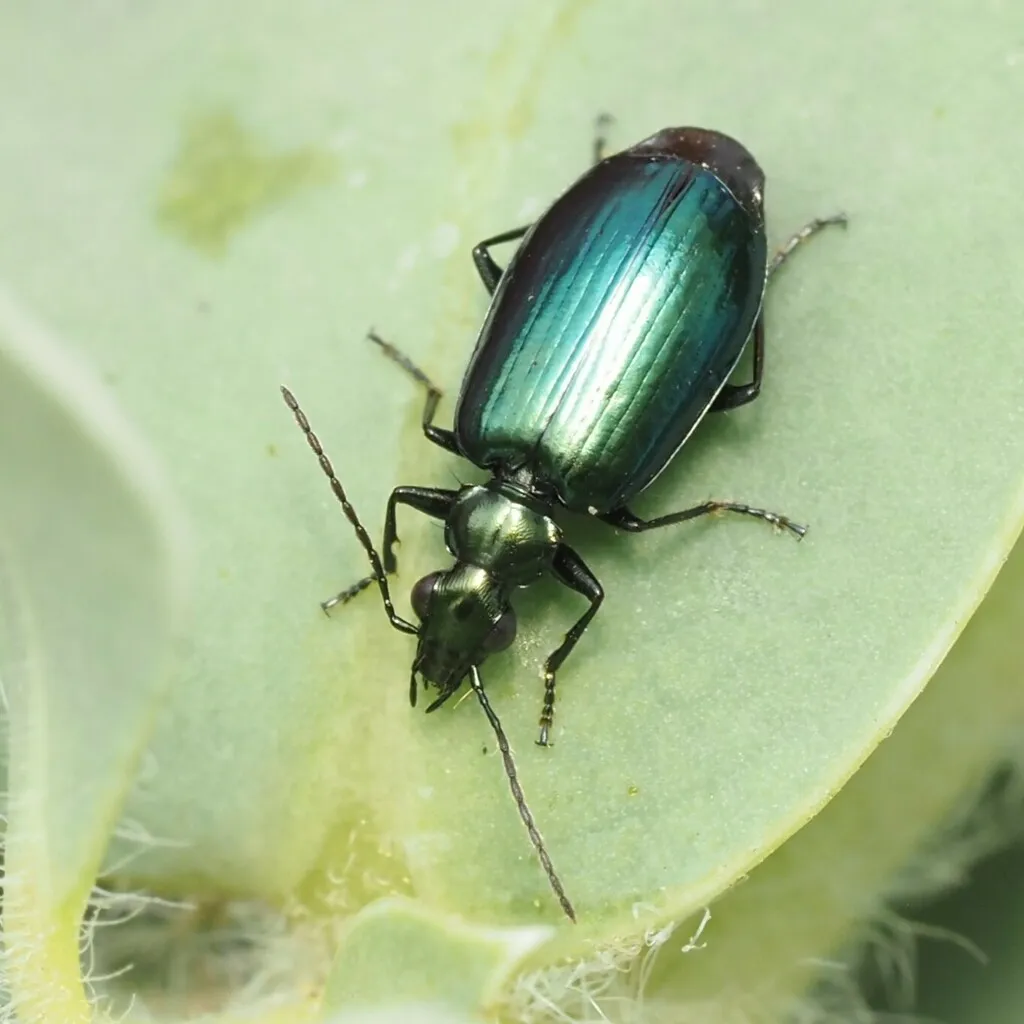
Lebia viridis
Lebia viridis
Lebia viridis (Lebia viridis) is a species in the family Carabidae, commonly known as ground beetles, belonging to the order Coleoptera (Beetles). It is classified within the subfamily Harpalinae, tribe Lebiini, suborder Adephaga. This species belong
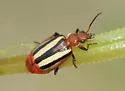
Lebia vittata
Lebia vittata
Identification: The vittate elytra, pale head, and femora dark at least apically, distinguish L. vittata from NA congeners except L. pectita in which the sutural vitta is not forked basally and elytral basal ridge incomplete
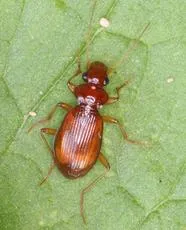
Leistus ferrugineus
Leistus ferrugineus
About 8 mm long, this small colourful beetle is reddish brown or pale brown all over, with legs a shade paler than the body; it becomes darker coloured with age. It has a very rounded pronotum which is sharply sinuate to the rear corners, which have
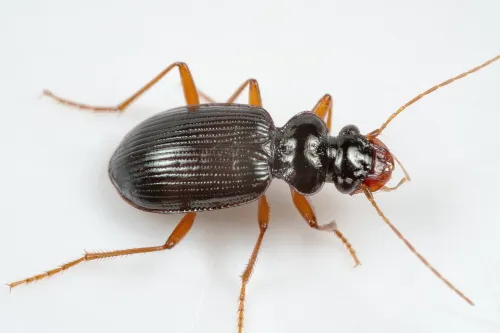
Leistus fulvibarbis
Leistus fulvibarbis
Small (6.5 to 8 mm) dark ground beetle usually with blue metallic elytral reflections in certain light, and may look very bluish. It has reddish-yellow legs and a specialised basket around its mouth for trapping springtail prey. Very similar to L. sp
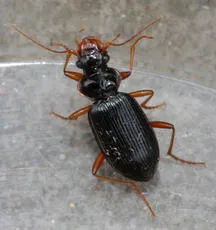
Leistus rufomarginatus
Leistus rufomarginatus
Length 8 to 10 mm. This is a distinctive blue-black or reddish-black species, with the legs, antennae and palps all being reddish brown and with a broad flange on the edge of the pronotum of the same colour. Under logs and stones, often in well woode
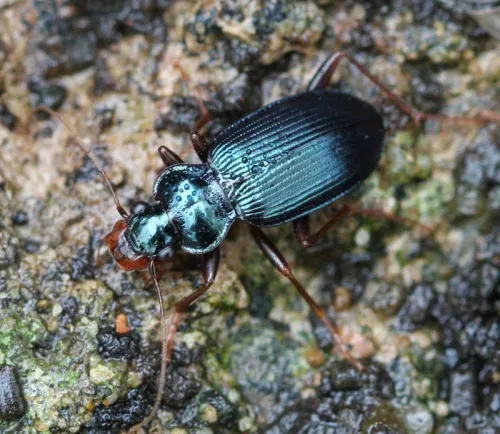
Leistus spinibarbis
Leistus spinibarbis
8 - 10mm. A handsome ground beetle, with dark blue elytra, though the shade can vary in different light conditions. Very similar to L. fulvibarbis and best separated by the pronotum characters. In L. spinibarbis the flattened and punctured side margi
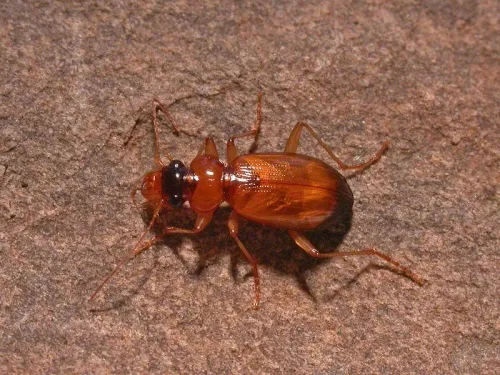
Leistus terminatus
Leistus terminatus
About 8mm long it is a reddish brown beetle with a black head but darker, brown forms also occur. Similar to L. ferrugineus , except this species has a dark head and also a dark end to the elytra. Found primarily in damp places in woodland, damp gras
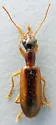
Leptotrachelus dorsalis
Leptotrachelus dorsalis
Identification: - - occasionally all dark Det. Jan Ciegler, 2012 comes to lights (BG data)
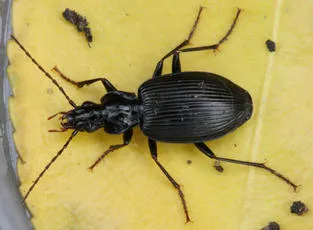
Limodromus assimilis
Limodromus assimilis
This all black beetle is 9-12mm and has dark brown legs and antennae, though the femora and antennal bases are black. It has a sinuate pronotum with sharp and raised hind angles. Various habitats in search of prey, but tends to favour damper location
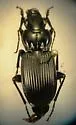
Lophoglossus gravis
Lophoglossus gravis
Identification: Pronotum is distinctive for the genus
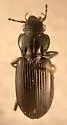
Lophoglossus vernix
Lophoglossus vernix
Will 1999 considered the species the rarest in the genus, and possibly extirpated from previous sites due to habitat destruction.
Loricera foveata
Loricera foveata
Identification: "The only nearctic species with pale legs and with 2nd, 4th, and 7th elytral intervals each with 3 foveae." ( comment by Tim Loh ) Type at MCZ .
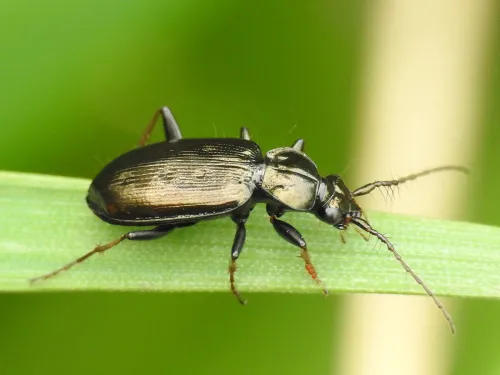
Loricera pilicornis
Loricera pilicornis
A small (6 to 8.5 mm) brassy-brown or bronze-black ground beetle, this species has cup like depressions (foveate punctures) on the wing cases with conspicuous long bristles (setae) at the bases to its antennae as well as bristles on the underside of
Metrius contractus
Metrius contractus
Identification: This species has a coastal distribution while the other species, M. explodens , is only known from Idaho. ( 3 ) Three subspecies recognized. ( 3 ) Secretes defensive chemicals (quinone-based and hot, like bombardier beetles) as a frot
Micratopus aenescens
Micratopus aenescens
Identification: Holotype adults best collected by sifting forest floor litter ; fairly common at lights in TX
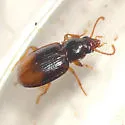
Mioptachys flavicauda
Mioptachys flavicauda
Identification: posterior half of elytra, lateral margins of pronotum, legs, antennae, and mouthparts yellowish; remainder of body dark brown
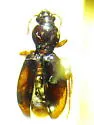
Miscodera arctica
Miscodera arctica
Identification: Pedunculate body; overall metallic and shiny.
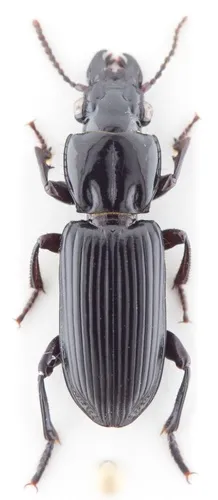
Morion monilicornis
Morion monilicornis
Morion monilicornis is a species of ground beetle in the family Carabidae. It is found in North America.
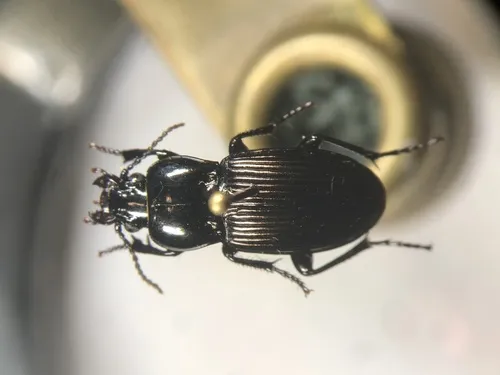
Myas cyanescens
Myas cyanescens
Myas cyanescens is a species of woodland ground beetle in the family Carabidae. It is found in North America.
Nebria bellorum
Nebria bellorum
Identification: Superficially similar to N. pallipes but can be easily distinguished by the uniformly dark head lacking rufous spots on the frons and the pronotum possessing midlateral setae Previously treated as a subspecies of N. lacustris ; raised
Nebria brevicollis
Nebria brevicollis
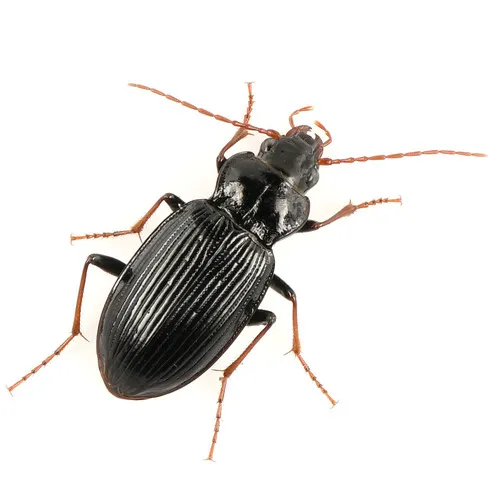
This is a large ground beetle (10-14mm) with a broad pronotum. It is black or dark brown but with mid-brown legs and antennae, though the femora are usually darker brown. It is very similar to N. salina which prefers damper habitats. Nebria brevicoll
Lacustrine Gazelle Beetle
Nebria lacustris
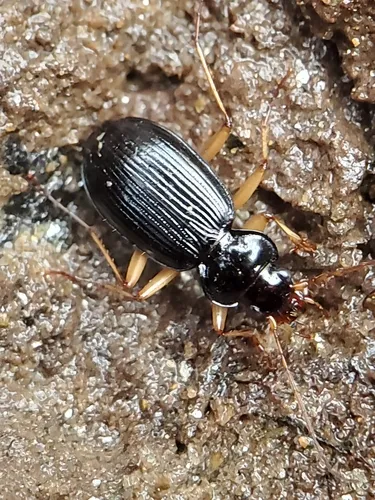
Nebria lacustris, also known as the lacustrine gazelle beetle, is a species of ground beetle in the Nebriinae subfamily that can be found in southern Canada and in the US states such as Tennessee and Wisconsin. One of such species was found in Great
Nebria nivalis
Nebria nivalis
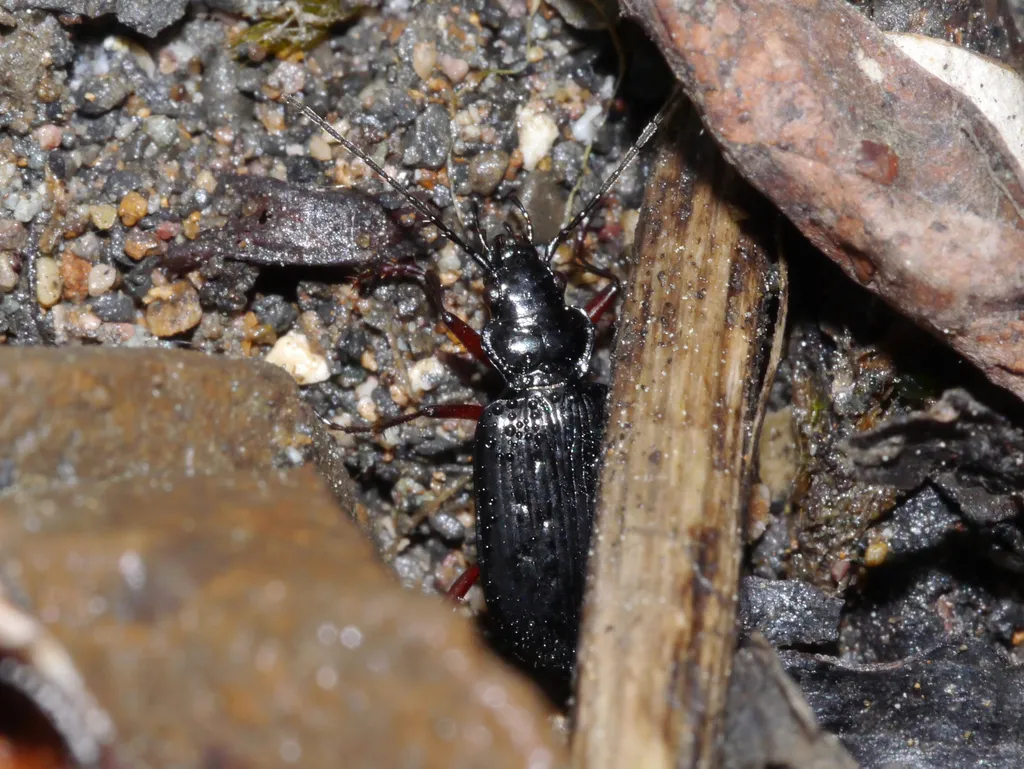
Nebria nivalis is a ground beetle in the subfamily Nebriinae. It is found mainly in Scandinavia and northern Russia; it is rare in the British Isles, where it occurs at isolated upland locations in North Wales, northern England, Scotland and the west
Nebria praedicta
Nebria praedicta
Identification: see https://www.biodiversitylibrary.org/page/63533781#page/79/mode/1up
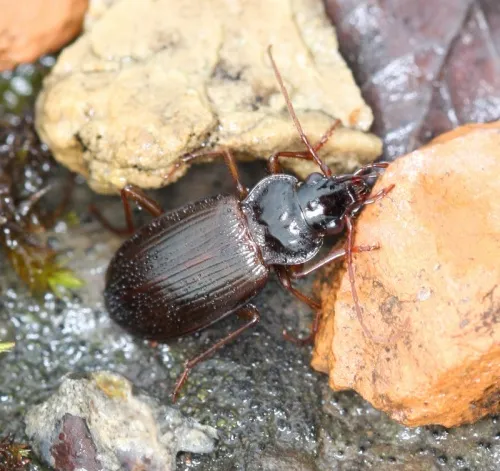
Nebria salina
Nebria salina
Moderately large (10-14 mm) dark brown or blackish ground beetle. The antennae and legs are a paler red/brown, though the femora are usually dark. Nebria brevicollis and N. salina are indistinguishable without examining the beetles under a microscope
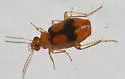
Nemotarsus elegans
Nemotarsus elegans
Identification: Similar to Lebia , distinguished by tibial spurs, etc. Body, legs, antennae dull yellow-brown; elytra dark with a large pale spot
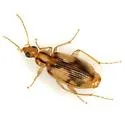
Nemotarsus rhombifer
Nemotarsus rhombifer
Texas considers this a Species of Greatest Conservation Need (SGCN) ( 4 ) ; fairly common at lights and in Lindgren funnel traps at Laguna Atascosa NWR ( 5 )
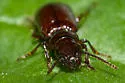
Stink Beetle
Nomius pygmaeus
occasionally invades homes in w. US and Canada; can produce an offensive odor retained by clothing for several weeks
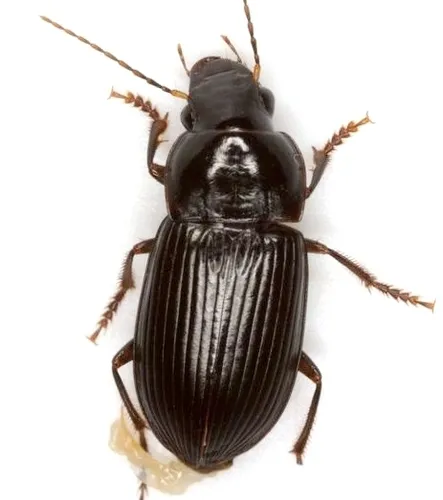
Notiobia maculicornis
Notiobia maculicornis
Notiobia maculicornis is a species of ground beetle in the family Carabidae. It is found in North America.
Notiobia mexicana
Notiobia mexicana
Identification: A southwestern species with distinctive pronotum (lateral margins sinuate and strongly beaded before dentate hind angles) and elytra with supposedly a hint of purplish shade
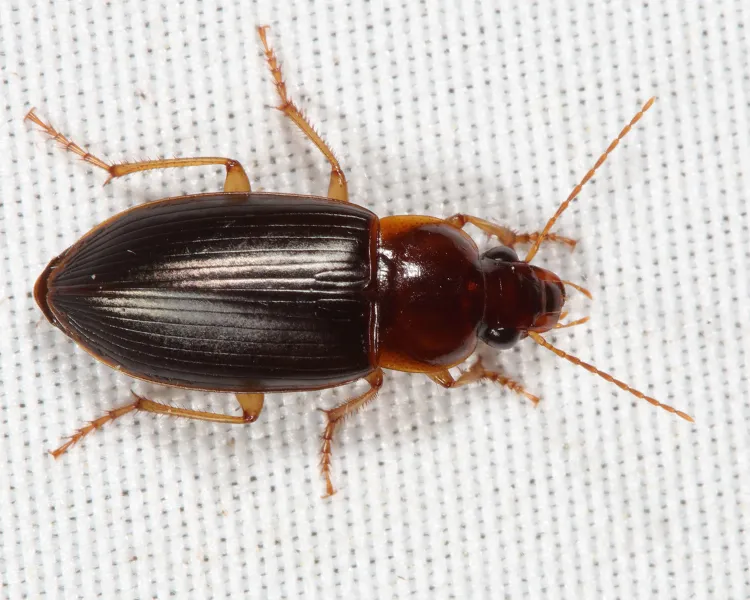
Notiobia terminata
Notiobia terminata
Notiobia terminata is a species of ground beetle in the family Carabidae. It is found in North America.
Notiophilus aeneus
Notiophilus aeneus
Identification: Elytra with two preapical setigerous punctures, antennae and legs pale reddish, pronotum markedly constricted basally.
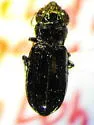
Notiophilus aquaticus
Notiophilus aquaticus
Identification: Elytra with single preapical setigerous puncture; legs dark/black; apex of elytra with little pronounced, ± irregular microreticulation; intervals behind shoulder without or with only suggested microsculpture Quite similar in the abov
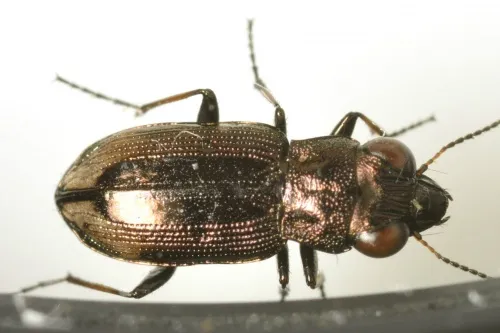
Notiophilus biguttatus
Notiophilus biguttatus
The Notiophilus beetles are very distinctive with prominent eyes. There are eight species in Britain, all very similar but often in different habitats. N. biguttatus usually has pale apical spots or patches on the apical ends of the elytra, though th
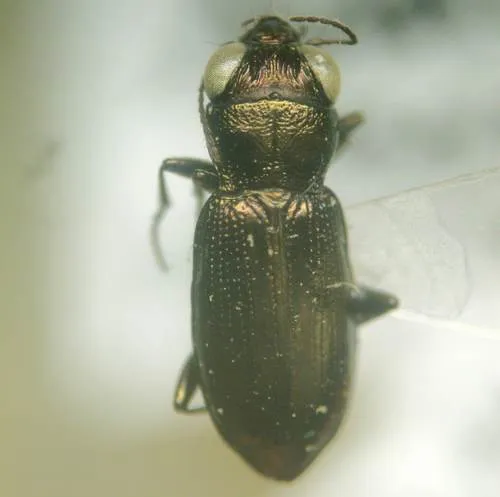
Notiophilus borealis
Notiophilus borealis
Notiophilus borealis is a species of ground beetle in the family Carabidae. It is found in Europe & Northern Asia (excluding China) and North America.
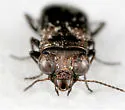
Notiophilus novemstriatus
Notiophilus novemstriatus
Identification: Smallest of our Notiophilus species. Elytra with two preapical setigerous punctures; legs and antennae not entirely pale; elytral intervals smooth, shiny on basal 1/2; striae 2-3 obliterated before apex; elytra without distinct pale a
Notiophilus palustris
Notiophilus palustris
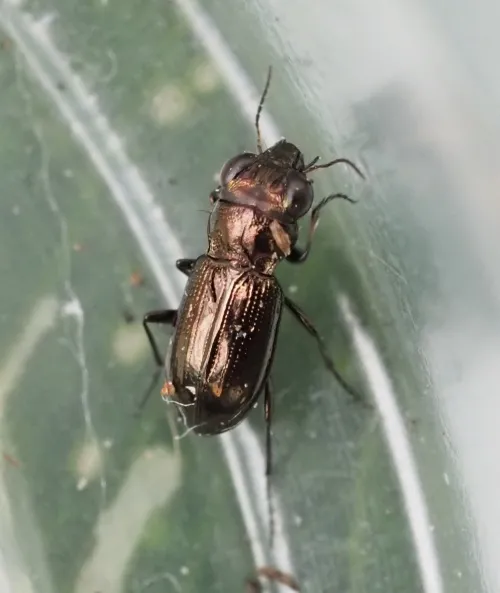
Length 5 to 6 mm. Very shiny black, lacking a paler patch at the tips of the elytra and with brown hind tibiae. Eyes very large, head wider than pronotum. Elytral interval 2 is no wider than 3, 4 and 5 combined. There are two pores at each of the ely
Notiophilus rufipes
Notiophilus rufipes
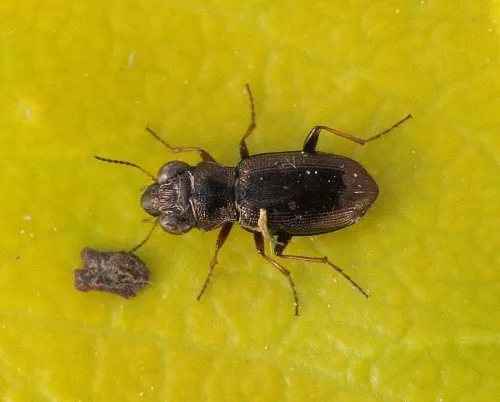
5.5 to 6.5 mm. Ranging from coppery bronze to almost black with studded elytra and the 2nd elytral interval as wide as the next three combined. The antennae are black with four basal segments yellow and the head and eyes are very large, even for Noti
Notiophilus substriatus
Notiophilus substriatus
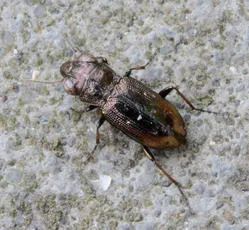
A small (5 mm) beetle with large bulging eyes and brassy brown studded elytra. Distinguished from N. biguttatus by the finer elytral pores. It usually prefers open ground with short, sparse vegetation and is often recorded from urban areas and fairly
Ocys harpaloides/tachysoides
Ocys harpaloides / tachysoides
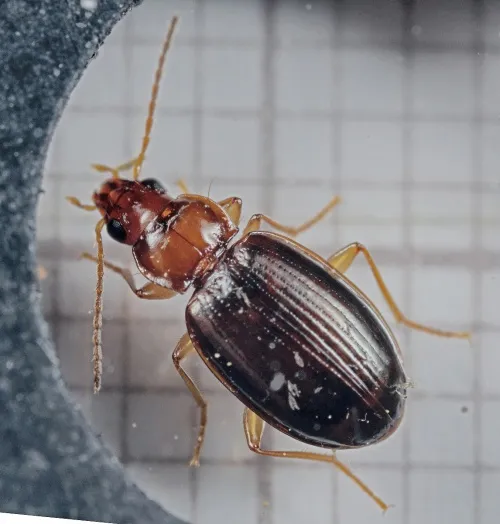
Beetles previously thought to be Ocys harpaloides have recently been shown to comprise two species , the other being Ocys tachysoides , but they can only be separated by examination of the genitalia or DNA analysis. If you are unable to separate the
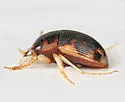
American Round Sand Beetle
Omophron americanum
Identification: color pattern variable; 15-striate elytron, V-shaped pale area on the frons, punctate metasternum and two setae on the mesocoxa make it easy to distinguish ( 3 ) the most common and widespread Omophron in NA ( 6 )
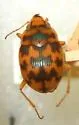
Toothed Round Sand Beetle
Omophron dentatum
Identification: Pronotum with an irregular transverse band, pale area on front weakly M-shaped dorsal habitus photos: Erwin | Brett
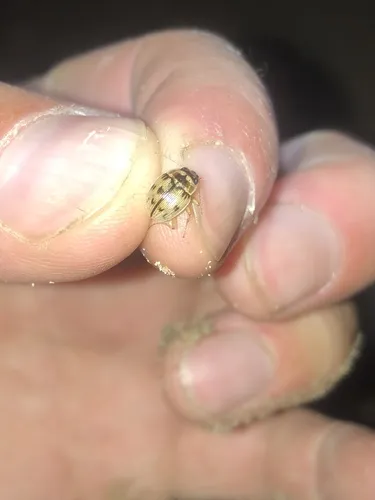
Gila River Round Sand Beetle
Omophron gilae
Omophron gilae, the Gila River round sand beetle, is a species of ground beetle in the family Carabidae. It is found in Central America and North America (Sonora, Arizona, California, Colorado, New Mexico, Texas, Utah), where it may be found at the m
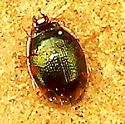
Shiny Round Sand Beetle
Omophron nitidum
Nocturnal; adults take cover during the day in burrows dug in the ground, or in leaf litter. Adults are gregarious; often come to lights. ( 3 )
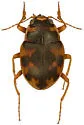
Effaced Round Sand Beetle
Omophron obliteratum
Identification: "V" shaped pale spot on head, 14 elytral striae
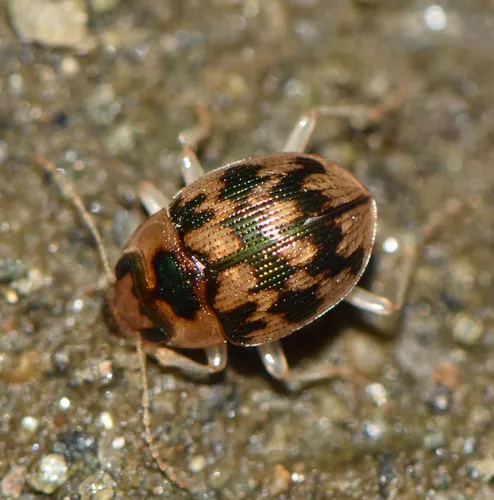
Mosaic Round Sand Beetle
Omophron tessellatum
Omophron tessellatum, the mosaic round sand beetle, is a species of ground beetle in the family Carabidae. It is found in North America.
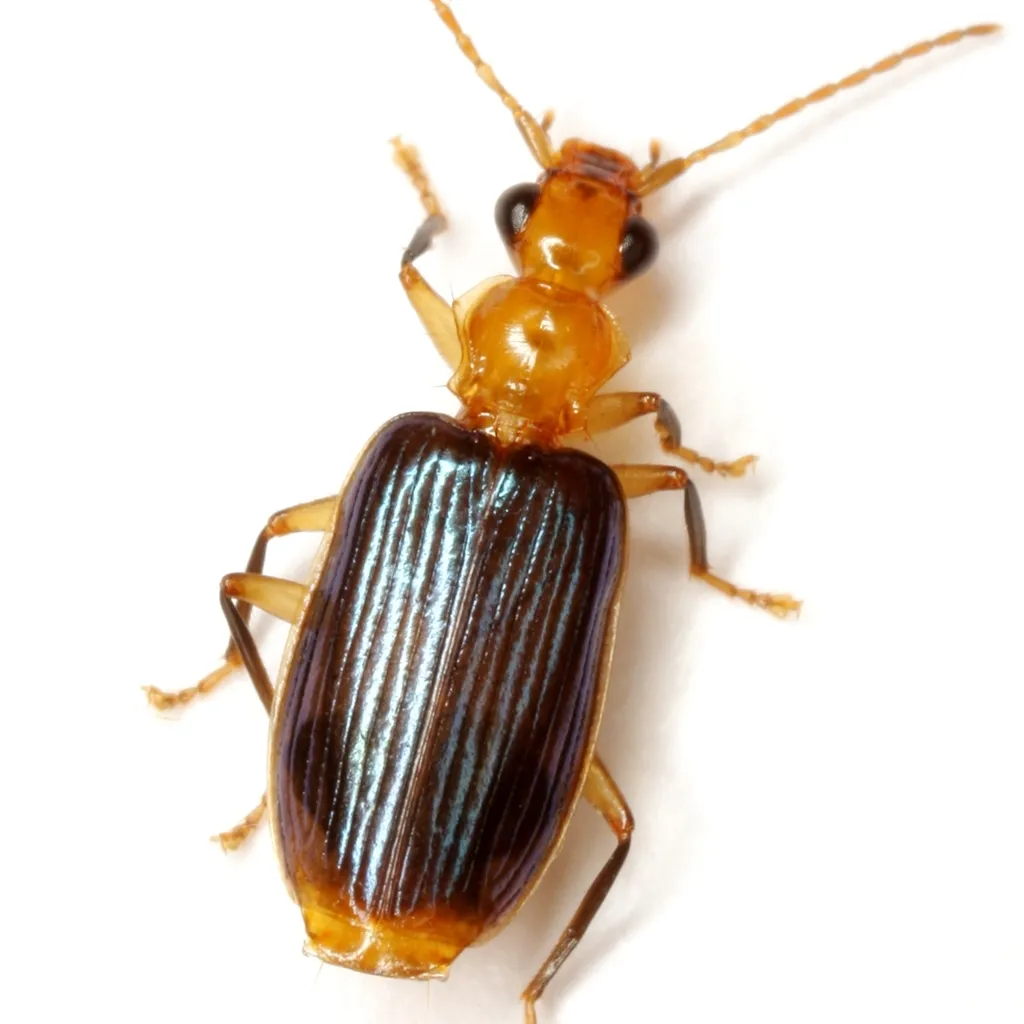
Onota angulicollis
Onota angulicollis
Onota angulicollis is a species of ground beetle in the family Carabidae. It is found in Central America, North America, and South America.
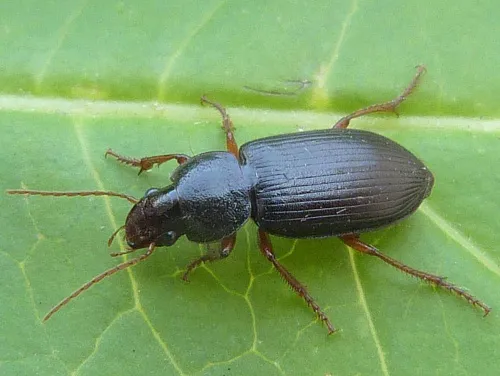
Ophonus ardosiacus
Ophonus ardosiacus
Length 10 to 14 mm. A rather variable species - the elytra may vary from a bright dark blue to almost black. The legs are usually brown. Usually found on disturbed ground or post industrial sites often under stones. All year round, but most likely to
Ophonus puncticeps
Ophonus puncticeps
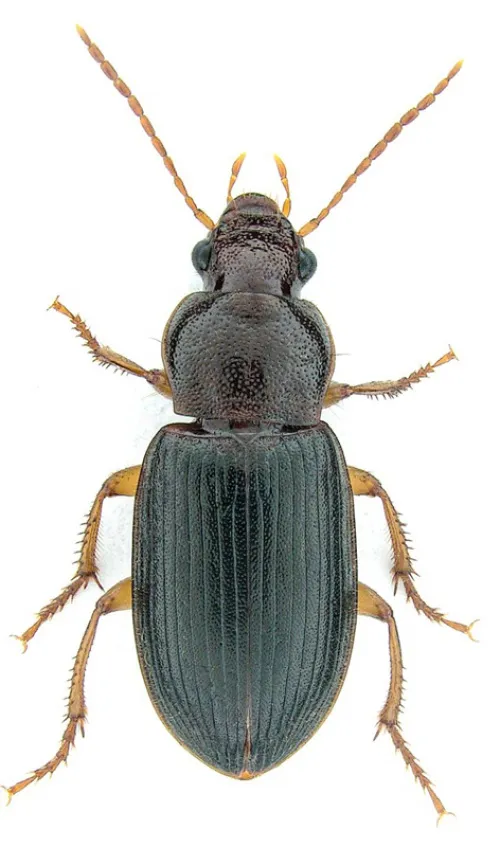
A 6.5 to 9 mm long, brownish black, seed eating ground beetle. Unless identified by a recognised expert, a photo is required and the specimen should be examined with a microscope. In the comments box, state the key or ID method used and describe the
Ophonus rufibarbis
Ophonus rufibarbis
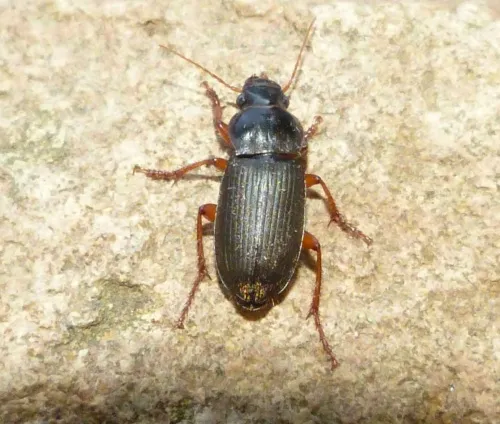
This medium sized beetle (7-9mm) has a dark brown body and pale legs and antennae. The pronotum is strongly sinuate with sharp points at the hind angles. Found in sparsely vegetated habitats on all soil types.
Lime-headed Tiger Beetle
Opilidia chlorocephala
Identification: Distinctive, hind legs are extremely long in both sexes
Oxycrepis celeris
Oxycrepis celeris
Identification: Loxandrus celer is one of the very few N. American species that can be accurately identified using only external characters. The following combination is distinctive: 1. last tarsomere setose ventrally 2. sides of pronotum not sinuate
Oxycrepis parvula
Oxycrepis parvula
Identification: Like nearly all Oxycrepis , identifiable only by examination of male genitalia. The median lobe of the aedeagus has a unique apex that is abruptly hooked dorsally.
Oxycrepis pravituba 0
Oxycrepis pravituba
Type Locality: Brownsville, Texas, June 11-16, 1933. Darlington, Collector apparently not treated in ( 5 )
Oxycrepis rectangula
Oxycrepis rectangula
Identification: Strong microsculpture present dorsally on forebody, shape of pronotum distinctive. Type Locality: Enterprise, Volusia Co., FL rare
Oxycrepis sculptilis
Oxycrepis sculptilis
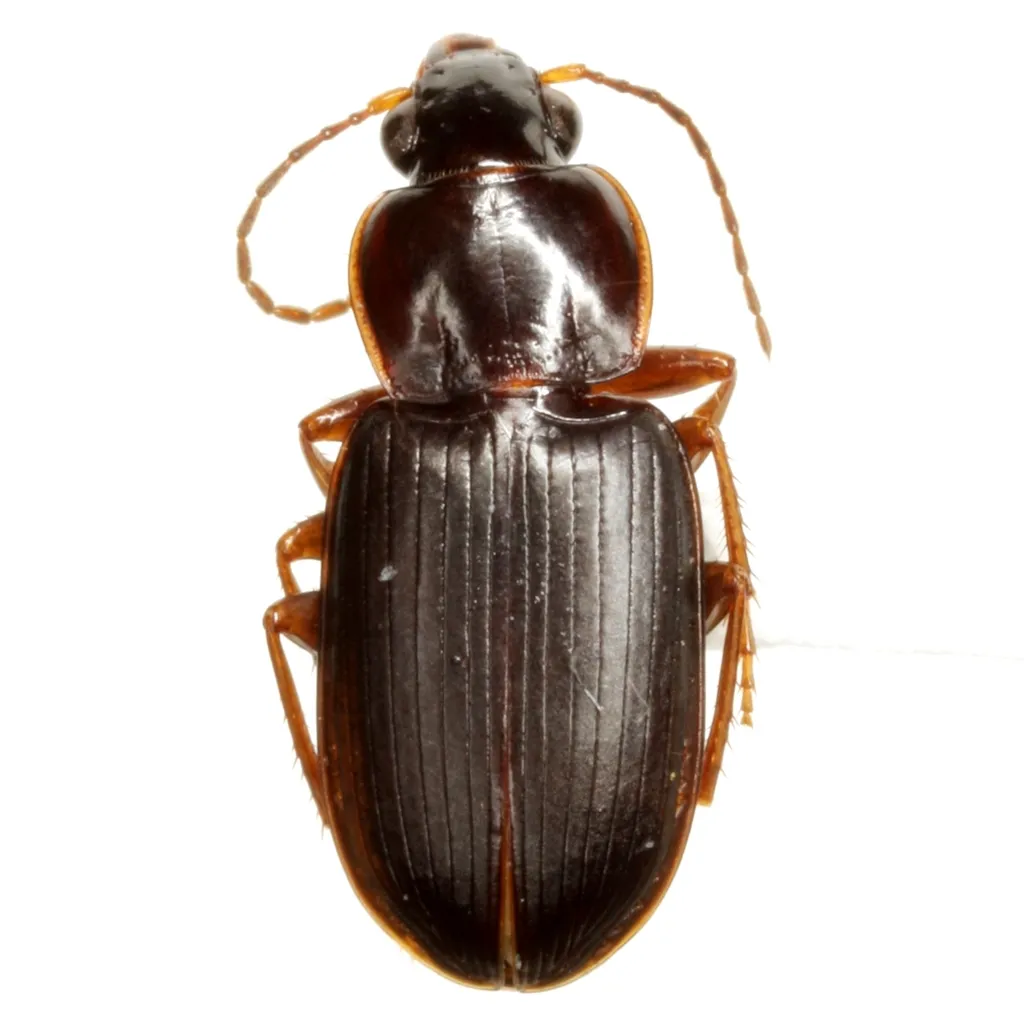
Identification: a relatively rare Texas species distinguished from other Oxycrepis by dull elytra (m/s isodiametric), pair of mentum pits, and small body size. … Peter W. Messer, 22 March, 2021
Oxypselaphus obscurus
Oxypselaphus obscurus
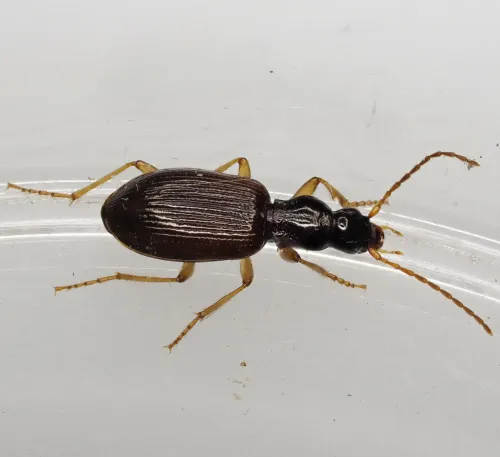
Length 6.5 mm. This is small, brown ground beetle has a dark/black head and pale appendages. The elongate and highly sinuate pronotum, heavily punctured at the base, together with the pale legs helps to make this species 9the only UK species in the g

Crucifix Ground Beetle
Panagaeus cruxmajor
A largely black and rather bristly beetle, it is 8 to10 mm in length, with large red spots on its wing cases which give the appearance of a red background behind a black cross. Panagaeus bipustulatus is a commoner relative, looking very much alike ex
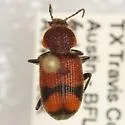
Panagaeus fasciatus
Panagaeus fasciatus
Identification: head and pronotum not black Adults are taken most frequently at light sources
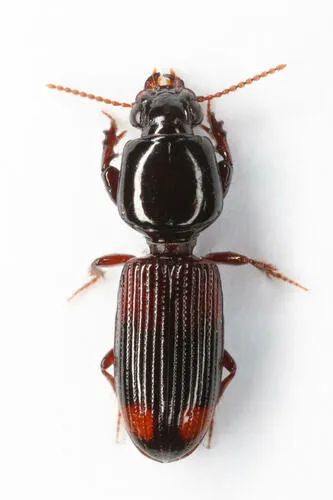
Greater Tail-light Carabid
Paraclivina bipustulata
Identification: Adult: head and pronotum dark brown to blackish; elytra striated and punctate, dark brown to blackish with dull dark reddish area at base, and two large spots of same color near apex; front tarsi flattened and bearing several claw-lik
Paraclivina convexa
Paraclivina convexa
Identification: Protibia with anterior spur bent at near 90°
Paraclivina sulcipennis
Paraclivina sulcipennis
Identification: Pronotum impunctate, elytra dark, small size • description
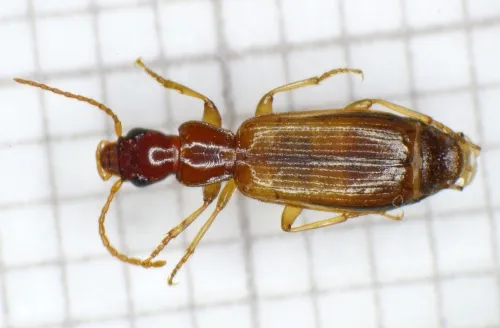
Paradromius linearis
Paradromius linearis
Length 4.5 to 6 mm. This is a long, slim, reddish brown ground beetle. The head is barely longer than wide (ignoring the mandibles). P. longiceps has a head that is notably longer than wide and it usually has a dark midline around the elytral sutures
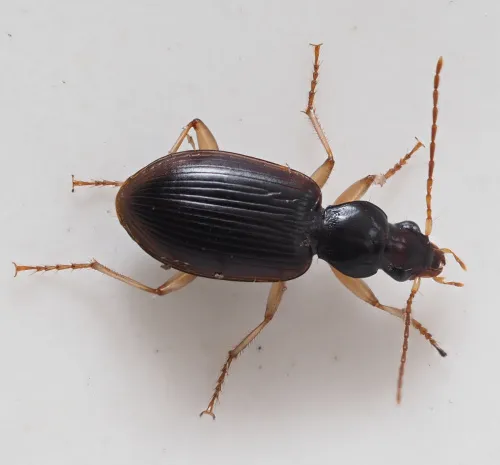
Paranchus albipes
Paranchus albipes
This is a 6 to 9mm long, dark brown ground beetle with conspicuous pale yellow legs and antennae. The first three antennal segments are all non-pubescent. Under stones and among litter or on mud at the side of lakes, streams and rivers.
Paratachys albipes
Paratachys albipes
Identification: Large and dark, elytra iridescent due to dense microsculpture lines; hind angles of pronotum obtuse, basal margin oblique near them; males with first two protarsomeres dilated and with ventral adhesive setae.
Paratachys potomaca
Paratachys potomaca
Identification: Markedly reduced membranous wings, also characteristic are smaller, less convex eyes and the elytra shaped more oviform with more narrowed shoulders compared to very similar P. pumilus. (Peter Messer's comment)
Paratachys sagax
Paratachys sagax
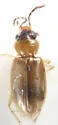
Identification: "[...] enormous hemispherical eyes. [...] darkened head and antennae, long antennomeres, concolorous pale pronotum and elytra without darker marks, transverse (therefore iridescent) pronotal and elytral microsculpture, linear trapezoi
Paratachys ventricosus
Paratachys ventricosus
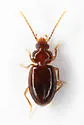
Identification: "two dilated protarsomeres and the Trechus-esque coloration and habitus" ‒Curt Harden's comment Holotype
Swift Tiger Beetle
Parvindela celeripes
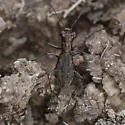
Identification: Flightless, dull green to brown. Elytral maculations are broken into dots Det. Alex Harman, 2018 Texas considers this to be a "Species of Greatest Conservation Need" (SGCN) this easily overlooked sp., may be more common than thought T
Meadow Tiger Beetle
Parvindela lunalonga
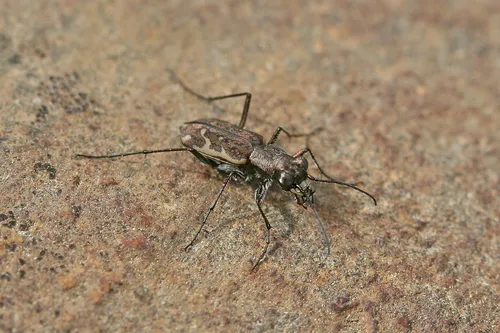
Identification: The species can exhibit very thin maculations to immaculate. The small size and dull appearance will generally separate it from other species in the region. It often appears with Cicindela haemorrhagica , but size, maculations (or lac
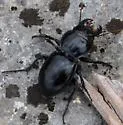
Pasimachus duplicatus
Pasimachus duplicatus
Identification: discal intervals hardly traceable, intervals 7 & 8 costate
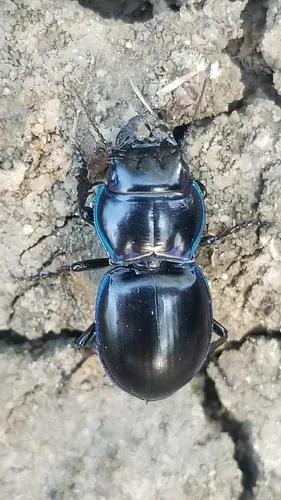
Blue-bordered Pedunculate Ground Beetle
Pasimachus elongatus
Pasimachus elongatus is a species of ground beetle in the family Carabidae. It is found in Central America and North America.
Pasimachus obsoletus
Pasimachus obsoletus
Identification: Most similar to P. elongatus , but borders of pronotum and elytra narrower and usually black (may be faintly blue, especially near humeri) • no fringe of yellow setae inside metatibia in males (present in P. elongatus )
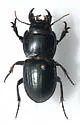
Pasimachus sublaevis
Pasimachus sublaevis
Identification: Pronotum relatively unconstricted basally, hind corners obtuse, elytra somewhat irregularly dimpled; no median pairs of setae on ventrites 2‒5; dorsal fixed subapical mesotibial spine/spur laterally compressed. Mesotibial spine:
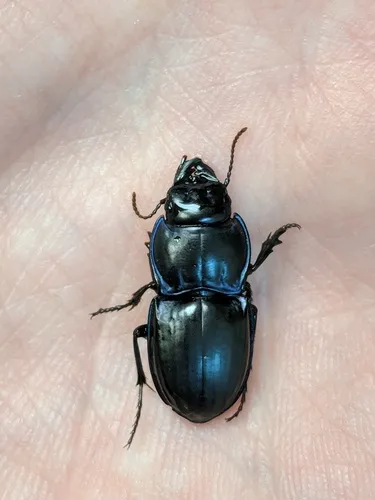
Moderately Sulcate Warrior Beetle
Pasimachus subsulcatus
Identification: Small; no paired median setae on ventrites 2‒5; dorsal fixed subapical mesotibial spine/spur not laterally compressed, acute; pronotum markedly emarginate above scutellum; pronotal margins just barely crenulate before base. Mesotibial
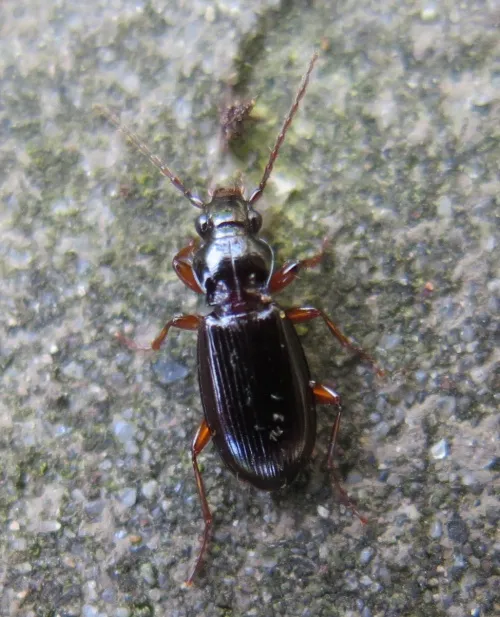
Patrobus atrorufus
Patrobus atrorufus
7.5 to9.5 mm. Uniformly dark brown with reddish legs and antennae. The first two antennal segments are bare but the third is pubescent. The third antennal segment is longer than the first. Wings absent. Patrobus assimilis is similar but generally sli
Patrobus fossifrons
Patrobus fossifrons
Pohl reported that members of this species can be segregated into a “coastal” and “inland” morphs and that hybridization occurs between the coastal form of P. fossifrons and P. stygicus
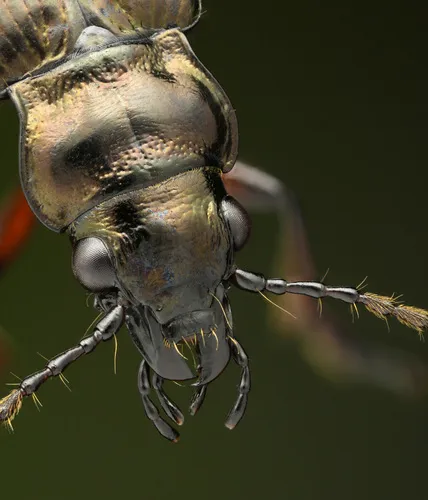
Pelophila borealis
Pelophila borealis
Pelophila borealis is a species of ground beetle in Nebriinae subfamily which was described by Gustaf von Paykull in 1790. The species can be found in Belarus, Canada, Estonia, Finland, Latvia, Norway, Russia, and Sweden. It is black in colour and is
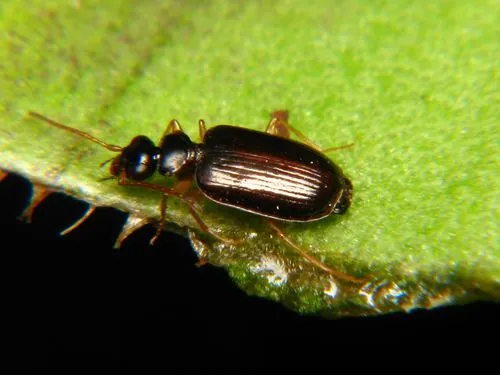
Pentagonica flavipes
Pentagonica flavipes
Pentagonica flavipes is a species of ground beetle in the family Carabidae. It is found in the Caribbean Sea, Central America, North America, and the Caribbean.
Pentagonica maculicornis
Pentagonica maculicornis
Identification: fulvous antennae, the entire scape and the other joints being brown only at the apex; prothorax with a broad, distinct, black stripe on both sides (Bates 1883), pronotal side marks vary from well defined, to indefinite smudges, or ent
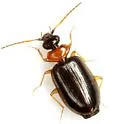
Pentagonica marshalli
Pentagonica marshalli
Identification: Differs from P. picticornis by antenna pale (emphasis added) distad scape, head proportionatly shorter (truncated behind eyes), and pronotum proportionately wider Type locality: 3 mill. NW Alligator Point, Franklin Co., Florida
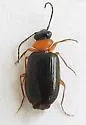
Pentagonica nigricornis
Pentagonica nigricornis
Identification: differs from all previously described New World Pentagonica in type of coloration combined with uniformly black antennae (emphasis added). It resembles picticornis Bates of Guatemala except that the antennae (of nigricornis ) are not
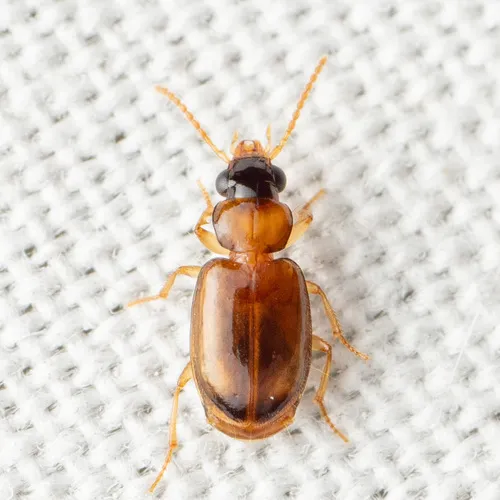
Perigona nigriceps
Perigona nigriceps
Identification: note the distinctly widened antenna segments. (comm. per Peter W. Messer, 25 October, 2007) earliest record in our area: before 1853
Philophuga caerulea
Philophuga caerulea
Identification: Head and pronotum with metallic blue or blue-green lustre, similar in color to elytra and not contrasting; elytral striae deeply impressed; intervals convex, finely to moderately coarsely punctate Lectotype
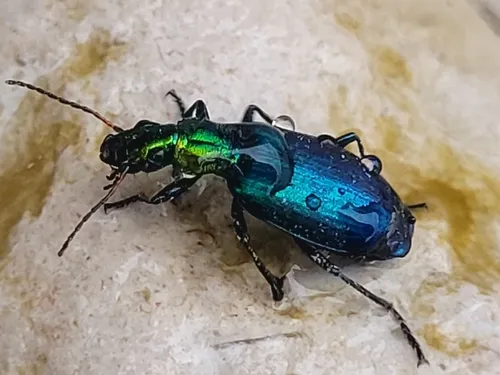
Philophuga viridicollis
Philophuga viridicollis
Identification: Head and pronotum with metallic green lustre, contrasting with blue elytra, or elytra also green; elytral striae shallowly impressed; intervals flat, finely punctate "Metatarsomere 4 is triangular and emarginate apically, not deeply b
Philophuga viridis
Philophuga viridis
Identification: Pronotum and head concolorous, black with a metallic blue or green sheen; hind angle of pronotum with or without a setiferous puncture This is the most varied species of Philophuga , containing four well defined subspecies.
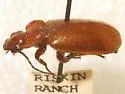
Physea hirta
Physea hirta
Identification: Physea hirta has a uniform covering of short setae in addition to longer tactile setae, while Physea latipes lacks the short setae, having only the long tactile ones. Type locality: "Mexico ... a few miles south of our boundary" (orig