
Family Ground Beetles (Carabidae)
Carabidae is a family in the order Coleoptera. Browse 1,800 named species recorded in this family, or open an individual profile for its available identification and natural-history information.
Guides
Species in Carabidae (1,800)
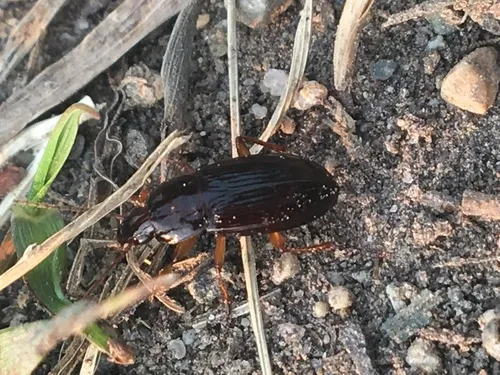
Calathus ingratus
Calathus ingratus
Calathus ingratus is a species of ground beetle in the family Carabidae. It is found in North America.
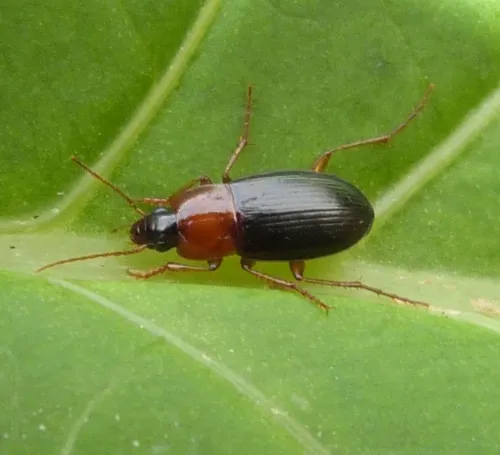
Calathus melanocephalus
Calathus melanocephalus
Length about 6 to 8 mm. It is usually black with a bright red thorax and pale legs. This ground beetle is usually found where there is bare, sandy soil. It lives during the day under stones and amongst leaf litter, coming out to hunt for small invert
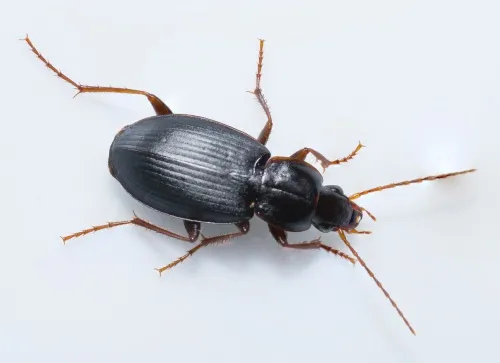
Calathus rotundicollis
Calathus rotundicollis
Length 8 to 11.5mm. It can be identified by the reddish edges of the pronotum. Found under logs and stones, even in well wooded areas. Widespread and fairly frequent in Britain.
Calleida decora
Calleida decora
Identification: Eyes large and prominent - key to separate the similarly colored C. punctata and C. decora
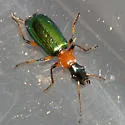
Calleida punctata
Calleida punctata
Identification: Eyes small - key to separate the similarly colored C. punctata and C. decora
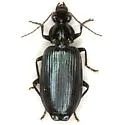
Calleida punctulata
Calleida punctulata
Identification: A species account written in English is available under the junior synonym Callida rugicollis G.H. Horn, 1894: page 361 . Members of genus Calleida typically have elongated pronota and without such widely reflexed lateral margins as s
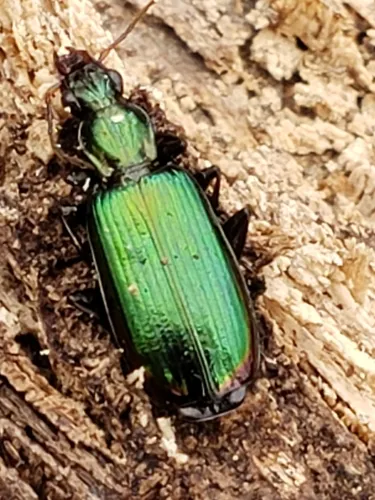
Calleida viridipennis
Calleida viridipennis
Identification: bright bluish-green, elytra can be purple, sometimes margined with copper; antennae piceous , except for antennomeres 1-3 and part of 4; venter piceous occasionally comes to lights
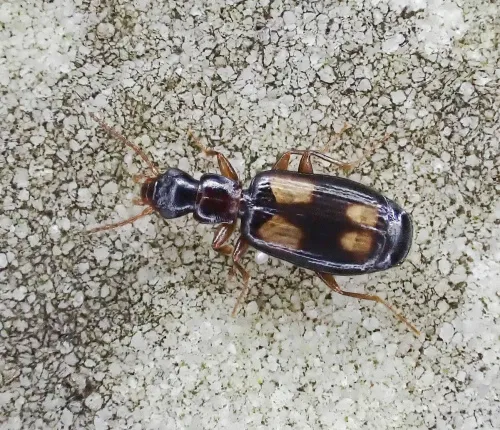
Calodromius spilotus
Calodromius spilotus
Calodromius spilotus is a small species, measuring around 3.5 to 4.5 mm long. It has a rather flat body shape and black head , the pronotum is reddish-brown, the elytra dark brown with two pale markings on each. Please provide a photograph and an ind
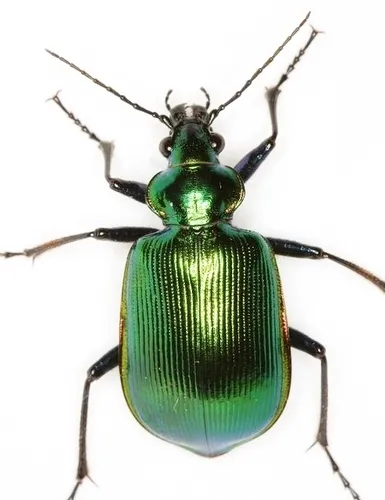
Calosoma aurocinctum
Calosoma aurocinctum
First recorded in the US by Townsend (1902) from specimens collected near Brownsville.
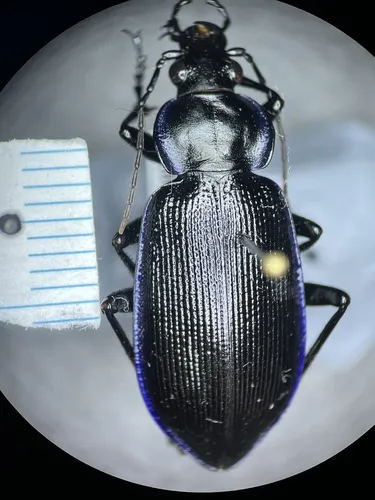
Narrow Searcher
Calosoma externum
Identification: Very large, black with margins of elytra and pronotum brilliant blue. Elytra with evenly-spaced rows of punctured grooves (striae) and a few large punctures (foveae). Pronotum rounded, not flared out on the apical (head) end. Resemble
Calosoma macrum
Calosoma macrum
Identification: remarkable for the almost entire absence of the usual striae and foveae: the tibia are straight in both sexes. The elytra of the male are not wider than the thorax; those of the female are about one third wider. Det. J. C. Abbott, 199
Calosoma marginale
Calosoma marginale
Identification: elytra with a few scattered coarse punctures toward base Det. E. G. Riley, 2009 Type Locality: Arizona?
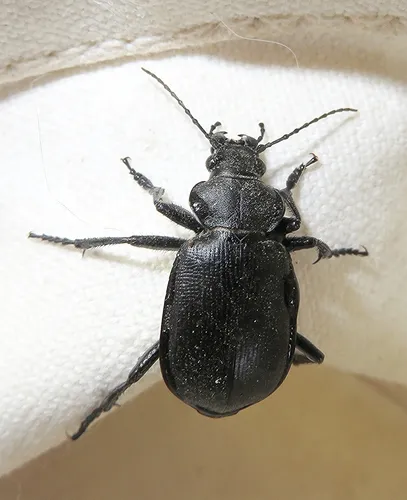
Calosoma obsoletum
Calosoma obsoletum
Calosoma obsoletum is a species of ground beetle in the subfamily of Carabinae. It was described by Say in 1823.
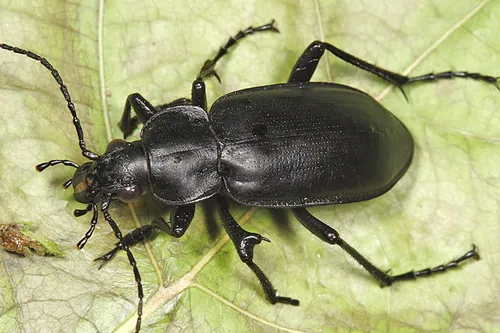
Calosoma protractum
Calosoma protractum
Calosoma macrum is a species of ground beetle in the subfamily Carabinae. It was described by John Lawrence LeConte in 1852. The species is 22–29 millimetres (0.87–1.14 in) long, black, and lives at an elevation of 1,100 to 1,700 metres (3,600 to 5,6
Caterpillar Searcher
Calosoma sycophanta
Introduced in 1905 to control spongy moth ( Lymantria dispar ) and Euproctis chrysorrhoea
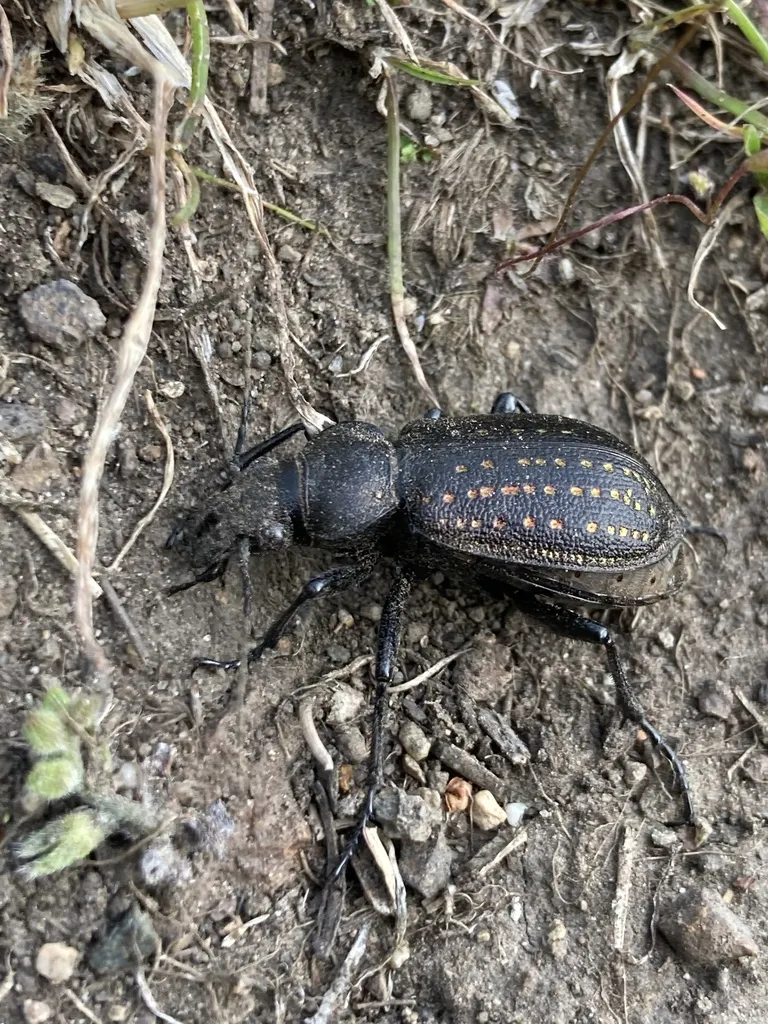
Calosoma tepidum
Calosoma tepidum
Calosoma tepidum is a species of ground beetle in the subfamily Carabinae. It was described by John Lawrence LeConte in 1851.
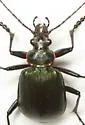
Calosoma wilcoxi
Calosoma wilcoxi
Identification: In general, smaller and duller than the similar Calosoma scrutator . See images and comments:
Calosoma wilkesii 0
Calosoma wilkesii
Identification: Species page dorsal habitus: form A · form B
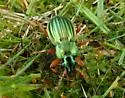
Carabus auratus
Carabus auratus
a member of the subgenus Tachypus Weber (4 spp. in Europe, one ranging into Siberia)
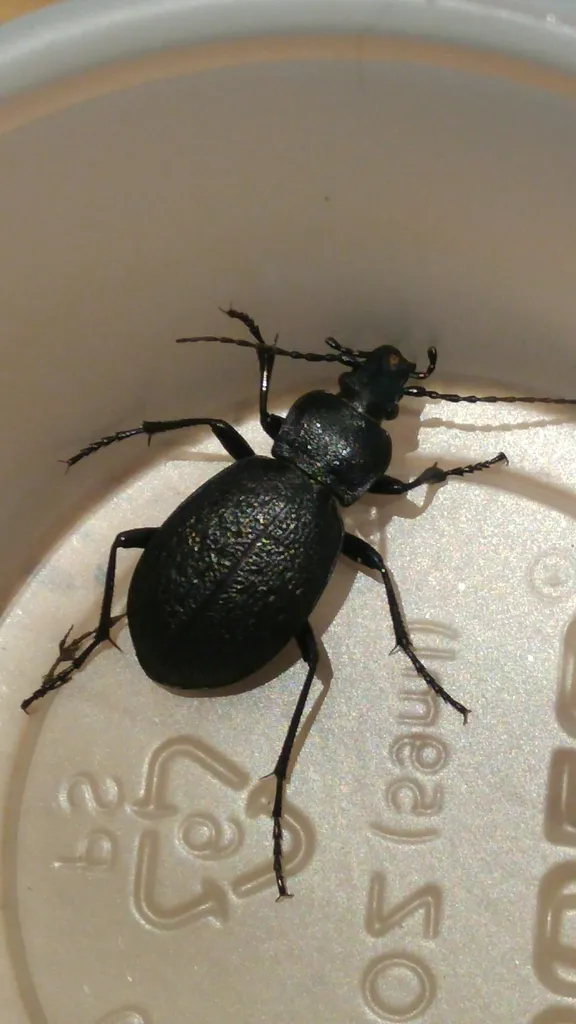
Carabus chamissonis
Carabus chamissonis
Carabus chamissonis is a species of ground beetle in the family Carabidae. It is found in tundra regions across northern Canada and Alaska, as well as isolated populations on Mount Washington, New Hampshire and Katahdin in Maine. This is a species of
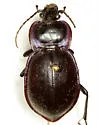
Carabus finitimus
Carabus finitimus
14 spmns in the UTIC ( 4 ) from the Brackenridge Field Laboratory (BFL), UT, Austin, Travis County, Texas from Nov. 1968 to April 1969.
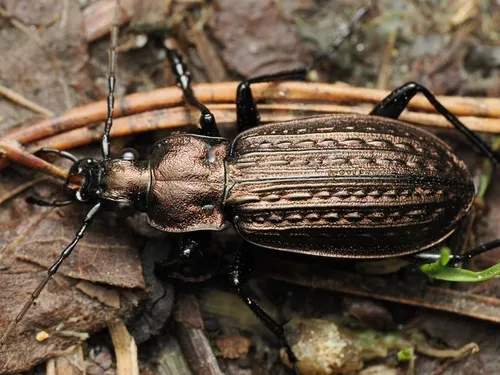
Carabus granulatus
Carabus granulatus
A large (16-23mm) granulate bronze, green or black predatory beetle. Wet fields, river margins, lakeshores and light woodland. Widespread in much of Britain but never really common.
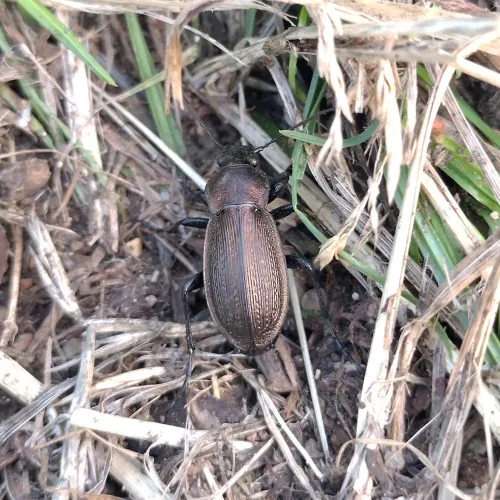
Necklace Ground Beetle
Carabus monilis
A large beetle (22 to 26mm). Body entirely metallic green or coppery. The elytral sculpture is suggestive of strings of beads, and this gives rise to the common name of Necklace Ground Beetle. Good quality photograph(s) required to support your recor
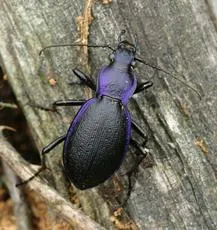
Carabus problematicus
Carabus problematicus
Up to 30mm. This species has ridges and dimples on its elytra and also has a pronotum that is barely transverse and with contracted sides. C. violaceus has smoother elytra that are more elongate and also has a more transverse pronotum. Although predo
Carabus truncaticollis
Carabus truncaticollis
our only representative of the subgenus Aulonocarabus Reitter (13 spp. in Asia, of which one ranges into n. NA)
Carabus vinctus
Carabus vinctus
Identification: Large, black, and slightly bronzed. Each elytron has "four ridges broken into elongate tubercles" . Blatchley gives the following description: Appears, like many carabids, to have potent chemical defenses (Frost, 1910):
Violet Ground Beetle
Carabus violaceus
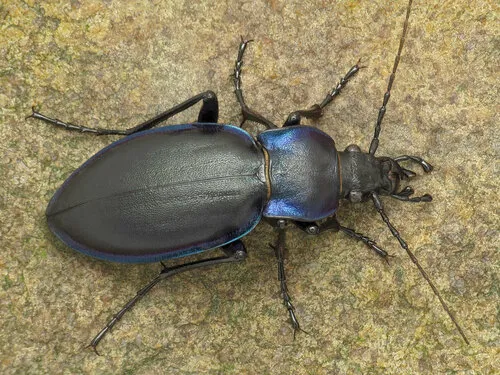
One of the largest species in the UK, measuring about 20-30mm in length. It is similar to Carabus problematicus but the elytra of Carabus violaceus are smoother with fewer dimples and ridges. Often found by day under logs and stones. Most of the year
Chlaenius amoenus
Chlaenius amoenus
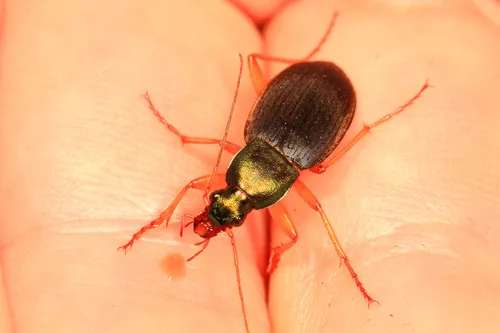
Chlaenius is a large and diverse genus of ground beetle. It is native to the Palearctic realm (including Europe, the Near East, and North Africa), Afrotropical realm, and Nearctic realm. Worldwide, roughly 1,000 species are currently recognized with
Chlaenius caurinus 0
Chlaenius caurinus
Chlaenius is a large and diverse genus of ground beetle. It is native to the Palearctic (including Europe), the Near East, North Africa, Afrotropical region, and the Nearctic. Worldwide, roughly 1,000 species are currently recognized with the majorit
Chlaenius circumcinctus
Chlaenius circumcinctus
the only member of the circumcinctus group in our fauna
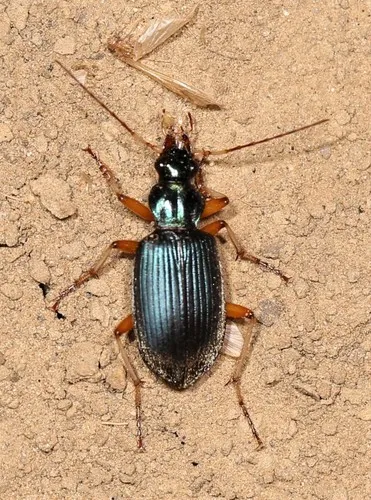
Chlaenius cordicollis
Chlaenius cordicollis
Identification: Third antennal segment distinctly longer than fourth; abdominal sclerties more or less glabrous at middle, densely punctate laterally; elytral margin curved evenly onto basal margin (no angle); pronotal disk with impunctate areas; ely
Chlaenius cumatilis
Chlaenius cumatilis
a member of the cursor group, represented in our fauna also by Ch. chaudoiri, Ch. patruelis, & Ch. sparsus )
Chlaenius emarginatus
Chlaenius emarginatus
Identification: Distinguished by large body size and long mandibles compared to other similar-looking congeners
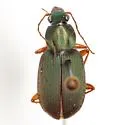
Chlaenius flaccidus
Chlaenius flaccidus
Type: One specimen female, collected by Belfrage, in Waco County, Texas. (Waco is in McLennan County.)
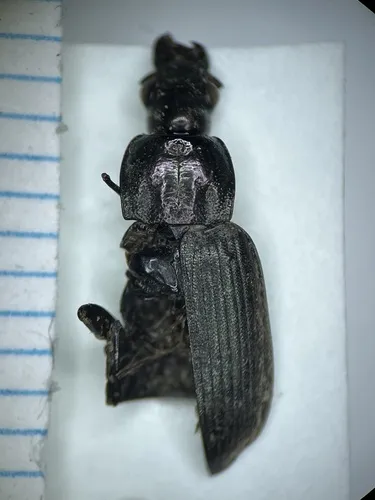
Chlaenius harpalinus
Chlaenius harpalinus
Chlaenius is a large and diverse genus of ground beetle. It is native to the Palearctic realm (including Europe, the Near East, and North Africa), Afrotropical realm, and Nearctic realm. Worldwide, roughly 1,000 species are currently recognized with
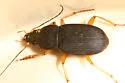
Chlaenius impunctifrons
Chlaenius impunctifrons
Identification: pale legs Det. Peter W. Messer, 2009 the only member of the impunctifrons group in our fauna
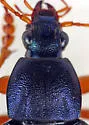
Chlaenius laticollis
Chlaenius laticollis
Identification: Among other differences, pronotum is duller dark bluish compared to that of bright metallic green in C. sericeus
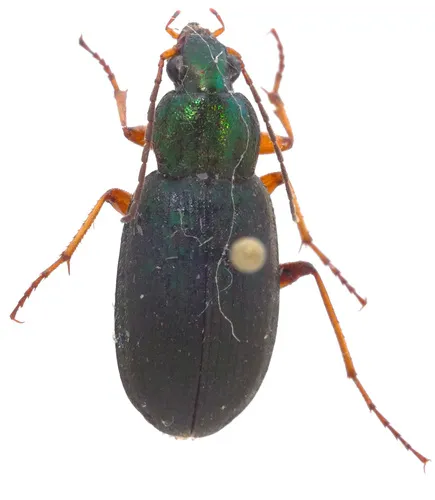
Chlaenius nebraskensis
Chlaenius nebraskensis
Chlaenius is a large and diverse genus of ground beetle. It is native to the Palearctic (including Europe), the Near East, North Africa, Afrotropical region, and the Nearctic. Worldwide, roughly 1,000 species are currently recognized with the majorit
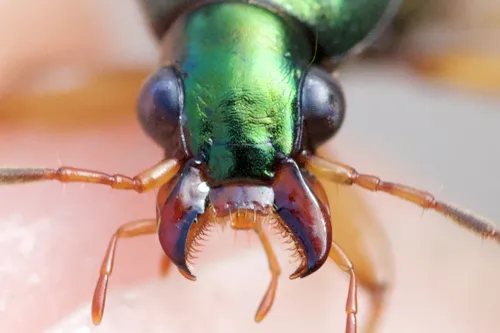
Say's Ground Beetle
Chlaenius pennsylvanicus
Chlaenius is a large and diverse genus of ground beetle. It is native to the Palearctic (including Europe), the Near East, North Africa, Afrotropical region, and the Nearctic. Worldwide, roughly 1,000 species are currently recognized with the majorit
Chlaenius purpuricollis
Chlaenius purpuricollis
Identification: adult habitus This relatively small chlaeniine had been rarely collected until pitfall trapping showed that it is common in alvars, which are flat, relatively open grassy areas with shallow or sporadic soil cover over calcareous bedro
Chlaenius pusillus
Chlaenius pusillus
Identification: Small compared to most congeners, plus long jaws
Chlaenius ruficauda
Chlaenius ruficauda
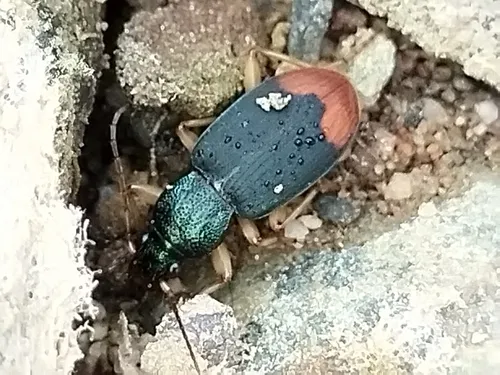
Chlaenius is a large and diverse genus of ground beetle. It is native to the Palearctic realm (including Europe, the Near East, and North Africa), Afrotropical realm, and Nearctic realm. Worldwide, roughly 1,000 species are currently recognized with
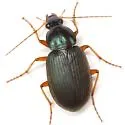
Chlaenius texanus
Chlaenius texanus
Type locality: Brownsville, Cameron Co., TX quite common in Brazos Co., TX. =v=
Chlaenius tomentosus
Chlaenius tomentosus
Identification: browner than most Chlaenius spp., and the pronotum wider than most Chlaenius spp. Det. M. A. Quinn, 2015
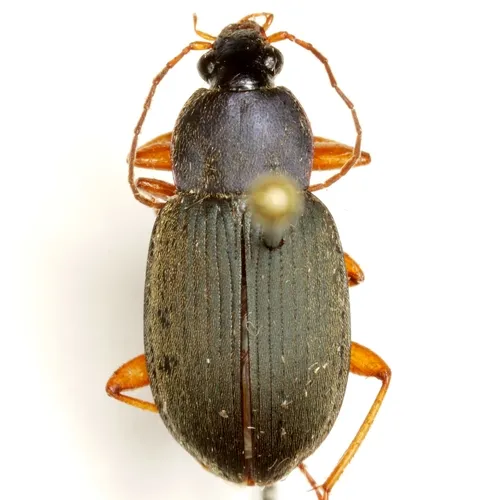
Chlaenius vafer
Chlaenius vafer
Chlaenius vafer is a species of ground beetle in the family Carabidae. It is found in North America.
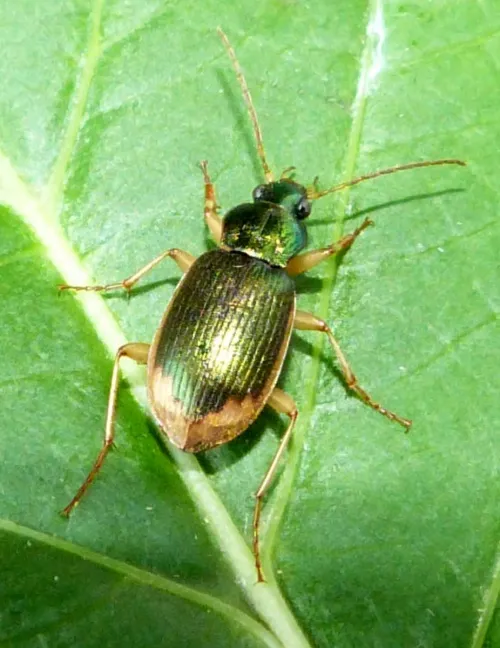
Chlaenius vestitus
Chlaenius vestitus
Length 8.5 to 11mm. A metallic green beetle with orangey-yellow patches at the ends of the elytra. Usually found in marshes, reedbeds and on the edges of ponds and lakes. Widespread and fairly frequent in the southern half of Britain No additional im
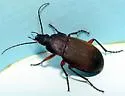
Chlaenius viduus
Chlaenius viduus
Identification: Orange femora & black tibiae & tarsi
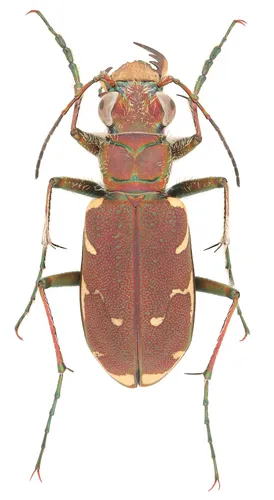
Appalachian Tiger Beetle
Cicindela ancocisconensis
Cicindela ancocisconensis, known generally as the Appalachian tiger beetle or boulder beach tiger beetle, is a species of flashy tiger beetle in the family Carabidae. It is found in North America.
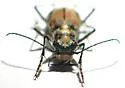
Pacific Coast Tiger Beetle
Cicindela bellissima
Identification: “Above brown with coppery reflections. The maculations are heavy, but are separated into three distinct lines. The middle line has a curved bend toward the rear, but lacks the sharp “elbow” of other species.”
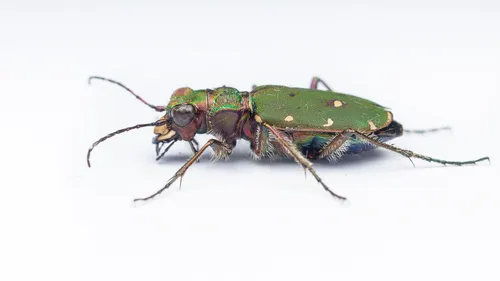
Green Tiger Beetle
Cicindela campestris
A large (15 mm) tiger beetle that is iridescent green with yellow markings. It is usually found in areas with bare ground or sparse vegetation such as gravelly or sandy hillsides and sandy heath. April to September. Adults are active in early summer
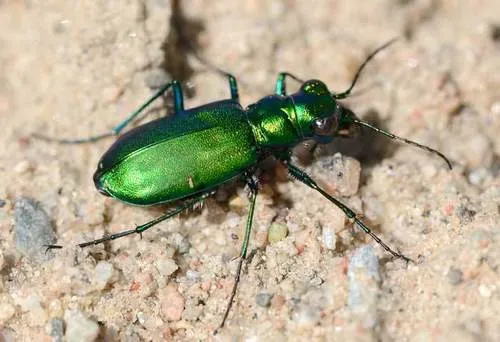
Laurentian Tiger Beetle
Cicindela denikei
Cicindela togata, Laurentian tiger beetle is a species of tiger beetle in the Cicindelinae subfamily that can be found in Minnesota, Manitoba, and Ontario. The species have green coloured elytron and is 13–15 millimetres (0.51–0.59 in) long. It can b
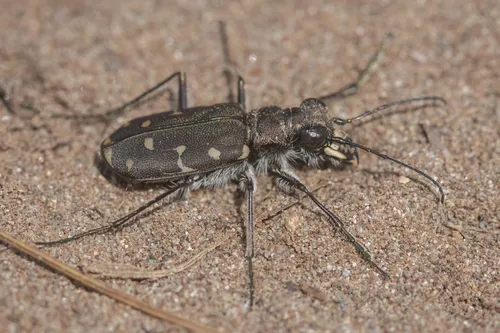
Twelve-spotted Tiger Beetle
Cicindela duodecimguttata
Identification: The usual bands are often broken into spots - 12 spots on some individuals. On other individuals, the bands may be more intact and there will be fewer than 12 spots or marks. The shoulder marking (humeral lunule), whether entire or br
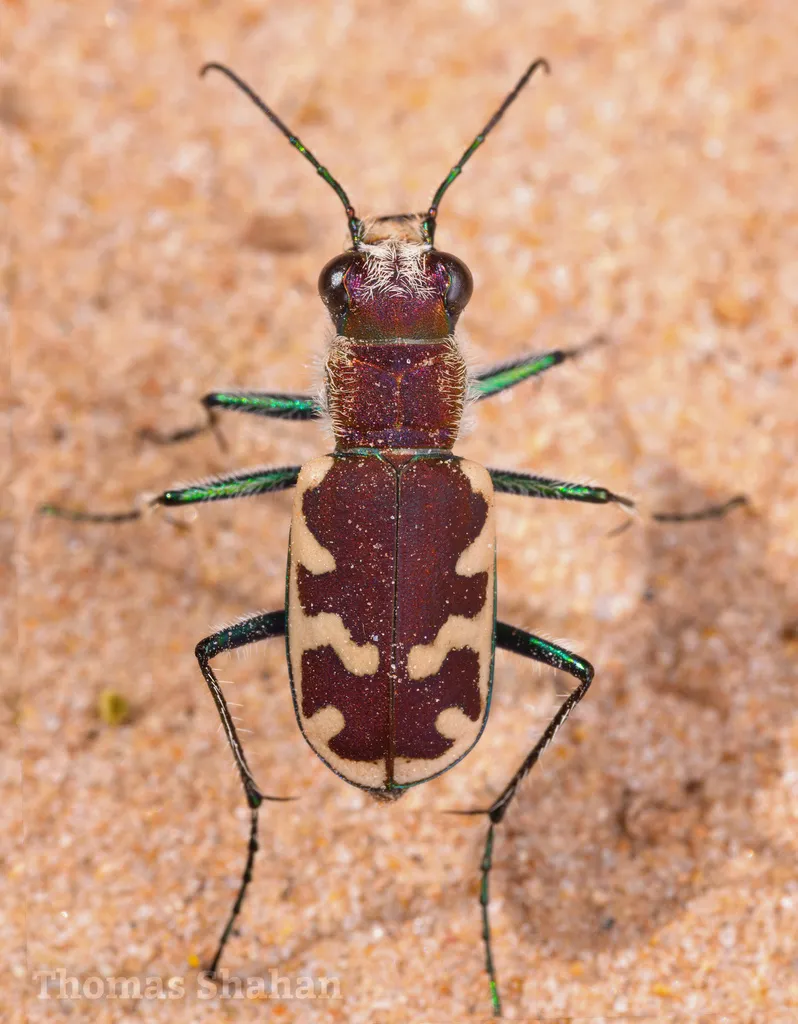
Big Sand Tiger Beetle
Cicindela formosa
Identification: C. f. formosa : elytra reddish/purple ▪ C. f. generosa : elytra dark brown to black ▪ C. f. pigmentosignata
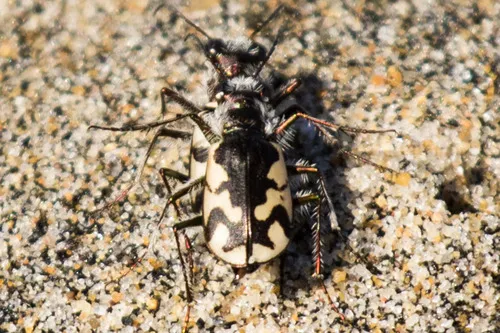
Western Beach Tiger Beetle
Cicindela latesignata
Cicindela latesignata is a ground beetle in the genus Cicindela ("common tiger beetles"), in the subfamily Cicindelinae ("tiger beetles"). Common names are "western beach tiger beetle" and "angel's tear". The distribution range of Cicindela latesigna
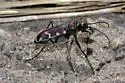
Common Claybank Tiger Beetle
Cicindela limbalis
Identification: color of dorsal surface varies greatly, from brick red to metallic red to reddish-purple to reddish-green, and rarely dull green or brown; elytral markings highly variable: (humeral lunule complete, broken, or rarely absent; middle ba
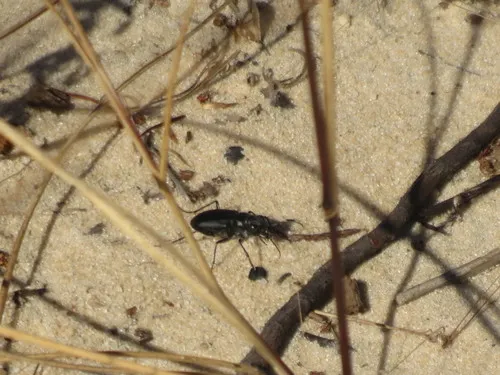
Autumn Tiger Beetle
Cicindela nigrior
Elias S.A. (2014) A brief history of the changing occupations and demographics of coleopterists from the 18th through the 20th century. J Hist Biol 47: 213–242 ( Full text )
Ohlone Tiger Beetle
Cicindela ohlone
Federally listed endangered species. For details (including some interesting natural history) see this PDF from the US Fish & Wildlife Service's website. The Ohlone Tiger Beetle was discovered and named by the late Randy Morgan ...naturalist extraor
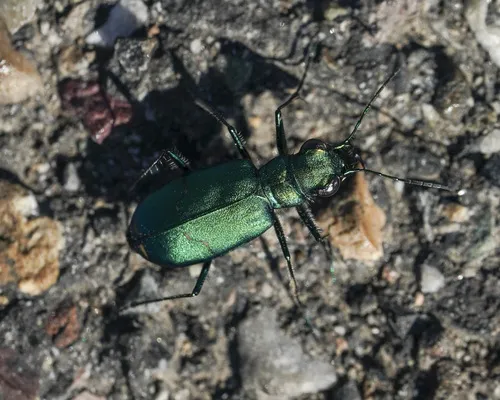
Sagebrush Tiger Beetle
Cicindela pugetana
Cicindela pugetana, the sagebrush tiger beetle, is a species of flashy tiger beetle in the family Carabidae. It is found in North America.
Beautiful Tiger Beetle
Cicindela pulchra
Identification: Most are metallic purple, but can be deep dull purple also. Maculation in Colorado can vary from a well defined middle band to no maculation at all. In Arizona/southern New Mexico the maculation is greatly expanded; these populations
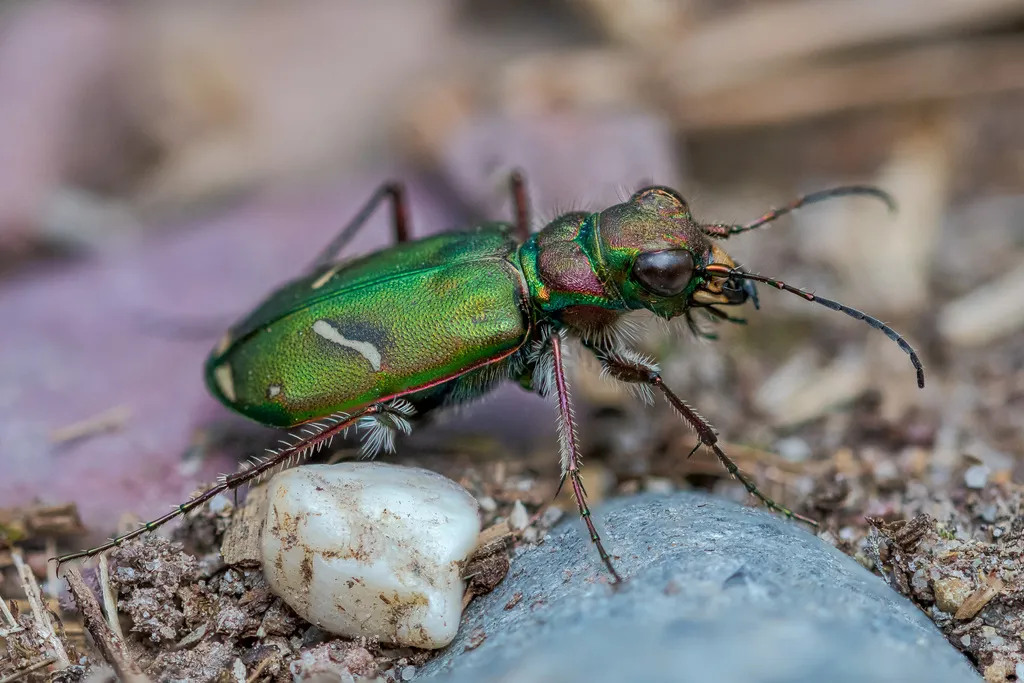
Cow Path Tiger Beetle
Cicindela purpurea
Identification: Purple, greenish-purple, or green. Shoulder marking absent; middle marking does not reach outside edge of elytron; apical marking short. The middle marking is curved, but not sharply elbowed as it is in C. limbalis . Unfortunately, so
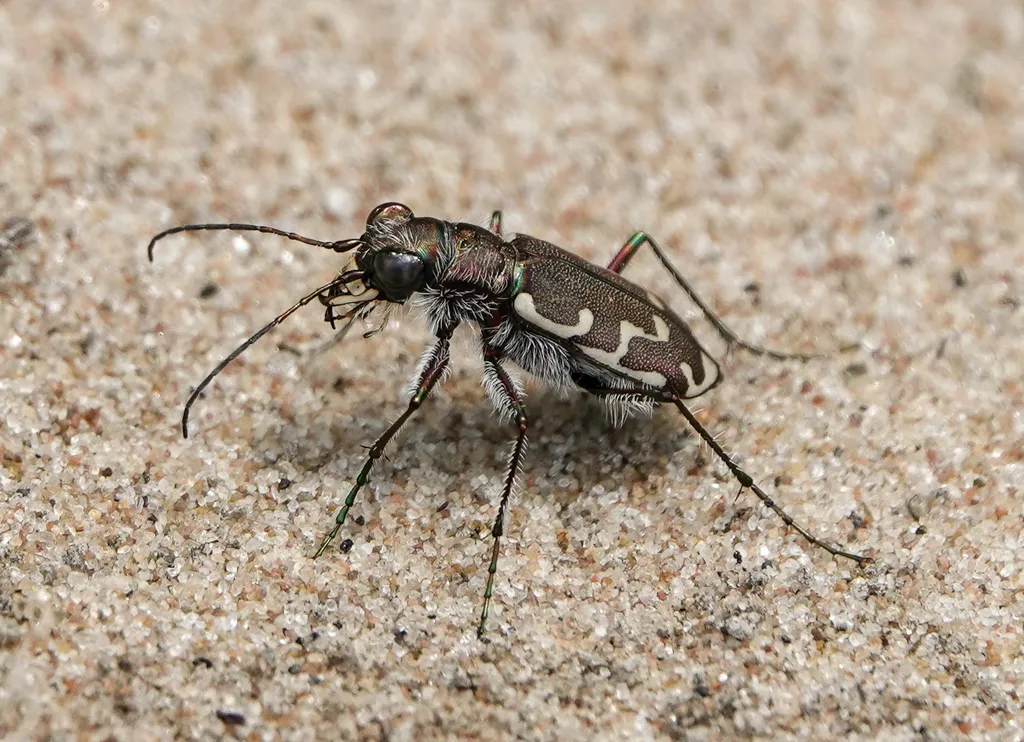
Bronzed Tiger Beetle
Cicindela repanda
Identification: Labrum small with one tooth; pronotum coppery and hairy. Shoulder marking (humeral lunule) touches or nearly touches the middle band.
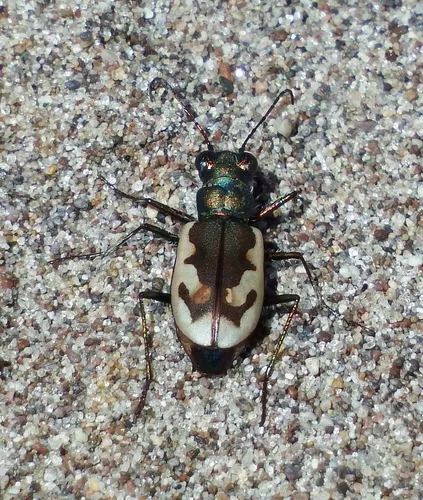
Colorado Dune Tiger Beetle
Cicindela theatina
Cicindela theatina, commonly known as the Great Sand Dunes tiger beetle, is a predatory beetle found in sparsely vegetated sandy habitats. The species' range encompasses only about 290 square kilometres (110 sq mi) in the Great Sand Dunes park in Col
Eastern Pinebarrens Tiger Beetle
Cicindelidia abdominalis
Identification: Tiny. Shiny blackish with some blue above, whitish crescents at tip of elytra .
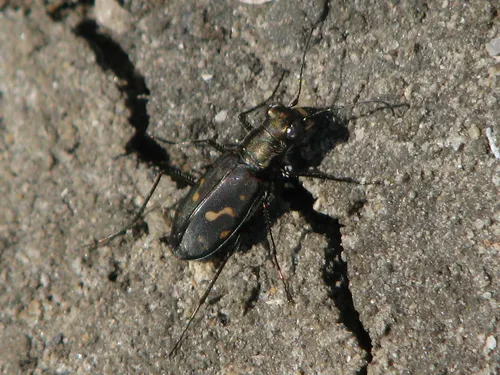
Wetsalts Tiger Beetle
Cicindelidia hemorrhagica
Identification: Dorsal color dark coppery brown to dark brownish-black; underside of abdomen red; elytral maculations creamy white, many individuals have broad and complete markings, some are intermediate, and some are completely unmarked; lateral ma
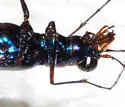
Highlands Tiger Beetle
Cicindelidia highlandensis
Identification: Distinguished from similar species - C. abdominalis (Eastern Pinebarrens Tiger Beetle), widely distributed throughout the Atlantic and Gulf Coastal Plain, and C. scabrosa (Scabrous Tiger Beetle), confined to the Florida Peninsula and
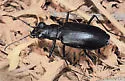
Horn's Tiger Beetle
Cicindelidia hornii
Usually quite ephemeral, out after rains but not too long. They also come in blue and green forms, but probably mostly black in NM. (Comment by Dr. C. Barry Kinsley).
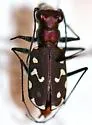
Melissa's Tiger Beetle
Cicindelidia melissa
Identification: can be distinguished from all other similar Cicindelidia by its dark green-violet abdominal venter with the two apical segments dull orange or orange-brown, a brassy-cupreous head and pronotum with metallic blue reflections in sulci,
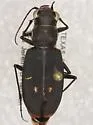
Large Grassland Tiger Beetle
Cicindelidia obsoleta
Identification: “Above dark black, brown, green, and rarely dark blue with maculations that are absent in some populations, reduced to incomplete lines and dots in others, and thin but complete in others. If maculations are present, usually only the
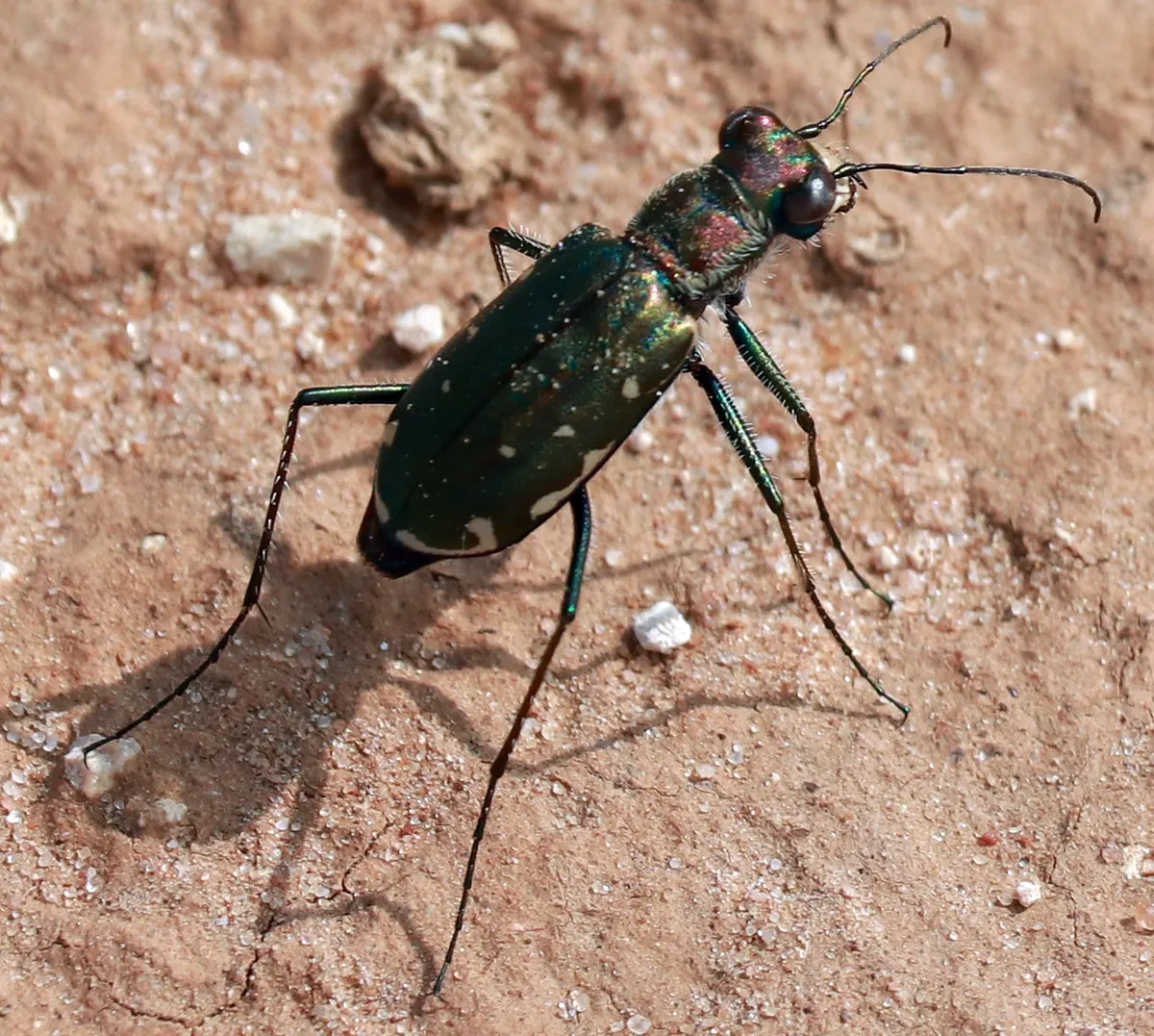
Punctured Tiger Beetle
Cicindelidia punctulata
Identification: slender, dark brownish-gray (in the east), with or without thin white markings; longitudinal row of pits on each elytron: in the southwest may be completely green, and have reduced maculae or none:
Eastern Red-bellied Tiger Beetle
Cicindelidia rufiventris
Identification: abdomen under the elytra is bright red, especially towards the rear
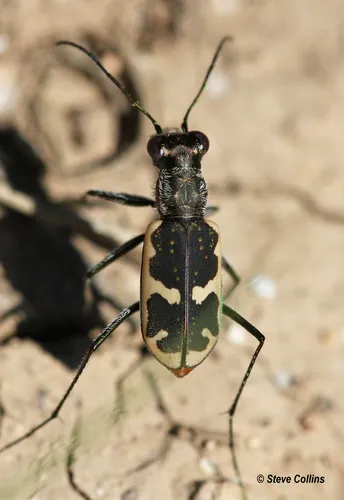
Schaupp's Tiger Beetle
Cicindelidia schauppii
Identification: Elytra dull bronze-brown to green with white maculations and green sub-sutural punctures. Extent of white markings can vary. Cicindela cazieri, C. politula are often found together with this species.
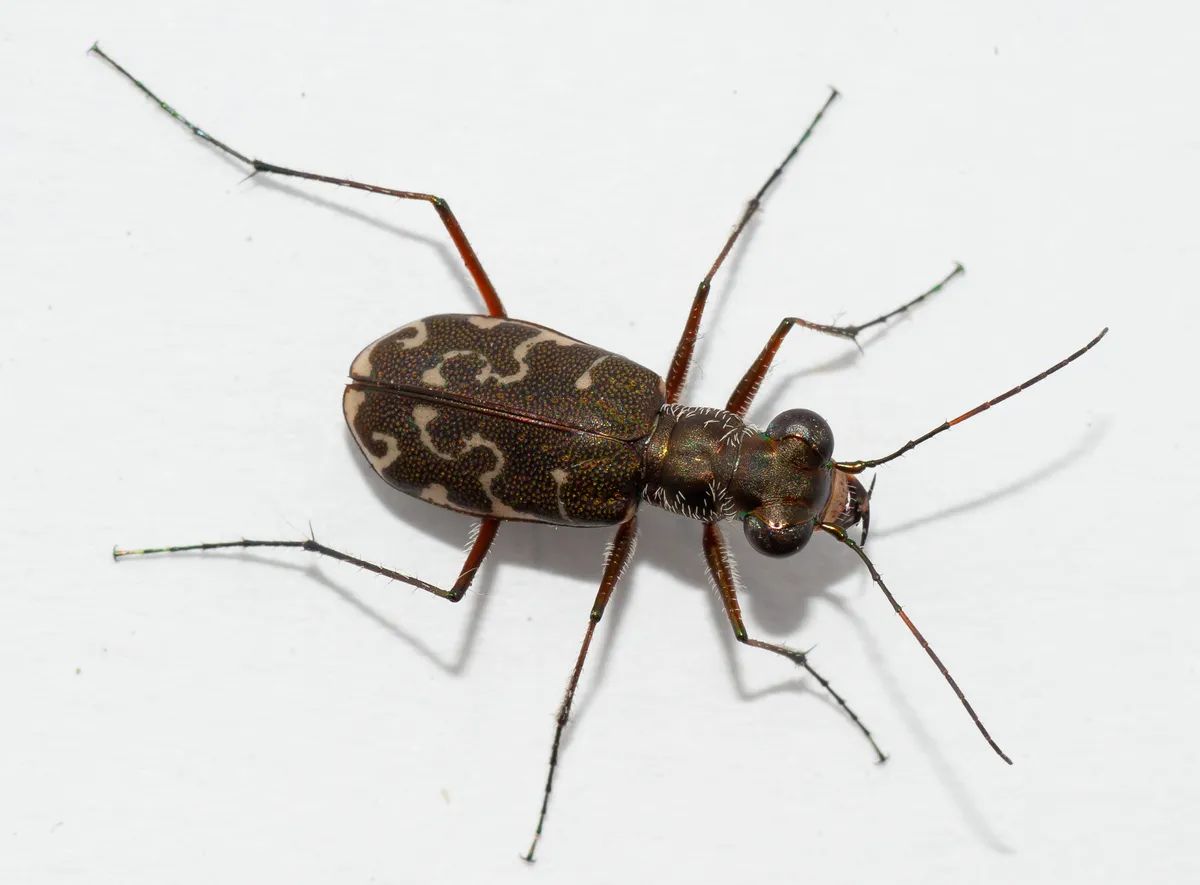
S-banded Tiger Beetle
Cicindelidia trifasciata
Identification: variably dark grayish-brown to light brown, sometimes with greenish tint; middle band curved in conspicuous S shape in well-marked specimens; lines tend to be thin and delicate in subspecies ascendens , and thicker/bolder in subspecie
Clivina acuducta
Clivina acuducta
Identification: differs from C. americana by larger size (≥6 mm), longer antenna segments (not squarish), pronotal sides more rounded, and elytral striae more effaced toward apices. (R.Davidson, pers.comm. to PWM)
Clivina californica
Clivina californica
Clivina californica is a species of ground beetle in the subfamily Scaritinae. It was described by Vandyke in 1925.
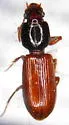
Clivina collaris
Clivina collaris
Identification: adult habitus: live image | specimen head and pronotum black; elytra brownish-red earliest record in our area: MA, before 1838
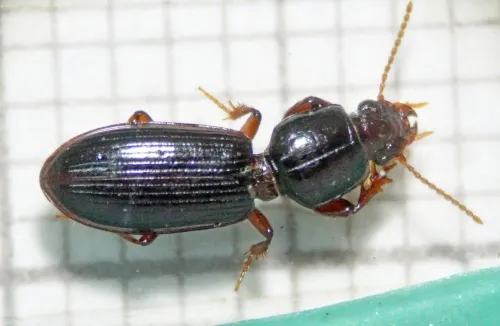
Clivina fossor
Clivina fossor
Size 6 to 7 mm. This beetle is all dark brown with studded rows or lines running the length of its elytra. It has adaptations for a life underground. The tarsal segments on the front pair of legs are broadened for digging. This enables exploitation o
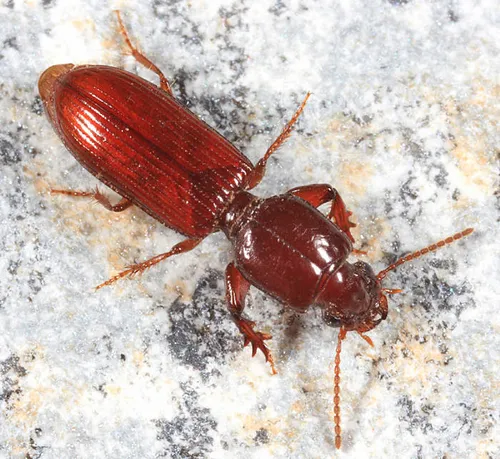
Slender Seedcorn Beetle
Clivina impressefrons
Identification: One clue that helps distinguish this species is its rather uniform brown color. In hand the pronotum appeared almost same color as elytra.
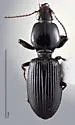
Clivina morio
Clivina morio
Identification: From Bousquet : "The species can be distinguished from the other eastern North American species of Leucocara by its size and shorter metepisternum. The four specimens studied of C. morio range between 7.0 and 8.5 mm in size while the
Clivina pallida
Clivina pallida
Identification: Eye reduced, longitudinal length less than 1.5 times that of temple. Elytral striae wide with wavy edges, punctures at most suggested • neotype
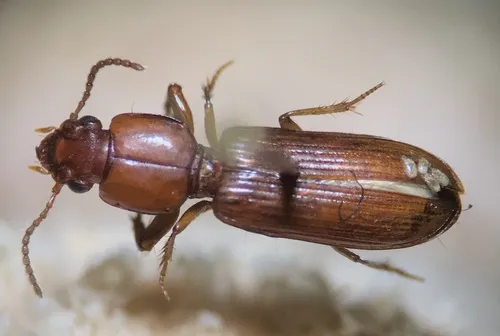
Clivina planicollis
Clivina planicollis
Identification: Clivina planicollis is distinguished from other Nearctic members of the fossor group by having antennal article II plurisetose rather than unisetose. (Whitehead, 1974) Det. Brad Barnd, 2024 (via spmn)
Clivina vespertina
Clivina vespertina
Identification: " Clivina vespertina differs from C. dentipes by possessing an obtuse rather than an acute profemoral tooth; smaller size (hindbody under 4.0 mm in length); and distinct isodiametric microsculpture at the apex of each elytron (absent
Colliuris lioptera
Colliuris lioptera
Identification: Elytron black with one lateral reddish dot in posterior third. ─Peter Messer, 5.ix.2015
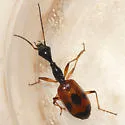
Colliuris pensylvanica
Colliuris pensylvanica
Colliuris pensylvanica (Colliuris pensylvanica) is a species in the family Carabidae, commonly known as ground beetles, belonging to the order Coleoptera (Beetles). It is classified within the subfamily Harpalinae, tribe Odacanthini, suborder Adephag
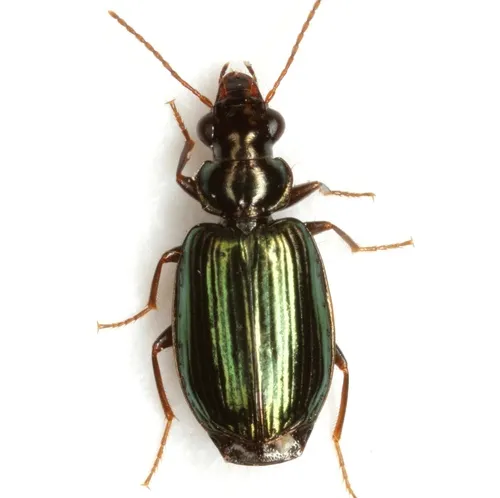
Coptodera aerata
Coptodera aerata
Coptodera aerata is a species of ground beetle in the family Carabidae. It is found in North America.
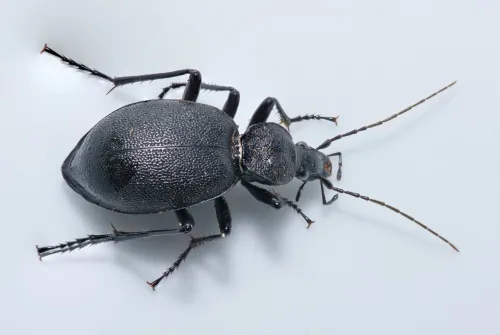
Snail Hunter
Cychrus caraboides
Length 14 to 19 mm. This beetle has a long thin head designed for getting inside snail shells to eat the flesh. It also has a pear-shaped body and is not likely to be confused with any other species. It is mainly found in woodland and other shaded ha
Cyclotrachelus convivus
Cyclotrachelus convivus
According to Freitag (1969), this species can usually be separated from very similar C. sigillatus by their geographic distributions, i.e., west vs east of Appalachian Mountains. Comment by Peter W. Messer
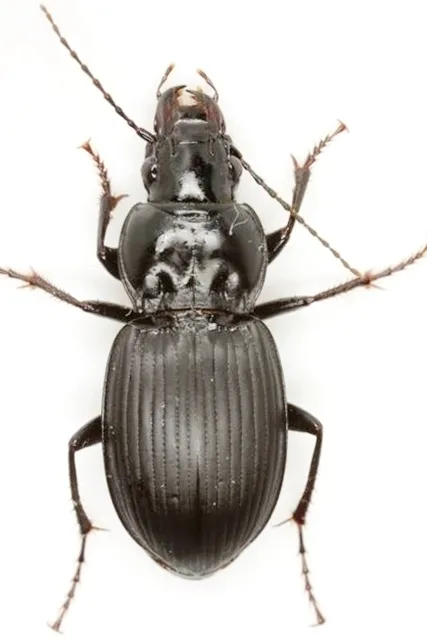
Cyclotrachelus engelmani
Cyclotrachelus engelmani
Cyclotrachelus engelmani is a species of woodland ground beetle in the family Carabidae. It is found in North America.
Cyclotrachelus iuvenis
Cyclotrachelus iuvenis
Cyclotrachelus iuvenis (Cyclotrachelus iuvenis) is a species in the family Carabidae, commonly known as ground beetles, belonging to the order Coleoptera (Beetles). It is classified within the subfamily Harpalinae, tribe Pterostichini, suborder Adeph
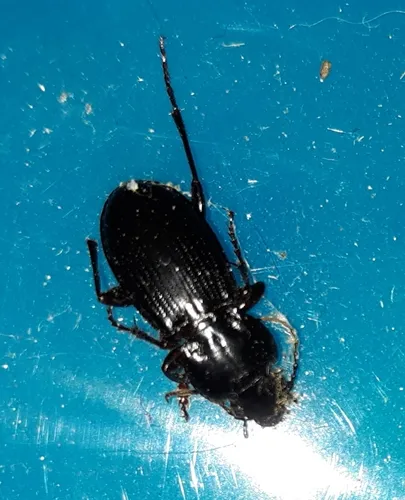
Cyclotrachelus seximpressus
Cyclotrachelus seximpressus
Cyclotrachelus seximpressus is a species of woodland ground beetle in the family Carabidae. It is found in North America.
Cyclotrachelus sodalis
Cyclotrachelus sodalis
member of the sodalis group (6 spp. in our area) ( 3 )
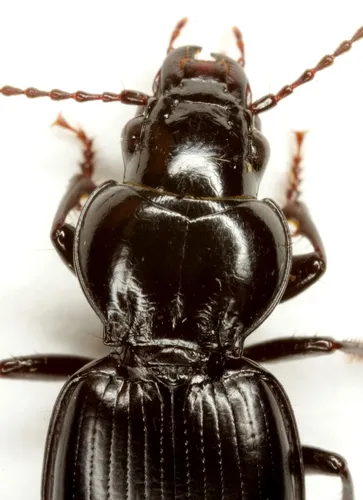
Cyclotrachelus substriatus
Cyclotrachelus substriatus
Identification: Note: This species separates from juxtapositional species in Freitag (1969) by the following combination: 1) So-called "umbilicate" punctures along anterolateral border of shoulder are not surrounded by prominent elevated ridges. 2) E
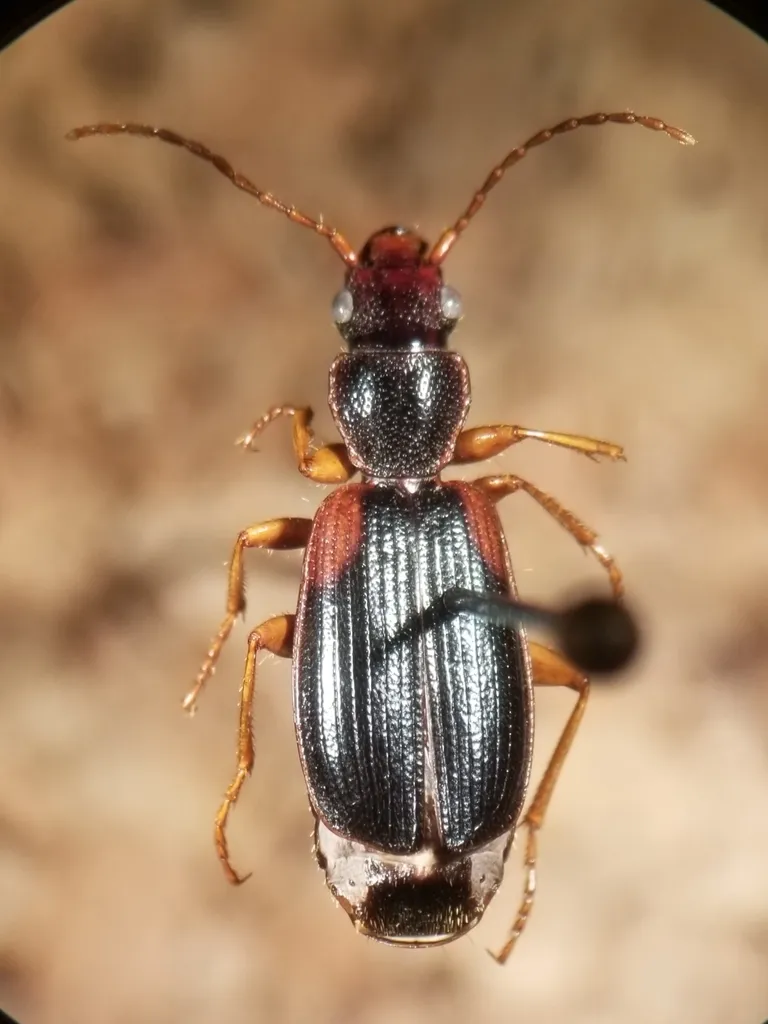
Cymindis borealis
Cymindis borealis
Cymindis borealis is a species of ground beetle in the subfamily Harpalinae. It was described by LeConte in 1863.
Cymindis cf-evanescens
Cymindis cf-evanescens
very thin elytral striae suggest C. evanescens but the latter has no AZ records according to (yet does occur in CA-UT)
Cymindis complanata
Cymindis complanata
Identification: "ferruginous coloration throughout", characters of setae, and male/female genitalia Rare
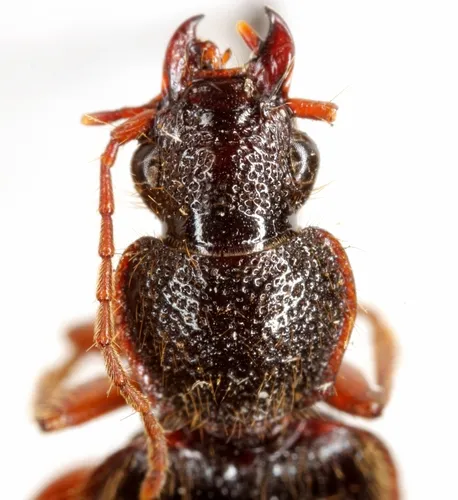
Cymindis laticollis
Cymindis laticollis
Cymindis laticollis is a species of ground beetle in the subfamily Harpalinae. It was described by Say in 1830.
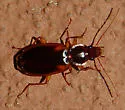
Cymindis limbata
Cymindis limbata
Identification: Pale spot present on elytral humerus (lacking in the similar C. platicollis )
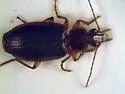
Cymindis platicollis
Cymindis platicollis
a typical element of e. N. Amer. temperate forest. Unlike most carabids inhabiting the temperate and boreal regions, this species lives above the surface of the ground in trees and is usually collected by beating branches. An arboreal way of life is
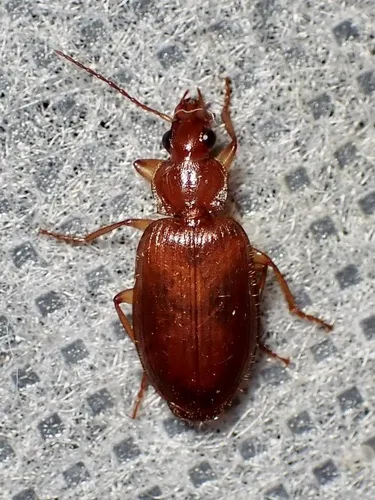
Cymindis punctifera
Cymindis punctifera
Pinacodera punctifera is a species in the beetle family Carabidae. It is found in the United States.
Cymindis vaporariorum
Cymindis vaporariorum
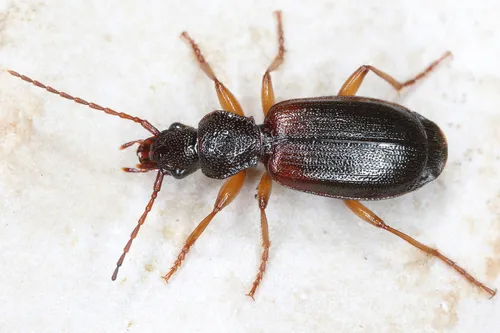
Cymindis vaporariorum is a species of ground beetle in the subfamily Harpalinae. It was described by Carl Linnaeus in 1758.Most adults collected in June and July, but likely are around all summer.
Demetrias atricapillus
Demetrias atricapillus
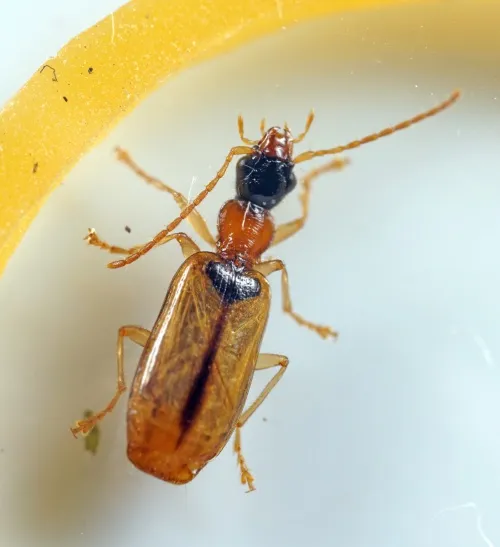
Length: 4.5 to 5.5 mm. Black head, red/orange pronotum and straw-coloured elytra with a dark central stripe that broadens apically. The head is punctured and hairy behind the eyes. Other Demetrias species have more marked elytra. The bi-lobed tarsal