
Western Longwing
Capnobotes occidentalis
This record describes Capnobotes occidentalis (species). Recorded family: Tettigoniidae. Recorded order: Orthoptera.
Identification and Appearance
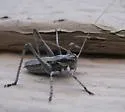
Very similar to Capnobotes fuliginosus , and overlapping distribution widely, but this species ranges further north and not so far southward. In comparison, C. occidentalis is somewhat smaller and more varied in body coloring (gray, brown, yellowish, green, etc.), has hind wings less darkened and more nearly clear. Genitalia differ in details (notably projection of last abdominal segment and cerci are shorter in this species), but rarely visible in photos. Capnobotes bruneri is from the same area where C. occidentalis was first described, and is somewhat similar - but differs in the shape of the pronotum, wing length, length of female ovipositor, and in other proportions and details. It is commonly (always?) much plainer in color pattern. The male's calling song is a continuous but irregular rapid series of separate short pulses, sounding somewhat like a Field Cricket chirping, but less musical.
Classification
- Kingdom
- Animalia
- Phylum
- Arthropoda
- Class
- Insecta
- Order
- Orthoptera (Grasshoppers, Crickets, Katydids)
- Suborder
- Ensifera
- Family
- Tettigoniidae (Katydids)
- Subfamily
- Tettigoniinae
- Genus
- Capnobotes
Imported taxonomy record. Source availability varies; see the source references and editorial policy below.
Habitat and Range
Geographic Range
Primarily in Colorado Plateaus and Great Basin from southern Rockies in w. Colorado and n. New Mexico to mountains of California; westward in southern California to coastal mountains. Apparently absent further south from Chihuahuan, Sonoran, and Colorado Desert regions.
Seasonal Activity
Adults seem most abundant in late spring - early summer, first appearing in June or July, depending upon climate and seasonal weather. Some may survive until first frost of autumn.
About Grasshoppers, Crickets, Katydids: the wider group
Order-level background for Orthoptera, the group containing Capnobotes occidentalis. Species-specific details appear above.
Group overview
Orthoptera includes ~28,000 described species of grasshoppers, crickets, and katydids. Desert locusts can form swarms covering 460 square miles containing up to 80 million individuals per square kilometer.
Ecological role of the group
Grasshoppers and crickets are a primary food source for birds, reptiles, and small mammals. Cricket farming is a growing industry - crickets require 12× less feed than cattle to produce the same amount of protein, using 2,000× less water.
Economic and practical significance of the group
A single large locust swarm can consume the same amount of food in one day as 35,000 people. The 2019-2021 East Africa locust crisis affected food security for 42 million people across multiple countries. Global crop losses from locusts can reach billions annually.
Recorded sources for this group: FAO, UN World Food Programme, research publications. Imported estimates may describe particular regions or reporting periods.
Photos of Western Longwing (5)
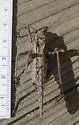
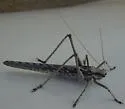
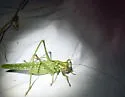
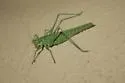
Photo credits: Contributed by Lynette Elliott; Additional contributions by David Ferguson
Frequently Asked Questions About Western Longwing
What is Western Longwing?
Western Longwing (Capnobotes occidentalis) is a species in the family Tettigoniidae, within the order Orthoptera.
How do you identify Western Longwing?
Very similar to Capnobotes fuliginosus , and overlapping distribution widely, but this species ranges further north and not so far southward. In comparison, C. occidentalis is somewhat smaller and more varied in body coloring (gray, brown, yellowish, green, etc.), has hind wings less darkened and more nearly clear. Genitalia differ in details (notably projection of last abdominal segment and cerci are shorter in this species), but rarely visible in photos. Capnobotes bruneri is from the same area where C. occidentalis was first described, and is somewhat similar - but differs in the shape of the pronotum, wing length, length of female ovipositor, and in other proportions and details. It is commonly (always?) much plainer in color pattern. The male's calling song is a continuous but irregular rapid series of separate short pulses, sounding somewhat like a Field Cricket chirping, but less musical.
Where is Western Longwing found?
Range: Primarily in Colorado Plateaus and Great Basin from southern Rockies in w. Colorado and n. New Mexico to mountains of California; westward in southern California to coastal mountains. Apparently absent further south from Chihuahuan, Sonoran, and Colorado Desert regions.
When is Western Longwing active?
Western Longwing: seasonal activity - Adults seem most abundant in late spring - early summer, first appearing in June or July, depending upon climate and seasonal weather. Some may survive until first frost of autumn..