
Broad-tipped Conehead
Neoconocephalus triops
This record describes Neoconocephalus triops (species). Recorded family: Tettigoniidae. Recorded order: Orthoptera.
Identification and Appearance
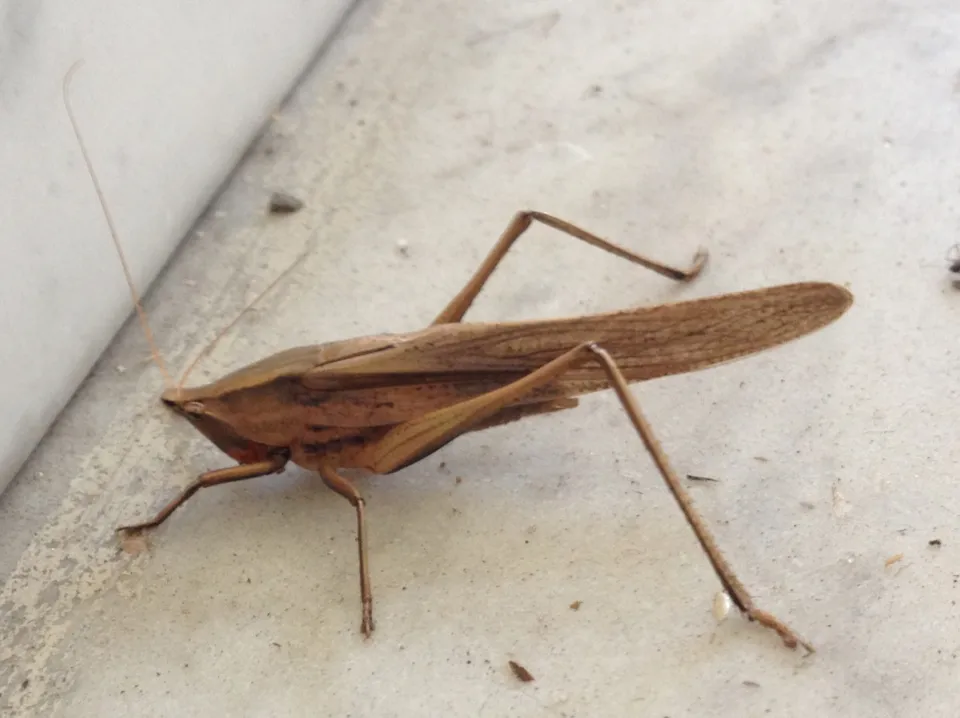
Song is a buzz interrupted at one second intervals, then switches to a continuous buzz. Males call from low bushes or from high intrees. Active earlier in the season than others in the genus. Large conehead, green or brown. Cone wider than long. Length 43-60 mm for males, 51-67 for females. This is measured from head to wingtips, or tip of abdomen, whichever is longest. (Ovipositor is excluded in females.) Round-tipped Conehead, Neoconocephalus retusus , is similar--wings shorter, cone not wider than long. Article: Rearing Neoconocephalus triops with photos of life cycle, moulting, mating, laying eggs, and more.
Wikipedia reference for Neoconocephalus triops: http://en.wikipedia.org/wiki/Neoconocephalus_triops.
Classification
- Kingdom
- Animalia
- Phylum
- Arthropoda
- Class
- Insecta
- Order
- Orthoptera (Grasshoppers, Crickets, Katydids)
- Suborder
- Ensifera
- Family
- Tettigoniidae (Katydids)
- Subfamily
- Conocephalinae
- Tribe
- Copiphorini
- Genus
- Neoconocephalus (Common Coneheads)
Imported taxonomy record. Source availability varies; see the source references and editorial policy below.
Habitat and Range
Habitat
Calling males found in a variety of habitats, including suburban areas. Juveniles and feeding adults occur in open areas with grass. Overwintering adults occur in thickets and forests.
Geographic Range
Southern United States: Long Island south to Florida. Across south to southern California.
Seasonal Activity
Fall, then April-June in northern part of range, most of year farther south. September-May in North Carolina according to Brimley, p. 20 . Males sing March-May in North Carolina (SINA--see Internet references.)
Diet and Behavior
Diet: Herbivores, largely on seeds of grasses. Occasionally eat other insects. In captivity, can be offered potted wheat seedlings, puppy chow (Purina, MO), rolled oats and apples (Beckers & Schul, 2008).
Life History
Females lay eggs in grass stems. Two generations per year in southern part of range, one farther north. Adults overwinter and are found in spring, unlike other members of genus. Males sing February-May and July-August in Florida. Both sexes come to lights.
Additional species information
Species notes from the sources
Etymology: Species name "triops" is Greek, meaning "three eyes". Also a character from Greek mythology, an offspring of the sea-god Poseidon and Kanake. (Based on Internet searches.) This refers to the black spot on the cone, having the appearance of a third eye.
About Grasshoppers, Crickets, Katydids: the wider group
Order-level background for Orthoptera, the group containing Neoconocephalus triops. Species-specific details appear above.
Group overview
Orthoptera includes ~28,000 described species of grasshoppers, crickets, and katydids. Desert locusts can form swarms covering 460 square miles containing up to 80 million individuals per square kilometer.
Ecological role of the group
Grasshoppers and crickets are a primary food source for birds, reptiles, and small mammals. Cricket farming is a growing industry - crickets require 12× less feed than cattle to produce the same amount of protein, using 2,000× less water.
Economic and practical significance of the group
A single large locust swarm can consume the same amount of food in one day as 35,000 people. The 2019-2021 East Africa locust crisis affected food security for 42 million people across multiple countries. Global crop losses from locusts can reach billions annually.
Recorded sources for this group: FAO, UN World Food Programme, research publications. Imported estimates may describe particular regions or reporting periods.
Photos of Broad-tipped Conehead (3)
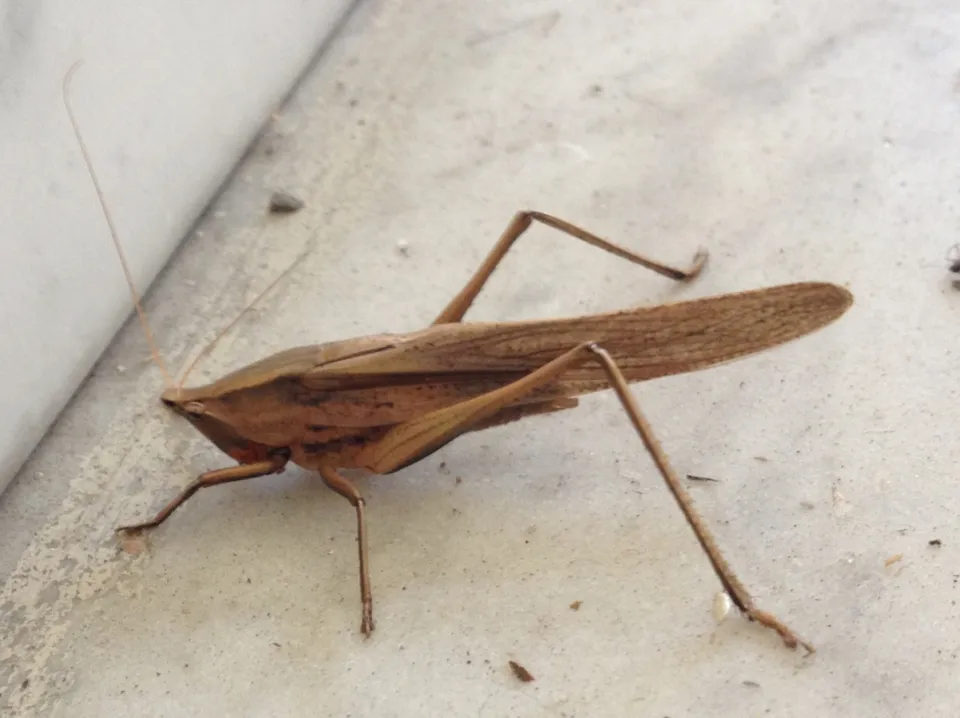
Photo credits: Contributed by Cotinis; Additional contributions by Mike Quinn , dvoribird , Arturo Santos
Frequently Asked Questions About Broad-tipped Conehead
What is Broad-tipped Conehead?
Broad-tipped Conehead (Neoconocephalus triops) is a species in the family Tettigoniidae, within the order Orthoptera.
How big is Broad-tipped Conehead?
Head to tip of folded wings: 43-60 mm (male), 51-67 mm (female), body length circa 32 mm.
How do you identify Broad-tipped Conehead?
Song is a buzz interrupted at one second intervals, then switches to a continuous buzz. Males call from low bushes or from high intrees. Active earlier in the season than others in the genus. Large conehead, green or brown. Cone wider than long. Length 43-60 mm for males, 51-67 for females. This is measured from head to wingtips, or tip of abdomen, whichever is longest. (Ovipositor is excluded in females.) Round-tipped Conehead, Neoconocephalus retusus , is similar--wings shorter, cone not wider than long.
Where is Broad-tipped Conehead found?
| Feature | Details |
|---|---|
| Habitat | Calling males found in a variety of habitats, including suburban areas. Juveniles and feeding adults occur in open areas with grass. Overwintering adults occur in thickets and forests. |
| Range | Southern United States: Long Island south to Florida. Across south to southern California. |
What does Broad-tipped Conehead eat?
The diet of the Broad-tipped Conehead includes Herbivores, largely on seeds of grasses. Occasionally eat other insects. In captivity, can be offered potted wheat seedlings, puppy chow (Purina, MO), rolled oats and apples (Beckers & Schul, 2008)..
When is Broad-tipped Conehead active?
Broad-tipped Conehead: seasonal activity - Fall, then April-June in northern part of range, most of year farther south. September-May in North Carolina according to Brimley, p. 20 . Males sing March-May in North Carolina (SINA--see Internet references.).
What is the life cycle of a Broad-tipped Conehead?
Females lay eggs in grass stems. Two generations per year in southern part of range, one farther north. Adults overwinter and are found in spring, unlike other members of genus. Males sing February-May and July-August in Florida. Both sexes come to lights.