
Family Pyralid Snout Moths (Pyralidae)
Pyralidae is a family in the order Lepidoptera. Browse 523 named species recorded in this family, or open an individual profile for its available identification and natural-history information.
Species in Pyralidae (523)
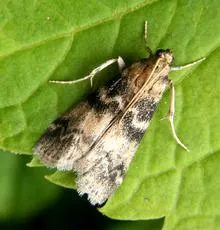
Euzophera pinguis
Euzophera pinguis
Wingspan 23-28 mm. The diagnostic zigzag lines and bands of dark and pale colour make this species easy to identify. The adults are on the wing in July and August and are attracted to light after dark. The larvae burrow into the bark of Ash trees and
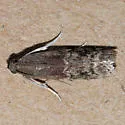
American Plum Borer - Hodges#5995
Euzophera semifuneralis
Identification: Adult: forewing reddish-brown to AM line, which is almost halfway along wing; AM and PM lines white, zigzag, enclosing a large mottled blackish patch that begins at the costa but usually stops short of the inner margin; dark shading i
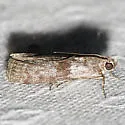
Fundella argentina - Hodges#5726
Fundella argentina
Determined by Bob Patterson. Type locality Argentina. It may be an introduced species.
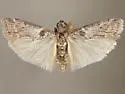
Fundella ignobilis - Hodges#5726.1
Fundella ignobilis
Identification: Wing pattern is variable. Best distinguished by genitalia, see Heinrich (1945) and Heinrich (1956). Genitalia:
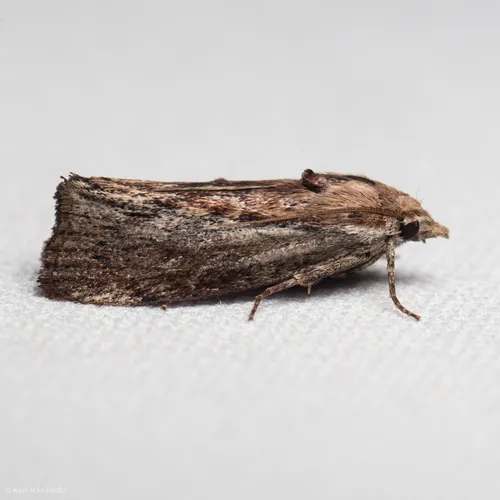
Wax Moth
Galleria mellonella
Wingspan 29 to 40 mm. The males of this species have a distinctively concave outer edge to the forewing; the females are generally plainer in appearance with a less concave edge. Flying between June and October, the adults can be attracted to light.
Glyphocystis viridivallis - Hodges#5765
Glyphocystis viridivallis
Identification: Blanchard original description is in PDF. Close to Catastia but with "considerable differences in the female genitalia"
Heliades mulleolella - Hodges#5574
Heliades mulleolella
Identification: The original description as Pempelia mulleolella Hulst, is available online in the print references. Thanks to James Hayden , Curator, Florida State Collection of Arthropods, who corrected the identification of this group. Please see
Homoeosoma albescentella - Hodges#5941
Homoeosoma albescentella
Identification: Description can be found in MONA Fascicle 15-4 at link in citations below.
Homoeosoma deceptorium - Hodges#5944
Homoeosoma deceptorium
Homoeosoma eremophasma has an identical COI barcode to H. deceptorium .
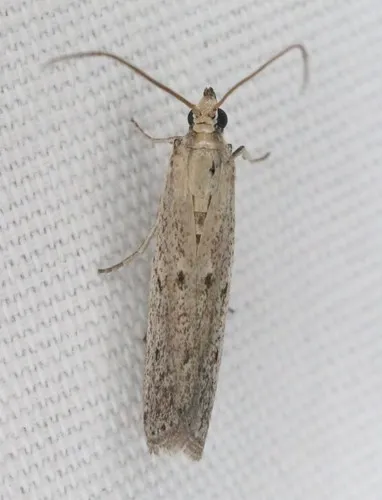
American Sunflower Moth
Homoeosoma electella
Homoeosoma electellum, the American sunflower moth, is a species of moth of the family Pyralidae. It is native to North America but also found in South America.
Sunflower moth - Hodges#5935
Homoeosoma electellum
Identification: Powell & Opler (2009) ( 3 ) reported two color phases in both sexes. Gray with a white subcostal streak. Tan with or without the subcostal streak. Specimen identified by DNA analysis (BOLD). ( 4 ) Heinrich (1921) description of larva
Homoeosoma illuviella - Hodges#5939
Homoeosoma illuviella
Identification: The revised description by Heinrich (1956), is available online in the print references below.
Homoeosoma impressalis - Hodges#5942
Homoeosoma impressalis
Identification: Hulst original description and the Heinrich revised description are both available online in the print references.
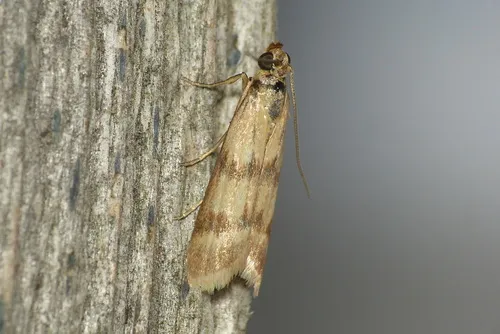
Homoeosoma sinuella
Homoeosoma sinuella
Wingspan 18-23 mm. Fairly distinctive with its yellowish ground colour and darker banding, it is one of the easier species to identify in its group. This species lives in open habitat on dry soils on old dunes, limestone and chalk grassland, waste gr
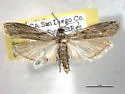
Homoeosoma striatellum - Hodges#5937
Homoeosoma striatellum
Identification: Dyar original description online or in PDF. Specimen determined by DNA analysis (BOLD).
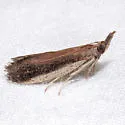
Homosassa ella - Hodges#6068
Homosassa ella
Identification: Homosassa ella is the only member of the genus missing the forewing vein M2.
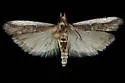
Honora dotella - Hodges#5922
Honora dotella
Identification: Dyar original description and the Heinrich descriptions are online in the print references. Powell & Opler described the basal area of the forewing as rust red. Specimen determined by DNA analysis (BOLD).
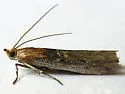
Honora mellinella - Hodges#5919
Honora mellinella
Identification: Adult : FW blackish-fuscous. Head and thorax faded ocherous. Interior line white, not continued to costa. Yellow shade-spot below, near inner margin. Two separate, very small, dark, distal dots. Exterior line near the margin, even, n
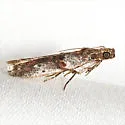
Hypargyria slossonella - Hodges#5711
Hypargyria slossonella
Identification: The original description as Salebria slossonella Hulst, is available online. (link in the print preferences below). - Determined by Brian Scholtens. Genitalia:
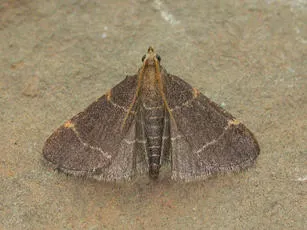
Hypsopygia glaucinalis
Hypsopygia glaucinalis
Wingspan 23-30 mm. A mid brown coloured moth with two pale lines running across the wings. It frequents sheds and farm buildings, gardens, hay-stacks, thatched roofs and bird nests. On the wing in July and August, when it comes to light. The larvae f
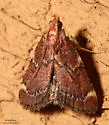
Red-shawled Moth - Hodges#5526
Hypsopygia intermedialis
Identification: Adult: forewing dark brownish-red; AM and PM lines black, bordered with pale yellow; no discal spot; AM line zigzagged; PM line slightly jagged, curving inward near costa to terminate in a pale yellow crescent hindwing light brownish-
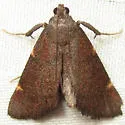
Undescribed Hypsopygia - Hodges#5533.85
Hypsopygia new-species
Identification: Much darker than H. olinalis and lacking the yellow fringe, with the yellow markings on the forewings reduced.
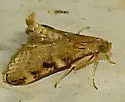
Hypsopygia newspecies - Hodges#5533.86
Hypsopygia new-species-two
Identification: "This I [is] the nicest specimen I have seen of a moth first discovered by Mike Rickard in 2015 [2012] at Santa Ana NWR. It is a species of Hypsopygia according to Alma Solis probably undescribed.” - Ed Knudson, pers. comm., 2018. Ful
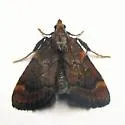
Hypsopygia phoezalis - Hodges#5527
Hypsopygia phoezalis
Dolichomia, Herculia, Cisse, Buzala, Ocrasa, Bejuda, Pseudasopia, and Orthopygia were synonymized with Hypsopygia in Leraut (2006a) .
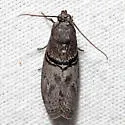
Immyrla nigrovittella - Hodges#5766
Immyrla nigrovittella
Identification: Dyar (1906) original description online. 108 Engel (1909) reported the species is not often attracted to lights.
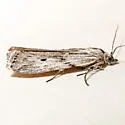
Interjectio denticulella - Hodges#5755
Interjectio denticulella
Identification: Forewing white with thin, black longitudinal streaks and conspicuous, narrow, triangular black spot just before the AM line. Some specimens exhibit only weakly formed dark marks on forewings; some are dark overall with usual white gro
Interjectio niviella - Hodges#5758
Interjectio niviella
Identification: The Heinrich revised description is available in PDF or view online in the print references below.
Scale-feeding Snout Moth - Hodges#5949
Laetilia coccidivora
Uses carminic acid acquired from its food as a defense against predators (Eisner et. al., 1994)
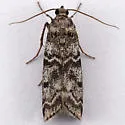
Laetilia zamacrella - Hodges#5950
Laetilia zamacrella
Identification: Description notes adapted from Heinrich. Forewing has small area of black at base. The white antemedial line is slightly indented at fold, and bordered on both sides with blackish brown. The discal spot is black. The white subterminal
Theresian Moth
Lamoria anella
Lamoria anella is a species of snout moth described by Michael Denis and Ignaz Schiffermüller in 1775. It is found in most of Europe (except Ireland, Great Britain, Fennoscandia, Denmark, the Baltic region and Slovenia), the Canary Islands, as well a
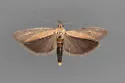
Lipographis unicolor - Hodges#5888.1
Lipographis unicolor
Described from seven males and two females collected one night 31 July, 2011 in recently burned pine forest in Gila National Forest, Catron County, NM
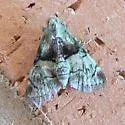
Macalla glastianalis - Hodges#5576.1
Macalla glastianalis
Macalla glastianalis was listed as Incertae sedis in Solis. It requires a new genus, inclusion of several Neotropical species, and description of new species. It was first collected by A. Blanchard in Texas in the early 1970’s (MAS unpub.) .
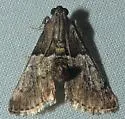
Zeller's Macalla - Hodges#5579
Macalla zelleri
Identification: Adult : Head/thorax has low longitudinal "crest" of raised brown scales in two parallel rows; forewing basally dark brownish-gray; black AM line nearly perpendicular to costal and inner margins, wavy, with sharply contrasting white o
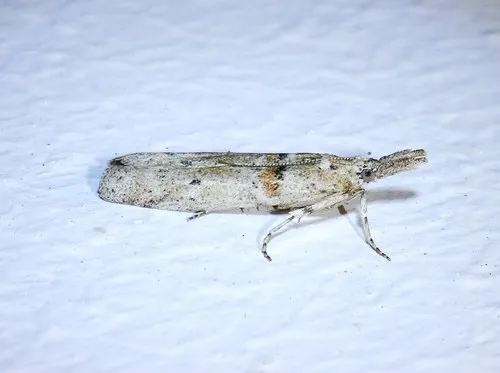
Macrorrhinia aureofasciella - Hodges#5912
Macrorrhinia aureofasciella
Identification: The Heinrich 1956 revised description and the Hulst 1890 description as Dolichorrhina aureofasciella (Ragonot) are both available online in the print references below. , Orange band is sometimes absent. Photo determined by Brian Schol
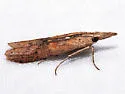
Alligatorweed Stemborer - Hodges#5913
Macrorrhinia endonephele
First introduced to the United States in 1971 as a possible biological control of the accidentally introduced pest alligatorweed, Alternanthera philoxeroides (Amaranthaceae). ( 4 )
Martia arizonella - Hodges#5903
Martia arizonella
Identification: Shaffer (1968) revised description is in PDF. ( 3 )
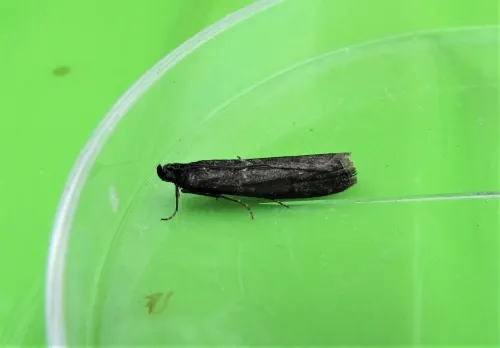
Matilella fusca
Matilella fusca
Wingspan around 26 mm with a dull brownish colouration. Unless identified by a recognised expert, a photo is required. If the photo doesn't show the key ID features then in the comments box describe the size and identifying characters you have observ
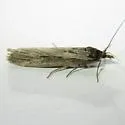
Megasis edwardsialis - Hodges#5865
Megasis edwardsialis
Identification: The original description as Megaphysis edwardsialis Hulst, and the Heinrich revised description of Sarata edwardsialis (Hulst) are both available online in the print references below. Determined by Brian Scholtens , “I dissected and c
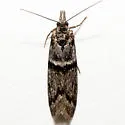
Megasis iota - Hodges#5879
Megasis iota
Identification: Genitalia: Sarata iota Heinrich, 1956, excluded from Neunzig (2003), is treated as "valid unassociated female" in the 1983 Hodges checklist and in Scholtens & Solis (2015), ZooKeys. 535: 1-136.
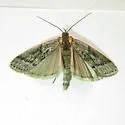
Megasis nigrifasciella - Hodges#5872
Megasis nigrifasciella
Identification: The Heinrich 1956 revised description of Sarata nigrifasciella Ragonot, is available online in the print references below. ID confirmed by Brian Scholtens
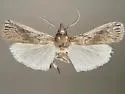
Melitara apicigrammella - Hodges#5971.3
Melitara apicigrammella
Identification: The only Melitara with short black longitudinal lines in the terminal area of the forewing. The other species have black dots in the terminal area.
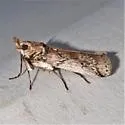
Melitara doddalis - Hodges# 5971.1
Melitara doddalis
Identification: "Melitara doddalis adults have extensive dark-brown or black suffusions in the posterior half of the fore wing (plate 3, figure 16), and the black line associ ated with the antemedial line is missing, or weakly formed." Genitalia: ♀ ♂
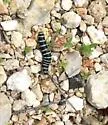
Melitara junctolineella - Hodges#5972
Melitara junctolineella
Identification: Among the largest of the Phycitini, may be mistaken for a noctuid. Genitalia:
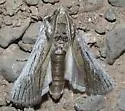
Melitara subumbrella - Hodges#5973
Melitara subumbrella
Identification: Larvae are white with pale purple cross-bands.
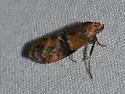
Poplar Bud Borer Moth - Hodges#5786
Meroptera cviatella
Identification: Adult : Basal area, the costa and the inner margin of the FW are broadly bright reddish brown, while the center beyond the base is purplish gray. Mark Dreiling's DNA Specimen
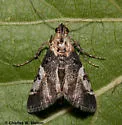
Milgithea alboplagialis - Hodges#5581
Milgithea alboplagialis
Identification: Dyar original description as Cacozelia alboplagialis is available in PDF. Reported on the Moths of Southeastern Arizona website as Cacozelia alboplagialis . (no photo).
Darker Moodna Moth - Hodges#6005
Moodna ostrinella
Identification: See comments on images--differentiate from other members of this genus.
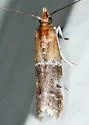
Paler Moodna Moth - Hodges#6005.1
Moodna pallidostrinella
Paler Moodna Moth - Hodges#6005.1 (Moodna pallidostrinella) is a species in the family Pyralidae, commonly known as pyralid moths, belonging to the order Lepidoptera (Butterflies and Moths). It is classified within the subfamily Phycitinae, tribe Phy
Moodnodes plorella - Hodges#6074.1
Moodnodes plorella
Identification: Similar in appearance and size to species of Ephestiodes and Australephestiodes . Dark, broad outer band of forewing AM line is distinctive.
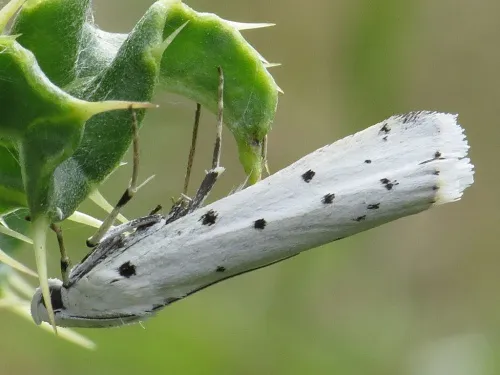
Thistle Ermine
Myelois circumvoluta
Wingspan 27-33 mm. This is a very distinctive moth, rather reminiscent of a larger version of the Yponomeutidae family. Found in habitats where the foodplants (Thistles) grow. Flying in June and July, the adults can be attracted to light. As the name
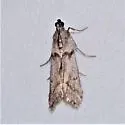
Myelopsis alatella - Hodges#5720
Myelopsis alatella
Identification: A fairly large (8 - 13.5 mm) pale Phycitine with an overall silvery gray or pale buffy gray aspect and strongly oblique AM and PM lines on the forewings. Distinguished from the very similar congener Myelopsis minutulella by the lack
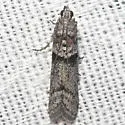
Myelopsis minutulella - Hodges#5719
Myelopsis minutulella
Identification: A fairly large (9 - 11 mm) Phycitine with an overall silvery gray aspect and oblique AM and PM lines on the forewings. Distinguished by the presence of small buffy patches at the inner base of the forewings; the very similar congener
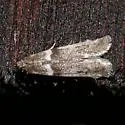
Myelopsis subtetricella - Hodges#5718
Myelopsis subtetricella
Identification: Original description: "19 - 22 mm. Fore wings elongate, oval, very narrow at base, strongly rounded on costa, dark gray, much suffused with brownish, glossy, first line broad, oblique, straight, gray, indistinct, edged outwardly by a
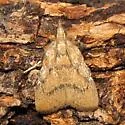
Negalasa fumalis - Hodges#5551
Negalasa fumalis
Identification: Barnes & McDunnough (1913) description stated. ♂ "Palpi, head and thorax pale ochraceous; tufts on legs smoky brown, primaries, pale to deep ochraceous, slightly sprinkled with smoky scales and shaded with smoky along costa, crossed b
Olybria furciferella - Hodges#5769
Olybria furciferella
Identification: The winter season Pima County, Arizona photos in this guide were tentatively identified as Olybria furciferella by Brian G. Scholtens . He stated these could be another species possibly something undescribed.
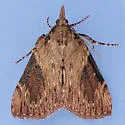
Omphalocera cariosa - Hodges#5625
Omphalocera cariosa
Omphalocera cariosa has dimorphic larvae. "Adults look very much the same but the caterpillars that feed on Agarita in the spring look a little different than those that feed on Snailseed in the fall. Wagner thinks there are probably two different sp
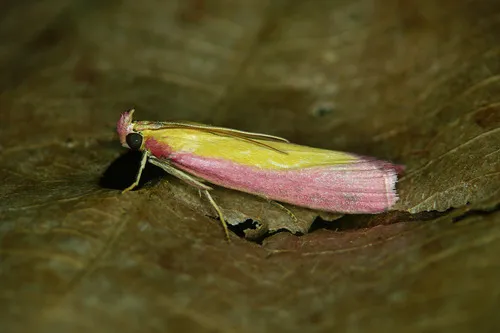
Oncocera semirubella
Oncocera semirubella
Wingspan 17 to 29 mm. A beautifully coloured little moth, with pink and yellow forewings, sometimes exhibiting a whitish stripe along the leading edge of the forewing. Unless identified by a recognised expert, a photo is required. If the photo doesn'
Oreana unicolorella - Hodges#5767
Oreana unicolorella
Identification: Specimens identified by DNA analysis: Genitalia: ♀ ♂ This species is represented on BOLD by a pair of closely related BINs with about 3% sequence divergence, indicating that there is an undescribed cryptic species in this genus.
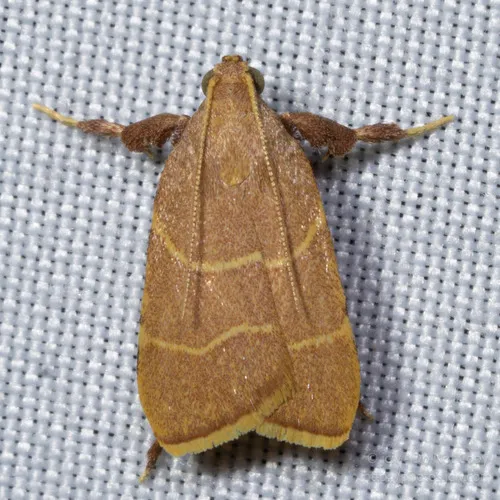
Parachma Moth - Hodges#5538
Parachma ochracealis
Identification: Adult: forewing variably yellowish-brown, reddish-brown, yellowish-gray, or grayish-brown, slightly flared near base, giving "shouldered" appearance; AM and PM lines pale yellow, almost straight; terminal line dark reddish-brown; frin
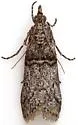
Passadena flavidorsella - Hodges#5899
Passadena flavidorsella
Identification: Detailed description can be found in MONA Fascicle 15-5 at link in citations below.
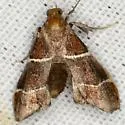
Penthesilea difficilis - Hodges#5554
Penthesilea difficilis
Identification: Original description of Tetraschistis leucogramma Hampson is online at the link in the print references below.
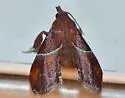
Penthesilea sacculalis - Hodges#5555
Penthesilea sacculalis
Identification: Ragonot (1890) original description of Penthesilea sacculalis is available online and linked in the print references.
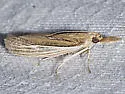
Peoria floridella - Hodges#6046
Peoria floridella
Peoria floridella - Hodges#6046 (Peoria floridella) is a species in the family Pyralidae, commonly known as pyralid moths, belonging to the order Lepidoptera (Butterflies and Moths). It is classified within the subfamily Phycitinae, tribe Peoriini, s
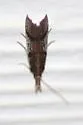
Long-palps Peoria - Hodges#6042
Peoria longipalpella
Identification: Adult: forewing brownish-gray with dark diffuse diagonal markings in AM and PM areas; AM marking angles slightly toward base from inner margin to costa, whereas PM marking angles slightly toward apex from inner margin to costa; upper
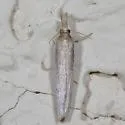
Peoria opacella - Hodges#6045
Peoria opacella
Identification: The original description as Anerastia opacella Hulst is available online in the print references below. Adult: Head and thorax fuscous brown Forewing inner margin half is blackish-gray Forewing costal half is lighter near white and d
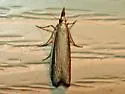
Peoria tetradella - Hodges#6044
Peoria tetradella
Identification: Adult: forewing light brownish-gray with speckled whitish strip along length of costa; strip has 3 or 4 dark diagonal streaks in distal half; cubital vein (in center of wing) covered with white scales; other veins in distal half of wi
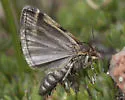
Philodema rhoiella - Hodges#5885
Philodema rhoiella
Identification: See original description in print references below.
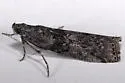
Phobus funerella - Hodges#5815
Phobus funerella
Identification: The Heinrich revised description is available in PDF and online in the print references below. Hindwing is brownish gray. Specimens identified by DNA analysis (BOLD). Genitalia:
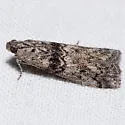
Phobus incertus - Hodges#5817
Phobus incertus
Phobus incertus - Hodges#5817 (Phobus incertus) is a species in the family Pyralidae, commonly known as pyralid moths, belonging to the order Lepidoptera (Butterflies and Moths). It is classified within the subfamily Phycitinae, tribe Phycitini, supe
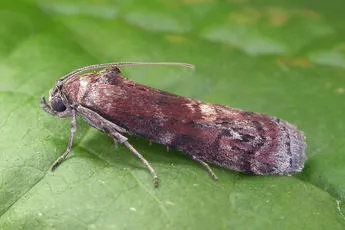
Phycita roborella
Phycita roborella
Wingspan 24 to 29 mm. The adults of this quite attractive species have a subtle pattern of red, black and grey on the upper wings. Various especially in well wooded areas containing Oak. The single generation is on the wing in July and August, when i
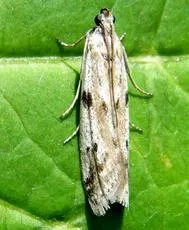
Phycitodes binaevella
Phycitodes binaevella
Wingspan 22-27 mm. The easiest of the three British species of Phycitodes to identify; it is the largest and has large blackish dots on a paler ground colour. The resting posture where the wings are rolled tightly around the body is common to the gro
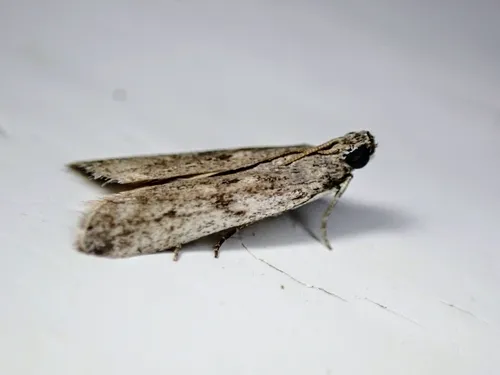
Phycitodes mucidella - Hodges#5946
Phycitodes mucidella
Identification: "Smooth, obscure cinereous, thickly dusted with white on costal half. Lines obsolete, the inner represented by three black dots, the upper and lower of which are very small, the middle one more outwardly placed; outer line indicated b
Phycitodes reliquellum - Hodges#5946.2
Phycitodes reliquellum
Identification: "Smooth, obscure cinereous, thickly dusted with white on costal half. Lines obsolete, the inner represented by three black dots, the upper and lower of which are very small, the middle one more outwardly placed; outer line indicated b
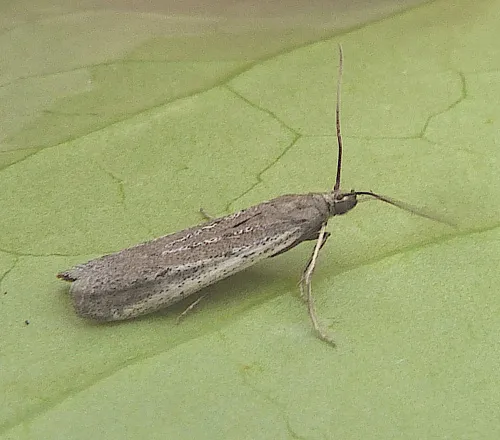
Phycitodes saxicola
Phycitodes saxicola
Wingspan about 17mm. Part of a complex of three very similar species occurring in Britain, this is generally the smallest. To be certain of the identification of adults, reference to the genitalic structure is advised. P. saxicola feeds on various ot
White-edged Pima Moth - Hodges#5747
Pima albiplagiatella
Identification: The original Packard description as Myelois albiplagiatella , and the Heinrich revised description of Pima albiplagiatella are both available online in the print references.
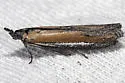
Pima occidentalis - Hodges#5747.1
Pima occidentalis
Identification: Specimen identified by DNA analysis (BOLD). ( 3 )
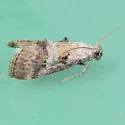
Pococera baptisiella - Hodges#5619
Pococera baptisiella
Identification: The Fernald (1887) and Hulst (1889) descriptions are available in the print references below.

Pococera callipeplella - Hodges# 5599
Pococera callipeplella
Identification: Quoted from Hulst, 1888: " Tetralopha callipeplella , n. sp. Expands 16 mm. Palp, head, antennae, and thorax uneven fuscus gray; forewings gray, rather strongly overlaid with blackish, more especially on the basal field; extreme base
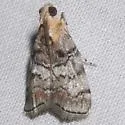
Mesquite Leaf Tier - Hodges#5620
Pococera euphemella
Identification: Species page created based on this image determined by Ed Knudson, Texas Lepidoptera Survey, Houston:
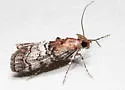
Pococera maritimalis - Hodges#5603
Pococera maritimalis
Identification: Specimen determined by DNA (BOLD) ( 4 )
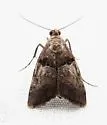
Pine Webworm - Hodges#5595
Pococera robustella
Natural enemies keep them from being a serious pest under normal circumstances, with the damage being mostly cosmetic- though they can completely strip the needles from smaller seedlings.
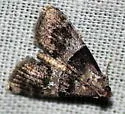
White-aproned Pococera Moth - Hodges#5596
Pococera scortealis
Identification: Specimen identified by DNA analysis:
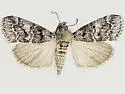
Pococera tiltella - Hodges#5616
Pococera tiltella
Identification: W[anda] tiltella , n. sp. Expands 20 mm, Head, thorax and fore wings gray, peppered over with black scales, giving a general blackish gray color; basal space somewhat darker than the rest of the fore wings; at the middle of basal fiel
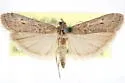
Protasia mirabilicornella - Hodges#5993.1
Protasia mirabilicornella
The identified specimens on BOLD yielded only partial barcodes; a specimen from the Los Angeles area may also represent this species. If so, Protasia is likely a junior synonym of Eumysia ; refer to remarks here .
Protasia nr. mirabilicornella
Protasia nr-mirabilicornella
These specimens may represent an undescribed species near Protasia mirabilicornella , which was described from San Diego. The pinned specimens shown here are misidentified on BOLD as Eumysia fuscatella , which they do not closely resemble in maculati
Pseudocabima arizonensis - Hodges#5994.2
Pseudocabima arizonensis
Identification: Male genitalia as for genus , female genitalia distinguished by signa (Heinrich, 1956)
Appleleaf Skeletonizer - Hodges#5931
Psorosina hammondi
Identification: "♂ differs from ♀ in the basal portion of the antennae being curved, and the curve filled with a tuft of scales."
Pyla aequivoca - Hodges#5824
Pyla aequivoca
Identification: Original description online: (143) - Determined Chuck Harp.
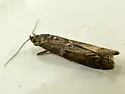
Pyla fusca - Hodges#5829
Pyla fusca
Identification: head and eyes very dark or black forewings long and slender, black with scattered pale speckling; two zigzag bands (sometimes indistinct) cross each wing, the inner edge of the basal band forms a whitish patch in the midline when the
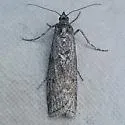
Pyla impostor - Hodges#5823
Pyla impostor
Identification: The original description is available in PDF or view online in the print references below.
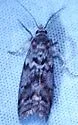
Pyla insinuatrix - Hodges#5826
Pyla insinuatrix
Identification: The most clearly marked species of all the gray Pyla with strong contrast between the pale and dark areas of the forewings.
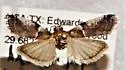
Quasisalebria fructella - Hodges#5777
Quasisalebria fructetella
Identification: Genitalia: Ann Hendrickson, July 6, 2024 While DNA shows that this species can be found in Texas, I believe it to be uncommon. Although I see quite a few in the Genus, this is the only specimen that has tested Q. fructella .
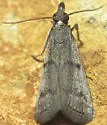
Reynosa floscella - Hodges#6072
Reynosa floscella
Identification: Determined by Ed Knudson (Texas Lepidoptera Survey)
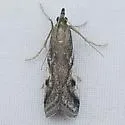
Rhagea packardella - Hodges#5966
Rhagea packardella
Identification: Description can be found in MONA Fascicle 15-4 at link in citations below.
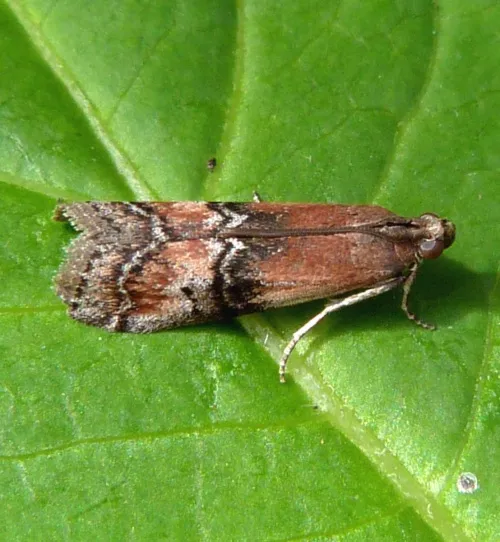
Rhodophaea formosa
Rhodophaea formosa
Wingspan 20 to 23mm. An attractive red, grey and black species. Rather secretive in habits. It is not often encountered by day but can be attracted to light at night. The adults are on the wing from June until August. The larvae feed in a slight web
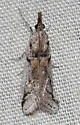
Rostrolaetilia texanella - Hodges#5962
Rostrolaetilia texanella
Identification: The original description is available in PDF. ( 3 )
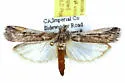
Rumatha bihinda - Hodges#5979
Rumatha bihinda
Identification: Dyar original description as Zophodia bihinda is online in the print references. Heinrich and Heinrich descriptions of the adult, including genitalia, are both in PDF. Specimen determined by DNA analysis (BOLD).
Rumatha glaucatella - Hodges#5978
Rumatha glaucatella
Identification: From MONA Fascicle 15.4 - "...mostly white and rather small (wing length 7.0-9.0 mm)."
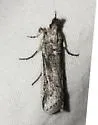
Rumatha jacumba - Hodges#5979.1
Rumatha jacumba
Identification: Description can be found in MONA Fascicle 15-4 at link in citations below.
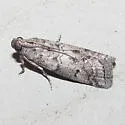
Salebriaria ademptandella - Hodges#5770.1
Salebriaria ademptandella
Identification: Determined by Ed Knudson (Texas Lepidoptera Survey) Genitalia: