
Protasia nr. mirabilicornella
Protasia nr-mirabilicornella
This record describes Protasia nr-mirabilicornella (species). Recorded family: Pyralidae. Recorded order: Lepidoptera.
Identification and Appearance
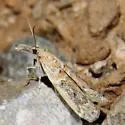
These specimens may represent an undescribed species near Protasia mirabilicornella , which was described from San Diego. The pinned specimens shown here are misidentified on BOLD as Eumysia fuscatella , which they do not closely resemble in maculation; unfortunately, none have been barcoded. Two of the P. mirabilicornella on BOLD have partial sequences. One, from a paratype, is only 31.5% complete. The other , from a female collected in the Channel Islands off of Los Angeles, is 69.6% complete; its closest match, at 99.3%, is to a specimen from the Los Angeles area with a 95.9% complete sequence. The latter specimen is identified on BOLD as Eumysia sp., and the upper surfaces of its forewings are completely obscured, so it may be a Protasia . The next closest matches to the Channel Islands Protasia , ranging from 97.36% to 96.04%, are to five specimens identified as three Eumysia species; the remainder of the top 100 nearest sequences range from 94.71% to 95.51% alignment and are of various Phycitinae, including Macrorrhinia and Davara . The Los Angeles Eumysia nested within the rest of Eumysia in a phylogenetic tree of the genus generated through BOLD, suggesting the two genera should be synonymized unless there is substantial divergence between the two specimens within the missing portion of the sequence of the Protasia .
Classification
- Kingdom
- Animalia
- Phylum
- Arthropoda
- Class
- Insecta
- Order
- Lepidoptera (Butterflies and Moths)
- Superfamily
- Pyraloidea
- Family
- Pyralidae (Pyralid Moths)
- Subfamily
- Phycitinae
- Tribe
- Phycitini
- Genus
- Protasia
Imported taxonomy record. Source availability varies; see the source references and editorial policy below.
About Butterflies and Moths: the wider group
Order-level background for Lepidoptera, the group containing Protasia nr-mirabilicornella. Species-specific details appear above.
Group overview
Lepidoptera includes approximately 180,000 described species of butterflies and moths. Moths outnumber butterflies roughly 10:1. The monarch butterfly's eastern population has declined by more than 80% since the mid-1990s, and the western population by over 95% since the 1980s. The IUCN lists the migratory monarch as Vulnerable.
Ecological role of the group
Butterflies and moths are essential indicators of ecosystem health. As caterpillars, they are a primary food source for birds - a single nest of blue tit chicks requires ~10,000 caterpillars. Adult moths pollinate many night-blooming plants.
Economic and practical significance of the group
Lepidoptera are critical pollinators. In Europe, grassland butterfly species have declined by almost 50% since the early 1990s. In the UK, three-quarters of butterflies are in decline. In the U.S., five butterfly species have gone extinct since 1950, with 29 listed as endangered.
Recorded sources for this group: IUCN Red List, Xerces Society, USFWS, PNAS, WWF. Imported estimates may describe particular regions or reporting periods.
Photos of Protasia nr. mirabilicornella (5)
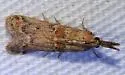
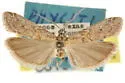
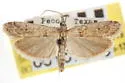
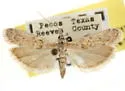
Photo credits: Contributed by Aaron Hunt