
Myrmica sabuleti
This record describes Myrmica sabuleti (species). Recorded family: Formicidae. Recorded order: Hymenoptera.
Identification and Appearance
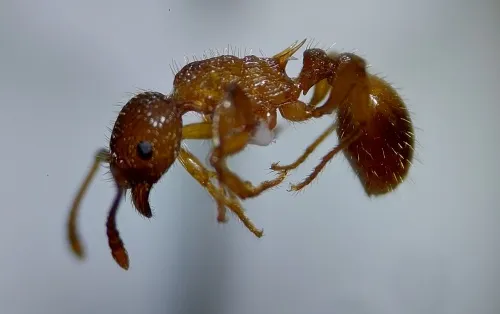
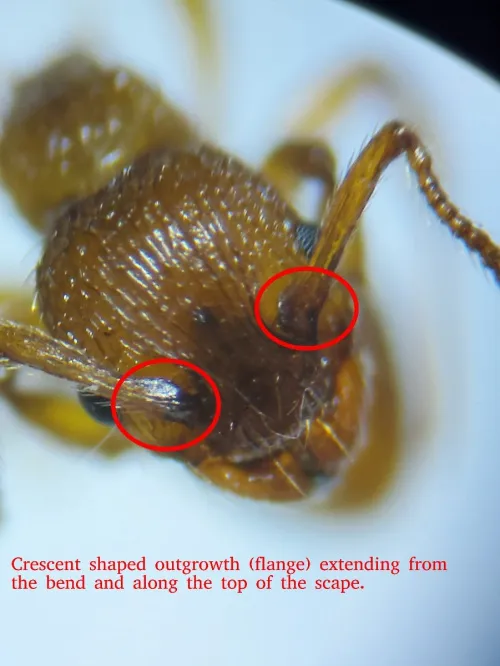
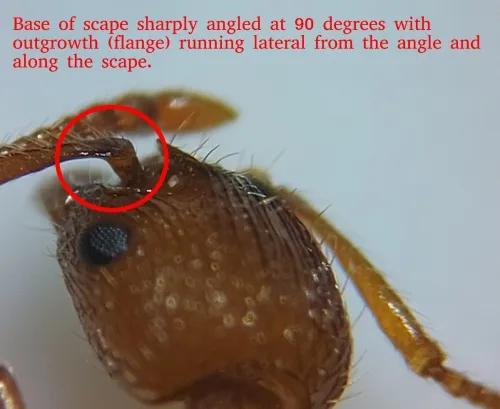
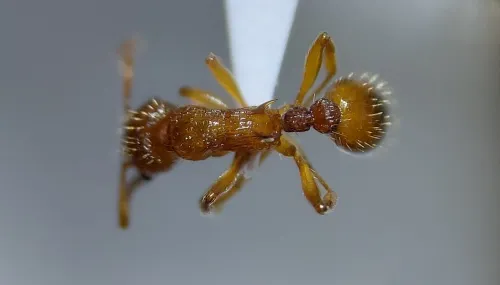
Myrmica sabuleti is another reddish brown ant similar to other Myrmica species. Adult workers are typically 4 to 5 mm in length. Generally they are characterised by quite narrow frons and a well-developed lobe at the scape base. Can be confused with a number of other Myrmica species but most notably Myrmica scabrinodis Antennal scapes are sharply angulate with a longitudinal keel running forward from the bend and a more or less massive lateral extension. / The petiole node is more rounded and usually less truncate than in Myrmica scabrinodis and the epinotal spines are relatively longer but these features cannot be relied upon. Unless identified by a recognised expert, a photo is required and the specimen should be examined with a microscope. In the comments box, state the key or ID method used and describe the size and identifying characters. This species has a distinct preference for open warm and dry habitats such as chalk downs, open sandy heaths and coastal dunes. Nests are usually under stones and seldom in tree stumps. Mating flights typically occur in August and September. Adult workers can be found from early spring through to autumn. Myrmica sabuleti will eat small invertebrates either caught alive or found dead and also tends aphids for honey dew. They are attracted to sugary food such as damaged fruit. This species is the host of the caterpillar of the Large Blue Butterfly. The butterfly caterpillars feed on ant grubs inside the nest of the ants. Locally fairly common with most records from southern England, but it is also found in suitable habitats in Wales, Ireland and Scotland. This species is not regarded as scarce or threatened.
Classification
- Kingdom
- Animalia
- Phylum
- Arthropoda
- Class
- Insecta
- Order
- Hymenoptera
- Family
- Formicidae
- Genus
- Myrmica
Imported taxonomy record. Source availability varies; see the source references and editorial policy below.
Habitat and Range
Habitat
This species has a distinct preference for open warm and dry habitats such as chalk downs, open sandy heaths and coastal dunes. Nests are usually under stones and seldom in tree stumps.
Seasonal Activity
Mating flights typically occur in August and September. Adult workers can be found from early spring through to autumn.
Diet and Behavior
Life History
Myrmica sabuleti will eat small invertebrates either caught alive or found dead and also tends aphids for honey dew. They are attracted to sugary food such as damaged fruit. This species is the host of the caterpillar of the Large Blue Butterfly. The butterfly caterpillars feed on ant grubs inside the nest of the ants.
Additional species information
Recorded status
Locally fairly common with most records from southern England, but it is also found in suitable habitats in Wales, Ireland and Scotland. This species is not regarded as scarce or threatened.
About Flies: the wider group
Order-level background for Hymenoptera, the group containing Myrmica sabuleti. Species-specific details appear above.
Group overview
Hymenoptera includes over 150,000 described species of ants, bees, wasps, and sawflies. Earth harbors approximately 20 quadrillion (20×10^15) ants, with a combined biomass of ~12 megatons of dry carbon - exceeding the combined biomass of all wild birds and mammals (PNAS, 2022).
Ecological role of the group
About 35% of the world's food crops depend on animal pollinators. The chocolate industry, valued at over $100 billion, depends on pollinating flies and midges. Ants are the dominant soil engineers in most terrestrial ecosystems, turning more soil than earthworms in many habitats.
Economic and practical significance of the group
Pollinators contribute $235-577 billion worth of annual global food production (FAO). In the U.S., bee pollination alone benefits crops valued at $18 billion annually, and honey bees are responsible for $5.4 billion in agricultural productivity. Between April 2023-2024, 55.1% of managed honey bee colonies were lost. The U.S. bee population dropped from 5 million to 2.5 million.
Recorded sources for this group: FAO, USDA, EPA, PNAS (2022), US Fish & Wildlife Service. Imported estimates may describe particular regions or reporting periods.
Photos of Myrmica sabuleti (4)
Frequently Asked Questions About Myrmica sabuleti
What is Myrmica sabuleti?
Myrmica sabuleti is a species in the family Formicidae, within the order Hymenoptera.
Where is Myrmica sabuleti found?
Habitat: This species has a distinct preference for open warm and dry habitats such as chalk downs, open sandy heaths and coastal dunes. Nests are usually under stones and seldom in tree stumps.
When is Myrmica sabuleti active?
Myrmica sabuleti: seasonal activity - Mating flights typically occur in August and September. Adult workers can be found from early spring through to autumn..
What is the life cycle of a Myrmica sabuleti?
Myrmica sabuleti will eat small invertebrates either caught alive or found dead and also tends aphids for honey dew. They are attracted to sugary food such as damaged fruit. This species is the host of the caterpillar of the Large Blue Butterfly. The butterfly caterpillars feed on ant grubs inside the nest of the ants.