
Antlions, Lacewings, and Allies
Order Neuroptera
The Antlions, Lacewings, and Allies (Order Neuroptera) includes 232 species across 11 families and 64 genera in our directory.
About Antlions, Lacewings, and Allies
Neuroptera (lacewings, antlions, owlflies) includes ~6,000 described species. Green lacewing larvae are called 'aphid lions' - a single larva can consume up to 200 aphids per week.
Economic Impact
Lacewings are commercially reared and sold as biological pest control agents. The global biological pest control market, which heavily features lacewings, was valued at $6.6 billion in 2023 and is projected to reach $16.4 billion by 2033.
Ecological Role
Antlion larvae build conical pit traps in sandy soil - an engineering feat studied by physicists for insights into granular mechanics. Adult lacewings are important pollinators of night-blooming flowers.
Families in Neuroptera (11)
Species in Neuroptera (232)
Ascalobyas albistigma
Ascalobyas albistigma
Identification: White stigma on each wing. Dark anterior margins on forewings. Dark apical patches on hindwings. Antennae pale-tipped.
Ascaloptynx appendiculata
Ascaloptynx appendiculata
Identification: A slender owlfly with four stalked wings, eyes not divided, as in Ululodes . Leading edge of each wing has dark stripe of pigment--apparently distinctive Reported to have a musky odor, likely to be chemical defenses.
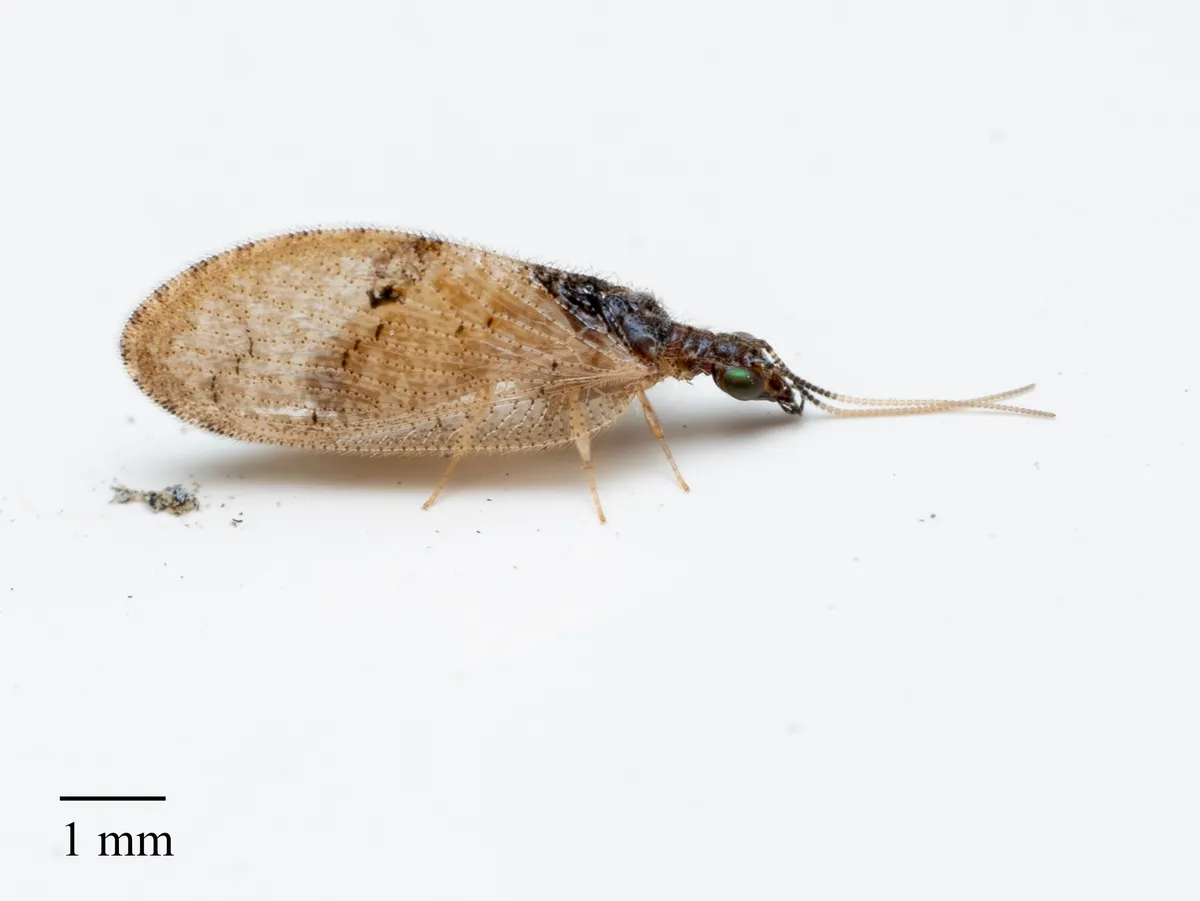
Barber's Brown Lacewing
Sympherobius barberi
Identification: Very similar to S. amiculus , often only distinguishable by the lack of a distal radial crossvein.
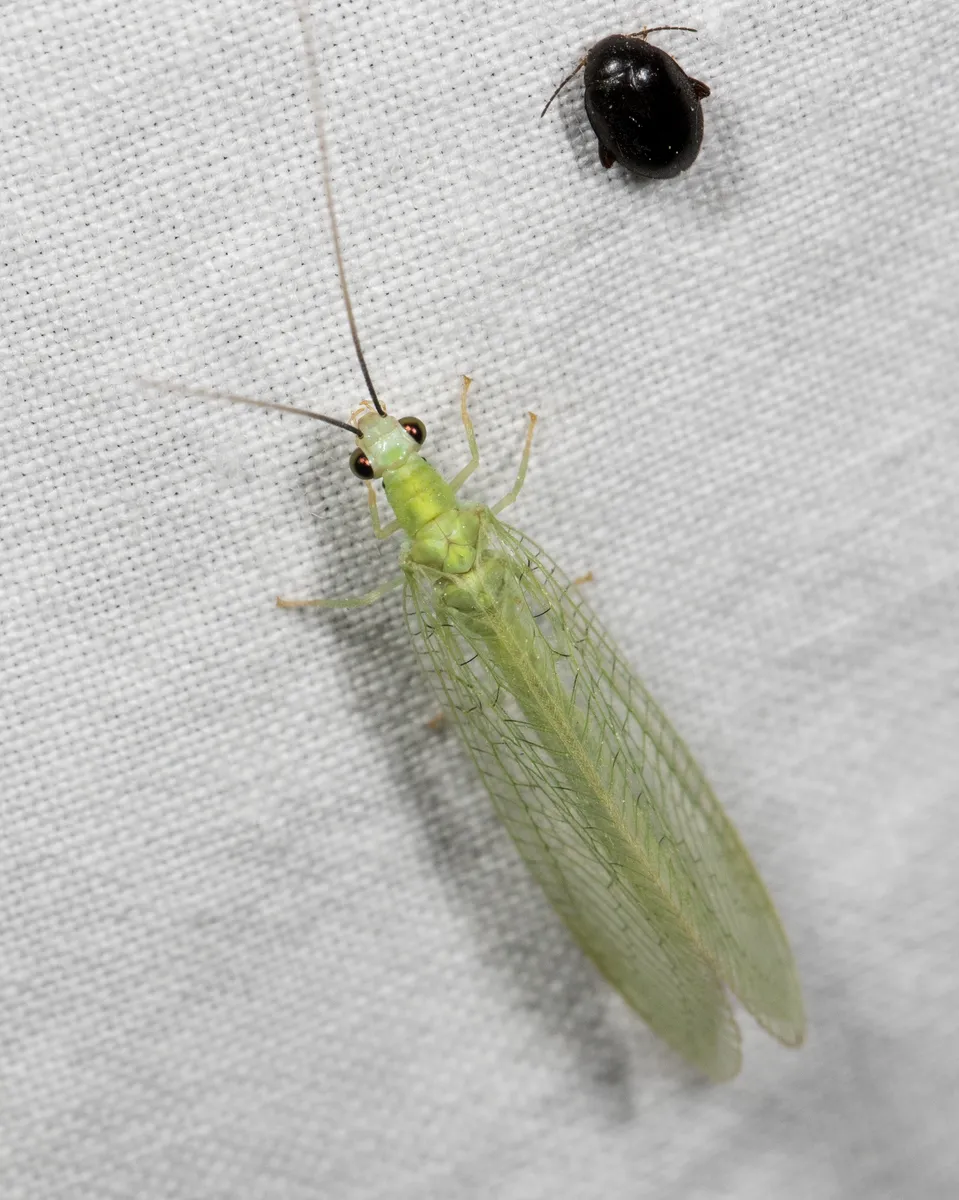
Black-horned Green Lacewing
Chrysopa nigricornis
Identification: Adults "A rather large, pale species. Note the almost entirely unmarked pronotum and the almost entirely pale head capsule, with only one pair of small dark spots, one on each side of the clypeus. The proximal parts of the antennae ar
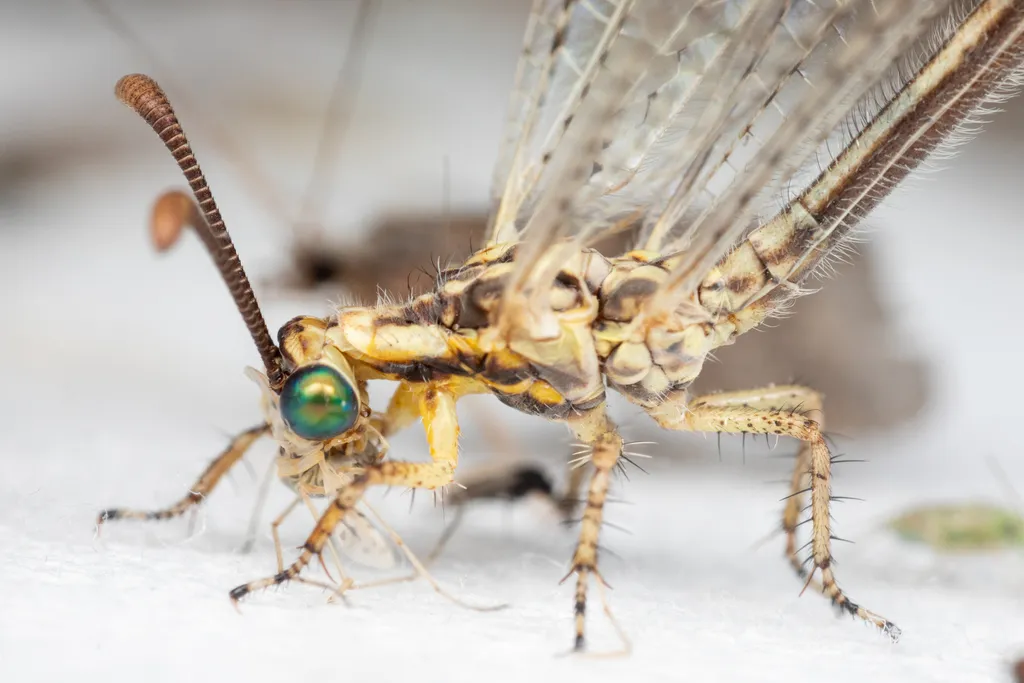
Brachynemurus abdominalis
Brachynemurus abdominalis
Identification: ♂ ♀ Adults of this species are often collected in general sweeping. Since the larvae are not pit formers, they are rarely reared.
Brachynemurus irregularis
Brachynemurus irregularis
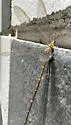
Identification: A conspicuously bright reddish-brown species with yellow markings. Hind tibial spurs shorter than hind basitarsus, spots in subcosta of wing, ectoproct of male with postventral lobe not abruptly narrowed toward the apex.
Brachynemurus nebulosus
Brachynemurus nebulosus
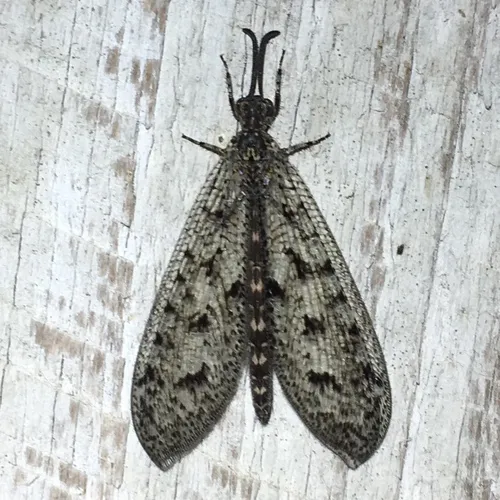
Identification: ♂ ♀ Larvae of this species have been suggested as Batesian mimics of velvet ants (Brach 1978).
Brachynemurus ramburi
Brachynemurus ramburi
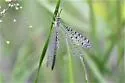
Identification: Easily recognizable by the pattern of prominent spots in the forewing. The presence of tibial spurs additionally helps separate it from B. nebulosus .
Brachynemurus sackeni
Brachynemurus sackeni
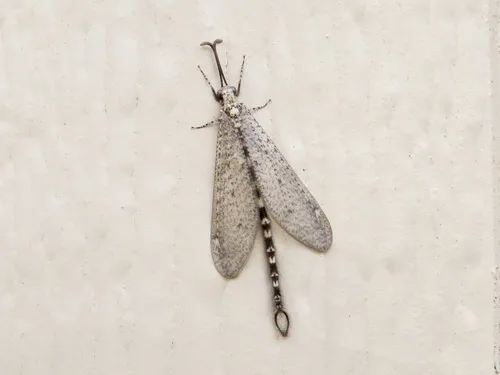
Identification: Males are distinguished from other southwestern species by their very elongate, striped abdomens and large, distinctive genitalia. ♂ ♀
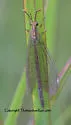
Brachynemurus signatus
Brachynemurus signatus
Identification: One of only 2 Brachynemurus lacking tibial spurs (the other being B. nebulosus ). Coloration is superficially similar to B. abdominalis , but the abdomen has yellow markings restricted to the margins of the tergites.
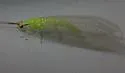
Ceraeochrysa cincta
Ceraeochrysa cincta
Identification: Red marks on the sides of the prothorax, antennal scapes with two stripes on the dorsal (upper) surface, flagellum usually pale (variable). The populations described from Florida and Mexico likely represent two separate species within
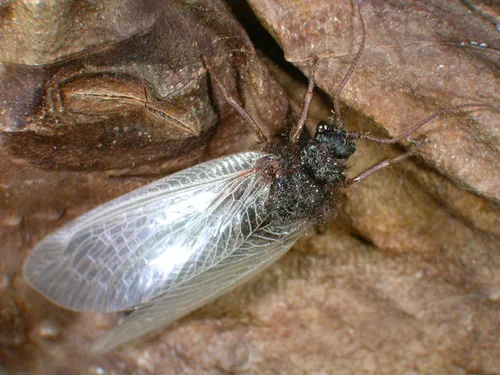
Cheese-weed Moth Lacewing
Oliarces clara
Recent phylogenetic work suggests that it may be more closely related to some polystoechotids (J.D. Oswald, 16 July, 2009)
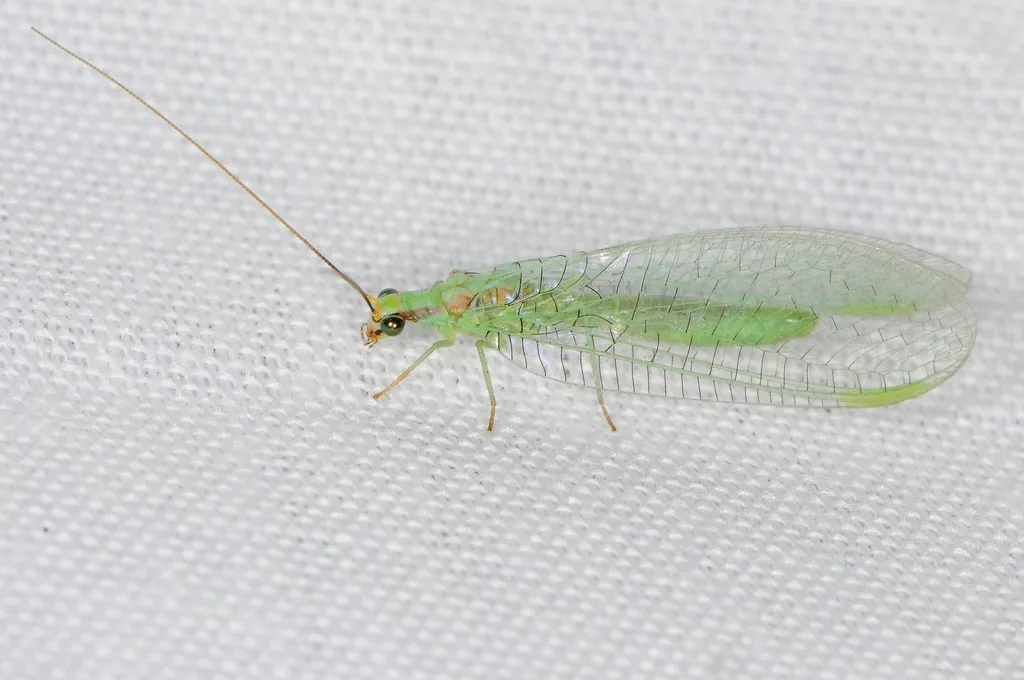
Chrysopa coloradensis
Chrysopa coloradensis
Identification: C. coloradensis is distinctive in the broad red stripes extending from behind the eyes down the length of the thorax. The face is marked with a black loop under the base of each antenna, and the genae have a broad black stripe.
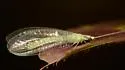
Chrysopa incompleta
Chrysopa incompleta
Identification: C. incompleta has a pale pedicel as opposed to the dark pedicel of C. oculata . "Note two dark stripes on vertex of head and four large dark marks on pronotum, two on each side, sometimes joined." - J.D. Oswald
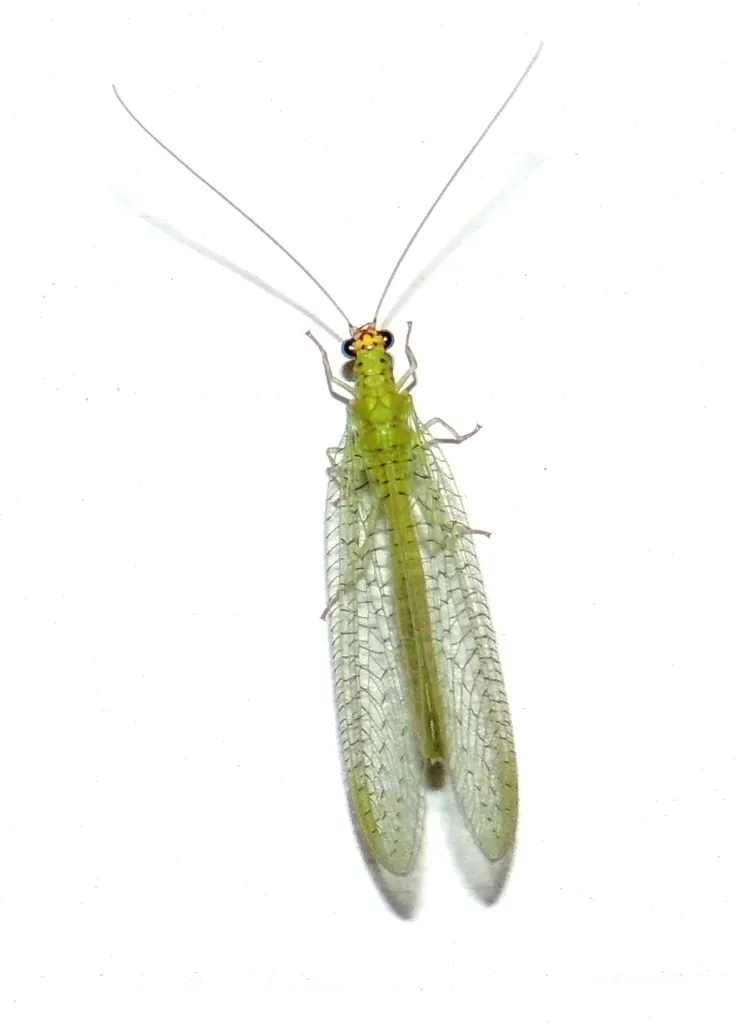
Chrysopa oculata
Chrysopa oculata
Identification: Adults C. oculata can be distinguished from other species by the following combination of characters: the frons has a darkly coloured ring around the lower or lateral margin of the base of the antenna; the antennal bases have reddish
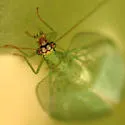
Chrysopa pleuralis
Chrysopa pleuralis
Identification: Separated from the very similar C. oculata by the additional dark stripes down the lateral groove near the eye. Specimens also occasionally have more complete stripes on the vertex as opposed to four spots. Left to right: C. pleuralis
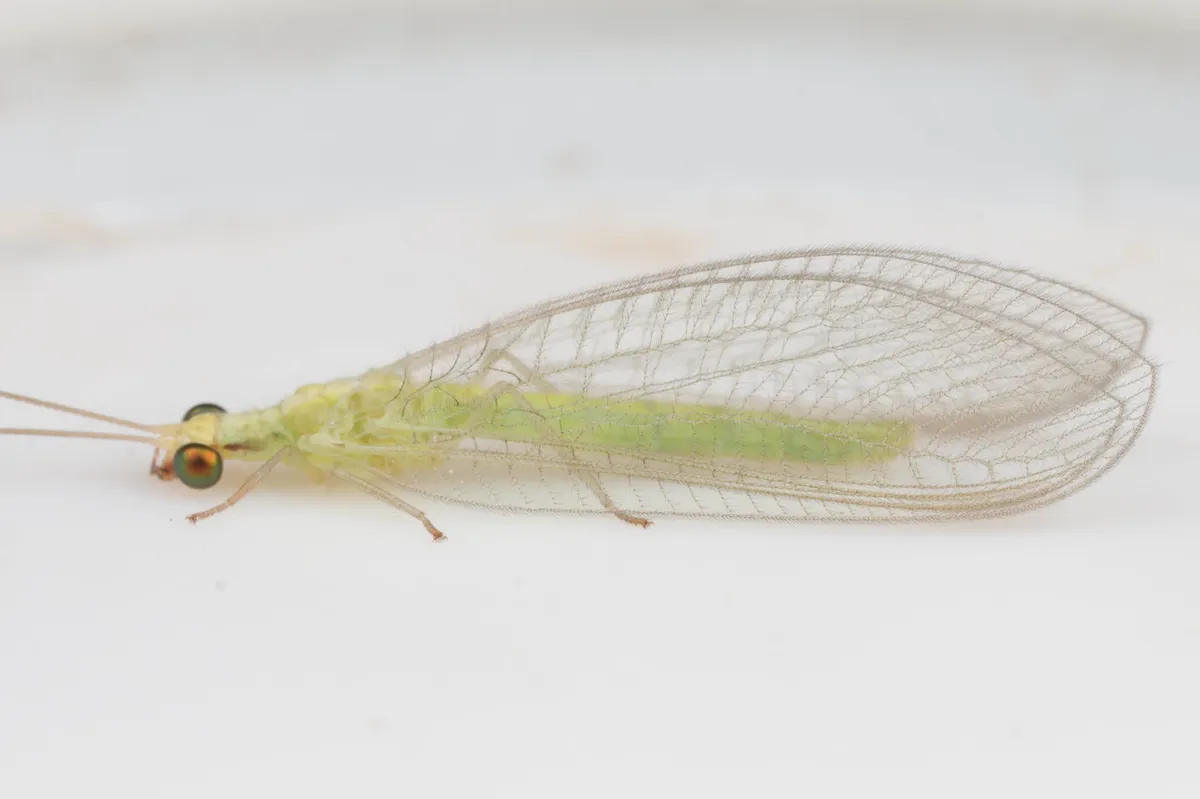
Chrysoperla externa
Chrysoperla externa
Identification: Noted for the reddish markings on the prothorax (similar to many members of Ceraeochrysa ), single narrow red stripe on the genae ("lips"), and pointed hind wingtips.
Chrysopodes collaris
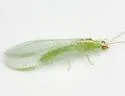
Chrysopodes collaris
Identification: red red lineations (sinistrodextral) on the clypeus are unique among Chrysopidae in our area
Climacia areolaris
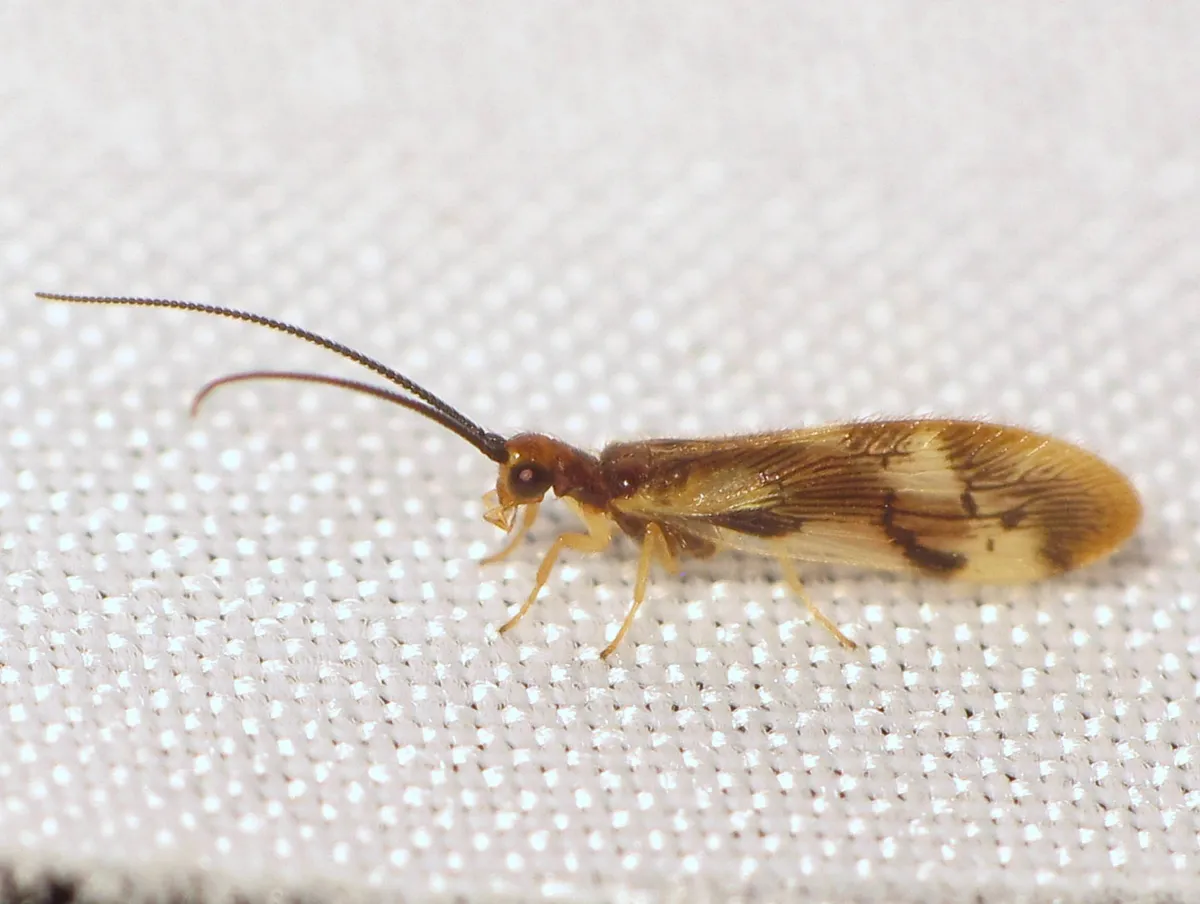
Climacia areolaris
Identification: Forewing RP with 1 bifurcation; forewing with distinct maculations and streaking; white of the pterostigma covering 6 veins; flagellum dark brown to black (not pale); postocciput darker than rest of head.
Climacia californica
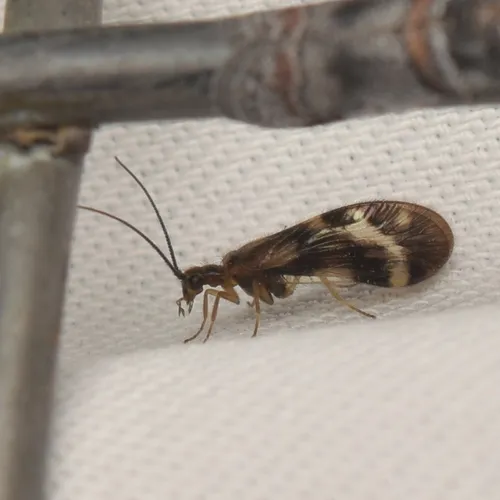
Climacia californica
Identification: Forewing RP with 1 bifurcation; forewing with distinct maculations and streaking; white of the pterostigma covering 4 veins; flagellum pale to dark brown (not black); postocciput concolorous with rest of head.
Climacia chapini
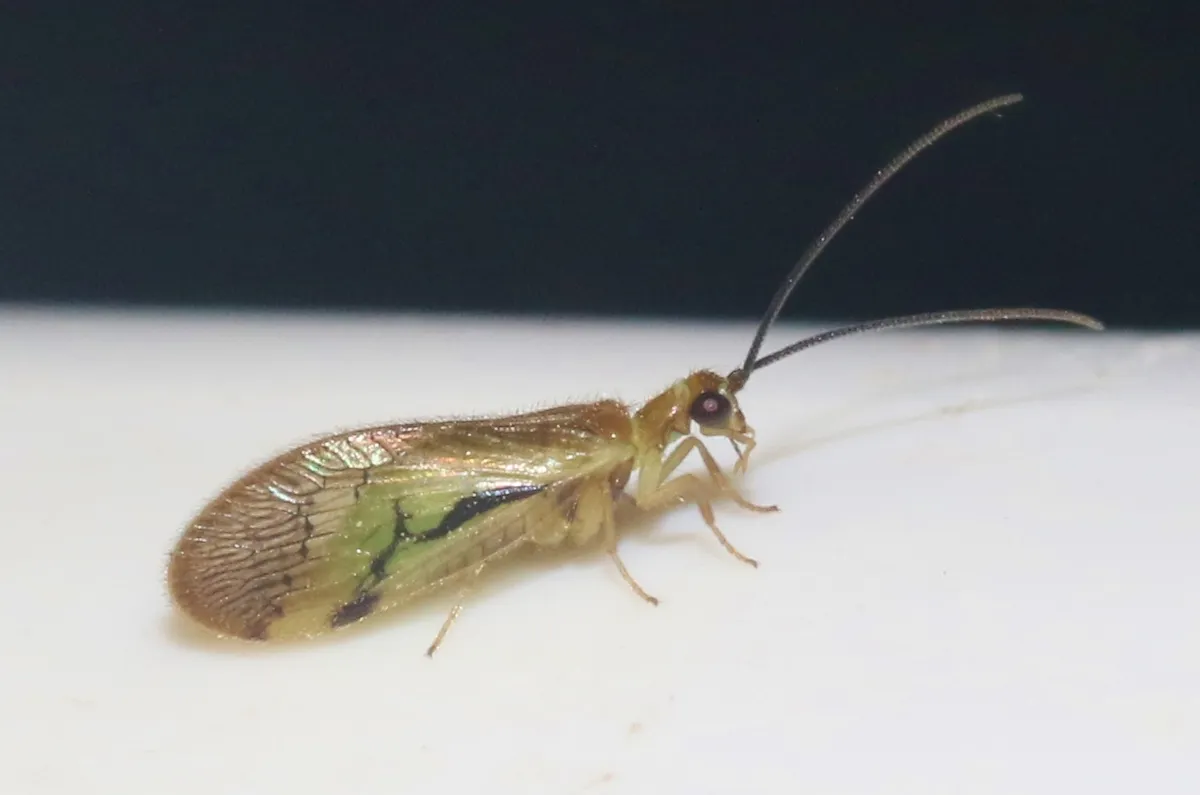
Climacia chapini
Identification: Forewing RP with 2-3 bifurcations anterior to pterostigma; forewing color mostly hyaline, lacking maculations, and with narrow radiomedial streak; flagellum dark brown; postocciput pale and concolorous with rest of head.
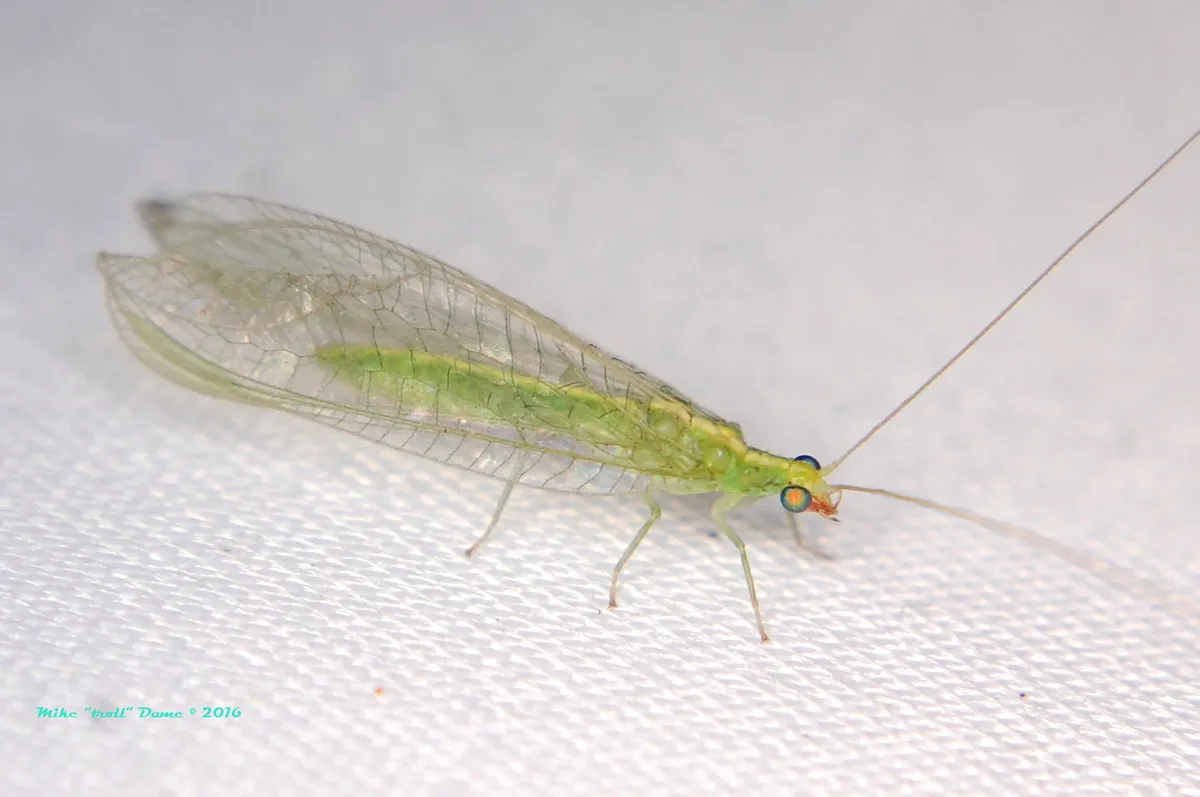
Comanche Green Lacewing
Chrysoperla comanche
Identification: Distinguished by its western range, broadly red-striped genae ('cheeks'), green cross veins, and pointed hind wingtips. This species may be mistaken for C. rufilabris due to its extensively red genae. However, C. comanche is found in
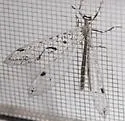
Dendroleon speciosus
Dendroleon speciosus
Identification: Large, with fairly intricate maculation on the forewings (less so than in D. obsoletus ) and no large, circular spots on the hind wings. Middle femora pale yellow with a darker subapical ring. Legs long and spindly. Antennae slightly
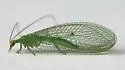
Downes's Green Lacewing
Chrysoperla downesi
Identification: Adults Eastern: Separated from the eastern population of C. plorabunda (the only other member of the group east of the Great Plains) by its consistently darker and deeper green color. Western: Song analysis is required to separate thi
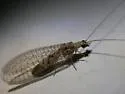
Eremochrysa hageni
Eremochrysa hageni
Identification: Face white with wide genal stripe, scapes with a broad stripe above (not at outer and inner sides), pronotum with only 3 dark spots at side, costal crossveins entirely pale.
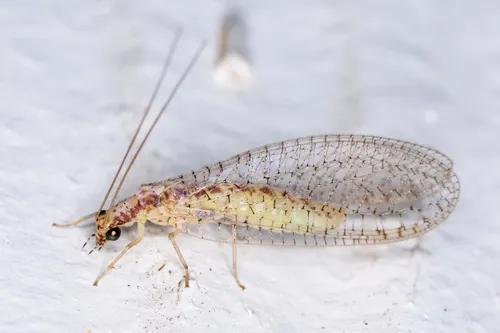
Eremochrysa punctinervis
Eremochrysa punctinervis
Identification: A readily-diagnosed species: face with yellow-to-red markings; vertex marked with spots or lines; antennae pale beyond second segment; pronotum with broad reddish marks at the sides; fore and mid tibiae lacking dark bands; venation co
Eremochrysa tibialis
Eremochrysa tibialis
Identification: Front and mid tibiae with a dark cross-band about one-third way from base, often also a dark spot at base of these tibiae; venation mostly dotted, vertex usually with reddish lines or spots.
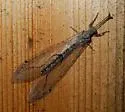
Euptilon sinuatum
Euptilon sinuatum
Identification: Readily identified by the ornate, white-marked abdomen (with segments having alternating bands and paired spots) and the dark, sinuate mark in the forewing.
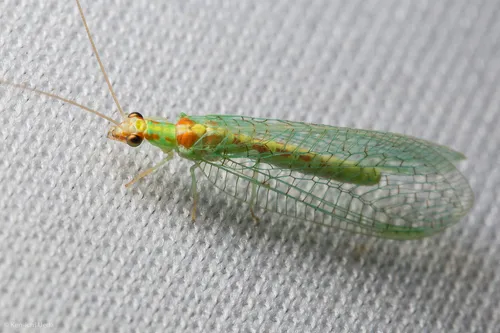
Four-spotted Green Lacewing
Chrysopa quadripunctata
Identification: Adults The head is pale with a yellowish-green occiput and reddish stripe following the genae. The antennae are entirely pale. The body is green with a yellowish median stripe. Bordering this stripe are paired orange-to-reddish spots
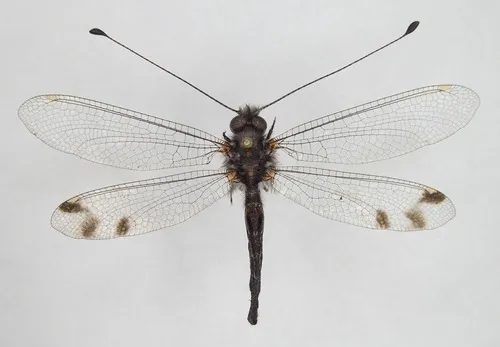
Four-spotted Owlfly
Ululodes quadripunctatus
Identification: Sexually dimorphic: ♀ with diffuse dark spots near wingtips (variable and sometimes absent), ♂ with prominent tuft of black bristles on top of abdomen near base (resemble scent scales, or pencils, of some Lepidoptera)
Harris's Green Lacewing
Chrysoperla harrisii
Identification: Noted for the extensively red genae, pointed apex of hind wings, broad red marks behind the eyes, brown spots at the anterior corners of the prothorax, and entirely green wing venation. Dorsum of maxillary palps black; forewing narrow
Hemerobius conjunctus
Hemerobius conjunctus
Identification: Head dark, wing margin without conspicuous dark and light spots but with heavy interior maculations, and basal cross-vein at or near first fork of MP.
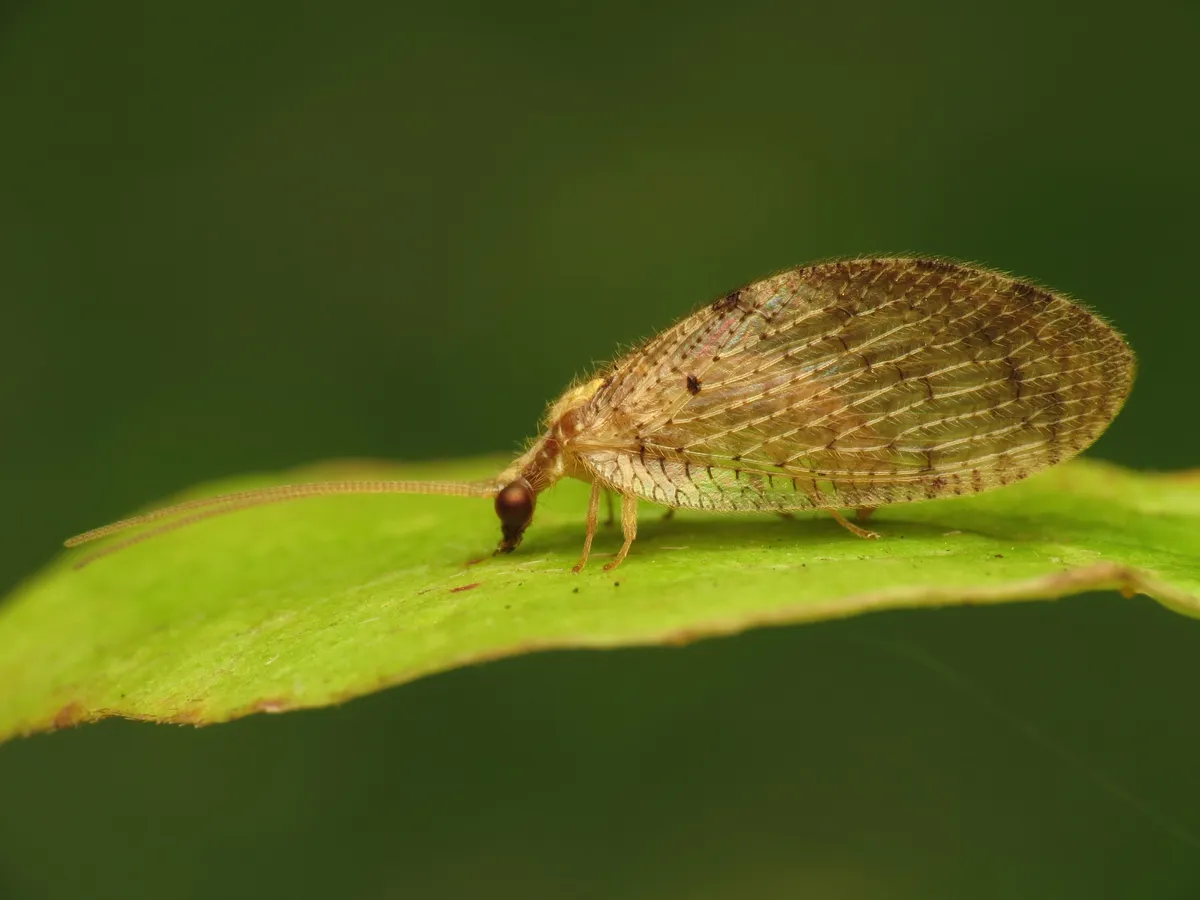
Hemerobius humulinus
Hemerobius humulinus
Identification: Within the eastern range (particularly southeastern), the broad pale stripe on the thorax and lack of pigmented pterostigmas separate it from the other widespread species, H. stigma . Caution: many (!) other species have a yellowish s
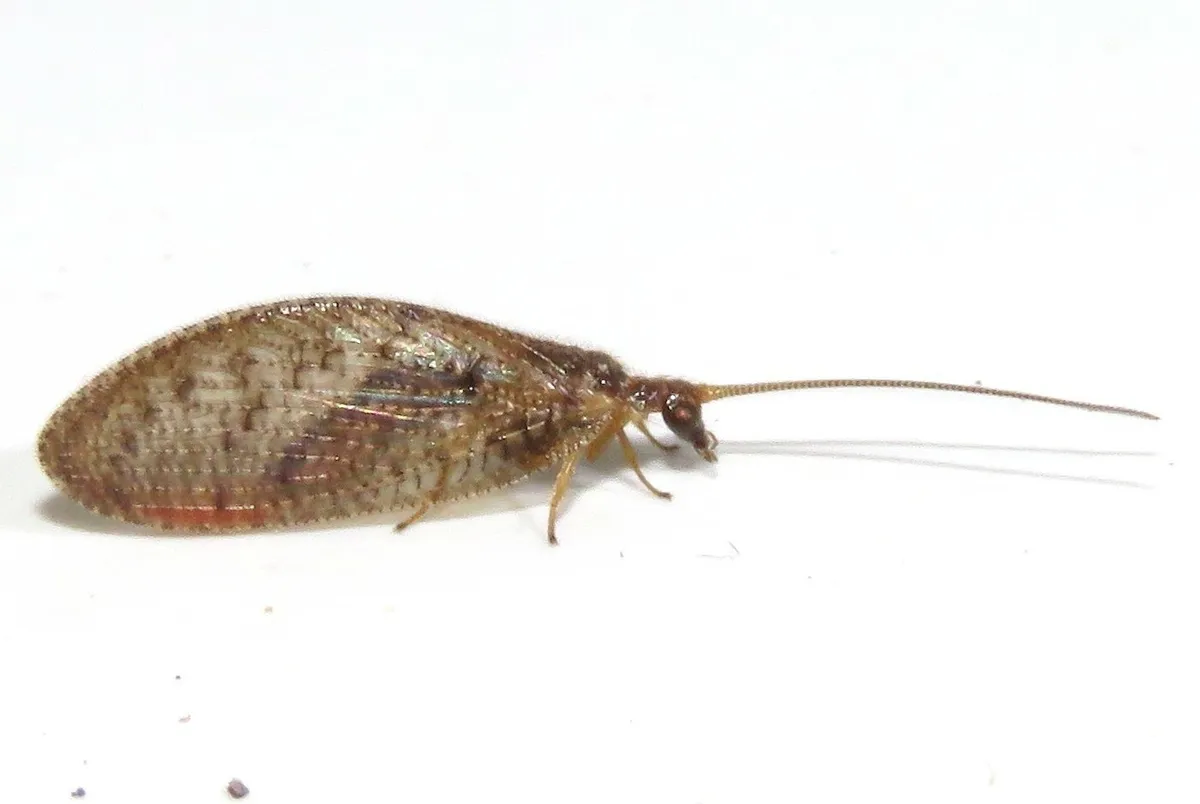
Hemerobius stigma
Hemerobius stigma
Identification: Noted for a distinctive, broad orange-brown pterostigma especially on the hind wings , dark spot at the basal crossvein between veins M3+4 and Cu1, and more unicolored thorax. (see Meinander, 1962 ) Highly variable in terms of wing ma
Kymachrysa intacta
Kymachrysa intacta
Identification: Kymachrysa is one of several genera with a pale streak down the body and is distinguished by its sinuate longitudinal veins, between the inner and outer gradate veins. In most other green lacewing genera, the longitudinal veins are es
Leucochrysa americana
Leucochrysa americana
Identification: L. americana is a variable species that can be similar to L. explorata , which only ranges into southern New Mexico and Texas. Both species are distinct in having 6 cubital cells in the forewing (7 or 8 in other species). L. americana
Leucochrysa callota
Leucochrysa callota
Identification: Paired spots on vertex, thorax, and abdomen; pterostigma has a dark spot, like in all of our Leucochrysa except L. arizonica
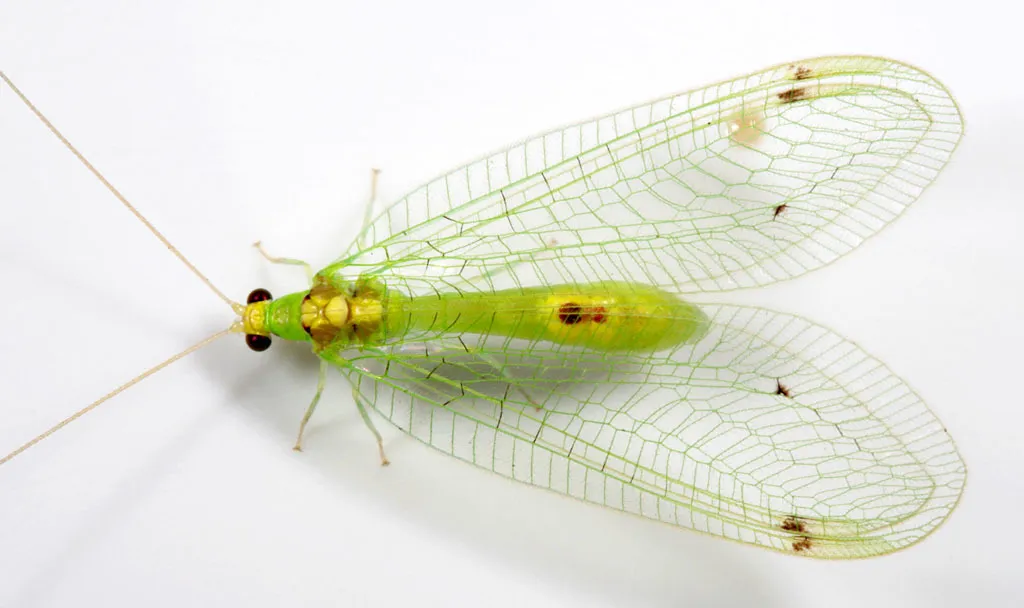
Leucochrysa insularis
Leucochrysa insularis
Identification: Two dusky spots on each forewing (single spot in most other Leucochrysa ; no spot in L. arizonensis ), four mesothoracic spots on a golden ground color, and single abdominal spot are distinctive of this species.
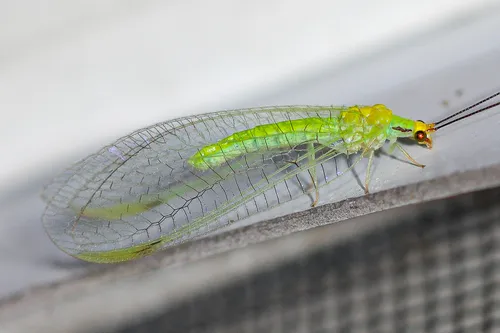
Lichen-carrying Green Lacewing
Leucochrysa pavida
Identification: Adults have rather long antennae, a golden head and regions of the thorax, red stripes on the antennal scapes, a red stripe on the gena, dark stripes on the sides of the prothorax, and conspicuously darkened pterostigmas (characterist
Megalomus angulatus 0
Megalomus angulatus
Easily confused with one form of M. moestus . The population previously reported from Mexico has been reassigned to M. moestus . ( 3 )
Meleoma emuncta
Meleoma emuncta
Identification: The pale streak down the body and lines on the genae make this species very easily mistaken for a Chrysoperla . However, the strong cylindrical shape of the scapes and absence of any red on the genae are useful for distinguishing this
Menkeleon bellulus
Menkeleon bellulus
Identification: Antennae with a pale band, abdomen distinctly banded.
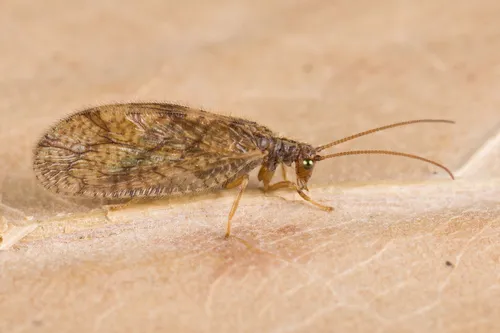
Micromus angulatus
Micromus angulatus
To the extent that we can tell, M. angulatus is probably naturally Holarctic. The genus Micromus is subcosmopolitan, with species nearly everywhere, except, interestingly, South America. There are a number of endemic species of Micromus in North Amer
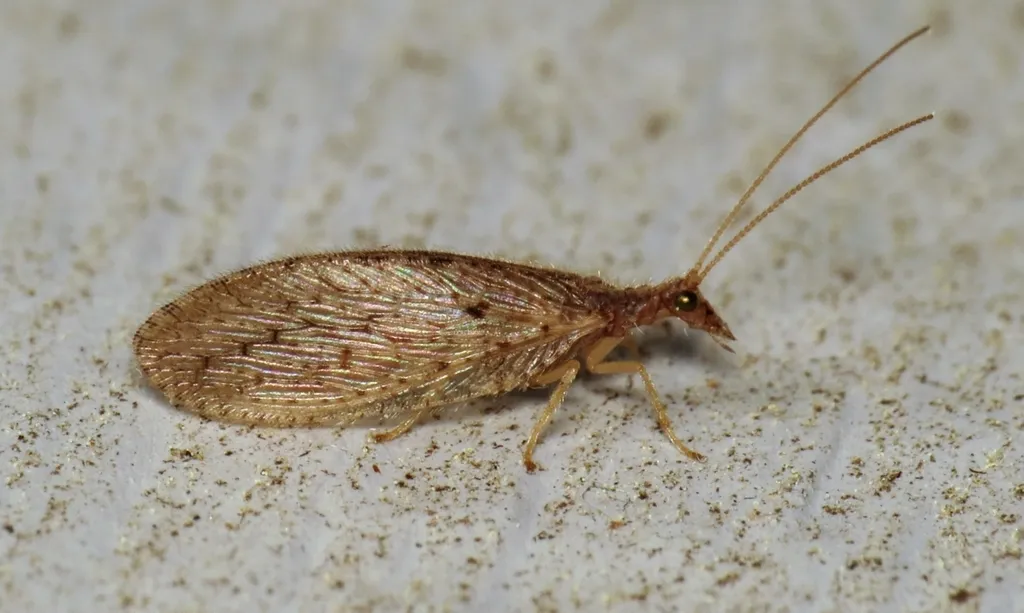
Micromus subanticus
Micromus subanticus
Identification: Forewing with inner gradate veins separated by a distance greater than their length. Face with conspicuous dark markings. Larvae described by Krakaur & C. Tauber. Anacharis parasitize the larvae.
Myrmeleon crudelis
Myrmeleon crudelis
Identification: Vertex entirely dark with reddish-brown tint, legs yellowish with dark tarsi (not reddish as in M. texanus ), clypeus marked with dark, body dark with yellowish markings on the thorax. Setae mostly white, female with black on the apic
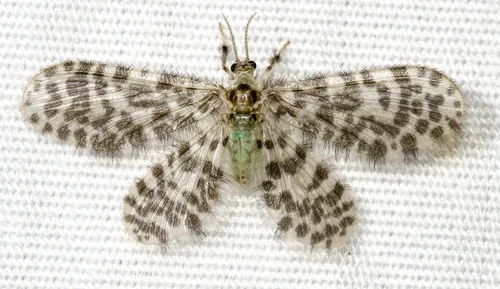
Nallachius americanus
Nallachius americanus
Identification: Larvae very elongate: Adults resemble small brown moths: wings rounded, hairy, transparent except for dark veins and many light brown spots, a number of which coalesce to form irregular bands across the wing; male antennae pectinate ;
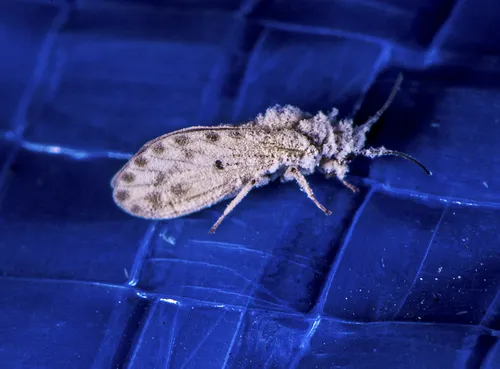
Neoconis marginata
Neoconis marginata
Neoconis marginata (Neoconis marginata) is a species in the family Coniopterygidae, commonly known as dusty lacewings, belonging to the order Neuroptera (Antlions, Lacewings, and Allies). It is classified within the subfamily Aleuropteryginae. This s
Nolima pinal
Nolima pinal
Identification: Wing venation Rehn described 3 species in our area: Nolima dine, N. kantsi, and N. pinal . All three were synonymized under N. pinal in
Paranthaclisis congener
Paranthaclisis congener
Identification: Distinguished from other species in the genus by the yellowish median mark on the mesoscutellar rim (dark in all of our other species).
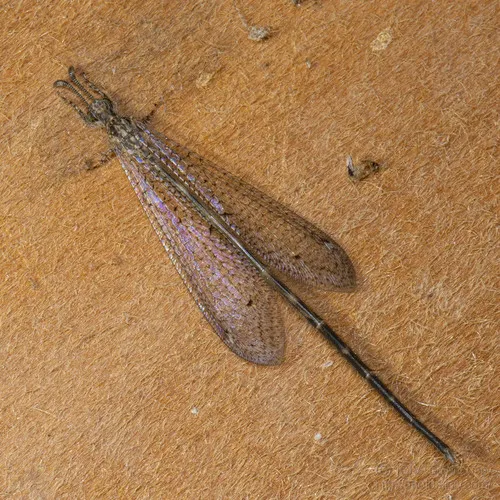
Peruveleon dorsalis
Peruveleon dorsalis
Identification: Quoting original description (Banks, 1903), for what it's worth: " Brachynemurus dorsalis , sp. nov. "Face yellowish, a dark brown interantennal mark, concave below, a pale transverse band from eye to eye above antennae ; vertex brown
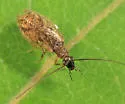
Psectra diptera
Psectra diptera
The status of P. diptera is uncertain, but it is almost certainly an introduction. All of the other species of Psectra are Old World (mostly Afrotropical, Australian and Oriental, with a number of species in Oceania); P. diptera is the only one in Eu
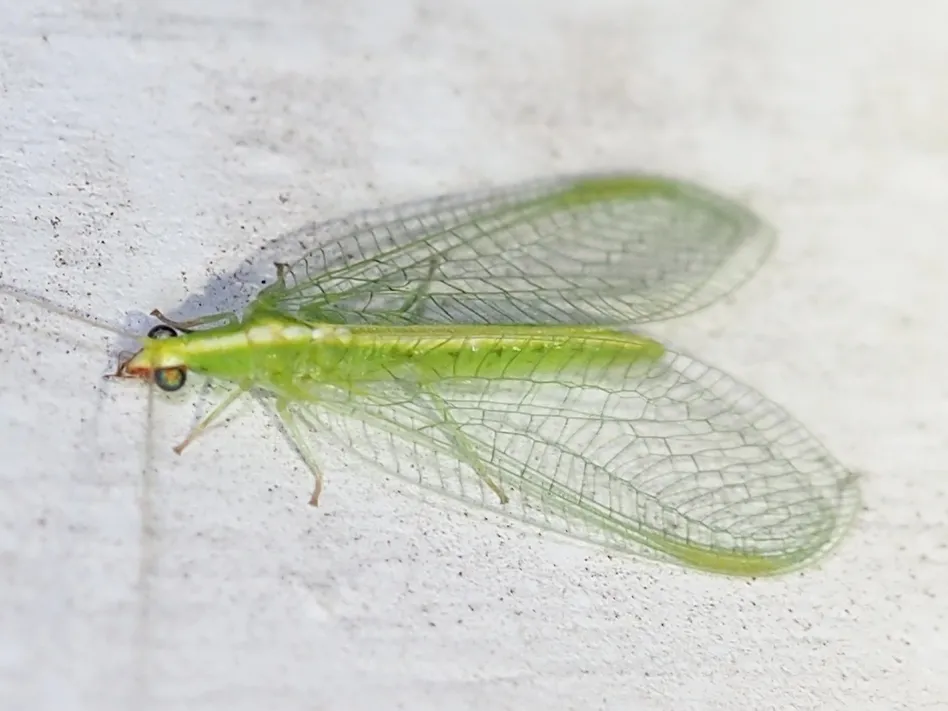
Red-lipped Green Lacewing
Chrysoperla rufilabris
Identification: Adults Adults of C. rufilabris are distinguished by their near-entirely red genae ('cheeks'), black cross veins, and pointed hind wingtips. Because they overwinter as adults (unlike our other members of the pudica group), they turn br
San Francisco Lacewing
Nothochrysa californica
Identification: The red-orange and black color pattern on the head is quite distinctive. The antennae are black, slightly shorter than the wings. The pronotum is relatively long, gradually widening towards posterior end, reddish-brown with narrow, pa
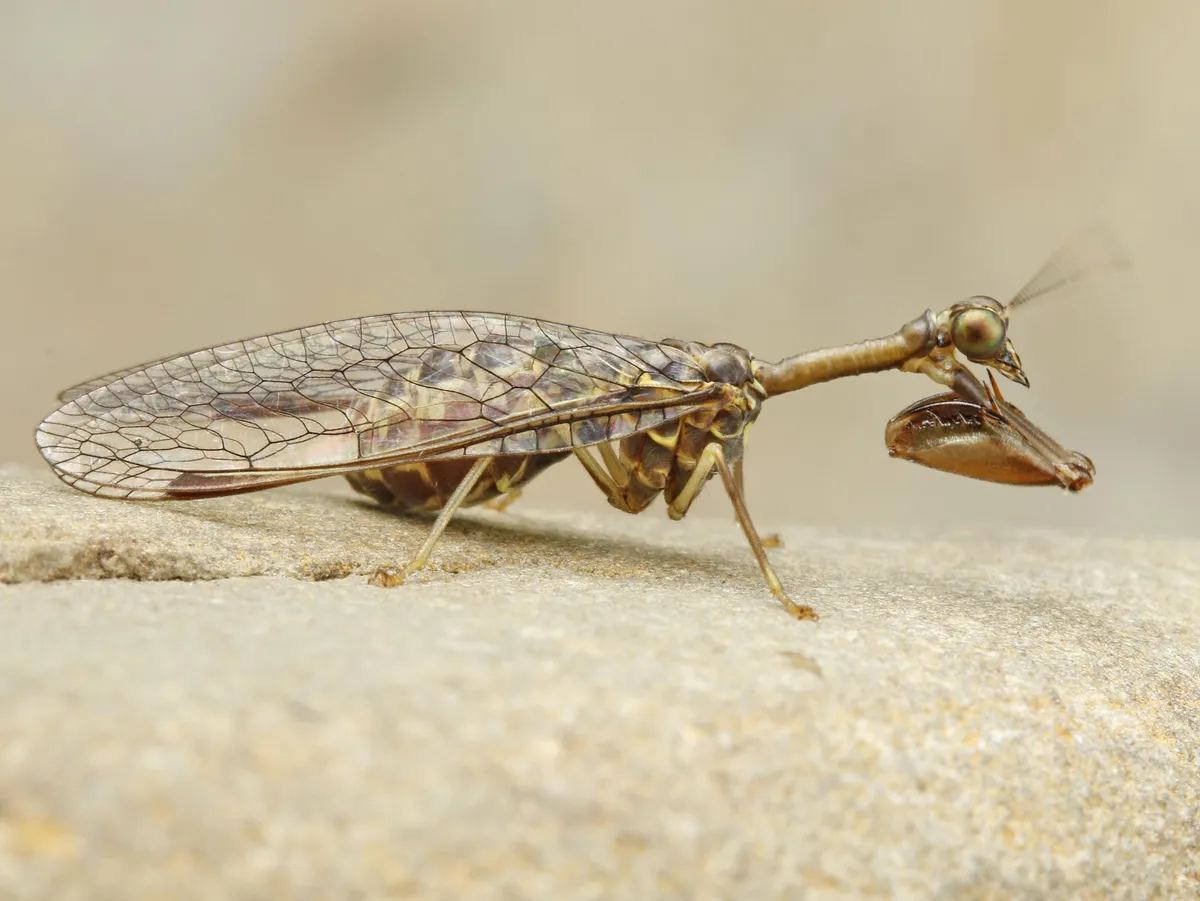
Say's Mantidfly
Dicromantispa sayi
Identification: Lacks darkened cross-veins near the pterostigma. Has dark brownish-to-black as well as lighter yellowish color forms . has several largely allopatric color forms ( here ) formerly treated as species ( Hoffman 1989 ); the dark forms fr
Signoret's Green Lacewing
Meleoma signoretti
Identification: Body green, head often paler. Antennae shorter with strongly cylindrical with scapes broadly separated (around the width of each base), base of flagellum black. Female with four spots on the frons forming a broad "ʌ" shape. Male with
Slosson's Green Lacewing 0
Chrysopa slossonae
Identification: Adults are very similar in appearance to Chrysopa quadripunctata but differ in terms of wing venation. Larval traits differ more greatly, with C. slossonae adapted as a specialist of Prociphilus tesselatus , the woolly alder aphid, an
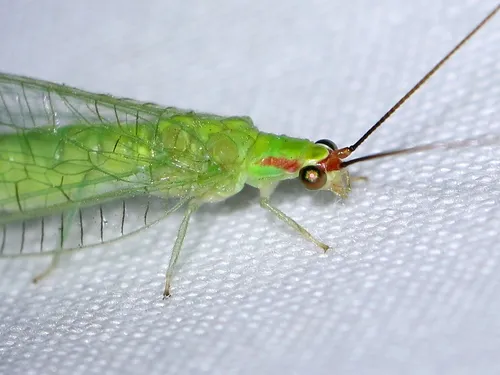
Smith's Green Lacewing
Ceraeochrysa smithi
Identification: Separated from other members of the genus by the entirely red dorsal surface of the scapes, extending onto the vertex as triangular marks. Like many of our other species in the genus ( C. cubana , C. cincta , & C. valida ), the sides
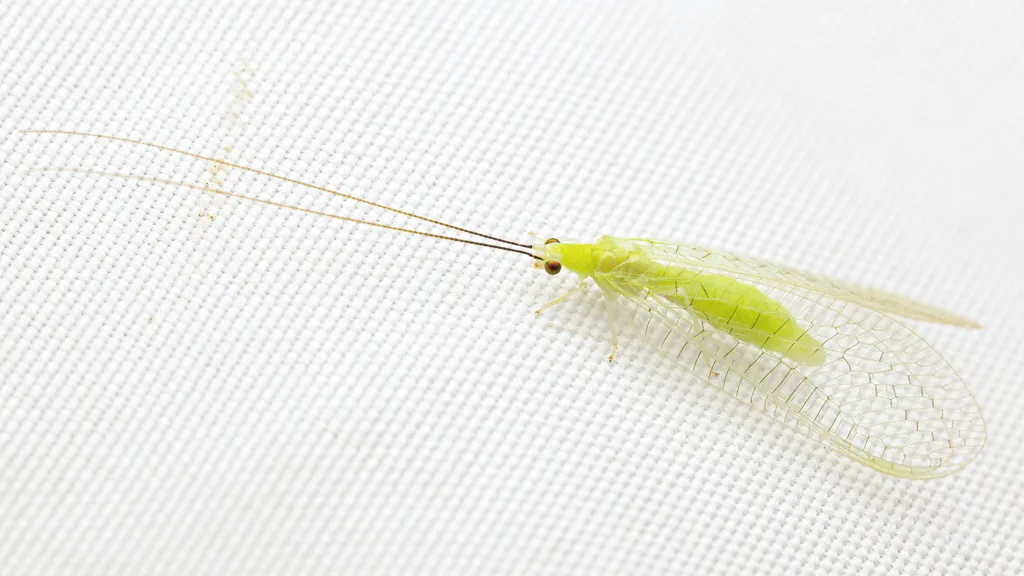
Stripe-horned Green Lacewing
Ceraeochrysa lineaticornis
Identification: Recognizable as a Ceraeochrysa by the unmarked genae , longer antennae, narrow wings, and lack of a dark spot in the pterostigma . C. lineaticornis is further denoted by the darker bases of the antennae, (usually!) black-striped scape
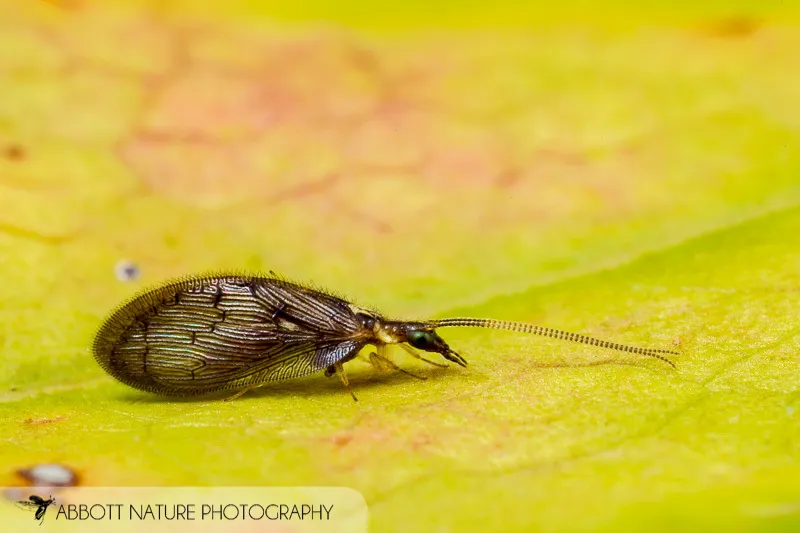
Sympherobius occidentalis
Sympherobius occidentalis
Identification: "The yellow v-shaped mark on the mesothorax is diagnostic" - J.D. Oswald
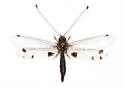
Ululodes arizonensis
Ululodes arizonensis
Identification: The developed pattern of dark pigmentation in the hindwing is distinctive, and all four pterostigmas are dark. U. bicolor often has less developed dark wing pigmentation, and the pterostigmas of the forewings are pale.
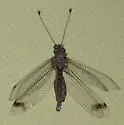
Ululodes bicolor
Ululodes bicolor
Identification: Distinguished from all western species in having the forewing stigmas white but the hindwing stigmas dark. The hindwings have a dark band of pigmentation on them, which further separates this species from the eastern U. floridanus .
Ululodes chiricahuensis
Ululodes chiricahuensis
Identification: White tuft of setae on thorax near the base of the wings (tegular setae). Antennae held straight while at rest (vs. curved/sigmoid antennae in U. mexicanus ). Inner rear margin of hindwing slightly concave (vs. convex in U. mexicanus
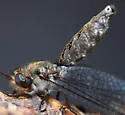
Ululodes floridanus
Ululodes floridanus
Identification: Distinguished from all other eastern species by having the fore pterostigmas pale but the hind pterostigmas dark. Only the western U. bicolor has this combination within our range and is readily separated from U. floridana by the deve
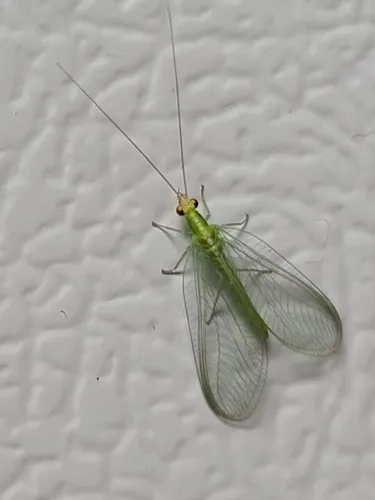
Weeping Green Lacewing
Chrysoperla plorabunda
Identification: Definitive identification of adults would require analysis of the tremulation ("song") pattern to separate this species from other members of the carnea group. This is, however, the only species of the group reported within the southe
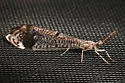
Western Picture-winged Antlion
Glenurus luniger
Gerstaecker's original 1893 description (in German, with preface in Latin) is here .
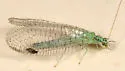
X-marked Green Lacewing
Chrysopa chi
Identification: Adults Wing venation separates Chrysopa from similar Chrysoperla . C. chi has an X-shaped mark between the antennal bases, two spots on top of head, and pronotum with 3 pairs of dark spots. Larvae The head capsule is marked with 3 spo
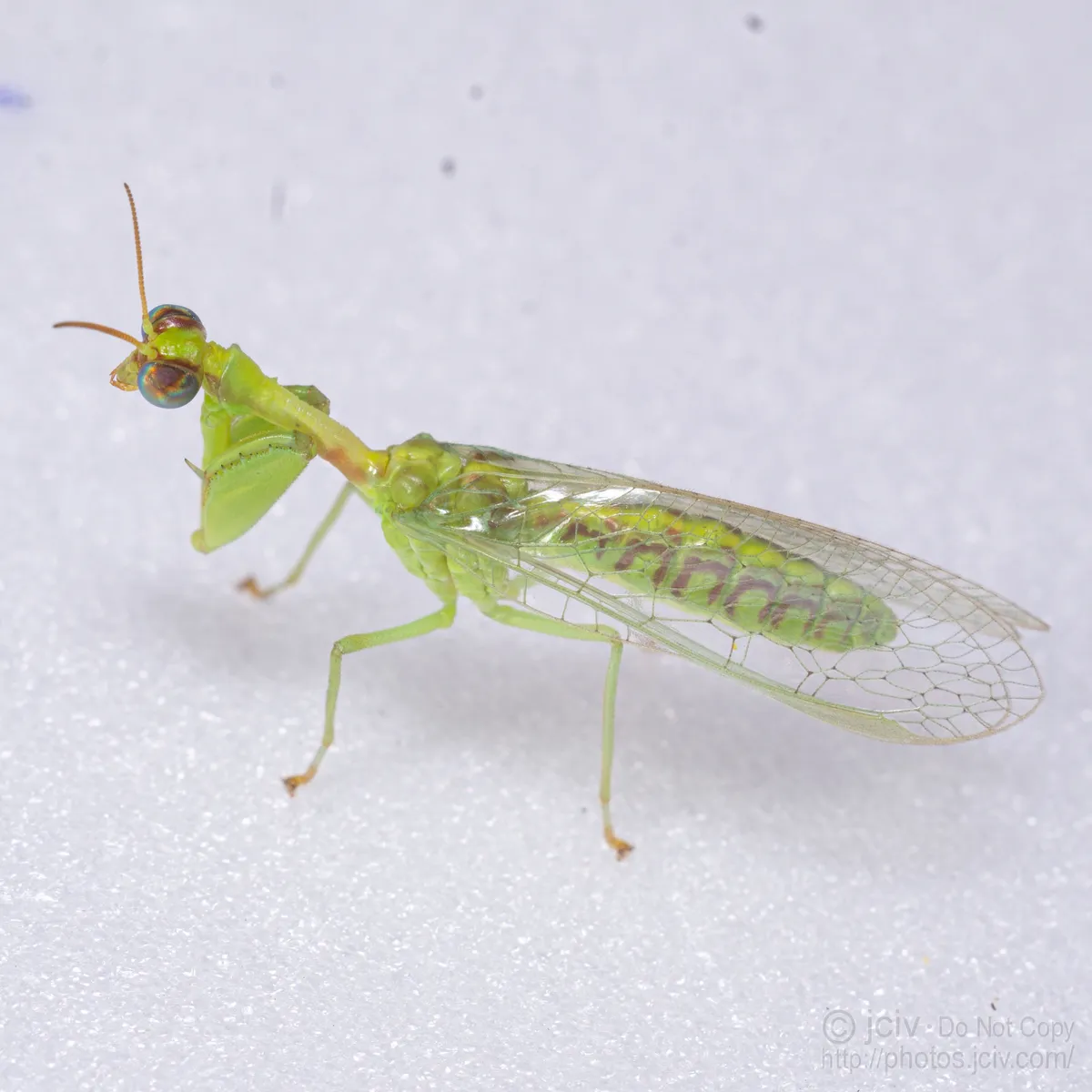
Zeugomantispa minuta
Zeugomantispa minuta
Identification: Green color distinctive among our mantispid fauna (although preserved specimens frequently appear pale yellow). Note: other green members of this genus occur in the Neotropics. Wing venation
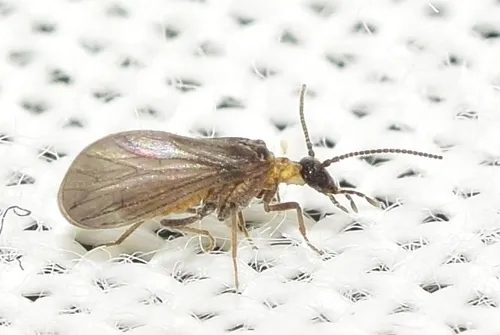
Aleuropteryx remane
Aleuropteryx remane
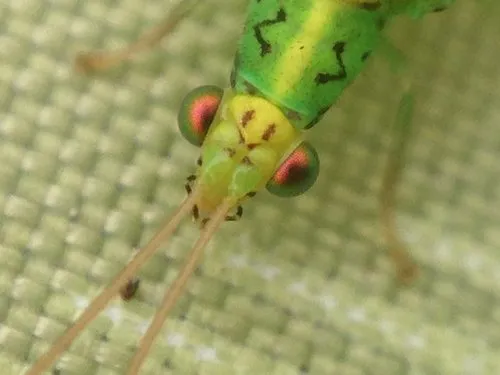
Apertochrysa edwardsi
Apertochrysa edwardsi
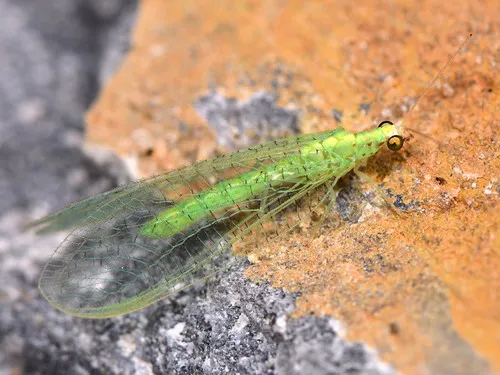
Apertochrysa flavifrons
Apertochrysa flavifrons
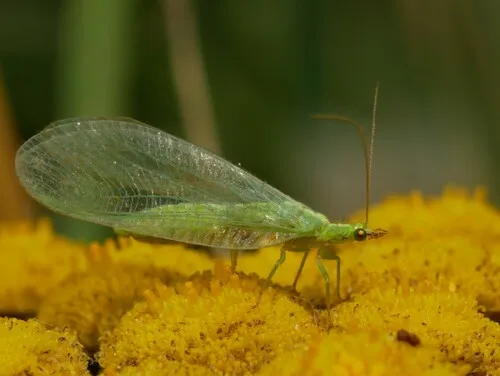
Chrysoperla carnea
Chrysoperla carnea
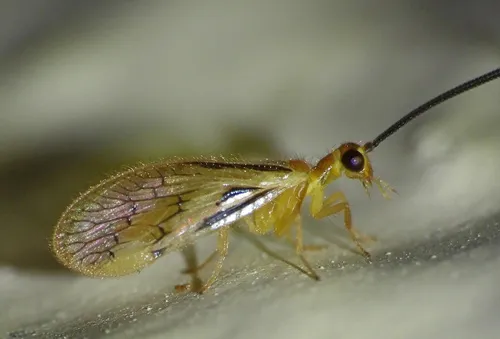
Climacia basalis
Climacia basalis
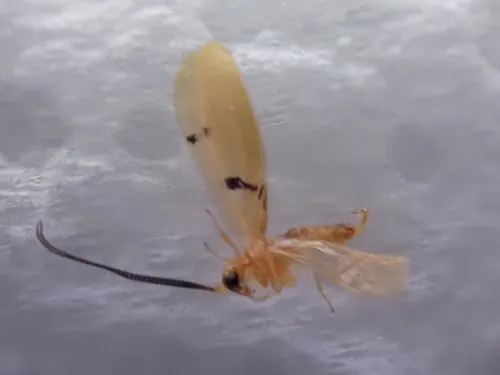
Climacia bimaculata
Climacia bimaculata
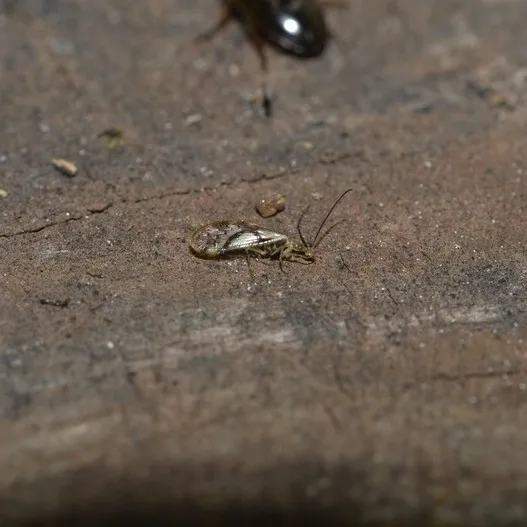
Climacia insolita
Climacia insolita
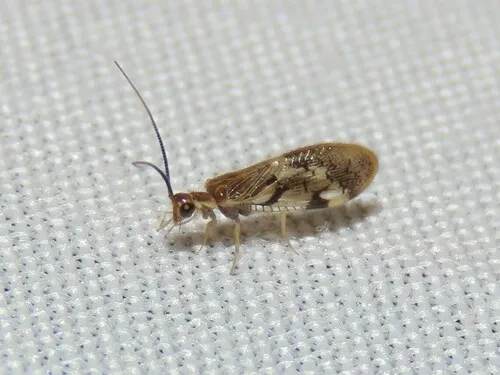
Climacia negrensis
Climacia negrensis
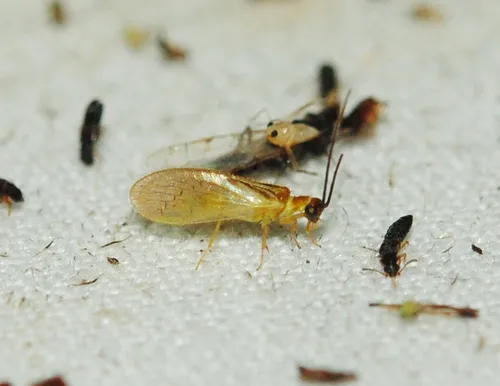
Climacia townesi
Climacia townesi
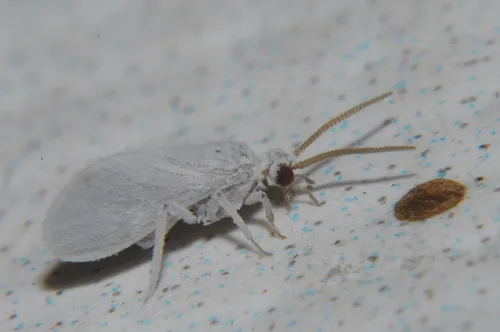
Coniopteryx borealis
Coniopteryx borealis
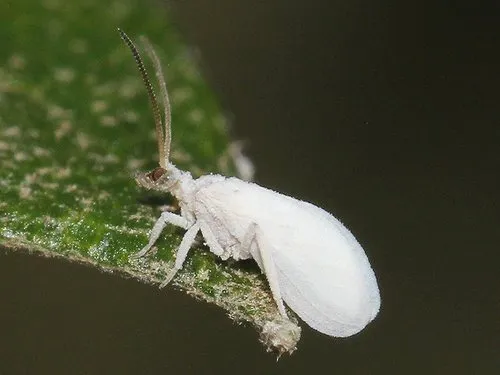
Coniopteryx maculithorax
Coniopteryx maculithorax
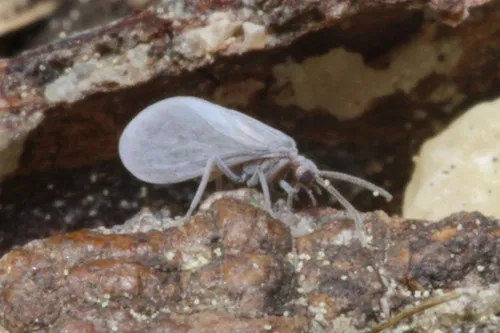
Coniopteryx pygmaea
Coniopteryx pygmaea
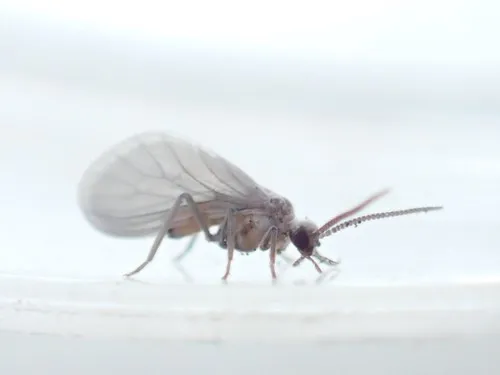
Coniopteryx tineiformis
Coniopteryx tineiformis
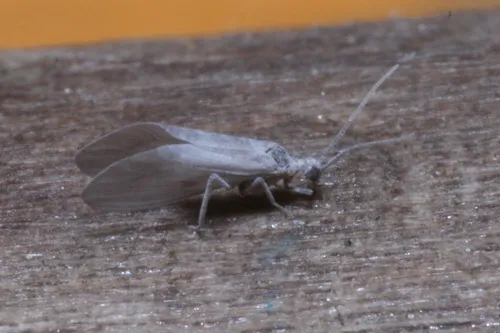
Conwentzia pineticola
Conwentzia pineticola
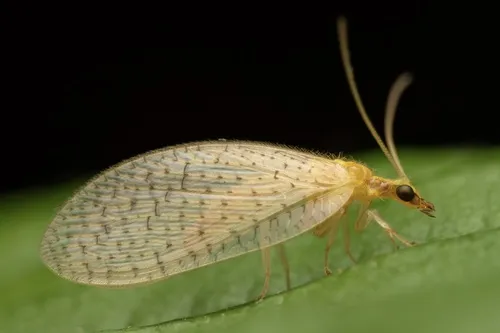
Hemerobius micans
Hemerobius micans
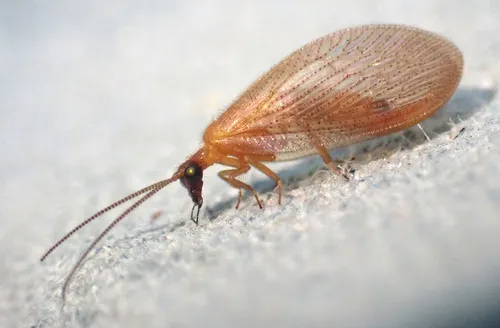
Hemerobius nitidulus
Hemerobius nitidulus
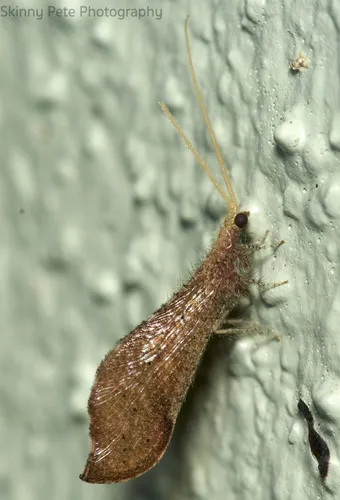
Lomamyia hamata
Lomamyia hamata
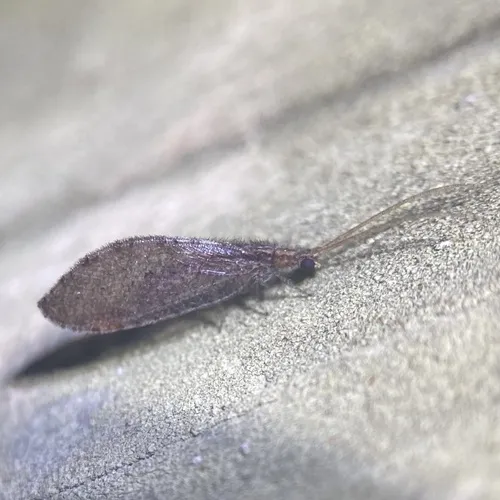
Lomamyia longicollis
Lomamyia longicollis
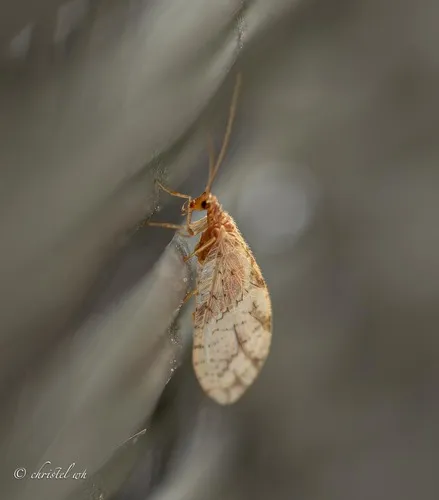
Micromus paganus
Micromus paganus
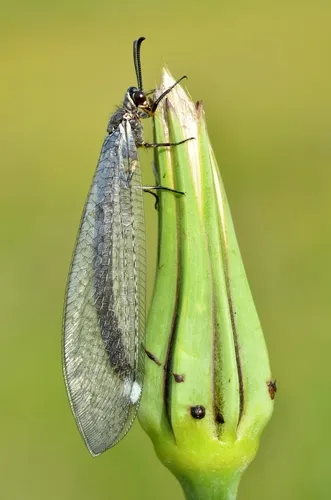
Myrmeleon formicarius
Myrmeleon formicarius
Nallachius krooni
Nallachius krooni
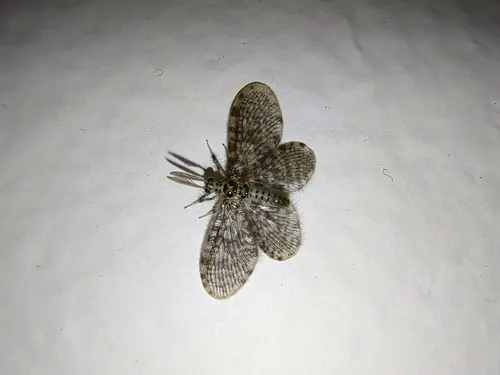
Nallachius ovalis
Nallachius ovalis
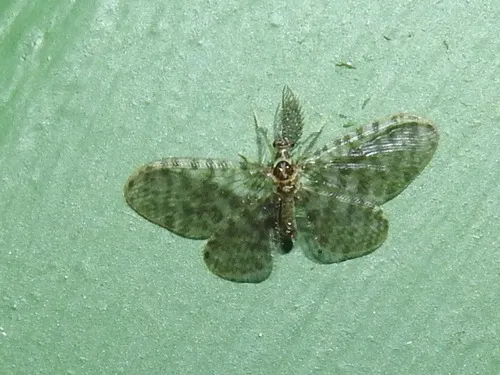
Nallachius parkeri
Nallachius parkeri
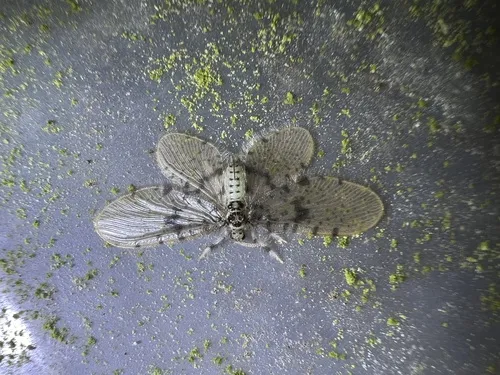
Nallachius potiguar
Nallachius potiguar
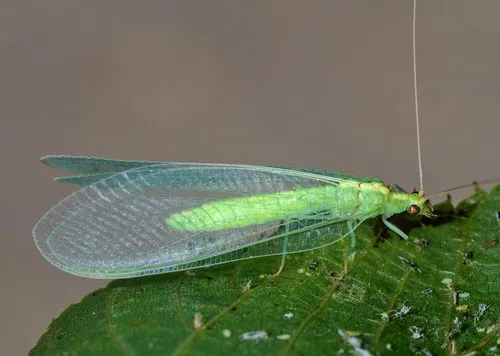
Nineta flava
Nineta flava
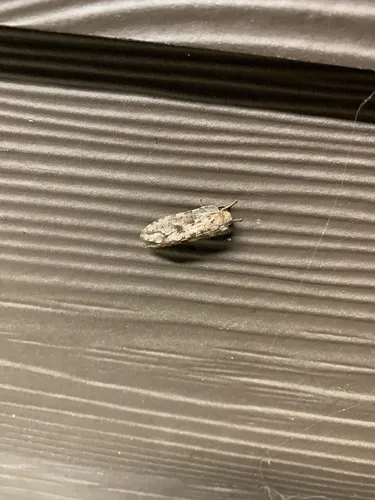
Platystoechotes lineata
Platystoechotes lineata
Plega fratercula
Plega fratercula
Plega fumosa
Plega fumosa
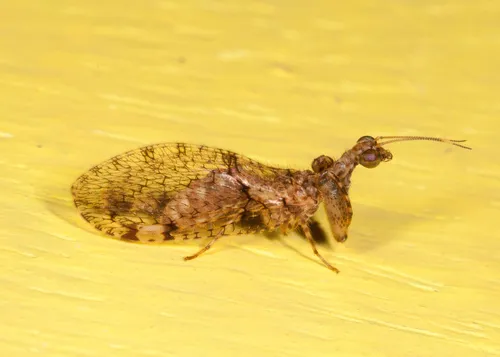
Plega hagenella
Plega hagenella
Plega melitomae
Plega melitomae
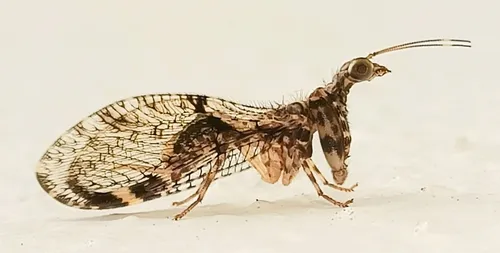
Plega yucatanae
Plega yucatanae
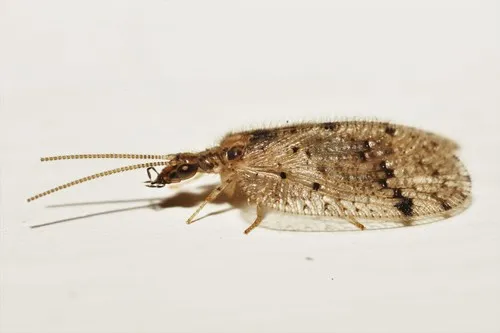
Psectra nakaharai
Psectra nakaharai
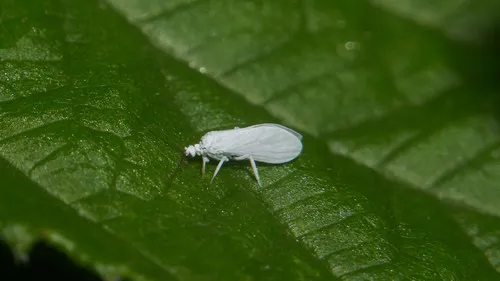
Semidalis aleyrodiformis
Semidalis aleyrodiformis