
Micromus angulatus
This record describes Micromus angulatus (species). Recorded family: Hemerobiidae. Recorded order: Neuroptera.
Identification and Appearance
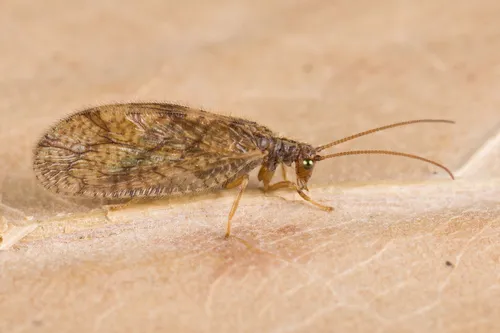
To the extent that we can tell, M. angulatus is probably naturally Holarctic. The genus Micromus is subcosmopolitan, with species nearly everywhere, except, interestingly, South America. There are a number of endemic species of Micromus in North America, some of which are in species groups that also have Palearctic members. So, it is not unreasonable to believe that M. angulatus could also be so. It is also a more northerly species, adapted to the colder northern climate. This can be interpreted to support either a natural Holarctic distribution, or a successful introduction of a northern species from the Old World. One might be able differentiate these based on population-level genetic studies, but we don't have any hard data on that. --John Oswald, pers. comm. to =v= 3.vi.2013
Wikipedia reference for Micromus angulatus: https://en.wikipedia.org/wiki/Micromus_angulatus.
Classification
- Kingdom
- Animalia
- Phylum
- Arthropoda
- Class
- Insecta
- Order
- Neuroptera (Antlions, Lacewings, and Allies)
- Family
- Hemerobiidae (Brown Lacewings)
- Subfamily
- Microminae
- Genus
- Micromus
Imported taxonomy record. Source availability varies; see the source references and editorial policy below.
Habitat and Range
Geographic Range
boreal NA (NF-YT south to NY-SD) ; probably naturally Holarctic
About Antlions, Lacewings, and Allies: the wider group
Order-level background for Neuroptera, the group containing Micromus angulatus. Species-specific details appear above.
Group overview
Neuroptera (lacewings, antlions, owlflies) includes ~6,000 described species. Green lacewing larvae are called 'aphid lions' - a single larva can consume up to 200 aphids per week.
Ecological role of the group
Antlion larvae build conical pit traps in sandy soil - an engineering feat studied by physicists for insights into granular mechanics. Adult lacewings are important pollinators of night-blooming flowers.
Economic and practical significance of the group
Lacewings are commercially reared and sold as biological pest control agents. The global biological pest control market, which heavily features lacewings, was valued at $6.6 billion in 2023 and is projected to reach $16.4 billion by 2033.
Recorded sources for this group: USDA IPM, biological control market research. Imported estimates may describe particular regions or reporting periods.
Photos of Micromus angulatus (2)
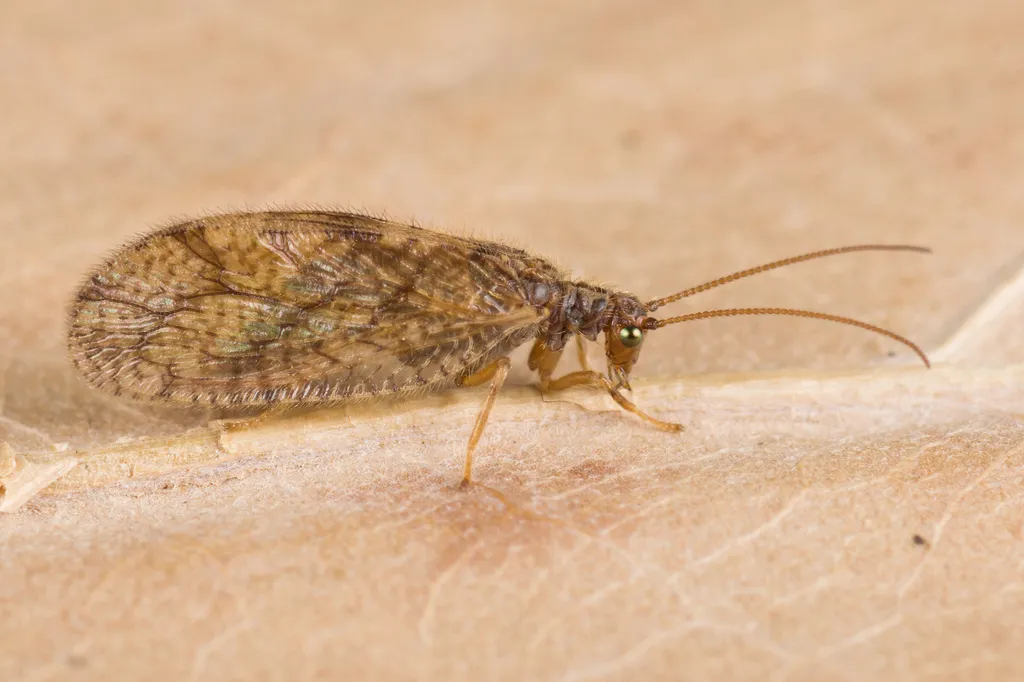
Photo credits: Contributed by v belov