
Psectra diptera
This record describes Psectra diptera (species). Recorded family: Hemerobiidae. Recorded order: Neuroptera.
Identification and Appearance
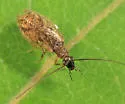
The status of P. diptera is uncertain, but it is almost certainly an introduction. All of the other species of Psectra are Old World (mostly Afrotropical, Australian and Oriental, with a number of species in Oceania); P. diptera is the only one in Europe, and it is likely that our NA populations are derived from unintentional introductions from Europe; probably fairly early post-European contact, and possibly from ballast-dump materials. --John Oswald, pers. comm. to =v= 3.vi.2013
Classification
- Kingdom
- Animalia
- Phylum
- Arthropoda
- Class
- Insecta
- Order
- Neuroptera (Antlions, Lacewings, and Allies)
- Family
- Hemerobiidae (Brown Lacewings)
- Subfamily
- Notiobiellinae
- Genus
- Psectra
Imported taxonomy record. Source availability varies; see the source references and editorial policy below.
Habitat and Range
Geographic Range
native to Europe, adventive in our area (John Oswald, pers. comm.): ne. NA (NF-ON south to VA-IN-IA)
Additional species information
Species notes from the sources
Etymology: Psectra diptera (Burmeister 1836)
About Antlions, Lacewings, and Allies: the wider group
Order-level background for Neuroptera, the group containing Psectra diptera. Species-specific details appear above.
Group overview
Neuroptera (lacewings, antlions, owlflies) includes ~6,000 described species. Green lacewing larvae are called 'aphid lions' - a single larva can consume up to 200 aphids per week.
Ecological role of the group
Antlion larvae build conical pit traps in sandy soil - an engineering feat studied by physicists for insights into granular mechanics. Adult lacewings are important pollinators of night-blooming flowers.
Economic and practical significance of the group
Lacewings are commercially reared and sold as biological pest control agents. The global biological pest control market, which heavily features lacewings, was valued at $6.6 billion in 2023 and is projected to reach $16.4 billion by 2033.
Recorded sources for this group: USDA IPM, biological control market research. Imported estimates may describe particular regions or reporting periods.
Photos of Psectra diptera (5)
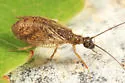
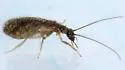
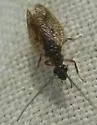
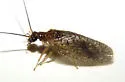
Photo credits: Contributed by tom murray; Additional contributions by v belov