
Cottonwood Dagger Moth - Hodges#9205
Acronicta lepusculina
This record describes Acronicta lepusculina (species). Recorded family: Noctuidae. Recorded order: Lepidoptera.
Identification and Appearance
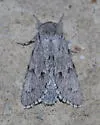
forewing whitish; lines faint except for 3 black blotches representing tips of lines at costa; black basal dash present; usually no orbicular spot hindwing white Although vulpina is usually paler, lepusculina is very variable and Midwestern ones can be nearly white. Vulpina has the PM line more offset towards the wing base and usually has an orbicular spot that is mostly absent in lepusculina...FW shape is more acute in lepusculina. Second comment: The dark patch in the postmedial area near the anal margin is more offset towards the wing base in vulpina compared to lepusculina, where the whole PM line is more even. - Chris Schmidt genitalia
Classification
- Kingdom
- Animalia
- Phylum
- Arthropoda
- Class
- Insecta
- Order
- Lepidoptera (Butterflies and Moths)
- Superfamily
- Noctuoidea
- Family
- Noctuidae (Owlet Moths)
- Subfamily
- Acronictinae
- Genus
- Acronicta (Dagger Moths)
Imported taxonomy record. Source availability varies; see the source references and editorial policy below.
Habitat and Range
Habitat
forested riverbanks; treed floodplains
Geographic Range
British Columbia to Nova Scotia, south to Florida, west to California (i.e. all of US and coast-to-coast in southern Canada)
Seasonal Activity
adults fly from April to September in the south (2 broods), and May to August in the north (1 brood)
Diet and Behavior
Diet: larvae feed on leaves of Populus species (Trembling Aspen, Balsam Poplar, Cottonwood), plus birch and willow
Life History
one generation per year in the north, two in the south Overwinters as a pupa in a cocoon composed of silk and bits of wood larva; adult
Additional species information
Species notes from the sources
Etymology: From Latin lepusculus- "little hare". The original description compares it to Acronicta leporina , whose name is itself derived from lepus- "hare"
About Butterflies and Moths: the wider group
Order-level background for Lepidoptera, the group containing Acronicta lepusculina. Species-specific details appear above.
Group overview
Lepidoptera includes approximately 180,000 described species of butterflies and moths. Moths outnumber butterflies roughly 10:1. The monarch butterfly's eastern population has declined by more than 80% since the mid-1990s, and the western population by over 95% since the 1980s. The IUCN lists the migratory monarch as Vulnerable.
Ecological role of the group
Butterflies and moths are essential indicators of ecosystem health. As caterpillars, they are a primary food source for birds - a single nest of blue tit chicks requires ~10,000 caterpillars. Adult moths pollinate many night-blooming plants.
Economic and practical significance of the group
Lepidoptera are critical pollinators. In Europe, grassland butterfly species have declined by almost 50% since the early 1990s. In the UK, three-quarters of butterflies are in decline. In the U.S., five butterfly species have gone extinct since 1950, with 29 listed as endangered.
Recorded sources for this group: IUCN Red List, Xerces Society, USFWS, PNAS, WWF. Imported estimates may describe particular regions or reporting periods.
Photos of Cottonwood Dagger Moth - Hodges#9205 (5)
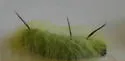
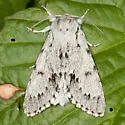
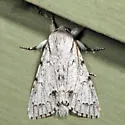
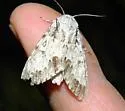
Photo credits: Contributed by john and jane balaban; Additional contributions by Robin McLeod , Tony-2 , Chuck Entz , Robert Lord Zimlich , marcie oconnor , Marci Hess
Frequently Asked Questions About Cottonwood Dagger Moth - Hodges#9205
What is Cottonwood Dagger Moth - Hodges#9205?
Cottonwood Dagger Moth - Hodges#9205 (Acronicta lepusculina) is a species in the family Noctuidae, within the order Lepidoptera.
How big is Cottonwood Dagger Moth - Hodges#9205?
wingspan 40-50 mm
How do you identify Cottonwood Dagger Moth - Hodges#9205?
forewing whitish; lines faint except for 3 black blotches representing tips of lines at costa; black basal dash present; usually no orbicular spot hindwing white Although vulpina is usually paler, lepusculina is very variable and Midwestern ones can be nearly white. Vulpina has the PM line more offset towards the wing base and usually has an orbicular spot that is mostly absent in lepusculina...FW shape is more acute in lepusculina. Second comment: The dark patch in the postmedial area near the anal margin is more offset towards the wing base in vulpina compared to lepusculina, where the whole PM line is more even. - Chris Schmidt genitalia
Where is Cottonwood Dagger Moth - Hodges#9205 found?
| Feature | Details |
|---|---|
| Habitat | forested riverbanks; treed floodplains |
| Range | British Columbia to Nova Scotia, south to Florida, west to California (i.e. all of US and coast-to-coast in southern Canada) |
What does Cottonwood Dagger Moth - Hodges#9205 eat?
The diet of the Cottonwood Dagger Moth - Hodges#9205 includes larvae feed on leaves of Populus species (Trembling Aspen, Balsam Poplar, Cottonwood), plus birch and willow.
When is Cottonwood Dagger Moth - Hodges#9205 active?
Cottonwood Dagger Moth - Hodges#9205: seasonal activity - adults fly from April to September in the south (2 broods), and May to August in the north (1 brood).
What is the life cycle of a Cottonwood Dagger Moth - Hodges#9205?
one generation per year in the north, two in the south Overwinters as a pupa in a cocoon composed of silk and bits of wood larva; adult