
Family Underwing, Tiger, Tussock, and Allied Moths (Noctuidae)
Noctuidae is a family in the order Lepidoptera. Browse 2,425 named species recorded in this family, or open an individual profile for its available identification and natural-history information.
Species in Noctuidae (2,425)
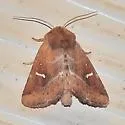
Amphipoea lunata - Hodges#9455
Amphipoea lunata
Identification: Smith original description as Apamea lunata is online.
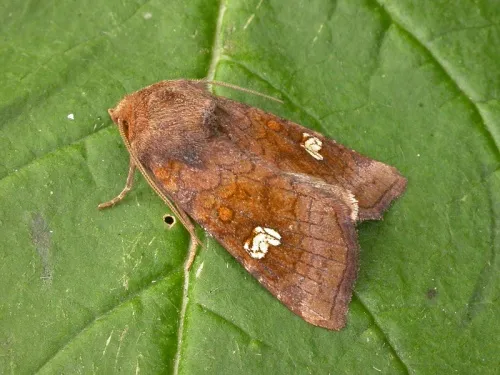
Ear Moth
Amphipoea oculea
There are possible (although unlikely in VC55) confusion species so gen det confirmation is required for this species. Gen det is required to identify this species, otherwise please record as Amphipoea oculea agg. Has one generation per year. The lar
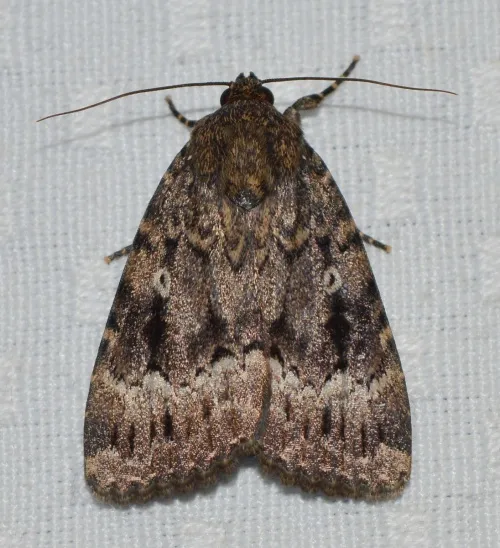
Svensson's Copper Underwing
Amphipyra berbera
Wingspan 47-56 mm. Only separated as a species from Copper Underwing ( A. pyramidea ) in the late 1960's, there are a number of subtle characters which can contribute to the identification, but often reference to the genitalia is needed to be sure. T
Amphipyra brunneoatra - Hodges#9641
Amphipyra brunneoatra
Identification: Pacific Northwest Moths has a detailed description. Specimen determined by DNA analysis (BOLD).
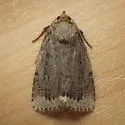
Smooth Amphipyra - Hodges#9640
Amphipyra glabella
Identification: Adult: forewing varies from medium to dark gray (and shiny under certain light) with orbicular and reniform spots reduced to dark dots; PM line curved, with large convex sinus below reniform spot; ST line straight, composed of dark gr
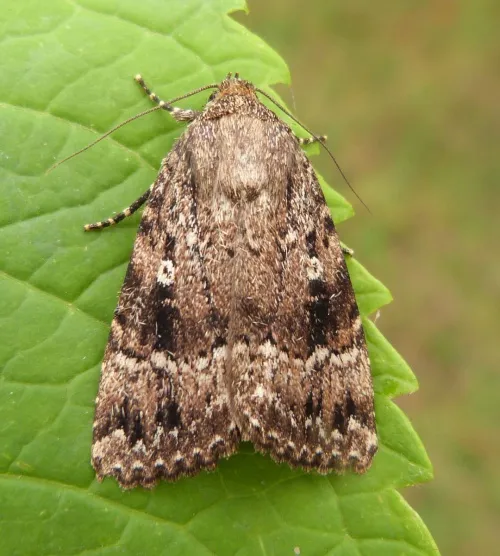
Copper Underwing
Amphipyra pyramidea
Wingspan 40-52 mm. There are a number of subtle ways to help distinguish this species from the similar Svensson's Copper Underwing ( A. berbera svenssoni ). The hindwing underside has a different pattern in the two species. Svensson's also has dark p
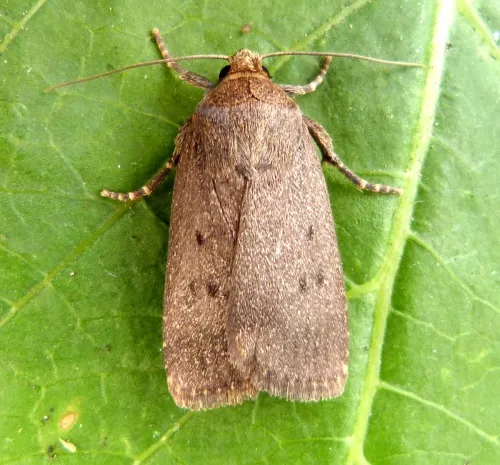
Mouse Moth
Amphipyra tragopoginis
Wingspan 33-38 mm. A very plain-looking moth, with three dark dots on the forewing, the ground colour is dark brown with a distinct glossy sheen. Gardens, woodland, sand-dunes, moorland and fens. The adults are on the wing from July to September and
Hook-tipped Amyna Moth - Hodges#9069
Amyna bullula
Identification: Adult: forewing brown with lighter yellowish shading in lower half, falcate outer margin, small pale patch near apex, and white or pale yellow fringe; hindwing brownish-gray with dark PM line and slightly wavy outer margin
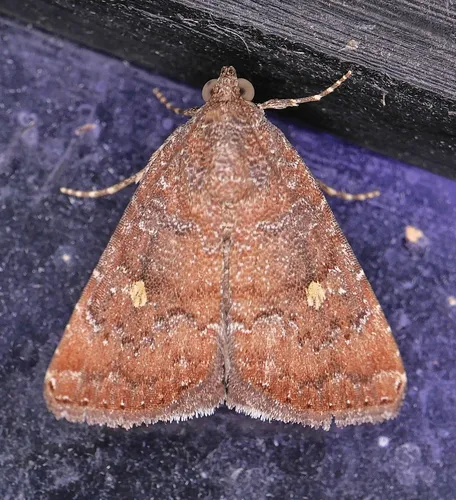
Eight-Spot - Hodges#9070
Amyna stricta
Identification: Adult: forewing variably reddish-brown to dark brown with indistinct black mottling and lines in basal half; reniform spot shaped like an "8", the lower half either solid white to orangish or filled with ground color, and the upper ha
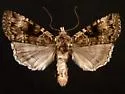
Anaplectoides brunneomedia - Hodges#11002
Anaplectoides brunneomedia
Identification: Similar to Anaplectoides pressus , replacing it at high elevations in the Appalachian Mountains, distinguished by the dark median area contrasting boldly with the rest of the wing.
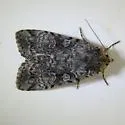
Anaplectoides pressus - Hodges#11001
Anaplectoides pressus
Identification: Specimens identified by DNA analysis: Genitalia:
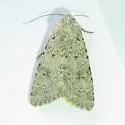
Anarta antica - Hodges#10258
Anarta antica
Anarta antica - Hodges#10258 (Anarta antica) is a species in the family Noctuidae, commonly known as owlet moths, belonging to the order Lepidoptera (Butterflies and Moths). It is classified within the subfamily Noctuinae, tribe Hadenini, superfamily
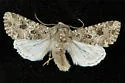
Anarta chartaria - Hodges#10222
Anarta chartaria
Identification: Specimen determined by DNA analysis (BOLD).
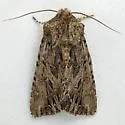
Anarta crotchii - Hodges#10233
Anarta crotchii
Identification: The original description as Mamestra crotchii Grote, and a revised description are available in the print references below. Anarta crotchii and Anarta fusculenta require examination of genitalia to distinguish. ( 4 ) Genitalia:
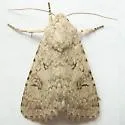
Anarta decepta - Hodges#10259
Anarta decepta
Identification: The original description as Trichoclea decepta Grote, and the revised description by Hampson (1905) are both available online at the links in the print references below. - Specimen identified by DNA analysis (BOLD). ( 3 )
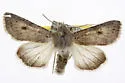
Anarta edwardsii - Hodges#10255
Anarta edwardsii
Listed as Endangered in British Columbia by the Committee on the Status of Endangered Wildlife in Canada (COSEWIC). PDF
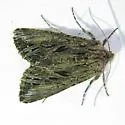
Anarta fusculenta - Hodges#10233.1
Anarta fusculenta
Anarta fusculenta - Hodges#10233.1 (Anarta fusculenta) is a species in the family Noctuidae, commonly known as owlet moths, belonging to the order Lepidoptera (Butterflies and Moths). It is classified within the subfamily Noctuinae, tribe Hadenini, s
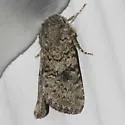
Anarta inconcinna - Hodges#10252
Anarta inconcinna
Identification: See Moths of the Pacific Northwest here This specimen identified by Lars Crabo
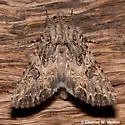
The Mutant - Hodges#10224
Anarta mutata
Identification: Adult: forewing brownish-gray with double AM and PM lines; orbicular spot oblong; dark shading in lower half of reniform spot; claviform spot cone-shaped (may be dark in some specimens, pale in others); subterminal line whitish, disti
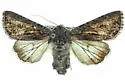
Anarta oaklandiae - Hodges#10234
Anarta oaklandiae
Identification: Specimen determined by DNA analysis (BOLD).
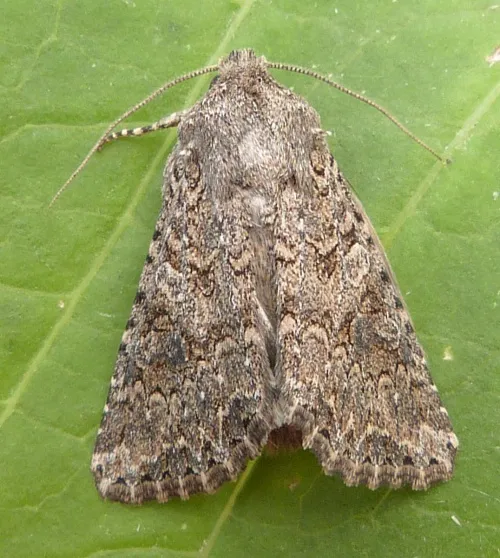
The Nutmeg
Anarta trifolii
Wingspan 30-35 mm. This moth has a finely variegated patterning of sandy and darker browns and greys. It also has quite a large kidney mark and the half near the trailing edge is always darker than the ground colour. It inhabits waste ground, agricul
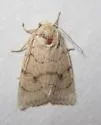
Anathix aggressa - Hodges#9963
Anathix aggressa
Identification: The forewing and hindwing are pale yellow and a large reniform spot.
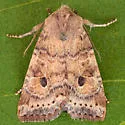
Puta Sallow - Hodges#9962
Anathix puta
Identification: FW is variably grayish brown to pale orange, typically with contrasting pale gray veins. Double AM & PM are filled with pale gray. Angled ML touches blackish spot in inner half of reniform spot. Midpoint of inconspicuous ST is accente
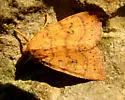
Dotted Sallow Moth - Hodges#9961
Anathix ralla
Identification: Adult : Orange FW has slightly scalloped, double AM and PM lines. Angled brown median band is often conspicuous. ST and terminal lines are rows of black dots. Orbicular and re-niform spots have diffuse blackish dots in inner halves.
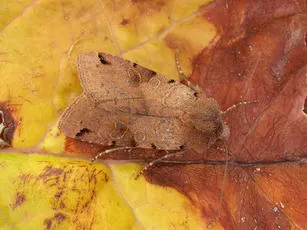
Brown-spot Pinion
Anchoscelis litura
Wingspan 28-35 mm. A fairly distinctive species, with a normally chestnut ground colour and several blackish marks on the leading edge of the forewing. It frequents woodland, heathland and bushy suburban habitats. Flying in September and October, it
Andropolia aedon - Hodges#9570
Andropolia aedon
Identification: Adult: forewing ground color white but covered with black speckling, giving an overall gray appearance; AM, PM, and subterminal lines black, zigzag, with large sharp teeth; thin black line runs along main vein to lower corner of renif
Canadian Giant - Hodges#9564
Andropolia contacta
Identification: Adult: forewing ground color white but covered with black speckling, giving an overall gray appearance; AM, PM, and subterminal lines black, zigzag, with large sharp teeth; thin black line runs along main vein to lower corner of renif
Andropolia diversilineata - Hodges#9563
Andropolia diversilineata
Identification: The Hampson, (1909) revised description of Andropolia diversilineata Grote , is available online at the link in the print references below Gray forewing with a black jagged, dentate submarginal line that creates two dark shaded triang
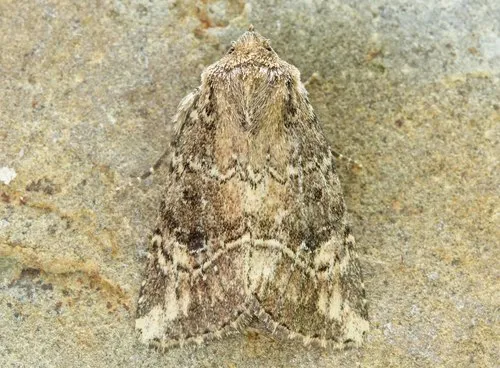
Anhimella contrahens - Hodges#10530
Anhimella contrahens
Identification: "This species can usually be recognized despite the variation in color and degree of mottling by the small size, dull-color, toothed lines with pale filling and smooth courses across the wing, and pale spots with dark filling" .
Anhimella pacifica - Hodges#10531
Anhimella pacifica
Identification: "This species can usually be identified by its small size and gray-brown color, pale filled smooth antemedial and postmedial lines, a light mark below the apex, dark-filled forewing spots, and light hindwing" .
Anicla beata - Hodges#10904
Anicla beata
Identification: Original description online as Agrotis beata Grote. (54) .
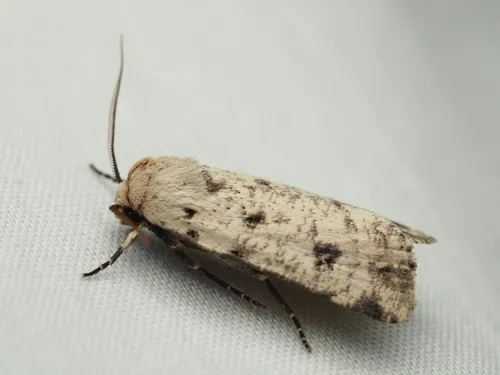
Anicla cemolia - Hodges#10912
Anicla cemolia
Anicla cemolia - Hodges#10912 (Anicla cemolia) is a species in the family Noctuidae, commonly known as owlet moths, belonging to the order Lepidoptera (Butterflies and Moths). It is classified within the subfamily Noctuinae, tribe Noctuini, superfami
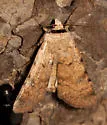
Anicla exuberans - Hodges#10905
Anicla exuberans
Identification: Powell & Opler (2009) stated "The adults are geographically variable in FW color and size." ( 3 ) The black thoracic collar is diagnostic.
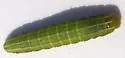
Snowy Dart - Hodges#10903
Anicla illapsa
Identification: Adult: forewing light gray to reddish-brown with black speckling; dark shading beyond PM line, especially near costa; reniform spot blackish, often broken into 2 or 3 parts; lines darkest at costa; hindwing white with some gray at ape
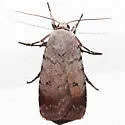
Anicla lubricans - Hodges#10901
Anicla lubricans
Identification: Easily confused with the very similar Anicla illapsa . The safest way to separate the 2 species is by looking at the hindwings. On Anicla illapsa , the hindwings are white but on Anicla lubricans the hindwings are grayish.
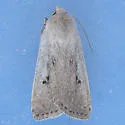
Anicla simplicius - Hodges#10907
Anicla simplicius
Identification: Adult: forewing pale gray or tan-colored with sparse black speckling; three irregular black pieces grouped in area of reniform spot; faint dark streaks in areas where orbicular and claviform spots normally present; terminal line compo
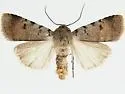
Anicla sullivani - Hodges#10901.1
Anicla sullivani
Identification: Specimen identified by DNA analysis (BOLD).
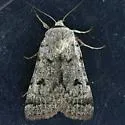
Anicla tepperi - Hodges#10910
Anicla tepperi
Identification: A medium size (3.6 - 4.0 cm wingspan) blue-grey moth with prominent but variable darker grey or black banding and streaking. The normal lines are usually well-marked, in particular the antemedian and postmedian lines. The orbicular sp
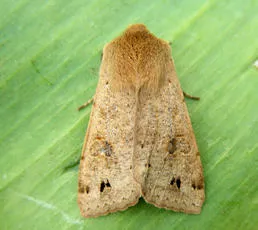
Twin-spotted Quaker
Anorthoa munda
Wingspan 38 to 44 mm. A variable species, with forewings ranging from pale buff to reddish-brown. The blackish twin spots are usually obvious, but in some forms, including ab. immaculata, these are reduced to barely discernible rufous marks, or obsol
Anycteola fotelloides - Hodges#9840
Anycteola fotelloides
Identification: Adult : see referenced bulletin for detail description My thanks to Christian Schmidt for identifying the images I sent to him. [A. Hendrickson]
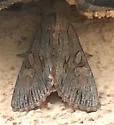
Apamea acera - Hodges#9338
Apamea acera
Identification: "Apamea acera is the only large ash-gray Apamea in North America. Usually, there is some orange shading around the orbicular and reniform spots. The basal dash is sharply defined in black and frequently extends almost to the postmedia
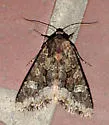
Yellow-headed Cutworm - Hodges#9348
Apamea amputatrix
Identification: Forewing mostly deep red with pale gray subterminal band; reniform spot has two distinctive small white dots at inside corner. A dark gray form also occurs.
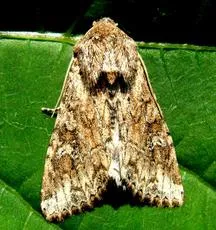
Large Nutmeg
Apamea anceps
Wingspan 35-40 mm. Fairly distinctive, with light ochreous forewing often longer and narrower than in other Apamea species. Inhabiting dry pasture and woodland fringes. Adults fly in June and July and are attracted to light and sugar. The larvae feed
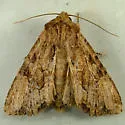
Apamea atriclava - Hodges#9333.1
Apamea atriclava
Identification: Specimen identified by DNA analysis (BOLD). ( 3 )
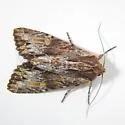
Apamea atrosuffusa - Hodges#9336
Apamea atrosuffusa
Identification: The original description as Parastichtis atrosuffusa Barnes & McDunnough, is available online in the print references below.
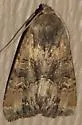
Apamea burgessi - Hodges#9378
Apamea burgessi
Identification: Description can be found in MONA Fascicle 26-9 at link in citations below.
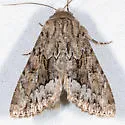
Apamea cinefacta - Hodges#9357
Apamea cinefacta
Identification: Specimens identified by DNA analysis:
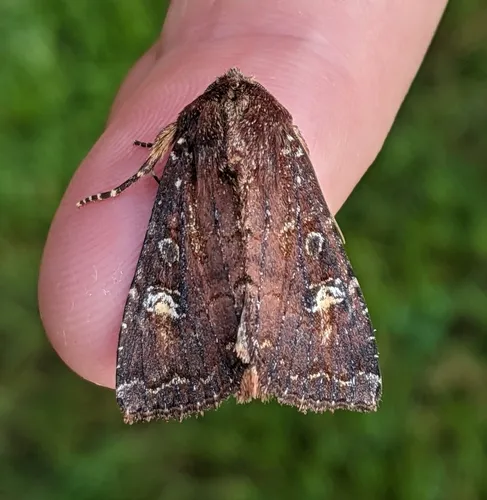
Thoughtful Apamea - Hodges#9367.1
Apamea cogitata
Identification: forewing reddish-brown, darker in subterminal area; reniform spot pale yellow or whitish with dark line running through it; orbicular spot oval, diagonal, with faint whitish outline; subterminal line thin, pale, jagged, indistinct; se
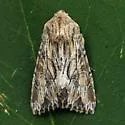
Apamea commoda - Hodges#9359
Apamea commoda
Identification: Two very different forms. A medium-sized very dark chocolate or red-brown moth, dusted and shaded with blackish. FW veins black with a few light scales, pattern normal, black where visible, but often lost. Lines fine, single, scallope
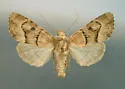
Northern Banded Quaker - Hodges#9394
Apamea contradicta
Identification: Distinctive orange-brown forewing has a darker median area within two curved black transverse lines. The sexes are nearly identical. - Photo of specimen from MNT Lepidoptera Collection Leg. Henry Hensel
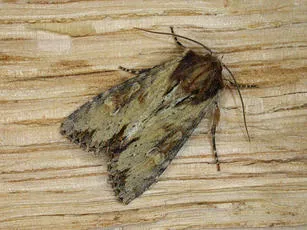
Clouded-bordered Brindle
Apamea crenata
Wingspan 36-44 mm. There is a frequent brownish or melanic variant, ab. combusta , in addition to the well-marked typical form. The single generation flies in June and July, sometimes earlier, and is frequent at light. The caterpillars feed on variou
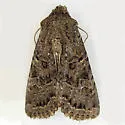
Glassy Cutworm - Hodges#9382
Apamea devastator
Identification: Specimens identified by DNA analysis: Genitalia: considered a serious pest of sod grass and agricultural products
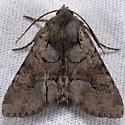
Apamea digitula - Hodges#9364.1
Apamea digitula
Identification: Apamea sordens and A. digitula can only be separated by dissection or DNA. ( 3 ) , ( 4 ) Specimen identified by DNA analysis (BOLD). ( 5 )
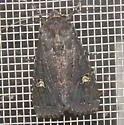
Doubtful Apamea - Hodges#9367
Apamea dubitans
Identification: Detailed description can be found in MONA Fascicle 26-9 at link in citations below. Base of rose-thorns higher than wide; barrel shaped. In A. cogitata, base of rose-thorn nearly flat; much wider than high. Forbes, 1954. digitus slend
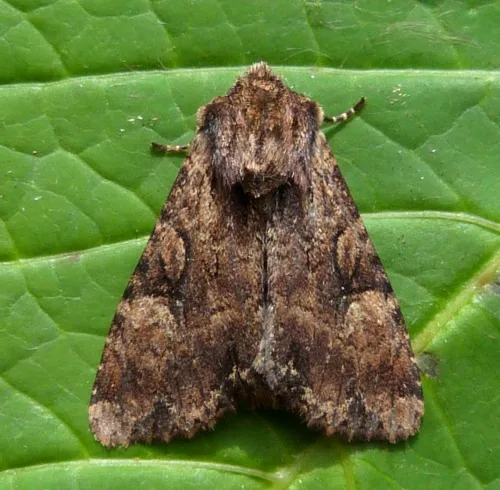
Clouded Brindle
Apamea epomidion
Wingspan 40 to 46 mm. A variable moth that is similar to Clouded-bordered Brindle but the markings are usually more distinct. There is just one brood, flying in May to July. The species frequently visits sugar, less frequently light. The overwinterin
Apamea geminimacula - Hodges#9368
Apamea geminimacula
Identification: Description can be found in MONA Fascicle 26-9 at link in citations below.
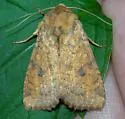
Yellow Three-Spot - Hodges#9373
Apamea helva
Identification: Adult: forewing dull orangish-yellow with broken gray lines and three gray patches: at costa above reniform spot, in lower half of reniform spot, and near apex; subterminal line broken near costa (a distinctive feature); hindwing gray
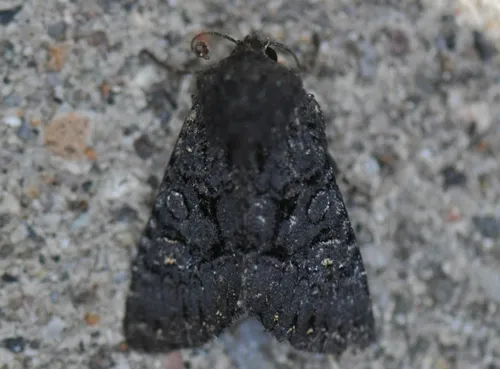
Apamea impulsa - Hodges#9360
Apamea impulsa
Identification: Adult: forewing very dark gray with black lines that contrast only slightly against ground color; AM and PM lines indistinct; center of reniform spot slightly paler than perimeter; orbicular and claviform spots visible as black outlin
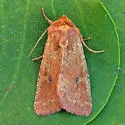
Lined Quaker - Hodges#9369
Apamea inficita
Identification: A medium-sized rusty-brown or yellow-brown, or ocassionaly pink moth with few markings, the most prominent being the dark, somewhat smeared and elongated reniform spot. The postmedian and subterminal lines are usually visible as faint
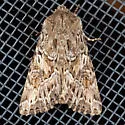
Apamea inordinata - Hodges#9353
Apamea inordinata
Identification: genitalia ct.gov - listed as Species of Concern in Connecticut
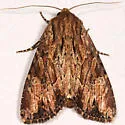
Wood-colored Apamea - Hodges#9333
Apamea lignicolora
Identification: Adult: forewing yellowish with reddish-brown shading; AM and PM lines obscure; PM line bends sharply; ST line forms a "W" at its middle, dividing black terminal shading into two large patches hindwing grayish-brown [description by Cha
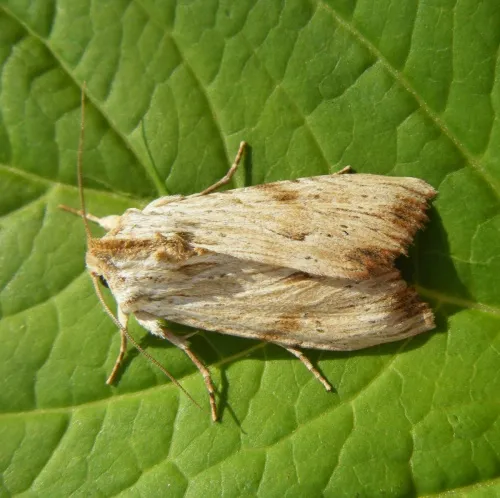
Light Arches
Apamea lithoxylaea
Wingspan 43-50 mm. Has a pale and rather ragged appearance. It inhabits dry pastures and similarly grassy places The flight period is between June and August, this species responds to light to a certain extent , but is more frequent at sugar The larv
Apamea longula - Hodges#9383
Apamea longula
Identification: Forewing has black basal dash and one in the median area. Hindwing is light grayish tan.
Apamea maxima - Hodges#9337
Apamea maxima
Identification: Adult: forewing light brown to orangish with conspicuous black outlines of reniform, orbicular, and claviform spots; claviform spot long and pointed, reaching to PM line; black basal dash, and several dark slender V-shaped markings al
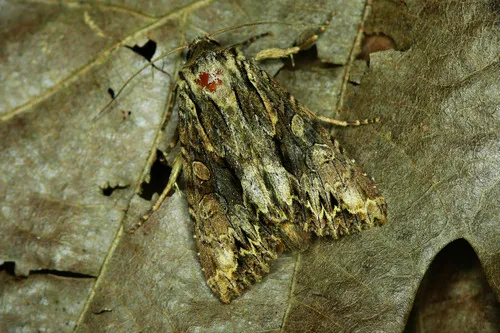
Dark Arches
Apamea monoglypha
Wingspan 45-55 mm. There are frequent melanic specimens, especially in the north. Occurring in a variety of habitats, especially more grassy areas. It is on the wing from July to August, with a later second brood in the south. It is readily attracted
Black-dashed Apamea - Hodges#9328
Apamea nigrior
Identification: Adult: forewing brown with black streak running parallel to inner margin from base to PM line, and a second shorter streak along inner margin near base; prominent black veins in outer half of wing; lighter strip along costa near base;
Snowy-veined Apamea - Hodges#9374
Apamea niveivenosa
Identification: Adult: forewing dark gray with conspicuous white veins and some pale shading along costa, along inner margin, and in subterminal area; hindwing brownish-gray, shading to dirty white basally, with pale veins, dark discal dot, and pale
Western Apamea - Hodges#9346
Apamea occidens
Identification: Adult: forewing gray with well-defined lines and large pale discal spots, broad gray subterminal band (sometimes tinted with pink), and no dentate subterminal line; AM line white, double, lobed; black anal dash, and short black basal
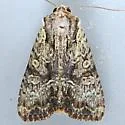
Apamea quinteri - Hodges#9329.1
Apamea quinteri
Identification: The original description in MONA Fascicle 26.9. Specimen identified by DNA analysis (BOLD).
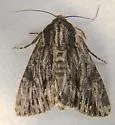
Apamea relicina - Hodges#9380
Apamea relicina
Identification: Photo from Marcie O'Connor identified by Merrill Lynch and conformed by Hugh McGuinness . Listed on the Indiana Endangered, Threatened, and Rare Species (PDF) list.
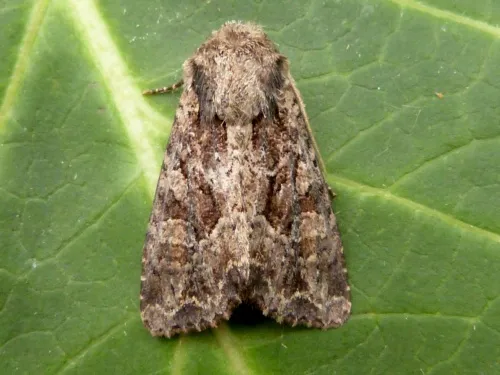
Dusky Brocade
Apamea remissa
Wingspan 36-42 mm. Two main forms of this species occur regularly, though others have been described. The dull, poorly-marked form obscura is the commonest and resembles a number of other species, most notably 'The Confused'. The typical form is bett
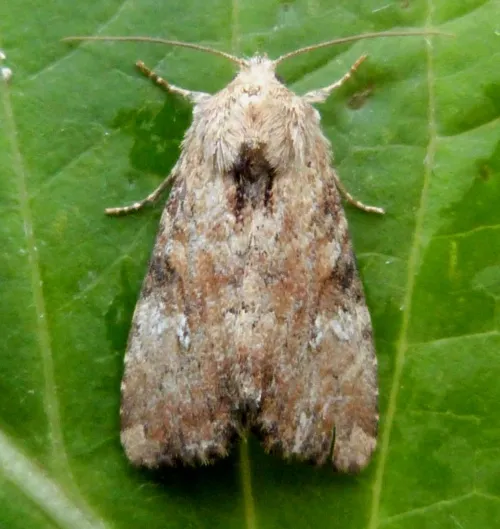
Slender Brindle
Apamea scolopacina
Wingspan 32 to 36 mm. A rather attractive species which does not tend to vary as much as its congeners. The larval foodplants are a range of woodland grasses, including Wood Millet and Wood-rushes. Locally distributed in the southern half of Britain,
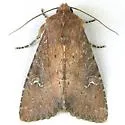
Apamea scoparia - Hodges#9365
Apamea scoparia
Identification: Adult: forewing dull reddish-brown; upper half of reniform spot filled with ground color, lower half dark gray to blackish, and distal edge with pale scales, including two converging small whitish ovals in lower corner of reniform spo
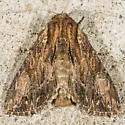
Apamea siskiyou - Hodges#9334.1
Apamea siskiyou
Identification: Description at Moths of the Pacific Northwest Specimen identified by Lars Crabo.
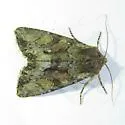
Apamea sora - Hodges#9339.1
Apamea sora
Apamea sora - Hodges#9339.1 (Apamea sora) is a species in the family Noctuidae, commonly known as owlet moths, belonging to the order Lepidoptera (Butterflies and Moths). It is classified within the subfamily Noctuinae, tribe Apameini, superfamily No
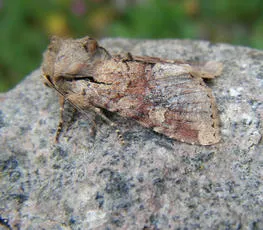
Rustic Shoulder-knot
Apamea sordens
Wingspan 34-42 mm. A variable moth but often a relatively dull brownish colour, sometimes pinker. It it can usually be recognised by the black 'shoulder-knot', a streak at the base of the forewing. Frequenting meadows, fields and other grassy places.
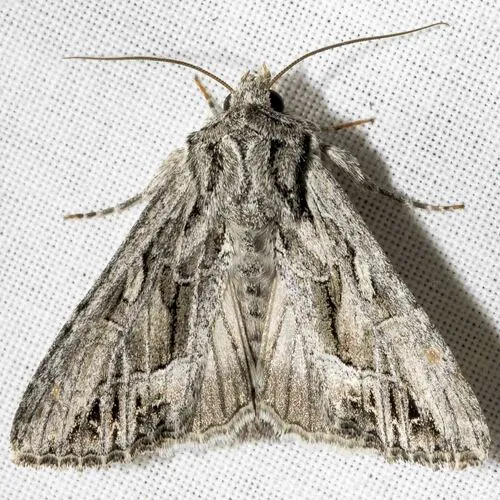
Spalding's Quaker - Hodges#9356
Apamea spaldingi
Identification: The original description as Hyppa spaldingi Smith is online at the link in the print references below. - Strong black basal dash and thick longitudinal median bar on the grey forewing. Specimen identified by DNA analysis (BOLD) ( 3 )
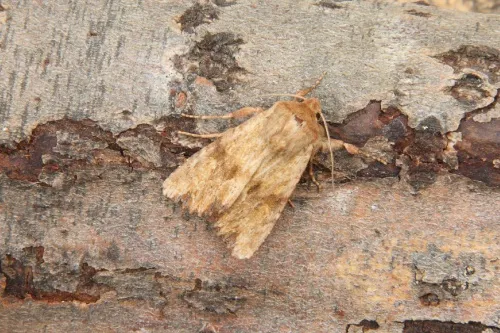
Reddish Light Arches
Apamea sublustris
Wingspan 42 to 48 mm. Resembling a pale version of Clouded-bordered Brindle (Apamea crenata) or a darker Light Arches (A. lithoxylaea). The early stages are incompletely known, but the larva is said to feed on the roots of grasses. It is distributed
Apamea unita - Hodges#9355
Apamea unita
Identification: Description can be found in MONA Fascicle 26-9 at link in citations below.
Apamea verbascoides - Hodges#9326
Apamea verbascoides
Identification: Adult: forewing light brown in upper half, dark brown with black steaks in lower half, except for speckled gray strip bordering inner margin; black basal, median, and anal dashes almost join to form a continuous stripe parallel to inn
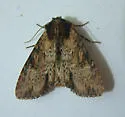
Airy Apamea - Hodges#9341
Apamea vultuosa
Identification: Adult: forewing light brown with two dark gray dashes along outer margin, dark shading in upper half of median area, and basal half of reniform spot filled with gray; PM line a series of white-dotted black streaks along veins; hindwin
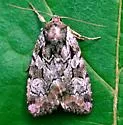
Quivering Dart Moth - Hodges#10999
Aplectoides condita
Identification: Specimen identified by DNA analysis: Genitalia: ♂
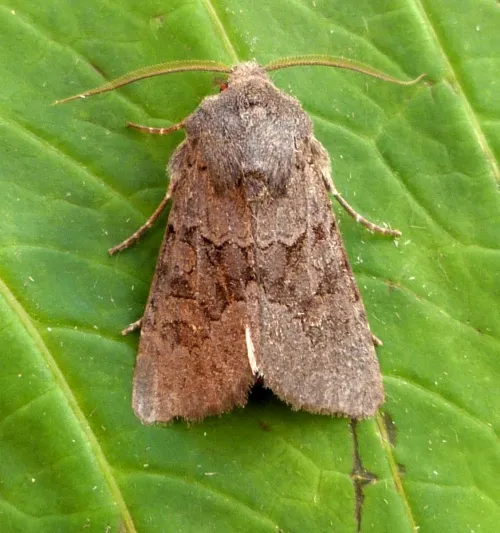
Deep-brown Dart
Aporophyla lueneburgensis
Wingspan 36 to 44 mm. A very dull brown moth sometimes with rather inconspicuous markings, but with very white underwings. A taxonomic review established that Aporophyla lutulenta is the same species as Aporophyla lueneburgensis . The adults are on t
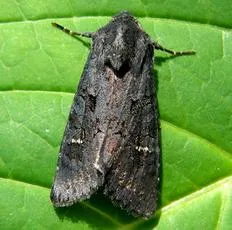
Black Rustic
Aporophyla nigra
Wingspan 40-46 mm. A rather long-winged species, with little variation from the blackish ground colour and whitish stigmata. The males have white hindwings, the females more dusky. The adults fly in September and October. The larvae feed on low plant
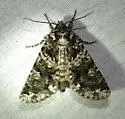
Apsaphida eremna - Hodges#10022
Apsaphida eremna
Identification: Franclemont (1973) described the adult, larva, and genitalia. The description can be viewed online in the print references below.
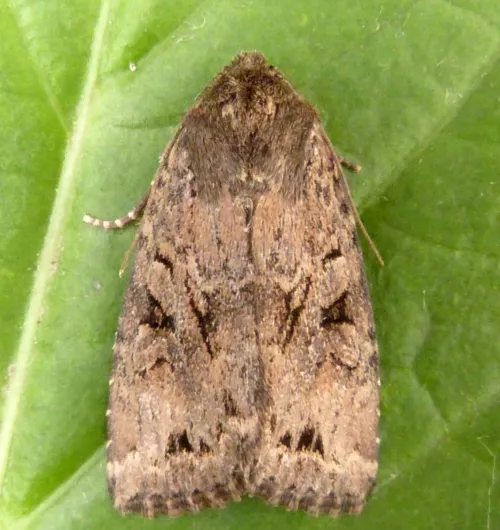
Dingy Shears
Apterogenum ypsillon
Wingspan 32 to 42 mm. A rather dull and nondescript species, as suggested by the English name. Various habitats, especially around Willow. The adult flight time is during June and July, and can be attracted by sugar as well as light. The caterpillars
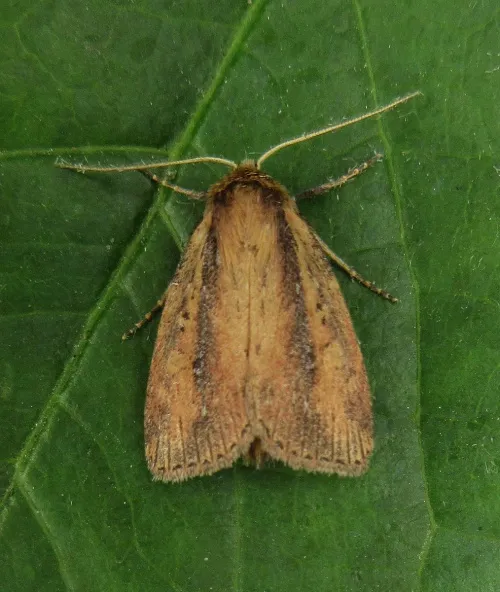
Brown-veined Wainscot
Archanara dissoluta
Wingspan 27 to 33 mm. The dull or reddish straw coloured forewing is dusted with grey and black and has a thick brown streak emanating centrally from the base. In the female this streak is restricted to the base but in the male it extends to the oute
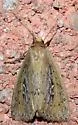
White-mantled Wainscot
Archanara neurica
From 2019 to 2024, approximately 30,000 Archanara neurica and Lenisa geminipuncta were released as biocontrol agents against Phragmites in 50 sites across southern Ontario, from Essex County in the southwest, to North Bay in the north, and east to Ot
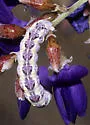
Argentostiria koebelei - Hodges#9779
Argentostiria koebelei
Identification: Adults are very unique: Larva identified by David Wagner, 2022:
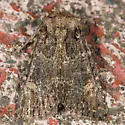
Rusty Shoulder Knot Moth - Hodges#9532
Aseptis binotata
Rusty Shoulder Knot Moth - Hodges#9532 (Aseptis binotata) is a species in the family Noctuidae, commonly known as owlet moths, belonging to the order Lepidoptera (Butterflies and Moths). It is classified within the subfamily Noctuinae, tribe Xylenini
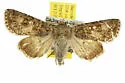
Aseptis catalina - Hodges#9528
Aseptis catalina
Identification: Smith, 1899) original description as Hadena catalina , and the Hampson (1908) description as Traecha catalina are online in the print references. Specimen determined by DNA analysis (BOLD). ( 3 )

Aseptis ferruginea - Hodges#9531.2
Aseptis ferruginea
Identification: Mustelin et al. original description in PDF. Specimen determined by DNA analysis (BOLD).
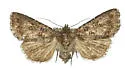
Aseptis fumeola - Hodges#9530
Aseptis fumeola
Identification: Hampson original description of the adult is online in the print references. Crumb description of the larvae is also available online. Specimen determined by DNA analysis (BOLD).
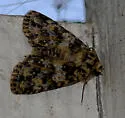
Aseptis lichena - Hodges#9574
Aseptis lichena
Identification: See diagnosis in Mustelin & Crabo as well as the original description . Genitalia:
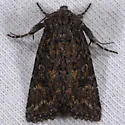
Aseptis perfumosa - Hodges#9529
Aseptis perfumosa
Identification: Specimen identified by DNA analysis (BOLD). ( 5 )
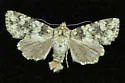
Aseptis pseudolichena - Hodges#9529.1
Aseptis pseudolichena
Identification: Mustelin & Leuschner original description in PDF. Specimen determined by DNA analysis (BOLD).
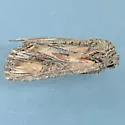
Aseptis susquesa - Hodges#9539
Aseptis susquesa
Identification: See Mustelin & Crabo for both adult and larva. Smith original description as Hadena susquesa is available online in the print references.
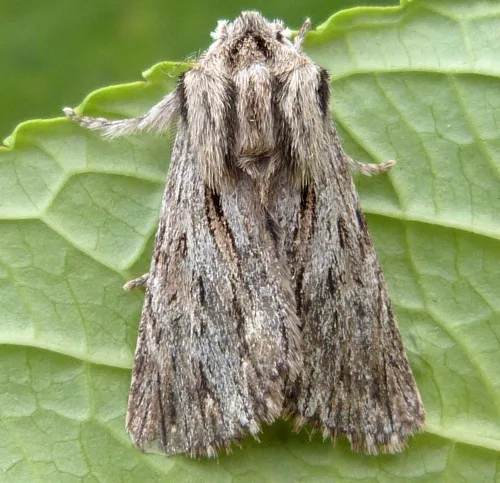
The Sprawler
Asteroscopus sphinx
Wingspan 39 to 49 mm.This moth has a very furry thorax, and its broad pale wings are streaked with darker colours. It is a late flying species, being on the wing from October to December. The English name 'Sprawler' comes from the larva's habit of th
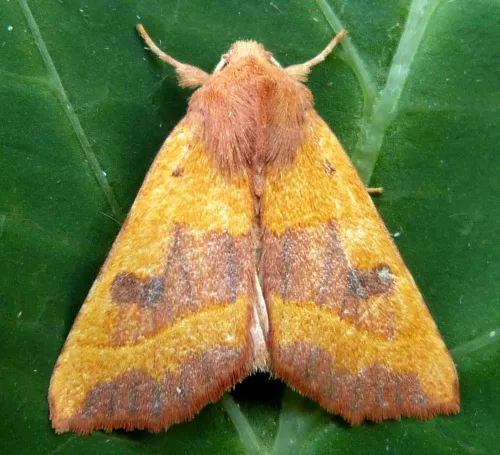
Centre-barred Sallow
Atethmia centrago
Wingspan 32-36 mm. Striking in appearance and unlikely to be confused with anything else. The main habitats are woodland and hedgerows. The moths are on the wing during August and September. The caterpillars feed on Ash, burrowing into the buds when
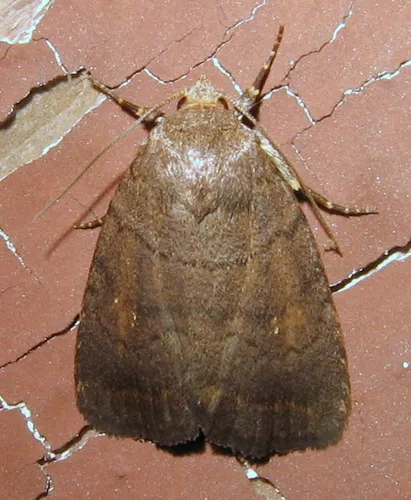
The Slowpoke - Hodges#9650
Athetis tarda
Identification: Adult - forewing dark grayish-brown; lines darker but usually inconspicuous; ST line wavy with pale tan to yellowish edging; spots inconspicuous, blackish; group of 4 pale dots around perimeter of reniform spot is diagnostic but not a