
Connected Dagger - Hodges#9219
Acronicta connecta
This record describes Acronicta connecta (species). Recorded family: Noctuidae. Recorded order: Lepidoptera.
Identification and Appearance
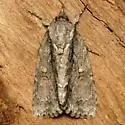
Adult: forewing yellowish-gray with broad blackish basal and anal dashes that are diffuse, blurred, and more-or-less connected in lower median area; dull orangish shading usually noticeable in upper median area (inside and distal to reniform spot); distal half of orbicular spot and basal half of reniform spot edged in black; hindwing variably dirty white to light gray with dark veins Larva: body dark green with two thick yellow subdorsal stripes; each abdominal segment has four black dorsal dots arranged in distinctive pattern; head usually green with lobes reddened above, but may also be reddish-brown, gray, or black Specimens from the Gulf Coast through south-western Texas into Mexico have the long basal-posterior dark streak reduced or absent, and the ground color is a more even, paler brown. These populations were previously placed as A. rapidan , but the pattern differences are clinal, with specimens from central Texas and eastward along the Gulf Coast showing progressively more contrast in forewing shading. There are no discernible genitalic structure differences, although three specimens of the rapidan phenotype from southern Texas differ by 2% in DNA barcodes from A. connecta .
Classification
- Kingdom
- Animalia
- Phylum
- Arthropoda
- Class
- Insecta
- Order
- Lepidoptera (Butterflies and Moths)
- Superfamily
- Noctuoidea
- Family
- Noctuidae (Owlet Moths)
- Subfamily
- Acronictinae
- Genus
- Acronicta (Dagger Moths)
Imported taxonomy record. Source availability varies; see the source references and editorial policy below.
Habitat and Range
Habitat
wetlands and edges of streams and rivers
Geographic Range
Great Lakes region to central New England, south to Florida, west to Texas and Utah
Seasonal Activity
adults fly from May to August mature larvae present from May onward
Diet and Behavior
Diet: larvae feed on leaves of willow ( Salix spp.)
Life History
two generations per year Larva; pupa; adult
Additional species information
Species notes from the sources
Etymology: specific epithet and common name may refer to the forewing's basal and anal dashes which more-or-less connect in the lower median area
About Butterflies and Moths: the wider group
Order-level background for Lepidoptera, the group containing Acronicta connecta. Species-specific details appear above.
Group overview
Lepidoptera includes approximately 180,000 described species of butterflies and moths. Moths outnumber butterflies roughly 10:1. The monarch butterfly's eastern population has declined by more than 80% since the mid-1990s, and the western population by over 95% since the 1980s. The IUCN lists the migratory monarch as Vulnerable.
Ecological role of the group
Butterflies and moths are essential indicators of ecosystem health. As caterpillars, they are a primary food source for birds - a single nest of blue tit chicks requires ~10,000 caterpillars. Adult moths pollinate many night-blooming plants.
Economic and practical significance of the group
Lepidoptera are critical pollinators. In Europe, grassland butterfly species have declined by almost 50% since the early 1990s. In the UK, three-quarters of butterflies are in decline. In the U.S., five butterfly species have gone extinct since 1950, with 29 listed as endangered.
Recorded sources for this group: IUCN Red List, Xerces Society, USFWS, PNAS, WWF. Imported estimates may describe particular regions or reporting periods.
Photos of Connected Dagger - Hodges#9219 (5)
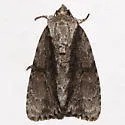
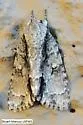
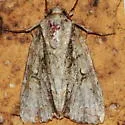
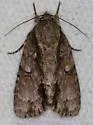
Photo credits: Contributed by Robin McLeod; Additional contributions by Steve Nanz , Tony-2 , marcie oconnor , Randy Hardy , Blocky
Frequently Asked Questions About Connected Dagger - Hodges#9219
What is Connected Dagger - Hodges#9219?
Connected Dagger - Hodges#9219 (Acronicta connecta) is a species in the family Noctuidae, within the order Lepidoptera.
How big is Connected Dagger - Hodges#9219?
wingspan 30-40 mm, based on several Internet photos
How do you identify Connected Dagger - Hodges#9219?
Adult: forewing yellowish-gray with broad blackish basal and anal dashes that are diffuse, blurred, and more-or-less connected in lower median area; dull orangish shading usually noticeable in upper median area (inside and distal to reniform spot); distal half of orbicular spot and basal half of reniform spot edged in black; hindwing variably dirty white to light gray with dark veins Larva: body dark green with two thick yellow subdorsal stripes; each abdominal segment has four black dorsal dots arranged in distinctive pattern; head usually green with lobes reddened above, but may also be reddish-brown, gray, or black
Where is Connected Dagger - Hodges#9219 found?
| Feature | Details |
|---|---|
| Habitat | wetlands and edges of streams and rivers |
| Range | Great Lakes region to central New England, south to Florida, west to Texas and Utah |
What does Connected Dagger - Hodges#9219 eat?
The diet of the Connected Dagger - Hodges#9219 includes larvae feed on leaves of willow ( Salix spp.).
When is Connected Dagger - Hodges#9219 active?
Connected Dagger - Hodges#9219: seasonal activity - adults fly from May to August mature larvae present from May onward.
What is the life cycle of a Connected Dagger - Hodges#9219?
two generations per year Larva; pupa; adult