
Langton's Forester Moth - Hodges#9318
Alypia langtoni
This record describes Alypia langtoni (species). Recorded family: Noctuidae. Recorded order: Lepidoptera.
Identification and Appearance
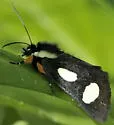
The most widespread Forester in Canada, ranging from Newfoundland & Labrador all the way to the Yukon. Adults with just one spot on each hindwing coupled with two on each forewing gives the species its common name. Larvae feed on Fireweed (Epilobium) .
Classification
- Kingdom
- Animalia
- Phylum
- Arthropoda
- Class
- Insecta
- Order
- Lepidoptera (Butterflies and Moths)
- Superfamily
- Noctuoidea
- Family
- Noctuidae (Owlet Moths)
- Subfamily
- Agaristinae
- Genus
- Alypia
Imported taxonomy record. Source availability varies; see the source references and editorial policy below.
Habitat and Range
Geographic Range
most of Canada from the Canadian Zone forests of southern Canada to the boreal forest and tundra regions of the Northwest Territories, the Yukon, and Alaska; eastern United States in northern and central Maine, northern New Hampshire, northern Vermont, and the Adirondack Mountains of upstate New York, northern Michigan and Minnesota, the mountains of the western United Statesd from the Canadian border east to western Montana and western South Dakota and south as far as the White Mountains of central Arizona, and California as far south as Santa Cruz County (Nearctica.com)
Diet and Behavior
Diet: Epilobium (Crumb, 1955)
About Butterflies and Moths: the wider group
Order-level background for Lepidoptera, the group containing Alypia langtoni. Species-specific details appear above.
Group overview
Lepidoptera includes approximately 180,000 described species of butterflies and moths. Moths outnumber butterflies roughly 10:1. The monarch butterfly's eastern population has declined by more than 80% since the mid-1990s, and the western population by over 95% since the 1980s. The IUCN lists the migratory monarch as Vulnerable.
Ecological role of the group
Butterflies and moths are essential indicators of ecosystem health. As caterpillars, they are a primary food source for birds - a single nest of blue tit chicks requires ~10,000 caterpillars. Adult moths pollinate many night-blooming plants.
Economic and practical significance of the group
Lepidoptera are critical pollinators. In Europe, grassland butterfly species have declined by almost 50% since the early 1990s. In the UK, three-quarters of butterflies are in decline. In the U.S., five butterfly species have gone extinct since 1950, with 29 listed as endangered.
Recorded sources for this group: IUCN Red List, Xerces Society, USFWS, PNAS, WWF. Imported estimates may describe particular regions or reporting periods.
Photos of Langton's Forester Moth - Hodges#9318 (5)
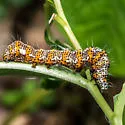
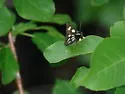

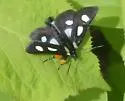
Photo credits: Contributed by Tony; Additional contributions by john and jane balaban | Contributed by Tony; Additional contributions by john and jane balaban , Maury Heiman , Randy Hardy
Frequently Asked Questions About Langton's Forester Moth - Hodges#9318
What is Langton's Forester Moth - Hodges#9318?
Langton's Forester Moth - Hodges#9318 (Alypia langtoni) is a species in the family Noctuidae, within the order Lepidoptera.
Where is Langton's Forester Moth - Hodges#9318 found?
Range: most of Canada from the Canadian Zone forests of southern Canada to the boreal forest and tundra regions of the Northwest Territories, the Yukon, and Alaska; eastern United States in northern and central Maine, northern New Hampshire, northern Vermont, and the Adirondack Mountains of upstate New York, northern Michigan and Minnesota, the mountains of the western United Statesd from the Canadian border east to western Montana and western South Dakota and south as far as the White Mountains of central Arizona, and California as far south as Santa Cruz County (Nearctica.com)
What does Langton's Forester Moth - Hodges#9318 eat?
The diet of the Langton's Forester Moth - Hodges#9318 includes Epilobium (Crumb, 1955).