
Miller Dagger - Hodges#9206
Acronicta vulpina
This record describes Acronicta vulpina (species). Recorded family: Noctuidae. Recorded order: Lepidoptera.
Identification and Appearance
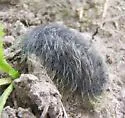
Adult: forewing chalky white, lightly dusted with gray scales; normal lines are reduced to a few black spots where they would meet the costa, and a series of small dots marking the terminal line; other markings include a short basal streak, a few dark scales at the orbicular spot, a small crescent for the reniform spot; several small spots or streaks on the upper half, and a larger black blotch and streak near the anal angle indicate the subterminal line hindwing white with small discal spot and series of black spots along margin at veins; sexes similar but females with a few more dark scales, especially along veins of hindwing Larva: covered with long soft pale yellow hair, pointing forward on one side and backward on the other, due to the habit of resting with the body doubled sideways; has several small hair pencils, white and black, which do not exceed the length of the yellow hair [both descriptions adapted from text at U. of Alberta site] genitalia
Classification
- Kingdom
- Animalia
- Phylum
- Arthropoda
- Class
- Insecta
- Order
- Lepidoptera (Butterflies and Moths)
- Superfamily
- Noctuoidea
- Family
- Noctuidae (Owlet Moths)
- Subfamily
- Acronictinae
- Genus
- Acronicta (Dagger Moths)
Imported taxonomy record. Source availability varies; see the source references and editorial policy below.
Habitat and Range
Habitat
mature deciduous and mixedwood forests; urban plantations
Geographic Range
Northwest Territories and British Columbia to Newfoundland, south to New York, west to Colorado
Seasonal Activity
adults fly from May to July (in Alberta)
Diet and Behavior
Diet: larvae feed on leaves of Trembling Aspen ( Populus tremuloides ), White Birch ( Betula papyrifera ), Balsam Poplar ( Populus balsamifera ), willow ( Salix spp.), and Speckled Alder ( Alnus rugosa )
Additional species information
Species notes from the sources
Etymology: Acronicta leporina is called The Miller in Europe, and is presumably the origin of the common name Miller Dagger for A. vulpina
About Butterflies and Moths: the wider group
Order-level background for Lepidoptera, the group containing Acronicta vulpina. Species-specific details appear above.
Group overview
Lepidoptera includes approximately 180,000 described species of butterflies and moths. Moths outnumber butterflies roughly 10:1. The monarch butterfly's eastern population has declined by more than 80% since the mid-1990s, and the western population by over 95% since the 1980s. The IUCN lists the migratory monarch as Vulnerable.
Ecological role of the group
Butterflies and moths are essential indicators of ecosystem health. As caterpillars, they are a primary food source for birds - a single nest of blue tit chicks requires ~10,000 caterpillars. Adult moths pollinate many night-blooming plants.
Economic and practical significance of the group
Lepidoptera are critical pollinators. In Europe, grassland butterfly species have declined by almost 50% since the early 1990s. In the UK, three-quarters of butterflies are in decline. In the U.S., five butterfly species have gone extinct since 1950, with 29 listed as endangered.
Recorded sources for this group: IUCN Red List, Xerces Society, USFWS, PNAS, WWF. Imported estimates may describe particular regions or reporting periods.
Photos of Miller Dagger - Hodges#9206 (5)
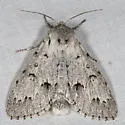
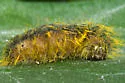
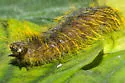
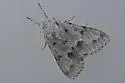
Photo credits: Contributed by Robin McLeod; Additional contributions by Steve Nanz | Contributed by Robin McLeod; Additional contributions by Steve Nanz , Tony-2 , marcie oconnor
Frequently Asked Questions About Miller Dagger - Hodges#9206
What is Miller Dagger - Hodges#9206?
Miller Dagger - Hodges#9206 (Acronicta vulpina) is a species in the family Noctuidae, within the order Lepidoptera.
How big is Miller Dagger - Hodges#9206?
wingspan 40-47 mm
How do you identify Miller Dagger - Hodges#9206?
Adult: forewing chalky white, lightly dusted with gray scales; normal lines are reduced to a few black spots where they would meet the costa, and a series of small dots marking the terminal line; other markings include a short basal streak, a few dark scales at the orbicular spot, a small crescent for the reniform spot; several small spots or streaks on the upper half, and a larger black blotch and streak near the anal angle indicate the subterminal line hindwing white with small discal spot and series of black spots along margin at veins; sexes similar but females with a few more dark scales, especially along veins of hindwing Larva: covered with long soft pale yellow hair, pointing forward on one side and backward on the other, due to the habit of resting with the body doubled sideways; has several small hair pencils, white and black, which do not exceed the length of the yellow hair [both descriptions adapted from text at U. of Alberta site] genitalia
Where is Miller Dagger - Hodges#9206 found?
| Feature | Details |
|---|---|
| Habitat | mature deciduous and mixedwood forests; urban plantations |
| Range | Northwest Territories and British Columbia to Newfoundland, south to New York, west to Colorado |
What does Miller Dagger - Hodges#9206 eat?
The diet of the Miller Dagger - Hodges#9206 includes larvae feed on leaves of Trembling Aspen ( Populus tremuloides ), White Birch ( Betula papyrifera ), Balsam Poplar ( Populus balsamifera ), willow ( Salix spp.), and Speckled Alder ( Alnus rugosa ).
When is Miller Dagger - Hodges#9206 active?
Miller Dagger - Hodges#9206: seasonal activity - adults fly from May to July (in Alberta).