
Idaea kendallaria - Hodges#7111.2
Idaea kendallaria
This record describes Idaea kendallaria (species). Recorded family: Geometridae. Recorded order: Lepidoptera.
Identification and Appearance
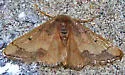
This species is very similar to reddish-shaded specimens of the common and widespread Idaea demissaria in color, pattern, and genital features. It can be separated from most I. demissaria by being slightly smaller on average, with browner (less reddish) shading, and sharper contrast between the forewing pattern basad and distad of the PM line. Females are often concolorous brown - a dimorphism absent in I. demissaria . The patch of ground color at the apex of the male forewing tends to terminate more cleanly above R3, with subterminal shading appressed to the outer side of the PM line all the way to the inner margin (often thin edging of ground color along outer side of the posterior portion of the PM line in I. demissaria ). Hindwing without broad, subterminal reddish border of shaded specimens of I. demissaria (some variants lack shading). Antenna fasciculate in male, simple in female .
Classification
- Kingdom
- Animalia
- Phylum
- Arthropoda
- Class
- Insecta
- Order
- Lepidoptera (Butterflies and Moths)
- Superfamily
- Geometroidea
- Family
- Geometridae (Geometrid Moths)
- Subfamily
- Sterrhinae
- Tribe
- Sterrhini
- Genus
- Idaea
Imported taxonomy record. Source availability varies; see the source references and editorial policy below.
Habitat and Range
Geographic Range
"Known from southern Texas (north to the vicinity of San Antonio, Bexar County) and northern Mexico, west into Arizona. It can be common in southern Texas" .
Seasonal Activity
"Capture records from February through November" .
Diet and Behavior
Diet: "The late Roy O. Kendall reared this species on southern live oak, Quercus virginiana , but did not make notes on the life stages" .
Additional species information
Species notes from the sources
Etymology: "This species is named in memory of the late Roy O. Kendall, who with the help of his wife Connie contributed immensely to the knowledge of the Lepidoptera of Texas and Northen Mexico" .
About Butterflies and Moths: the wider group
Order-level background for Lepidoptera, the group containing Idaea kendallaria. Species-specific details appear above.
Group overview
Lepidoptera includes approximately 180,000 described species of butterflies and moths. Moths outnumber butterflies roughly 10:1. The monarch butterfly's eastern population has declined by more than 80% since the mid-1990s, and the western population by over 95% since the 1980s. The IUCN lists the migratory monarch as Vulnerable.
Ecological role of the group
Butterflies and moths are essential indicators of ecosystem health. As caterpillars, they are a primary food source for birds - a single nest of blue tit chicks requires ~10,000 caterpillars. Adult moths pollinate many night-blooming plants.
Economic and practical significance of the group
Lepidoptera are critical pollinators. In Europe, grassland butterfly species have declined by almost 50% since the early 1990s. In the UK, three-quarters of butterflies are in decline. In the U.S., five butterfly species have gone extinct since 1950, with 29 listed as endangered.
Recorded sources for this group: IUCN Red List, Xerces Society, USFWS, PNAS, WWF. Imported estimates may describe particular regions or reporting periods.
Photos of Idaea kendallaria - Hodges#7111.2 (5)
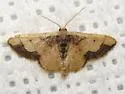
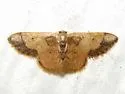
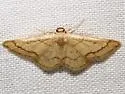
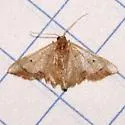
Photo credits: Contributed by Kyhl Austin; Additional contributions by Steve Nanz , Steve Morris
Frequently Asked Questions About Idaea kendallaria - Hodges#7111.2
What is Idaea kendallaria - Hodges#7111.2?
Idaea kendallaria - Hodges#7111.2 (Idaea kendallaria) is a species in the family Geometridae, within the order Lepidoptera.
How big is Idaea kendallaria - Hodges#7111.2?
Forewing length: 6.0-8.0 mm .
How do you identify Idaea kendallaria - Hodges#7111.2?
This species is very similar to reddish-shaded specimens of the common and widespread Idaea demissaria in color, pattern, and genital features. It can be separated from most I. demissaria by being slightly smaller on average, with browner (less reddish) shading, and sharper contrast between the forewing pattern basad and distad of the PM line. Females are often concolorous brown - a dimorphism absent in I. demissaria . The patch of ground color at the apex of the male forewing tends to terminate more cleanly above R3, with subterminal shading appressed to the outer side of the PM line all the way to the inner margin (often thin edging of ground color along outer side of the posterior portion of the PM line in I. demissaria ). Hindwing without broad, subterminal reddish border of shaded specimens of I. demissaria (some variants lack shading). Antenna fasciculate in male, simple in female .
Where is Idaea kendallaria - Hodges#7111.2 found?
Range: Known from southern Texas (north to the vicinity of San Antonio, Bexar County) and northern Mexico, west into Arizona. It can be common in southern Texas .
What does Idaea kendallaria - Hodges#7111.2 eat?
The diet of the Idaea kendallaria - Hodges#7111.2 includes The late Roy O. Kendall reared this species on southern live oak, Quercus virginiana , but did not make notes on the life stages ..
When is Idaea kendallaria - Hodges#7111.2 active?
Idaea kendallaria - Hodges#7111.2: seasonal activity - Capture records from February through November ..