
Family Geometrid Moths (Geometridae)
Geometridae is a family in the order Lepidoptera. Browse 1,358 named species recorded in this family, or open an individual profile for its available identification and natural-history information.
Species in Geometridae (1,358)
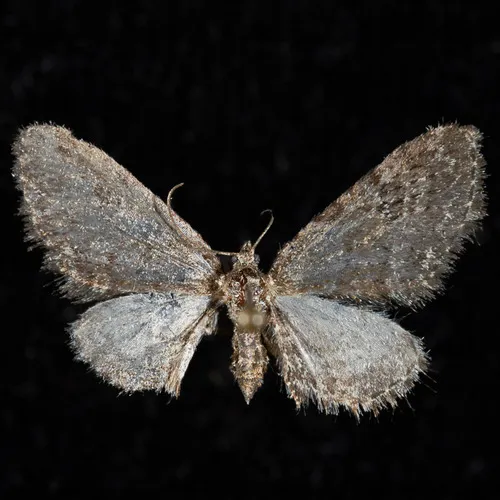
Eupithecia cognizata - Hodges#7547
Eupithecia cognizata
Identification: Specimen determined by DNA analysis (BOLD).
Eupithecia coloradensis - Hodges#7481
Eupithecia coloradensis
Identification: Adult : FW are dark brownish grey except for the reddish brown costa and poorly defined wide PM band. Hind wings slightly paler brownish grey. Second segment of abdomen with darker transverse band. (a)
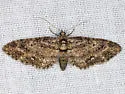
Columbian Eupithecia - Hodges#7459
Eupithecia columbiata
Identification: Specimen identified by DNA analysis (BOLD) female - long striated, sclerotized section of ductus bursae above appendix bursae male - lyre-shaped 8th sternite - unique to North American Eupithecia
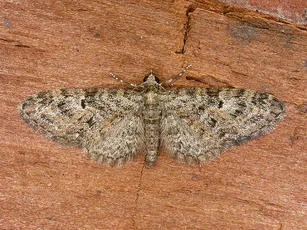
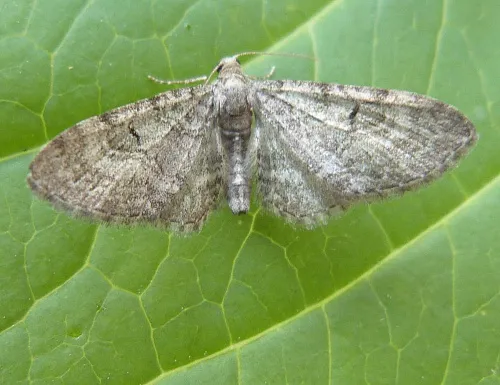
Oak-tree Pug
Eupithecia dodoneata
Wingspan 19 to 22 mm. Quite a small species. Found in deciduous woodland, hedgerows and suburban habitats. The single generation flies in May and June, and is most regularly encountered at light. The larvae feed on the flowers of Hawthorn as well as
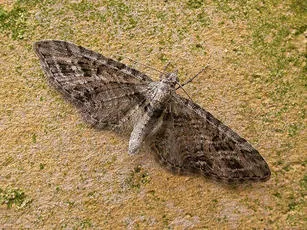
Pauper Pug
Eupithecia egenaria
Any habitat where the larval food plants are present. May to June is the typical flight period for this species. The larvae feed on Large-leaved Lime (Tilia platyphyllos) and Small-leaved Lime (Tilia cordata). This species is a rare and local moth, o
Mottled Pug
Eupithecia exiguata
Wingspan 20-22 mm. Many of the Pugs are very difficult to tell apart but this one is usually distinguishable by the rather pointed wings and broken dark lines along the veins. Woodland fringes, hedgerows and gardens. The larvae feed on a variety of t
Fletcher's Eupithecia - Hodges#7491
Eupithecia fletcherata
Identification: Adult - see original description in Print References. Larva - pale brown with a dark brown diamond pattern dorsally. Genitalia: ♀ ♂
Eupithecia gilvipennata - Hodges#7581
Eupithecia gilvipennata
Eupithecia gilvipennata - Hodges#7581 (Eupithecia gilvipennata) is a species in the family Geometridae, commonly known as geometrid moths, belonging to the order Lepidoptera (Butterflies and Moths). It is classified within the subfamily Larentiinae,
Eupithecia graefii - Hodges#7600
Eupithecia graefii
Identification: Fore-wing cell spot with red-orange scales, even in worn specimens, which, along with wing shape and maculation, identifies this species. Genitalia: ♀ ♂
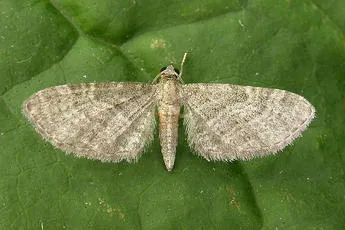
Haworth's Pug
Eupithecia haworthiata
Wingspan 12 to14 mm. One of the more easily recognisable of the Pugs ( Eupithecia spp.), with its orange or yellowish abdomen. The species can be found inhabiting woodland and chalky or limestone downs. The small, greenish caterpillars feed on the bu
Eupithecia helena - Hodges#7576
Eupithecia helena
Identification: Taylor original description is in PDF. Genitalia: ♀ ♂
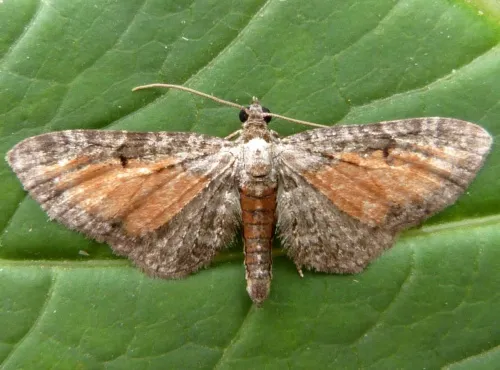
Tawny Speckled Pug
Eupithecia icterata
Wingspan 20 to 23 mm. One of our largest Eupithecia species. Typically the moth shows the fairly plain, two-tone reddish and brown appearance of the subspecies fulvata but in northern parts a more variegated race cognata occurs. July and August is th
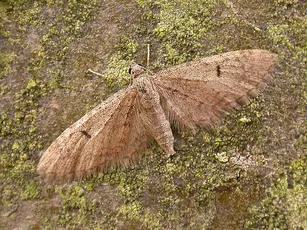
Ochreous Pug
Eupithecia indigata
Wingspan 15 to18 mm. This species often looks distinctly greyish, rather than ochreous, and has a distinctive resting aspect (among the pugs), with the wings held slightly below the horizontal. Flies early in the year, during April and May. The cater
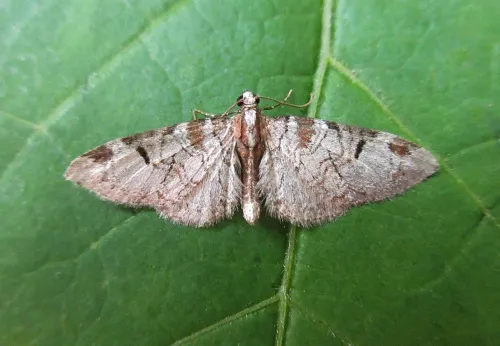
Pinion-spotted Pug
Eupithecia insigniata
Wingspan 18 to 22 mm. One of the more distinctively marked 'Pug' moths. Although this is a distinctively marked species a photograph is requested to support records in view of the rarity of this species in our area. Various habitats such as hedgerows
Juniper Looper - Hodges#7551
Eupithecia interruptofasciata
Identification: Adult: forewing grayish-brown with numerous dark transverse lines: single basal and median lines, and triple AM and PM lines; AM line sharply angled in middle; PM line jogs outward from costa; black oval discal spot interrupts median
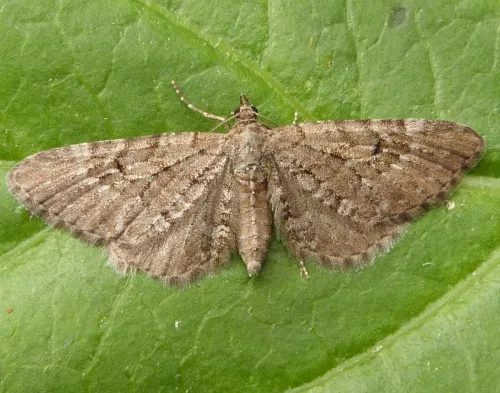
Freyer's Pug
Eupithecia intricata
Wingspan 20-24 mm. There are three subspecies of the large, rather distinctive Pug E. intricata in Britain: they are Freyer's Pug (ssp. arceuthata ) occurring in the southern half of England; Edinburgh Pug (ssp. millieraria ) which occurs in northern
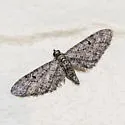
Eupithecia jejunata - Hodges#7486
Eupithecia jejunata
Identification: Eupithecia is a difficult group with many similar species that often require dissection for identification. Many undescribed species are known. Genitalia: ♀ ♂ In Texas and across at least part of the South, the thoracic and abdominal
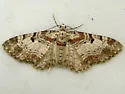
Eupithecia johnstoni - Hodges#7570
Eupithecia johnstoni
Identification: Specimens identified by DNA analysis: Genitalia: ♀ ♂
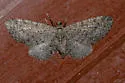
Eupithecia lachrymosa - Hodges#7548
Eupithecia lachrymosa
Identification: Hulst (1900) original description as Tephroclystis lachrymosa is available online in the print references. Specimen identified by DNA analysis (BOLD). ( 3 ) Genitalia: ♀ ♂
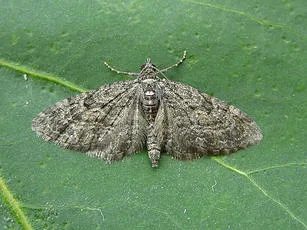
Larch Pug
Eupithecia lariciata
Wingspan 19 to 22 mm. A rather plain brownish species. As the name suggests, this is a species generally found in and around plantations of Larch. It flies during May and June, when it can be attracted to light. The small stripy caterpillar feeds on
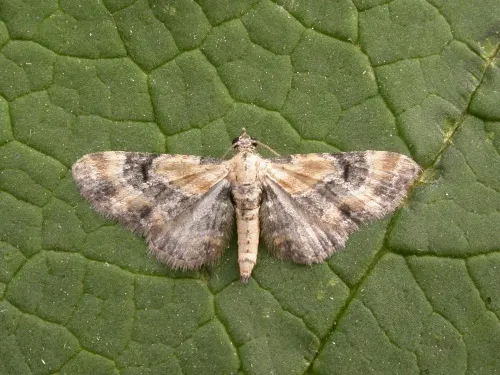
Toadflax Pug
Eupithecia linariata
Wingspan 11 to 16 mm. Although similar to the Foxglove Pug (Eupithecia pulchellata), this species is smaller, usually brighter-coloured Another useful feature for separating these two species is the innermost black band, which does not extend all of
Eupithecia longidens - Hodges#7454
Eupithecia longidens
Identification: See this annotated example on iNaturalist. Based on the subspecies kerrvillaria in Texas: a. FW crossed by two nearly complete fine dark lines, the inner one nearly/actually touching the dark cell spot; both lines are continued acros
Eupithecia longipalpata - Hodges#7468
Eupithecia longipalpata
Identification: Adult - McDunnough description. Larva - yellowish green with dark dorsal stripe, sometimes pale sub-dorsal lines, yellowish spiracular lines.
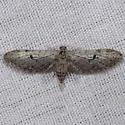
Eupithecia macdunnoughi - Hodges#7512
Eupithecia macdunnoughi
Identification: Specimen identified by DNA analysis (BOLD). ( 4 )
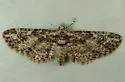
Eupithecia maestosa - Hodges#7460
Eupithecia maestosa
Identification: Taylor description as Eupithecia dyarata is available online in the print references. This group can be difficult to identify from photos and are best determined by examining the genitalia, or by DNA analysis. Specimen identified by D
Eupithecia multiscripta - Hodges#7536
Eupithecia multiscripta
Eupithecia multiscripta - Hodges#7536 (Eupithecia multiscripta) is a species in the family Geometridae, commonly known as geometrid moths, belonging to the order Lepidoptera (Butterflies and Moths). It is classified within the subfamily Larentiinae,
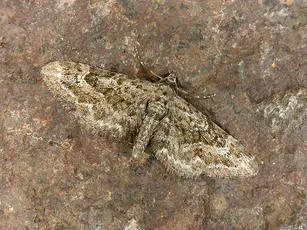
Narrow-winged Pug
Eupithecia nanata
Wingspan 13 to17 mm. A distinctive species. One of the earlier pugs to emerge in the spring, it flies from April to June, and sometimes has a second generation in August. The larvae feed on the flowers of Heather in the autumn. Fairly commonly distri
Eupithecia niphadophilata - Hodges#7552
Eupithecia niphadophilata
Identification: one distinct spine at the base of the vesica. one cannot separate adults of E. niphadophilata from those of E. interruptofasciata by external features.
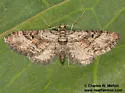
Eupithecia nonanticaria - Hodges#7594.1
Eupithecia nonanticaria
Identification: "This species is nearly identical in habitus to E. anticaria but is grayer with more subdued coloration and muted maculation; positive separation requires the examination of the genitalia."
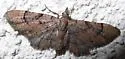
Peck's Pug Moth - Hodges#7453
Eupithecia peckorum
Peck's Pug Moth - Hodges#7453 (Eupithecia peckorum) is a species in the family Geometridae, commonly known as geometrid moths, belonging to the order Lepidoptera (Butterflies and Moths). It is classified within the subfamily Larentiinae, tribe Eupith
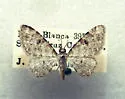
Eupithecia penablanca - Hodges#7605.2
Eupithecia penablanca
Identification: unique ventral plate on males; caliper-like rods with triangular, lateral projections.
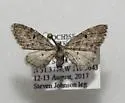
Eupithecia persimulata - Hodges#7507
Eupithecia persimulata
Identification: Genitalia: The maculation is very similar to that of alpinata and prostrata. (McDunnough, 1949)
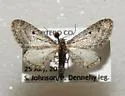
Eupithecia pertusata - Hodges#7595
Eupithecia pertusata
Identification: 8th sternite - triangular, weakly chitinized, terminating in 2 rounded projections. Vesica with 2 long, apically pointed rods, a slender finely spiculate strip, and an irregular fragment.
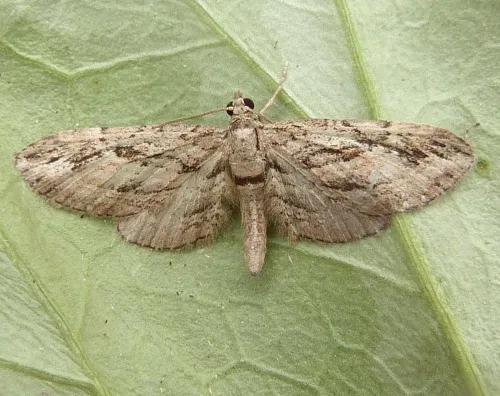
Cypress Pug
Eupithecia phoeniceata
Winspan18 to 22 mm. The ground colour of the forewings is pale greyish buff with conspicuous, blackish, vein-like patterning. Due to the fact that this moth is rarely recorded in our area all records must be accompanied by a photograph please. Associ
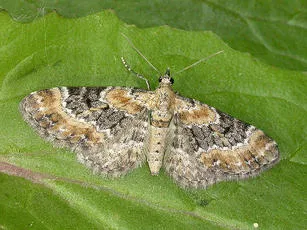
Foxglove Pug
Eupithecia pulchellata
Wingspan 18-22 mm. Quite a brightly coloured member of the Pug family. Similar to the much rarer Toadflax Pug. A comparison is made at the following LINK . Inhabiting open ground, woodland and a range of other habitats where its foodplant is found. T
Eupithecia purpurissata - Hodges#7579
Eupithecia purpurissata
Identification: Grossbeck original description. "In wing form like the ordinary type of Eupithecia , wings not unusually extended nor unusually broad. Front slightly protuberant, palpi extending a little beyond the front. Entire moth above including
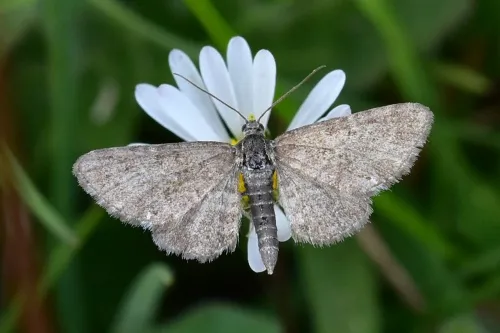
Marsh Pug
Eupithecia pygmaeata
Wingspan 14 to 18 mm. This is quite a small brown, or bluish brown species. Occupying both damp habitats such as marshes and fens, and drier locations like sand dunes and waste ground. The larvae feed on the flowers and seeds of field Mouse-ear ( Cer
Eupithecia rindgei - Hodges#7572
Eupithecia rindgei
Identification: Eupithecia rindgei is smaller and less boldly marked than Eupithecia johnstoni .
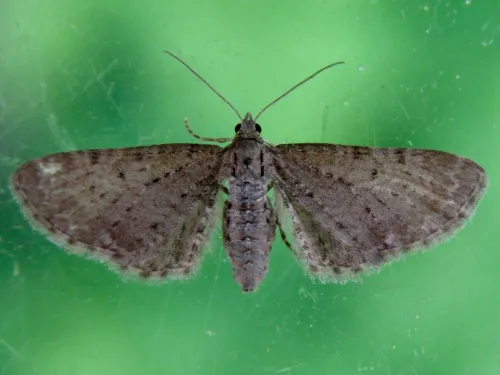
Satyr Pug
Eupithecia satyrata
Wingspan 18 to 24 mm. This moth is represented by three subspecies or forms in the British Isles. The nominate type satyrata occurs generally in the southern half of England and has a relatively plain appearance. In northern England, Scotland and Ire
Eupithecia segregata - Hodges#7557
Eupithecia segregata
Identification: Adult maculation is quite variable. Genitalia: ♀ ♂
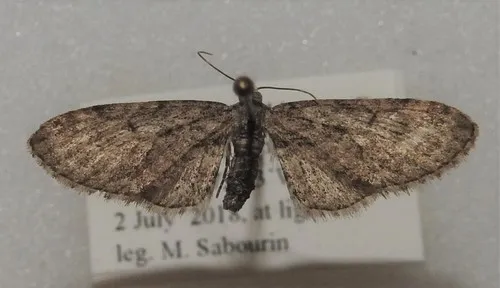
Eupithecia sheppardata - Hodges#7494
Eupithecia sheppardata
Identification: Both male and female genitalia very distinctive; nothing similar in Canada.
Eupithecia shirleyata - Hodges#7588
Eupithecia shirleyata
Identification: "In spite of the differences noted in the original description as distinguishing the species from subapicata , the only superficial one that seems to hold is the smaller size. There are tendencies towards a duller wing coloration, esp
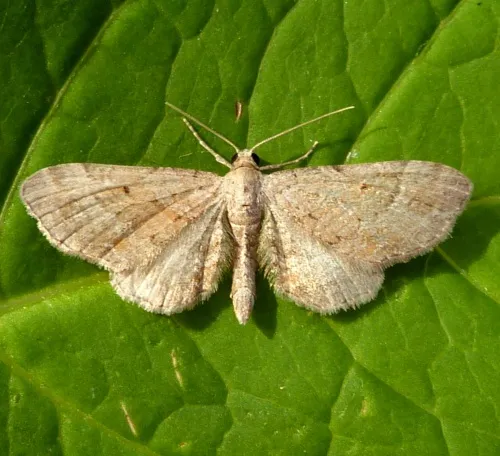
Plain Pug
Eupithecia simpliciata
Wingspan 21 to 23 mm. Despite its English (and Latin) name, this is one of the more distinctively-marked Pug moths, and is relatively easy to identify. Frequents waste ground and similar areas where the larval foodplants are found. The caterpillars f
Eupithecia spermaphaga - Hodges#7578
Eupithecia spermaphaga
Identification: Specimens identified by DNA analysis: Genitalia:
Eupithecia strattonata - Hodges#7523
Eupithecia strattonata
Identification: Adult: forewing dull rusty or reddish-brown beyond PM line and in basal area; median area less so, slightly more grayish; discal spot black, distinct; PM line composed of short dark streaks along veins; subterminal line toothed, faint
Eupithecia subapicata - Hodges#7587
Eupithecia subapicata
Eupithecia subapicata - Hodges#7587 (Eupithecia subapicata) is a species in the family Geometridae, commonly known as geometrid moths, belonging to the order Lepidoptera (Butterflies and Moths). It is classified within the subfamily Larentiinae, trib
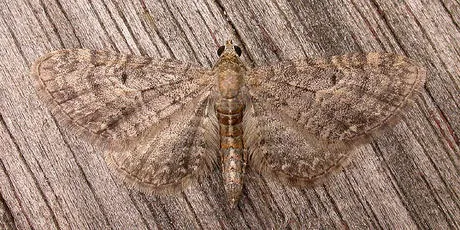
Grey Pug
Eupithecia subfuscata
Wingspan 17 to 21 mm. There are two main forms. The typical form is brownish, but the dark grey form obscurissima is also quite common, especially in urban areas. It can be found in a wide range of habitats. It flies in May and June, and sometimes ag
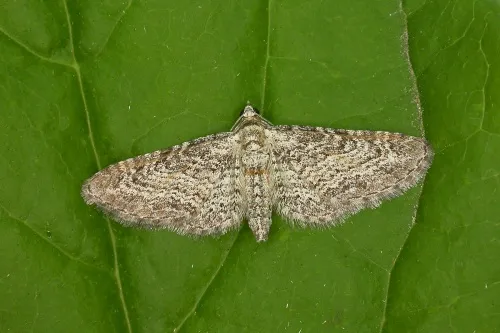
Shaded Pug
Eupithecia subumbrata
Wingspan 16 to 20 mm. This is a pale greyish member of the genus. Inhabiting damp grassy places, salt marshes and similar habitats. A single generation flies in June and July, from dusk onwards, but is infrequent at light. It is more readily disturbe
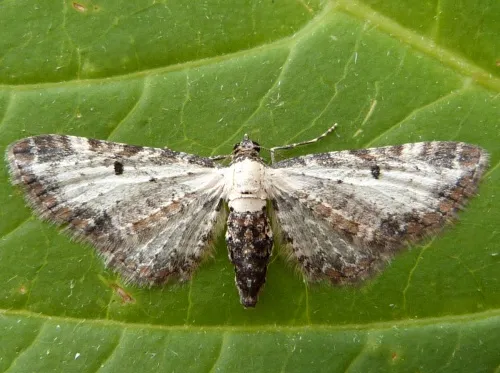
Bordered Pug
Eupithecia succenturiata
Wingspan 20-23 mm. A fairly easy species to identify, being one of only a few Pugs which are mainly black-and-white. Dry pastures, suburban habitats and waste ground. It is widely distributed throughout England and Wales, but local in Ireland and Sco
Swett's Eupithecia - Hodges#7530
Eupithecia swettii
Identification: Rindge description in PDF. Genitalia: ♀ ♂ male abdomen - 8th sternite is almost rectangular, with shallow basal cleft and flat at apex.
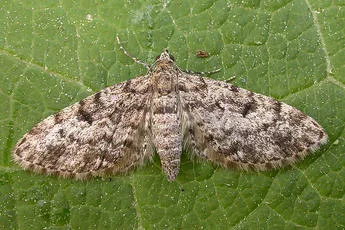
Dwarf Pug
Eupithecia tantillaria
Wingspan 16-19 mm. Despite its English name, this is by no means the smallest of the Pug moths in Britain. Occurs in coniferous woodlands and parkland. The adults appear on the wing in June and July. The nondescript brownish caterpillars feed on the
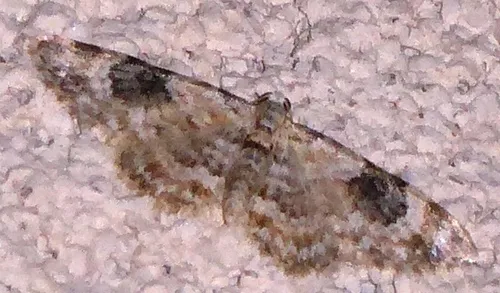
Eupithecia tenuata - Hodges#7559
Eupithecia tenuata
Identification: Hulst original description is available online in the print references. Revised description in PDF.
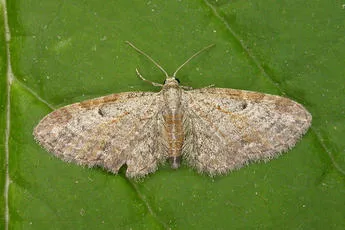
Slender Pug
Eupithecia tenuiata
Quite a small 'Pug'. with a wingspan of around 15mm. It occurs in woodland edges, meadows and marshes. Flies in as single generation in June and July. The larvae feed in early spring in the (usually male) catkins of willow. This species is widespread
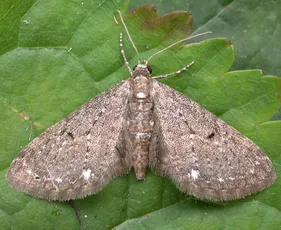
White-spotted Pug
Eupithecia tripunctaria
Wingspan 17-21 mm. Identified by the distinct white spots on the base of the wings. It occupies damp areas and well wooded areas. It has two generations, with adults on the wing in May and June and then in July and August. The larvae are yellowish gr
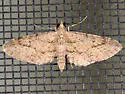
Eupithecia unicolor - Hodges#7472
Eupithecia unicolor
Identification: McDunnough revised description in PDF. Genitalia: ♀ ♂
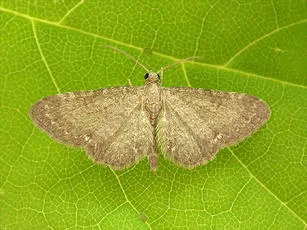
Valerian Pug
Eupithecia valerianata
Wingspan 16 to 20 mm. A relatively uniform and weakly-marked species. It generally occurs in damper habitats, such as fenland and broads. The larvae live in the seedheads of Common Valerian, feeding on the developing seeds and flowers. This moth is d
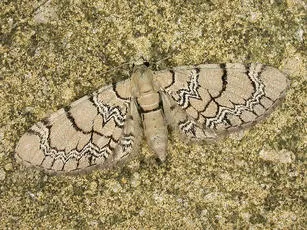
Netted Pug
Eupithecia venosata
Wingspan 17 to 22 mm. A very attractive species with its pale buff wings veined in black and white. Inhabits sea-cliffs, rocky slopes and chalk or limestone areas. It flies in May and June, in a single generation, from dusk into the night. The larvae
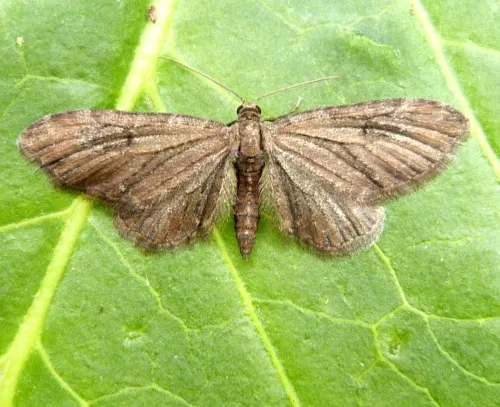
Common Pug
Eupithecia vulgata
Wingspan 15-18 mm. This species is represented by a number of subspecies and forms. Typical forms and the Scottish and Irish subspecies scotica and clarensis have fairly distinct markings, but the fairly common form atropicta is dull and poorly marke
Eupithecia woodgatata - Hodges#7563
Eupithecia woodgatata
Identification: very similar in maculation to Prorella albida but slightly larger and discal spot scales a darker shade of ochreous color of the bands; whereas discal spot scales in P. albida are dark brown; also maculation in P. albida also appears
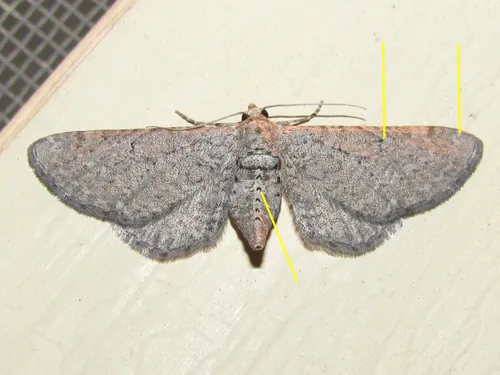
Eupithecia zygadeniata - Hodges#7532
Eupithecia zygadeniata
Identification: Adult - very similar to E. indistincta with longer and more pointed primaries, grayer ground color, smaller discal dot, and numerous, indistinct, oblique cross lines. The increasingly large set of images from Texas on iNaturalist show
Eusarca detractaria - Hodges#6931
Eusarca detractaria
Identification: Barnes & McDunnough original description is available online from print references below.
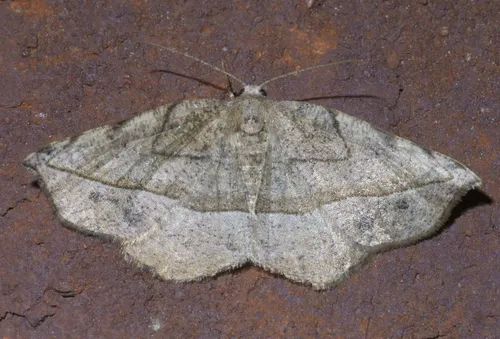
Packard's Eusarca - Hodges#6936
Eusarca packardaria
Identification: Adult: forewing light yellowish-brown with dark AM and PM lines, pointed apex, and falcate outer margin; AM line V-shaped; PM line straight except for sharp inward jog near costa; median line represented only by dark diagonal dash at
Eusarca venosaria - Hodges#6937
Eusarca venosaria
Identification: Specimen identified by DNA analysis:
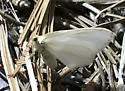
Evita hyalinaria - Hodges#6897
Evita hyalinaria
Identification: The wings, body and legs are an off-white color, usually with some slightly darker (tan) shading. The fore-wings and hind-wings are both simi-transparent and most of the wing-veins may be clearly visible. The subspecies Evita hyalina
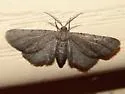
Fine-lined Gray Moth - Hodges#6478
Exelis pyrolaria
See an extended discussion of the problems of Exelis identification in Dave Barker's journal post on iNaturalist and comments on that post.
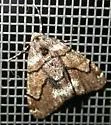
Dyar's Looper - Hodges#6781
Gabriola dyari
Identification: Adult: body slender; antennae pectinate (at least in males); forewing brownish-gray with black speckling and lines; AM and PM lines thick, AM line slightly curved, PM line zigzagged or sinuate; two or three black wedges at costa near
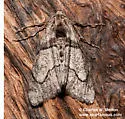
Gabriola minor - Hodges#6784
Gabriola minor
Identification: Adult : FW with upper surface pale gray ● AM broadly shaded basally with black band
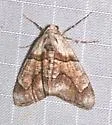
Gabriola regularia - Hodges#6785
Gabriola regularia
Identification: Adult : Similar to Gabriola minor but the upper surface of the wings is browner ● AM is weakly curved and broadly shaded basally by a dark brown band ● Male antennae pectinate, with terminal segments simple ● FW pale gray, variably su
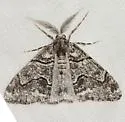
Gabriola sierrae - Hodges#6782
Gabriola sierrae
Identification: Rindge described sierrae as three location specific subspecies. Detailed descriptions are available at the link in citations below.
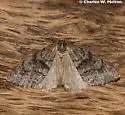
Galenara lixaria - Hodges#6630
Galenara lixaria
Galenara lixaria - Hodges#6630 (Galenara lixaria) is a species in the family Geometridae, commonly known as geometrid moths, belonging to the order Lepidoptera (Butterflies and Moths). It is classified within the subfamily Ennominae, tribe Melanoloph
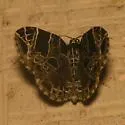
Dark-banded Geometer - Hodges#7214
Gandaritis atricolorata
Identification: Brown and white markings on forewings include a large almost square brown patch and a smaller oval.
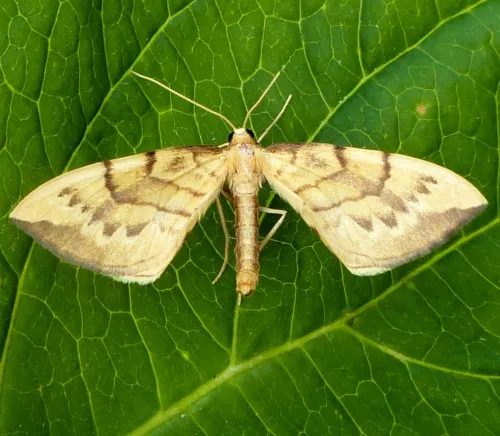
Barred Straw
Gandaritis pyraliata
Wingspan 28-33 mm. This moth is easily identified due to its unique resting posture with the forewings held extended and covering the hindwings. Hedgerows, gardens, woodland rides, scrubby grassland. The larvae feed on various Bedstraws. overwinters
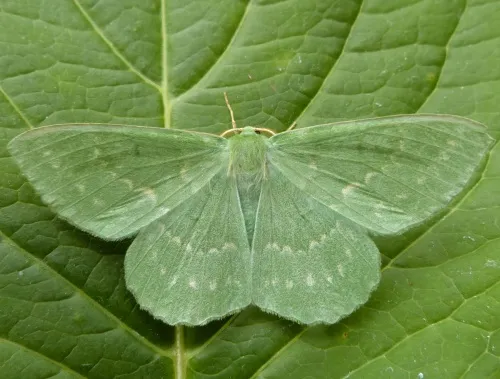
Large Emerald
Geometra papilionaria
Wingspan 40 to 50 mm. This is the largest of the 'emeralds'. Flies at night in June and July, when it is easily attracted by light. The caterpillar is brown at first, but after overwintering becomes green with brownish 'warts', and feeds mainly on bi
Glaucina erroraria - Hodges#6488
Glaucina erroraria
Identification: The Rindge description of the adult including genitalia is available in PDF. Rindge mentioned this species is easily recognized.
Glaucina escaria - Hodges#6495
Glaucina escaria
Identification: Male forewings gray, heavily overlain with grayish brown or black; AM line weakly represented or absent; PM line complete but sometimes weakly represented, outwardly produced on veins with moderate concave loop approaching inner margi
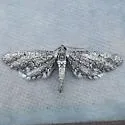
Glaucina eupetheciaria - Hodges#6496
Glaucina eupetheciaria
Identification: Rindge described eupetheciaria as four potential subspecies. The nominate form, mainly found in Arizona, Glaucina eupetheciaria eupehetciaria was described as similar to Glaucina escaria in most respects except size, being considerabl
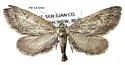
Glaucina golgolata - Hodges#6498
Glaucina golgolata
Identification: See detailed description by Rindge linked at bottom of page. The concave bend of the PM line in the upper part of wing is rather distinctive. Also noticeable is the dark banding of the ST area bordered by the white ST line that is str
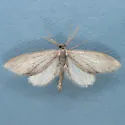
Glaucina lowensis - Hodges#6509
Glaucina lowensis
Identification: Rindge has description of the adult including genitalia.
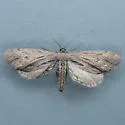
Glaucina macdunnoughi - Hodges#6492
Glaucina macdunnoughi
Identification: Grossbeck description is in the PDF or read online in the print references . Grossbeck stated "This species may be easily recognized by the two cross lines being heavily marked on the veins and between which the space is in part darke
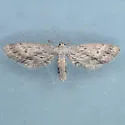
Glaucina magnifica - Hodges#6499
Glaucina magnifica
Identification: See detailed description by Rindge linked at bottom of page. The concave bend of the PM line in the upper part of wing is rather distinctive. Also noticeable is the dark banding of the ST area bordered by the white ST line that is str
Glaucina spaldingata - Hodges#6503
Glaucina spaldingata
Identification: Description of Glaucina spaldingata (Cassino & Swett) is available online in PDF.
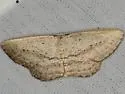
Blueberry Gray Moth - Hodges#6450
Glena cognataria
Identification: The original description as Tephrosia cognataria Packard, is available in PDF and online at the link in the print references below. This grayish brown species is the smallest in the group. Fresh specimens will have a pink or violet ti
Glena furfuraria - Hodges#6446
Glena furfuraria
Identification: Forewings light gray to grayish brown with obscure maculation.
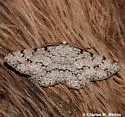
Glena grisearia - Hodges#6445
Glena grisearia
Glena grisearia - Hodges#6445 (Glena grisearia) is a species in the family Geometridae, commonly known as geometrid moths, belonging to the order Lepidoptera (Butterflies and Moths). It is classified within the subfamily Ennominae, tribe Boarmiini, s
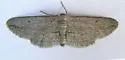
Glena interpunctata - Hodges#6451
Glena interpunctata
Identification: One of the largest species in the group. The specimens from Arizona to Texas have only dots for a postmedial line and the northern population has a bolder solid line. When the median line is visible it converges with the postmedial li
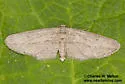
Glena mcdunnougharia - Hodges#6454
Glena mcdunnougharia
Identification: Detailed description by Rindge as subspecies mcdunnougharia and kirkwoodaria can be found at the link in citations below. Original description by Sperry can be found at link in citations below.
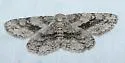
Glena nigricaria - Hodges#6448
Glena nigricaria
Identification: Adult - forewing light to dark gray with black lines, variably sharp and distinct to diffuse and indistinct; AM line does not extend onto hindwing; first abdominal segment same color as remaining segments (not pale). Specimens identif
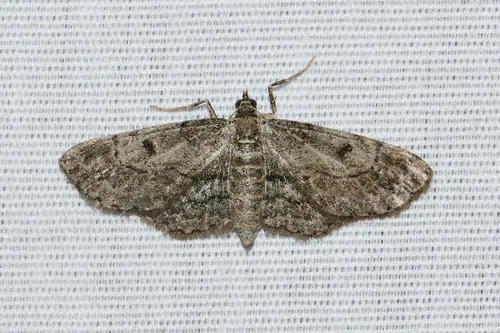
Glenoides lenticuligera - Hodges#6444
Glenoides lenticuligera
Identification: Blanchard (1973) stated "The new species is quite close to Glenoides texanaria , the only other taxon in the genus; the pattern of maculation is nearly the same, but the transverse lines of texanaria are much better defined and its ba
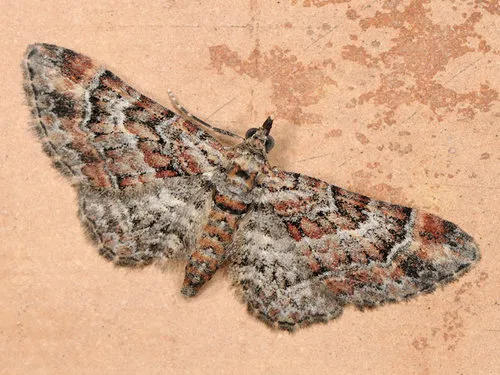
Double-striped Pug
Gymnoscelis rufifasciata
Wingspan 15-19 mm. It is often a brightly-coloured species. It occupies a wide range of habitats, including suburban areas, parks, gardens, hedgerows, roadside verges, heathland, moorland and woodland. This species generally has two broods, flying in
Hammaptera Moth - Hodges#7314
Hammaptera parinotata
Identification: Adult: forewing subterminal area has distinctive pair of dark "fingertip smudges" near apex; green tinting on forewing varies from bright and extensive to virtually non-existent; median area brownish-gray with paler central portion co
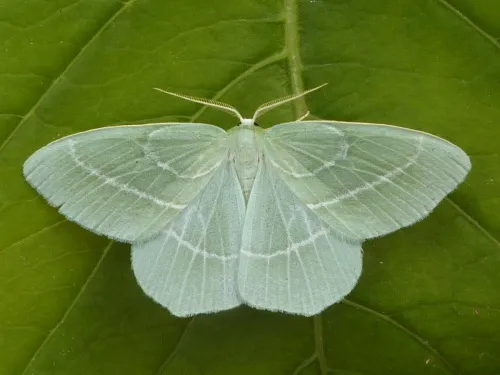
Small Emerald
Hemistola chrysoprasaria
Wingspan 28-32 mm. A distinctive moth. It has emerald green wings that are crossed with white lines. The green wing colour often fades in more mature specimens. Inhabits woodland edges and hedgerows mainly on chalk downs and limestone where the foodp
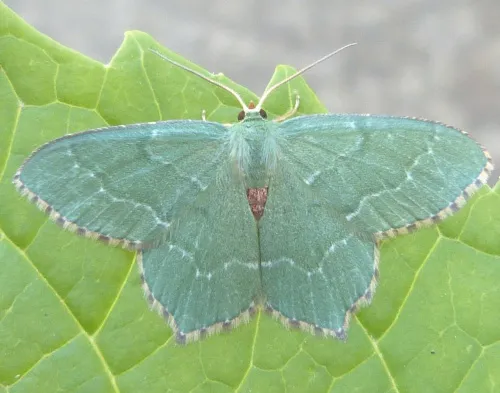
Common Emerald
Hemithea aestivaria
Wingspan 24 to 27 mm. Distinctively shaped and with chequered fringes - this is an easy species to recognise but, like many green moths, its colour tends to fade fairly quickly. It flies from dusk onwards in June and July. The larvae feed on bushes s
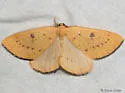
Hesperumia fumosaria - Hodges#6432
Hesperumia fumosaria
The population from southern California is small in size and has a relatively high percentage of the moths with a brown median area of the forewing in both sexes. The moths from central and northern California are larger and have about one-third as m
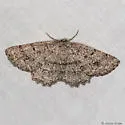
Hesperumia latipennis - Hodges#6433
Hesperumia latipennis
In general, the moths from the Cascade Mountains tend to be slightly grayer and to have more clearly defined maculation than do specimens from the coastal areas of British Columbia, Washington, and central California
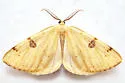
Sulphur Moth - Hodges#6431
Hesperumia sulphuraria
Identification: Adult - Most are primarily yellow, but a small portion has a large brown patch or markedly dark ante and postmedial bands. Rare individuals completely infuscated with brown scaling . Rindge's description follows: Forewings varying fro
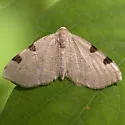
Three-spotted Fillip - Hodges#7647
Heterophleps triguttaria
Identification: Forewing whitish to pale yellowish-brown with three dark brown triangular spots evenly spaced along the costa.
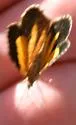
Heterusia atalantata - Hodges#7367
Heterusia atalantata
Identification: Unmistakeable upperwing pattern, brilliant yellow with a wide black border. At rest, hides this by folding wings up over its back and showing only the undersurface of the hindwings, which are mottled in various shades of brown. This d
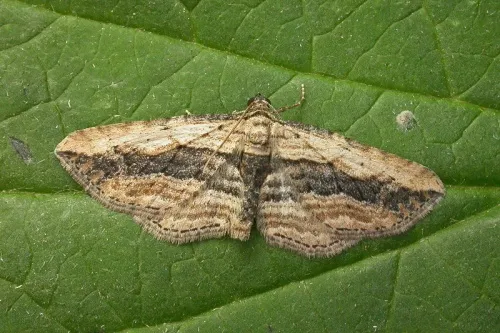
Small Waved Umber
Horisme vitalbata
Inhabiting woodland margins, hedgerows and chalk downs where Travellers-joy is present. There are two generations of this moth during the year, flying in May and June and again in August. The larval foodplant is Traveller's-joy. It is distributed ma
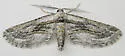
Hulstina aridata - Hodges#6543
Hulstina aridata
Identification: Detailed description is available in Rindge in link under citations below. From the key to species in Rindge, PM line represented by venular dots as it approaches the costal margin. Genitalia: ♀ ♂
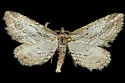
Hulstina exhumata - Hodges#6546
Hulstina exhumata
Identification: Specimen determined by DNA analysis (BOLD).