
Eupteryx atropunctata
This record describes Eupteryx atropunctata (species). Recorded family: Cicadellidae. Recorded order: Hemiptera.
Identification and Appearance
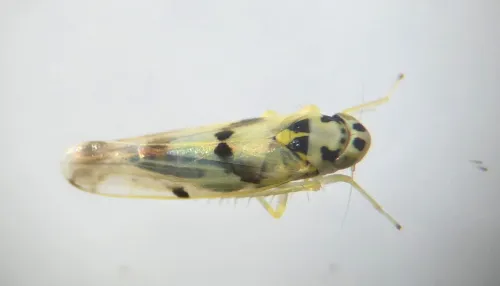
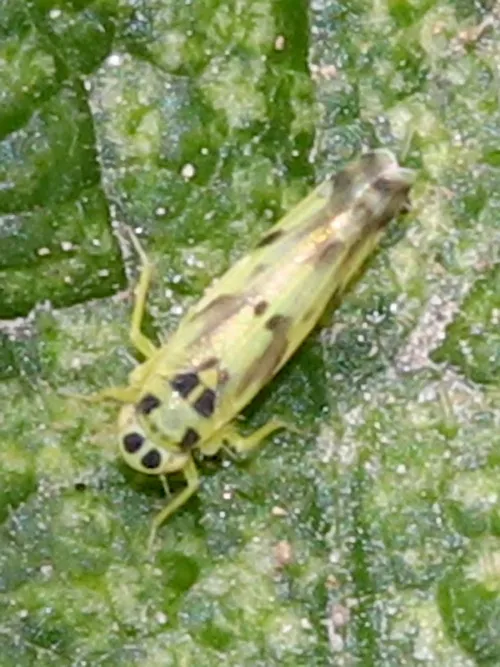
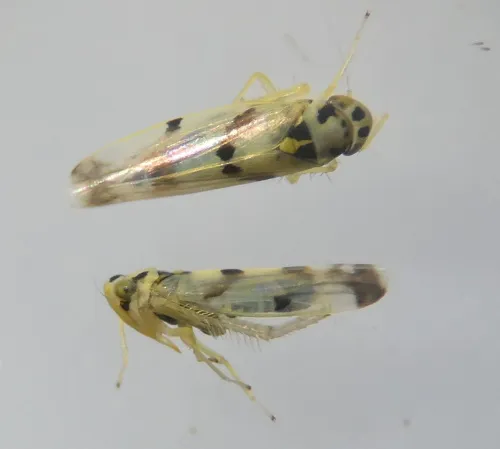
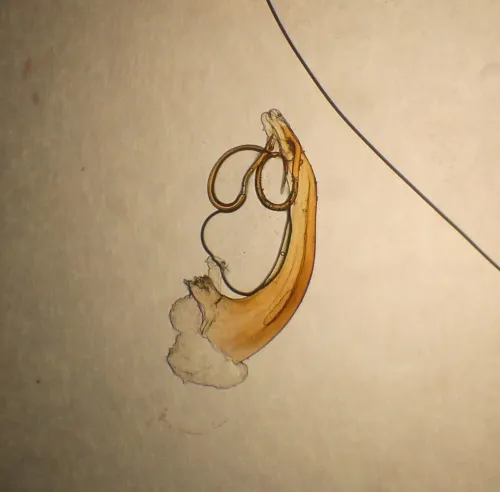
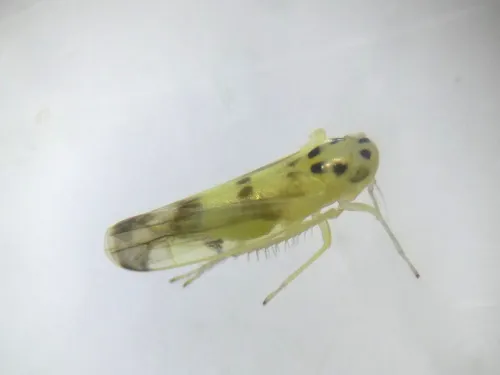
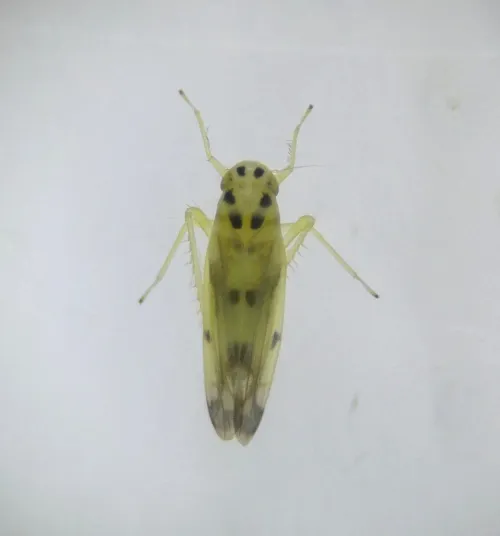
Length 3.5 mm. Identification of Eupteryx species can be difficult and requires careful examination of markings on vertex, pronotum and forewings. Greenish-yellow ground colour with dark spots or streaks on the forewings, including a spot on the costal margin. 2 black spots on vertex. There are large black spots on the pronotum and sometimes a pair of smaller central spots. Other Eupteryx , especially the very common E aurata , the Potato leafhopper, which is larger and usually more strongly marked. Good quality photographs in side-view and top down. According to Le Quesne and British Bugs website, 'Mainly mallow, potato and sage'. Biedermann & Niedringhaus state 'various tall herbs, esp Lamiaceae'. Local (ref: UK Auchenorrhyncha checklist 2021 ) https://www.britishbugs.org.uk/homoptera/Cicadellidae/Eupteryx_atropunctata.html No additional images available for this species.
Classification
- Kingdom
- Animalia
- Phylum
- Arthropoda
- Class
- Insecta
- Order
- Hemiptera (True Bugs, Cicadas, Hoppers, Aphids and Allies)
- Suborder
- Auchenorrhyncha
- Superfamily
- Membracoidea
- Family
- Cicadellidae (Typical Leafhoppers)
- Subfamily
- Typhlocybinae
- Tribe
- Typhlocybini
- Genus
- Eupteryx
Imported taxonomy record. Source availability varies; see the source references and editorial policy below.
Habitat and Range
Habitat
According to Le Quesne and British Bugs website, 'Mainly mallow, potato and sage'. Biedermann & Niedringhaus state 'various tall herbs, esp Lamiaceae'.
Seasonal Activity
Adult: May to October.
Additional species information
Recorded status
Local (ref:
About True Bugs, Cicadas, Hoppers, Aphids and Allies: the wider group
Order-level background for Hemiptera, the group containing Eupteryx atropunctata. Species-specific details appear above.
Group overview
Hemiptera (true bugs) includes over 80,000 described species across cicadas, aphids, leafhoppers, shield bugs, and bed bugs. Aphids alone cost global agriculture an estimated $2.5 billion annually in crop losses.
Ecological role of the group
Many Hemiptera are essential food sources for birds and predatory insects. Cicadas provide massive nutrient pulses during emergence events - a single Brood X emergence can involve trillions of individuals across 15 states.
Economic and practical significance of the group
The brown marmorated stink bug (Halyomorpha halys) caused $37 million in apple crop losses in a single year in the U.S. Mid-Atlantic region. Bed bug infestations in the U.S. increased by 500% between 2001-2010, costing the hotel industry hundreds of millions annually.
Recorded sources for this group: USDA, EPA, University research. Imported estimates may describe particular regions or reporting periods.
Photos of Eupteryx atropunctata (6)
Frequently Asked Questions About Eupteryx atropunctata
What is Eupteryx atropunctata?
Eupteryx atropunctata is a species in the family Cicadellidae, within the order Hemiptera.
How big is Eupteryx atropunctata?
3.5 mm. Identification of
Where is Eupteryx atropunctata found?
Habitat: According to Le Quesne and British Bugs website, 'Mainly mallow, potato and sage'. Biedermann & Niedringhaus state 'various tall herbs, esp Lamiaceae'.
When is Eupteryx atropunctata active?
Eupteryx atropunctata: seasonal activity - Adult: May to October..