
Family Aphids (Aphididae)
Aphididae is a family in the order Hemiptera. Browse 390 named species recorded in this family, or open an individual profile for its available identification and natural-history information.
Species in Aphididae (390)
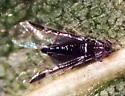
Blackmargined Pecan Aphid
Monellia caryella
Identification: Found on pecan trees. A clear to yellow or pale green aphid. Adults hold their wings flat over the back of the body. distinguished from the related Yellow Pecan Aphid, Monelliopsis pecanis Bissel, which lacks the black front margin
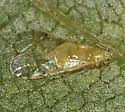
Monellia microsetosa
Monellia microsetosa
Identification: Viviparae are alate, pale yellow, summer generations developing 2-3 pairs of conspicuous spots of intense yellow internal pigment. Antennae are banded and leading edge of forewing is spotted with black.
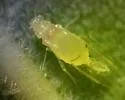
Yellow Pecan Aphid
Monelliopsis pecanis
Identification: Similar to Monellia caryella, but holds the wings roof-like over the abdomen at rest, instead of flat.
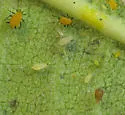
Myzocallis asclepiadis
Myzocallis asclepiadis
Identification: Pale green-yellow; later in the season, may have orange spots or be entirely orange. Even later in the season, wingless ones with more numerous dark spots or small plates appear, presumably they are sexual neotene adults. over the cou
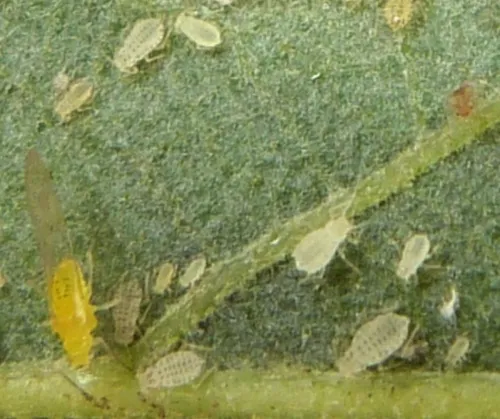
Turkey Oak Aphid
Myzocallis boerneri
The body length of Myzocallis boerneri alatae is 1.3 to 2.2 mm. For most of the year, immature M. boerneri are very pale yellow, or whiish with paired dusky spinal and marginal spots and many capitate hairs on the dorsum. Adult viviparous alatae of M
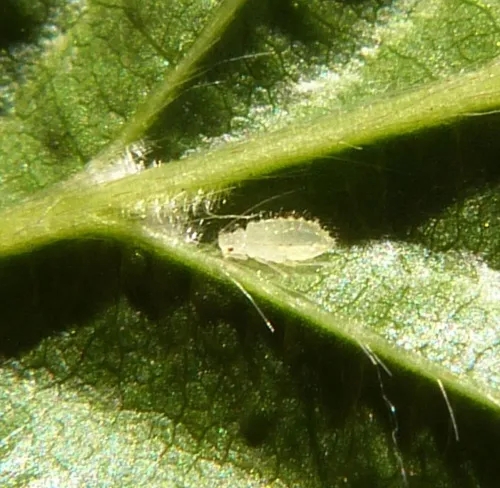
Myzocallis carpini
Myzocallis carpini
Immature Myzocallis carpini are pale and unmarked and have the body hairs (and a few basal antennal hairs) capitate, and very much longer than those of the adult. Winged adult M. carpini viviparae are pale yellow to yellowish white, with no dorsal ab
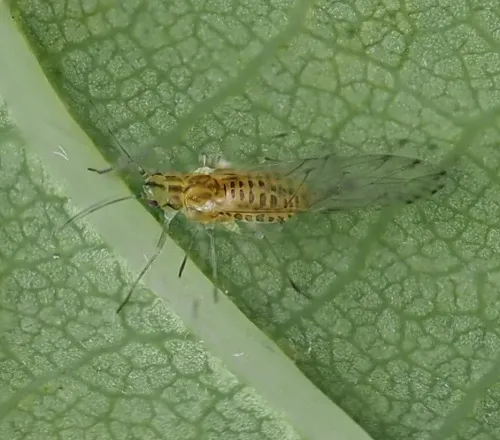
Myzocallis castanicola
Myzocallis castanicola
Immature Myzocallis castanicola are yellowish-white or greenish-white with some brown-black dorsal markings. All adults are winged, yellow with paired black spots on the abdomen and a central dark median line on the head . The wing venation distinctl
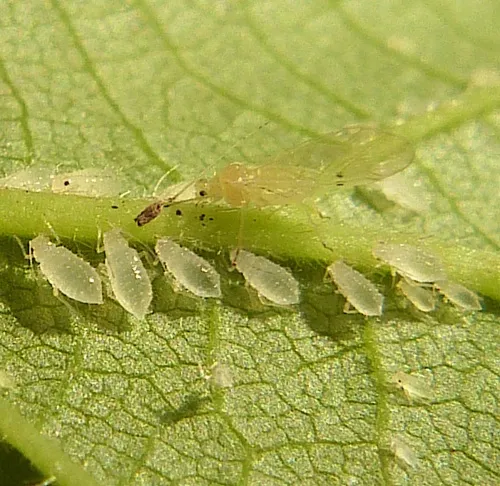
Myzocallis coryli
Myzocallis coryli
The body length of Myzocallis coryli alatae is 1.3 to 2.2 mm. It has ringed antennae and a inconspicuous dot on the wings of winged adults. For further details of this species please see the link below. Please provide good close-up images of the aphi
Myzocallis granovskyi
Myzocallis granovskyi
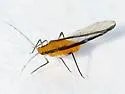
Identification: In life this species is yellow with black lateral margins around the eyes, on the thorax, and black costal margins on the wings. The antennae are banded, with dark spots at the apices of segments III-VI. The tibiae and tarsi are black
Myzocallis schreiberi
Myzocallis schreiberi
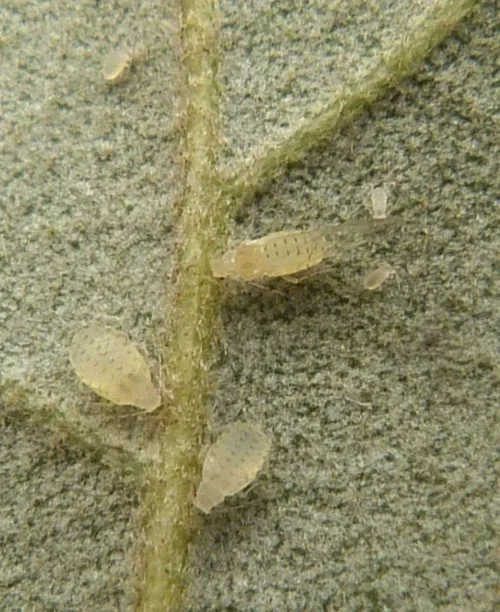
Immature Myzocallis schreiberi are whitish to pale straw yellow with four longitudinal rows of dark spots and long body hairs. Winged adult viviparae of M. schreiberi are pale yellow, with the head and the thorax slightly darker. The prothorax often
Myzocallis walshii
Myzocallis walshii
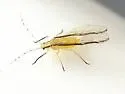
Identification: Specimens found earlier in the year are largely yellow with black pigment at apices of antennal segments and some weak pigment on foretibiae and on costal margin of forewing; later in the year pronotum with black pigment on each side,
Shallot Aphid
Myzus ascalonicus
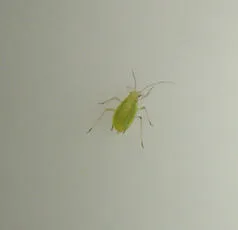
The adult wingless form is 1.1 to 2.2 mm long and shiny pale green to dirty yellow. Its appendages are all pale except for the ends of the antennae and the 'ankles/feet' which are all quite black. The two tubes (siphunculi) at the rear end are pale,
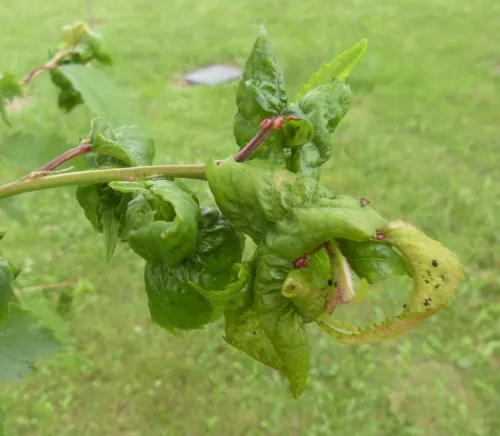
Cherry Aphid
Myzus cerasi
On its primary host (Cherry), Myzus cerasi cause the leaves to curl and produce ant-attended leaf nests. The adult aptera that lives in the leaf nest is a small to medium sized aphid, shiny, very dark brown to black with a sclerotized dorsum. Good qu
Green Peach Aphid
Myzus persicae
Considered a major pest because they cause damage to vegetables and ornamentals. Can transmit viral diseases. There is a wide variety of predators that are used as biocontrols, ladybugs, syrphid flies, parasitic wasps, etc.
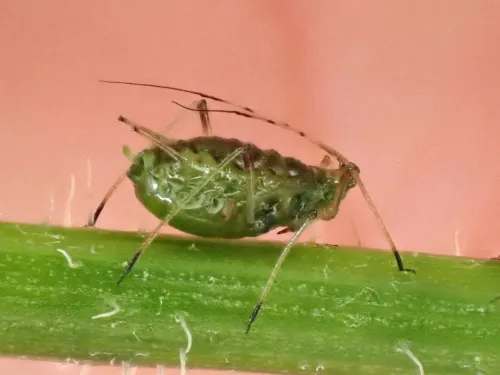
Nasonovia ribisnigri
Nasonovia ribisnigri
On the primary hosts, gooseberry and blackcurrant, the wingless apterae are bright shiny green. Winged adults have black markings on abdomen. On the secondary host (plant in Daisy family, Asteraceae, including Lettuce) apterae can be green, pink or y
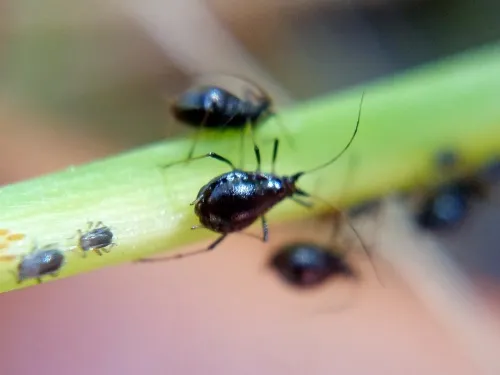
Neotoxoptera formosana
Neotoxoptera formosana
Adult apterae of Neotoxoptera are shining magenta-red to dark reddish brown or almost black, immatures are similarly coloured. The body length of the adult aptera is 1.6 to 2.3 mm. N. formosana alatae are very dark red to black with the wing veins he
Oestlundiella flava
Oestlundiella flava
Identification: All viviparae are alate, delicate, lemon yellow with plumes of bluish white wax developing on antennae and legs.
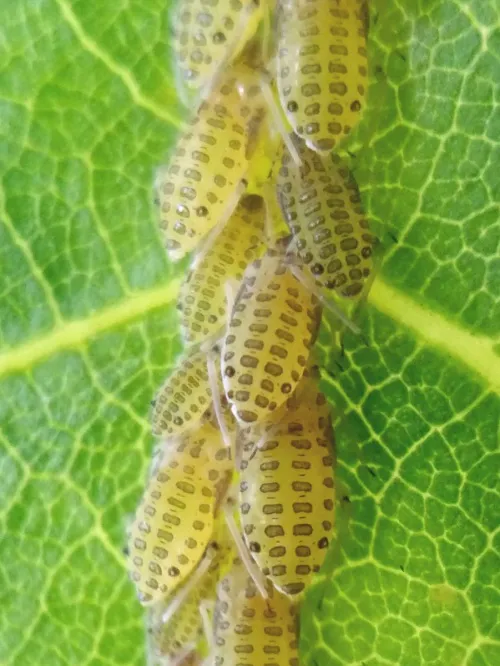
Large Walnut Aphid
Panaphis juglandis
The fourth-instar nymph has transverse rows of brown patches on the dorsal abdomen. The adult alate is large and stout-bodied. It has a darkened head and thorax, and a yellow abdomen with dark brown transverse bands. The forewing veins are fuscous-bo
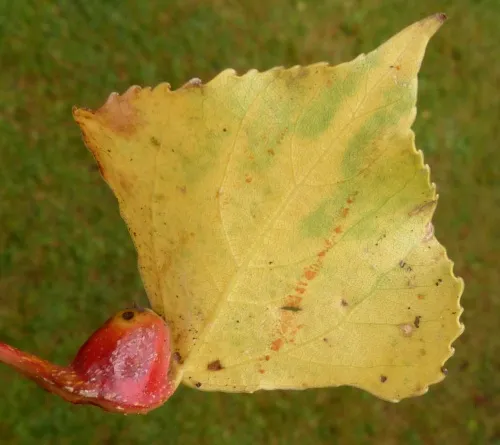
Pemphigus bursarius
Pemphigus bursarius
Pemphigus bursarius is an aphid which causes pouch galls to form in the petioles of the leaves in some species of Poplar. The galls are seen more often than the aphid, and are 15 x 6 to 8 mm and form on one side of the petiole opening in June to rele
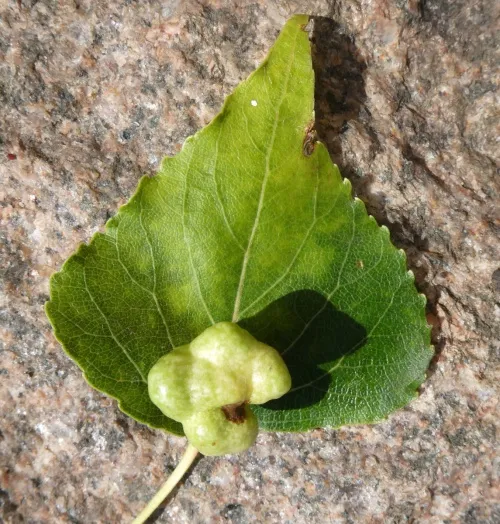
Pemphigus populi
Pemphigus populi
The aphid Pemphigus populi causes a green or greenish-yellow club-shaped gall to form on the leaves of Black Poplar and its hybrids such as Lombardy Poplar. The gall is found close to the base of the leaf. Mature Pemphigus populi alatae are greyish g
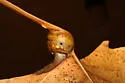
Pemphigus populicaulis
Pemphigus populicaulis
Causes twisted, subglobular galls with oblique openings at the base of cottonwood ( Populus ) leaf blades.
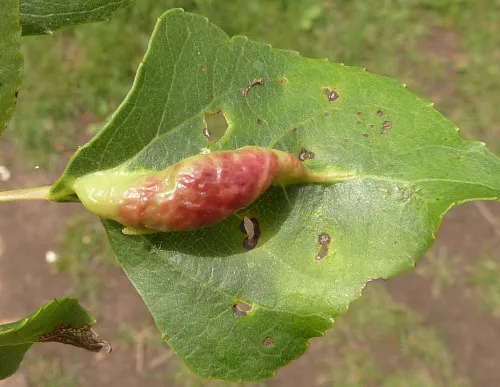
Pemphigus populinigrae agg.
Pemphigus populinigrae agg.
The fundatrices of the aphid Pemphigus populinigrae induce yellowish or dull reddish broad pouch-shaped galls on the midrib of the upperside of leaves of poplar (mainly Black Poplar and Lombardy Poplar). Mature galls are rounded and smooth on top and
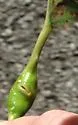
Poplar Petiolegall Aphid
Pemphigus populitransversus
Identification: Forms oval galls with transverse openings near the middle of poplar ( Populus ) petioles.
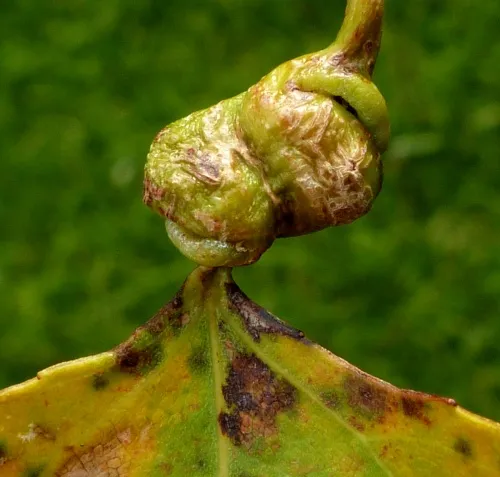
Pemphigus spyrothecae
Pemphigus spyrothecae
Pemphigus spyrothecae is an aphid that causes galls to form in the leaf petioles of its host trees. The galls are seen more often than the aphid. The galled petioles have 2-3 twists, which loosen up later in the year to release aphids through a slit
Periphyllus acericola
Periphyllus acericola
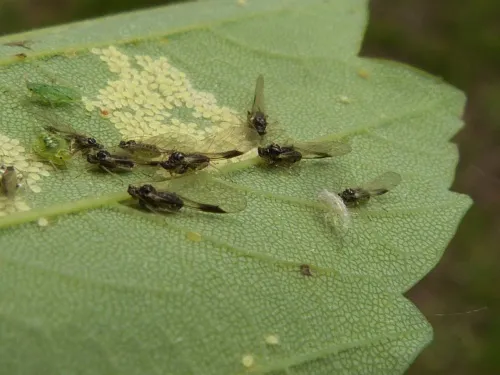
Aphid colonies occur on the undersides of sycamore leaves. Alates with closely spaced, black, abdominal cross-bars and black pterostigmata. White "dimorph" nymphs in dense groups. Please provide close-up images of the aphids and state the host specie
Periphyllus aceris
Periphyllus aceris
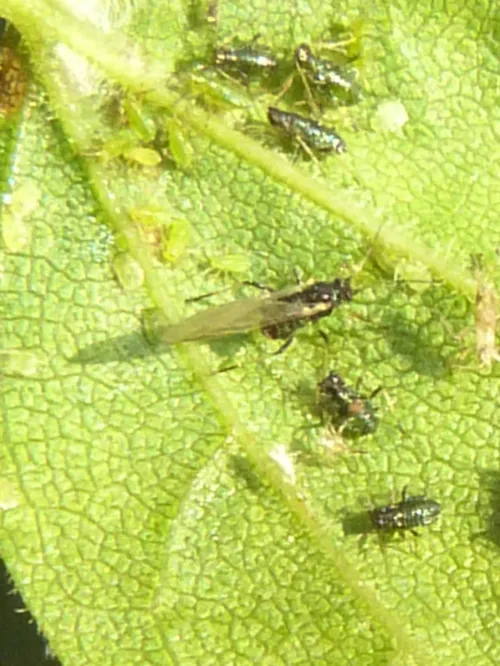
The alates (winged adults) have widely separated broad black bands on the abdomen which helps with identification. The alate body length is 3.2 to 4.5 mm. The apterae (wingless forms) are yellow-green and can be much more difficult to identify to spe
Norway Maple Periphyllus Aphid
Periphyllus lyropictus
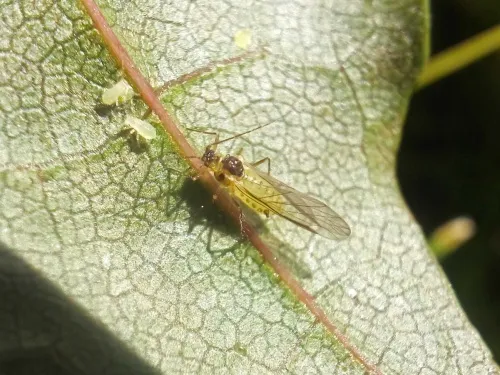
Apterae 2 to 3 mm, relatively long-hairy and with short siphunculi and found in large colonies on the underside of Norway Maple leaves. Records should be supported by a photograph showing the aphids in as much detail as possible. Please also state th
Common Maple Aphid
Periphyllus testudinaceus
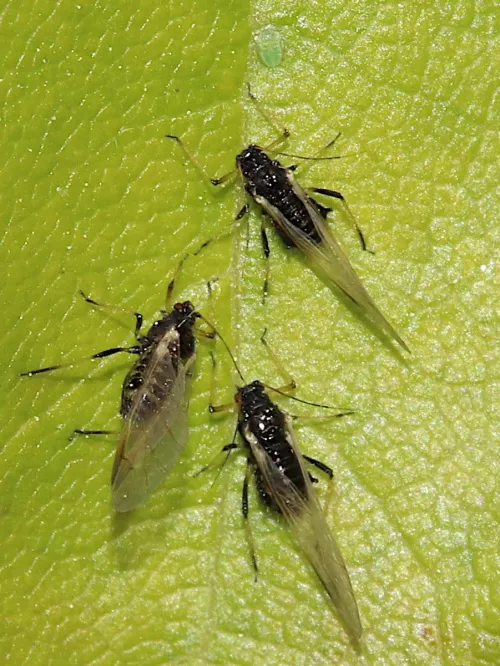
In the winged form of this aphid (alate) the pterostigma on the wing is brown, rather than black. Widespread but under recorded in Britain. https://influentialpoints.com/Gallery/Periphyllus_testudinaceus_Common_Periphyllus_Aphid.htm
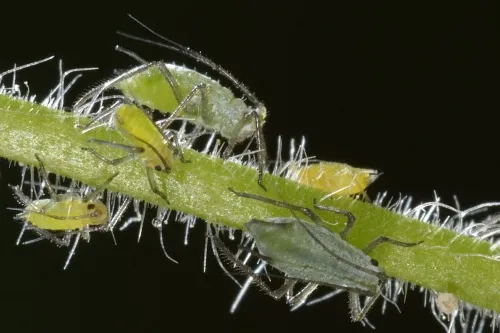
Damson-hop aphid
Phorodon humuli
Phorodon humuli apterae are small to medium sized, whitish to pale yellowish green and relatively shiny. The abdomen is marked with three dark green longitudinal stripes. The damson-hop Aphid host alternates from blackthorn or plum species (Prunaceae
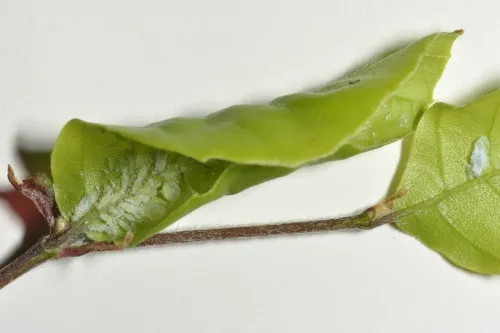
Woolly Beech Aphid
Phyllaphis fagi
The aphids are covered entirely by white waxy filaments that are secreted from its body. The aphids cause irregular upward bulges on the leaves, with the aphids living in shallow depressions underneath and causing the leaf to curl downwards Thought t
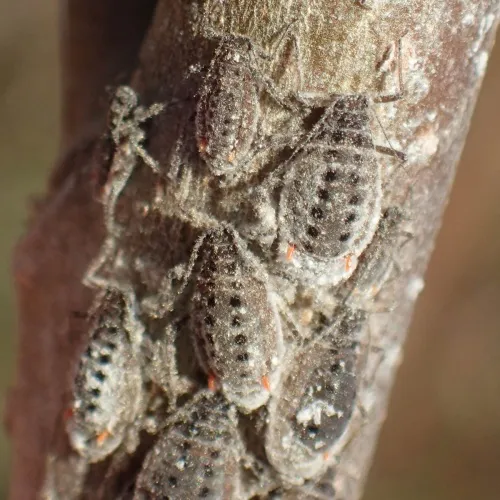
Plocamaphis flocculosa
Plocamaphis flocculosa
These are large grey aphids 3.1 - 5.0 mm in length. The head and legs are dark and there are two rows of dark spots running down the back. The insect is almost completely covered in whitish wax secretions. The siphunculi are bright orange. They feed
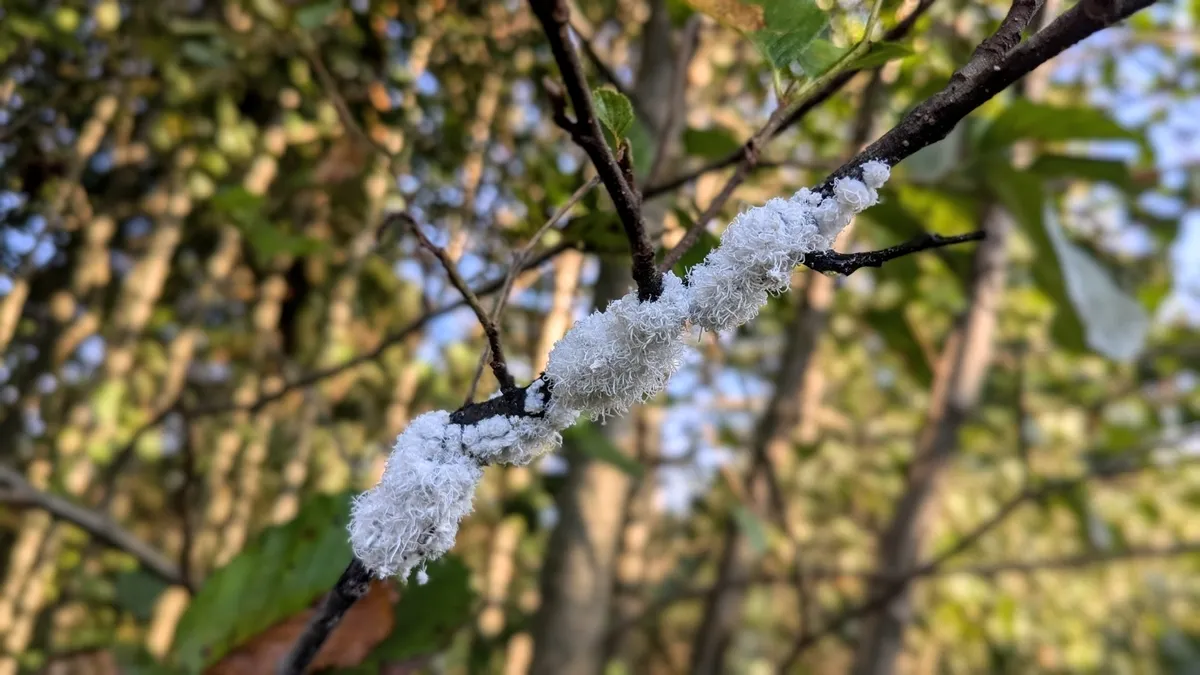
Woolly Alder Aphid
Prociphilus tessellatus
Identification: Gray to black in color. It gets its name from the fluffy, white wax found on its abdomen. Colonies are obvious because of their white, fuzzy appearance. They are usually seen on leaves, twigs or bark. Although infested leaves shrivel
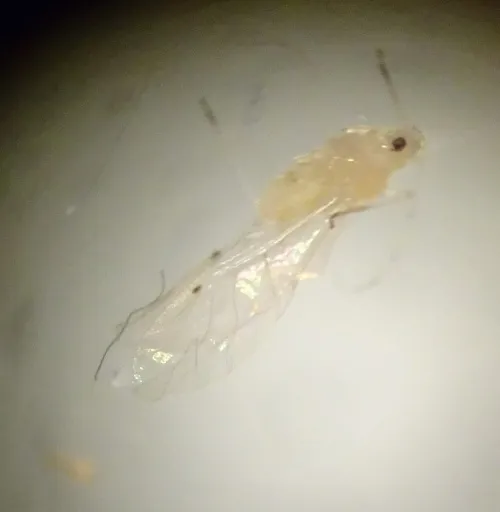
Pterocallis alni
Pterocallis alni
The body length of Pterocallis alni apterae is 1.3 to 2.0 mm. Both the winged and wingless adult viviparae of P. alni are yellowish white to yellowish green. For a more detailed description of this species please use the ‘Further info:’ link below. P
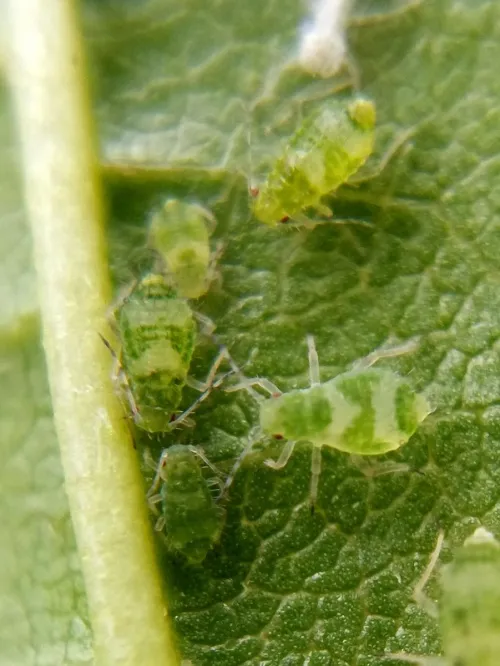
Pterocallis maculata
Pterocallis maculata
Adult apterae of Pterocallis maculata are yellowish-green or green, with a pattern of diffuse dark green dorsal cross bands, giving an overall blotchy appearance. The body length of the aptera is 1.4 to 2.1 mm. The P. maculata alate has a pale green
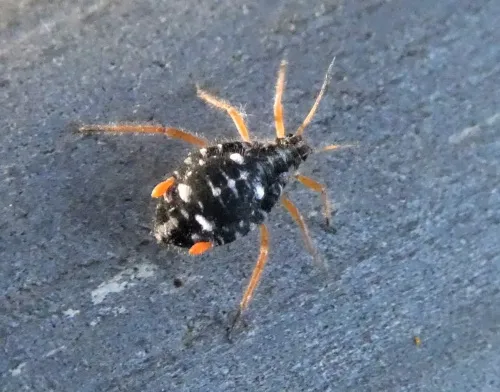
Black Willow Bark Aphid
Pterocomma salicis
These are large greenish black to black aphids 3.2 - 4.5 mm in length with pale grey spots of waxy powder. The siphunculi are bright orange. The legs and antennae are pinkish-brown. They feed on the two year old twigs of willows (Salix species). Diff
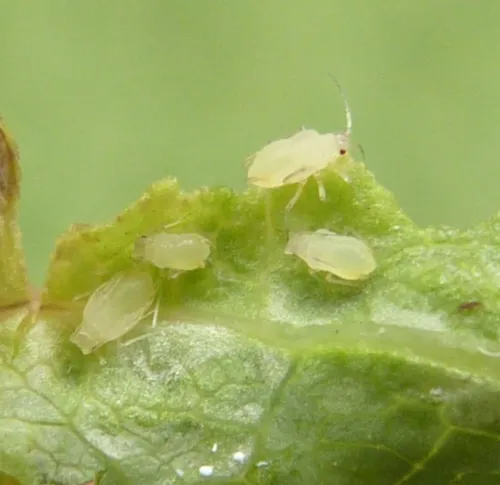
Rhopalomyzus lonicerae
Rhopalomyzus lonicerae
This is a small, pale creamy aphid, the body length of the adult aptera of Rhopalomyzus lonicerae is 2.0 to 2.6 mm. (see 'Further info' link). Please provide good photographs showing the aphids, plus host plant and galls if present. The primary host
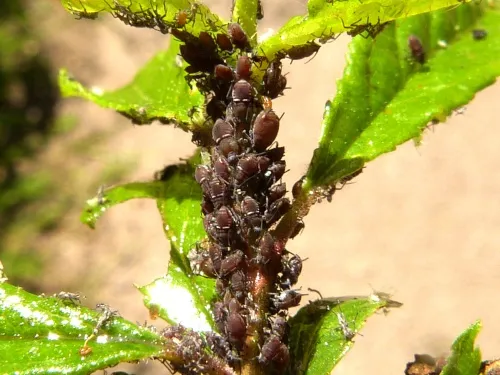
Water Lily Aphid
Rhopalosiphum nymphaeae
Apterae of Rhopalosiphum nymphaeae are reddish-brown on the primary host ( Prunus species – Plum and Blackthorn), and more or less shiny reddish-brown to dark olive on the secondary host (Water-lily). R. nymphaeae alatae are shining brown, sometimes
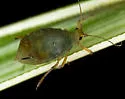
Bird Cherry Oat Aphid
Rhopalosiphum padi
Identification: Wingless adults are green with reddish areas toward the end of the abdomen and around the bases of the cornicles. Winged adults have black heads and thoraxes and green abdomens.
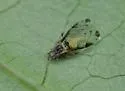
Crapemyrtle Aphid
Sarucallis kahawaluokalani
Identification: Adults are light green to yellow with black thoracic markings and black markings on dorsal of abdomen. The second abdominal segment has a double-pronged hump in the black marking. Wings are clear with black markings and held roof-like
Greenbug
Schizaphis graminum
Identification: Mature female greenbugs are winged or wingless, pear-shaped, about 1/16-inch long, pale green, and marked with a darker green stripe down the middle of the back and black tips on the legs and the two appendages (cornicles) on the back
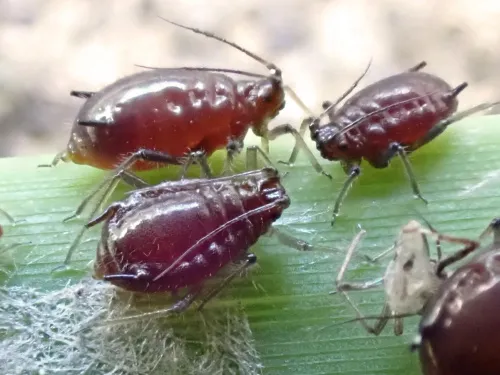
Schizaphis scirpi
Schizaphis scirpi
Apterae of Schizaphis scirpi are shiny dark bronze-brown to reddish brown or blackish with a body length of 1.5 to 2.8 mm. Fur further details see the 'Further Information' link below. Please provide good close up images and state the host plant. Wet
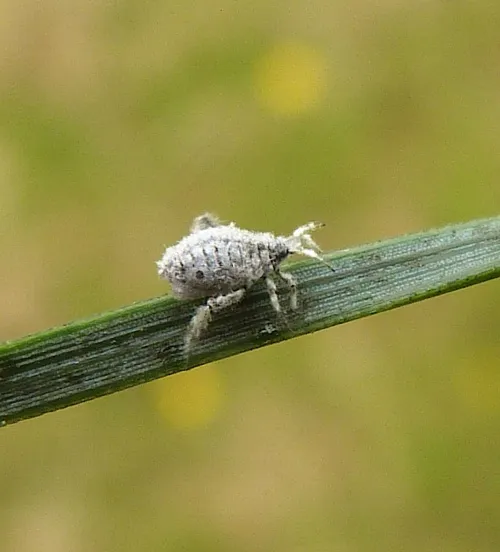
Schizolachnus pineti
Schizolachnus pineti
The apterae are dark greyish-green covered in wax meal giving a light bluish-grey appearance. The last rostral segment is very short and stumpy with a short tip. The body length is 1.2 to 2.5 mm. They are found on numerous species of Pines (Pinus spp
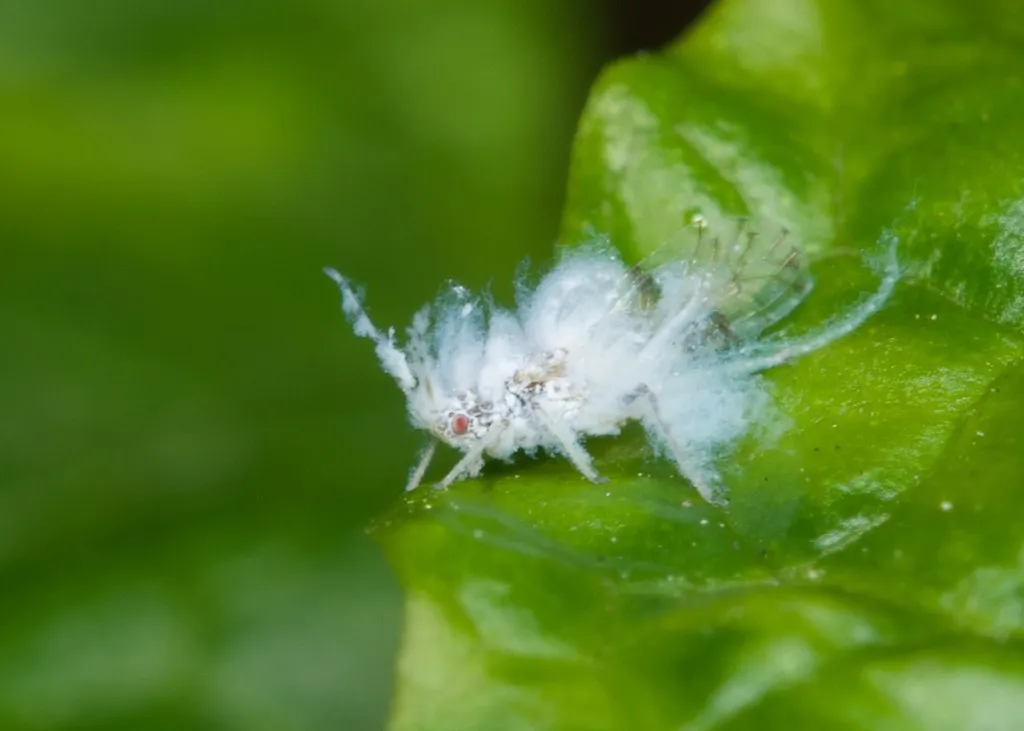
Asian Woolly Hackberry Aphid
Shivaphis celti
Identification: These aphids are covered in a bluish white wax that forms from conspicuous abdominal glands. The winged forms have shading along the wing veins, particularly toward the edge of the wings. While generally obscured like most of the inse
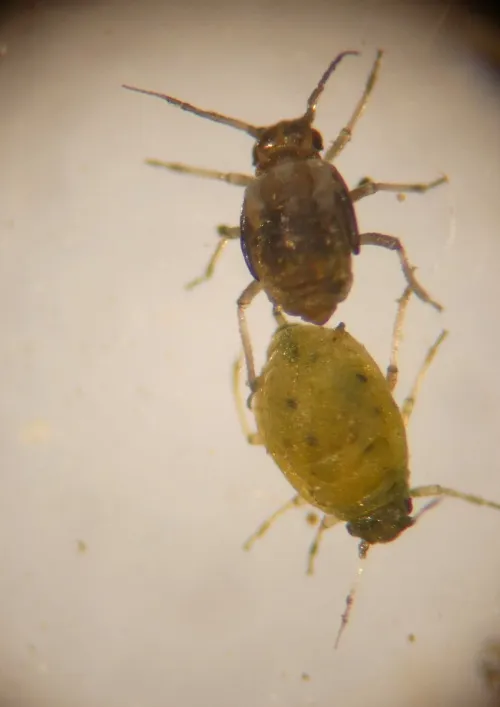
Staegeriella necopinata
Staegeriella necopinata
Adult apterae of Staegeriella necopinata are yellowish-green or greyish-green aphids powdered ventrally with grey wax. Unless identified by a recognised expert, a photo is required. If the photo doesn't show the key ID features then in the comments b
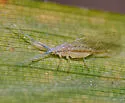
Takecallis arundinariae
Takecallis arundinariae
Identification: Adult female: dark stripes along top of thorax; two rows of "8"-shaped black spots along abdomen.
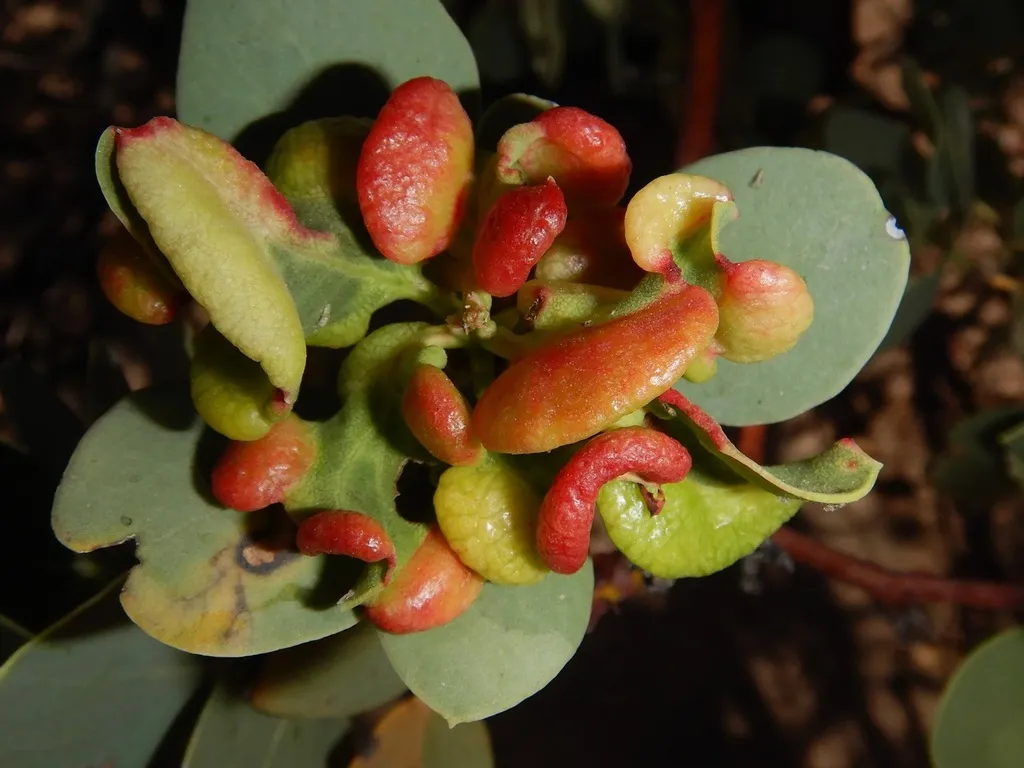
Manzanita Leaf Gall Aphid
Tamalia coweni
Identification: This aphid feeds on over 30 species of Arctostaphylos (manzanita). It induces pink/red fold galls, either along leaf edges, on the inflorescences, or, on some manzanitas, along the midrib vein.
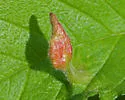
Tetraneura nigriabdominalis
Tetraneura nigriabdominalis
Identification: Galls tend to be bicolored (green and red); hairy; elongate/pouch shaped; typically with a pointed apex
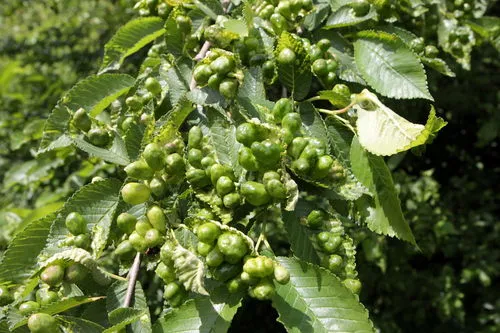
Fig Gall
Tetraneura ulmi
The aphid Tetraneura ulmi causes a fig like gall to be formed on certain species of elm. This is a quite large, solitary, upright, pouch like gall on the upper surface of the leaf. The gall is more often seen than the adult aphid. Anywhere that the h
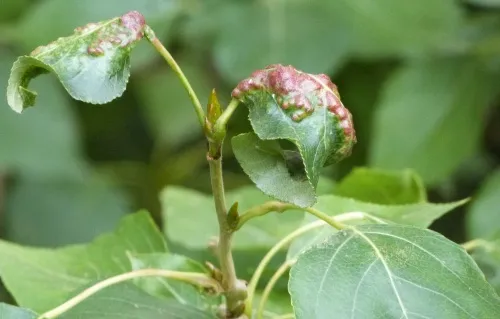
Poplar-buttercup gall aphid
Thecabius affinis
This aphid causes galls on Poplar and Buttercup species. On Poplar the galls are usually found as red blisters on the leaf. See link below for more details. Adult: Unless identified by a recognised expert, a photo is required and the specimen should
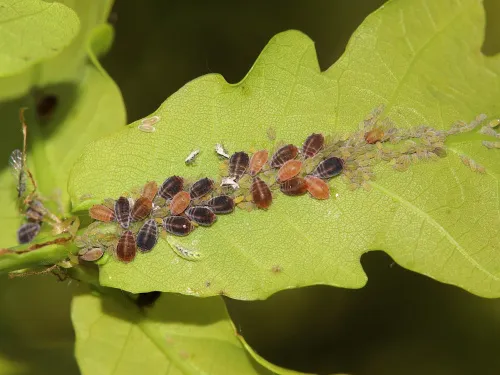
Thelaxes dryophila
Thelaxes dryophila
The wingless stages of Thelaxes sp. are small (1-2.3 mm) oval and brown or greenish, sometimes with a paler stripe along the back. Their rostrum is distinctive in having a long and almost needle-like last rostral segment. The cauda is knobbed and the
Yellow Clover Aphid
Therioaphis trifolii
Identification: Therioaphis adults have a dark band from eye to eye on the ventral side of the face. [Natalie Hernandez email] Introduced from Europe, 1879
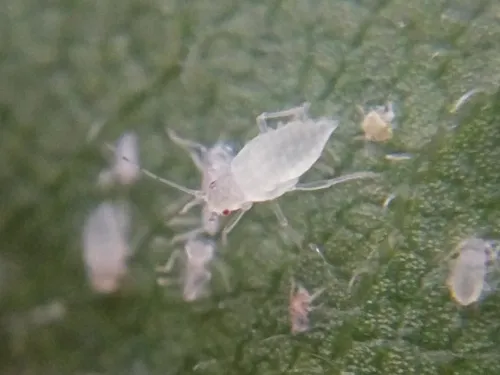
Tinocallis takachihoensis
Tinocallis takachihoensis
All adult Tinocallis takachihoensis viviparae are winged. These alates are pale yellow-green with a shiny black head and thorax. The pattern of black markings on the wings is diagnostic. The body length of Tinocallis takachihoensis alates is 1.8-2.0
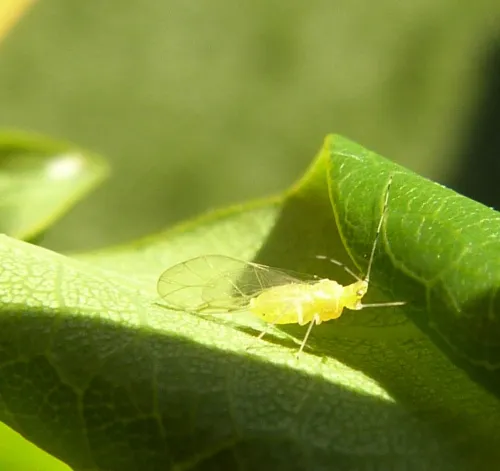
Tuberculatus annulatus
Tuberculatus annulatus
Immature Tuberculatus annulatus are yellowish or green with pale antennae apart from black bands at the tips of the segments. The adult winged viviparae are very variable in colour, ranging from yellowish, greyish-green or pink to purple in summer. F
Tuberculatus borealis
Tuberculatus borealis
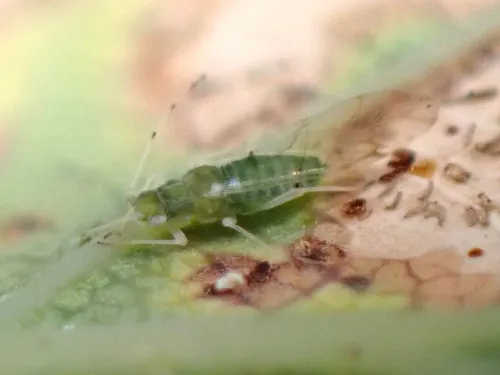
Length 1.9-2.3mm. Alate (winged) females are generally pale blue-green, yellow mottled with green, or light yellow. Unless identified by a recognised expert, a photo is required and the specimen should be examined with a microscope. In the comments b
Giant Willow Aphid
Tuberolachnus salignus
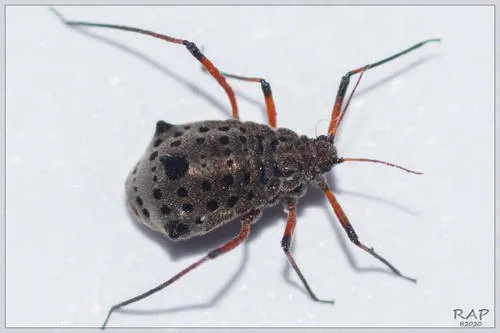
Giant Willow Aphids are dark brown with a peppering of black spots but can appear grey from a white dust which forms on them. It is an unusually large aphid, measuring up to 6mm long. Adults of the species have a thorn-like tubercle which protrudes f
Uroleucon aeneum
Uroleucon aeneum
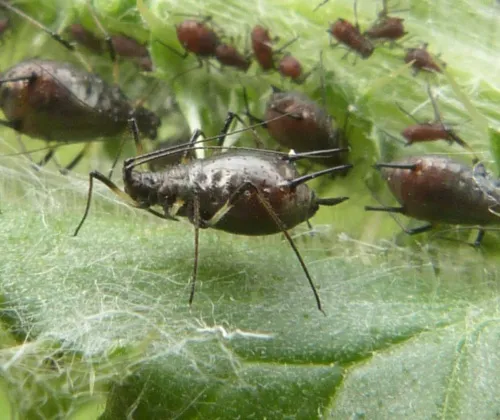
The body length of the adult Dark-tailed Thistle Aphid ( Uroleucon aeneum ) apterae is 3.0 to 4.3 mm. The cauda (tail) in this species is black which helps to identify it (see below). Large Thistle Aphid ( Uroleucon cirsii ) is similar and also uses
Brown Ambrosia Aphid
Uroleucon ambrosiae
Identification: Adults are medium to large in size, broadly spindle shaped, red-brown to dark brown or dull red, and have black cornicles.
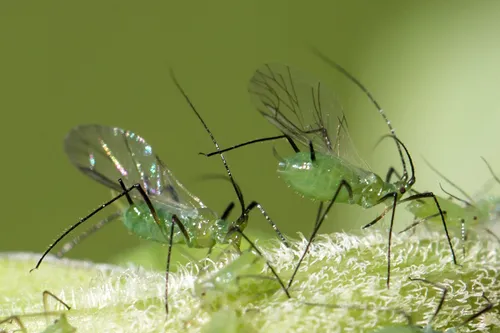
Northern Green Goldenrod Aphid
Uroleucon caligatum
Closely related and very similar to U. luteolum , which has a more southern distribution. Blackman & Eastop note the relationship needs to be studied further.
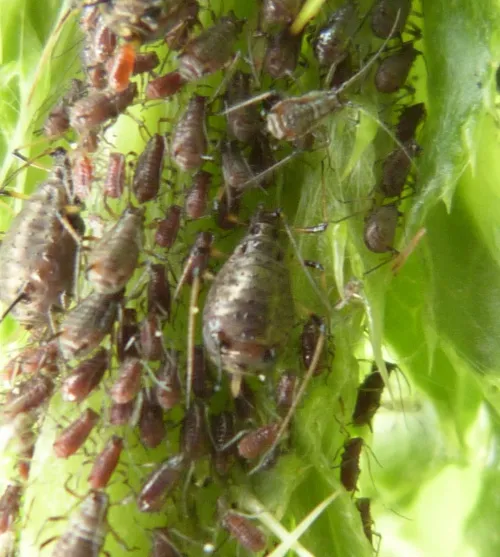
Large Thistle Aphid
Uroleucon cirsii
The large thistle aphid Uroleucon cirsii is between 4 and 5.2 mm in length and has characteristic two tone legs. Dark-tailed Thistle Aphid (Uroleucon aeneum) is similar and also uses Thistle as a host plant, but Uroleucon aeneum has an all black caud
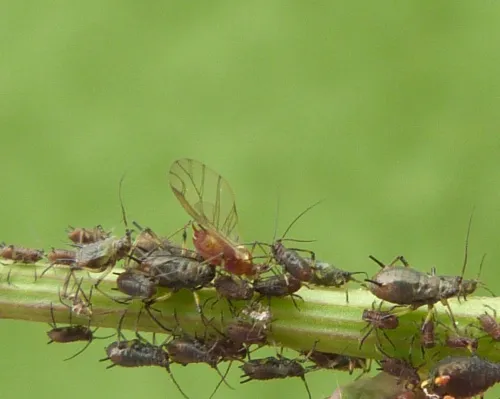
Uroleucon hypochoeridis
Uroleucon hypochoeridis
Uroleucon hypochoeridis is a large pinkish-grey aphid with pale legs that are darkened towards the apices of the segments. Immatures are grey with a reddish-pink suffusion around the bases of the siphunculi. Uroleucon cichorii also occurs (rarely?) o
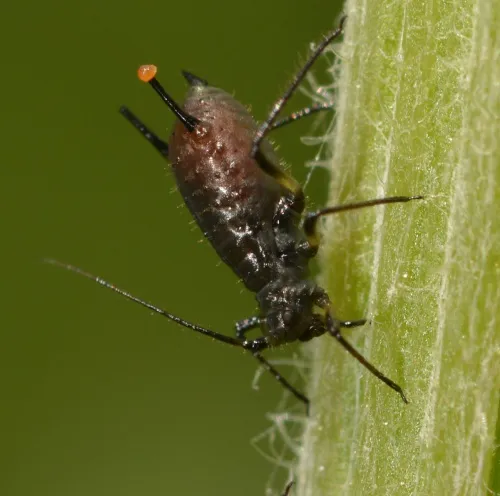
Large Knapweed Aphid
Uroleucon jaceae
This is a large blackish aphid that can appear dark metallic green. The abdominal tergites 2-4 often have small marginal tubercles. The femora have the basal half pale and distal half dark, with a rather sharp transition between them. The tibiae are
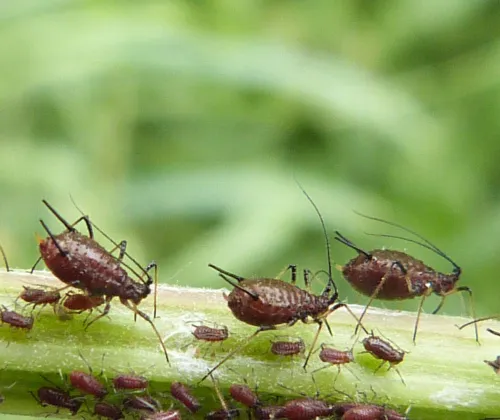
Yellow-legged Knapweed Aphid
Uroleucon jaceicola
Apterae of Uroleucon jaceicola are dark bronze-brown but in this species the legs are mainly yellowish with black around the 'knees'. and the cauda (tail) is also pale. Uroleucon jaceicola lives on the stems of Common Knapweed. In spring it is found
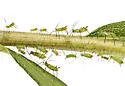
Uroleucon luteolum
Uroleucon luteolum
Closely related and very similar to U. caligatum , which has a more northern distribution. Blackman & Eastop note the relationship needs to be studied further.
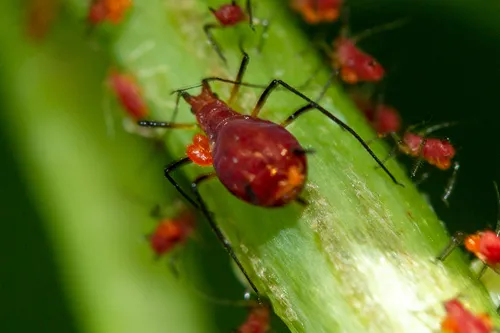
Uroleucon obscuricaudatum
Uroleucon obscuricaudatum
Identification: Red with smoky or dusky cauda, darker than abdomen.
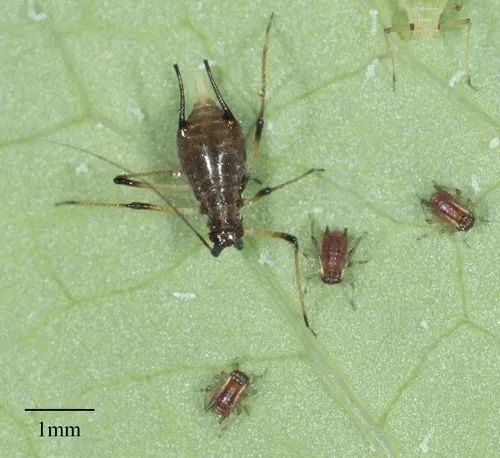
Uroleucon sonchi
Uroleucon sonchi
This is a large, dark brownish aphid with a glossy shine. Thought to be common and widespread in Britain, but little recorded. https://influentialpoints.com/Gallery/Uroleucon_sonchi_Large_sowthistle_aphid.htm
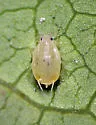
Abstrusomyzus phloxae
Abstrusomyzus phloxae
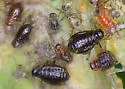
Acuticauda solidaginifoliae
Acuticauda solidaginifoliae
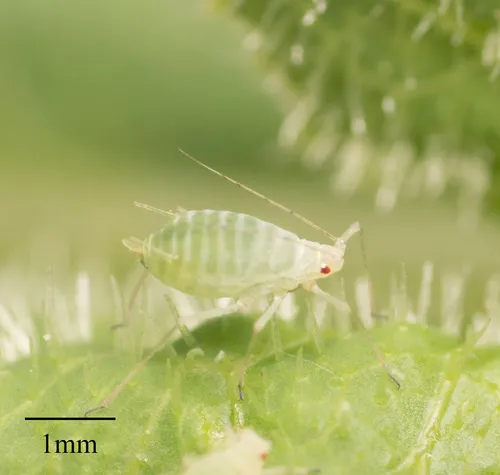
Acyrthosiphon lactucae
Acyrthosiphon lactucae
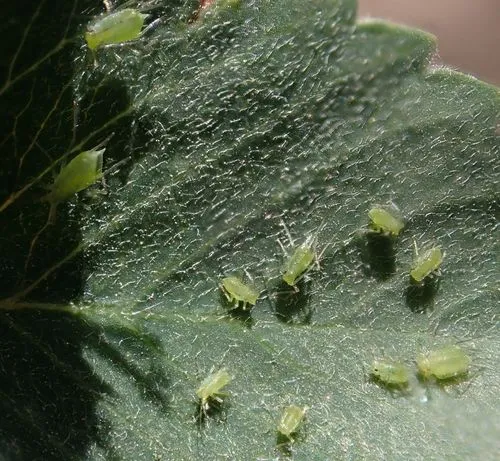
Acyrthosiphon macrosiphum
Acyrthosiphon macrosiphum
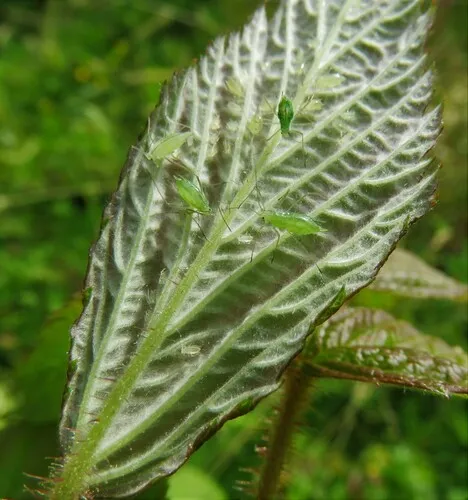
Large Raspberry Aphid
Amphorophora agathonica
Amphorophora ampullata
Amphorophora ampullata
Aphis asclepiadis
Aphis asclepiadis
Black Citrus Aphid
Aphis aurantii
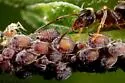
Aphis cephalanthi
Aphis cephalanthi
Tupelo - Blackjack Aphid
Aphis coreopsidis
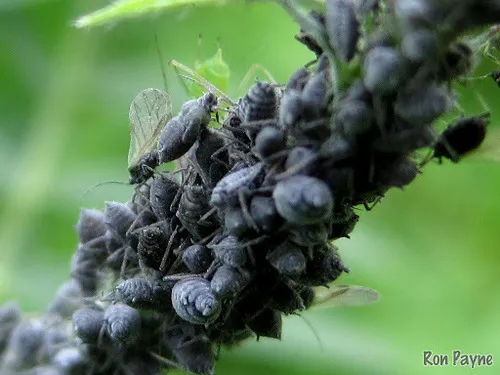
Tufted Vetch Aphid
Aphis craccae
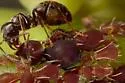
Virginia Creeper Aphid
Aphis folsomii
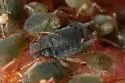
Strawberry Root Louse
Aphis forbesi
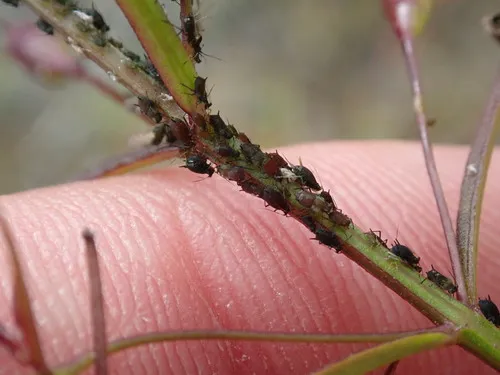
False Foxglove Aphid
Aphis gerardiae
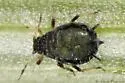
Small Chicory Aphid
Aphis intybi
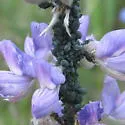
Western American Lupine Aphid
Aphis lupini
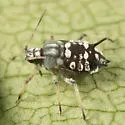
Spotted Poplar Aphid
Aphis maculatae
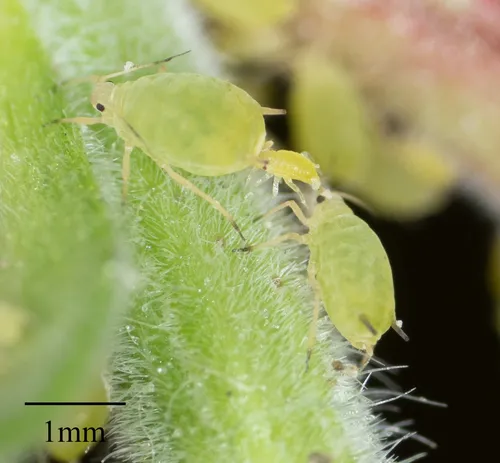
Buckthorn Aphid
Aphis nasturtii
Introduced from the Palearctic. Considered a pest.
Red-osier Dogwood Aphid
Aphis neogillettei
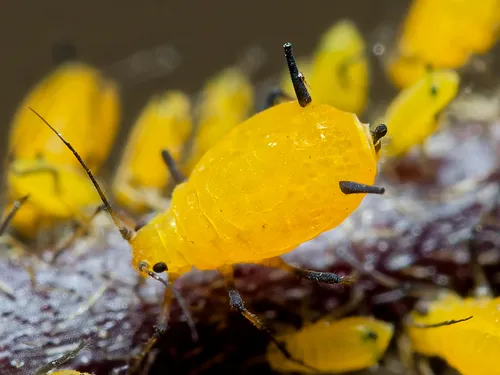
Oleander Aphids
Aphis nerii
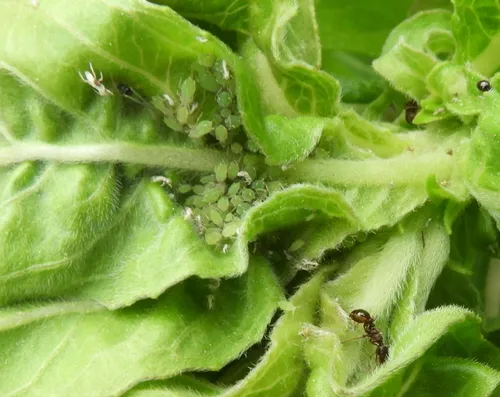
Evening Primrose Aphid
Aphis oenotherae
Dark-tipped Evening Primrose Aphid
Aphis oestlundi
Redbud Aphid
Aphis pawneepae
Aphis pulchella
Aphis pulchella
Small Blackberry Aphid
Aphis rubifolii
Aphis saniculae
Aphis saniculae
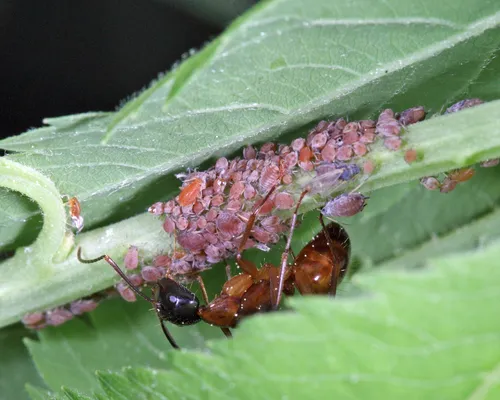
Brown Spirea Aphid
Aphis spiraephila
Waxy Meadow-rue Aphid
Aphis thalictri
Aphis varians
Aphis varians
Mullein Aphid
Aphis verbasci
Ironweed Aphid
Aphis vernoniae
Aphthargelia symphoricarpi
Aphthargelia symphoricarpi
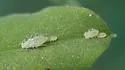
Black Locust Aphid
Appendiseta robiniae
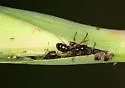
Brachycaudus tragopogonis
Brachycaudus tragopogonis
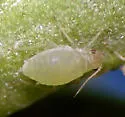
Brachyunguis bonnevillensis
Brachyunguis bonnevillensis