
Nemapogon acapnopennella - Hodges#0261
Nemapogon acapnopennella
This record describes Nemapogon acapnopennella (species). Recorded family: Tineidae. Recorded order: Lepidoptera.
Identification and Appearance
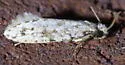
| Feature | Details |
|---|---|
| Head | Head whitish, long haired (scaled). Face front has brownish spot between antenna bases. Palpi long, folded; white flecked with grayish-brown. Segment 2 dark, scaled on underside. Antenna: Base (scape) white. Segments yellowish-white, ringed with brown. |
| Thorax | White flecked with brown. Sides (patagia) brown. Wings: White, heavily speckled with brown. Costa margin has long dashes of dark brown continuing around entire wing tip. A dark, somewhat scaly patch at mid wing and another curved, small patch nearer wing tip, also central. Small dark patch on inner margin just before fringe (anal angle). Fringe alternate dark and light, speckled with brown. Hind wings dark gray. |
| Legs | White with brown tips. Feet striped brown and white. Hind shin (tibia) feathered. |
| Abdomen | Top side grayish-brown, segments have a brown line on each side. Underside yellow-white flecked with some brown. The description as Tinea acapnopennella Clemens, is available online in the print references below. Specimen identified by DNA analysis (BOLD) Adults are rarely seen at lights. Types: Holotype as Tinea acapnopennella by Clemens, 1863. #213. Locality: unknown In the U. S. National Museum, Smithsonian. Syntype as Tinea minutipulvella female Chambers, 1875. #212; MCZ#1390. Locality: Canada. In Museum of Comparative Zoology, Cambridge, Mass. |
Classification
- Kingdom
- Animalia
- Phylum
- Arthropoda
- Class
- Insecta
- Order
- Lepidoptera (Butterflies and Moths)
- Superfamily
- Tineoidea
- Family
- Tineidae (Clothes Moths)
- Subfamily
- Nemapogoninae
- Genus
- Nemapogon
Imported taxonomy record. Source availability varies; see the source references and editorial policy below.
Habitat and Range
Habitat
Deciduous forests.
Geographic Range
British Columbia to Quebec. The United States records are all eastern from Pennsylvania to Florida and Texas, Oklahoma. ( 3 ) , ( 4 ) First Canadian record was in July 2001 from Alberta. ( 4 ) Moth Photographers Group - large map with some distribution data.
Seasonal Activity
Adults are reported from February to November. May to August in the north.
Diet and Behavior
Diet: Bracket fungus Polyporus tulipiferus found on dead wood of deciduous trees.
Life History
The larva feeds on fungus and when full grown pupate in the decayed wood to which the fungus is attached. Full grown larva are 5.5 mm. long. Antennae 3-jointed, last segment longer with several fine hairs. Head bears several long, fine hairs. Head dark, segment behind head dark with white line down center. Next 2 (thorax segments) wrinkled. Rest of segments white with 4 rows of long fine hair. Pupa 6 mm. long. Brownish, spined, last ones hooked.
About Butterflies and Moths: the wider group
Order-level background for Lepidoptera, the group containing Nemapogon acapnopennella. Species-specific details appear above.
Group overview
Lepidoptera includes approximately 180,000 described species of butterflies and moths. Moths outnumber butterflies roughly 10:1. The monarch butterfly's eastern population has declined by more than 80% since the mid-1990s, and the western population by over 95% since the 1980s. The IUCN lists the migratory monarch as Vulnerable.
Ecological role of the group
Butterflies and moths are essential indicators of ecosystem health. As caterpillars, they are a primary food source for birds - a single nest of blue tit chicks requires ~10,000 caterpillars. Adult moths pollinate many night-blooming plants.
Economic and practical significance of the group
Lepidoptera are critical pollinators. In Europe, grassland butterfly species have declined by almost 50% since the early 1990s. In the UK, three-quarters of butterflies are in decline. In the U.S., five butterfly species have gone extinct since 1950, with 29 listed as endangered.
Recorded sources for this group: IUCN Red List, Xerces Society, USFWS, PNAS, WWF. Imported estimates may describe particular regions or reporting periods.
Photos of Nemapogon acapnopennella - Hodges#0261 (5)
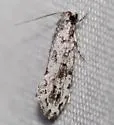
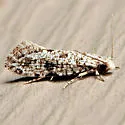
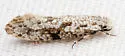
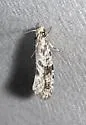
Photo credits: Contributed by Maury J. Heiman; Additional contributions by lee_penner
Frequently Asked Questions About Nemapogon acapnopennella - Hodges#0261
What is Nemapogon acapnopennella - Hodges#0261?
Nemapogon acapnopennella - Hodges#0261 (Nemapogon acapnopennella) is a species in the family Tineidae, within the order Lepidoptera.
How big is Nemapogon acapnopennella - Hodges#0261?
5 to 6 mm long. Wingspan about 9 mm.? OR 12 to 14
How do you identify Nemapogon acapnopennella - Hodges#0261?
| Feature | Details |
|---|---|
| Head | Head whitish, long haired (scaled). Face front has brownish spot between antenna bases. Palpi long, folded; white flecked with grayish-brown. Segment 2 dark, scaled on underside. Antenna: Base (scape) white. Segments yellowish-white, ringed with brown. |
| Thorax | White flecked with brown. Sides (patagia) brown. Wings: White, heavily speckled with brown. Costa margin has long dashes of dark brown continuing around entire wing tip. A dark, somewhat scaly patch at mid wing and another curved, small patch nearer wing tip, also central. Small dark patch on inner margin just before fringe (anal angle). Fringe alternate dark and light, speckled with brown. Hind wings dark gray. |
| Legs | White with brown tips. Feet striped brown and white. Hind shin (tibia) feathered. |
| Abdomen | Top side grayish-brown, segments have a brown line on each side. Underside yellow-white flecked with some brown. The description as Tinea acapnopennella Clemens, is available online in the print references below. Specimen identified by DNA analysis (BOLD) |
Where is Nemapogon acapnopennella - Hodges#0261 found?
| Feature | Details |
|---|---|
| Habitat | Deciduous forests. |
| Range | British Columbia to Quebec. The United States records are all eastern from Pennsylvania to Florida and Texas, Oklahoma. ( 3 ) , ( 4 ) First Canadian record was in July 2001 from Alberta. ( 4 ) Moth Photographers Group - large map with some distribution data. |
What does Nemapogon acapnopennella - Hodges#0261 eat?
The diet of the Nemapogon acapnopennella - Hodges#0261 includes Bracket fungus Polyporus tulipiferus found on dead wood of deciduous trees..
When is Nemapogon acapnopennella - Hodges#0261 active?
Nemapogon acapnopennella - Hodges#0261: seasonal activity - Adults are reported from February to November. May to August in the north..
What is the life cycle of a Nemapogon acapnopennella - Hodges#0261?
| Feature | Description |
|---|---|
| Additional details | The larva feeds on fungus and when full grown pupate in the decayed wood to which the fungus is attached. Full grown larva are 5.5 mm. long. |
| Antennae | Antennae 3-jointed, last segment longer with several fine hairs. |
| Head | Head bears several long, fine hairs. |
| Head | Head dark, segment behind head dark with white line down center. Next 2 (thorax segments) wrinkled. Rest of segments white with 4 rows of long fine hair. Pupa 6 mm. long. Brownish, spined, last ones hooked. |