
Family Hover Flies (Syrphidae)
Syrphidae is a family in the order Diptera. Browse 520 named species recorded in this family, or open an individual profile for its available identification and natural-history information.
Species in Syrphidae (520)
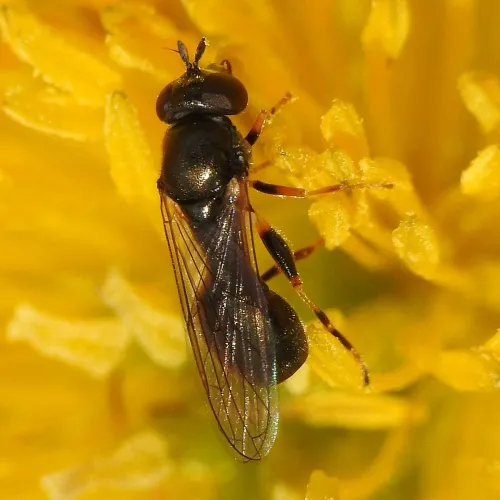
Neoascia meticulosa
Neoascia meticulosa
A small hoverfly with wing length 4 to 5.5 mm. The marginal cross-veins are not darkened and the hind femora are narrowly yellow at the apex. The front tibia are mostly yellow, the front and mid femora half yellow, and the hind tibia only narrowly ri
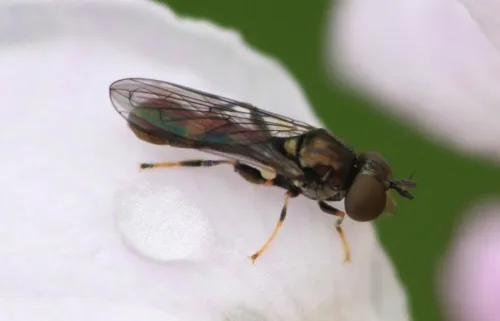
Neoascia tenur
Neoascia tenur
Wing length 3 to 5 mm. This tiny species is similar to N. geniculata but in the male the third antennal segment is relatively narrow, and about one and a half times as long as broad. The female of this species has less waisted lateral margins to terg
Ocyptamus dimidiatus
Ocyptamus dimidiatus
Identification: See comments under images, for example, this one:
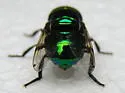
Green Jewel Fly
Ornidia obesa
Identification: Body shiny, metallic, green or purplish-blue. Wings mostly hyaline, but with two spots along anterior margin: one near middle, the other smaller and before the apex. Scutellum with a shallow transverse depression before posterior edge
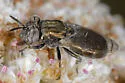
Orthonevra bellula
Orthonevra bellula
Identification: Relatively large and distinctive. The hairy face which is almost shaggy, elongate second antennal segments, simple eye markings, and distinctive male genitalia will separate this species from all others in the group (Sedman 1964). Lar
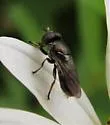
Orthonevra feei
Orthonevra feei
Identification: One of two species of Orthonevra without eye markings. " Orthonevra robusta also lacks eye markings but has entirely black legs and postpedicel shorter than scape plus pedicel combined." (Skevington et al. 2019)
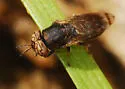
Orthonevra flukei
Orthonevra flukei
Identification: Distinguished from other Southwestern members of the species group by the combination of face with scales (not bare or with long hairs); eye with two eye stripes, usually with sharp angles above midline (vs. three stripes or with gent
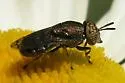
Orthonevra nitida
Orthonevra nitida
Identification: The eye markings are unique in the East.
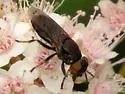
Orthonevra pictipennis
Orthonevra pictipennis
Identification: Distinguished from other members of the pictipennis group by the combination of dark bands along crossveins (sometimes narrow) and fore tibiae black medially.
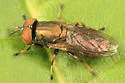
Orthonevra pulchella
Orthonevra pulchella
Identification: Distinguished from other North American members of the pictipennis group by the combination of wings without distinct bands along crossveins and tibiae black medially.
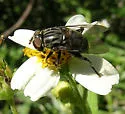
undescribed sp. 1
Palpada undescribed-species-near-furcata
This page is for observations of the possibly undescribed species near Palpada furcata
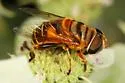
Palpada vinetorum
Palpada vinetorum
Identification: A robust syrphid, (typical of genus Palpada ), yellowish-brown with gray bands on thorax. Legs reddish or yellowish, femora darker. Hind tibiae thick, arc-shaped. Wings slightly darkened. See comments to this image:
Paragus angustifrons
Paragus angustifrons
Identification: Examination of male genitalia necessary to ID to species
Paragus haemorrhous
Paragus haemorrhous
Identification: Scutellum entirely black (no apical reddish spot) and hairs on eye not forming banded pattern. possibly a complex of species
Parasyrphus genualis
Parasyrphus genualis
Identification: "Markings on tergite 2 are more linear and closer at middle than other Parasyrphus species. Hind femur and hind tibia much too extensively darkened for female Syrphus and posterior edge of markings on tergites 3 and 4 too emarginate f
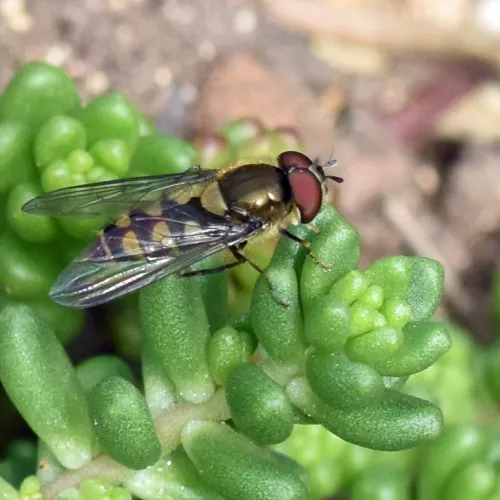
Parasyrphus punctulatus
Parasyrphus punctulatus
Length 6 to 8 mm, wing length 5.5 to 7.75 mm. This is a rather small hoverfly and is unusual amongst parasyrphus because the abdominal markings are spots rather than bars. Visits willows in spring and is often found in wooded areas including conifero
Parasyrphus relictus
Parasyrphus relictus
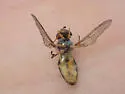
Males similar to P. genualis but differ in details of frons and facial color and wing microtrichosity.
Parhelophilus flavifacies
Parhelophilus flavifacies
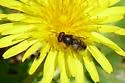
Identification: hind tibia almost entirely black, unlike in any other eastern Parhelophilus . --Jeff Skevington
Parhelophilus frutetorum
Parhelophilus frutetorum
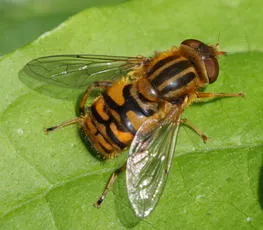
There are three very similar Parhelophilus species, all are compact and brightly coloured hoverflies, well covered in yellow hairs. Separation of the species needs careful and close examination. Particularly alongside ponds and ditches. The larvae ha
Parhelophilus versicolor
Parhelophilus versicolor
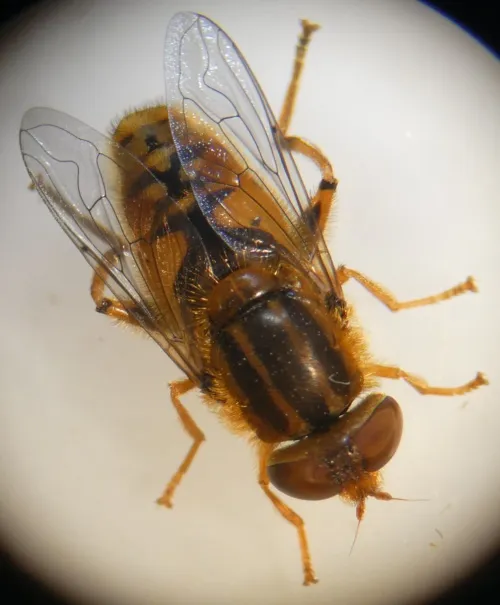
Like a smaller, hairier and often more orange looking version of Helophilus . The various species of this genus are difficult to separate in the field, or even from photographs. Where the subject of an image has not received genitalia examination, wh
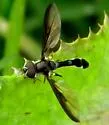
Pelecinobaccha costata
Pelecinobaccha costata
Identification: Wing with leading edge darkened and with cell dm always clear; face yellow with median black line; abdomen constricted basally, swollen/widened apically with pointed tip, ground color black w/ blue-to-silvery markings, and three equal
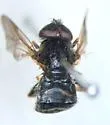
Pipiza femoralis
Pipiza femoralis
Identification: Separated from other species of Pipiza by the single pair of yellow spots on the second abdominal segment (sometimes very weak), apex of hind femora thickened bearing small spinules, and the apical two tarsi being black.
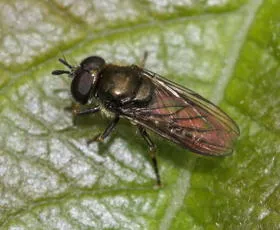
Pipizella viduata
Pipizella viduata
A small, compact species (8 to 10 mm) with an all-black abdomen. The third segment of the antenna is about 1.5 times as long as wide in the male and about twice as long as wide in the female. It has a row of hairs on the anterior surface of the rear
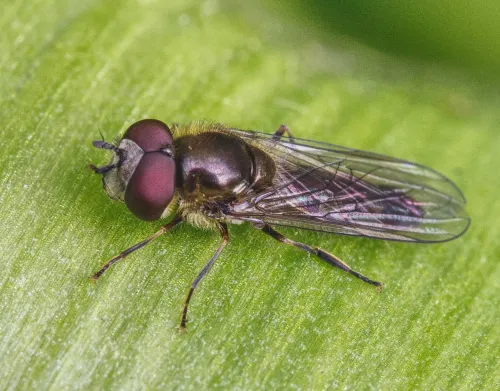
Platycheirus ambiguus
Platycheirus ambiguus
Males have the front legs entirely unmodified except for a curled bristle behind the tip of the front femora. In females tergites 3 & 4 have complete silvery bands across the basal half. Strongly associated with Blackthorn. The larvae are aphidophago
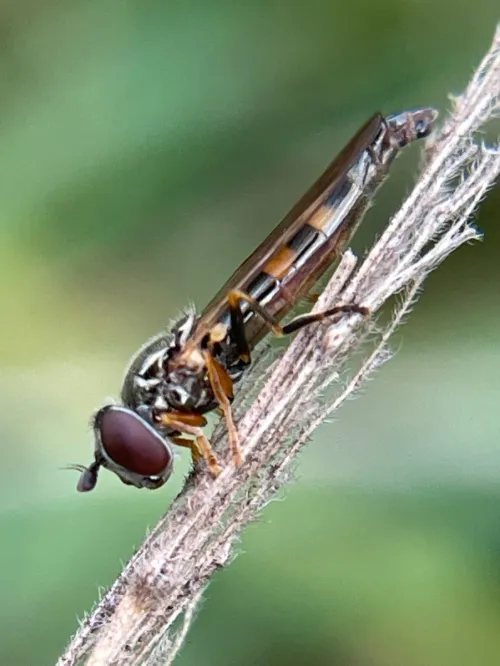
Platycheirus angustatus
Platycheirus angustatus
Our most narrowly-built Platycheirus with males that could be overlooked as Melanostoma mellinum in the field until the broadened front legs are seen. It belongs within the clypeatus group with front legs modified in much the same way as other member
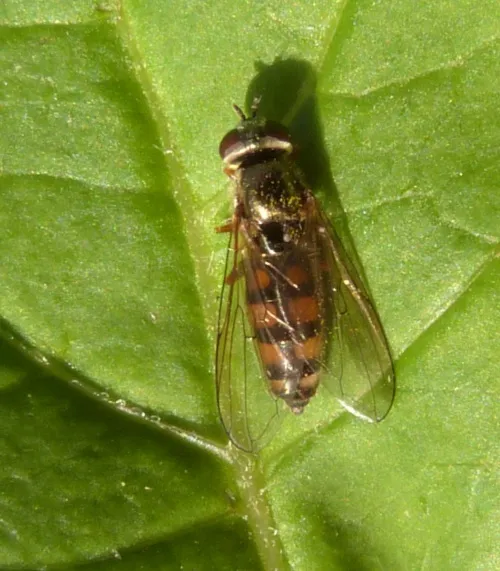
Platycheirus clypeatus
Platycheirus clypeatus
Wing length 5 to 7.5 mm. P. clypeatus is rather broader bodied than other similar species, but careful examination is necessary to ensure correct identification. Various habitats, including both dry grassland and wet meadows, or even woodland rides.
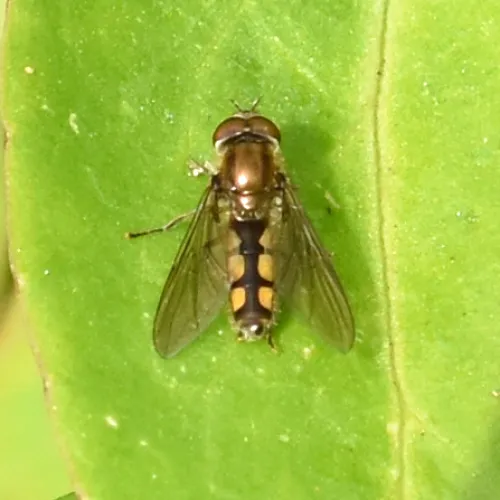
Platycheirus manicatus
Platycheirus manicatus
This species has a less shiny thorax than other Platycheirus species and with large, rounded yellow spots on the abdomen. There are several similar hoverflies with yellow spots so care is needed to note their shape and size. Dry open grassland, and e
Platycheirus obscurus
Platycheirus obscurus
one of the most commonly encountered spp. of our fauna
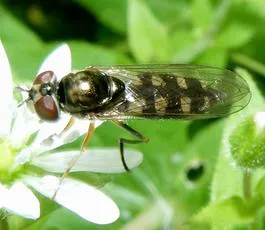
Platycheirus peltatus
Platycheirus peltatus
In size Platycheirus peltatus is amongst the largest of this sub-genus, and has the typical very shiny brassy looking thorax. April to November peaking in June and August. Widespread and fairly frequent in Britain but possibly declining throughout it
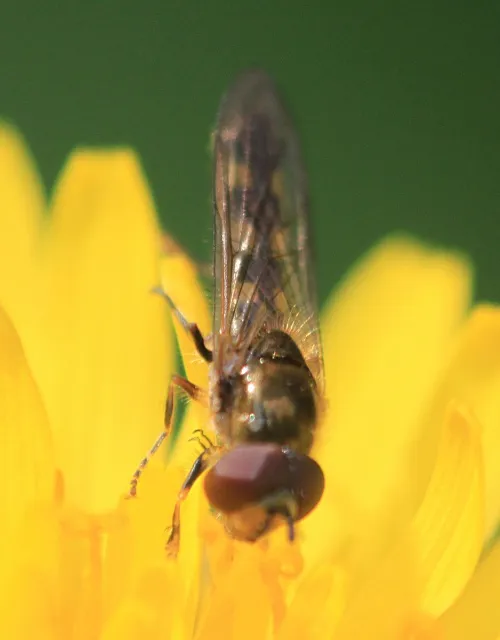
Platycheirus scutatus
Platycheirus scutatus
Although shown as a species, it is now thought that scutatus is a species complex. Voucher specimens are usually collected when precise identification is required. Sensu lato means 'in the broadest sense' and is a term used to describe a species grou
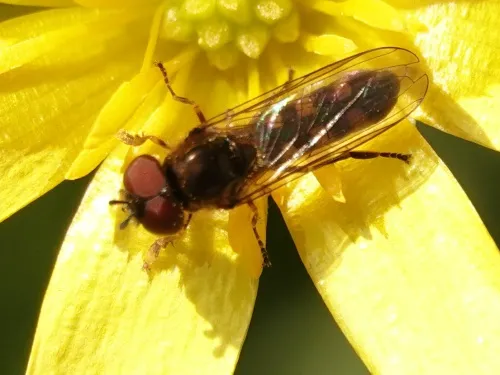
Platycheirus splendidus
Platycheirus splendidus
Very similar to P. scutatus and only described as a separate species in 1998, by Graham Rotheray. Males can be easily distinguished from those of scutatus by the deep black frons (pale grey-dusted in scutatus). The spots on the tergites, especially t
Platycheirus stegnus
Platycheirus stegnus
Identification: Images of adult (fig. 23) & larvae (fig. 24)
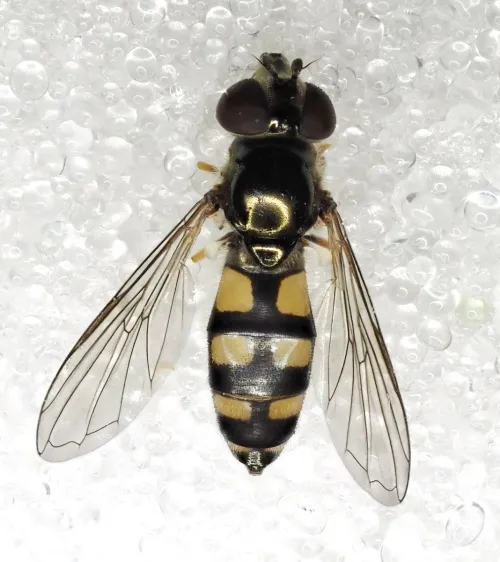
Platycheirus tarsalis
Platycheirus tarsalis
Platycheirus tarsalis is one of a pair of yellow-spotted Platycheirus species with a strongly protruding mouth and the front legs of the male with only tarsal segments 1 and 2 enlarged and the fore tibiae unmodified. Compared with Platycheirus manica
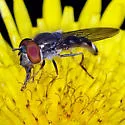
Platycheirus trichopus
Platycheirus trichopus
Includes western specimens previously identified as Platycheirus obscurus .
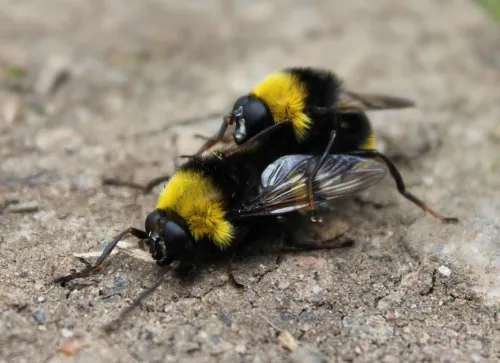
Pocota personata
Pocota personata
Arguably the finest bumblebee mimic in the European hoverfly fauna. Its small head size in relation to its body, and the strikingly lemon bands make it readily identifiable. Pocota is associated with very old trees in woodland and semi-natural parkla
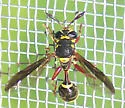
Polybiomyia bellardii
Polybiomyia bellardii
Identification: Thorax: Pleura (= lateral faces of the thorax) with no yellow markings ...mostly black but often tinged reddish in some areas. Dorsum of thorax black except for symmetrically-paired yellow spots on humeri (= anterior corners) and noto
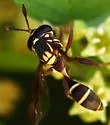
Polybiomyia macquarti
Polybiomyia macquarti
The trapezoidal shape of the yellow prescutellar markings are a significant diagnostic for this species. Shannon described them as "A large trapezoidal spot, or a pair of parallel spots", and he mentioned that in his two male specimens the "spots wer
Polybiomyia schnablei
Polybiomyia schnablei
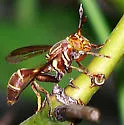
Identification: This species is distinguished among species in our area by the small, yellow, obliquely-angled, "prescutellar spots" (i.e. angled-inward, just in front of the scutellum on the thorax); the yellow supra-alar stripes (cf. here ); and ot
Polybiomyia townsendi
Polybiomyia townsendi
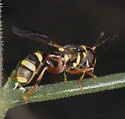
The original 1895 description by Snow is here . A 1924 description by Curran appears here . Shannon's 1925 revision of Cerioidini, though quite old, has a key for nearctic taxa in Polybiomyia . [Update: There is now a newer key to Polybiomyia coverin
Polydontomyia curvipes
Polydontomyia curvipes
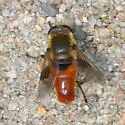
Identification: easily recognized by long spur on the metatibia. Tropidia spp. look similar but are more slender and have spots instead of a pure red abdomen. the only representative of the subgen. Polydontomyia Williston 1896 in our area Displays st
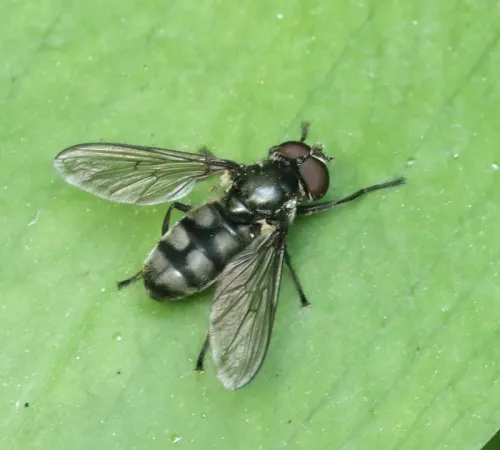
Portevinia maculata
Portevinia maculata
A medium-sized black hoverfly related to Cheilosia with large grey dust-spots on tergites 2 and 3 of the males. Often present at good stands of Ramsons in woods but sometimes absent for reasons that are unclear. It can also use Ramsons in more open l
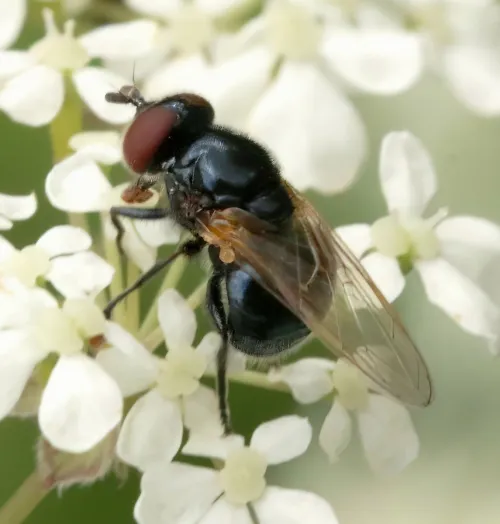
Psilota anthracina
Psilota anthracina
In ancient broadleaved woodland and parkland. https://www.flickr.com/photos/63075200@N07/sets/72157629238038404/ No additional images available for this species.
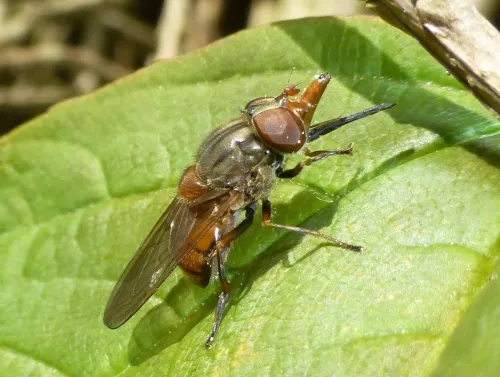
Rhingia campestris
Rhingia campestris
The genus is easily recognised by its long snout. With R. campestris the abdomen usually has a black line or stripe along the axis, but always along the lateral margins of the tergites. It has a largely orange abdomen and dark thorax. There are just
Rhingia nasica
Rhingia nasica
Identification: has a conspicuous snout which aids it in extracting nectar from flowers Larvae associated with animal dung
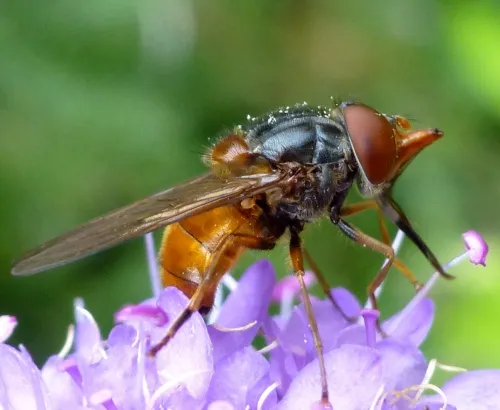
Rhingia rostrata
Rhingia rostrata
Wing length 7.5 to 9.5 mm. Similar to the much more common R. campestris, but in Rhingia rostrata the thorax is more bluish in colour, there are no dark edges to the abdomen, the legs have more orange and less black and it is generally brighter in co
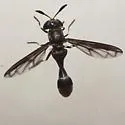
Rhopalosyrphus ramulorum
Rhopalosyrphus ramulorum
Identification: Similar to R. guentherii , but is smaller, narrower, not as robust, and has much more extensive black pile on face, scutum and anepisternum. For complete description, see cited reference.
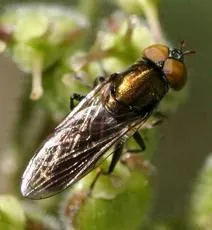
Riponnensia splendens
Riponnensia splendens
This is the only species of its genus in the UK. The thorax is a greenish copper with two grey stripes. There is a broad belt of whitish dusting across the face. It prefers marshes, fens and wet woodland, and particularly favours Meadowsweet and umbe
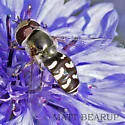
Scaeva affinis
Scaeva affinis
Identification: Eyes with dense hair; upper 2/3 of male eye "with extensive area of almost uniformly enlarged facets" ; abdomen dark, with six white, curved stripes. Larvae are light green with a white dorsal longitudinal stripe. Usually with abdomin
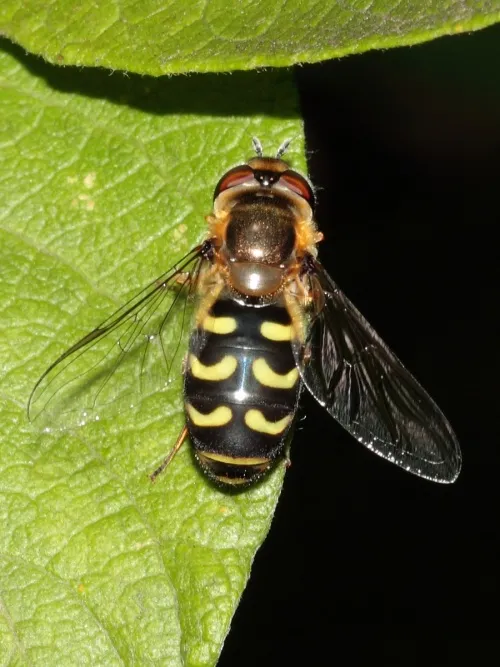
Scaeva selenitica
Scaeva selenitica
Wing length 10.5 to 12 mm. This is a large distinctive fly with three pairs of yellow comma markings (lunules) on the abdomen; these are white on Scaeva pyrastri. The commas on selenitica extend equally far forward at both the inner and outer ends. M
Two-spotted Pond Fly
Sericomyia carolinensis
Identification: A single pair of narrow maculae on the second tergite, yellow hair on the scutellum, no median black vitta on face, basitarsi reddish brown to orange.
Western Pond Fly
Sericomyia chalcopyga
Identification: similar to S. chrysotoxoides : both have three yellow bands separated in the middle (not broadened at tips) and bristles along edge of thorax opposite wing base that are extensively black; the yellow bands are straight in S. chalcopyg
Oblique-banded Pond Fly
Sericomyia chrysotoxoides
Identification: similar to the western S. chalcopyga --see discussion the most common species of Sericomyia in the East -- Jeff Skevington's comment
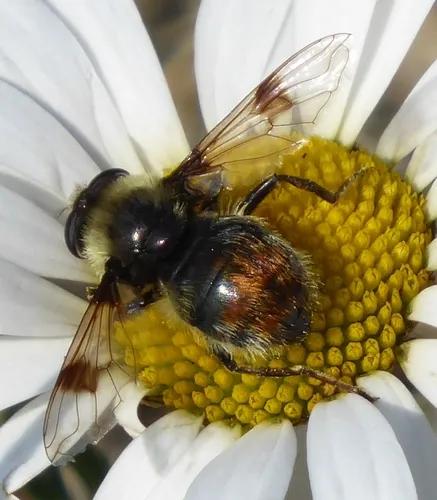
Spot-winged Pond Fly
Sericomyia flagrans
Identification: Bumble-bee mimic. Antennae short, with a plumose arista attached baso-dorsally on the bulbous 3rd segment (= flagellomere). Thorax with dark, metallic coppery-bronze, ground color...densely-covered with long, pale-yellow hairs. Abdome
Harvey's Pond Fly
Sericomyia harveyi
Identification: Dense yellow setae on first three quarters of scutum, scutellum is black setose.
Sphaerophoria novaeangliae
Sphaerophoria novaeangliae
Identification: distinguished from congeners by the pale marks along the sides of the thorax that stop at the suture, combined with a bold facial stripe below the antennae • Holotype
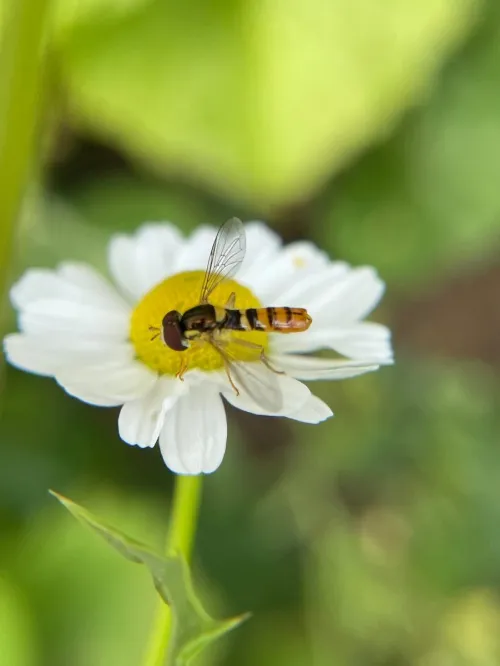
Sphaerophoria rueppellii
Sphaerophoria rueppellii
A rather distinct short-bodied Sphaerophoria due to the bulbous abdomen of the male (broadest at the tip), the oblique/curved bands and spots on the tergites, and the truncated nature of the yellow stripe on the shoulder which does not extend rearwar
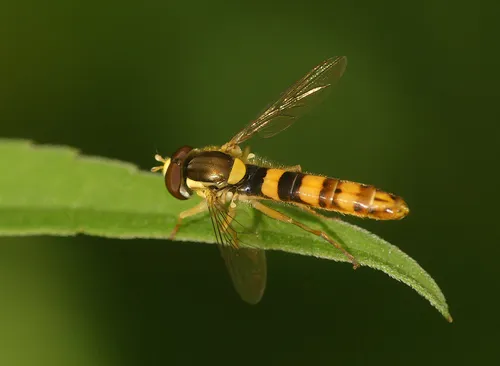
Long Hoverfly
Sphaerophoria scripta
The male is readily identifiable as its body is longer than the wings, though the pattern of black and yellow is variable with a darker form fairly frequent. Females however cannot be readily identified. Found from April to November, peaking in July
Sphaerophoria sulphuripes
Sphaerophoria sulphuripes
Identification: "There is a small group of Sphaerophoria males, where the notopleural stripe is only half yellow, and there are only a few species in CA." (comment by Martin Hauser)
Sphecomyia columbiana
Sphecomyia columbiana
Identification: Recognizable by the lack of pollinosity on the first tergite. Rare. Only a dozen or so specimens collected.
Sphecomyia hoguei
Sphecomyia hoguei
Identification: Only distinguishable from S. dyari by male genitalia or geographic locality. S. dyari is endemic to the Sierra Nevada.
Sphecomyia interrupta
Sphecomyia interrupta
Identification: Vitta on the scutum, incomplete medial facial vittae in the male, scutellum completely pollinose, antenna not lengthed.
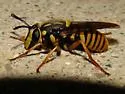
Sphecomyia vittata
Sphecomyia vittata
Identification: Similar to Temnostoma species, but recognized by its long antennae . Apparently a Batesian mimic of Vespula squamosa worker
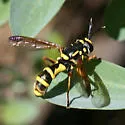
Sphiximorpha cylindrica
Sphiximorpha cylindrica
Identification: The relatively large yellow lateral markings on each side of the 2nd abdominal segment (extending nearly its entire length) are distinctive and diagnostic for this species. The relatively short frontal prominence/antennifer is charac
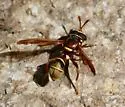
Sphiximorpha oharai
Sphiximorpha oharai
Identification: "Sphiximorpha oharai new species differs from S. loewii by having tergite 2 wider than long (longer than wide in S. loewii), tergites 3 and 4 mostly black in background color, except for the apical yellow fascia (partly or mostly oran
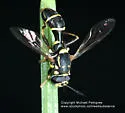
Sphiximorpha willistoni
Sphiximorpha willistoni
Identification: The very detailed original description (as Ceria willistoni ) is here .
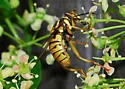
Spilomyia alcimus
Spilomyia alcimus
Identification: Note dark propleuron: Compare texana :
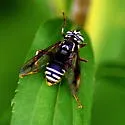
Bald-faced Hornet Fly
Spilomyia fusca
Identification: Second tergite entirely black, eyes pale, with dark spots and vertical bands
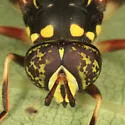
Four-lined Hornet Fly
Spilomyia sayi
Four-lined Hornet Fly (Spilomyia sayi) is a species in the family Syrphidae, commonly known as hover flies, belonging to the order Diptera (Flies). It is classified within the subfamily Eristalinae, tribe Milesiini, superfamily Platypezoidea. This sp
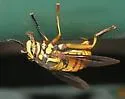
Spilomyia texana
Spilomyia texana
Identification: Similar to Spiloymyia alcimus , but has yellow spot on propleuron (dark in alcimus ): Compare alcimus :
Syritta flaviventris
Syritta flaviventris
Identification: Male: Female: Introduced from Europe, 1990's
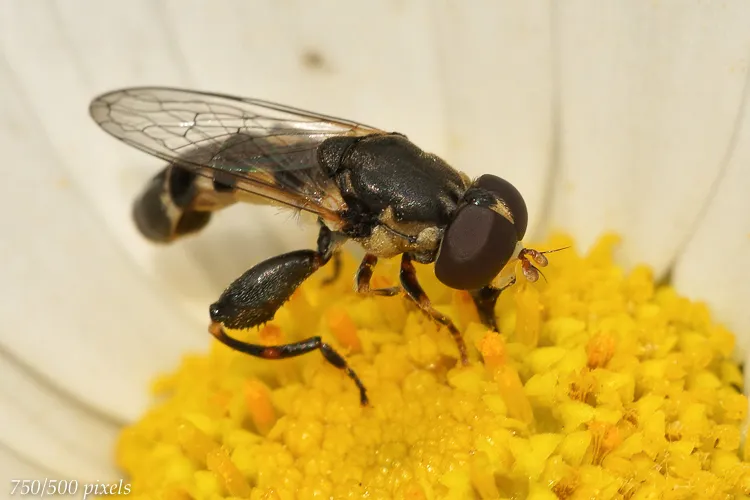
Syritta pipiens
Syritta pipiens
Identification: Male: Female: Introduced from Europe in the 1800s ( Martin Hauser's comment ).
Syrphus opinator
Syrphus opinator
Identification: S. opinator is the common species in central California and has the abdominal fasciae restricted to the sides and isolated from the margins. S. torvus has hairy eyes (more in the male than in the female), is more northern and early sp
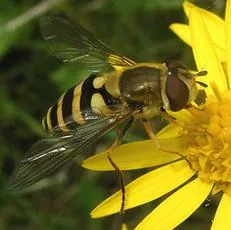
Syrphus vitripennis
Syrphus vitripennis
This species is very hard to distinguish from S. ribesii unless looking at the rear legs of the female: S. ribesii is all yellow whereas S. vitripennis has a black femur (top segment of leg). March to November peaking slightly in May, but most abunda
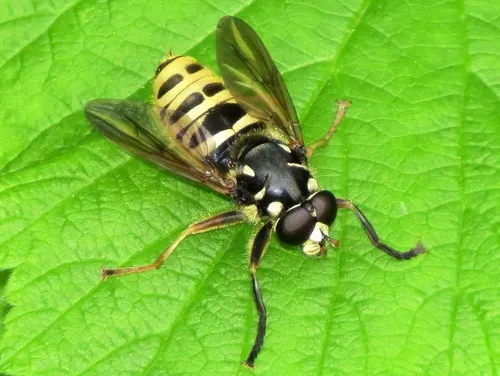
Temnostoma excentrica
Temnostoma excentrica
Identification: The species has two morphs which may prove to be distinct species with genetic analysis. A grey morph which is transcontinental and a yellow morph found in the Appalachian mountains.
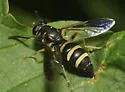
Temnostoma trifasciatum
Temnostoma trifasciatum
Identification: Key characters for this species: metasternum hairy, abdominal segments 2-4 with only one yellow stripe, face not tuberculate, middle & hind femora yellowish, last abdominal segment with mostly black hairs beyond the yellow stripe, and
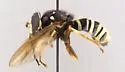
Temnostoma venustum
Temnostoma venustum
Identification: Band on transverse suture broken into two spots. Scutellum black setose. Tergite 4 with single medial black band.
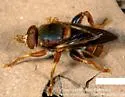
Teuchocnemis bacuntius
Teuchocnemis bacuntius
May be a Batesian mimic of a paper wasp, e.g. Polistes fuscatus . Compare:
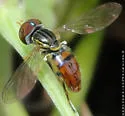
Toxomerus boscii
Toxomerus boscii
Identification: The main characters are: the yellow stripe on the mesonotum is not very thick and the hind femur has a black ring. -- comment by Martin Hauser
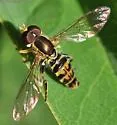
Toxomerus occidentalis
Toxomerus occidentalis
Identification: almost identical to T. geminatus but usually separable by geographic location (ranges overlap only in Texas) -- see[cite:144390]
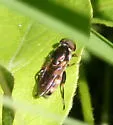
Tropidia albistylum
Tropidia albistylum
Identification: Note the reddish base of the hind femur (wholly black in T. quadrata )
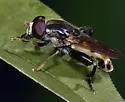
Tropidia quadrata
Tropidia quadrata
Identification: Tip of abdomen is usually downcurved, and there's a large tooth on hind femur. These flies will hover in place, then fly quickly away, then return to the original area, as if on territory.
Tropidia scita
Tropidia scita
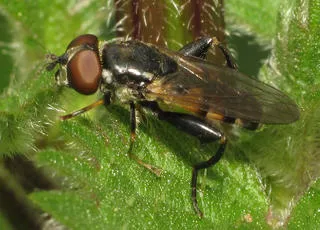
The key identification feature of this hoverfly is the arched and swollen hind femur with a large triangular projection on its lower surface near the apex. (Visible is several photos below, including an enlargment.) The projection has small black spi
Volucella bombylans
Volucella bombylans
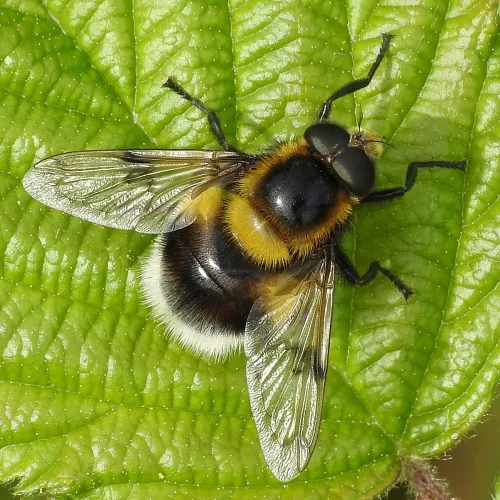
This hoverfly is an excellent mimic of a bumblebee and is found throughout most of the UK. There are two main varieties which mimic different species of bumblebee, one with an orange-red tail ( V . bombylans ) and the other with a white tail ( V. plu
Volucella evecta
Volucella evecta
Identification: Black face beneath black or black-and-yellow hair, yellow haired thorax.
Volucella facialis
Volucella facialis
Identification: Yellow face beneath yellow hair, yellow haired thorax. Abdomen is usually black in the East and orange in the West, possibly correlated with variation in color of bumblebees.
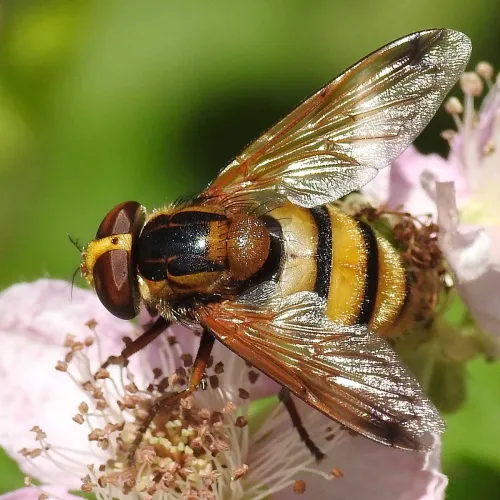
Volucella inanis
Volucella inanis
Somewhat smaller than the similiar V. zonaria and with yellow rather than chestnut markings on tergite (segment) 2 and more extensive yellow on the underside of the abdomen. It looks more wasp-like than hornet-like. Flower meadows, roadside verges an
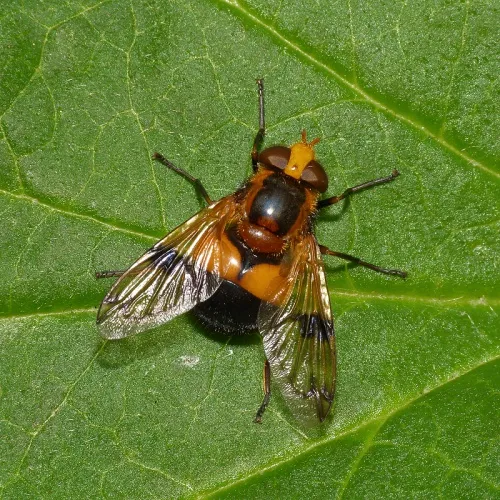
Volucella inflata
Volucella inflata
There is a strong resemblance to the more common species V. pellucens except that the markings on tergite 2 are deep orange, as is the thorax. Heavily wooded areas and mainly restricted to ancient semi-natural woodland. May to September peaking in Ju
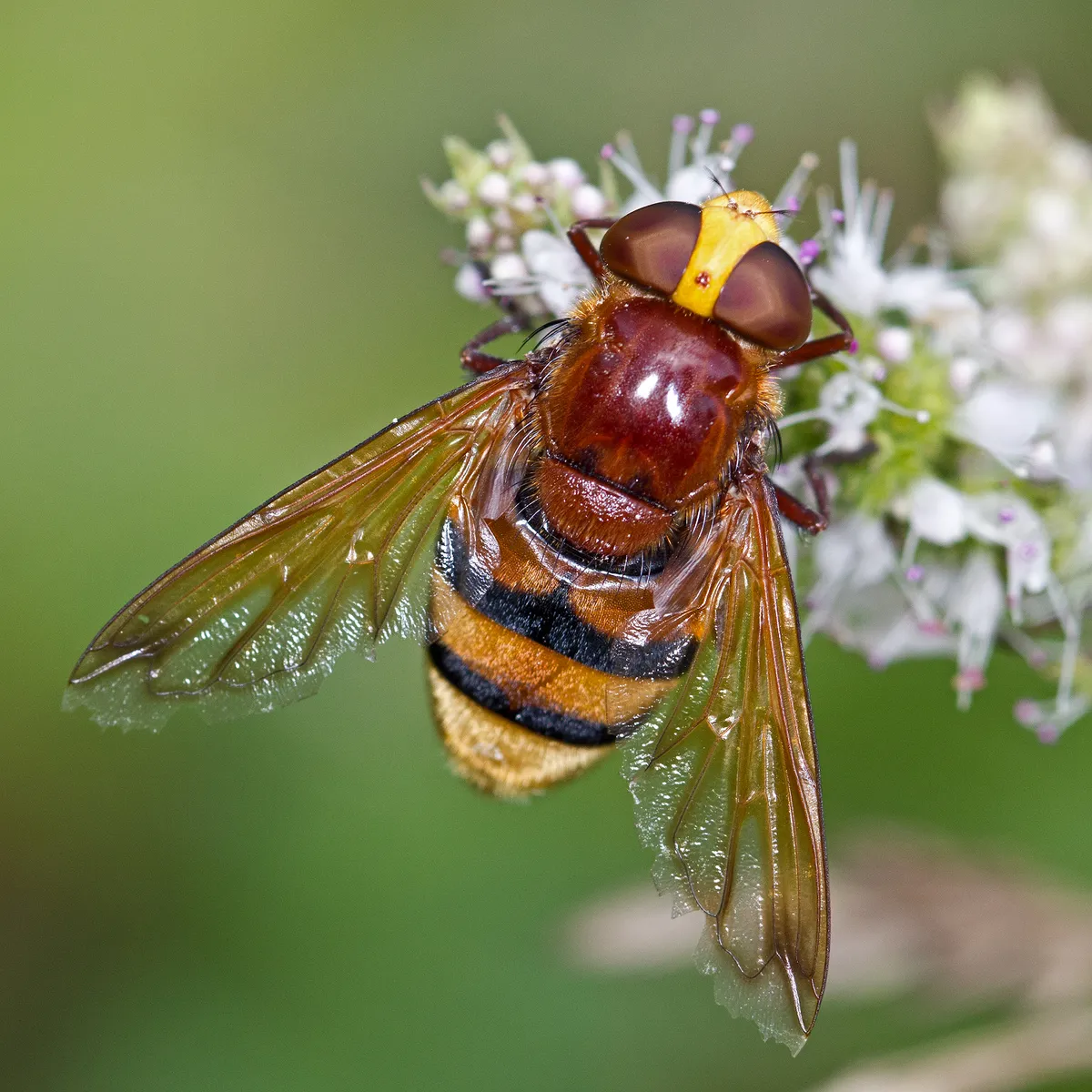
Volucella zonaria
Volucella zonaria
This is a hornet mimic and is one of our largest and most spectacular hoverflies which can be recognised by its yellow and black banded abdomen. It is chestnut on tergite 2 and also on the scutellum and much of the thorasic dorsum. The only similar s
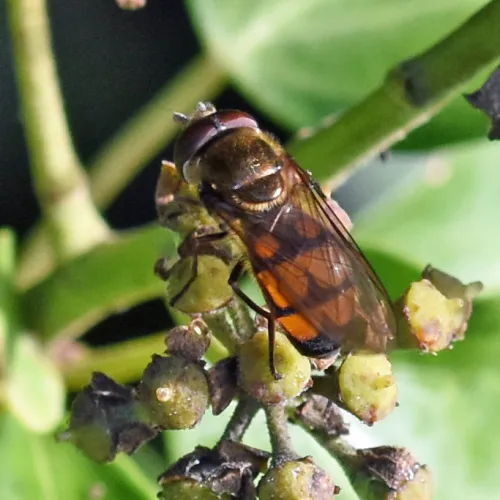
Xanthandrus comtus
Xanthandrus comtus
Abdomen segment T2 has round spots and segments T3 and T4 have semi-circular spots tht may join in the middle. Males are considerably more colourful than females which have darker, greyer markings on the abdomen. It usually occurs in woodland edge (d
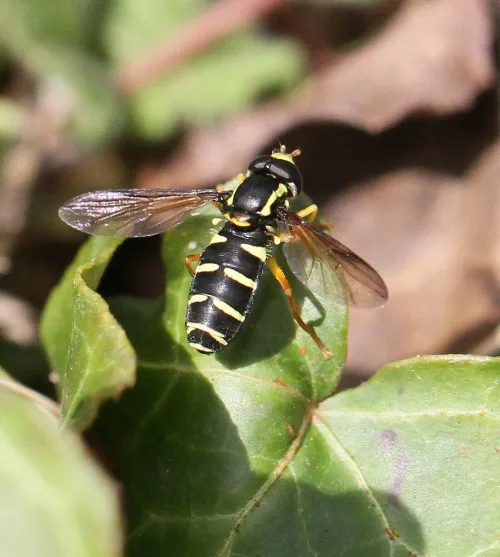
Xanthogramma citrofasciatum
Xanthogramma citrofasciatum
Wing length 6.5 to 10.5 mm. This species is black with lemon markings. It is similar to the more common Xanthogramma pedissequum but the sharply defined narrow triangular marking on T2 and the predominantly orange legs help to distinguish this specie
Xanthogramma flavipes
Xanthogramma flavipes
Identification: face, margins on thorax, and transverse bands on abdomen all bright yellow; female may have brown bands between the yellow abdominal bands
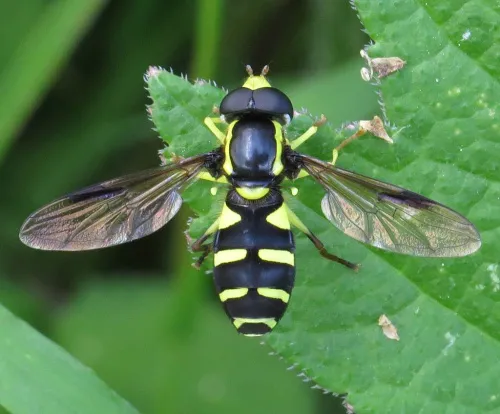
Xanthogramma pedissequum sensu lato
Xanthogramma pedissequum sensu lato
Quite a distinctive hoverfly, Xanthogramma pedissequum is best distinguished from the similar X. citrofasciatum by the dumpy appearance of the yellow triangles on tergite 2. However the very similar Xanthogramma stackelbergi was added to the British
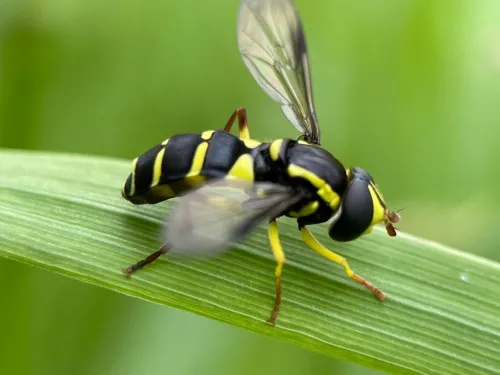
Xanthogramma pedissequum sensu stricto
Xanthogramma pedissequum sensu stricto
Xanthogramma pedissequum is best distinguished from the similar X. citrofasciatum by the dumpy appearance of the yellow triangles on tergite 2. However the very similar X. stackelbergi was added to the British list in 2012 (see Similar Species below)
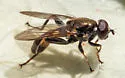
Xylota annulifera
Xylota annulifera
Identification: Tergites 2-3 with yellow-orange spots; metatrochanter with long spine; frontal triangle usually entirely pollinose; tarsi with apical three tarsomeres black; female pro- and mesotibiae dark apically.
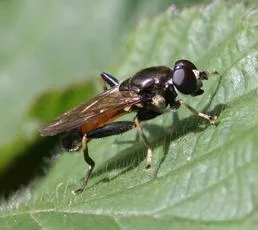
Xylota segnis
Xylota segnis
Identification: The broad orange belt across the abdomen of this species is distinctive, but not always obvious under the wings when at rest.
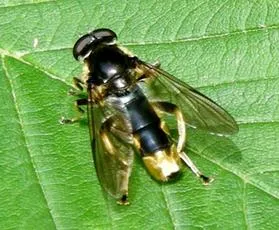
Xylota sylvarum
Xylota sylvarum
This species has golden hair on the bottom of its abdomen and often a further golden band above this. It can be seen from May to October with a peak in late June and July. Larvae have been found in wet decaying roots of Beech stumps, but where Beech
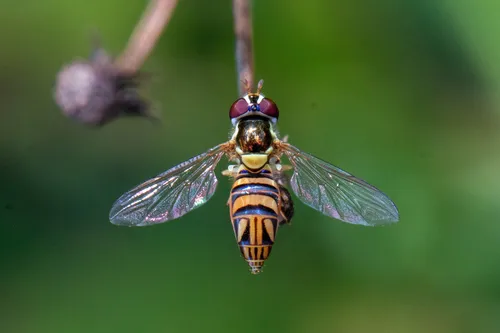
Common Oblique Syrphid Fly
Allograpta obliqua
Allograpta radiata
Allograpta radiata
Anasimyia distincta
Anasimyia distincta
Anasimyia grisescens
Anasimyia grisescens