
Family Scarab Beetles (Scarabaeidae)
Scarabaeidae is a family in the order Coleoptera. Browse 896 named species recorded in this family, or open an individual profile for its available identification and natural-history information.
Guides
Species in Scarabaeidae (896)
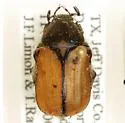
Euphoria casselberryi
Euphoria casselberryi
Type Locality: Davis Mountains, Jeff Davis Co., Texas (Robinson, 1937). The single specimen Riley and Wolfe (2003) examined was from the Davis Mountains Resort area Davis Mts., at ca. 5800 ft. (Jeff Davis County), taken during June. ( 3 ) Texas consi
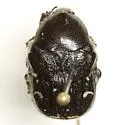
Euphoria devulsa
Euphoria devulsa
Identification: Elytral striae bearing 3 evenly spaced rows of lunulate punctures (Fig. 5a). Pygidium at apex sexually dimorphic, rounded in males, acuminate in females distinguished from other species in the group by the subquadrate clypeus, striae
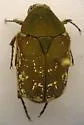
Olive Euphoria
Euphoria herbacea
fairly common in early summer in Durham, NC. I have not seen it at flowers, however, as is common with E. sepulcralis . (This could just be due to my limited experience with the beetles.) Almost all E. herbacea I have seen appear to be in a frantic r
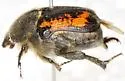
Euphoria pilipennis
Euphoria pilipennis
Euphoria pilipennis (Euphoria pilipennis) is a species in the family Scarabaeidae, commonly known as scarab beetles, belonging to the order Coleoptera (Beetles). It is classified within the subfamily Cetoniinae, tribe Cetoniini, suborder Polyphaga, s
Euphoria schottii 0
Euphoria schottii
Identification: syntype only 8 specimens known (none recently collected), including types
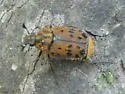
Gnorimella maculosa
Gnorimella maculosa
Identification: Medium-sized scarab with prominent maculations . Bright yellow pygidium with dark "U-shaped" mark on ventral surface is also distinctive. rarely collected...
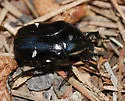
Gymnetina borealis
Gymnetina borealis
Identification: distinguished by greatly reduced pronotal and elytral markings and a pygidium lacking cretaceous spots. Type Locality: Oak Creek Canyon, Coconino Co., Ariz., July 20, 1970
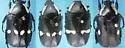
Gymnetina cretacea
Gymnetina cretacea
Identification: see discussion here: Det. Wm. B. Warner, 2011
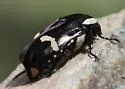
Gymnetina howdeni
Gymnetina howdeni
Type Locality: Miller Canyon, Cochise Co. AZ., Aug. 8, 1987, Coll'ed by Tom Ryan
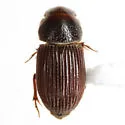
Haroldiataenius convexus
Haroldiataenius convexus
Identification: Clypeal anterior margin angulate each side of median emargination. Elytral intervals strongly convex on disc. Body dark reddish brown. among the most commonly coll'ed beetle spp. (via pitfall traps) at Laguna Atascosa NWR, Rio Hondo,
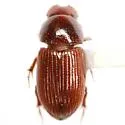
Haroldiataenius griffini
Haroldiataenius griffini
Identification: Det. P. Skelley, 2008 Type Locality: San Patricio County, near junction of Texas Highway 9 and U.S. 77.
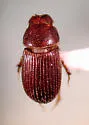
Haroldiataenius semipilosus
Haroldiataenius semipilosus
Identification: Clypeus strongly angulate to dentate each side of median emargination. Elytral intervals with long scattered setae, most prominent laterally. Type Locality: Texas Pass, Dragon [Dragoon] Mountains, Arizona, Van Dyke Coll, in CASC.
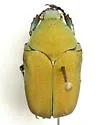
Hologymnetis argenteola
Hologymnetis argenteola
Identification: Venter a bright, shining brassy green, usually with distinct coppery reflection. Protibia with teeth subequally spaced from one another. (Ratcliffe and Deloya 1992) Apparently not abundant (Ratcliffe and Deloya 1992)
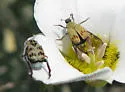
Hoplia dispar
Hoplia dispar
Identification: Readily distinguished by the round elytral scales and reduced prothoracic angulation
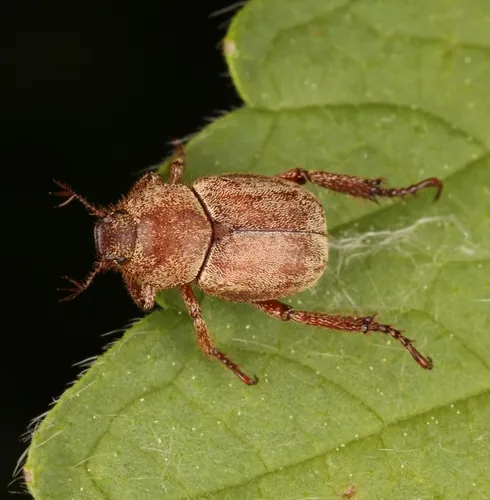
Hoplia equina
Hoplia equina
Identification: Syntype • the only Nearctic Hoplia with a single mesotarsal claw
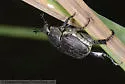
Hoplia laticollis
Hoplia laticollis
Identification: Holotype • very difficult to distinguish from the western H. callipyge ; may prove to be just a form of the latter
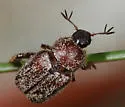
Hoplia mucorea
Hoplia mucorea
Identification: Body rather elongated compared to similar species. Clypeus separated from frons with a carina (ridge). Protibia bidentate
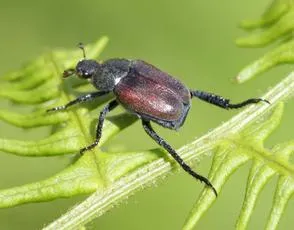
Welsh Chafer
Hoplia philanthus
Length 8-9 mm with a black head and thorax and reddish brown wing cases. It is usually seen in meadows and along hedgerows and woodland edges. The adult beetle can be seen from June to August. The beetles are active during the day, particularly in Ju
Hoplia sackenii
Hoplia sackenii
Identification: Syntype • may be distinguished from other western species by the pale, elongate elytral scales (individuals that lack elytral scales may key to H. callipyge )
Dark Hoplia
Hoplia trivialis
Identification: Black with sparse white hairs. Similar to H. trifasciata
Hypothyce mixta
Hypothyce mixta
Identification: PARATYPE Type Locality: Tennessee colony, Anderson Co., TX Paratypes cited by Howden are from other localities in Anderson County, as well as in Harris, Nacogdoches and Wood counties. Hardy added Gonzales county. Currently only one sp
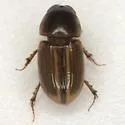
Labarrus pseudolividus
Labarrus pseudolividus
Labarrus pseudolividus (Labarrus pseudolividus) is a species in the family Scarabaeidae, commonly known as scarab beetles, belonging to the order Coleoptera (Beetles). It is classified within the subfamily Aphodiinae, tribe Aphodiini, suborder Polyph
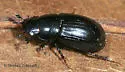
Lechorodius terminalis
Lechorodius terminalis
Identification: Dark coloration with more reddish elytral apices; fall-spring occurrence
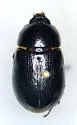
Ligyrus cuniculus
Ligyrus cuniculus
Identification: Apical angles of clypeus rounded; clypeal teeth triangular to transverse; I & II apical teeth of mandible equal in size and not joined; male genitalia distinctive our only representative of the subg. Anagrylius Casey 1915 that contain
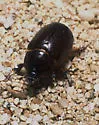
Carrot Beetle
Ligyrus gibbosus
Identification: External surface of protibia, in frontal view, deeply punctate. Pronotum and elytra with minute to small punctures.
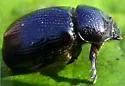
Ligyrus neglectus
Ligyrus neglectus
Identification: Type External protibial surface in frontal view nearly smooth, with only minute, sparse punctures. Pronotum and elytra deeply punctate, punctures large, round • apical half of parameres wide and parallel-sided, ventral tooth wide and
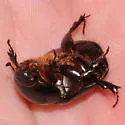
Ligyrus relictus
Ligyrus relictus
Identification: Protibia with 3 teeth and basal denticle, without denticle between basal and second tooth; parameres with ventral teeth acute and long may be found on lawns but are not turf feeders
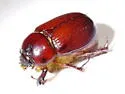
Ligyrus ruginasus
Ligyrus ruginasus
Identification: clypeus triangular, with 1 central tooth; frontal carina straight, entire; pronotum with prominent tubercle and deep, rounded fovea; pronotal punctation deep and large; metatibia with apex strongly narrowed
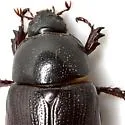
Ligyrus sallaei
Ligyrus sallaei
Identification: Protibia with 3 teeth, a basal denticle, and other denticle between basal and second tooth (Fig. 11E). Parameres with ventral teeth rounded and short (Fig. 15H).
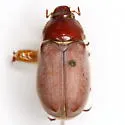
Listrochelus bottimeri
Listrochelus bottimeri
Type Locality: Big Bend National Park, Park hdqrs, Brewster County, Texas. Only two spmns in the TAMUIC , both coll'ed by H. S. Barber in 1948 in BBNP.
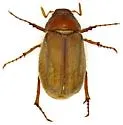
Listrochelus duncani
Listrochelus duncani
Identification: Similar in many regards to several other species of Listrochelus. Best differentiated using the characteristics of the male genitalia. Saylor (1940) states that the species is known only from the male holotype. The species appears to
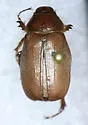
Listrochelus koehlerianus
Listrochelus koehlerianus
V. L. Wildermuth, at Koehler, N. Mex., July 3, 1914: "Tonight there occurred a remarkable flight of this beetle. The air was full of them, and the roar, for it was more a roar than a buzzing, from them was wonderful. They were like several swarms of
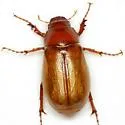
Listrochelus planeta
Listrochelus planeta
The type locality is Fort Davis (Jeff Davis County)(Reinhard, 1950). Riley & Wolfe recollected this species in Jeff Davis County and Howden reported specimens from Brewster County that he believed were intermediate between P. (L.) meadei Saylor from
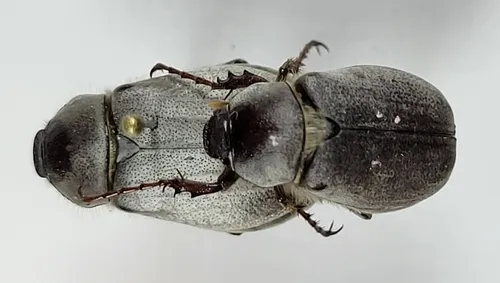
Listrochelus reinhardi
Listrochelus reinhardi
Identification: Saylor: Apical one-third of margin reflexed; general form in lateral view (fig. 8, a) quite different from that of either pulcher or mucorea Externally rather similar in both sexes to L. mucorea but quite different in the male genital
Listrochelus tarsalis
Listrochelus tarsalis
Identification: Though resembling several small and densely pruinose species, L. tarsalis is the only one with a thorax that is apparently (view vertically) impunctate and glabrous, except at the sides. Type locality: "Santa Rita Mts., Arizona."
Listrochelus texensis
Listrochelus texensis
Identification: Saylor: Outer front claw with a larger intercalated tooth, inner claw without such tooth; pygidium normally convex; sides of thorax subangularly dilated, margin very coarsely crenate Type Locality: Brownsville, Cameron Co., Texeas, Ju
Listrochelus timidus
Listrochelus timidus
Identification: A common little species and one of the few in the genus in which the area of the vertex behind the transverse ridge of the front is densely, coarsely, and almost completely punctured; in most species this area is either entirely smoot
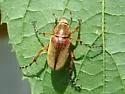
Macrodactylus angustatus
Macrodactylus angustatus
Identification: "...erect spine-like setae on the pronotal disc. According to Paul Lago, there apparently is some overlap in the character between subspinosus and angustatus (comparing external characters to DNA analyses), although subspinosus female
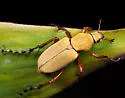
Rose Chafer
Macrodactylus subspinosus
Identification: very similar to and hard to distinguish from M. angustatus , with which it used to be considered synonymous Males: Considered a minor pest species
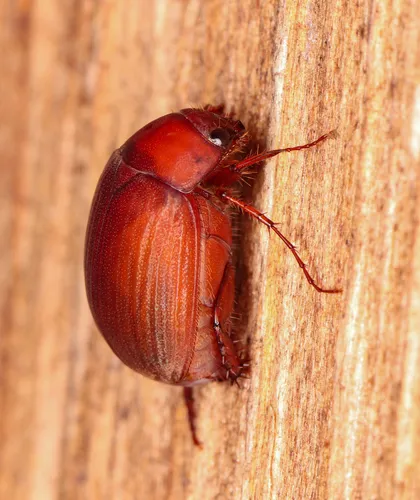
Asiatic Garden Beetle
Maladera formosae
Identification: Most closely resembles Serica , but has the hind tibiae wider. Ventrites 5 thru 7 have a transverse row of spines extending the width of each segment. Backward projecting hairs on top of head
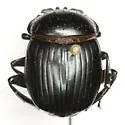
Malagoniella astyanax
Malagoniella astyanax
First reported for the U.S. by Schaeffer. Six spmns in the TAMUIC Spmn coll'ed by C. Cate & M. Quinn in 1995 was the first modern U.S. record in 65 years. Texas considers this a SGCN
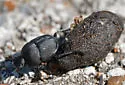
Melanocanthon nigricornis
Melanocanthon nigricornis
Identification: easily distinguished from similar Canthon spp. by the presence of two apical spurs on the posterior tibia. this character also separates it from all other scarabaeines in NE Det. Brad Barnd, 2016 (from spmn)
Melinopterus prodromus
Melinopterus prodromus
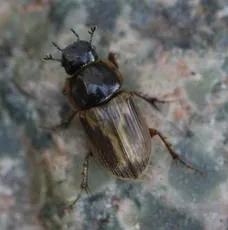
This rather cylindrical looking Dung Beetle has yellow-brown ribbed elytra with a black thorax. Length 5 to 7 mm. It is possibly the commonest of the dung beetles but is very similar to Melinopterus sphacelatus . Melinopterus sphacelatus looks almost
Melinopterus sphacelatus
Melinopterus sphacelatus
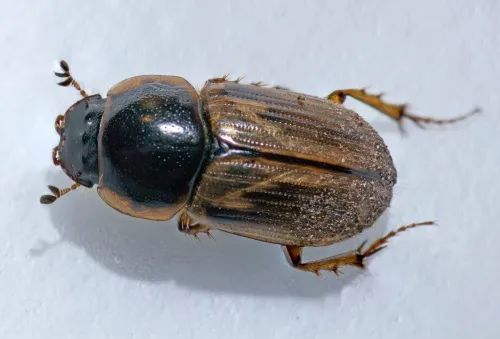
Size 4.5 to 5.5 mm, the females are slightly larger than the males. The elytra vary from pale straw colour to a deeper brown, the head is blacker. Melinopterus sphacelatus is very similar to M. prodromus and both can be found together in dung. M. sph
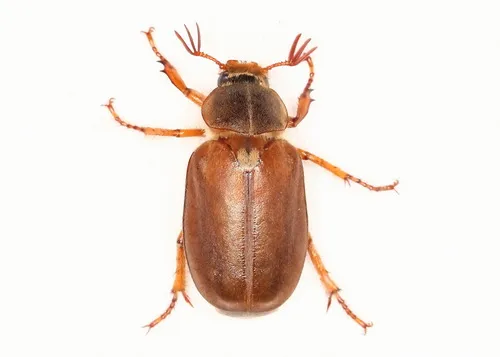
Common Cockchafer
Melolontha melolontha
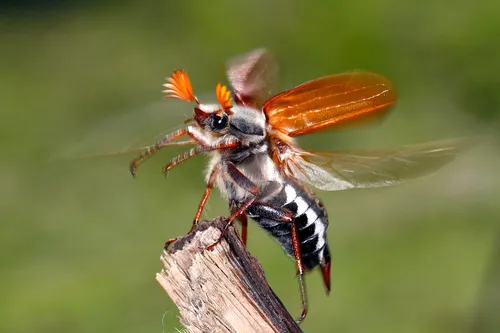
This large beetle has ribbed wing cases (elytra) that are reddish-brown in colour, and the head and the pronotum are blackish and covered in short hairs. The fan-like antennae are longer in males than females. Frequents hedgerows and gardens. It is a
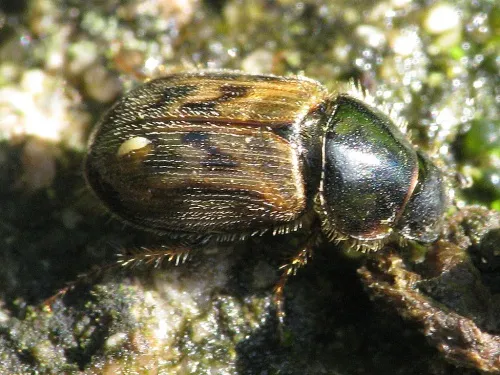
Nimbus contaminatus
Nimbus contaminatus
Pronotum fringed with hairs, a bit like false eye-lashes stuck along the rim. This species has a regular pattern of black streaks on the elytra. In contrast, Melinopterus prodromus has quite plain elytra with no black dashes only the dark area of the
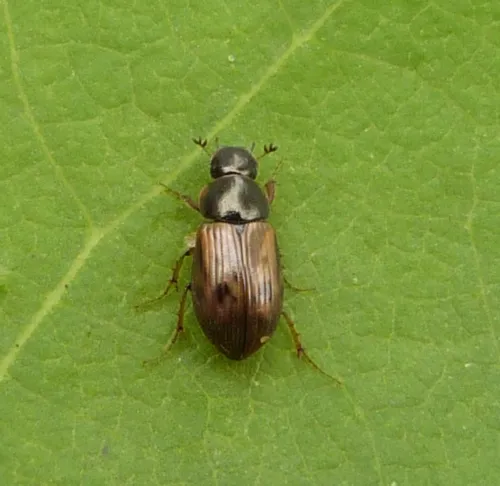
Nimbus obliteratus
Nimbus obliteratus
Length 5 to 7 mm. The elytra are mainly pale brown marked with darker blotches, whilst the head and pronotum are nearly black. There are similar species, particularly Nimbus contaminatus, and detailed examination is necessary for identification. Some
Odontolytes denominatus
Odontolytes denominatus
Odontolytes denominatus (Odontolytes denominatus) is a species in the family Scarabaeidae, commonly known as scarab beetles, belonging to the order Coleoptera (Beetles). It is classified within the subfamily Aphodiinae, tribe Eupariini, suborder Poly
Onthophagus altivagans
Onthophagus altivagans
Identification: Males of O. altivagans differ from O. subopacus males by the form of the pronotal prominence, and in that the pygidium is shiny only towards the apex. Additionally, the pronotal setation is longer and denser.
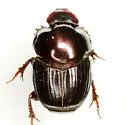
Onthophagus batesi
Onthophagus batesi
Although this species can be considered common throughout much of its range in Mexico and Central America it is apparently rare in south Texas. The only published records for Texas (and the United States) are those accompanying the original descripti
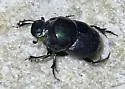
Onthophagus cavernicollis
Onthophagus cavernicollis
Slay et al. (2012) categorize this sp. as a troglophile (an animal that may complete its life cycle in a cave, but can also survive outside)
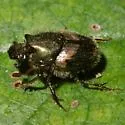
Onthophagus concinnus
Onthophagus concinnus
Identification: Bicolored green and yellow; male with anteriorly projected pronotal lobe
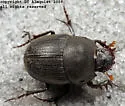
Onthophagus depressus
Onthophagus depressus
Identification: clypeus sharply emarginate, pronotum appear rough, granulate earliest record in our area: GA 1937
Scooped Scarab
Onthophagus hecate
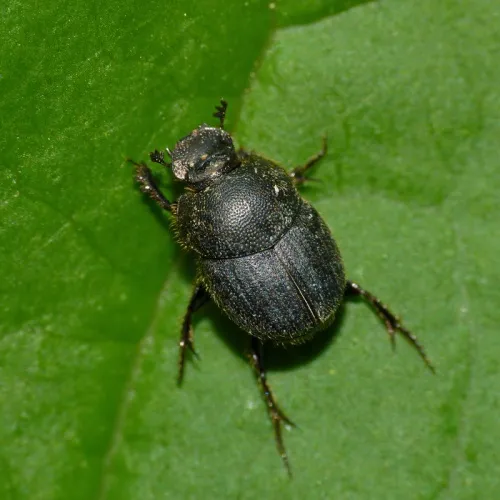
Identification: dull black, pronotum densely granulate; major males have a long, usually bifurcated pronotal horn
Onthophagus joannae
Onthophagus joannae
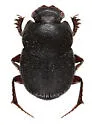
A uniformly dark grey-black beetle measuring 4 to 6 mm. Associated with animal dung especially sheep dung. Widespread in the south of Britain but infrequent further north. No additional images available for this species.
Onthophagus knausi
Onthophagus knausi
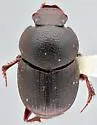
Identification: Small size, elytra with 6 striæ between suture and humerus, striæ 2‒5 with two irregular rows of small tubercles locally abundant in se.NE
Onthophagus mextexus
Onthophagus mextexus
an important component for sustainable tropical cattle ranching in Veracruz, Mexico
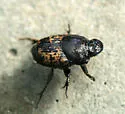
Onthophagus nuchicornis
Onthophagus nuchicornis
accidentally introduced to North America prior to the 1840s
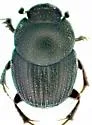
Onthophagus oklahomensis
Onthophagus oklahomensis
Identification: Similar to O. pennsylvanicus , but usually smaller and with two sizes of punctures on pronotum (punctures uniform in O. pennsylvanicus )
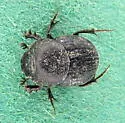
Onthophagus pennsylvanicus
Onthophagus pennsylvanicus
Identification: Sexual dimorphism not pronounced [males without obvious horns or protuberances]; similar to O. oklahomensis
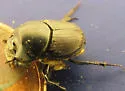
Bull Headed Dung Beetle
Onthophagus taurus
Identification: Major males have long horns and are easy to identify earliest record in our area: FL 1971
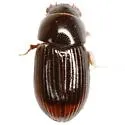
Oscarinus bottimeri
Oscarinus bottimeri
Identification: Four sharp, prominent clypeal teeth
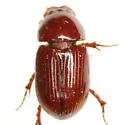
Oscarinus matiganae
Oscarinus matiganae
Identification: yellowish red color and uniformly moderately punctate pronotal disc characterize this sp.
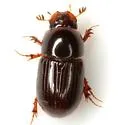
Oscarinus texensis
Oscarinus texensis
Identification: clypeal angles in texensis have teeth, while in welderi they are angulate to rounded, per P.E. Skelley, 13.iii.2012
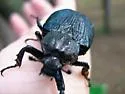
Osmoderma scabrum
Osmoderma scabrum
Identification: the smallest of our spp.; pronotum deeply punctate; elytra wrinkled, irregularly punctate; head deeply excavated between eyes
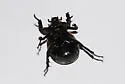
Osmoderma subplanatum
Osmoderma subplanatum
Identification: vs O. eremicola : elytra often lacking polished luster, finely to moderately punctate; scutellum usually heavily punctate, median line sometimes smooth or impunctate (characters may not work) Images were sorted here primarily based on
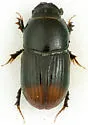
Otophorus haemorrhoidalis
Otophorus haemorrhoidalis
Identification: large scutellum, elytra usually with apical red patch earliest record in our area: NJ before 1915
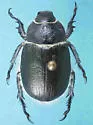
Paracotalpa deserta
Paracotalpa deserta
Flights occur in a narrow window, later in the day than other related species, usually corresponding with the hottest portion of the day (typically mid to late afternoon).
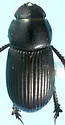
Parapsammodius bidens
Parapsammodius bidens
Riley & Wolfe collected first Texas record (one specimen) at uv light from a location in Kenedy County with deep sandy soil.
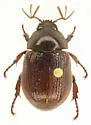
Parastasia brevipes
Parastasia brevipes
Identification: male antennal club twice as long as antennomeres 2‒7 color dark reddish brown to black Det. E. G. Riley, 1998 comes to lights
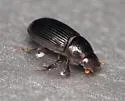
Parataenius simulator
Parataenius simulator
Identification: Strongly wrinkled clypeus and basal half of pronotum with numerous coarse punctures
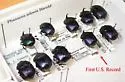
Phanaeus adonis
Phanaeus adonis
Identification: All US specimens have been blue, but green examples have been collected as far north as southern Tamaulipas, Mexico. ( 3 ) First U.S. record published in Riley & Wolfe (2003) ( 5 ) TEXAS: Cameron Co. 15 mi. E Rio Hondo VI-13-14-1995 C
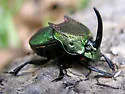
Phanaeus difformis
Phanaeus difformis
Identification: MAJOR MALES: vindex -vs- difformis depicted are easier to differentiate than minor males (w/ short horns) and females (w/ very short horns). major male: - note, colors variable minor male: female: much less common than P. vindex (BG d
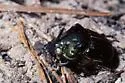
Phanaeus igneus
Phanaeus igneus
Identification: Color is highly variable: black, green or a green red combination.
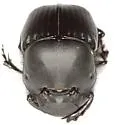
Phanaeus texensis
Phanaeus texensis
Identification: major male: minor male: female: Type Locality: 2mi N. Cedar Hill, Dallas Co., Texas
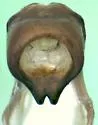
Phyllophaga aemula
Phyllophaga aemula
Identification: Variation primarily in body color (from light to dark or reddish brown) Type Locality: northern Georgia
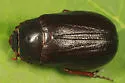
Cranberry White Grub
Phyllophaga anxia
Identification: Large, dark glabrous species with 10 antennomeres. Genitalia are quite variable, sometimes distinguished as "northern" and "southern" forms. Genitalia somewhat similar to P. implicata , but that species has a nine-segmented antennae
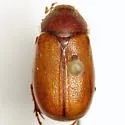
Phyllophaga apicata
Phyllophaga apicata
Identification: Det. E. G. Riley, 1996 Type Locality: College Station, Brazos Co., Texas
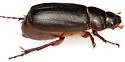
Phyllophaga bilobatata
Phyllophaga bilobatata
Identification: The subgenus Phytalus includes species that have the tooth of the tarsal claws not much removed from the apex. In other subgenera the tooth on the claws are quite distinct from the apex, often near the middle of the claw.
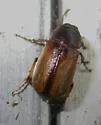
Cuban May Beetle
Phyllophaga bruneri
Identification: Color pattern and small size are diagnostic. Antennae 9-segmented. Type Locality: Estacion Central Agronomica de Cuba, La Habana, Cuba
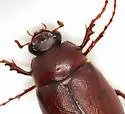
Phyllophaga crassissima
Phyllophaga crassissima
abundant and destructive to crops in some locations
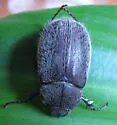
Phyllophaga crenulata
Phyllophaga crenulata
Identification: Typically quite hairy. Size, color, and vestiture variable. Antennae 10-segmented. Larvae may damage sod, field crops, and coniferous nurseries ( 3 )
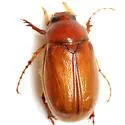
Phyllophaga crinita
Phyllophaga crinita
Identification: Pronotum noticeably hairy, antennae 10-segmented, pale antennal club much longer than rest of antenna. Det. E. G. Riley, 2009
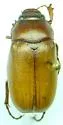
Phyllophaga ephilida
Phyllophaga ephilida
Identification: Best diagnosed by examination of genitalia. Some external characters include antennae 10-segmented, glabrous dorsum, and a barely sinuate clypeus. Similar in general appearance to P. clypeata , except clypeata has a 9-segmented antenn
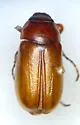
Phyllophaga forbesi
Phyllophaga forbesi
Identification: Antennae 10 segmented. Essentially identical to P. ephilida externally.
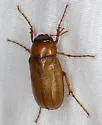
Phyllophaga gracilis
Phyllophaga gracilis
Identification: Elongate, cylindrical, pale rufotestaceous, thorax somewhat darker. head fuscous or piceous. Head broad, eyes large, especially in the male. Clypeus short, deeply emarginate, margin not wielely reflexed. Claws feebly curved. the tooth
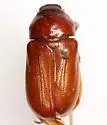
Phyllophaga hamata
Phyllophaga hamata
Reinhard (1939, 1950) reported this species from Bexar, Menard, Sutton and Tom Green counties. To these records Riley & Wolfe added Bandera, Bell, Kerr and Val Verde counties.
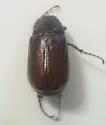
Phyllophaga hirticula
Phyllophaga hirticula
Identification: Long setae in rows on the elytra (occasionally worn), 10-segmented antennae
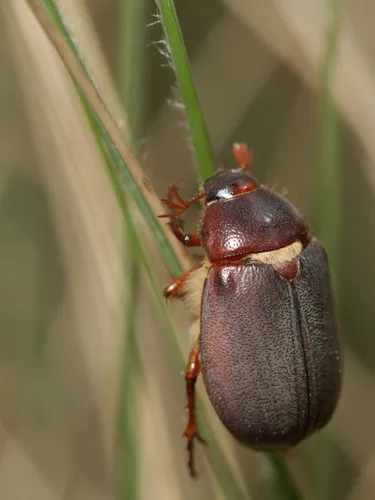
Phyllophaga impar
Phyllophaga impar
Identification: Quoting Davis (1920): Body oblong, slightly broadest behind, reddish brown or darker, the surface sometimes shining but usually more or less pruinose, and in one specimen the surface has a dull smoky appearance.... Clypeus feebly emar
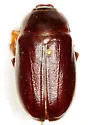
Phyllophaga karlsioei
Phyllophaga karlsioei
Identification: Phyllophaga karlsioei (Linell) Det. E. G. Riley, 1998 Types: Two examples, male and female, collected at electric light in Hot Springs, Arkansas, by Doctor W. J. Karlsioe, and kindly presented to the National Museum. (Linell 1898)
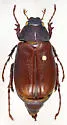
Phyllophaga knochii
Phyllophaga knochii
Identification: The large size and densely rugose punctation of the pronotum narrows this species to a small group of species in the East. Identification can be confirmed by examination of the genitalia for both males and females.
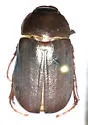
Phyllophaga latifrons
Phyllophaga latifrons
Identification: elytral surface in the darker specimens decidedly pruinose. Abdomen always pale. Clypeus entire, concave, the margin rather widely reflexed. Not a common species (outside of FL??)
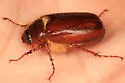
Phyllophaga longispina
Phyllophaga longispina
Identification: Usually light brown overall color and has 9 antennal segments. A hairy species, especially on the pronotum. Elytral hairs more or less in rows.
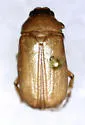
Phyllophaga longitarsa
Phyllophaga longitarsa
Identification: pale, elongated, distinctive clypeus strongly attracted to lights
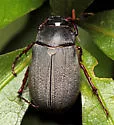
Phyllophaga micans
Phyllophaga micans
Identification: elytral surface with a pruinose coating , but this feature is shared with several other spp. such as Phyllophaga latifrons (LeConte). Clypeus concave and feebly emarginate, the border moderately reflexed Det. Blaine Mathison, 2011 com
Phyllophaga parvidens
Phyllophaga parvidens
Phyllophaga parvidens (Phyllophaga parvidens) is a species in the family Scarabaeidae, commonly known as scarab beetles, belonging to the order Coleoptera (Beetles). It is classified within the subfamily Melolonthinae, tribe Rhizotrogini, suborder Po
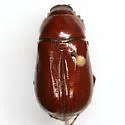
Phyllophaga psiloptera
Phyllophaga psiloptera
Type Locality: Chisos Mountains, Blue creek, elevation 6,000 ft. Brewster Co., Texas. Howden also recorded it from the Chisos Mountains. Riley & Wolfe collected this species in the Davis Mountains at elevations ranging from 4,900 to 6,180 feet.
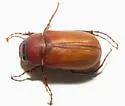
Phyllophaga quercus
Phyllophaga quercus
Identification: Glabrous with surface pruinose. Elytra noticeably paler than head and pronotum. Antennae 9-segmented. Clypeus distinctly emarginate. , Male genitalia:
Phyllophaga renodis
Phyllophaga renodis
"Provisional Texas endernic. This species is likely to occur in northeastern Mexico. The type locality is Fowlerton (LaSalle County) (Reinhard, 1939). We have collected and/or seen specimens from Atascosa, LaSalle, McMullen and Webb counties."
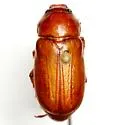
Phyllophaga riviera
Phyllophaga riviera
Texas endemic. The type locality is Riviera (Kleberg County) (Reinhard, 1950). Riley & Wolfe collected this species in Brooks, Kenedy and Kleberg counties. The female remains unknown. The species description was based on 37 male specimens and the fou