
Acrossus rufipes
This record describes Acrossus rufipes (species). Recorded family: Scarabaeidae. Recorded order: Coleoptera.
Identification and Appearance
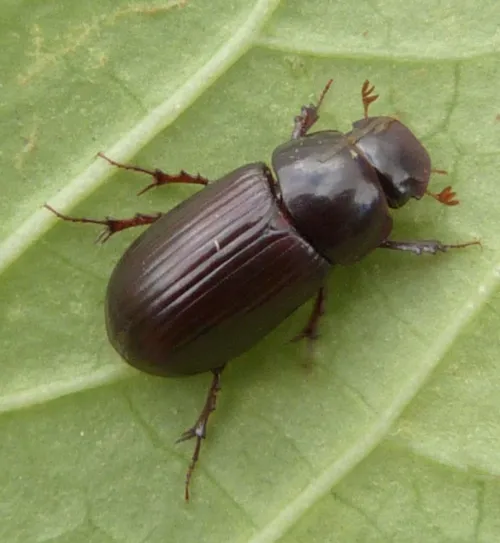
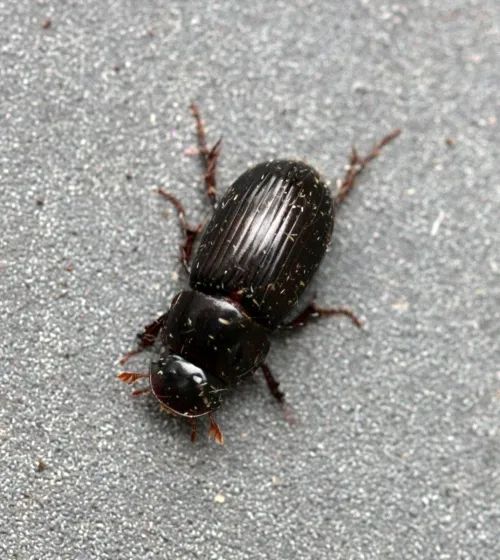
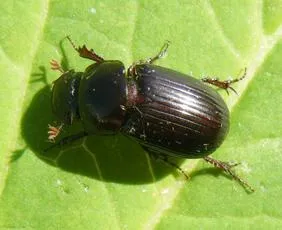
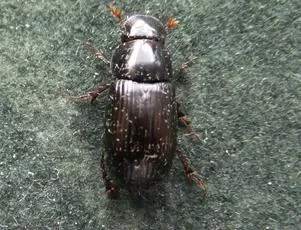
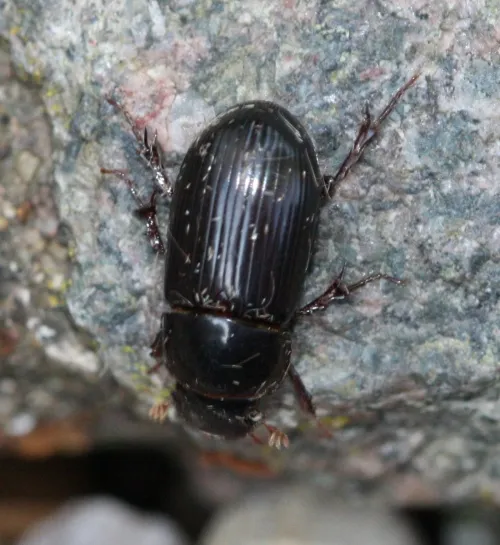
9-13mm. Dark brown to black dung beetle. The scutellum is an equilateral triangle. The pronotum has a few large punctures amongst an even covering of fine punctures - a key ID feature when combined with the large size. A good quality photo + a note of the size required. Gardens, pony paddocks etc. It is a very regular visitor to gardens. Although feeding in Cow or Horse dung, these beetles fly great distances at night to find new food sources, and regularly turn up around outside lights in gardens, well into towns away from potential sources of food. After their initial crash into the light source, they are most often seen crawling on the ground beneath the light. Dung-feeder on droppings of Cows and Horses, both as adults and larvae.
Classification
- Kingdom
- Animalia
- Phylum
- Arthropoda
- Class
- Insecta
- Order
- Coleoptera (Beetles)
- Suborder
- Polyphaga
- Superfamily
- Scarabaeoidea
- Family
- Scarabaeidae (Scarab Beetles)
- Subfamily
- Aphodiinae
- Tribe
- Aphodiini
- Genus
- Acrossus
Imported taxonomy record. Source availability varies; see the source references and editorial policy below.
Habitat and Range
Habitat
Gardens, pony paddocks etc. It is a very regular visitor to gardens. Although feeding in Cow or Horse dung, these beetles fly great distances at night to find new food sources, and regularly turn up around outside lights in gardens, well into towns away from potential sources of food. After their initial crash into the light source, they are most often seen crawling on the ground beneath the light.
Seasonal Activity
Peak is late summer and autumn
Diet and Behavior
Life History
Dung-feeder on droppings of Cows and Horses, both as adults and larvae.
Additional species information
Recorded status
Widespread and common in Britain.
About Primitive Winged Insects: the wider group
Order-level background for Coleoptera, the group containing Acrossus rufipes. Species-specific details appear above.
Group overview
Coleoptera is the largest order of insects with over 400,000 described species, representing ~25% of all known animal species and ~40% of all insects. In the U.S. alone, nearly 30,000 beetle species have been identified.
Ecological role of the group
Beetles are prominent decomposers, especially in forests, breaking down dead wood and recycling nutrients. As predators, they reduce populations of pest insects. Many species are also important pollinators of flowering plants.
Economic and practical significance of the group
Beetles have major economic significance: leaf beetles (Chrysomelidae) and weevils (Curculionoidea) are among the most destructive agricultural pests globally, costing billions annually, while predatory species like ladybugs provide natural pest control.
Recorded sources for this group: Britannica, Smithsonian, NCSU Entomology. Imported estimates may describe particular regions or reporting periods.
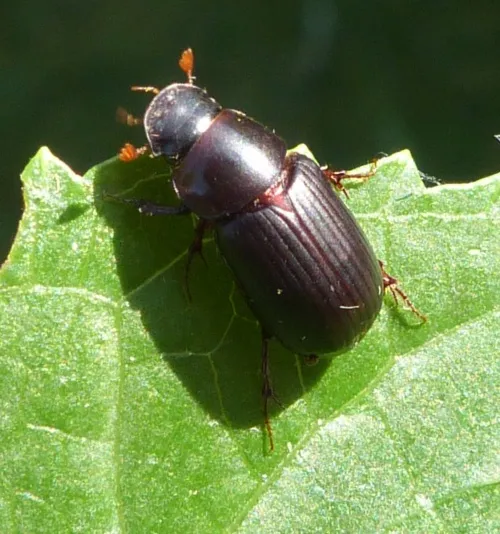
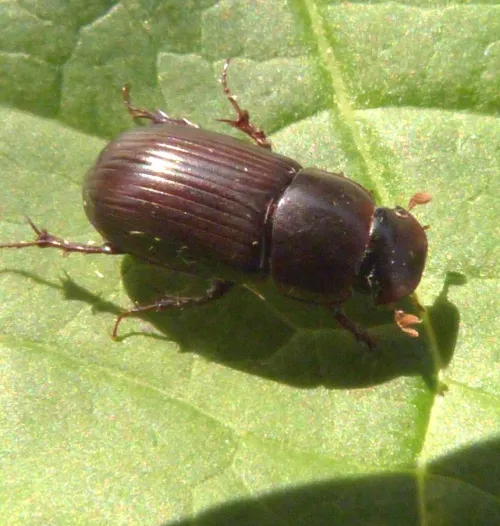
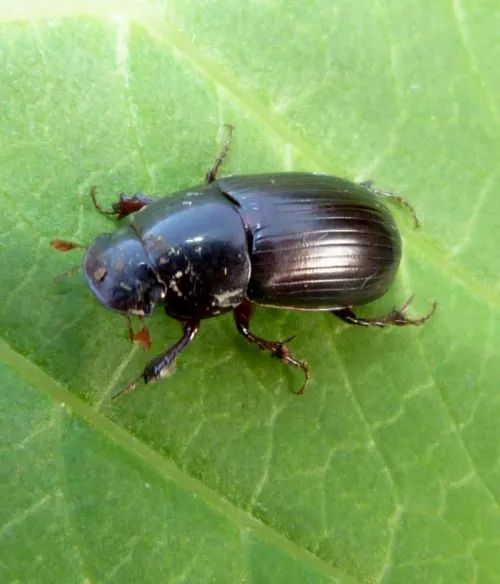
Photos of Acrossus rufipes (10)
Frequently Asked Questions About Acrossus rufipes
What is Acrossus rufipes?
Acrossus rufipes is a species in the family Scarabaeidae, within the order Coleoptera.
Where is Acrossus rufipes found?
Habitat: Gardens, pony paddocks etc. It is a very regular visitor to gardens. Although feeding in Cow or Horse dung, these beetles fly great distances at night to find new food sources, and regularly turn up around outside lights in gardens, well into towns away from potential sources of food. After their initial crash into the light source, they are most often seen crawling on the ground beneath the light.
When is Acrossus rufipes active?
Acrossus rufipes: seasonal activity - Peak is late summer and autumn.
What is the life cycle of a Acrossus rufipes?
Dung-feeder on droppings of Cows and Horses, both as adults and larvae.