
Family Underwing, Tiger, Tussock, and Allied Moths (Noctuidae)
Noctuidae is a family in the order Lepidoptera. Browse 2,425 named species recorded in this family, or open an individual profile for its available identification and natural-history information.
Species in Noctuidae (2,425)
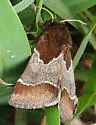
Schinia hanga - Hodges#11136
Schinia hanga
Identification: Strecker (1898) stated "The somewhat crenulated transverse lines and checkered fringe of primaries as well as the curve of the T. A. line [antemedial line] will serve to readily separate this from its three nearest allies." Strecker (
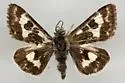
Black-Spotted Gem - Hodges#11102
Schinia honesta
Identification: Grote (1881) original description as Melicleptria honesta is available online in the print references. White with wide black basal streak. Large black reniform and orbicular spots. Black waved subterminal band Thin black terminal line
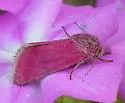
Phlox moth - Hodges#11095
Schinia indiana
Identification: Kwiat original description as Heliolonche indiana is available online. Adults have crimson forewing with a pale tan to gray fringe (seen only in fresh individuals). Hindwings are black with white fringe. Listed as rare in Minnesota an
Schinia intrabilis - Hodges#11159
Schinia intrabilis
Identification: The Smith (1893) original description is available in the print references.
Leadplant Flower Moth - Hodges#11174
Schinia lucens
This species is threatened or endangered in parts of its range, usually from disappearance of the hostplant due to habitat loss
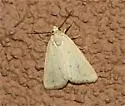
Schinia luxa - Hodges#11203
Schinia luxa
Identification: Adult - forewing pale yellow with several dark dots in specific locations: one serves as the orbicular spot, another serves as the midpoint of the otherwise invisible AM line, and two more are spaced apart along the otherwise invisibl
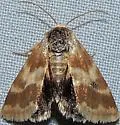
Lynx Flower Moth - Hodges#11117
Schinia lynx
Identification: Colors and markings of this moth are extremely variable.
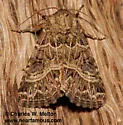
Schinia mexicana - Hodges#11134.3
Schinia mexicana
Identification: The orange hindwing distinguishes this from the other similar species.
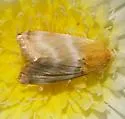
Desert Marigold Moth - Hodges#11155
Schinia miniana
Identification: Adult: forewing light brownish-yellow with broad pale AM and PM lines; AM line almost straight, PM line gently sinuous; reddish line or shading often present in subterminal area and sometimes in median area; hindwing gray with variabl
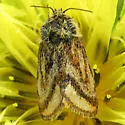
Schinia mitis - Hodges#11169
Schinia mitis
This is a day flying moth, which is only active for a few hours in the morning, when the flowers of its host plant are open. (a)
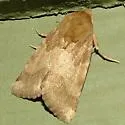
Schinia mortua - Hodges#11131
Schinia mortua
Identification: Determined by Chuck Harp. Schinia mortua appears to be widespread in western North America but uncommon.
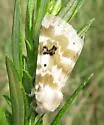
Goldenrod Flower Moth - Hodges#11177
Schinia nundina
Identification: Adult : FW white with bands of pale green or brownish-green shading • Small, black orbicular spot • Hourglass-shaped reniform is boldly outlined in black • Terminal line is series of blackish dots ( 3 )
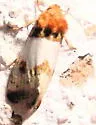
Schinia oculata - Hodges#11197
Schinia oculata
Identification: Smith is available in PDF or view online. Specimen identified by DNA analysis (BOLD).
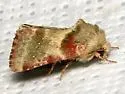
Schinia olivacea - Hodges#11130
Schinia olivacea
Identification: Smith (1906) description is in the print references.
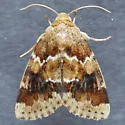
Schinia parmeliana - Hodges#11120
Schinia parmeliana
Identification: Edwards (1882) original description as Lyqranthacia parmeliana and the description by Hampson (1903) as Schinia parmeliana are both available online in the print references. Specimen identified by DNA analysis (BOLD). ( 3 )
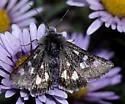
Schinia persimilis - Hodges#11103
Schinia persimilis
Identification: Pacific Northwest Moths has a description.
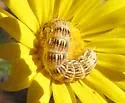
Schinia petulans - Hodges#11113
Schinia petulans
Identification: The original description as Anthoecia petulans Hy. Edwards, and a later description by Hampson (1906) are both available in the print references below.
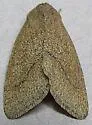
Schinia psamathea - Hodges#11140.1
Schinia psamathea
Identification: The original description is available in PDF. The only transverse line on the forewing is a dark brown postmedial line. Antemedial line seldom present and if so is extremely faint.
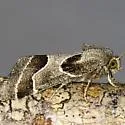
Ragweed Flower Moth - Hodges#11135
Schinia rivulosa
Identification: Adult: forewing blackish-gray in basal area and beyond PM line, and lighter gray in median area; AM and PM lines white, conspicuous; AM line arc-shaped, and PM line deeply curved; ST line straight, white, faint or sometimes absent; hi
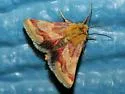
Schinia roseitincta - Hodges#11092
Schinia roseitincta
Identification: Harvey (1874) original description as Lygtanthoecia roseitincta is available online in the print references. Distinctive scarlet and black hindwings. ( 3 ) Adults of this species are active both day and night.
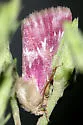
Bleeding Flower Moth - Hodges#11173
Schinia sanguinea
Identification: forewing pink to purple with yellowish to greenish median area and diffuse dark reniform spot; AM line V-shaped, PM line sinuous hindwing yellowish basally, shading to brownish-gray distally, with diffuse discal spot; head, thorax, ab
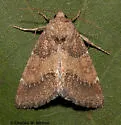
Brown Flower Moth - Hodges#11140
Schinia saturata
Identification: Grote (1874) original description as Lygranthoecia saturata is in the print references.
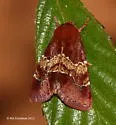
Divided Flower Moth - Hodges#11099
Schinia scissoides
Identification: Benjamin original description as Eupanychis scissoides is available in PDF or view online in the print references.
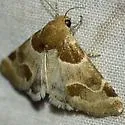
Schinia sexplagiata - Hodges#11151
Schinia sexplagiata
Identification: Adult : FW ground is pale olive-tan. The dark basal area has a light patch near the costa. AM is white and smoothly curved, wider at the costa. PM is white and sinuous, and wider at the costa. Reniform is filled with gray-tan. HW is p
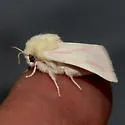
Schinia snowi - Hodges#11206
Schinia snowi
Identification: Grote (1875) original description as Aedophron snowi is available in the print references).
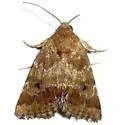
Schinia sordidus - Hodges#11112
Schinia sordidus
Identification: Smith, (1883) original description and the later description by Hampson, (1903) are online in the print references.
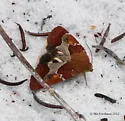
Schinia subspinosae - Hodges#11104.1
Schinia subspinosae
Identification: Hardwick gives a brief description.
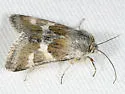
Schinia suetus - Hodges#11088
Schinia suetus
Identification: Adult: forewing yellowish-gray with black speckling and lopsided whitish Y-shaped patch in median area; small triangular pale patch sometimes present in AM area near costa; hindwing black with two large white spots in median area and
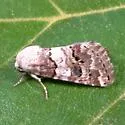
Schinia tertia - Hodges#11179
Schinia tertia
Identification: Adult: forewing gray with broad white medial band but narrower than in S. albafascia ; reniform spot dark gray to blackish; subterminal line white, jagged, irregular; fringe checkered; hindwing white basally; discal spot pale gray, fa
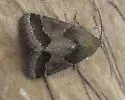
Thoreau's Flower Moth - Hodges#11141
Schinia thoreaui
Identification: Thorax: Light or dark brown, very heavily scaled or hairy. Wings: Base and lower area of wings dark brown. Center of wing more grayish or lighter brown; areas very faintly outlined with white. Both dark areas curved, base and lower cu
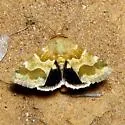
Golden Aster Flower Moth - Hodges#11116
Schinia tuberculum
Identification: Photo identified by Bob Patterson and confirmed by Chuck Harp. Reported as diurnal but adults are often seen at lights. Listed on the New York State Department of Environmental Conservation Rare Animal Status List.
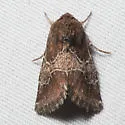
Schinia ultima - Hodges#11127
Schinia ultima
Identification: Strecker (1876) description as Heliothis ultima and a revised description by Hampson (1903) are in the print references.
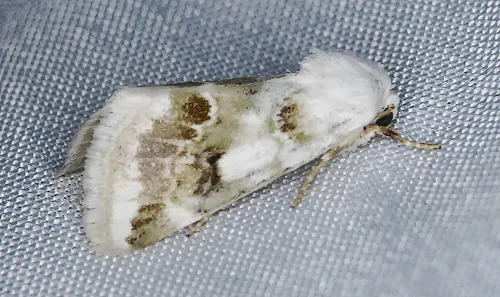
Schinia unimacula - Hodges#11188
Schinia unimacula
Identification: Adult: forwing has straight median band with wide white area between basal and median bands; subterminal band consists of distinct subapical spot, then becomes faint medially and more distinct on inner margin; reniform spot large and
Schinia velaris - Hodges#11153
Schinia velaris
Identification: The Grote (1878) original description as Tamila velaris is available in the print references.
Little Dark Gem - Hodges#11083
Schinia villosa
Identification: Mature larvae are light green with a darker green bands and lines along the length. ( 6 )
Painted Schinia - Hodges#11106
Schinia volupia
Often seen resting on the flower heads of the host plant and other species of Asteraceae. Attracted to lights.
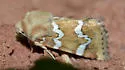
Schinia zuni - Hodges#11176
Schinia zuni
Identification: Forewing olive brown with bold, silvery white transverse lines outlined by black scales. Fringe checkered with dark brown and white. Hindwing yellow with a broad smoky brown marginal band and a well-defined discal lunule . This specie
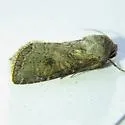
Scotogramma fervida - Hodges#10239
Scotogramma fervida
Identification: Barnes & McDunnough (1912) stated "Is closely related to trifolii and albifusa but can be most readily separated by the general rough and diffuse appearance, the broad bulbous lower half of the reniform which is often prominently fill
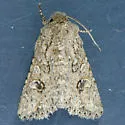
Scotogramma fieldi - Hodges#10250
Scotogramma fieldi
Identification: Specimen determined by DNA analysis (BOLD).
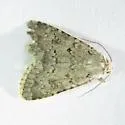
Scotogramma submarina - Hodges#10238
Scotogramma submarina
Identification: See description at Pacific Northwest Moths here
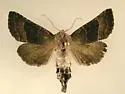
Selicanis Moth - Hodges#9430
Selicanis cinereola
Identification: Adult: forewing medium brown, dusted with pale gray scales; median area dark brown, bordered by thin grayish-white lines; slightly paler color outside PM line, shading to dark brown in terminal area; subterminal line indistinct; hindw
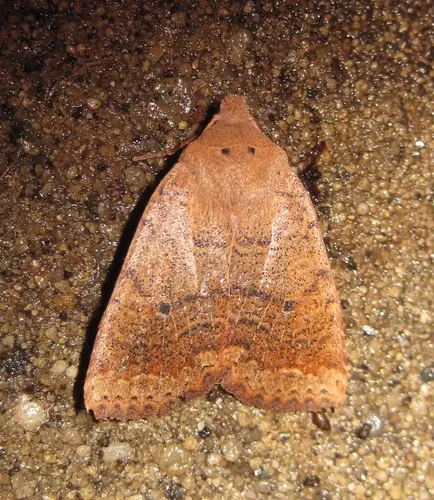
Variable Sallow - Hodges#9941
Sericaglaea signata
Identification: Adult: forewing color varies widely: light to dark brown, sometimes reddish-brown with purplish gloss in fresh specimens; some have heavy black shading inside irregular subterminal line, with conspicuously paler area outside ST line;
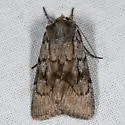
Setagrotis pallidicollis - Hodges#10975
Setagrotis pallidicollis
Identification: The forewings are grey with a reddish-brown wash in the lower portion of the median area and in the subterminal area. The reddish cast is more pronounced in the species as one goes south into California. The antennae of males are mode
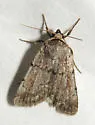
Setagrotis vocalis - Hodges#10975.1
Setagrotis vocalis
Identification: Forewing with thin black basal streak and thin black lines nearly outlining the orbicular spot which fills the space between the orbicular and reniform spot. Outer veins often with black streaking. Hindwings are shiny white.
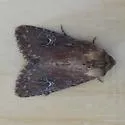
Sideridis artesta - Hodges#10263
Sideridis artesta
Identification: The Smith and Hampson descriptions are available in the print references below. Determined by Chuck Harp. Listed on the Ohio's Endangered Species list.
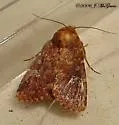
The German Cousin - Hodges#10266
Sideridis congermana
Identification: Yellow tinted FW tornus distinguishes this from similar species.
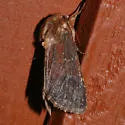
Maroonwing - Hodges#10268
Sideridis maryx
Identification: Adult: forewing uniformly dull brownish-red sometimes overlaid with dark gray shading which partly obscures AM and PM lines composed of series of pale yellowish dots; reniform spot inconspicuous, filled with gray; hindwing dirty white
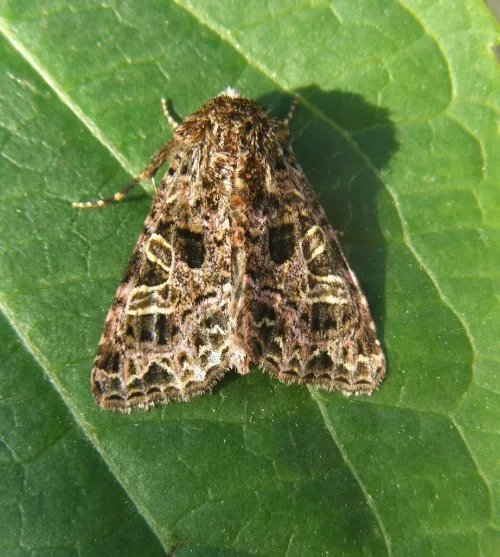
The Campion
Sideridis rivularis
Wing length 14-16 mm. Well marked and with a purplish hue in fresh specimens. The Campion closely resembles The Lychnis (H. bicruris), but tends to have the two forewing stigmata joined at the base. Fresh specimens usually also have a purplish suffus
Rosewing - Hodges#10265
Sideridis rosea
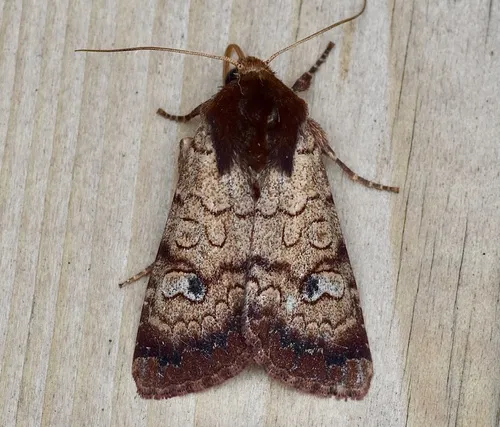
Identification: Adult: head and thorax dark brown, hairy; forewing light reddish-brown with scalloped lines and brown-rimmed spots filled with ground color; reniform spot blackish in lower half; dark brown shading on basal side of ST line; terminal a
Sideridis uscripta - Hodges#10261
Sideridis uscripta
Sideridis uscripta - Hodges#10261 (Sideridis uscripta) is a species in the family Noctuidae, commonly known as owlet moths, belonging to the order Lepidoptera (Butterflies and Moths). It is classified within the subfamily Noctuinae, tribe Hadenini, s
Spaelotis unicava - Hodges#10926.2
Spaelotis unicava
Spaelotis unicava - Hodges#10926.2 (Spaelotis unicava) is a species in the family Noctuidae, commonly known as owlet moths, belonging to the order Lepidoptera (Butterflies and Moths). It is classified within the subfamily Noctuinae, tribe Noctuini, s
Sparkia immacula - Hodges#10218
Sparkia immacula
Identification: Adults are pale greenish-yellow without transverse markings or spots.
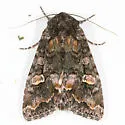
Otter Spiramater - Hodges#10301
Spiramater lutra
Identification: Adult: forewing dark brown or blackish with pale (often pinkish) reniform spot, anal patch, and basal patch Larva: early instars green, later instars brown with a line of black dots down the back The genus Spiramater is misspelled "Sp
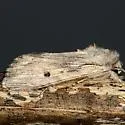
Gray-streaked Armywom Moth - Hodges#9673
Spodoptera albula
Identification: Adult: forewing brownish-gray with dark streaks along veins; thin black basal dash a distinctive feature; reniform spot a small dark dot; lacks diffuse patch around reniform spot and lacks dark streak extending to outer margin (both c
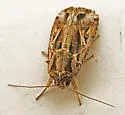
Sweetpotato Armyworm Moth - Hodges#9671
Spodoptera dolichos
Identification: Heppner states Spodoptera dolichos "is most easily distinguished by the dark brown longitudinal stripes on the dorsum of the thorax."
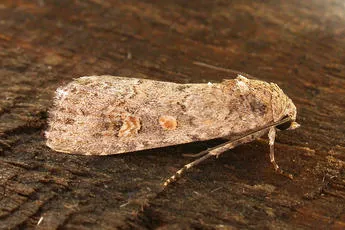
Small Mottled Willow
Spodoptera exigua
Wingspan 26 to 32 mm. It can resemble some other species, but holds its wings rolled around the body when at rest. Arrivals have been noted in most months from February to November, but the peak arrival period is from August to October. The caterpill
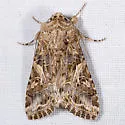
Western Yellow-striped Armyworm Moth - Hodges#9667
Spodoptera praefica
Identification: Adult: forewing variably grayish-brown to yellowish-brown with pale scaling along veins; oblique yellowish shade line extends across orbicular spot toward PM line; basal, AM, PM, and ST lines irregular, pale yellow or white; hindwing
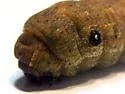
Caribbean Armyworm Moth - Hodges#9668
Spodoptera pulchella
Identification: According to the Moth Photographers Group species page , the curved white line along the posterior margin of the forewing is distinctive.
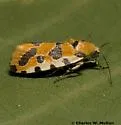
Spragueia cleta - Hodges#9123
Spragueia cleta
Identification: Description can be found at nearctica.com . The original description as Agrophila cleta Druce, is available online in the print references below. Abdomen is ringed with yellow-white bands. ( 4 )
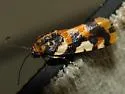
Southern Spragueia Moth - Hodges#9122
Spragueia dama
Identification: Adult - sexually dimorphic and have variable markings (see Nearctica.com). Larva - see Wagner, 2011.
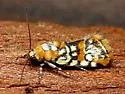
Spotted Spragueia - Hodges#9125
Spragueia guttata
Identification: Adult: forewing white to pale yellowish, crossed by thick curving lines as though drawn with a black felt marker, and giving the effect of having large hollow spots; dark orange patches in basal, median, and subterminal areas; fringe
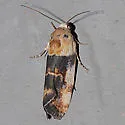
Spragueia obatra - Hodges#9130
Spragueia obatra
Identification: The original description as Tarache obatra Morrison, and other descriptions are available online in the print references below.
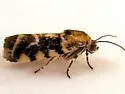
Spragueia perstructana - Hodges#9124
Spragueia perstructana
Spragueia perstructana - Hodges#9124 (Spragueia perstructana) is a species in the family Noctuidae, commonly known as owlet moths, belonging to the order Lepidoptera (Butterflies and Moths). It is classified within the subfamily Acontiinae, tribe Aco
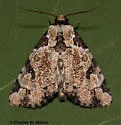
Whaleback Moth - Hodges#9716
Stibaera thyatiroides
Identification: Adult: forewing ground color white with brown dappling in median area, and yellowish-brown shading beyond PM line; orbicular spot brown, round; reniform spot blackish, U-shaped; blackish patches along costa in basal, median, and subte
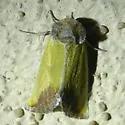
Stiria blanchardi - Hodges#9783
Stiria blanchardi
Identification: The only Stiria species without a median patch along the forewing inner margin.
Stiria dyari - Hodges#9786
Stiria dyari
Stiria dyari - Hodges#9786 (Stiria dyari) is a species in the family Noctuidae, commonly known as owlet moths, belonging to the order Lepidoptera (Butterflies and Moths). It is classified within the subfamily Stiriinae, tribe Stiriini, superfamily No
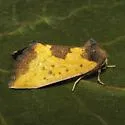
Stiria intermixta - Hodges#9785.1
Stiria intermixta
" Stiria rugifrons and intermixta are extremely close morphologically and superficially. Stiria intermixta may be just the southwestern US Mexican race of rugifrons . The ranges of variability in both the male and female genitalia overlap and cannot
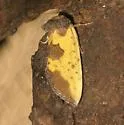
Yellow Sunflower Moth - Hodges#9785
Stiria rugifrons
" Stiria rugifrons and intermixta are extremely close morphologically and superficially. Stiria intermixta may be just the southwestern US Mexican race of rugifrons . The ranges of variability in both the male and female genitalia overlap and cannot
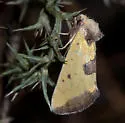
Stiria sulphurea - Hodges#9787
Stiria sulphurea
Identification: The hindwing is brownish in both the male and female.
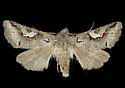
Stretchia inferior - Hodges#10475
Stretchia inferior
Identification: Specimen determined by DNA analysis (BOLD).
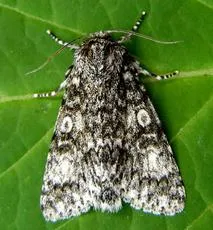
Poplar Grey
Subacronicta megacephala
Wingspan 40-44 mm. One of several powdery-looking greyish moths which can be difficult to identify, this species has however a distinctly round whitish orbicular stigma with a darker centre, and whitish hind wings. The grey-brown caterpillar feeds on
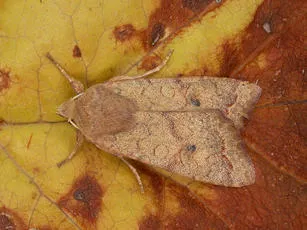
The Brick
Sunira circellaris
Wingspan 33-38 mm. One of several similar, orange-coloured species which emerge during the autumn period. It frequents mainly woodland and parkland. The larvae feed on the flowers and leaves of Wych Elm or Poplar when young, later feeding on the leav
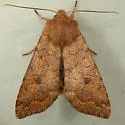
Battered Sallow - Hodges#9960
Sunira verberata
Identification: Adult: forewing similar to Bicolored Sallow (except there are no individuals whose outer half is completely purplish-gray, as in some bicolorago ); hindwing usually evenly shaded with gray except for sharply-defined pale strip along c
Supralathosea baboquivariensis - Hodges#10024
Supralathosea baboquivariensis
Identification: Adult : Male - Head, thorax and abdomen dull gray, mixed with some black and white ● FW ground color dull gray, more or less suffused and irrorated with white ● All ordinary lines and spots more or less obsolescent, not easily disting
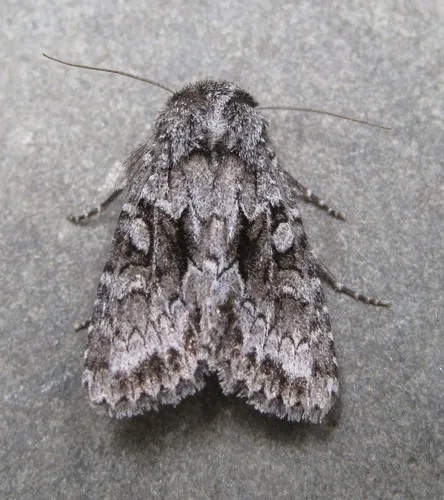
Private Sallow Moth - Hodges#9989
Sutyna privata
Identification: "Peppery ash gray FW has darker gray basal and median areas. All lines and spots are indistinct and edged white. Thick bar in inner median area is conspicuous. ST has black wedges at midpoint and anal angle." Head: Speckled gray-white
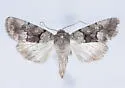
Sympistis apep - Hodges#10164.1
Sympistis apep
Identification: The hind-wings are mostly dark colored, with a sinuous and relatively thin, white-colored PM band. This is a feature that is only shared with a few other species, such as Sympistis aterrima and Sympistis tenuifascia .
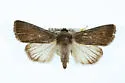
Sympistis astrigata - Hodges#10134
Sympistis astrigata
Identification: Specimen determined by DNA analysis (BOLD). ( 4 )
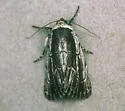
Brown-lined Sallow - Hodges#10059
Sympistis badistriga
Identification: forewing brown with variable white scaling and small black streaks in subterminal area; AM and PM lines very thin, curved; black basal dash extends to PM line; another black dash extends through reniform spot and upper PM line hindwin
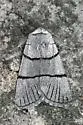
Sympistis barnesii - Hodges#10121
Sympistis barnesii
Identification: Original description as Oncocnemis barnesii is available online.
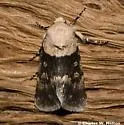
Sympistis basifugens - Hodges#10089
Sympistis basifugens
Identification: Adult: forewing basal area whitish or pale cream; median area dark gray, bounded basally by almost straight AM line, and distally by toothed convex PM line; pale shading beyond PM line blends into dark terminal area; reniform spot usu
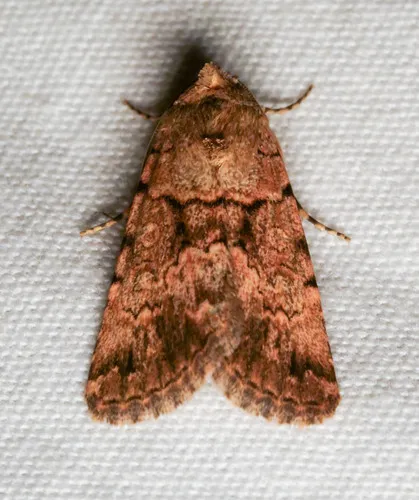
Sympistis buchis - Hodges#10102.2
Sympistis buchis
Identification: Description can be found in Troubridge at link in citations below ($15 fee, but well worth the cost).
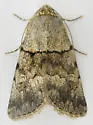
Sympistis cherti - Hodges#10118.3
Sympistis cherti
Identification: Troubridge description can be found at link in citations below.
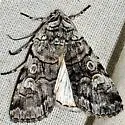
Fringe-Tree Sallow - Hodges#10067
Sympistis chionanthi
Identification: Adult: forewing pale gray with darker gray shading; AM and PM lines and spot outlines sharp, black; orbicular and reniform spots pale gray, darker toward center; claviform spot connected to AM line, forming a sharp hollow wedge; black
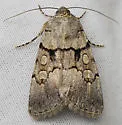
Sympistis columbia - Hodges#10118
Sympistis columbia
Identification: See identification information at Pacific Northwest Moths (PNWM) ( 4 ) .
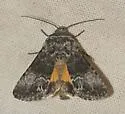
Sympistis corusca - Hodges#10074
Sympistis corusca
Identification: Smith (1899) original description as Oncocnemis corusca is online in the print references.
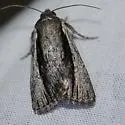
Sympistis cottami - Hodges#10129
Sympistis cottami
Identification: From Blanchard : Oncocnemis cottami is very close to O. atricollaris Harvey. The transverse lines of atricollaris are generally well marked, sometime only partly traceable, rarely completely obsolete; the part of the reniform which fa
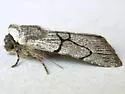
Sympistis figurata - Hodges#10130
Sympistis figurata
Identification: The basal dash on the forewing is distinctive.
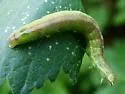
Sympistis forbesi - Hodges#10067.1
Sympistis forbesi
Identification: Description in PDF. Can only reliably be identified by the larva. All images of the adults, that do-not have larva or host information should be placed here: - chionanthi or forbesi
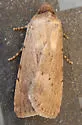
Sympistis fortis - Hodges#10068
Sympistis fortis
Identification: Description can be found at Pacific Northwest Moths.
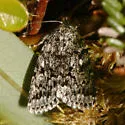
Sympistis heliophila - Hodges#10156
Sympistis heliophila
Identification: Detailed description: Specimen identified by Lars Crabo. Day-flying moth ( diurnal ).
Sympistis jocelynae - Hodges#10094.3
Sympistis jocelynae
Identification: Troubridge original description can be found at link in citations below. According to Troubridge, jocelynae should not be confused with any other species. The pinkish forewing and paler orbicular and reniform spots are similar to that
Sympistis lapponica - Hodges#10157
Sympistis lapponica
Identification: Specimen determined by DNA analysis (BOLD).
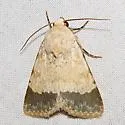
Sympistis modesta - Hodges#10090
Sympistis modesta
Identification: "...Primaries with the basal two-thirds creamy with a slight ochreous tinge; inception of ordinary lines indicated by three small, smoky, equidistant, costal patches; t. a. line scarcely discernable, indicated more by the paler fillin
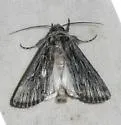
Sympistis mut - Hodges#10135.6
Sympistis mut
Identification: Very similar to Sympistis major (see detailed description of major at Pacific Northwest Moths ) Male hindwing of mut pure white with row of black scales along outer margin and a few black scales on veins; female hindwing white with wi
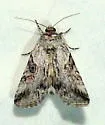
Sympistis orbicularis
Sympistis orbicularis
Identification: Typically has forewings with both am. and pm. lines incomplete. However, there are specimens at BOLD with barcodes matching specimens in BOLD:AAC0956 , the BIN group for orbicularis , with transverse lines reaching the inner margin.
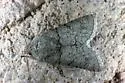
Scribbled Sallow - Hodges#10154
Sympistis perscripta
Identification: Adult: forewing dark gray with distinct black lines and black-outlined spots; AM line heaviest marking, zigzag; PM line double, sinuate; claviform spot oval, larger than round orbicular spot; reniform spot semicircular or slightly cur
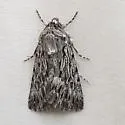
Sympistis poliochroa - Hodges#10094.4
Sympistis poliochroa
Identification: Original description as Oncocnemis poliochroa Hampson, is available at the link in the print references below.
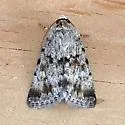
Sympistis ra - Hodges#10104.2
Sympistis ra
Identification: Head white with black scales between antennae; thorax and tegulae a mix of white and black scales. Forewing ground color white, mottled with black and pale blue-gray scales with patches of pale yellow; heavy suffusion of black scales
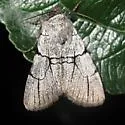
Sympistis ragani - Hodges#10132
Sympistis ragani
Identification: Powell & Opler stated Sympistis ragani can be distinguished from S. semicollaris by the brown head.
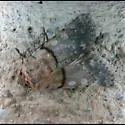
Sympistis rosea - Hodges#10114
Sympistis rosea
Identification: Adult: forewing light gray with pinkish tint toward base and slightly darker gray beyond PM line; AM line bold, black, almost straight; reniform and orbicular spots whitish; PM line scalloped, black, inconspicuous; hindwing medium gra