
Family Leaf Beetles (Chrysomelidae)
Chrysomelidae is a family in the order Coleoptera. Browse 1,349 named species recorded in this family, or open an individual profile for its available identification and natural-history information.
Species in Chrysomelidae (1,349)
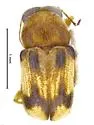
Pachybrachis connexus
Pachybrachis connexus
Identification: readily identifiable among pubescent species due to the [bold] striping on the elytra , iNaturalist described based upon a single female from Hot Springs, Arizona, Hot Springs, possibly Verde Hot Springs in Gila County.
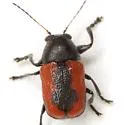
Pachybrachis cruentus
Pachybrachis cruentus
Identification: Prothorax entirely black, elytra with a broad red margin interrupted at the convexity somewhat scarce and very sparingly represented in collections
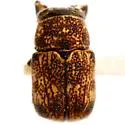
Pachybrachis delumbis
Pachybrachis delumbis
Identification: Fall's description: In the male type the vertex spot is large, but the frontal spot is narrow and the front is mostly yellow; the thoracic M is quite distinct, attaining the apical third, the thorax predominantly yellow. Elytral spots
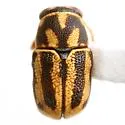
Pachybrachis deyrupi
Pachybrachis deyrupi
Identification: one of three vittate species of Pachybrachis known from Florida. Type Locality: FL: POLK CO., TNC / SADDLEBLANKET LAKE / PRES. 11 MAY 2009 / MARK DEYRUP // SWEPT FROM / POLYGONELLA / MYRIOPHYLLA / N27.67162 / W081.57587 There are 12 p
Pachybrachis dilatatus
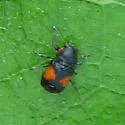
Pachybrachis dilatatus
Identification: "the punctures [on elytra] serially or subserially arranged except in a baso-sutural triangle." (serially only on sides and rear in subfasciatus ).
Pachybrachis donneri
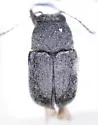
Pachybrachis donneri
Identification: Black, opaque, side margins of prothorax, basal raised margin of elytra also side margins for a variable distance from the base, yellow; lustre throughout alutaccous, pubescence gray, decumbent, rather plentiful Det. M. A. Quinn, 2016
Pachybrachis dubiosus
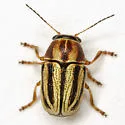
Pachybrachis dubiosus
Identification: The median thoracic stripe is bifurcate in front, but does not touch the lateral stripes. Det. E. G. Riley, 2009 Type Locality: "Tex"
Pachybrachis duryi
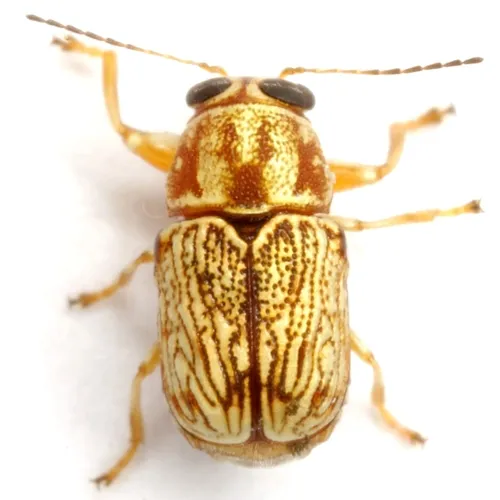
Pachybrachis duryi
Identification: Yellow, brown punctate, thoracic M moderate, elytra with a common sutural spot on the convexity and some small marginal markings; front rather narrow, the eyes separated by a distance less than the vertical width of their upper lobes,
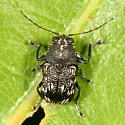
Pachybrachis femoratus
Pachybrachis femoratus
Identification: Small to medium in size, females quite robust, blackish and dull yellow, mottled, the darker color usually in excess on the prothorax, and often on the elytra; punctuation rather dense, broadly confused on the elytral disk; no ocular
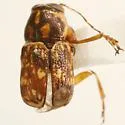
Pachybrachis fortis
Pachybrachis fortis
Identification: from Fall's description: Large, robust, yellow, with standard markings, in pale brown, rather lightly indicated on the elytra; luster dull, surface with very fine, short and sparse pubescence; no ocular lines; front claws of male rath
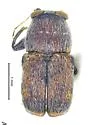
Pachybrachis gilberti
Pachybrachis gilberti
Identification: recognized by its narrow shape, almost purple coloration with yellow highlights, and bulging eyes. Type Locality: ARIZ: Cochise Co. Cave Cr. / Cyn., 3 mi. W Portal VIII-9-[20]00, / 5120ft. A. Gilbert & N. Smith / 31o53.023′N -109o10.7
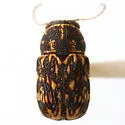
Pachybrachis gracilipes
Pachybrachis gracilipes
Identification: Fall's description: Of medium size, rather brightly black and yellow mottled; eyes in the male separated by a distance which is less, and in the female more, than the vertical width of their upper lobes; no ocular lines; front tibiae
Pachybrachis hector
Pachybrachis hector
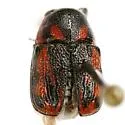
Identification: Black, variably marked with red or reddish yellow, the latter color occasionally predominant in the male; surface moderately shining, the prothorax with scarcely visible trace of alutaceous sculpture. Eyes moderately distant; front wi
Pachybrachis hepaticus
Pachybrachis hepaticus
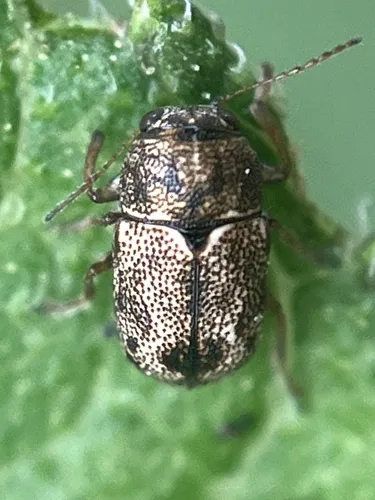
Pachybrachis hepaticus is a species of case-bearing leaf beetle in the family Chrysomelidae. It is found in Central America and North America.
Pachybrachis hybridus
Pachybrachis hybridus
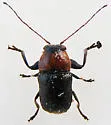
Identification: black, prothorax red varying to black with red side margins (last key couplet) note pale line bisecting pronotum, distinctive when present (MAQ, pers. obs.) Det. M. A. Quinn, 2020 confirmed the asso. w/ chamise ( Adenostoma fasciculat
Pachybrachis illectus 0
Pachybrachis illectus
Identification: there is still only one pair known, that being from the Hubbard and Schwarz Collection housed at USNM. While the external appearance of P. illectus is very similar to many maculate species of Pachybrachis , the median lobe of the aede
Pachybrachis immaculatus
Pachybrachis immaculatus
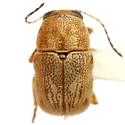
Identification: "Rather robust, pale dull yellow above with brown punctures, finely alutaceous, scarcely shining; prothoracic markings pale, diffuse and nearly obsolete; elytra immaculate, rarely with faint traces of standard spots..." Det. E. G. Ril
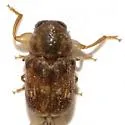
Pachybrachis integratus
Pachybrachis integratus
Identification: Yellowish, thinly pubescent above, with broad suffused pale brown to fuscous markings; surface shining, without alutaceous sculpture; eyes narrowly separated. Det. M. A. Quinn, 2017
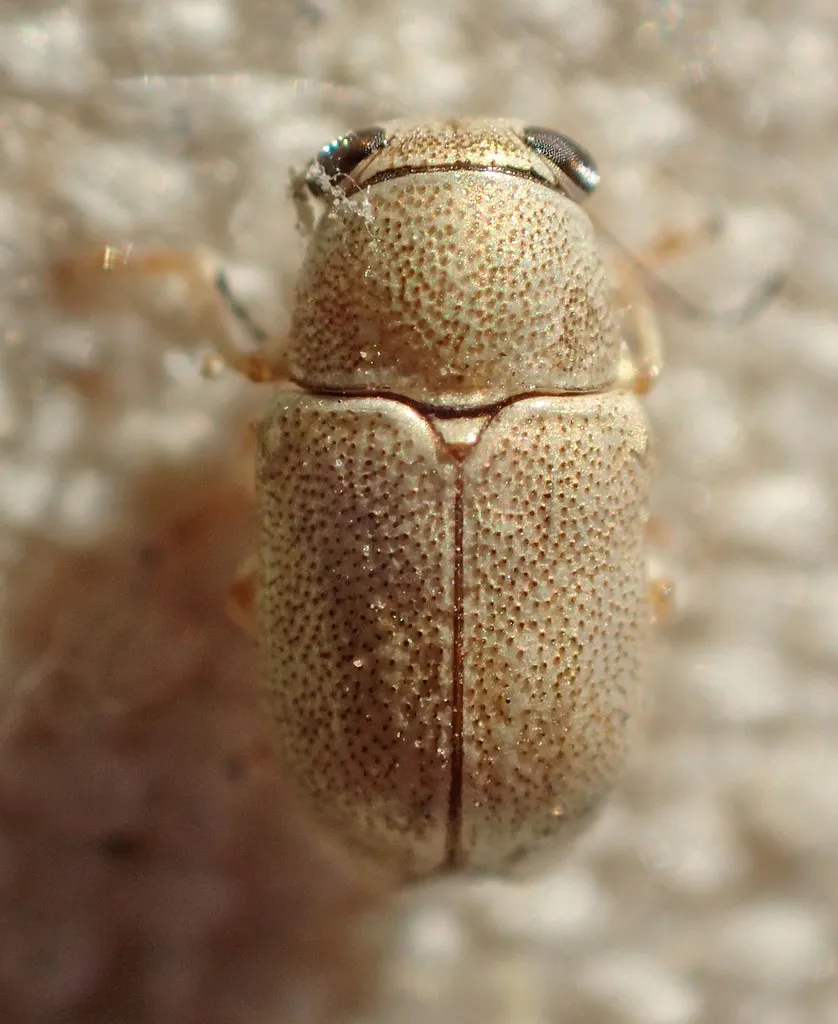
Pachybrachis jacobyi
Pachybrachis jacobyi
Identification: Moderately robust, pale whitish or grayish yellow, thickly, finely and for the most part diffusedly punctate, the punctures often pale brown but sometimes without color, integuments shining, not at all or scarcely alutaceous; eyes dis
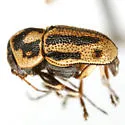
Pachybrachis kentuckyensis
Pachybrachis kentuckyensis
Type Locality: KY: Hardin Co. / Eastview Barrens SNP / 37.603476 -86.047614 / 9 Jun 2009
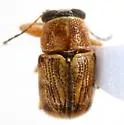
Pachybrachis laevis
Pachybrachis laevis
Identification: Small, yellow, polished. Standard spots variable from black or nearly so through pale brown, diffuse and indistinct to entirely wanting. Type Locality: Colorado Springs, Colorado
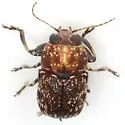
Pachybrachis latithorax
Pachybrachis latithorax
Identification: "Size large, reddish brown variegated with numerous small yellow [pronotal] spots , lustre dull; eyes separated in the female by a distance subequal to the vertical width of their upper lobes, front without ocular lines; elytra deeply
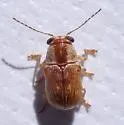
Pachybrachis livens
Pachybrachis livens
Identification: Prothorax with a usually nearly parallel and entire rufo-testaceous stripe occupying the middle third (last key couplet) a rufo-testaceous or pale brown entire nearly parallel sided median stripe occupying a little less than the middl
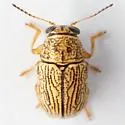
Pachybrachis lodingi
Pachybrachis lodingi
Identification: the short vertical narrow basal mid-pronotal line appears to be a pretty consistent character Type Series: Two males, Spring Hill, three females, Grand Bay, Alabama, three North Carolina, one Florida. Type coll., Bowditch. Sent me by
Pachybrachis luctuosus 0
Pachybrachis luctuosus
Identification: for the genus, quite regular and deep elytral striae
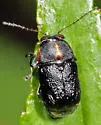
Pachybrachis luridus
Pachybrachis luridus
Identification: Pronotum may be completely black with red lateral margins, may have a red medial vitta or be completely red. Elytra completely black or with a few yellow specks, especially at apex. , see: "Here appears luridus , the first of our spec
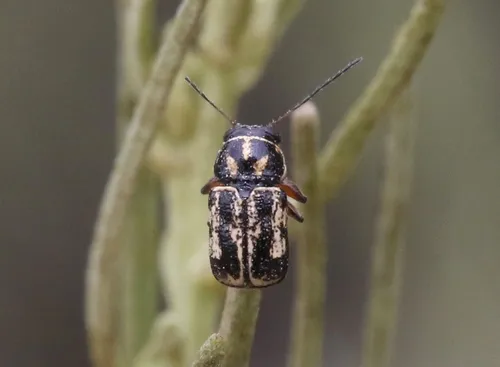
Pachybrachis lustrans
Pachybrachis lustrans
Pachybrachis lustrans is a species of case-bearing leaf beetle in the family Chrysomelidae. It is found in Central America and North America.
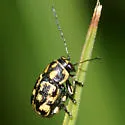
Pachybrachis m-nigrum
Pachybrachis m-nigrum
Identification: Det. E. G. Riley, 1998 This species was often found misidentified in collections as P. intricatus or P. picturatus . It cannot be reliably distinguished from P. deceptor except by examination of the male genitalia. On average, however
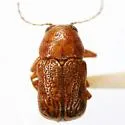
Pachybrachis macronychus
Pachybrachis macronychus
Identification: Fall's description: Rather large, yellow, brown punctate, minutely alutaceous, moderately shining; cephalic spots small, pale brown, thoracic M represented by pale diffuse rust colored shades, elytra without spots; ocular lines wantin
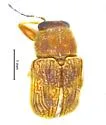
Pachybrachis madera
Pachybrachis madera
Identification: fine white pubescence on the elytra, which is not present on the pronotum and very difficult to detect, plus the very large median lobe, makes P. madera particularly distinctive relative to the other members of this pubescent species-
Pachybrachis melanostictus
Pachybrachis melanostictus
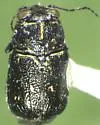
Identification: Black and dull yellow, mottled, sometimes the pale, sometimes the dark, areas in excess. A widely dispersed and very common species in the Pacific Region and variable in a greater or less degree in almost all its characters. For that
Pachybrachis mellitus
Pachybrachis mellitus
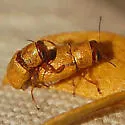
Identification: "upper side entirely dark honey-yellow, shining. The large size and shining yellow colour make this species easy to recognize." "Robust, dark honey yellow, immaculate, integuments very minutely alutaceous but rather strongly shining,
Pachybrachis mercurialis
Pachybrachis mercurialis
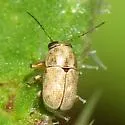
Identification: Light yellow pale brown punctate integuments polished; elytra immaculate; prothorax with small diffuse pale brownish clouds.
Pachybrachis mobilis
Pachybrachis mobilis
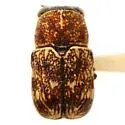
Identification: Pale yellow with standard spots variably developed, brown to fuscous; eyes more distant in the male than the vertical width of their upper lobes; front without ocular lines; punctuation rather dense, the elytral striae more or less di
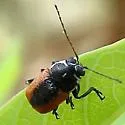
Pachybrachis newmani
Pachybrachis newmani
Identification: The orange-red elytra, enlarged claws, and large size make P. discoideus readily recognizable. The size of the black sutural macula is variable, and the pronotum of females is often entirely black. Elytra orange-red with wide, black s
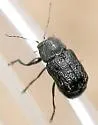
Pachybrachis nigricornis
Pachybrachis nigricornis
Identification: P. nigricornis autolycus Fall - striped, other forms mostly or entirely black
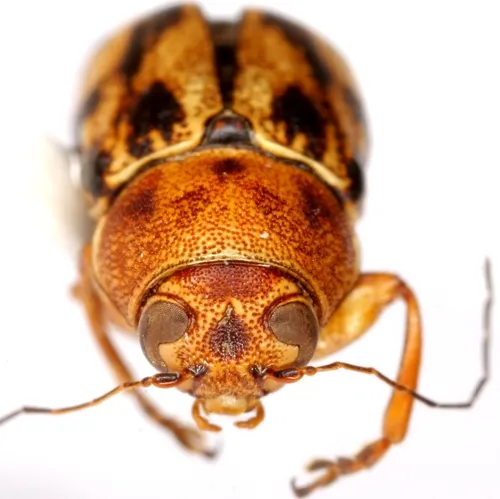
Pachybrachis nobilis
Pachybrachis nobilis
Identification: There are at least two big honkers like this on pines in AZ and nobilis is one of them. (E. G. Riley, 2013 pers. comm. to MAQ) Type Locality: Williams, Coconino Co., Arizona, west of Flagstaff.
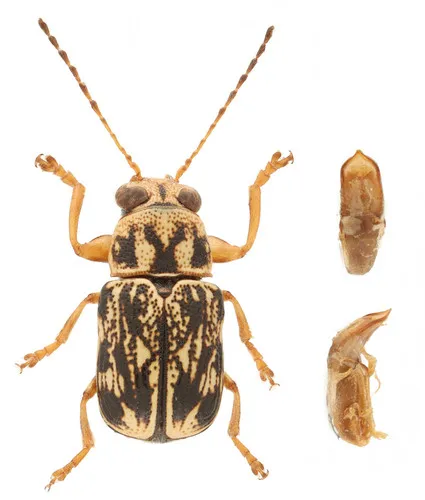
Pachybrachis obsoletus
Pachybrachis obsoletus
Identification: Yellow, strongly marked with black, varying to nearly completely yellow with brown maculations. Head yellow with vertex black or brown, frons with or without median black vitta; strongly punctate. Pronotum yellow with black M varying
Pachybrachis osceola 0
Pachybrachis osceola
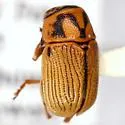
FLORIDA: Lake Co., Astor, 10.v.1956, ex. Taxodium distichum , F. W. Mead [1♂ 1♀, FSCA]; Volusia Co., Enterprise, 11.vi, Hubbard & Schwarz Collection [1♂ 1♀, 1♂ holotype, USNM].
Pachybrachis othonus
Pachybrachis othonus
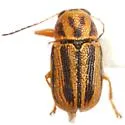
Identification: Pachybrachis othonus othonus (Say) Say's description: Black; thorax with a narrow margin and abbreviated line, dull fulvous; elytra yellowish, with two black vittae. Det. M. A. Quinn, 2015 Pachybrachis othonus pallidipennis Suffrian F
Pachybrachis pawnee
Pachybrachis pawnee
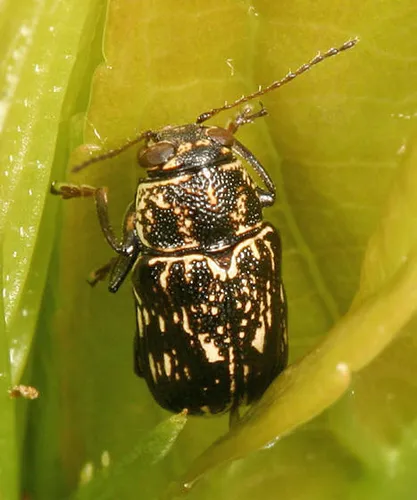
Identification: "Elytra yellow, with suture or sutural bead and two discal vittae on each black or brownish. Front claws of male distinctly enlarged; lustre dull, outer elytral vitta confined to the 7th and 8th interspaces." Type Locality: Onaga, Kan
Pachybrachis peccans
Pachybrachis peccans
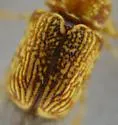
Identification: Ocular lines prominent; males with enlarged foreleg claws; color extremely variable, ranging from yellowish with faint black spots to almost black speckled with small yellow marks
Pachybrachis pectoralis
Pachybrachis pectoralis
Identification: Form, especially of the male, narrower than usual; color dull yellow, maculate with brown or black; surface not or scarcely shining; eyes narrowly separated ; ocular lines present... Front tibiae sinuate on the inner margin beyond the
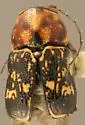
Pachybrachis pinguescens
Pachybrachis pinguescens
Identification: Closely allied to californicus differing only as follows: Size larger, a little stouter, prothorax similarly strongly rounded in the male and distinctly more inflated in the female than in californicus , widest nearly at the middle in
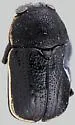
Pachybrachis praeclarus
Pachybrachis praeclarus
Identification: pale elytral margin Fall considered it to be extremely rare, but Doug LeDoux collected multiple short series from several locations in MO. (spmns now in the TAMUIC.)
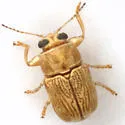
Pachybrachis pusillus
Pachybrachis pusillus
Identification: eyes bulge, nearly touch... among the most commonly coll'ed beetle spp. (at UV lights) at Laguna Atascosa NWR, Rio Hondo, Cameron Co., TX ( 6 )
Pachybrachis rileyi
Pachybrachis rileyi
Identification: a robust species with a very localized range Type Locality: FLA: Monroe Co., Upper Key Largo, April 30, 1988, E. Riley & F. Whitford, collected at mercury vapor & blacklight
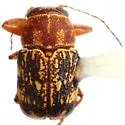
Pachybrachis sanrita
Pachybrachis sanrita
Identification: elytral striae very imperfect and fragmentary but present at least toward and on the posterior convexity; prothoracic markings reddish brown, broadly suffused, the elytral spots black, heavy. (last key couplet) Det. E. G. Riley, 1987
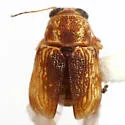
Pachybrachis signatus
Pachybrachis signatus
Identification: broad median thoracic stripe narrowly divided in front
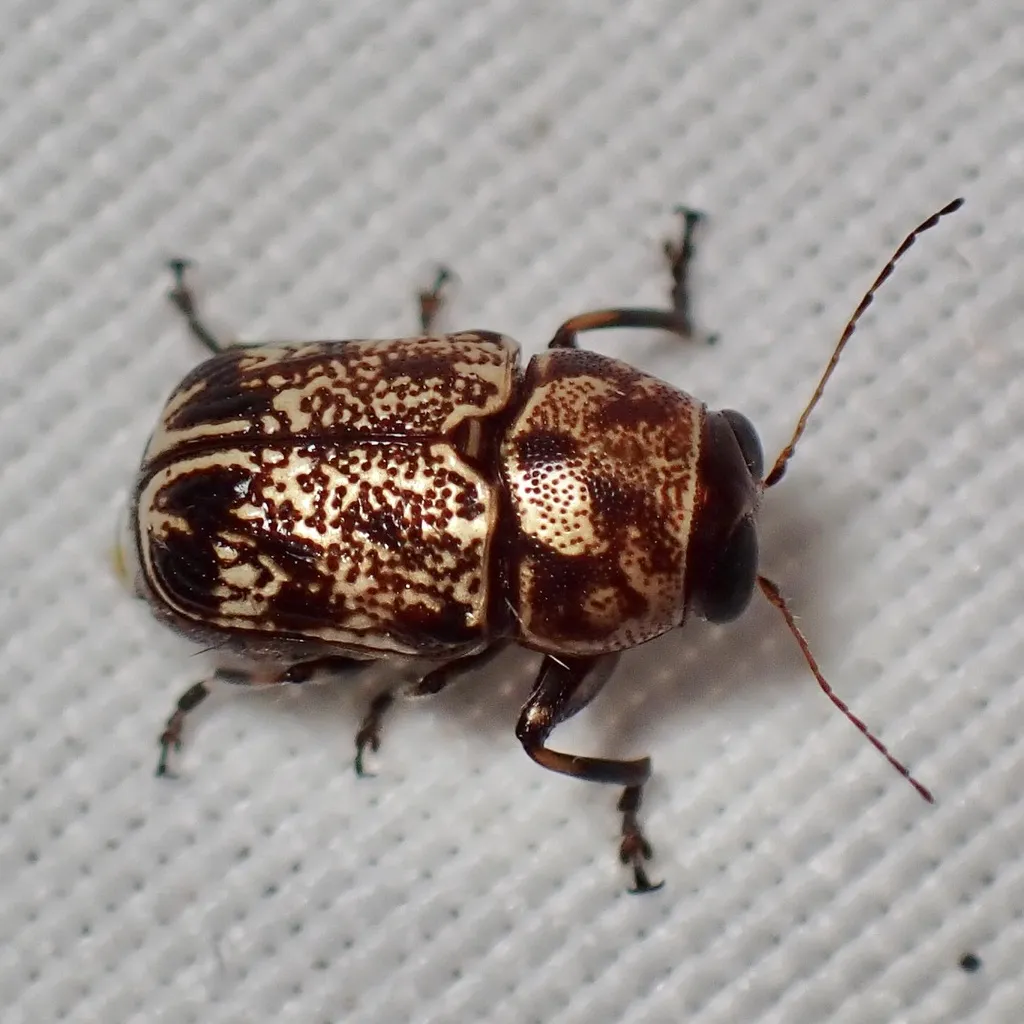
Pachybrachis snowi
Pachybrachis snowi
Identification: Lustre moderately shining, prothorax not very densely punctate, terminal joint of antennae not dilated. Elytral punctuation much confused, striae feebly impressed. (last key couplets) Large, robust, yellow with red-brown to piceous ma
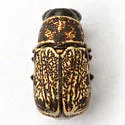
Pachybrachis sonorensis
Pachybrachis sonorensis
Identification: "rather easily separable by its almost completely confused punctuation without trace of impressed striae except the lateral one. There are in most examples short, slightly raised elytral costae extending back from the basal margin"
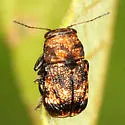
Pachybrachis spumarius
Pachybrachis spumarius
Identification: Redescription : Yellow, with brown, reddish brown, or rust-colored punctures, with standard maculae diffuse, often dark brown or fuscous. Head: Slightly wider than thoracic apex; eyes moderately separated; face yellow with brown, W-sh
Pachybrachis stygicus
Pachybrachis stygicus
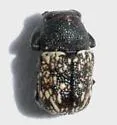
Identification: a common, widespread species from the mid-Atlantic Coast to the 100th meridian (Map 1B). While virtually totally black specimens can be found from Florida to Nebraska, trends to a paler form in the southwestern part of its range. Det.
Pachybrachis texanus
Pachybrachis texanus
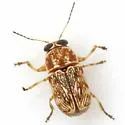
Identification: eyes nearly touch... Det. M. A. Quinn, 2013 The type and great majority of specimens seen by Fall (1915) from Brownsville.
Pachybrachis texasensis 0
Pachybrachis texasensis
Holotype: USA: TEX: Grayson Co. Juniper Point Campground 33.85962°N 96.83010°W IV-27-2012, E. Riley, UV
Pachybrachis thoracicus
Pachybrachis thoracicus
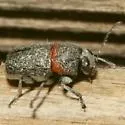
Identification: Robust, black, prothorax at base and the raised basal margin of the elytra red; rather densely silvery white pubescent, especially the head, pygidium and under surface. Det. T. O. Robbins, 2011
Pachybrachis tridens
Pachybrachis tridens
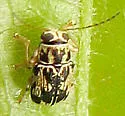
Since P. tridens has not been collected from Canada in the last 55 years, it can be considered as extirpated from the Canadian fauna. ( 5 )
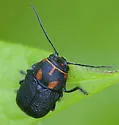
Pachybrachis trinotatus
Pachybrachis trinotatus
Identification: Pronotum red with heavy, sharply defined, black M-mark, and with pale anterior and lateral margins; elytra entirely black.
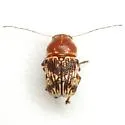
Pachybrachis turbidus
Pachybrachis turbidus
Identification: Medium to large yellow with red brown markings which may become nearly black on the elytra; elytral striae deep with convex intervals. variable, among the most common Pachybrachis spp. in TX Type Locality: Texas among the most common
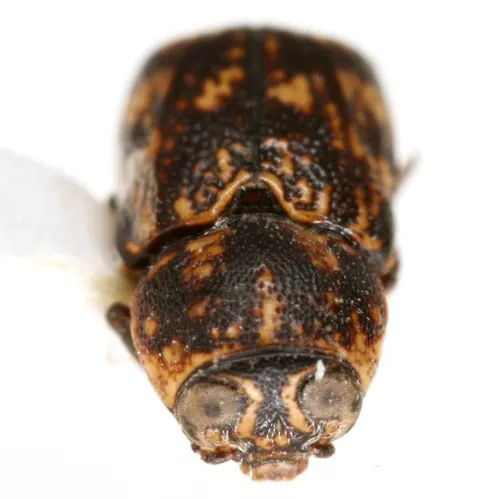
Pachybrachis turgidicollis
Pachybrachis turgidicollis
Identification: Black or fuscous and yellow maculate, the darker color predominating. Eyes separated by a distance distinctly less than, in the male, or, in the female, subequal to the vertical width of their upper lobes; front without ocular lines.
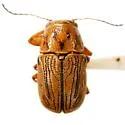
Pachybrachis umbraculatus
Pachybrachis umbraculatus
Identification: Fall's description: Pale dull yellow, minutely alutaceous but somewhat shining; prothorax with a blackish Y shaped median vitta and a lateral vitta each side inclosing (as usual) somewhat imperfectly an external pale spot; elytra each
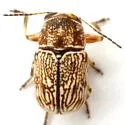
Pachybrachis varians
Pachybrachis varians
Identification: Robust, yellow, with fuscous punctures, standard maculae diffuse, luster dull Bowditch's lectotypes and paralectotypes from Opelousas, St. Landry Parish, Louisiana
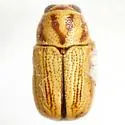
Pachybrachis vau
Pachybrachis vau
Identification: "Pale yellow or testaceous, integuments polished, prothorax with a median V shaped mark and a vitta each side [emphasis added], the elytra with the suture and two discal stripes, black; the outer stripe occupying the seventh and eight
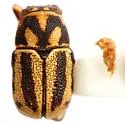
Pachybrachis viduatus
Pachybrachis viduatus
Identification: P. viduatus was long confused with the common and widespread Pachybrachis bivittatus (Say). Like the other vittate species of the viduatus species-group, this species is uncommon in collections.
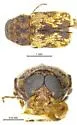
Pachybrachis vigilans
Pachybrachis vigilans
Identification: eyes may touch, but this is not diagnostic Lectotype - MCZ, Harvard not listed in Riley et al.
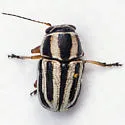
Pachybrachis virgatus
Pachybrachis virgatus
Identification: median pronotal stripe dilated at middle, but the anterior part not bifurcate Det. E. G. Riley a somewhat scarce species of which Fall saw ten examples . There were only 2 spmns in the TAMUIC in 2014.
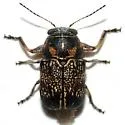
Pachybrachis wenzeli
Pachybrachis wenzeli
Identification: Robust, varying from almost entirely black to yellow, more or less heavily maculate and irrorate with black; prothoracic punctuation nearly equally dense to the extreme margins, elytral punctuation largely confused. [irrorate = marked
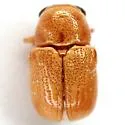
Pachybrachis xantholucens
Pachybrachis xantholucens
Identification: elytra conspicuously wider at base than the prothorax Type Locality: El Paso, Texas
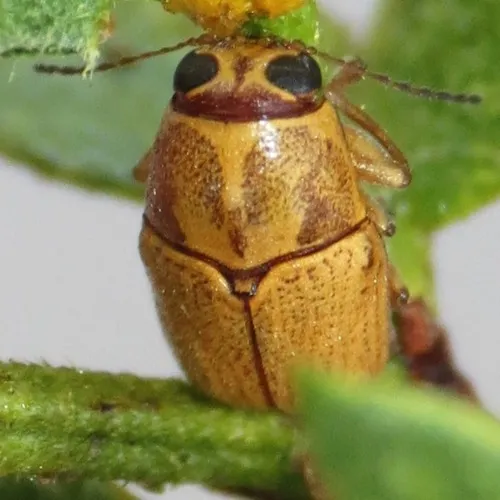
Split-neck Creosote Pachy
Pachybrachis xanti
Identification: Robust, primarily yellow; widest across humeri, narrowing to head and elytral apices (last key couplet) ( 3 ) Very robust, rufo-testaceous, prothorax unusually long, sub conical with smooth median line, with or without faint darker sh
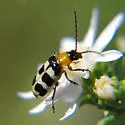
Paranapiacaba tricincta
Paranapiacaba tricincta
Identification: variable: - last pic of an unusually dark spmn
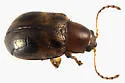
Strawberry Rootworm
Paria fragariae-complex
one named subspecies, P. f. kirki Balsbaugh 1970, known from AL, MD, NC, NY, PA, SC, TN Before the description of this species, it was often identified as P. canella (Fabricius) or P. quadrinotata (Say)
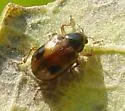
Oak Paria
Paria opacicollis
Oak Paria (Paria opacicollis) is a species in the family Chrysomelidae, commonly known as leaf beetles, belonging to the order Coleoptera (Beetles). It is classified within the subfamily Eumolpinae, tribe Typophorini, suborder Polyphaga, superfamily
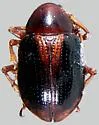
Paria scutellaris
Paria scutellaris
Identification: large elongate scutellar spot and the narrow apical margin of the elytra rufous. (Notman 1920) Det. Gerald M. Fauske Described from one spmn coll'ed Windsor, Broome Co., N.Y.
Parorectis arenaria 0
Parorectis arenaria
Identification: Dorsum yellowish-brown; pronotum with pair of small, round, black spots near center of disc; separated from P. callosa and P. rugosa by coloration and shape; the latter two are more strongly arched.
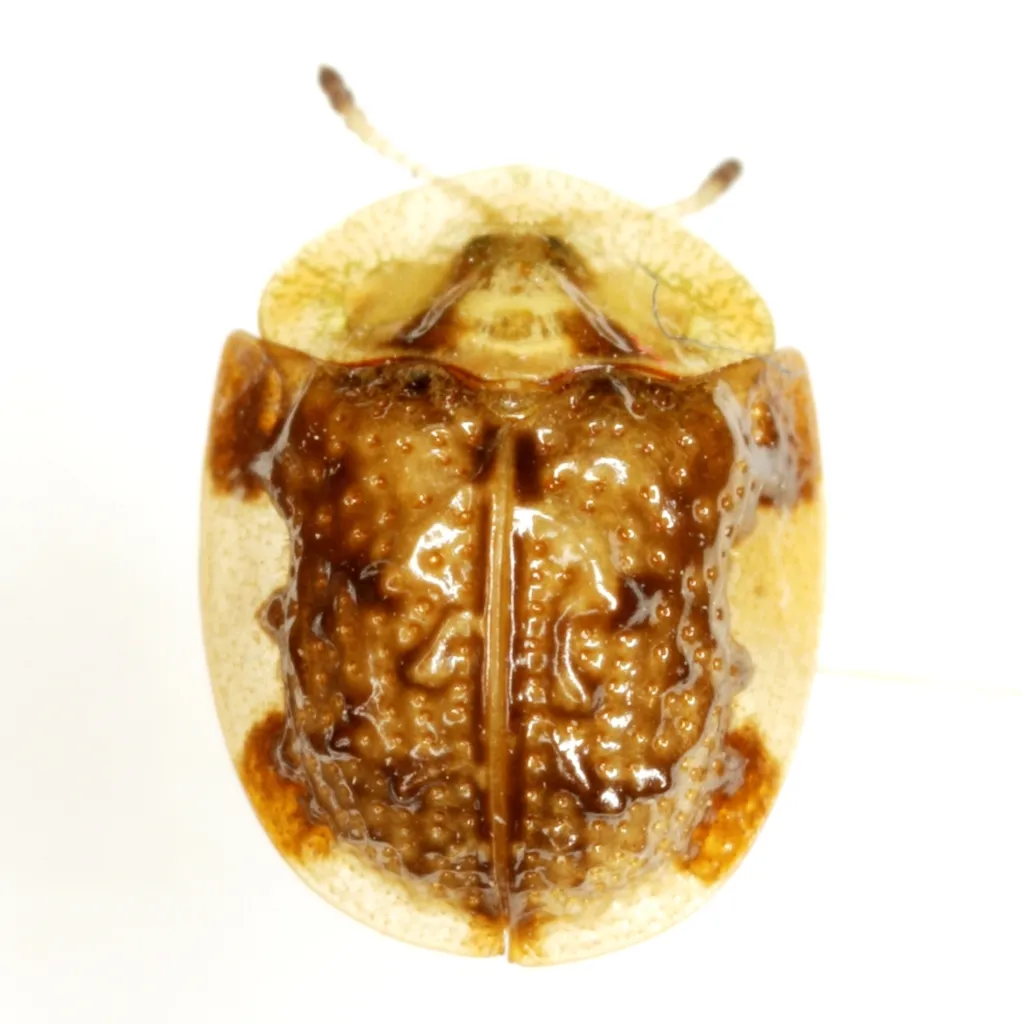
Parorectis callosa
Parorectis callosa
Parorectis callosa is a species of tortoise beetle in the family Chrysomelidae. It is found in North America.
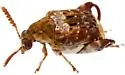
Parkinsonia Seed Beetle
Penthobruchus germaini
first US record from e. Calif in 2012 where it was already described as "an infestation" timeline of first state records per iNat (& BG) data: 2017 - first CA record - Pasadena 2018 - first AZ record - Nogales (per BG data) 2019 - first TX record - E
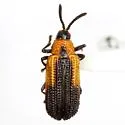
Pentispa melanura
Pentispa melanura
Identification: Pentispa melanura (Chapuis) – form 1 Det. E. G. Riley, 2010 Pentispa melanura (Chapuis) – form 2 Det. E. G. Riley, 2010
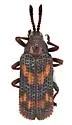
Pentispa sallaei
Pentispa sallaei
November 2019, adults found grazing the upper leaf surfaces of Barbados cherry creating significant scarring, and larvae, pupae, and teneral adults were found inside blotch-type leaf mines in Davie, Florida (Broward County). This represents the first
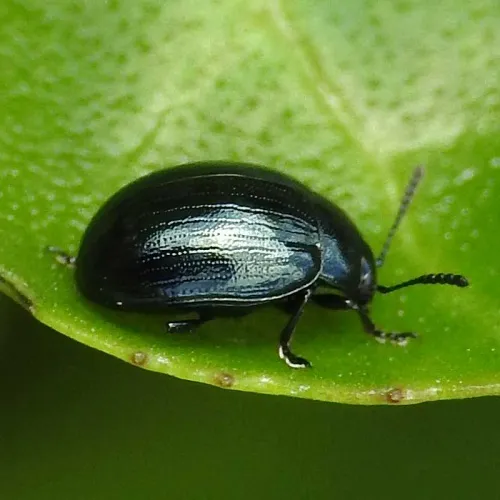
Phaedon armoraciae
Phaedon armoraciae
3.5 to 4.7 mm. Deep metallic. Pronotal disc with both fine and coarse punctures. Distinctly swollen 'shoulders' (humeral calli). Antennae entirely dark and widely spaced. Adults are found on a variety of water plants, though larvae have only been fou
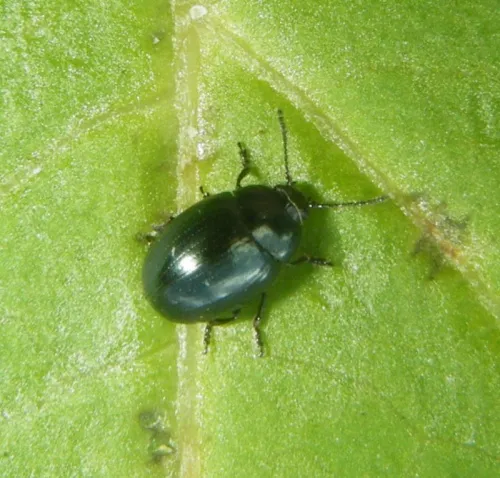
Mustard Beetle
Phaedon cochleariae
3 to 4 mm. Elongate oval and metallic blue in colour. Humeral calli are distinct (bulges at the front of the pronotum). The antennae are black except for the underside of the first two segments which are yellow/orange. Found around most wetland areas
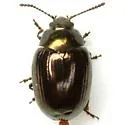
Phaedon desotonis
Phaedon desotonis
Identification: the distincitve characteristic of this beetle is its bronze-colored pronotum a case where an uncommon insect herbivore has 'jumped' from its rare native host to related common hosts and is spreading (Smith-Rodgers 2012)
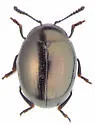
Phaedon laevigatus
Phaedon laevigatus
Identification: Palearctic: adventive(?) in North America, native to Europe Coleopterists are still debating whether or not Phaedon laevigatus ... [is] native to North America or accidentally introduced from the Palearctic Region. I personally think
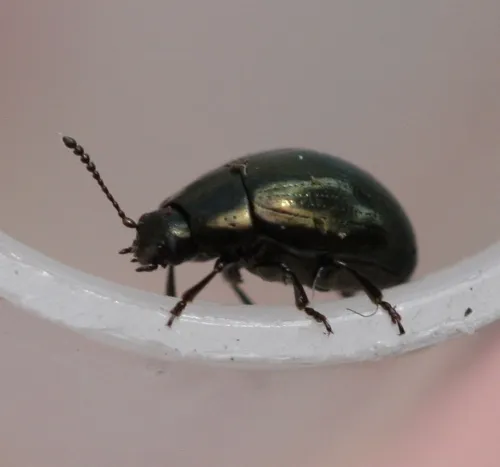
Celery Leaf Beetle
Phaedon tumidulus
3 to 4mm. Variable, usually dark blue or dark green with a brassy metallic lustre. Elliptical and convex with a transverse pronotum that strongly narrows at the front. The elytral punctures are spaced out, roughly 4x the size of each puncture. P. tum
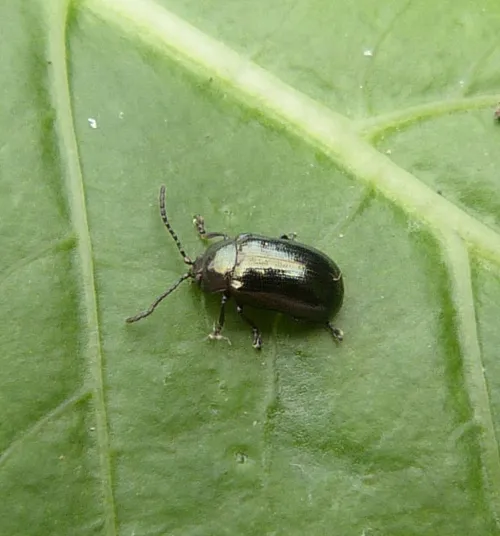
Phratora laticollis
Phratora laticollis
A small beetle (4 or 5 mm) which may have a blue or green sheen. Widespread, but sometimes local in Britain.
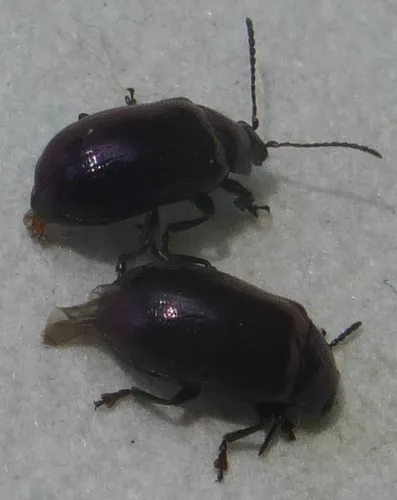
Aspen Skeletonizer
Phratora purpurea
Phratora purpurea, the aspen skeletonizer, is a species of leaf beetle in the family Chrysomelidae. It is found across North America, including Maryland, New York, Ontario, British Columbia, and the Northwest Territories. It feeds on willows and popl
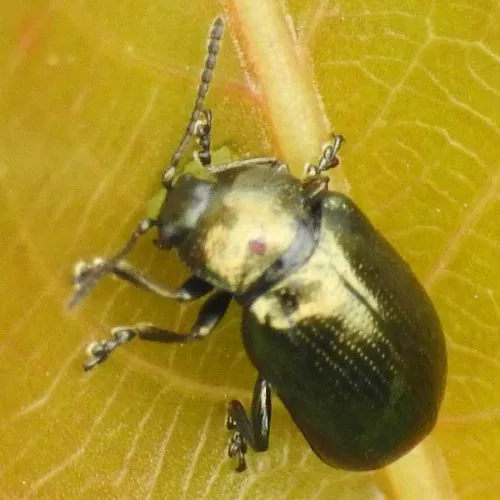
Brassy Willow Beetle
Phratora vitellinae
3.8 to 5.0 mm. Usually brassy/bronze but sometimes blueish or greenish. 2nd antennal segment shorter than 3rd. No depression on head between antennae. Both the adults and their larvae feed on the leaves of Willow and Poplar. Common and widespread thr
Blue Willow Beetle
Phratora vulgatissima
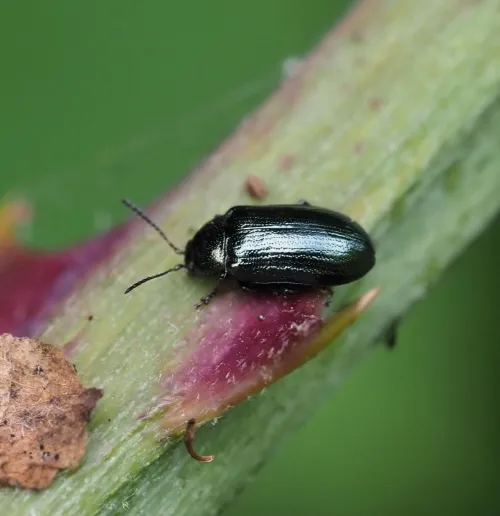
4-5mm. Usually blue and shiny, but despite the common name it can vary in colour from blue/green to bronze/black. It is generally oblong in shape with a pronotum that has parallel sides and a fine basal margin. Legs and antennae are dark. The elytra
Phydanis bicolor
Phydanis bicolor
Identification: Males have distinctive antennae Det. E. G. Riley, 2009 sp. remains very rare in collections (E.G. Riley, pers. comm. to MAQ, 2017)
Phyllobrotica antennata
Phyllobrotica antennata
Identification: Last key couplet: Antennae of male with basal segment [scape] strongly inflated, apical three segments yellow Syntype - female, so lacking the male diagnostic ant. charaters Syntype Locality: Chestoa, Unicoi County, Tennessee
Phyllobrotica costipennis
Phyllobrotica costipennis
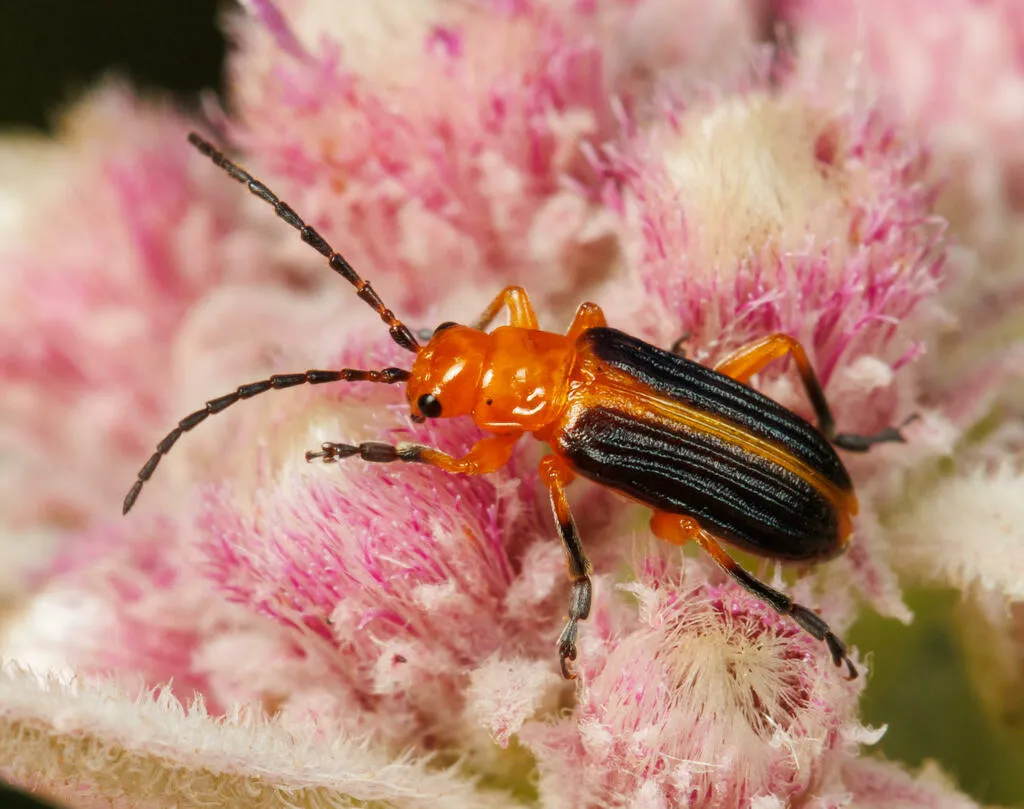
Phyllobrotica costipennis is a species of skeletonizing leaf beetle in the family Chrysomelidae. It is found in North America.
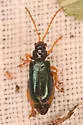
Phyllobrotica leechi
Phyllobrotica leechi
Identification: dark except in front of eyes; antennae yellow, legs usually black at base
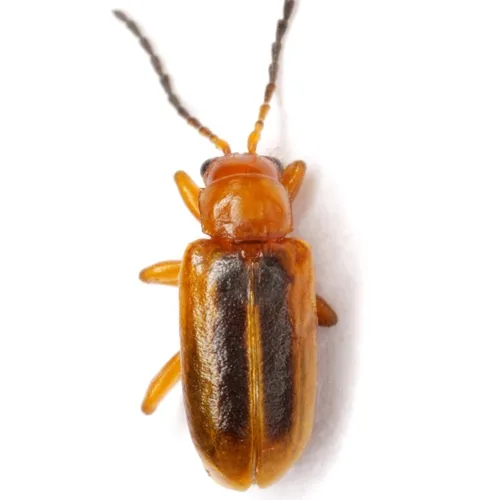
Phyllobrotica lengi
Phyllobrotica lengi
Identification: see MacRae Type Locality: Perry Co., Indiana Known from Missouri by just four specimens collected in the late 1800s until Rev. James Sullivan collected a small series on S. parvula in east-central Missouri in 1988. (MacRae 2019) Karl
Phyllobrotica physostegiae
Phyllobrotica physostegiae
Identification: - male/female Dets. E. G. Riley, 2009 Type Locality: Missouri, Dade County, Niawathe Prairie, 10 mi. N. Lockwood, June 12, 1978 (E. G. Riley) on Physostegia angustifolia . In addition to the holotype, 89 specimens have been examined (
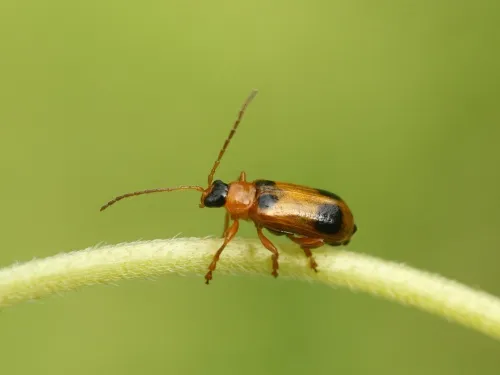
Skullcap Leaf Beetle
Phyllobrotica quadrimaculata
Size 5 to 7 mm. The straw-brown or orange-brown elytra are marked with a total of four dark spots or blotches, giving rise to the Latin name. As the Common Name suggests this species is strongly associated with Skullcap. Widespread, although not comm
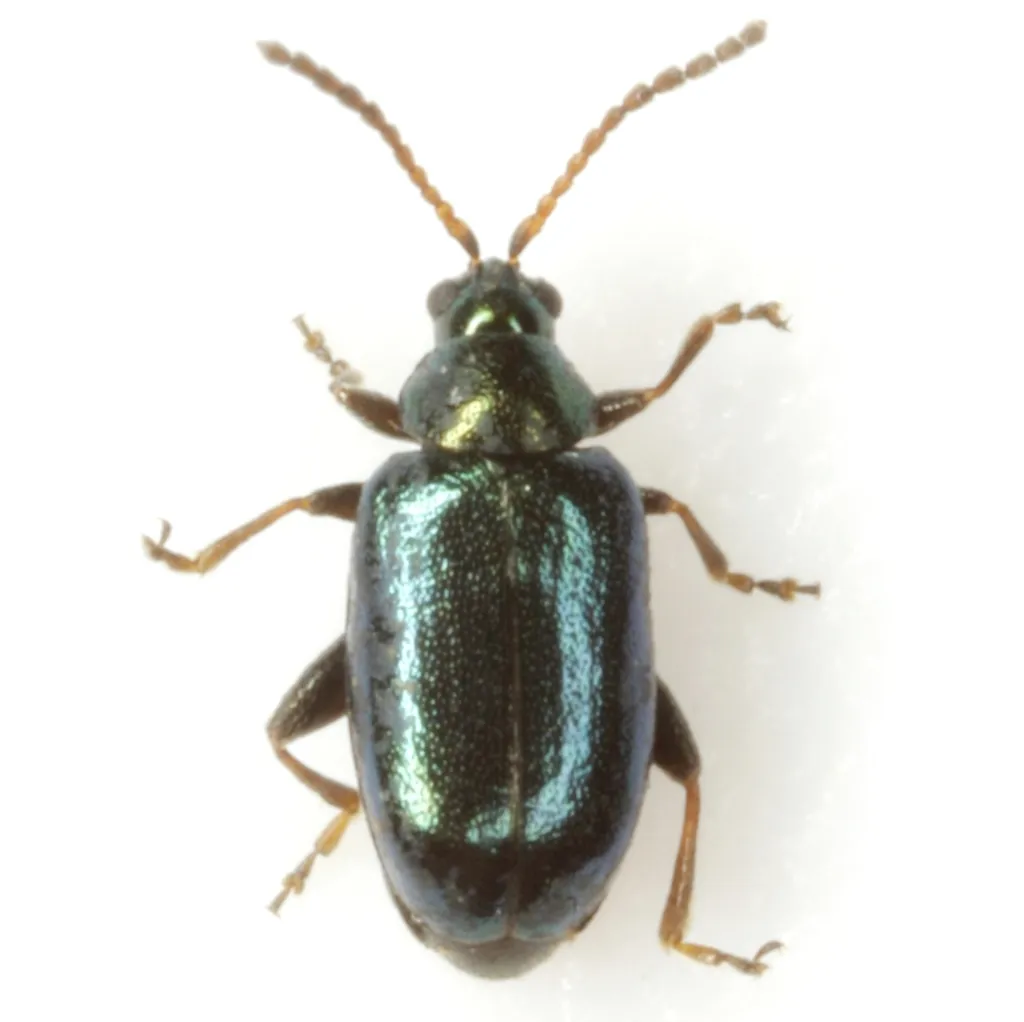
Bronzy Brassica Flea Beetle
Phyllotreta aeneicollis
Identification: elytra blue-green, thorax aeneous; tibiae pale Det. E. G. Riley, 2012 The coloration of this one matches the type. This is metallic pronotum and elytra in different colours and pro-tibia dark (at least not completely pale). The other
Crucifer Flea Beetle
Phyllotreta cruciferae
Identification: separated easily from other congeners by the absence of pale markings AND a bluish-green lustre An important pest
Phyllotreta denticornis
Phyllotreta denticornis
Identification: Elytra with only a narrow stripe, or, most commonly, two elongate spots each, or completely black. Dorsally coarsely punctate. Male: antennal segments 4+5 strongly dilated; 6th with a spine on underside; Female: antennal segment 5 lon
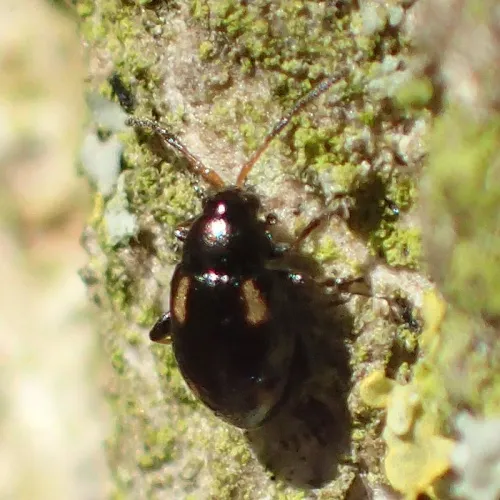
Phyllotreta exclamationis
Phyllotreta exclamationis
Length 1.5-1.8mm. This tiny beetle is mostly black apart from two triangular yellowish spots on each elytra, occasionally connected into a band. The elytral shape is broadly elliptical and convex. Legs usually black with reddish tibia and tarsi. The
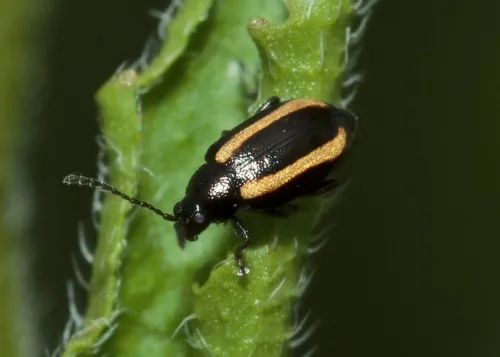
Large Striped Flea Beetle
Phyllotreta nemorum
2.5-3mm. The black elytra are marked with broad pale yellow longitudinal stripes that are roughly parallel in shape. Pronotum is black. Antennae are pitchy brown to black. All tibia are unicoloured - dark brown to black. The hind tarsi can be pale. I
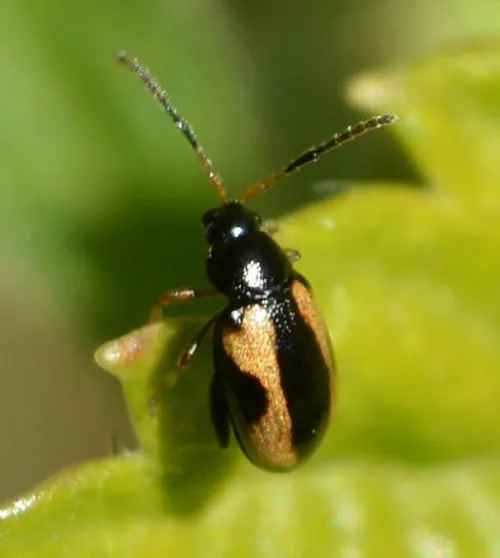
Phyllotreta ochripes
Phyllotreta ochripes
This 3mm long flea beetle is black and brown with pale legs. Only the hind femur is black otherwise the legs are all straw yellow. The 5th antennal segment is elongated. Found on a range of brassicas, but especially on garlic mustard. Widespread and