
Pachybrachis duryi
This record describes Pachybrachis duryi (species). Recorded family: Chrysomelidae. Recorded order: Coleoptera.
Identification and Appearance
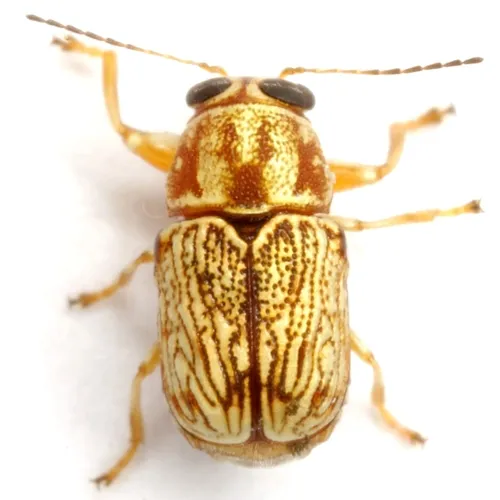
Yellow, brown punctate, thoracic M moderate, elytra with a common sutural spot on the convexity and some small marginal markings; front rather narrow, the eyes separated by a distance less than the vertical width of their upper lobes, even in the female; no ocular lines; front claws of male not appreciably enlarged. Prothorax moderately narrowed in front, widest at basal third, sides broadly arcuate, slightly incurved basally; punctuation rather coarse and close in the dark areas, which vary much in development but are quite sharply defined and usually rather broad; side margins smooth. Elytra with striae two to three and seven to eight entire and evidently impressed, the outer ones rather strongly so; striae four to six much broken or confused anteriorly, but distinct on the posterior convexity; shield distinct, convex, sub-triangular; marginal interspace without punctures, the submarginal stria deflexed to the margin behind the shoulder. Det. E. G. Riley, 2013 Type Locality: Brownsville, Cameron Co., Texas Texas considers this a Species of Greatest Conservation Need (SGCN)
Wikipedia reference for Pachybrachis duryi: https://en.wikipedia.org/wiki/Pachybrachis duryi.
Classification
- Kingdom
- Animalia
- Phylum
- Arthropoda
- Class
- Insecta
- Order
- Coleoptera (Beetles)
- Suborder
- Polyphaga
- Superfamily
- Chrysomeloidea
- Family
- Chrysomelidae (Leaf Beetles)
- Subfamily
- Cryptocephalinae
- Tribe
- Cryptocephalini
- Genus
- Pachybrachis (Scriptured Leaf Beetles)
Imported taxonomy record. Source availability varies; see the source references and editorial policy below.
Habitat and Range
Geographic Range
southmost TX (Hidalgo & Cameron Co.) - Map
Seasonal Activity
Compiled Texas collecting events by month: March, April, May, June, July, Oct.
Diet and Behavior
Diet: Tepeguaje - Leucaena pulverulenta (Fabaceae) ( 4 )
Additional species information
Species notes from the sources
Etymology: Pachybrachis duryi Fall, 1915
About Primitive Winged Insects: the wider group
Order-level background for Coleoptera, the group containing Pachybrachis duryi. Species-specific details appear above.
Group overview
Coleoptera is the largest order of insects with over 400,000 described species, representing ~25% of all known animal species and ~40% of all insects. In the U.S. alone, nearly 30,000 beetle species have been identified.
Ecological role of the group
Beetles are prominent decomposers, especially in forests, breaking down dead wood and recycling nutrients. As predators, they reduce populations of pest insects. Many species are also important pollinators of flowering plants.
Economic and practical significance of the group
Beetles have major economic significance: leaf beetles (Chrysomelidae) and weevils (Curculionoidea) are among the most destructive agricultural pests globally, costing billions annually, while predatory species like ladybugs provide natural pest control.
Recorded sources for this group: Britannica, Smithsonian, NCSU Entomology. Imported estimates may describe particular regions or reporting periods.
Photos of Pachybrachis duryi (6)
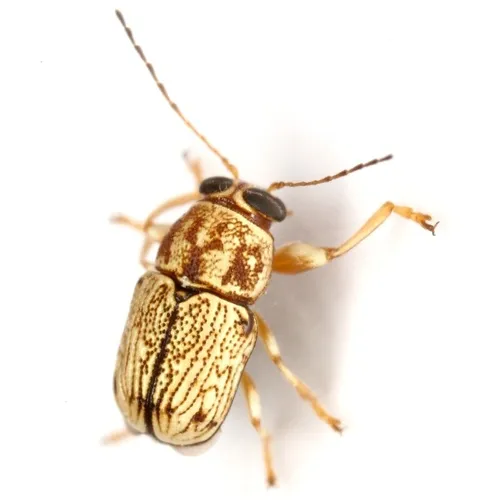
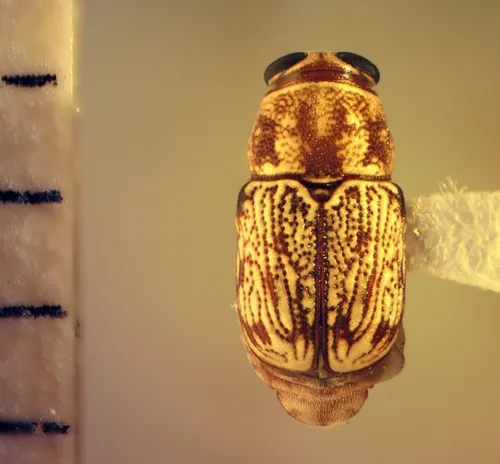
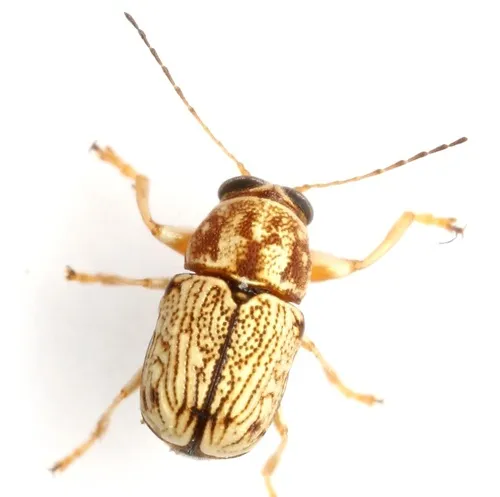
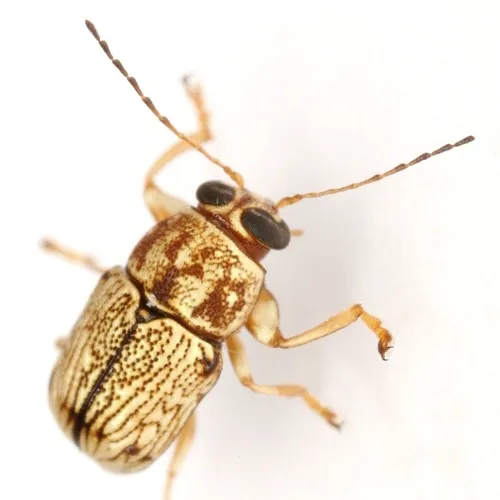
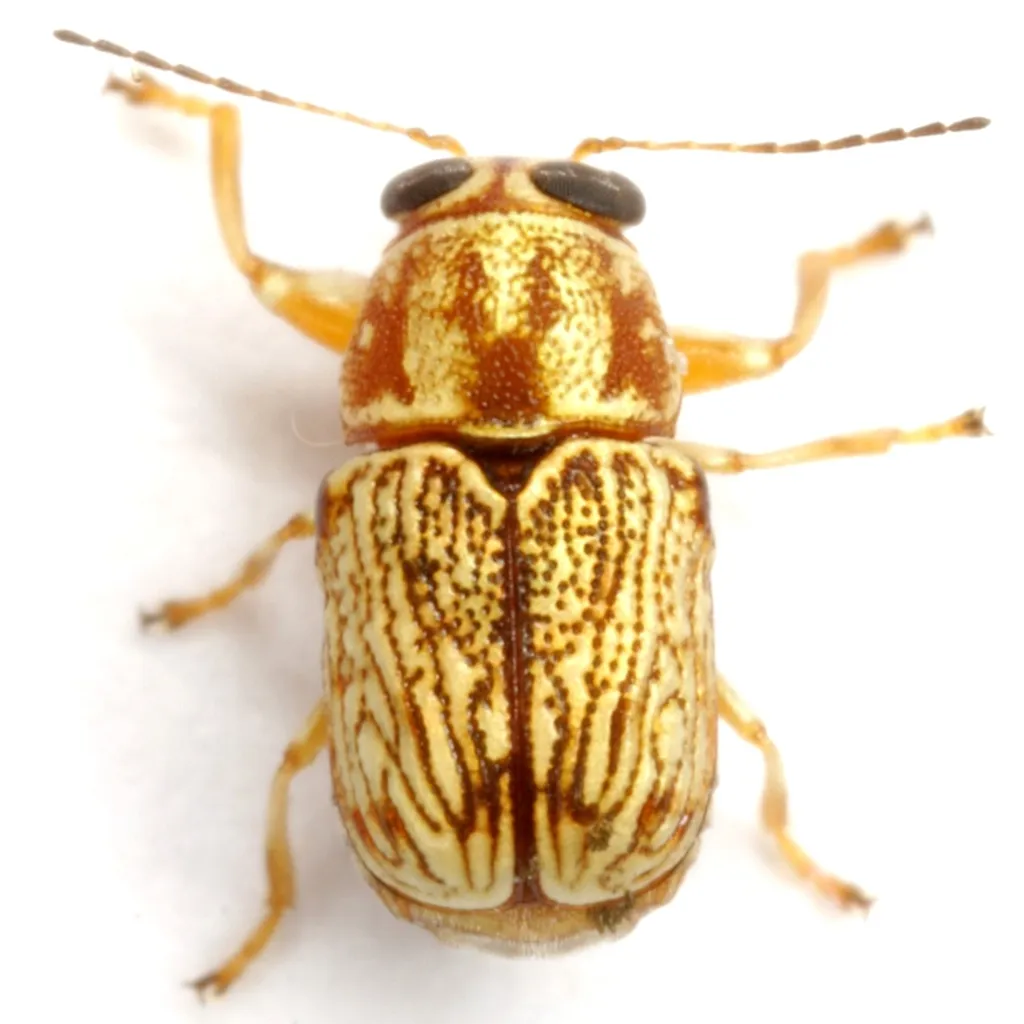
Photo credits: (c) Mike Quinn, San Marcos, some rights reserved (CC BY-NC), uploaded by Mike Quinn, San Marcos | (c) Ben Hutchins, some rights reserved (CC BY-NC), uploaded by Ben Hutchins | Contributed by Mike Quinn
Frequently Asked Questions About Pachybrachis duryi
What is Pachybrachis duryi?
Pachybrachis duryi is a species in the family Chrysomelidae, within the order Coleoptera.
How big is Pachybrachis duryi?
Ave. length 2.3 mm
How do you identify Pachybrachis duryi?
Yellow, brown punctate, thoracic M moderate, elytra with a common sutural spot on the convexity and some small marginal markings; front rather narrow, the eyes separated by a distance less than the vertical width of their upper lobes, even in the female; no ocular lines; front claws of male not appreciably enlarged. Prothorax moderately narrowed in front, widest at basal third, sides broadly arcuate, slightly incurved basally; punctuation rather coarse and close in the dark areas, which vary much in development but are quite sharply defined and usually rather broad; side margins smooth. Elytra with striae two to three and seven to eight entire and evidently impressed, the outer ones rather strongly so; striae four to six much broken or confused anteriorly, but distinct on the posterior convexity; shield distinct, convex, sub-triangular; marginal interspace without punctures, the submarginal stria deflexed to the margin behind the shoulder. Det. E. G. Riley, 2013
Where is Pachybrachis duryi found?
Range: southmost TX (Hidalgo & Cameron Co.) - Map
What does Pachybrachis duryi eat?
The diet of the Pachybrachis duryi includes Tepeguaje - Leucaena pulverulenta (Fabaceae) ( 4 ).
When is Pachybrachis duryi active?
Pachybrachis duryi: seasonal activity - Compiled Texas collecting events by month: March, April, May, June, July, Oct..