
Pachybrachis hector
This record describes Pachybrachis hector (species). Recorded family: Chrysomelidae. Recorded order: Coleoptera.
Identification and Appearance
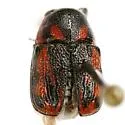
| Feature | Description |
|---|---|
| Additional details | Black, variably marked with red or reddish yellow, the latter color occasionally predominant in the male; surface moderately shining, the prothorax with scarcely visible trace of alutaceous sculpture. |
| Eyes | Eyes moderately distant; front without ocular lines; front claws of male not appreciably enlarged. |
| Elytra | Elytra coarsely densely confusedly punctate baso-suturally, striate at sides and rear, striae moderately impressed, eighth with subbasal interruption, marginal interspace impunctate or with a few punctures toward the base; shield undeveloped; color varying from red or reddish yellow with the outer standard spots distinct, the inner ones more or less confluent, to entirely black; often black with an apical red spot or vitta extending forward a variable distance. Det. E.G. Riley Sparingly represented in most of the larger collections |
Classification
- Kingdom
- Animalia
- Phylum
- Arthropoda
- Class
- Insecta
- Order
- Coleoptera (Beetles)
- Suborder
- Polyphaga
- Superfamily
- Chrysomeloidea
- Family
- Chrysomelidae (Leaf Beetles)
- Subfamily
- Cryptocephalinae
- Tribe
- Cryptocephalini
- Genus
- Pachybrachis (Scriptured Leaf Beetles)
Imported taxonomy record. Source availability varies; see the source references and editorial policy below.
Habitat and Range
Geographic Range
TX-KS - Map
Diet and Behavior
Diet: Collected by beating on blooming Blackbrush Acacia - Acacia rigidula (Fabaceae) in Texas. ( 4 )
Additional species information
Species notes from the sources
Etymology: Pachybrachis hector Fall 1915 In Greek mythology, Hectōr is a Trojan prince and the greatest fighter for Troy in the Trojan War.
About Primitive Winged Insects: the wider group
Order-level background for Coleoptera, the group containing Pachybrachis hector. Species-specific details appear above.
Group overview
Coleoptera is the largest order of insects with over 400,000 described species, representing ~25% of all known animal species and ~40% of all insects. In the U.S. alone, nearly 30,000 beetle species have been identified.
Ecological role of the group
Beetles are prominent decomposers, especially in forests, breaking down dead wood and recycling nutrients. As predators, they reduce populations of pest insects. Many species are also important pollinators of flowering plants.
Economic and practical significance of the group
Beetles have major economic significance: leaf beetles (Chrysomelidae) and weevils (Curculionoidea) are among the most destructive agricultural pests globally, costing billions annually, while predatory species like ladybugs provide natural pest control.
Recorded sources for this group: Britannica, Smithsonian, NCSU Entomology. Imported estimates may describe particular regions or reporting periods.
Photos of Pachybrachis hector (5)
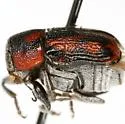
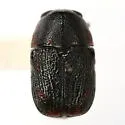
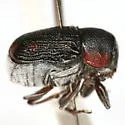
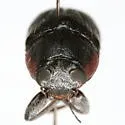
Photo credits: Contributed by Mike Quinn
Frequently Asked Questions About Pachybrachis hector
What is Pachybrachis hector?
Pachybrachis hector is a species in the family Chrysomelidae, within the order Coleoptera.
How big is Pachybrachis hector?
Ave. length 4 mm.
How do you identify Pachybrachis hector?
| Feature | Description |
|---|---|
| Additional details | Black, variably marked with red or reddish yellow, the latter color occasionally predominant in the male; surface moderately shining, the prothorax with scarcely visible trace of alutaceous sculpture. |
| Eyes | Eyes moderately distant; front without ocular lines; front claws of male not appreciably enlarged. |
| Elytra | Elytra coarsely densely confusedly punctate baso-suturally, striate at sides and rear, striae moderately impressed, eighth with subbasal interruption, marginal interspace impunctate or with a few punctures toward the base; shield undeveloped; color varying from red or reddish yellow with the outer standard spots distinct, the inner ones more or less confluent, to entirely black; often black with an apical red spot or vitta extending forward a variable distance. Det. E.G. Riley |
Where is Pachybrachis hector found?
Range: TX-KS - Map
What does Pachybrachis hector eat?
The diet of the Pachybrachis hector includes Collected by beating on blooming Blackbrush Acacia - Acacia rigidula (Fabaceae) in Texas. ( 4 ).