
Family Tortricid Moths (Tortricidae)
Tortricidae is a family in the order Lepidoptera. Browse 1,247 named species recorded in this family, or open an individual profile for its available identification and natural-history information.
Species in Tortricidae (1,247)
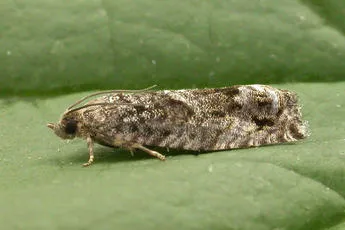
Cydia fagiglandana
Cydia fagiglandana
Wingspan 13 to 19 mm. Similar to C. splendana, but with rather less contrast between light and dark. The preferred habitat is beech woodland. The larvae feed internally on beech nuts. The species is fairly common in much of England and Wales, and als
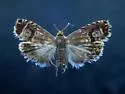
Cydia fahlbergiana - Hodges#3482
Cydia fahlbergiana
Identification: A small Tortricid with bright yellow scaling on the head. Body and proximal half of forewings smooth gray. Ocellar patch large, white with black transverse barring, and bordered with black. Terminal area of forewing dark rufous. H
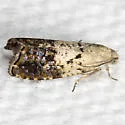
Fletcher's Cydia Moth - Hodges#3472
Cydia fletcherana
Identification: Adult - see original description in Print References.
Cydia flexiloqua - Hodges#3465
Cydia flexiloqua
Identification: Heinrich described the adult, including genitalia.
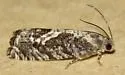
Cydia garacana - Hodges#3457
Cydia garacana
Identification: Adult - see original description in Print References.
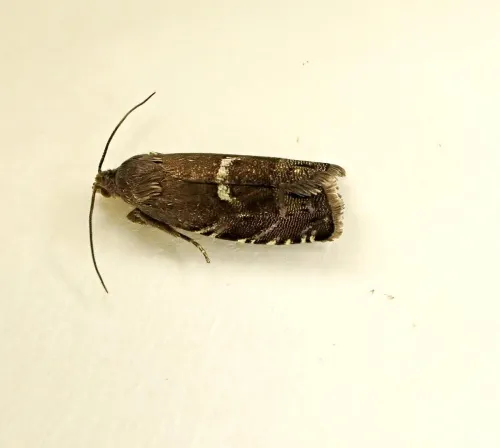
Cydia illutana
Cydia illutana
Unless identified by a recognised expert, a photo is required. If the photo doesn't show the key ID features then in the comments box describe the size and identifying characters you have observed. It may be expected to occur in areas where the larva
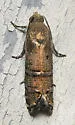
Longleaf Pine Seedworm Moth - Hodges#3487
Cydia ingens
Identification: To separate from the similar Cydia toreuta: In Cydia ingens the PM band is usually broken. There is one short bar on the costa between the PM band and ST band. There is no gap present between the black terminal line and ST band.
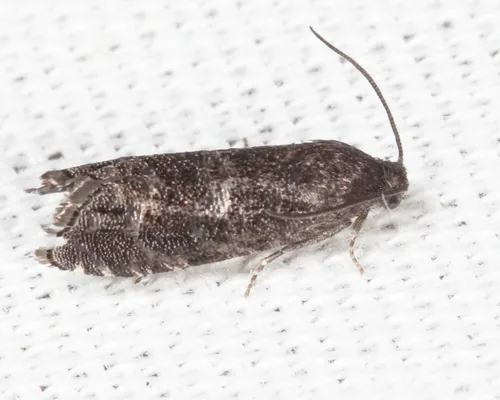
Cydia laricana - Hodges#3449
Cydia laricana
Identification: The original description as Laspeyresia laricana Busck is available online. Genitalia: Possibly more than one species involved. The type locality is Evaro, MT. It's range extends to the Northwest. The host plants are Larix occidentali
Filbertworm Moth
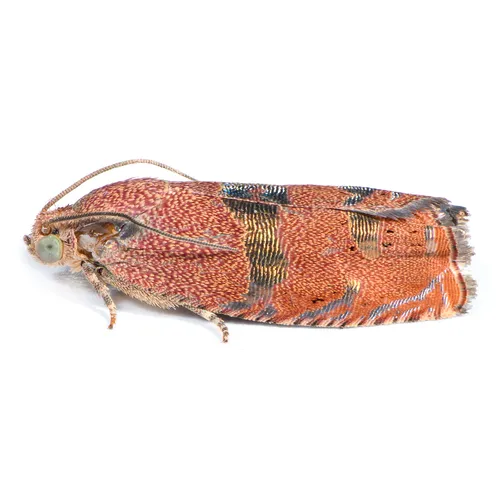
Cydia latiferreana
Cydia latiferreana, the filbertworm moth, is a moth of the family Tortricidae. It was formerly (and sometimes is still) separated in a monotypic genus Melissopus.
Cydia marita - Hodges#3448.2
Cydia marita
Aaron Hunt noticed that most images at MPG and BugGuide that were identified as Satronia tantilla might be misidentified Cydia marita . Upon review, Richard Brown agreed. See his comments below. - Steve Nanz, 3/12/2019.
Pea Moth
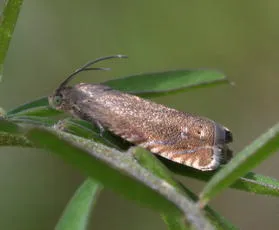
Cydia nigricana
Wingspan 12 to 16 mm. The adults are rather nondescript in appearance. The mainly brown wings have two or three short black dashes and other russet and white marks below. Around plants of the pea family including Common Vetch where it is plentiful. B
Ponderosa Pine Seedworm Moth - Hodges#3489
Cydia piperana
Identification: Adult - dark brownish gray, finely speckled by whitish scale tips, and with three raised, transverse bars of metallic lead- or bronze-colored scaling. Hindwing is entirely smokey brown Can inflict serious damage on seed crops of Ponde
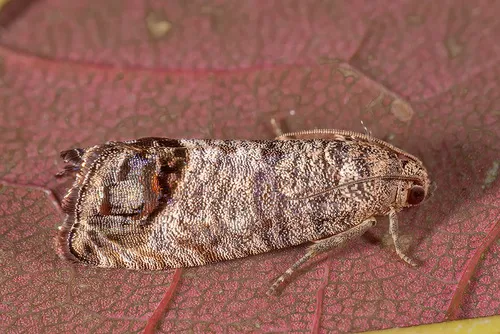
Codling Moth
Cydia pomonella
Wingspan 14-22 mm. A fairly distinctive greyish ' Tortrix ' with a darker, often coppery-brown, roundish patch towards the rear of the wing. The adults occur mainly in July and August and sometimes with a second generation in September and October. T
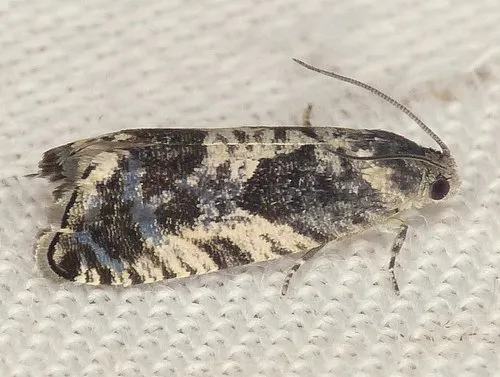
Cydia populana - Hodges#3463
Cydia populana
Cydia populana - Hodges#3463 (Cydia populana) is a species in the family Tortricidae, commonly known as tortricid moths, belonging to the order Lepidoptera (Butterflies and Moths). It is classified within the subfamily Olethreutinae, tribe Grapholiti
Cydia rana - Hodges#3450
Cydia rana
Identification: Forbes description - Deep brown; a strong double medial, strongly waved but not distinctly broken, silvery band; and a single postmedial band, each of these starting from a pair of white costal dots. Another single white subterminal d
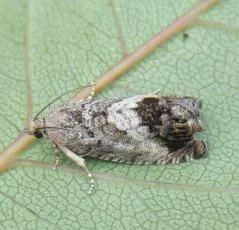
Cydia splendana
Cydia splendana
Wingspan 12-16 mm. The greyish adult has a slight 'speckled' appearance caused by pale tips to many of the scales. Occupying deciduous woodland where Oak or Sweet Chestnut occur. The adults can be found in July and August from evening into the night
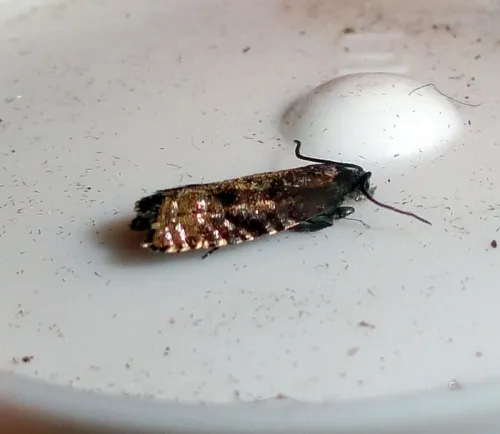
Spruce Seed Moth
Cydia strobilella
Wingspan 10 to15 mm. This is a quite well-marked species. The adults are found during May, flying in the afternoon in their chosen habitat (around Spruce), but they also come to light. The larvae feed in the cones of Norway Spruce (Picea abies), feed
Eastern Pine Seedworm Moth - Hodges#3486
Cydia toreuta
Identification: To separate from the similar Cydia ingens: In Cydia toreuta the PM band is usually unbroken. There are two short bars on the costa between the PM band and ST band, with the one nearest the PM band the shortest. The forewing shows a
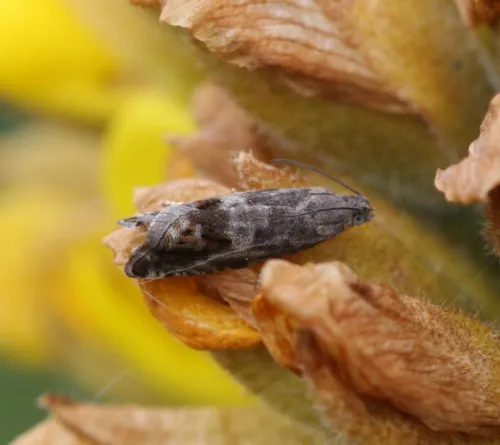
Cydia ulicetana
Cydia ulicetana
Wingspan 12-16 mm. A small greyish brown moth. The main markings are at the rear of the wing. Heathland and moorland, usually around Gorse or Broom. The males fly in sunshine, but the females tend to be more crepuscular. The species is on the wing in
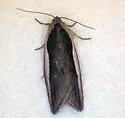
Decodes bicolor - Hodges#3577
Decodes bicolor
Identification: Obraztsov & Powell original description is online and in PDF.
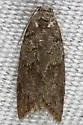
Decodes fragariana - Hodges#3574
Decodes fragariana
Identification: Busck (1919) original description is available online in the print references.
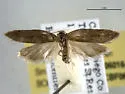
Decodes helix - Hodges#3579.1
Decodes helix
Identification: Specimen determined by DNA analysis (BOLD).
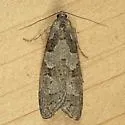
Decodes horariana - Hodges#3580
Decodes horariana
Identification: See print references below. Decodes horariana is a member of a species complex along with D. tahoense and possibly a few undescribed species. Their biology, variation, and species status have not been adequately assessed.
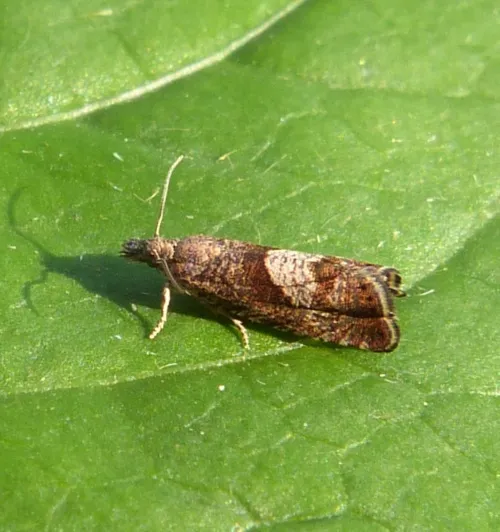
Dichrorampha acuminatana
Dichrorampha acuminatana
Wingspan 10-15 mm. This species at first glance appears rather nondescript but, when viewed closely, has a subtle mix of sub metallic and chestnut markings. Grassland containing the larval foodplants Oxeye Daisy and Tansy. Occurs on the wing in two g
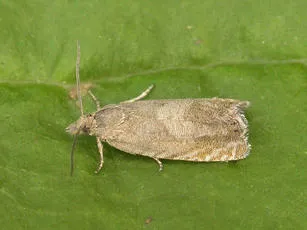
Dichrorampha aeratana
Dichrorampha aeratana
Wingspan about 14mm. Several of the Dichrorampha species are very alike in outward appearance, and it is often necessary, as with the present species, to examine the genitalia to be sure of identification. Various habitats, especially near to flower
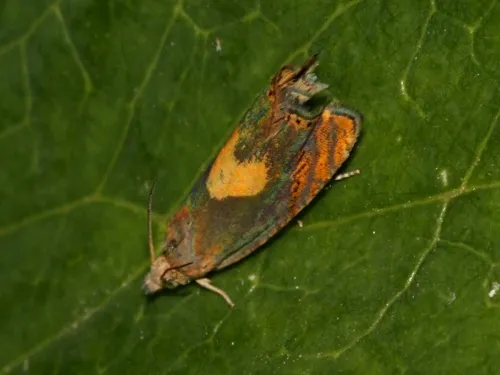
Dichrorampha alpinana
Dichrorampha alpinana
Wingspan about 14mm. Dichrorampha alpinana is externally very similar to D. flavidorsana and the two species are best separated by genitalia dissection. In flower rich grassland, especially where Oxeye Daisy is present. The moths fly, often during th
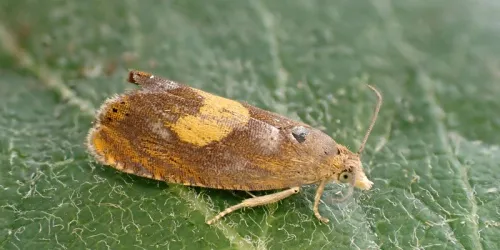
Dichrorampha flavidorsana
Dichrorampha flavidorsana
A very similar species to D. alpinana, the present species having a narrower dorsal blotch among other subtle differences, it is however best to refer to the structure of the genitalia for confirmation. This species needs to be confirmed by examinati
Dichrorampha incanana - Hodges#3407
Dichrorampha incanana
Identification: Adult - Dark gray head with white palpi. FW dark brown, varied with whitish along inner margin towards the base, with a slender, irregular dark brown line on its middle and 1-2 spots on dorsal edge of wing. Costa is streaked with whit
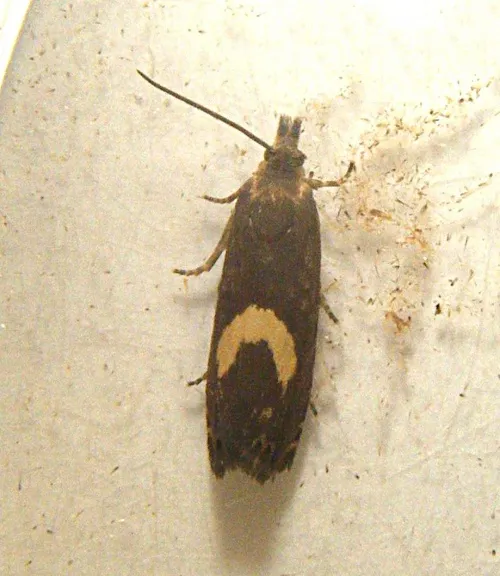
Dichrorampha petiverella
Dichrorampha petiverella
Wingspan 10 to 13 mm. A colourful species with a very clearly defined pale crescent. There are similar species and care is needed with identification with microscopic examination usually required. Inhabits meadows, rough pastures and hedgerows. The a
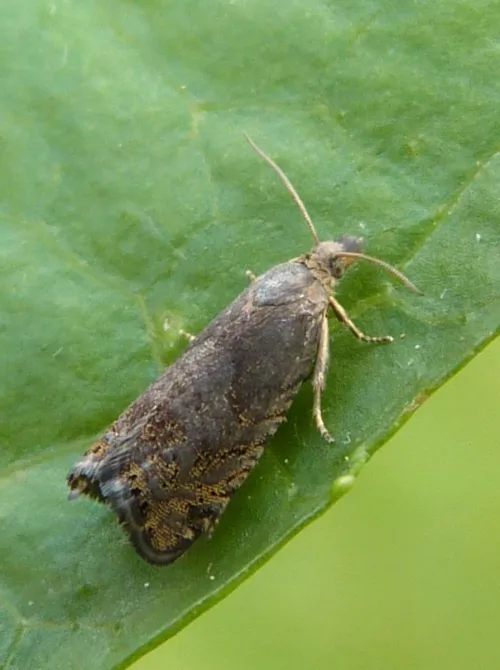
Dichrorampha plumbana
Dichrorampha plumbana
Wingspan around 13 mm. On first appearance, this rather small species appears dull and uninspiring, but on closer inspection, it can be seen to have an attractive pattern of chestnut, metallic grey and black. There are other similar members of the ge
Dichrorampha radicicolana - Hodges#3409
Dichrorampha radicicolana
Dichrorampha radicicolana - Hodges#3409 (Dichrorampha radicicolana) is a species in the family Tortricidae, commonly known as tortricid moths, belonging to the order Lepidoptera (Butterflies and Moths). It is classified within the subfamily Olethreut
Dichrorampha sedatana - Hodges#3412
Dichrorampha sedatana
Identification: Dichrorampha sedatana was formerly confused with the european species Dichrorampha plumbana Scopoli, 1763, a European species. It lacks the dorsal patch found if many other species in the genus. It has thin median and post median line
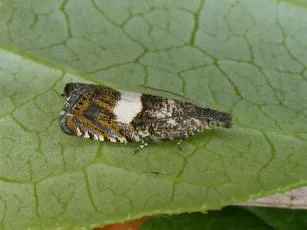
Dichrorampha sequana
Dichrorampha sequana
Wingspan about 10 mm. This is one of the smaller Dicrorampha species and can be distinguished by the broadly rectangular cream-coloured dorsal blotch. It prefers unkept verges and embankments, where Yarrow is common. Flies in the afternoon and toward
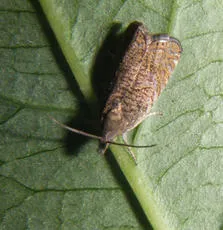
Dichrorampha simpliciana
Dichrorampha simpliciana
Wingspan 12 to16 mm. One of the more nondescript members of the Dicrorampha genus. Areas where the larval foodplant is present. The flight period is from July to September, when it is most active just before dark. The larvae feed within the roots of
Dichrorampha simulana - Hodges#3404
Dichrorampha simulana
Identification: The dorsal patch can vary from distinct to absent. There is a row of dark dots at base of fringe.
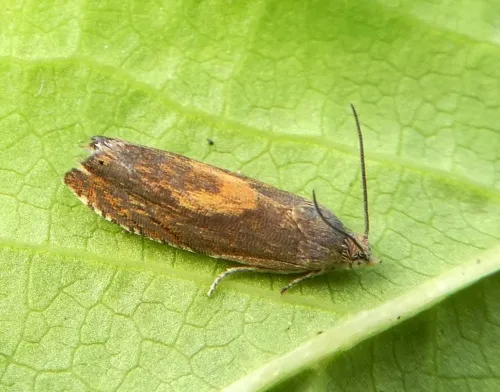
Dichrorampha vancouverana
Dichrorampha vancouverana
The adults fly in June and July, during the afternoon and towards sunset. The larvae feed in the rootstock of Yarrow (Achillea millefolium) and Tansy (Tanacetum vulgare). Distributed widely throughout England, but quite local in many places, and beco
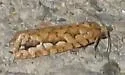
Cockerell's Moth - Hodges#3630
Diedra cockerellana
Identification: Adult - forewing yellowish-brown covered by series of connected semicircular loops; two loops near middle of wing have black margin and white filling.
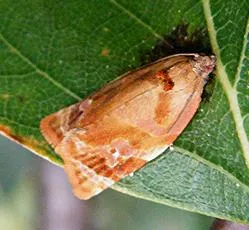
Red-barred Tortrix
Ditula angustiorana
Wingspan 12-18 mm. With an average wingspan of around 15 mm, this is quite a small species, though the females are usually slightly larger and differ slightly in markings and colour. Adults are on the wing in June and July. The males sometimes fly in
Eana argentana of authors - Hodges#3568
Eana argentana-of-authors
Identification: Adult - shining cream white. Rare in collections.
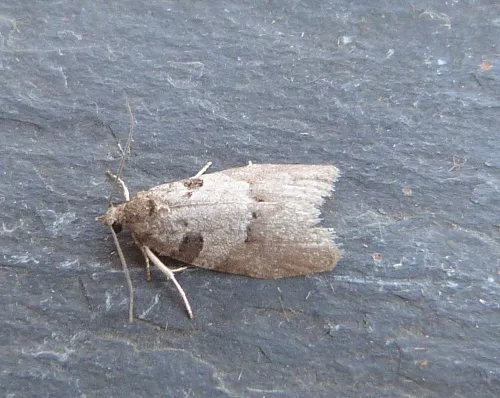
Eana incanana
Eana incanana
Wingspan 17 to 23 mm. The curved dark bands at the base of the forewings are quite distinctive, but their intensity varies, and the female is generally paler than the male. It inhabits woodland and is quite secretive, but can be attracted to light at
Eana osseana of authors - Hodges#3570
Eana osseana-of-authors
Eana osseana of authors - Hodges#3570 (Eana osseana-of-authors) is a species in the family Tortricidae, commonly known as tortricid moths, belonging to the order Lepidoptera (Butterflies and Moths). It is classified within the subfamily Tortricinae,
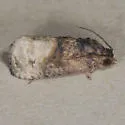
Ecdytolopha mana - Hodges#3498
Ecdytolopha mana
Identification: Adult - see original description in Print References.
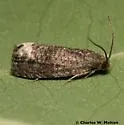
Ecdytolopha nigrita - Hodges#3495.3
Ecdytolopha nigrita
Identification: " Ecdytolopha nigrita is distinguished superficially from all other congeners by a combination of its small size and nearly uniform dark brown forewing, with the exception of a contrasting whitish blotch in the tornus" .
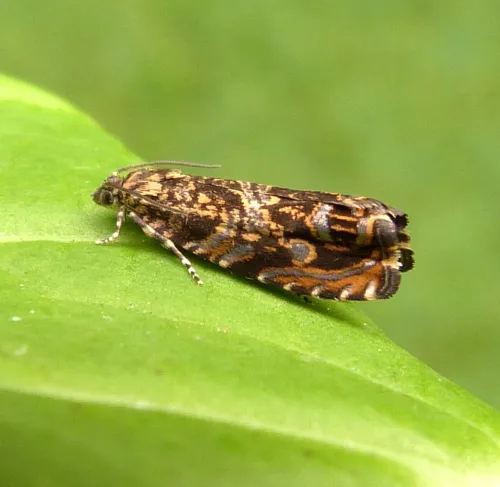
Cherry Bark Tortrix
Enarmonia formosana
Wingspan 15 to 19 mm. At first glance this looks to be a rather dull moth, but closer investigation reveals a complex combination of browns, white and metallic blue markings. The species occurs in gardens, parks and orchards where the larval foodplan
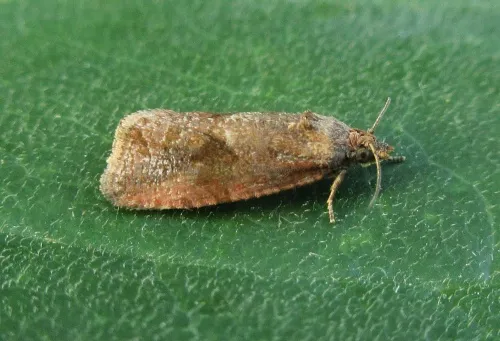
Endothenia ericetana
Endothenia ericetana
A photograph is required. This is a rarely recorded species in our area and the County Recorder has asked for the specimen to be retained if you are submitting a record. Endothenia ericetana inhabits meadows and fields and also occurs in farmland. It
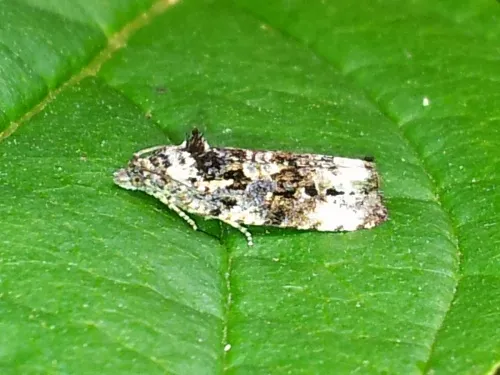
Endothenia gentianaeana
Endothenia gentianaeana
Wingspan 15 to19 mm. This is one of several species of Endothenia in which the adults closely resemble each other, and require dissection of the genitalia for accurate identification. Adults fly in June and July, usually in the vicinity of teasel (Di
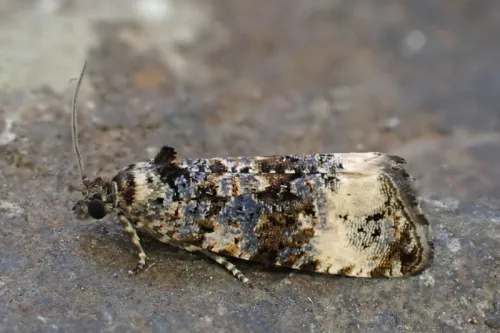
Endothenia marginana
Endothenia marginana
The males of this species have noticeably whitish hindwings which help distinguish it from similar species but the females have darker hindwings and are more difficult. Adults of this and several similar Endothenia species require dissection of the g
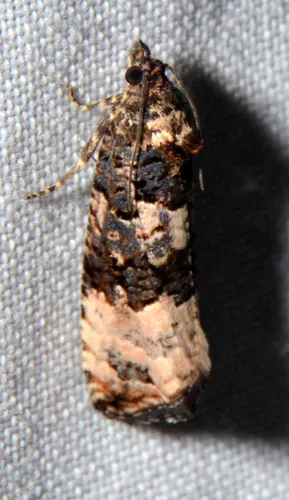
Endothenia melanosticta - Hodges#2736
Endothenia melanosticta
Endothenia melanosticta - Hodges#2736 (Endothenia melanosticta) is a species in the family Tortricidae, commonly known as tortricid moths, belonging to the order Lepidoptera (Butterflies and Moths). It is classified within the subfamily Olethreutinae
Endothenia montanana - Hodges#2732
Endothenia montanana
Identification: The Heinrich (1926) revised description is available online in PDF. ( 5 ) Specimen identified by DNA analysis (BOLD). ( 6 ) Genitalia: The genus is closely related to Bactra and the placement has been debated several times. ( 10 )
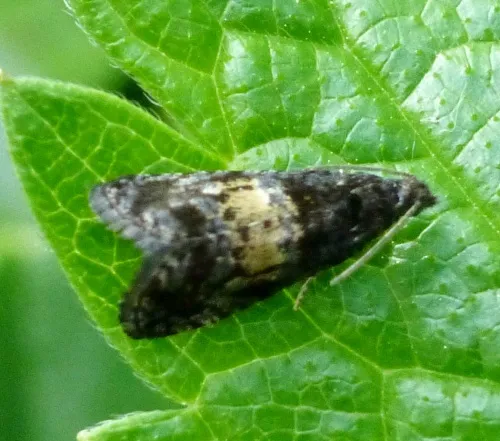
Endothenia nigricostana
Endothenia nigricostana
Wingspan about 13mm. The adults are quite distinctive, typically with a yellow or ochreous blotch on the dorsum, although this can be less obvious on darker examples. It inhabits woodland margins and embankments. The adults fly in June and are active
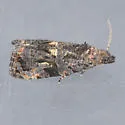
Endothenia nr. infuscata - Hodges#2742.85
Endothenia nr-infuscata
Endothenia nr. infuscata is represented at BOLD by BIN groups AAF8214 and AAH5569. It is possible that one of these two cryptic species may refer to "true" E. infuscata or E. conditana . Both of those species are closely related to E. montanana . DNA
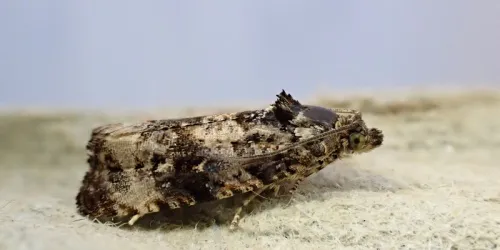
Endothenia oblongana
Endothenia oblongana
Wingspan 13 to 15 mm. Resembles a medium-sized E. gentianaeana but distinguished by the more broadly suffused apical area, which reduces or narrows the band of whitish ground colour beyond the median fascia, the more strongly dilated subterminal fasc
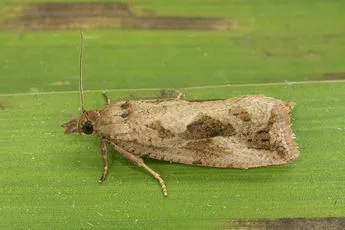
Endothenia quadrimaculana
Endothenia quadrimaculana
Wingspan 18 to 22mm. The moth is larger, generally paler and more distinctly marked than the similar E. ericitana with which it shares the same foodplant. It prefers places such as damp meadows and hedgerows and probably riverbanks. The moth hides lo
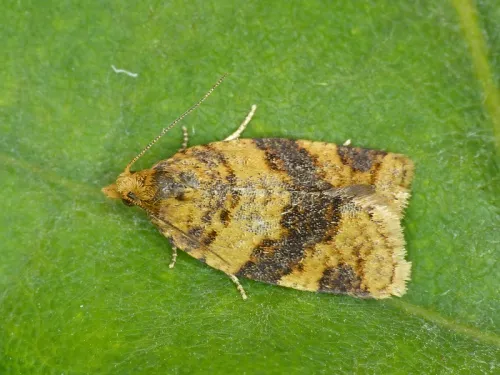
Epagoge grotiana
Epagoge grotiana
Flies during June and July, especially around dawn and at dusk. The larvae feed on the leaves of various trees and shrubs including Oak, Hawthorn and Bramble. Widely distributed over much of the British Isles this species becomes scarcer further nort
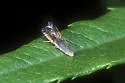
Grapholita angleseana - Hodges#3430
Ephippiphora angleseana
Identification: Adult - see original description on Print References.
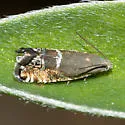
Grapholita lunatana - Hodges#3437
Ephippiphora lunatana
Identification: Adult - males have pale grey to white hindwing, females dark brown hindwing. ( 3 )
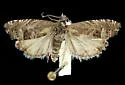
Grapholita vitrana - Hodges#3433
Ephippiphora vitrana
Identification: Walsingham (1879) description is online in the print references. Specimen determined by DNA analysis (BOLD). ( 3 )
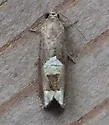
Epiblema boxcana - Hodges#3171
Epiblema boxcana
Identification: The Kearfott original description as Eucosma boxcana is available online in the Print References.
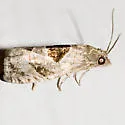
Brighton's Epiblema - Hodges#3203
Epiblema brightonana
Identification: Kearfott stated "Forewing: gray-brown; a large dark brown spot on dorsum, between inner fourth and middle, extending to middle of wing, pointed on top, rounded on sides; a smaller spot of same shape and color on dorsum before angle; f
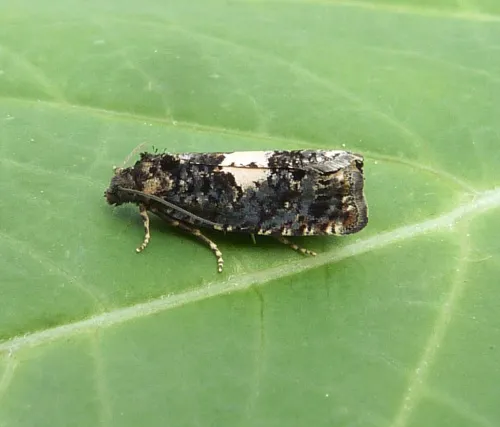
Epiblema cirsiana
Epiblema cirsiana
Wingspan 12-23mm. Part of a difficult species group. It is necessary to examine the genitalia structure to be certain of identification. When this detailed examination has not taken place records should be submitted as Epiblema scutulana agg. Epiblem
Epiblema coracinana - Hodges#3198.1
Epiblema coracinana
Identification: Typically very dark, blackish. The only member of the walsinghami group with blue-gray scaling in the interfascial spot and in the ocellus.
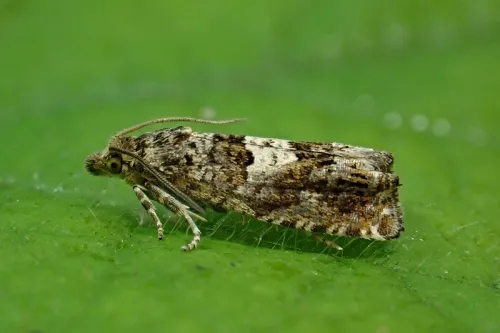
Epiblema costipunctana
Epiblema costipunctana
Wingspan 13 to 18 mm. A well marked moth with reddish brown patterning and a broad pale blotch. This species can be found on open uncultivated and waste ground and similar habitats, especially where ragwort is present. The moths are bivoltine in the
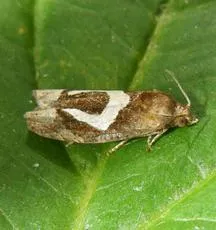
Epiblema foenella
Epiblema foenella
Wingspan 17 to 26 mm. One of the more distinctive Epiblema species, with its diagnostic angular whitish marking on a dark brown ground colour, although the shape and colour of this mark does vary. The adults fly from late afternoon into the evening,
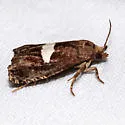
Gibson's Epiblema - Hodges#3207.2
Epiblema gibsoni
Identification: The forewing of fresh specimens have a lavender tint. Genitalia:
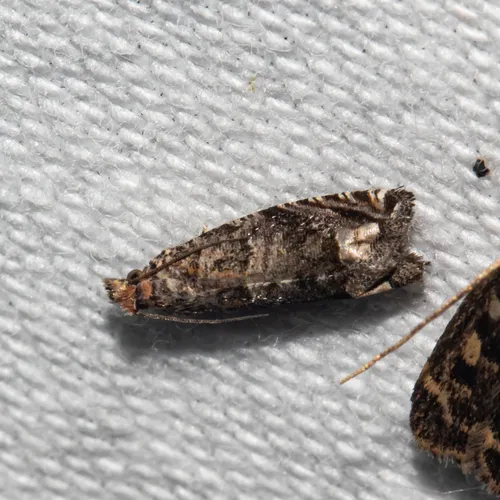
Epiblema glaseri - Hodges#3183.1
Epiblema glaseri
This page includes images of specimens which may refer to the Florida variant with "reddish suffusion in the forewing (e.g., Plate Q:46e)" of Epiblema glaseri Wright & Gilligan, 2023 mentioned in the comments in the original description for that spec
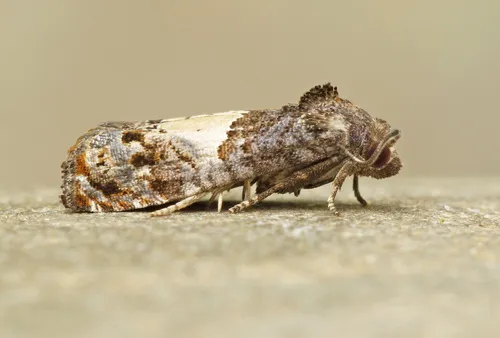
Glenn's Epiblema - Hodges#3184.1
Epiblema glenni
Identification: Adult : FW predominantly dark with a distinctly salmon colored interfascial spot at the middle of the dorsal margin, with its width narrowing markedly above the fold. In females , it continues forward to the costa as a narrower band.
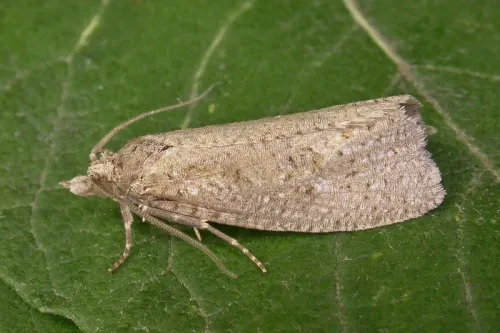
Epiblema grandaevana
Epiblema grandaevana
Wingspan 21 to 30 mm. One of the largest of the British Tortricidae . The larvae feed on the roots of plants such as Coltsfoot. This is quite a rare species. It was formerly established on the coast of north-east England until around 1910. Since then
Epiblema luctuosissima - Hodges#3174.1
Epiblema luctuosissima
Identification: Blanchard original description as Epiblema luctuosana is available online.
Epiblema macneilli - Hodges#3207
Epiblema macneilli
Epiblema macneilli - Hodges#3207 (Epiblema macneilli) is a species in the family Tortricidae, commonly known as tortricid moths, belonging to the order Lepidoptera (Butterflies and Moths). It is classified within the subfamily Olethreutinae, tribe Eu
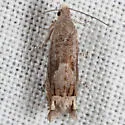
Minute Ragweed Borer - Hodges#3172.1
Epiblema minutana
Identification: See Gilligan et al. Additionally, based on a review of minutana and strenuana specimens in the Mississippi Entomological Museum, Richard Brown reported, "In all cases, the front of as well as dorsal surfaces of labial palpi are white
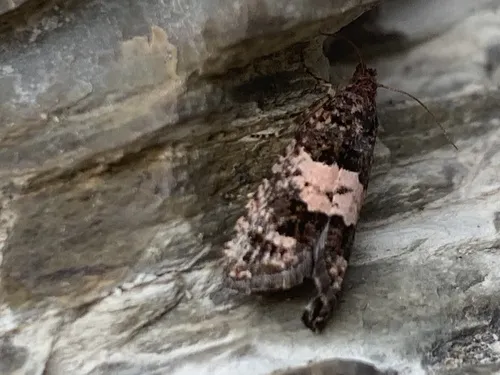
Epiblema periculosana - Hodges#3197
Epiblema periculosana
Epiblema periculosana - Hodges#3197 (Epiblema periculosana) is a species in the family Tortricidae, commonly known as tortricid moths, belonging to the order Lepidoptera (Butterflies and Moths). It is classified within the subfamily Olethreutinae, tr
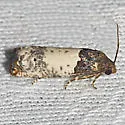
Goldenrod Gall Moth - Hodges#3186
Epiblema scudderiana
Identification: Description in PDF: Rests with wings rolled around body in shape of cylinder; basal third is dark brown or black, middle third is off-white, distal third is light bluish-gray; series of short diagonal stripes along outer third of cost
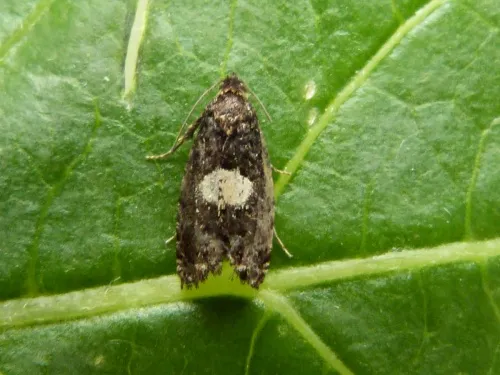
Epiblema scutulana
Epiblema scutulana
Wingspan 18-23 mm. Part of a difficult species group. It is necessary to examine the genitalia structure to be certain of identification. When this detailed examination has not taken place records should be submitted as Epiblema scutulana agg. Epible
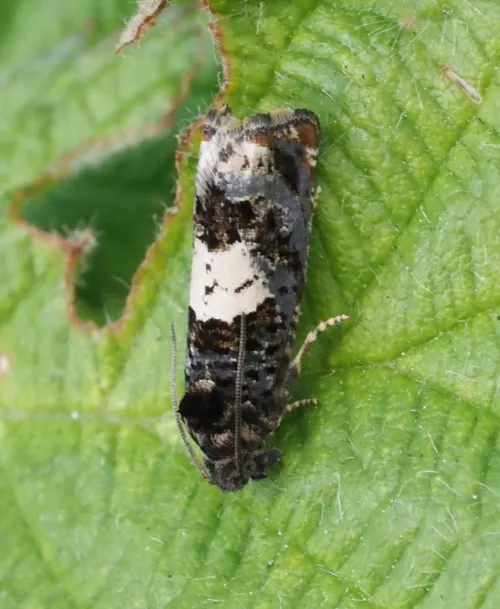
Epiblema scutulana agg.
Epiblema scutulana agg.
Epiblema scutulana, Epiblema sticticana and Epiblema cirsiana form a difficult species group. It is necessary to examine the genitalia structure to be certain of identification. When this detailed examination has not taken place records should be sub
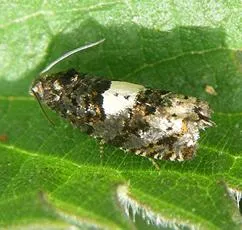
Epiblema sticticana
Epiblema sticticana
Wingspan 15-20 mm. Part of a difficult species group. It is necessary to examine the genitalia structure to be certain of identification. When this detailed examination has not taken place records should be submitted as Epiblema scutulana agg. Epible
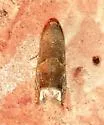
Ragweed Borer - Hodges#3172
Epiblema strenuana
Identification: See redescription in Gilligan et al. Specimen identified by DNA analysis (BOLD) - Adult: forewing medium to dark brownish-gray extensively covered with fine pale dots; pale patch at anal angle usually contains two small black marks; h
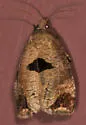
Epiblema tandana - Hodges#3204
Epiblema tandana
Epiblema tandana - Hodges#3204 (Epiblema tandana) is a species in the family Tortricidae, commonly known as tortricid moths, belonging to the order Lepidoptera (Butterflies and Moths). It is classified within the subfamily Olethreutinae, tribe Eucosm
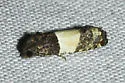
Tripartite Epiblema - Hodges#3184
Epiblema tripartitana
Identification: Revised description is online. - Wright was unable to find characters of the male or female genitalia that would separate E. tripartitana from E. glenni .
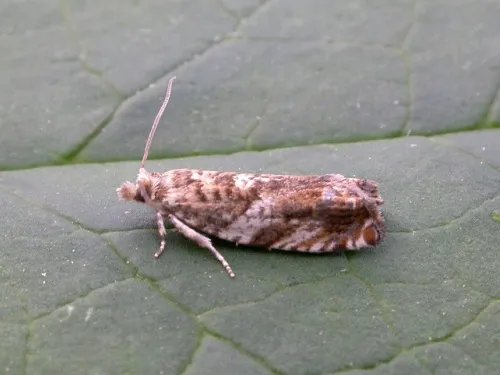
Epinotia abbreviana
Epinotia abbreviana
Wingspan 12 to 16 mm. E. abbreviana varies greatly in the strength of its markings and darkness of colour. Wherever Elms occur on lowland sites. During daylight, it often sits exposed on foliage or trunks. It flies in June and July at dusk and night
Epinotia albicapitana - Hodges#3296
Epinotia albicapitana
Identification: Adult - see original description in Print References.
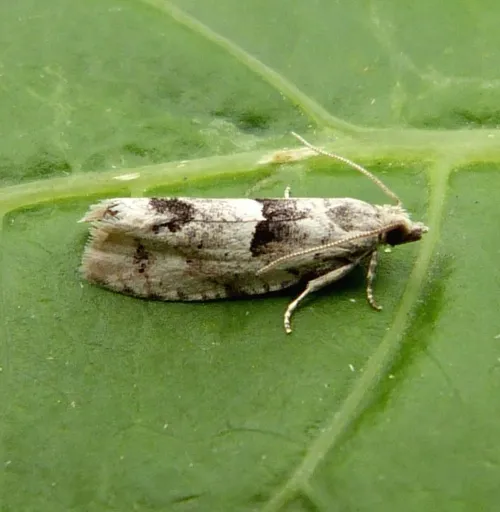
Epinotia bilunana
Epinotia bilunana
Wingspan 13-17 mm. Fairly distinctive with its creamy or pale greyish ground colour and diffuse blackish markings. Birch woodland and other areas where Birch is present. The adult flies during June and July and like most of its close relatives, is ac
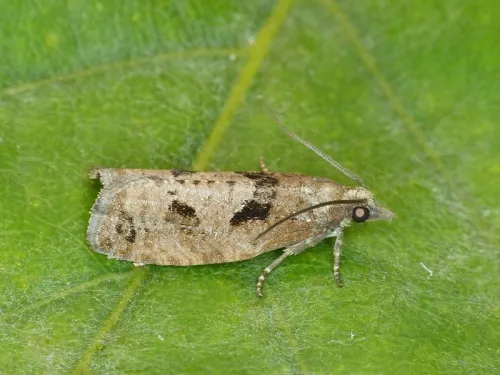
Epinotia brunnichana
Epinotia brunnichana
Wingspan 18-22 mm. A fairly variable species, though usually showing a pale blotch on the dorsal area, sometimes edged with darker. Well wooded areas containing the larval foodplants. The moths fly in July and August, from dusk onwards, when it can b
Epinotia celtisana - Hodges#3291
Epinotia celtisana
Identification: Adult - see original description in Print References.
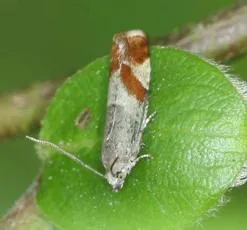
Willow Tortrix
Epinotia cruciana
Wingspan 12-15 mm. The scientific name cruciana refers to the pale forewing markings which, when the moth is at rest, meet to form the shape of a cross when seen from above. Flying from June to early August, the adults can be disturbed from the folia
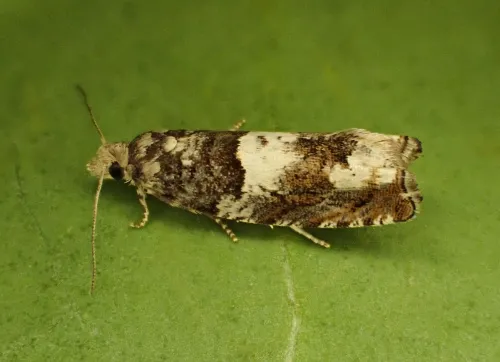
Epinotia demarniana
Epinotia demarniana
E. demarniana inhabits woodland, heathland and damper habitats such as fens and bogs. The adult moths fly in a single generation during June and July, when they can be attracted to light. The larvae feed within the catkins of birch, alder and goat wi
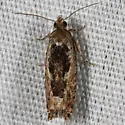
Epinotia emarginana - Hodges#3323
Epinotia emarginana
Identification: Adult - Highly variable. Walsingham described and illustrated five varieties in the original description.
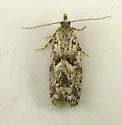
Epinotia hopkinsana - Hodges#3297
Epinotia hopkinsana
Identification: Adult - see original description in Print References. Larva - See description at Natural Resources Canada.
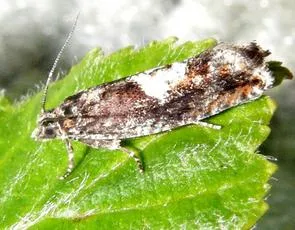
Epinotia immundana
Epinotia immundana
Wingspan 12-14 mm. The species is quite variable, with the paler diamond-shaped patch on the dorsal area sometimes obscured, yet sometimes contrasting strongly. It inhabits woodland, heathland and river banks. The moths fly in spring from April to Ju
Epinotia miscana - Hodges#3314
Epinotia miscana
Identification: See also Epinotia terracoctana , silvertoniensis , and huroniensis
Epinotia momonana - Hodges#3312
Epinotia momonana
Identification: Adult - see original description in Print References. ( 3 )
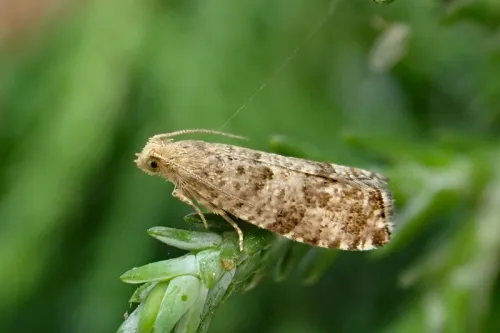
Epinotia nanana
Epinotia nanana
Wingspan c.10 mm. This very small Tortrix is delicately marked in close up, but typically looks all dark from any distance. It frequents coniferous woodland, parks and gardens where its foodplants, Norway spruce (Picea abies) and Sitka spruce (P.sitc
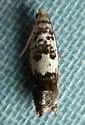
Epinotia nigralbana - Hodges#3319
Epinotia nigralbana
Identification: Adult - Head grayish fuscous, face and palps white ● Antennae greyish fuscous ● Forewings more than twice as long as wide, with the costa slightly arched ● Apical half of the wing is divided into three areas: 1st an oblique ferruginou
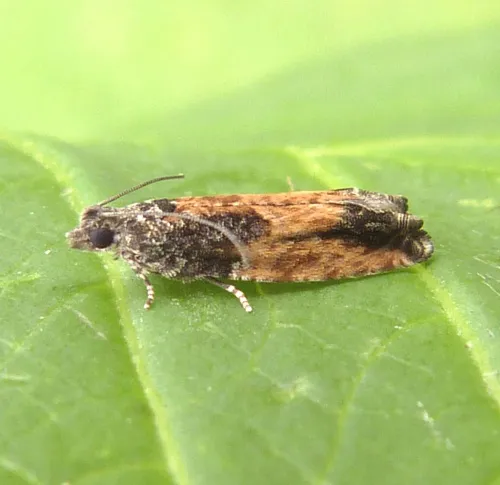
Epinotia nisella
Epinotia nisella
Wingspan 12 to17 mm. This is a very variable species. There are many variations, though one of the more distinctive is f. decorana , which shows an orange area over the mid-part of the forewing. In areas where the larval foodplant is common. The larv
Epinotia nonana - Hodges#3335
Epinotia nonana
Identification: Adult - forewing variably pale to medium gray with dark gray to blackish markings; short dark streaks of varying width along length of costa; dark irregular blotch near inner margin in AM area, and smaller blotches in subapical and me
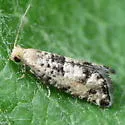
Epinotia normanana - Hodges#3336
Epinotia normanana
Identification: Adult - See original description in Print References.
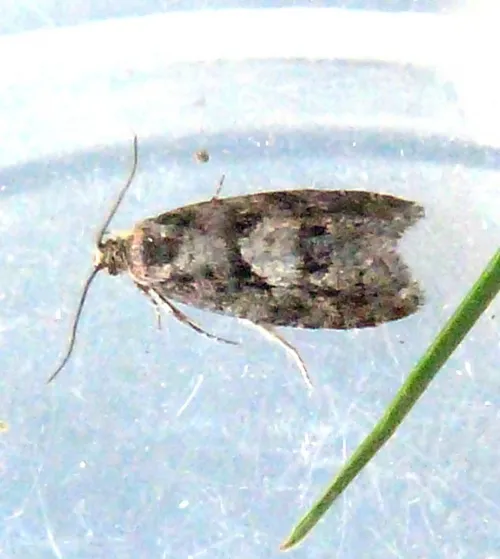
Epinotia pygmaeana
Epinotia pygmaeana
Wingspan 12 to 14 mm, the adults are similar to E. subsequana, but have a noticeable whitish patch on the inner area of the hindwing. Males can further be distinguished by their comb-like antennae. Occurs around coniferous forests and plantations. Th
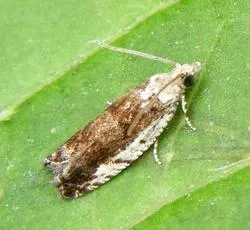
Epinotia ramella
Epinotia ramella
Wingspan 13-16 mm. The typical form of this moth has a dark triangular patch on the forewing but a fairly common variation is Epinotia ramella var. costana , which has an all dark forewing with a pale edge on the costa. Well wooded areas containing t
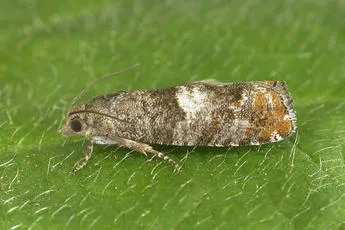
Epinotia rubiginosana
Epinotia rubiginosana
Areas where the larval foodplants are present. Flying in June, the adults can sometimes be seen flitting around the tops of pine trees in the late afternoon sunshine, but will come to light after dark. The larvae feed between spun needles of Scots Pi
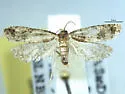
Epinotia sagittana - Hodges#3322
Epinotia sagittana
Identification: Specimen determined by DNA analysis (BOLD).
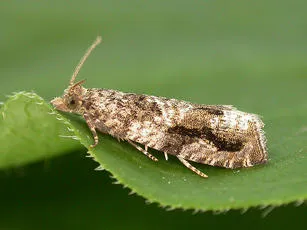
Epinotia signatana
Epinotia signatana
Wingspan 15mm. Rather obscurely-marked brownish species. Flying in a single generation, moths are on the wing in June/July. The larvae feed on Prunus, particularly Blackthorn but also other related foodplants occasionally. This is relatively uncommon