
Family Rove Beetles (Staphylinidae)
Staphylinidae is a family in the order Coleoptera. Browse 1,235 named species recorded in this family, or open an individual profile for its available identification and natural-history information.
Guides
Species in Staphylinidae (1,235)
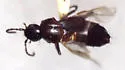
Fluviphirus elevatus
Fluviphirus elevatus
Identification: "quite isolated within the subgenus and its general appearance is very conspicuous (large size, very long legs and antennae)" This species moved to the new genus Fluviphirus by Brunke (2021, ZooKeys 1076: 109-124)
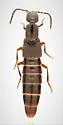
Gabrius astutoides
Gabrius astutoides
Identification: Very similar to the palearctic Gabrius astutus (only separated by aedeagus) Earliest NA specimen are of 1936 from Pensylvania
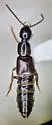
Gabrius seattlensis
Gabrius seattlensis
Externally similar to G. microphthalmus but can be easily separated by distribution ( G. microphthalmus is eastern in distribution with westernmost limits in Manitoba and S. Dakota vs. G. seattlensis , which is confined to the Pacific Northwest), and
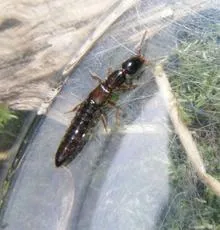
Gyrohypnus angustatus
Gyrohypnus angustatus
Length 6 to7 mm. Head black. Pronotum black to dark brown, sometimes paler around the margins. Elytra usually brown, occasionally darker or even black. Abdominal tergites usually dark brown. Legs brown to dark brown. Antennae brown with segment 1 dar
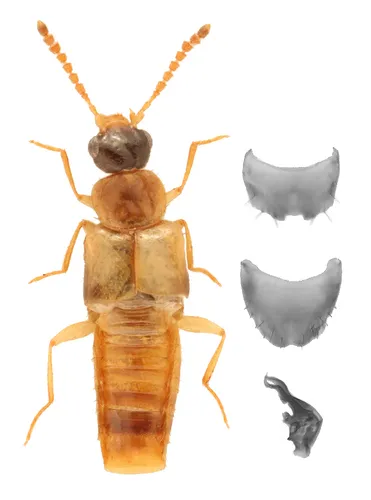
Gyrophaena gilvicollis
Gyrophaena gilvicollis
Identification: As with many species of Aleocharinae, the genitalia as well as tergites and sternites VIII allow for reliable diagnosis.
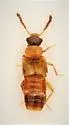
Gyrophaena nanoides
Gyrophaena nanoides
similar to G. caseyi , but differs by the subquadrate antennomeres VI‒X (transverse in G. caseyi ) and the distincly broader elytra (as broad as pronotum in G. caseyi )
Habrocerus magnus
Habrocerus magnus
Habrocerus magnus (Habrocerus magnus) is a species in the family Staphylinidae, commonly known as rove beetles, belonging to the order Coleoptera (Beetles). It is classified within the subfamily Habrocerinae, suborder Polyphaga, superfamily Staphylin
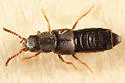
Halobrecta flavipes
Halobrecta flavipes
Our sole representative of the tribe Taxicerini Thomson, 1858
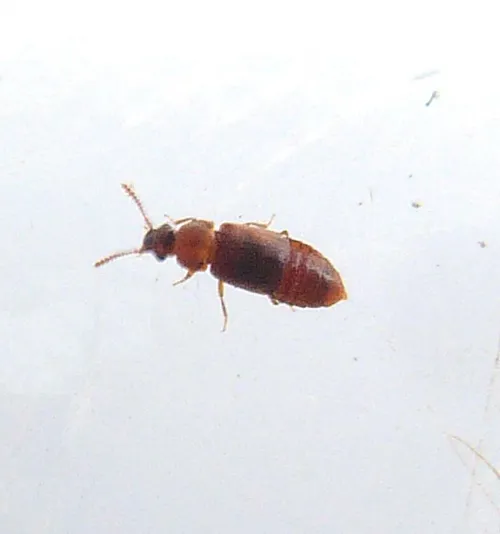
Hapalaraea pygmaea
Hapalaraea pygmaea
A small (2.2 to 3.0 mm) rove beetle which is orange-brown or red in colour. Unless identified by a recognised expert, a photo is required. If the photo doesn't show the key ID features then in the comments box describe the size and identifying charac
Hesperus arizonicus
Hesperus arizonicus
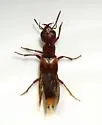
Hesperus arizonicus was described by Moore (1958) on the basis of a single male specimen from Patagonia, Santa Cruz County, Arizona. A single female specimen in the collection of the University of California at Riverside is from Cave Creek Ranch, ele
Holoboreaphilus nordenskioldi
Holoboreaphilus nordenskioldi
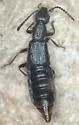
Holoboreaphilus nordenskioldi (Holoboreaphilus nordenskioldi) is a species in the family Staphylinidae, commonly known as rove beetles, belonging to the order Coleoptera (Beetles). It is classified within the subfamily Omaliinae, tribe Coryphiini, su
Homaeotarsus strenuus
Homaeotarsus strenuus
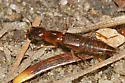
Identification: The mostly reddish species are easiest to ID using dorsal shots of the head. There are two (likely three) others in our region that are also of this mostly reddish look. Cheers, … Adam Brunke, 8 June, 2008
Hygronoma dimidiata
Hygronoma dimidiata
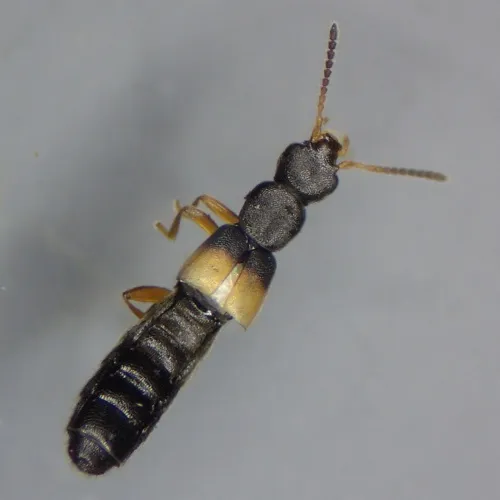
Length 3mm. Distal half of elytra yellow. Legs yellow. First four antennal segments yellow, the rest darker. Top of head and pronotum flattened. Unless identified by a recognised expert, the specimen should be keyed under a microscope and the disting
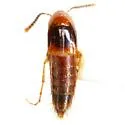
Ischnosoma flavicolle
Ischnosoma flavicolle
Ischnosoma flavicolle (Ischnosoma flavicolle) is a species in the family Staphylinidae, commonly known as rove beetles, belonging to the order Coleoptera (Beetles). It is classified within the subfamily Mycetoporinae, suborder Polyphaga, superfamily
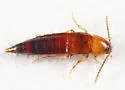
Ischnosoma virginicum
Ischnosoma virginicum
Identification: Close to I. flavicolle but lacking an apical palisade fringe of setae on the margin of the seventh tergite of the abdomen. Males of I. virgnicum may be readily distinguished from those of all other species of the Pictum group by the d
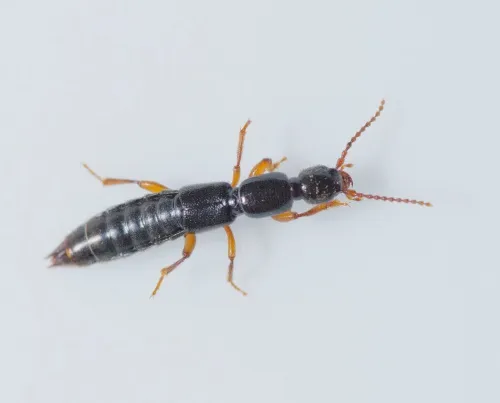
Lathrobium brunnipes
Lathrobium brunnipes
Length around 10 mm. A very dark almost black rove beetle with orangey coloured legs. They generally inhabit leaf litter and other decaying matter. All year round but especially late spring to autumn. No additional images available for this species.
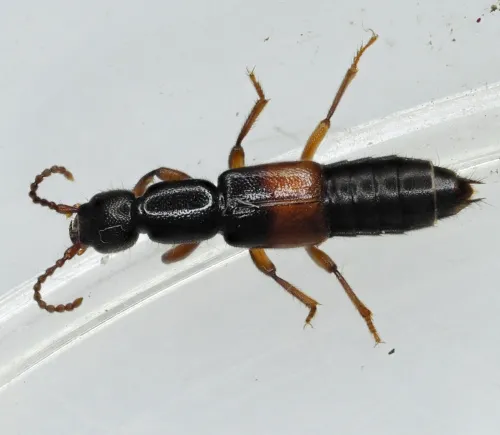
Lathrobium fulvipenne
Lathrobium fulvipenne
7.5 to 9 mm. A fairly large and slender rove beetle, the short elytra are reddish with a darker base. The legs are also orangey red. Unless identified by a recognised expert, a photo is required and the specimen should be examined with a microscope.
Lathrobium geminum
Lathrobium geminum
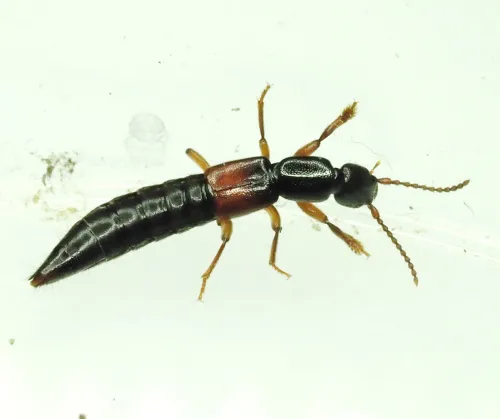
Size 7.5 to 10.5 mm. It is very similar to other members of the genus and detailed examination is necessary in order to identify to species. Unless identified by a recognised expert, a photo is required and the specimen should be examined with a micr
Lathrobium impressum
Lathrobium impressum
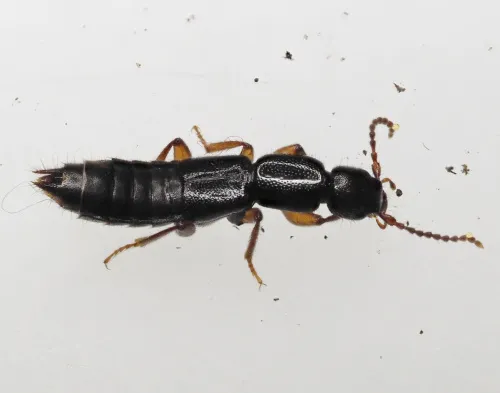
5.5-7mm. Generally black and glossy but with red-brown legs, palps and antennae. Males are easier to identify than females due to having upturned hooks at the end of each style - a unique character. Other Lathrobium species, particular L. fovulum . T
Lesteva longoelytrata
Lesteva longoelytrata
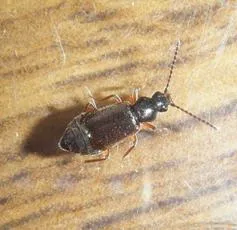
As is typical of the rove beetles the elytra on extend partway across its abdomen, in this case about two thirds. It also has a characteristic curvy shape to its pronotum. This beetle lives around water and in splashed habitats. All year round peakin
Lesteva sicula
Lesteva sicula
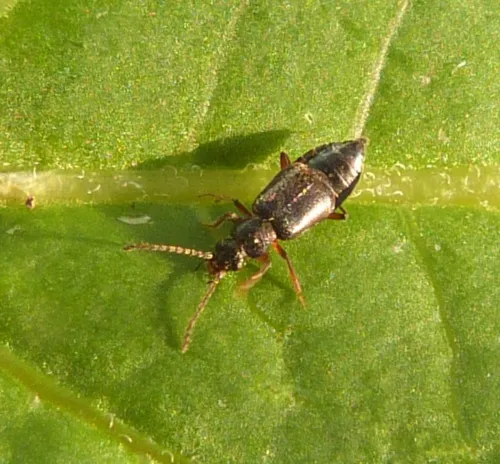
This is a fairly small dark brown to blackish rove beetle with orangey coloured legs. Often found in damp areas, in reed litter and flood refuse but also found under logs and stones. Widespread and fairly frequent in Britain. No additional images ava
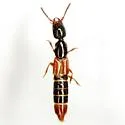
Lissohypnus texanus
Lissohypnus texanus
Identification: Det. E. G. Riley, 2010 Type Locality: Austin County, Texas
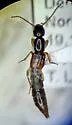
Lobrathium multipunctum
Lobrathium multipunctum
Identification: Male with deeply emarginate and impressed 6th abdominal sternite; 5th sternite with broad apical impression, bordered anteriorly with a pair of tubercles. earliest record in our area: WA 1932
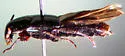
Black Lordithon Rove Beetle
Lordithon niger
Rare , considered to be a Species of Greatest Conservation Need in VA
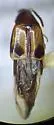
Lordithon poecilus
Lordithon poecilus
Externally similar to L. difficilis Campbell, a PNW species. Other than subtle differences in color and the 7th abdominal male sternite, the two are most reliably distinguished via male genitalia
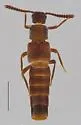
Losiusa angusticollis
Losiusa angusticollis
Identification: Disc of pronotum is continuous with hypomeron, no marginal bead present . Known from four specimens.
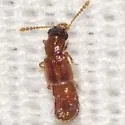
Manda nearctica
Manda nearctica
Identification: Pale rufo-testaceous, with dark head (Moore, 1964), and slightly dark apical elytral patches. Det. V. Belov, 2013 Type Locality: Archbold Biological Station, Lake Placid, Florida, IV-1-47, J. W. Green, collector.
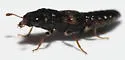
Megalopinus caelatus
Megalopinus caelatus
rarely found , although Karl Stephan collected 22 spmns of this sp. and 7 Megalopinus rufipes (LeConte) in Latimer Co., Oklahoma
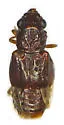
Megalopinus lingafelteri
Megalopinus lingafelteri
Identification: Eyes small, head not wider than pronotum
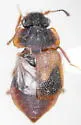
Megarthrus pictus
Megarthrus pictus
Identification: -the only nearctic species with bicolored elytra and angulate temples (=area immediately behind eye) -body and appendages predominantly yellow-brown (characteristic pattern shown below)
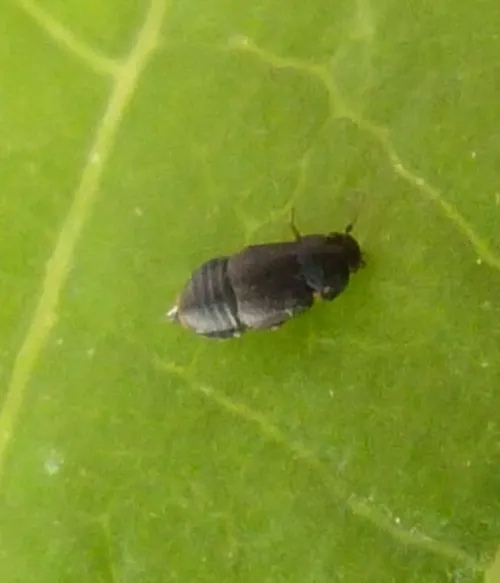
Megarthrus prosseni
Megarthrus prosseni
A very small dark maroon-brown rove beetle with a short rather stubby appearance. Associated with most decomposing material, including straw, leaves and fungi. It has also been associated with dung. All year but mostly late spring to autumn. Widespre
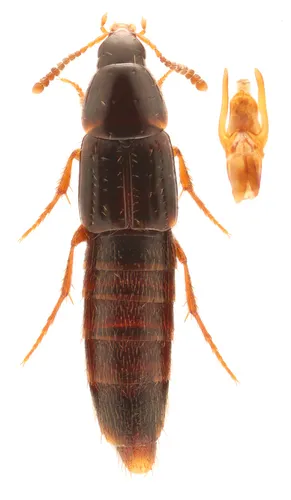
Mycetoporus consors
Mycetoporus consors
Identification: Distinct chaetotaxy of pronotum & elytra as well as form of genitalia. See Campbell for more information.
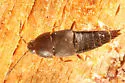
Myllaena audax
Myllaena audax
Identification: Very similar to M. insomnis Casey, genitalia must be examined to separate the species where their ranges overlap.
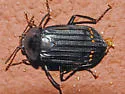
Red-lined Carrion Beetle
Necrodes surinamensis
Identification: Distinctive, large eyes, dark body with prominent raised elytral ridges, variable red-orange, sometimes yellow, markings on elytra, though these sometimes absent. Sometimes has red tinge to body. Males have distinctive leg morphology:
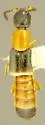
Neobisnius occidentoides
Neobisnius occidentoides
Type Locality: Lake Corpus Christi State Park, San Patricio Co., Texas
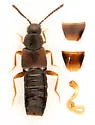
Neodimetrota tenuiducta
Neodimetrota tenuiducta
Identification: This species bears close resemblance to A. burwelli, A. curvipennis, and A. caribou, but it can be distinguished from them by differences in the shape of male genitalia and some external characteristics. Females of this species may be
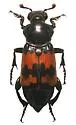
Margined Burying Beetle
Nicrophorus marginatus
Identification: Similar in appearance to N. guttula and N. obscurus , but can be easily distinguished by the fully orange epipleuron (which has a black subhumeral patch in guttula ) and the fully orange antennal club (the first segment of which is bl
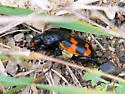
Nicrophorus obscurus
Nicrophorus obscurus
Identification: can be distinguished from the similar N. guttula by the deeply emarginate outer edge of antennomere 3 and from N. marginatus by the long setae on the anterior face of the procoxa in the basal half
Nisaxis caudata
Nisaxis caudata
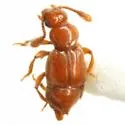
Identification: Very distinct from any of the described species by the dentate intermediate femora and the abdominal structure of the males. (Schaeffer 1905) Type Locality: Three males and one female taken at light at Esperanza Ranch, Rrownsville, Te
Ocypus aeneocephalus
Ocypus aeneocephalus
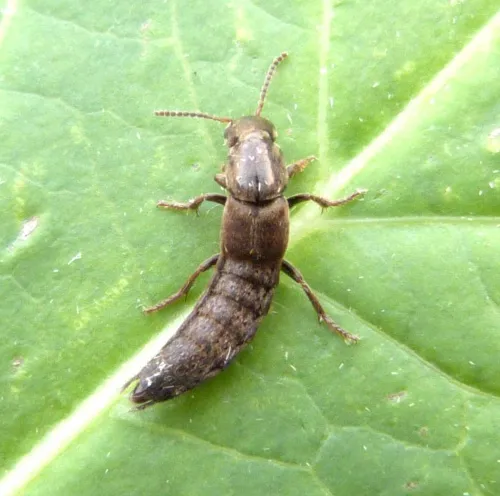
A species of extensive habitats on damp but well drained soils. All year round, but peak time is summer and autumn. Widespread and fairly frequent in Britain. No additional images available for this species.
Ocypus brunnipes
Ocypus brunnipes
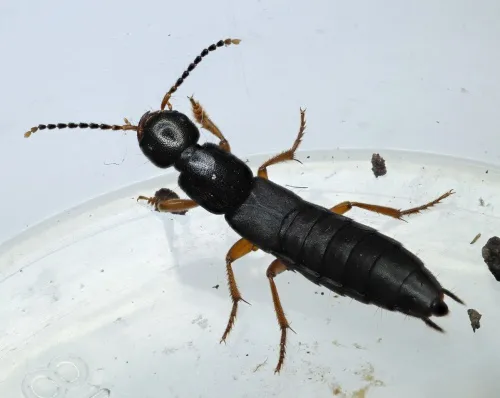
A large dark brown or blackish rove beetle with orange legs. It can measure up to 13 mm or more. Various habitats including damp but well drained soils, in woods and under stones. Widespread and fairly frequent in Britain.
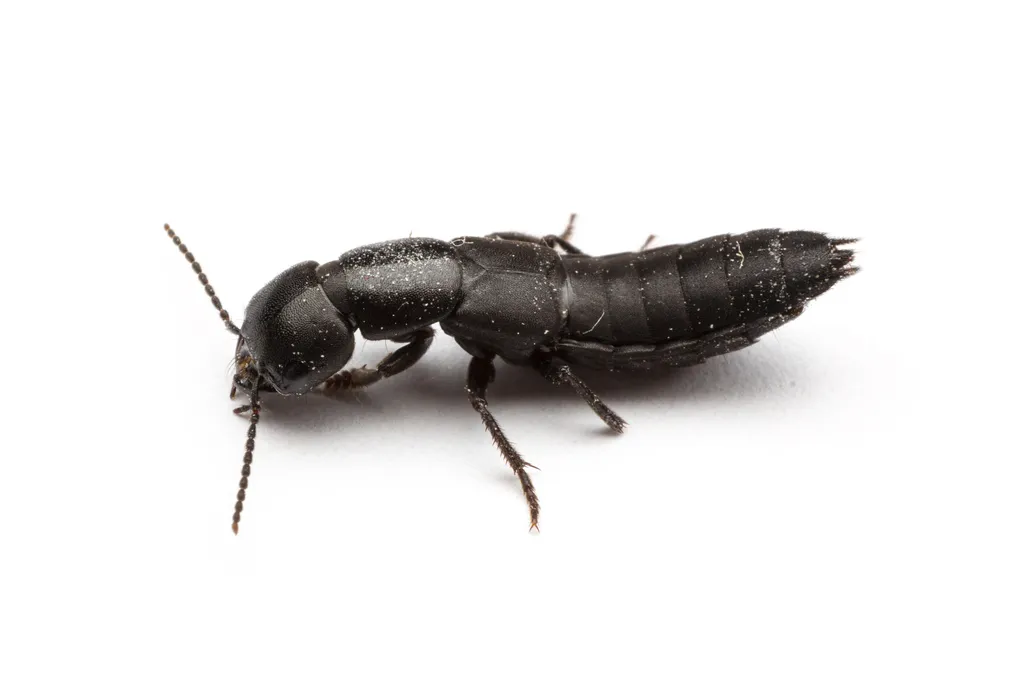
Ocypus nitens
Ocypus nitens
Identification: Very similar to Tasgius melanarius . Relevant details separating on the generic level are in the mouthparts, rarely visible on life images. The wings are visibly shorter than the pronotum in O. nitens , and pronotal punctures dense, b
Ridged Carrion Beetle
Oiceoptoma inaequale
Identification: All black, with strong ridges on elytra. Ventral side of elytra is bright metallic blue, shining in flight. Elytra are held up in the manner of a butterfly's wings while in flight. This gives a protean, "disappearing" effect as the be
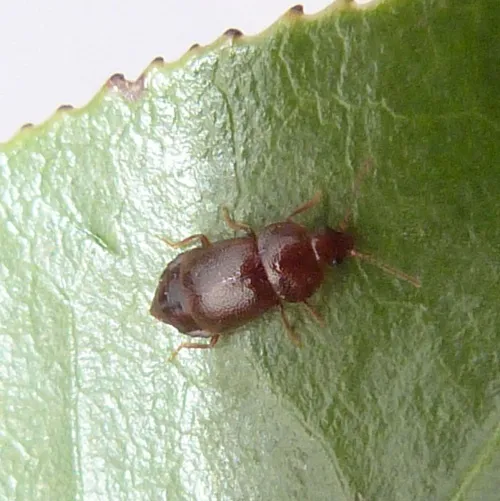
Olophrum piceum
Olophrum piceum
This is a small chestnut brown beetle with an unusual appearance for a member of the Staphylinidae family. It has strongly pitted elytra and pronotum with a black head and small black scutellum. Most frequently encountered in leaf litter. Can be foun
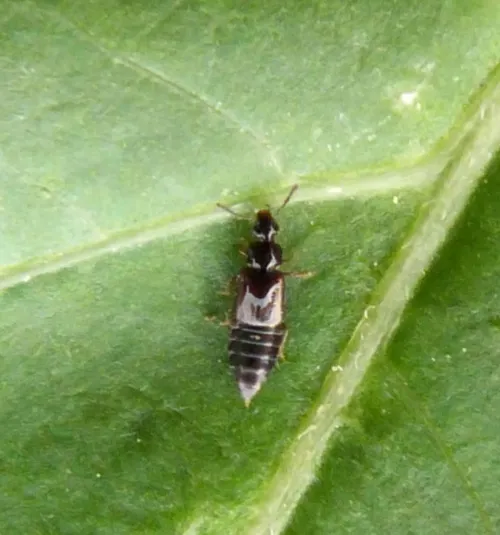
Omalium rivulare
Omalium rivulare
This is a small (3.5 to 5 mm), mainly brown rove beetle. Associated with decomposing material of all kinds, fungi, rotting wood, birds nests etc. Widespread and fairly frequent in Britain.
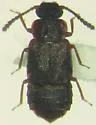
Omalium undescribed
Omalium undescribed
Identification: Transverse pronotum, and relatively thick antennomere 3-5 blending into a 6-seg. club Page created to accomodate this distinctive but not yet described (in process) northeastern species
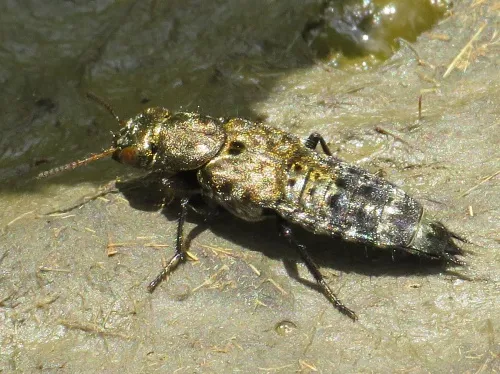
Ontholestes murinus
Ontholestes murinus
A very distinctive rove beetle which is around 14mm in length. The thorax has a few gingery hairs and a general brownish mottled appearance, whilst the abdomen shows some grey. Distinguished from the only other member of the genus, O. tesselatus , by
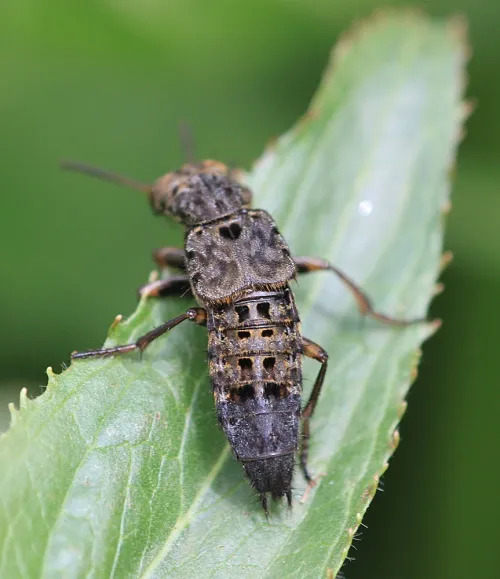
Ontholestes tessellatus
Ontholestes tessellatus
Length 14 to 19 mm. A very distinctive rove beetle with some orangey-yellow colouring in the legs. It is similar to Ontholestes murinus but that species has completely dark legs. Usually found in association with carrion. All year round especially in
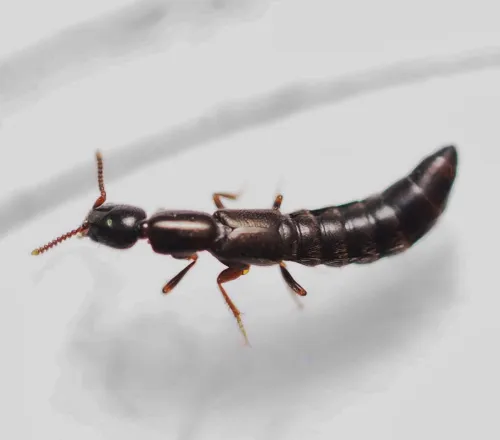
Othius laeviusculus
Othius laeviusculus
A small (5-6mm), mainly black rove beetle with elytra as long, or longer, than the pronotum. The terminal segment of the antennae is yellow, compared to the rest being red-brown. Varied, including open habitats and woodland. No additional images avai
Othius punctulatus
Othius punctulatus
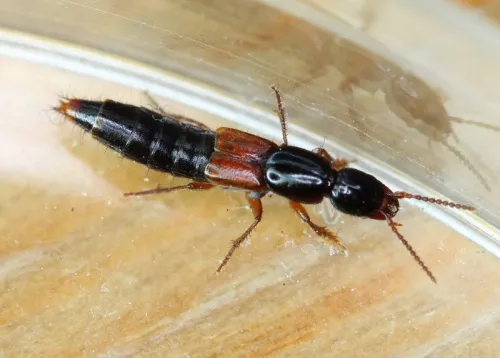
9 to 14mm. Blackish overall but with red elytra. The legs and antennae are also red. The pronotum may be dark red, particularly towards the margins. The abdominal tergites have a paler terminal band that becomes wider and more obvious on the final se
Oxybleptes davisi
Oxybleptes davisi
Author is Howard Notman, American entomologist. Few references are found readily--see Biodiversity Heritage Librarey Howard Notman . He was a apparently an illustrator as well as an amateur painter--see AskArt-- Howard Notman which gives his biograph
Oxypoda chantali
Oxypoda chantali
Named in honor of Claude Chantal, an "outstanding collector of beetles in Quebec", who collected the type series of this species and many others, and continuously contributes extensively to the entomological knowledge of Quebec.
Oxypoda stanleyi
Oxypoda stanleyi
Identification: antennae strongly clavate, no apparent longer setae on abdomen
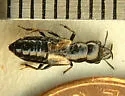
Oxyporus femoralis
Oxyporus femoralis
Identification: "...the white tibiae are a nice way to recognize this one" - Adam Brunke
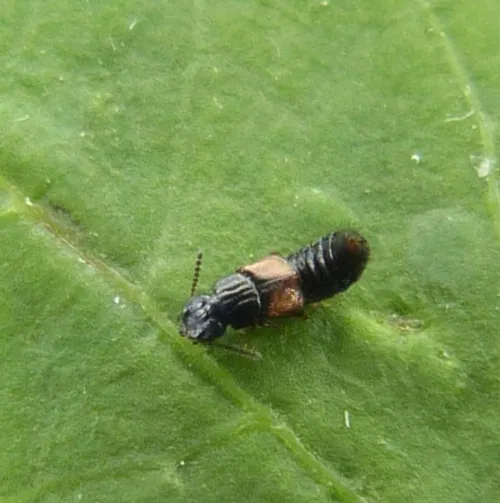
Oxytelus laqueatus
Oxytelus laqueatus
A small rove beetle with short light brown wing cases. It is only about 4 or 5 mm long. All year round especially in spring and summer. Widespread and fairly frequent in Britain.
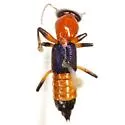
Paederus grandis
Paederus grandis
Identification: Head in male larger than elytra; robust; legs almost completely black
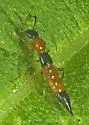
Paederus iowensis
Paederus iowensis
Identification: brachypterous, elytra not wider, and rather shorter than pronotum
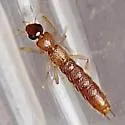
Palaminus larvalis
Palaminus larvalis
Identification: Strongly narrowed prothorax, small size (~ 3.1 mm), head & pronotum coarsely but not densely punctate.
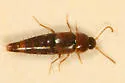
Palporus nitidulus
Palporus nitidulus
Identification: Extremely variable. Very small (head to elytra length 1.1 to 1.4 mm). Light yellowish to dark reddish-brown, sometimes darker. Head often darker than pronotum and elytra. Elytra usually lighter than pronotum and head. Pubescence of el
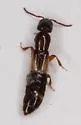
Phacophallus pallidipennis
Phacophallus pallidipennis
earliest NA record: west coast 1904; earliest eastern record: NY 1931
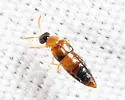
Phanerota dissimilis
Phanerota dissimilis
Identification: differs from P. fasciata by being darker/testaceous, with larger apical black spot on abdomen, and head with definite micro-reticulate sculpting
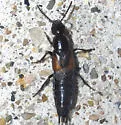
Philonthus aurulentus
Philonthus aurulentus
Identification: Pronotum with quite dense, almost regular punctation; elytra can be black, or red with scutellar region dark to variable extent. the very similar P. lecontei Horn, 1884 even more western (BC - CA + Rockies)
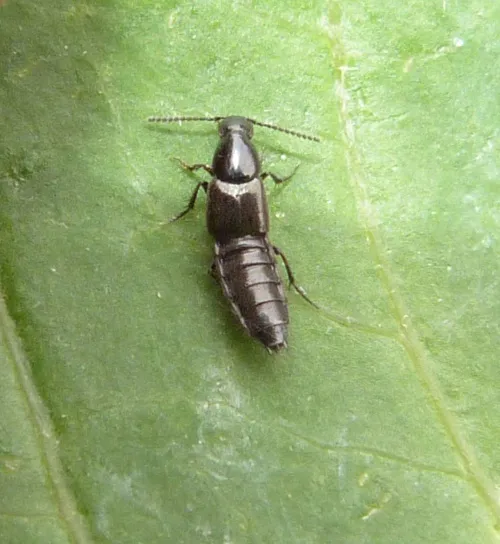
Philonthus carbonarius
Philonthus carbonarius
7-8mm. Black but with a green metallic sheen on the elytra. The legs and palps are dark brown. This looks like a smaller version of P. cognatus but lacks the bicolour (brown+yellow)of the first antennal segment. Unless identified by a recognised expe
Philonthus chujoi
Philonthus chujoi
Identification: Very similar to the adventive Philonthus debilis , most easily separated with male genitalia
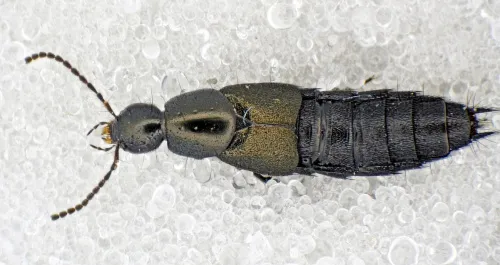
Philonthus cognatus
Philonthus cognatus
Adults are 8 to 11 mm long. They are black in colour with a green metallic sheen on the elytra which are are profusely pitted. A distinctive feature of this species is that the underside of the first antennal segment is yellow, contrasting with the b
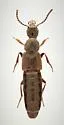
Philonthus concinnus
Philonthus concinnus
Identification: Species page earliest record in e.NA: QC 1906
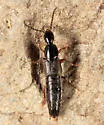
Philonthus couleensis
Philonthus couleensis
Often found by sifting litter, moss, dead vegetation or other debris. Also taken by treading and in clumps of grasses and Carex .
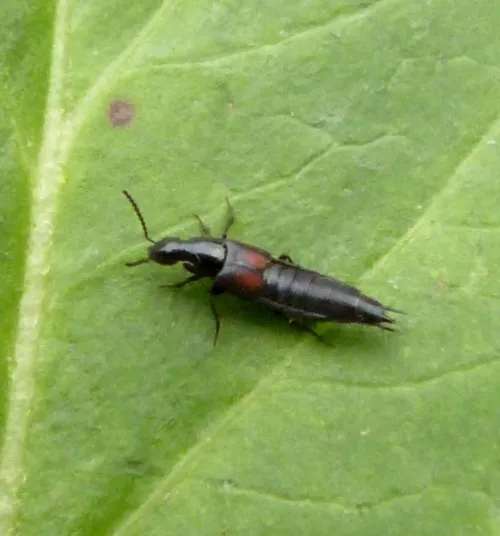
Philonthus cruentatus
Philonthus cruentatus
A blackish species but usually with prominent red spots on the wing cases. There are similar species and care is needed with identification. A species of extensive habitats on damp soils, but it also turns up in patch habitats, especially dung and ca
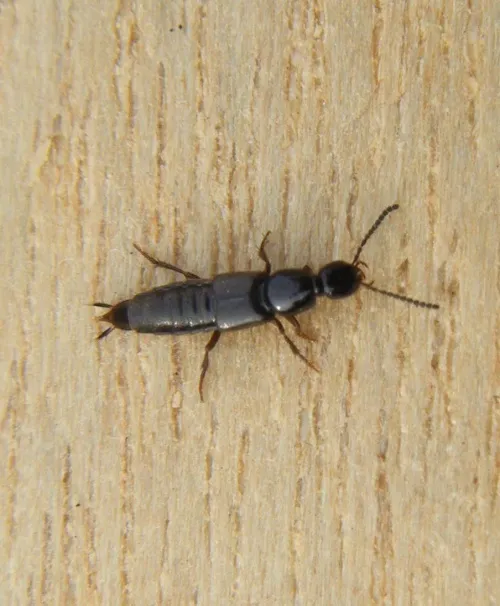
Philonthus debilis
Philonthus debilis
A small (about 5 mm) dark rove beetle with short dark brown wing cases. Under logs and stones and in leaf litter and debris. Widespread but infrequent in England and Wales, little recorded in Scotland. No additional images available for this species.
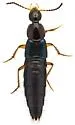
Philonthus gentilis
Philonthus gentilis
Identification: distinctive: legs & antennal base orange, elytra blue • Type specimens
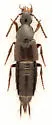
Philonthus jurgans
Philonthus jurgans
Philonthus jurgans (Philonthus jurgans) is a species in the family Staphylinidae, commonly known as rove beetles, belonging to the order Coleoptera (Beetles). It is classified within the subfamily Staphylininae, tribe Staphylinini, suborder Polyphaga
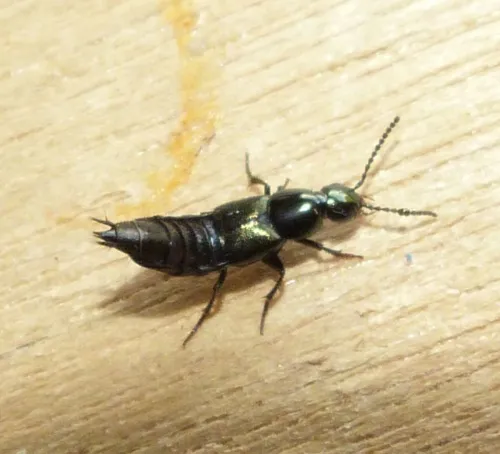
Philonthus laminatus
Philonthus laminatus
This rove beetle has a very shiny, metallic greeny bronze appearance. It can be found in all months of the year but most commonly between May and September. It is an active predator of small insects. Fairly frequent and widespread across England and
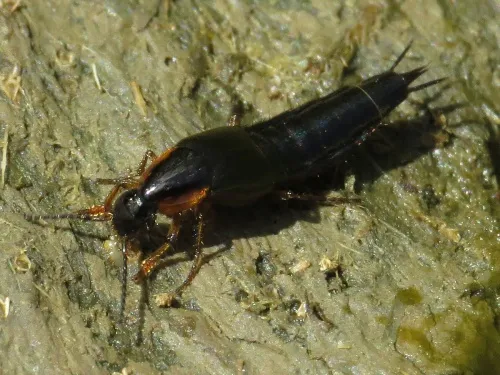
Philonthus marginatus
Philonthus marginatus
7 to 9.5mm. The reddish-yellow lateral margins to the pronotum make this beetle easy to identify. The remainder of the pronotum, head, and abdomen are shining black. The elytra are blackish with long overlapping hairs and the legs usually yellowish t
Philonthus nudus
Philonthus nudus
Identification: purely black, including elytra; the latter strongly but not densely punctured; some discal pronotal punctures in common groove, like in several Cafius . Head wider in males
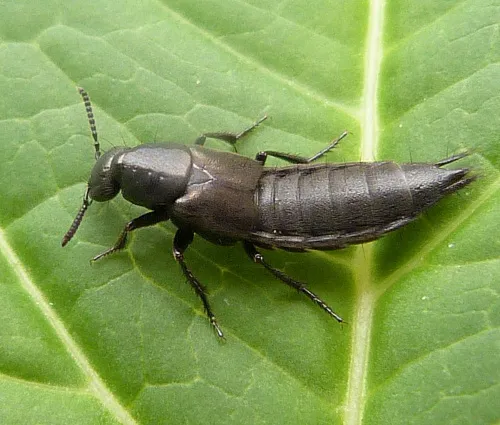
Philonthus politus
Philonthus politus
A large dark rove beetle with rather bronzy elytra. A patch habitat species most frequently found in carrion. Rather localised in Britain. Most records seem to come from central England and from Wales. No additional images available for this species.
Philonthus quadricollis
Philonthus quadricollis
Common species. Philonthus gavius Smetana, 1995 is very similar, but has a more southern distribution.
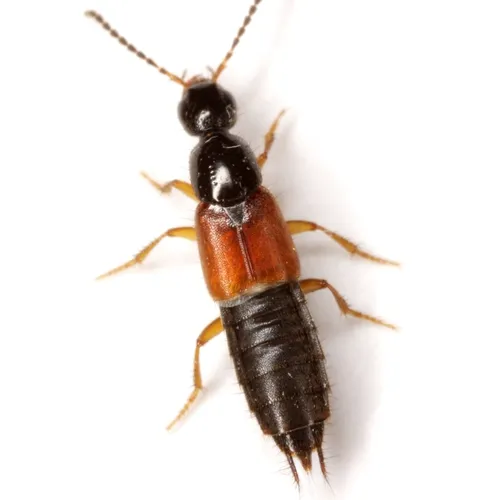
Philonthus rufulus
Philonthus rufulus
Identification: Like in P. alumnus , in males both 6th and 5th(visible) ventral segments of abdomen with excision (on 6th only is usual condition) Should be the common at lights - Adam Brunke, 2010 comment
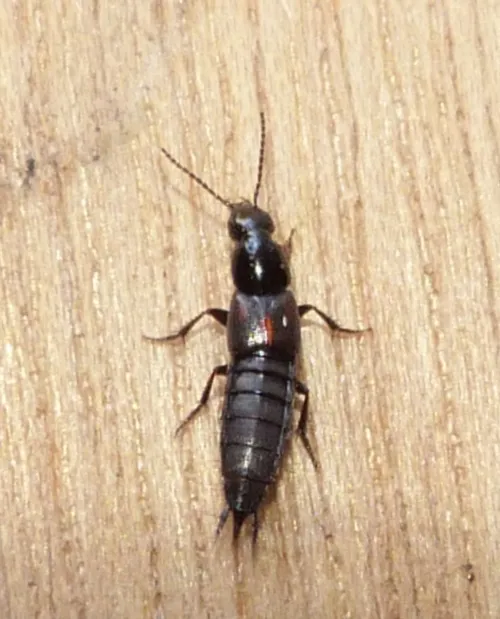
Philonthus sanguinolentus
Philonthus sanguinolentus
A fairly large, dark rove beetle which has a series of five punctures on the pronotum. A patch habitat species frequently found in dung, but also in more extensive habitats on damp but well drained soils. Widespread and fairly frequent in England and
Philonthus sericans
Philonthus sericans
Identification: Six punctures in each of the dorsal rows on the pronotum.
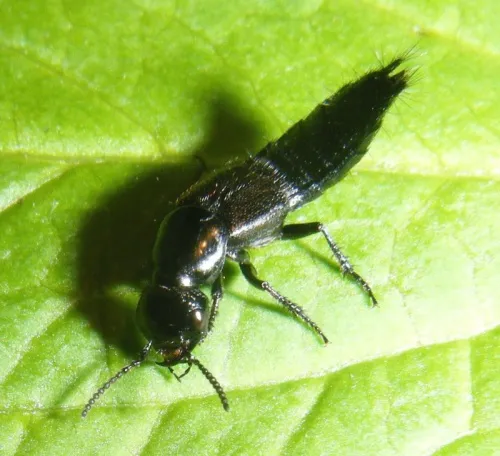
Philonthus splendens
Philonthus splendens
Length up to 16 mm. A rather large dark brown species. Widespread and fairly frequent in Britain.
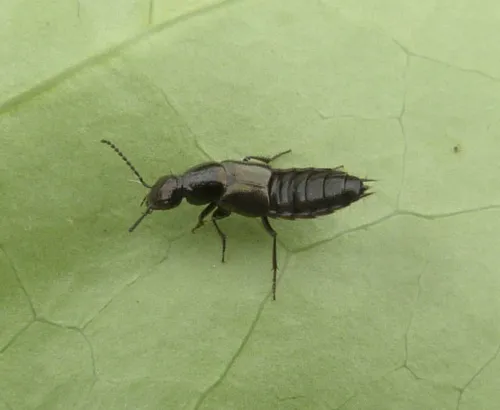
Philonthus tenuicornis
Philonthus tenuicornis
A medium sized (9 or 10 mm) dark brown or blackish rove beetle. Unless identified by a recognised expert, a photo is required and the specimen should be examined with a microscope. In the comments box, state the key or ID method used and describe the
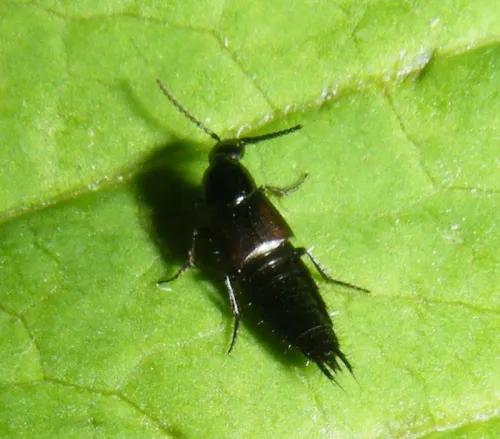
Philonthus varians
Philonthus varians
Length about 6 mm. The brownish elytra often show some degree of red marking or spots. Associated with decaying matter and dung. Widespread and fairly frequent in Britain.
Philonthus vulgatus
Philonthus vulgatus
Identification: Aedeagus distinctive, pronotum densely but irregularly punctate laterally (punctures usually with space between punctures wider than puncture diameter), head rounded with hind angles lacking, body pubescence black, dorsum not noticeab
Phloeocharis subtilissima 0
Phloeocharis subtilissima
Identification: see ; habitus: Fig.12 [p.243] dorsal habitus earliest NA record: NS 2001
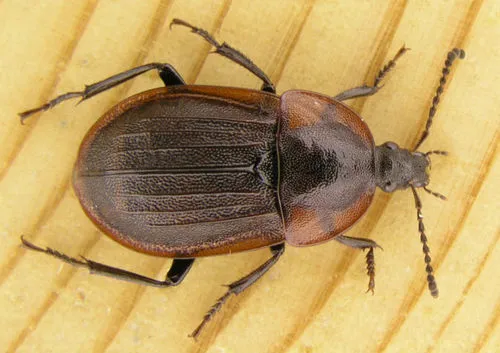
Phosphuga atrata
Phosphuga atrata
first detected in NA in 2021, in an urban park in Vancouver, BC by Cole Grueber, and in a forested area in Lévis, QC by Ludovic Leclerc; fairly abundant at both locations, but not yet found elsewhere in NA. All Quebec specimens are of the black morph
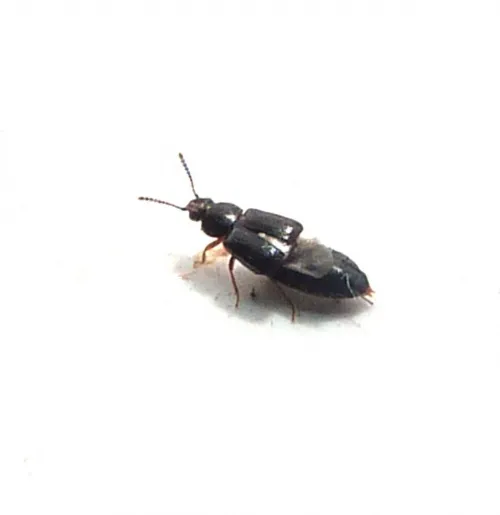
Phyllodrepa floralis
Phyllodrepa floralis
A very small, dark, almost blackish rove beetle. Probably develops in compost, litter etc.. Widespread and fairly frequent in Britain. No additional images available for this species.
Platydracus femoratus
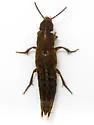
Platydracus femoratus
Identification: The large eyes (~2x the length of the temple) are diagnostic
Red-spotted Rove Beetle
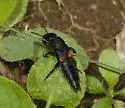
Platydracus fossator
Identification: Black overall with red spots on the tips of the elytra
Platydracus immaculatus
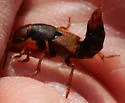
Platydracus immaculatus
Platydracus immaculatus (Platydracus immaculatus) is a species in the family Staphylinidae, commonly known as rove beetles, belonging to the order Coleoptera (Beetles). It is classified within the subfamily Staphylininae, tribe Staphylinini, suborder
Platydracus praelongus
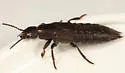
Platydracus praelongus
Identification: pronotum with an uneven punctation and wide (at least as wide as five punctures) impunctate line; head & pronotum are dull metallic ; head small (Black individuals do occur, but mostly in se. US)
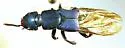
Platydracus rutilicauda
Platydracus rutilicauda
Identification: distinctive: metallic blue, abdomen black with apical ⅓ orange; habitus stout with triangular head (like, e.g., in P. fossator ); the similarly coloured Dinothenarus saphyrinus has orange legs
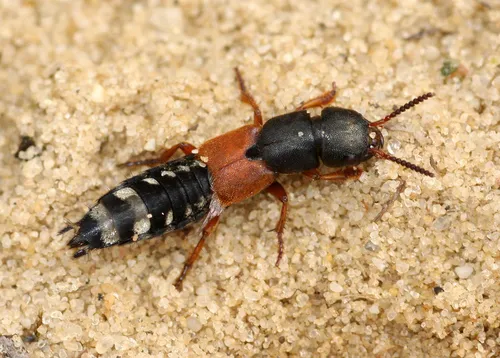
Platydracus stercorarius
Platydracus stercorarius
An impressive and colourful Rove Beetle, P stercorarius is also quite a large species reaching 2 cm or more in length. The legs and elytra are rust red, whilst the head, thorax and abdomen are mainly black. The head is very square at the back and the
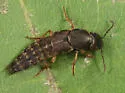
Platydracus viridanus
Platydracus viridanus
Identification: The combination of the small eyes (no longer than the temple), bronze metallic dorsal reflection, evenly punctate pronotum, elytra without spots, an elytral epipleuron with a pale ventral margin, and the distinctive pattern of abdomin
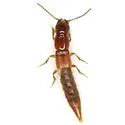
Platyprosopus mexicanus
Platyprosopus mexicanus
Platyprosopus mexicanus (Platyprosopus mexicanus) is a species in the family Staphylinidae, commonly known as rove beetles, belonging to the order Coleoptera (Beetles). It is classified within the subfamily Platyprosopinae, tribe Platyprosopini, subo
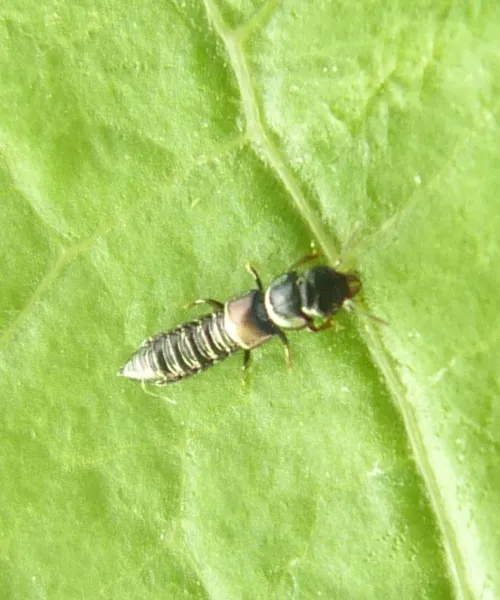
Platystethus arenarius
Platystethus arenarius
A small (4 or 5 mm) rove beetle with short, brown wing cases. The usual host is herbivore dung and the beetle is likely to be found wherever this occurs, irrespective of situation. They have also been found in association with other decomposing mater
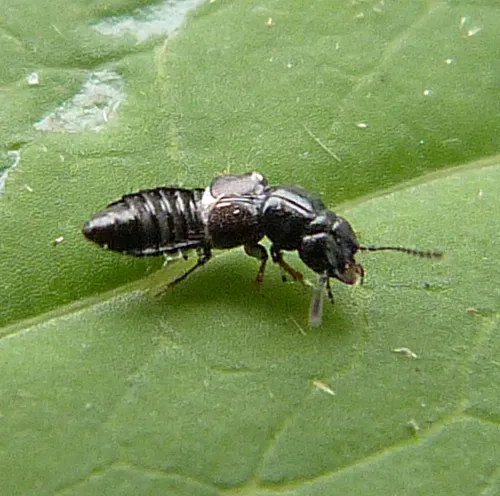
Platystethus cornutus
Platystethus cornutus
Length 2.5 to 4.5 mm. A small black rove beetle with short dark brown elytra. Widespread and fairly frequent in England and Wales. No additional images available for this species.
Platystethus degener
Platystethus degener
earliest NA record: 1971 ; a member of the subg. Craetopycrus Tottenham
Porrhodites inflatus
Porrhodites inflatus
Porrhodites inflatus (Porrhodites inflatus) is a species in the family Staphylinidae, commonly known as rove beetles, belonging to the order Coleoptera (Beetles). It is classified within the subfamily Omaliinae, tribe Anthophagini, suborder Polyphaga
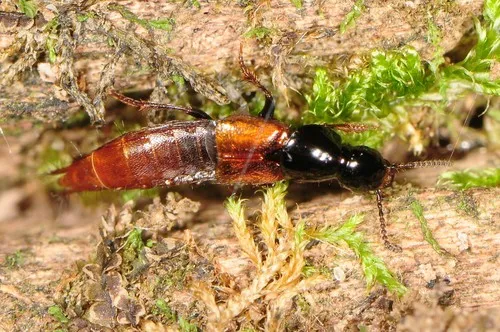
Quedius alesi
Quedius alesi
Previously identified as Q. erythrogaster in literature. That species as currently defined only occurs in western N. America
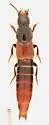
Quedius bicoloris
Quedius bicoloris
Identification: Very similar to the eastern Quedius alesi (referred as Quedius erythrogaster in , see for recent updates) but differs by the single pronotal ponctuation in the dorsal row, the non-uniform elytral ponctuation (2 distinct sizes) and the