
Family Rove Beetles (Staphylinidae)
Staphylinidae is a family in the order Coleoptera. Browse 1,235 named species recorded in this family, or open an individual profile for its available identification and natural-history information.
Guides
Species in Staphylinidae (1,235)
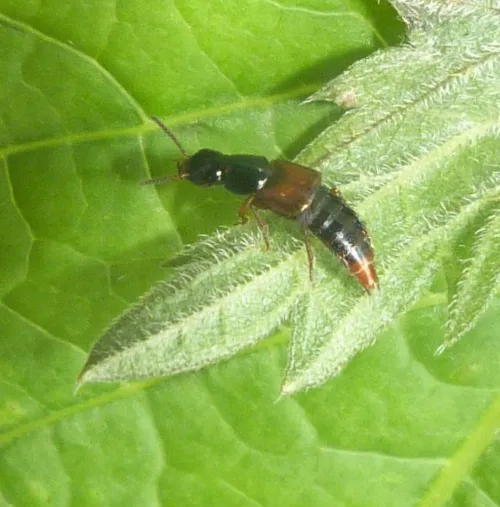
Quedius cruentus
Quedius cruentus
Length 9 mm. The wing cases and the tip of the abdomen are orange-brown, everything else being black. Under bark, and in situations associated with rotting wood, or compost. Widespread in England and Wales, less well recorded elsewhere in Britain. No
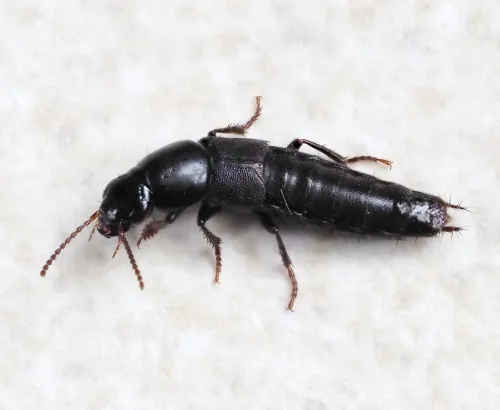
Quedius curtipennis
Quedius curtipennis
11 to 13mm. It is a black with red/brown antennae and tarsi. Detailed examination is necessary for identification. It is similar to several other species, especially the less common Quedius fuliginosus . In this species the meta sternum lacks the lon
Quedius divergens
Quedius divergens
"divergens is the correct name over uteanus because of first revisor action [by Smetana, 1971] (and both names refer to the western population, so the synonymy is correct). 'curtipennis' is the only (but unavailable) name for the eastern subspecies (
Quedius erythrogaster
Quedius erythrogaster
Previous records of this species from other parts of North America referred to undescribed species
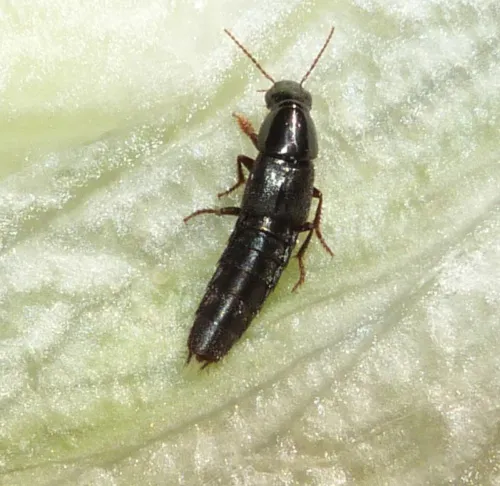
Quedius levicollis
Quedius levicollis
A dark, blackish rove beetle length about 11 to 16 mm. A species of extensive habitats on damp but well drained soils. Found in the roots of grass, dead leaves etc. Widespread and fairly frequent in Britain. No additional images available for this
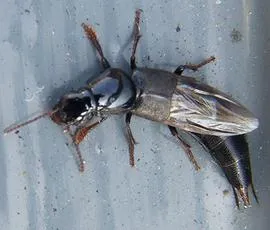
Quedius mesomelinus
Quedius mesomelinus
This is quite a large fairly plain dark brown or almost black rove beetle, sometimes paler when found in caves. Found in a variety of locations including mammal burrows, tree cavities, and caves as well as in various outbuildings and compost heaps. L
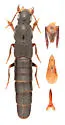
Quedius molochinus
Quedius molochinus
Identification: Pale base of the three antennomeres. Genitalia should be examined for confident discrimination
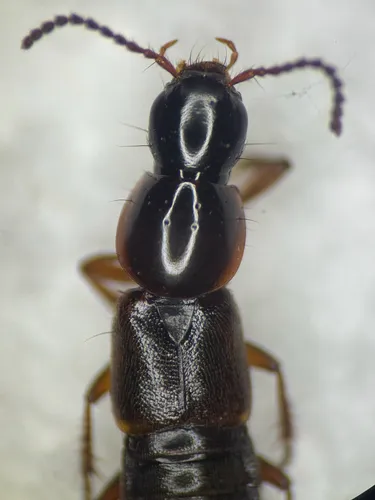
Quedius pellax
Quedius pellax
Identification: Extremely similar in external characters to Q. limbifer and distinguishable only by the shape of the male genitalia. Apical margin of 6th sternite with small shallow triangular emargination (as in limbifer ). Median lobe narrower and
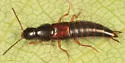
Quedius peregrinus
Quedius peregrinus
Identification: The head shape has a very long space after the eyes that is nearly straight. That and the orange-ish pronotum which can be darker on specimens, but seems to really stand out on live individuals.
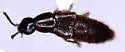
Quedius seriatus
Quedius seriatus
Identification: "This is a very peculiar species within the subgenus Raphirus due to the punctation of the elytra which is of the same type as in several species of the subgenus Distichalius . It cannot be confused with any other species of the subge
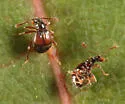
Reichenbachia facilis
Reichenbachia facilis
Identification: Blackish with reddish elytra and pale reddish-yellow legs. Head longer than wide, without punctures between prominent eyes, and with three deep pits of similar size arranged in equilateral triangle, narrower than head. Antennae longer
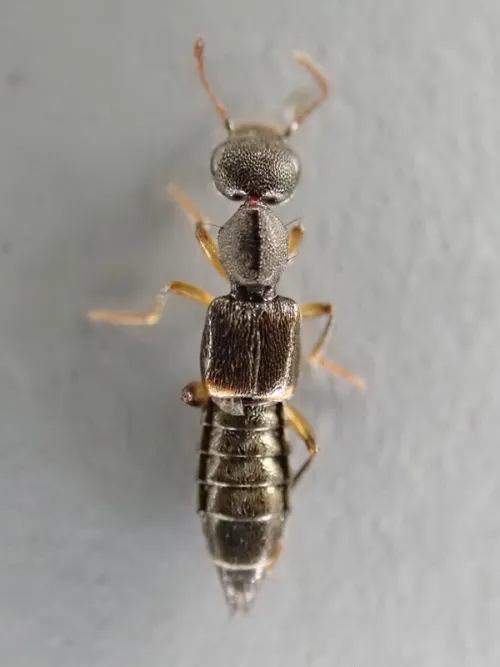
Rugilus orbiculatus
Rugilus orbiculatus
Length about 5 mm. This is a dark brown rove beetle with yellow/orange legs. Found in dung heaps, grass cuttings, flood refuse etc. Although widespread in Britain this species seems to be most frequently recorded in central and eastern England.
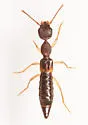
Rugilus rudis
Rugilus rudis
Identification: pronotum without smooth midline; punctures here and on head longitudinally confluent
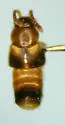
Sableta infulata
Sableta infulata
Identification: Distictive body color, large eyes, transverse antennal segments 8-10, the ligula in the apical half slit into two lobes, transverse pronoun, hypomera fully visible in lateral view. Male tergum 8 distinctive. (Ashe and Gusarov 2004).
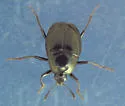
Scaphidium piceum
Scaphidium piceum
Identification: body deep black throughout, rather narrowly oval
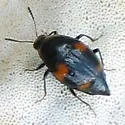
Scaphidium quadriguttatum
Scaphidium quadriguttatum
Identification: at its most colorful Det. Kyhl Austin, 2015
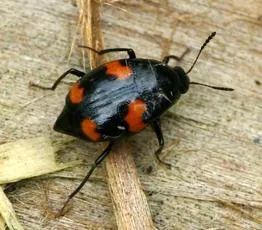
Scaphidium quadrimaculatum
Scaphidium quadrimaculatum
This species is surprisingly a rove beetle, to which it bears little resemblance. It is mainly black and glossyy but with four red spots or blotches (two on each elytra). Often under fungoid logs, or feeding on fungi such as brackets. It feeds on fun
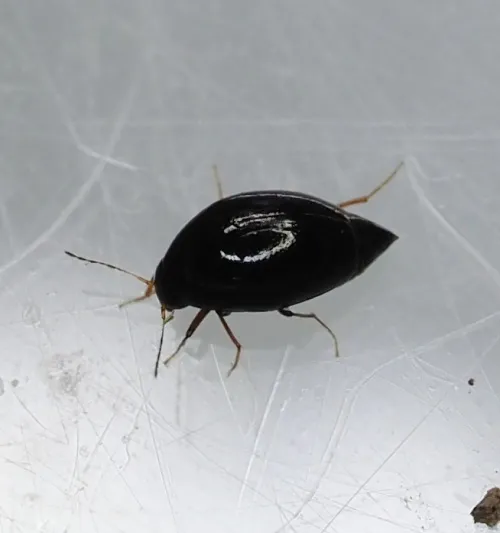
Scaphisoma agaricinum
Scaphisoma agaricinum
A small (2 mm) black beetle with a distinctive tear drop shape. Found in rotting timber and bracket fungi. All year round, especially August and September.
Scaphisoma pusillum
Scaphisoma pusillum
Identification: Lectotype paramere enlarged with constricted base, elytral apex yellow, metacoxal lines arcuate and not bordered with punctures
Sepedophilus brachypterus
Sepedophilus brachypterus
Identification: Male genitalia show variation throughout its range; may actually be a complex of similar species
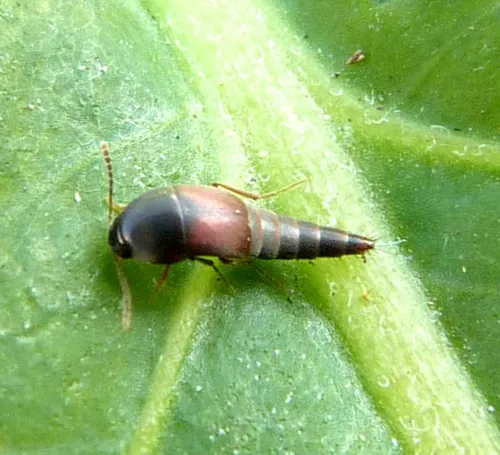
Sepedophilus marshami
Sepedophilus marshami
A very small (5 mm) Rove Beetle. It is shaped like a tear drop with the head at the wider end. It has a blackish body with a wide red central band. A ground dwelling species, often found in ants nests in damp rotting stumps and fallen branches, also
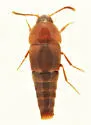
Sepedophilus wickhami
Sepedophilus wickhami
Identification: Holotype Described from Sudbury, Ontario; rare
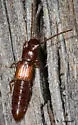
Siagonium americanum
Siagonium americanum
Identification: Distinguished from the other widespread species, Siagonium punctatum , by having elytra with a single stria near the suture (several in punctatum ), the remaining surface being longitudinally striate. Males have a horn above each ante
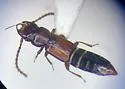
Siagonium stacesmithi
Siagonium stacesmithi
Identification: Distinguished from S. punctatum by a more transverse pronotum, with surface between punctures "alutaceous" (with skin-like lines). Also male horns are slightly stouter than in that species. Compare the pronotal microsculpture of stace
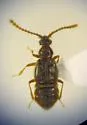
Sonoma tishechkini
Sonoma tishechkini
Identification: Examination of aedeagus is necessary Winged, capable of flight; collected in light trap . It is the only eastern Sonoma species known from low elevations.
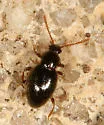
Stenichnus scutellaris
Stenichnus scutellaris
earliest record in our area: ON 2013 (probably earlier in ne US, but no published records)
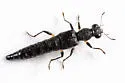
Stenus annularis
Stenus annularis
Identification: Abdomen unmargined, 4th tarsomere deeply lobed, legs bicolored (black dominant), body strongly punctured the sole representative member of the cicindeloides group in the Nearctic (Puthz 2008)
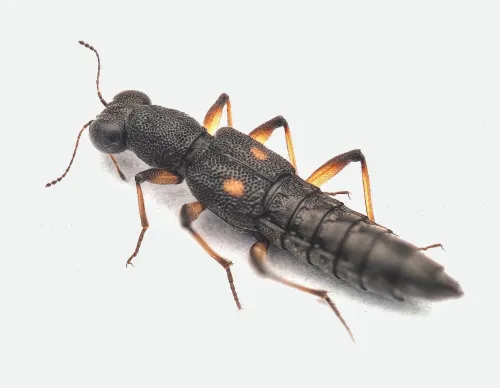
Stenus bimaculatus
Stenus bimaculatus
It is a predator of Springtails and like many Stenus species, it has adapted mouthparts to help it catch and hang onto its prey. Widespread and fairly frequent in England and Wales, less common further north.
Stenus cicindeloides
Stenus cicindeloides
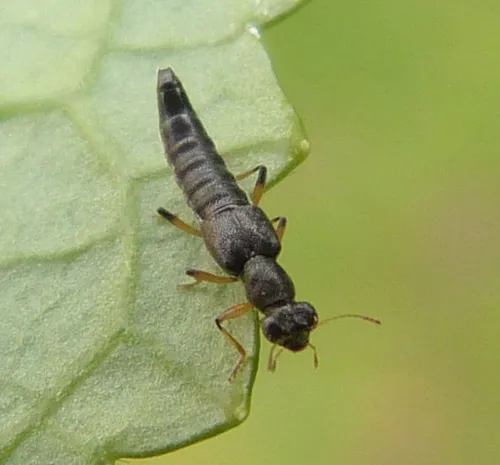
A grey rove beetle. Its mainly orange legs have some black above the knee. Usually, but not exclusively associated with damper areas and water margins. Widespread and fairly frequent in England and Wales, less common in Scotland.
Stenus clavicornis
Stenus clavicornis
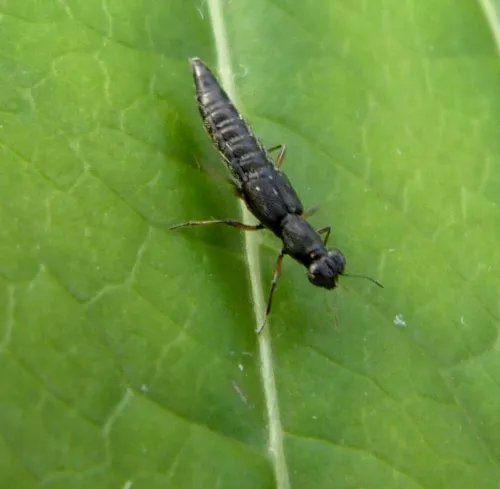
A small greyish black rove beetle measuring about 6.5 mm and very similar in appearance to other members of this family. Found in a wide variety of habitats including grass tussocks, moss and flood debris. No additional images available for this spec
Stenus comma
Stenus comma
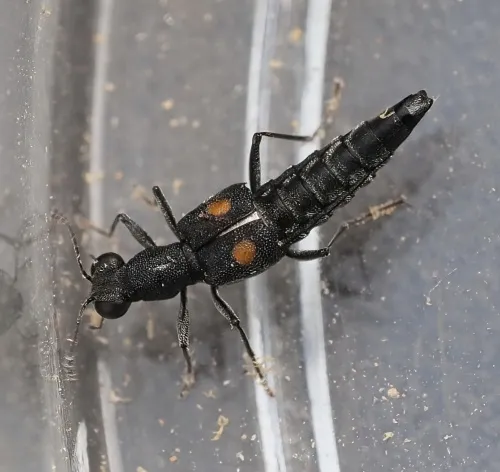
Length 5.5 to 6 mm. This species has noticeable orange spots on the elytra. Other identifying features are black legs, hind tarsi nearly as long as hind tibia and the fact that the basal segment of the palps, and only the very base f the second segme
Stenus croceatus
Stenus croceatus
Identification: Tarsi lobed + abdomen with side border + legs with black geniculations
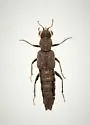
Stenus egenus
Stenus egenus
Identification: Very similar to S. stygicus , differs with male aedeagus and shape of 8th tergite
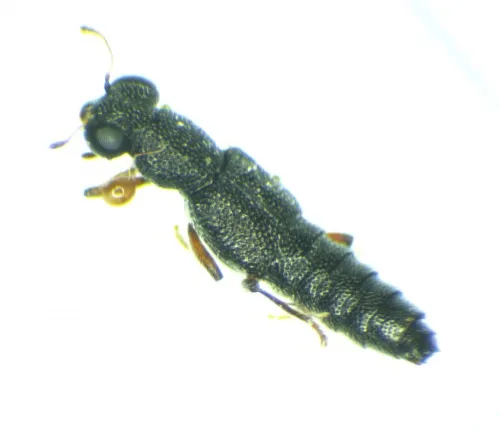
Stenus fulvicornis
Stenus fulvicornis
A generally black beetle similar to several other Stenus species. Many Stenus species are similar and microscopic examination is needed. Unless identified by a recognised expert, a photo is required and the specimen should be examined with a microsco
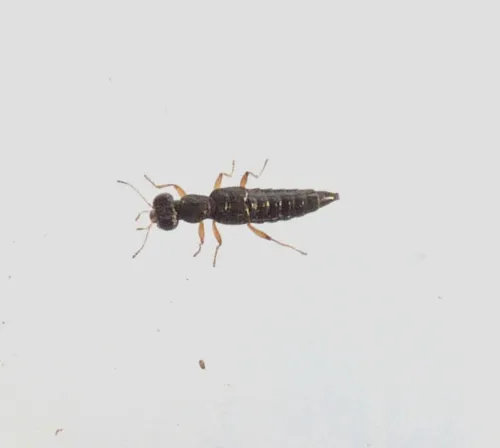
Stenus impressus
Stenus impressus
Length 3.7 to 4.5 mm. A slim black rove beetle with yellowy orange legs. Unless identified by a recognised expert, a photo is required and the specimen should be examined with a microscope. In the comments box, state the key or ID method used and des
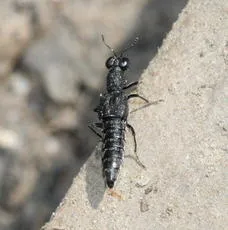
Stenus juno
Stenus juno
Length 6 to 7 mm with tibia-length tarsi and black legs. Characterised by having a central keel at the base of the abdominal tergites. Males have strongly thickened hind femora but simple, spurless tibiae. It is able to withstand a wide range of envi
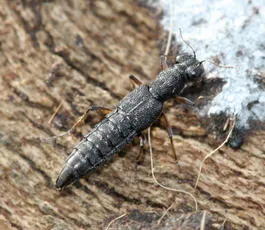
Stenus providus
Stenus providus
Length 6 mm. A slightly shiny greyish rove beetle with slightly orange legs and darkened knees. The head and thorax are studded with dimples. In various types of grassland including dry places, but also in marshes, lakeshores and riverbanks. Common i
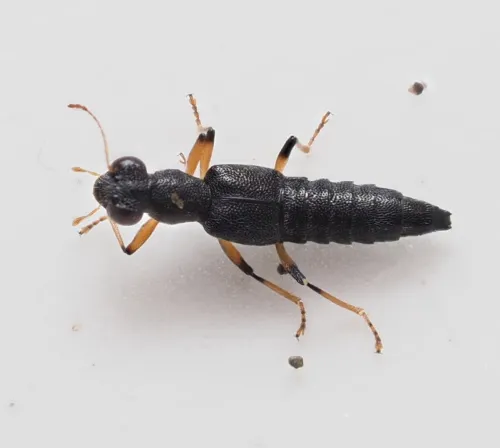
Stenus similis
Stenus similis
5-7mm. The abdomen lacks raised ridges and is mainly cylindrical. The body is all black with yellow legs that have black 'knees'. The first segment of the antennae are black. Images clearly showing the dorsal view, the legs and the antennae. Various
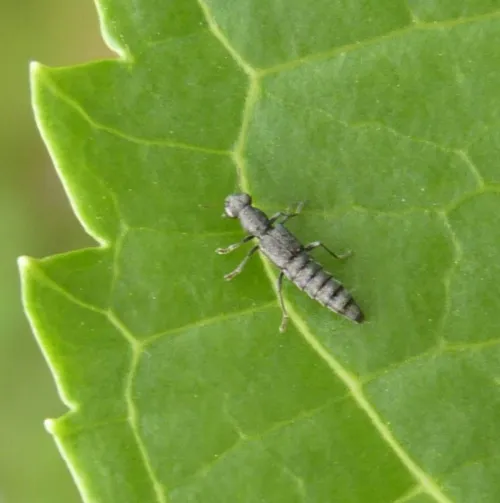
Stenus tarsalis
Stenus tarsalis
Found in wetlands, in richly vegetated areas besides lakes and rivers and in floodplain fens. Widespread and fairly frequent in Britain. No additional images available for this species.
Sunius rufipes
Sunius rufipes
Identification: See other photos and the original description here .
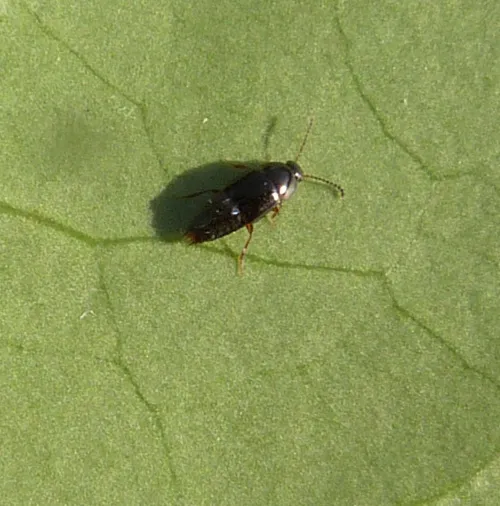
Tachinus laticollis
Tachinus laticollis
A small, almost black rove beetle with short wing cases exposing much of the abdomen. Found in various habitats, but especially associated with woodland. May be encountered in most months of the year but most frequent between April and August. Widesp
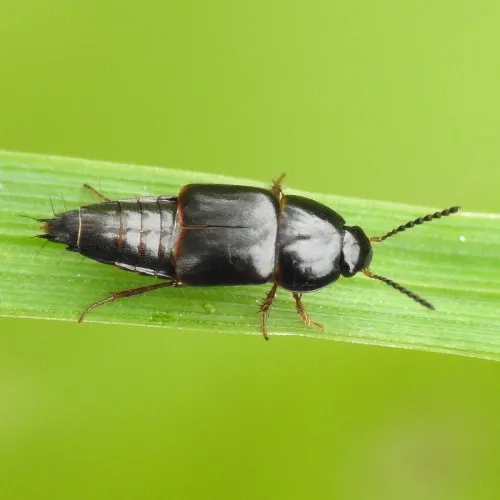
Tachinus rufipes
Tachinus rufipes
This is a relatively common dark coloured rove beetle and it has the typical short wing cases. Prefers damp (but not wet) habitats, damp logs, matted vegetation, compost and even dung. It is a predator of aphids and other small creatures. Common and
Tachinus subterraneus
Tachinus subterraneus
Identification: Elytra with well-defined, large humeral maculae reaching about mid-length, sometimes spreading over most of elytron except suture and apical margin
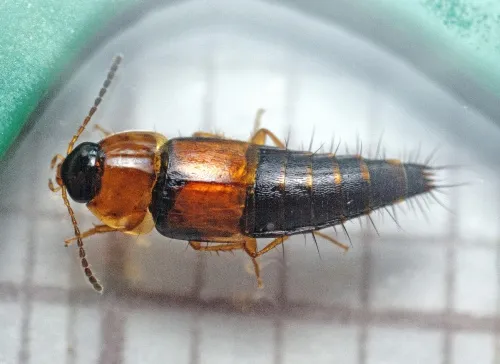
Tachyporus chrysomelinus agg.
Tachyporus chrysomelinus agg.
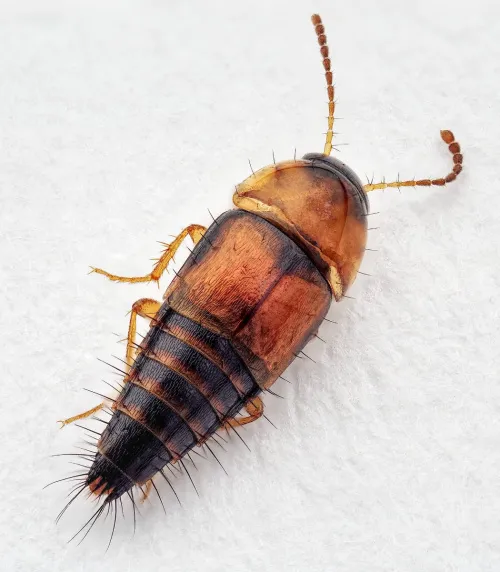
This small orange and black rove beetle is shaped rather like a teardrop, travelling blunt end first! It is very similar to T. dispar and can only be separated by detailed examination. In plant litter, moss, leaves etc, and on the soil surface. Preda
Tachyporus dispar
Tachyporus dispar
This small orange and black rove beetle is shaped like a teardrop. It is very similar to T. chrysomelinus and can only be separated by detailed examination - the hind margin of the elytra have four apical setae in T. dispar, T. chrysomelinus has thre
Tachyporus flavipennis
Tachyporus flavipennis
Identification: Very similar to T. maculicollis, but smaller and entirely yellowish pronotom (maculicollis usually has a dark central cloud, but can sometimes be completely pale like flavipennis).
Tachyporus hypnorum
Tachyporus hypnorum
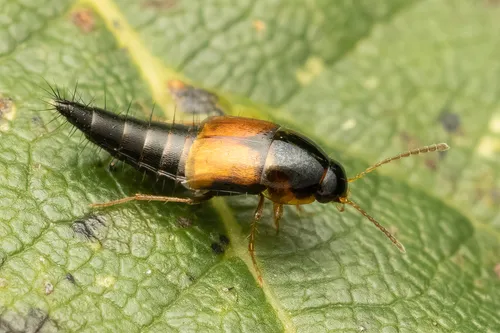
3 - 4 mm. Black with red elytra (wing cases) and a yellow patches on the hind corners of the otherwise black and glossy pronotum. Abdominal tergites have pale yellow hind margins. In plant litter, moss, under leaf rosettes, or amongst soil crumbs on
Tachyporus nitidulus
Tachyporus nitidulus
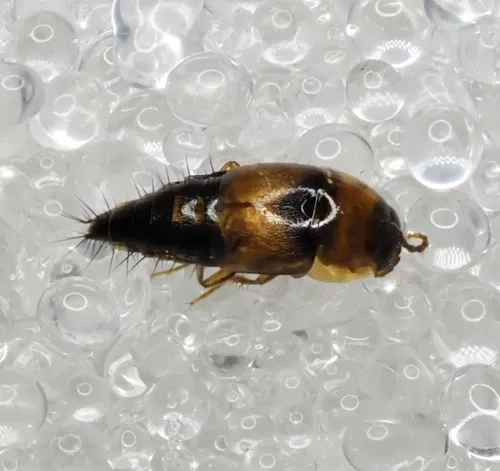
A small (2.5 to 3 mm long) rove beetle. Like most Tachyporus species, it is variable in appearance and shaped like a teardrop travelling blunt end first. It is identified by the second antennal segment being thickened and noticeable wider than the th
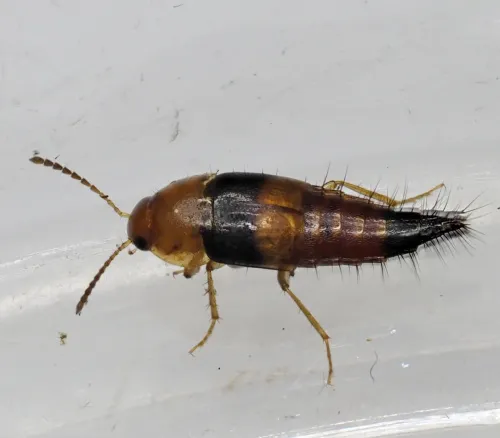
Tachyporus obtusus
Tachyporus obtusus
Length 4 mm. Generally orange but with the front half of the elytra and the last abdominal segments black. Though the genus is generally recognisable, there are 14 UK species so care needs to be taken to identify to species. Typical specimens can be
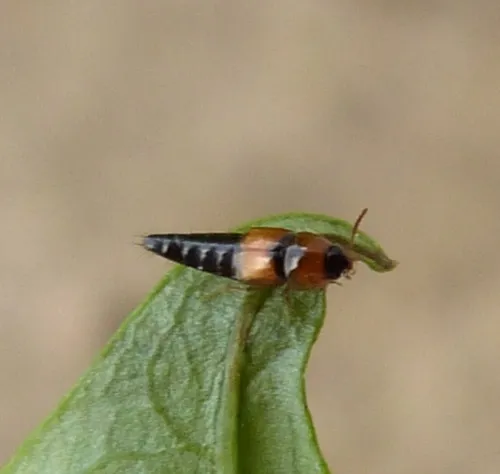
Tachyporus solutus
Tachyporus solutus
A small rove beetle of 3 to 4 mm. It has a black head and tail, but the pronotum and wing cases are orange. Most frequent in central and south eastern Britain. No additional images available for this species.
Tachyporus transversalis
Tachyporus transversalis
Its occurrence in North America is "...difficult to explain. It is unlikely... introduced because of its specialized habitat and because of the pattern of distribution in NA [which] is very unusual for a Holarctic species. Perhaps its restricted habi
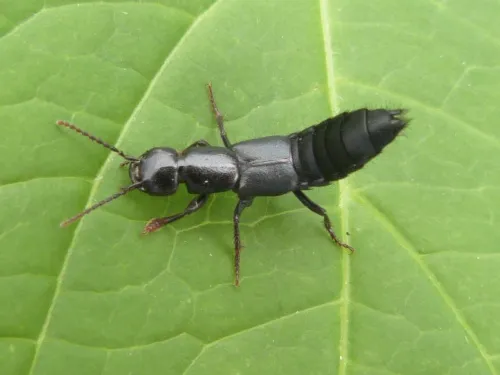
Tasgius ater
Tasgius ater
One of the larger black rove beetles. Detailed examination is needed for a safe id. Various habitats including gardens and post-industrial ground. Widespread and possibly increasing in Britain.
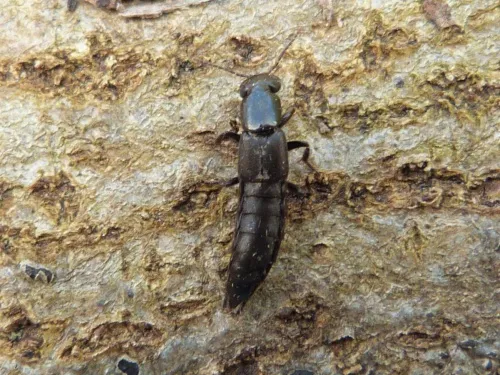
Tasgius globulifer
Tasgius globulifer
Length about 9 or 10 mm with black body and legs. Widespread and fairly frequent in Britain. No additional images available for this species.
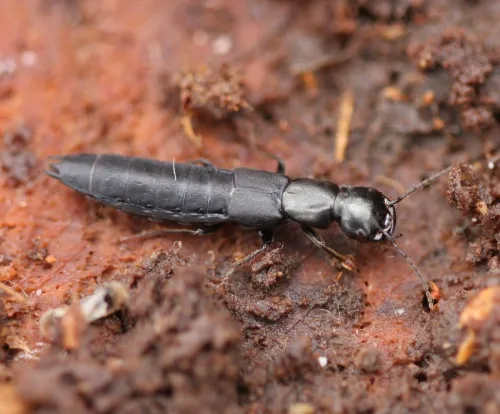
Tasgius melanarius
Tasgius melanarius
14-17mm. Black, sometimes with a bluish sheen to the pronotum. Legs black but with reddish tarsi. Antennae black but getting paler towards the apex. Head transverse and quadrangular. Terminal segment of labial palps large. Pronotum narrows towards th
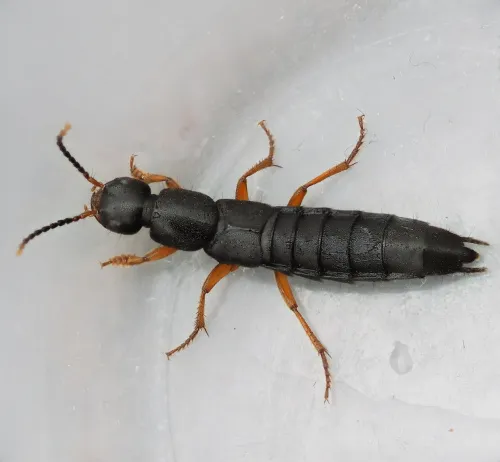
Tasgius morsitans
Tasgius morsitans
One of the larger rove beetles at 12 to 16 mm. It is all black except for red legs and the antennae basal segments + apical segment. It can be distinguished from all other similar species by the dense punctures on the pronotum that are all of even si
Tasgius winkleri
Tasgius winkleri
Identification: General characteristics like T. melanarius , punctures on forebody usually denser (variable to some extent). Pronotum widest at anteriour third [at anteriour 1/5 in T. melanarius ] Safe discrimination by male genitalia. Not in the boo
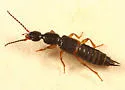
Tetartopeus tetricus
Tetartopeus tetricus
Type Locality: Austin County, Texas; not "Tex.: Austin; on the Colorado River above Columbus, Travis, Texas, United States" as reported: Note, the type series of this sp. was collected by Schwarz who collected in and around Austin County , Texas. Sch
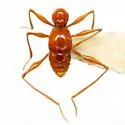
Kretschmarr Cave Mold Beetle
Texamaurops reddelli
Identification: A small, long-legged beetle with short elytra leaving five abdominal tergites exposed; metathoracic wings absent. Color reddish-brown, shiny; pubescent hairs pale, moderately abundant and partially laid back; general body surface spar
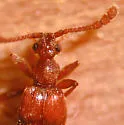
Tmesiphorus carinatus
Tmesiphorus carinatus
Identification: Similar to T. costalis , except pale reddish-brown, densely punctate. Pubescence short, appressed. Vertex with median frontal groove broader, not connected by branches with the fovea . Basal abdominal tergite with a median ridge, as w
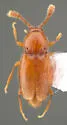
Veraphis capitata
Veraphis capitata
Identification: From Casey's key ... -Elytra finely punctulate; pronotum with short transverse impressed line at base -Head not carinate -Rufo-testaceus -Prothorax wider than long -Eyes small, tempora behind them subparallel and as long as eyes Appar
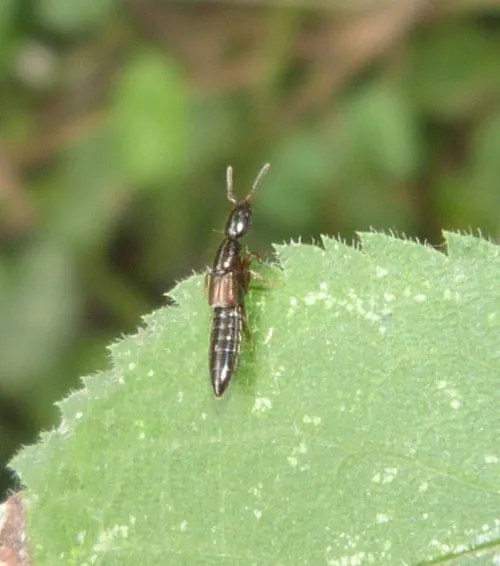
Xantholinus linearis
Xantholinus linearis
Length 7-8mm. This elongated rove beetle has a black head and abdomen, dark brown elytra and a dark red to black pronotum with a metalic sheen. The legs, palps and antennae are yellow to red. It has particularly strong microsculpture on the pronotum.
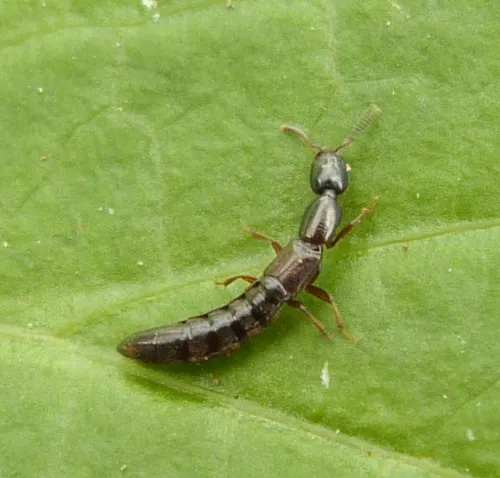
Xantholinus longiventris
Xantholinus longiventris
A long, dark, slim bodied rove beetle. The head and thorax are quite elongated. The species Xantholinus longiventris and Xantholinus linearis can only be separated by microscopic examination. Various habitats but favours damper areas. All year but pe
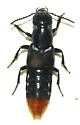
Xanthopygus xanthopygus
Xanthopygus xanthopygus
Identification: The elytra are rather densely hairy. The head and thorax are provided with a few hairs, arising from the large punctures scattered irregularly over their surfaces. Both sexes of X. xanthopygus can be easily distinguished from other sp
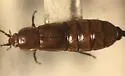
Abdiunguis fenderi
Abdiunguis fenderi
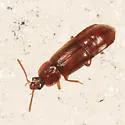
Acidota quadrata
Acidota quadrata
Acidota subcarinata
Acidota subcarinata
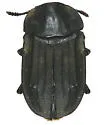
Western Spinach Carrion Beetle
Aclypea bituberosa
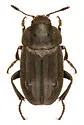
Aclypea opaca
Aclypea opaca
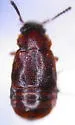
Acruliopsis tumidula
Acruliopsis tumidula
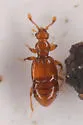
Actiastes desertorum
Actiastes desertorum
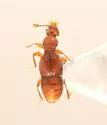
Actiastes foveicollis
Actiastes foveicollis
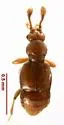
Actiastes fundatum
Actiastes fundatum
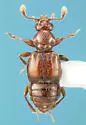
Actiastes globiferum
Actiastes globiferum
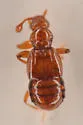
Actium barri
Actium barri
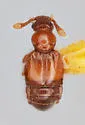
Actium bicolor
Actium bicolor
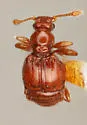
Actizona trifoveata
Actizona trifoveata
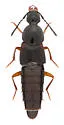
Acylophorus caseyi
Acylophorus caseyi
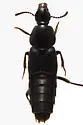
Acylophorus pratensis
Acylophorus pratensis
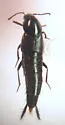
Acylophorus pronus
Acylophorus pronus
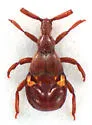
Adranes coecus
Adranes coecus
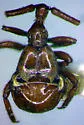
Adranes dietzii
Adranes dietzii
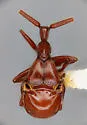
Adranes lecontei
Adranes lecontei
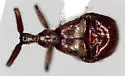
Adranes taylori
Adranes taylori
Agaricomorpha websteri 0
Agaricomorpha websteri
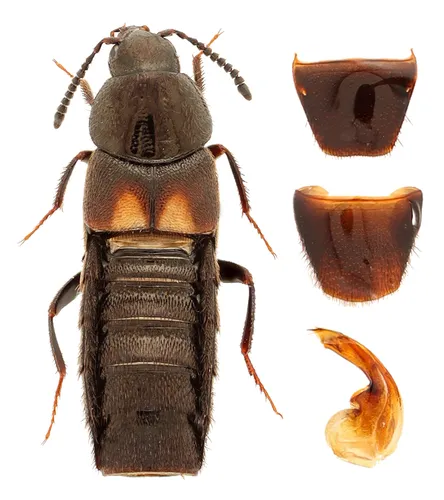
Aleochara bimaculata
Aleochara bimaculata
Aleochara castaneipennis
Aleochara castaneipennis
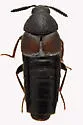
Aleochara curtula
Aleochara curtula
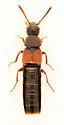
Aleochara daviesi
Aleochara daviesi
Aleochara fumata
Aleochara fumata
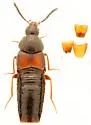
Aleochara gracilicornis
Aleochara gracilicornis
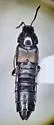
Aleochara lacertina
Aleochara lacertina
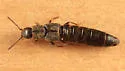
Aleochara littoralis
Aleochara littoralis
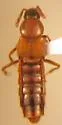
Aleochara lucifuga
Aleochara lucifuga
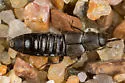
Aleochara pacifica
Aleochara pacifica
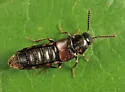
Aleochara rubripes
Aleochara rubripes
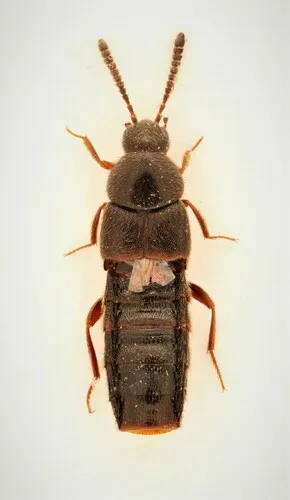
Aleochara sculptiventris
Aleochara sculptiventris
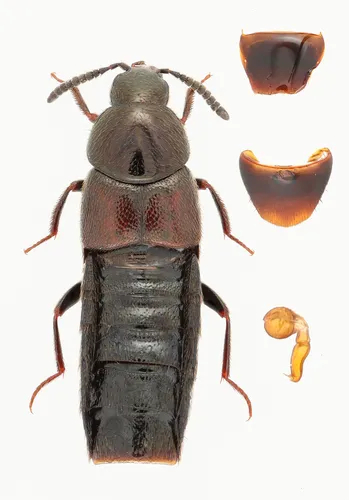
Aleochara speculicollis
Aleochara speculicollis
Aleochara sulcicollis
Aleochara sulcicollis
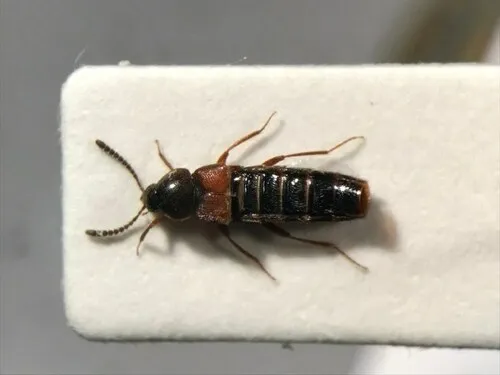
Aleochara thoracica
Aleochara thoracica
Aleochara tristis
Aleochara tristis