
Family Underwing, Tiger, Tussock, and Allied Moths (Noctuidae)
Noctuidae is a family in the order Lepidoptera. Browse 2,425 named species recorded in this family, or open an individual profile for its available identification and natural-history information.
Species in Noctuidae (2,425)
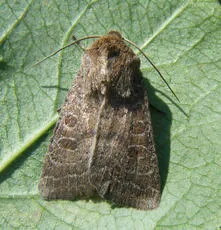
The Rustic
Hoplodrina blanda
Wingspan 31-35 mm. Very similar to The Uncertain, but is generally less yellowish brown and glossier in appearance. Flying from June to August, sometimes there is a second generation in the south in October. Common throughout much of England and Wale
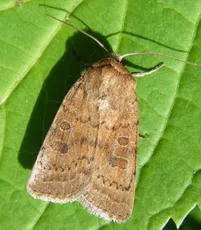
The Uncertain
Hoplodrina octogenaria
Wingspan 28-34 mm. Closely resembling The Rustic (H. blanda), there are a number of differences which contribute to the identification, but sometimes it may be necessary to refer to the genitalia for confirmation. In general, this species is more yel
Hydraecia medialis - Hodges#9511
Hydraecia medialis
Identification: The original description of Hydraecia medialis Smith, is available at the link in the print references below.
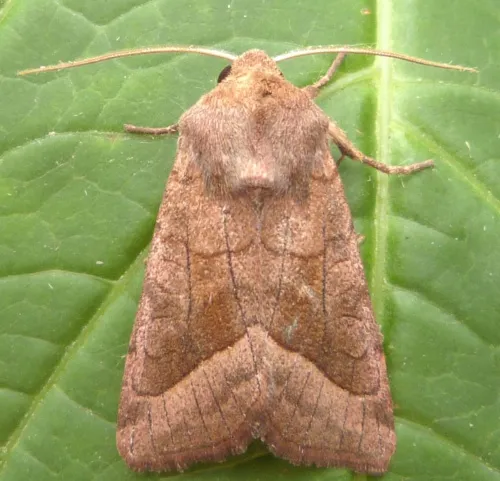
Rosy Rustic
Hydraecia micacea
Wingspan 28 to 45 mm. This species has a wide variation both in colour and size. Frequents waste ground, marshy areas, and other places where the foodplants such as Docks grow. It is on the wing from August to October The larvae live on a range of lo
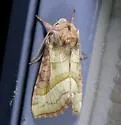
Hydraecia stramentosa - Hodges#9516
Hydraecia stramentosa
Forbes (1954) reported that the moth was "not common."
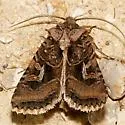
Hyperepia jugifera - Hodges#10576
Hyperepia jugifera
Identification: Fairly distinctive. See references below for full descriptions.
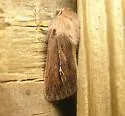
Hypocoena basistriga - Hodges#9439
Hypocoena basistriga
Identification: "The combination of small size, robust build, red-brown color and contrasting white cubital vein will usually identify this moth." -- U. Alberta (link below)
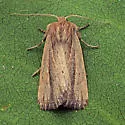
Brown-streaked Rustic - Hodges#9440
Hypocoena rufostrigata
Identification: A medium-size (approx. 2.6-3.0 cm wingspan) orange-brown or tan moth with dark streaking. The forewings are rusty and orange-buff, with a short thick black basal streak and broad dark grey-black median stripe that widens toward the ma
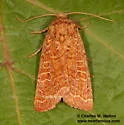
Hypotrix alamosa - Hodges#10599
Hypotrix alamosa
Identification: " Hypotrix alamosa occurs in two forms. In the darker, more common form the forewing is reddish brown with the maculation sharply defined by dark-red lines. The medial area is similar in color to the remainder of the forewing and the
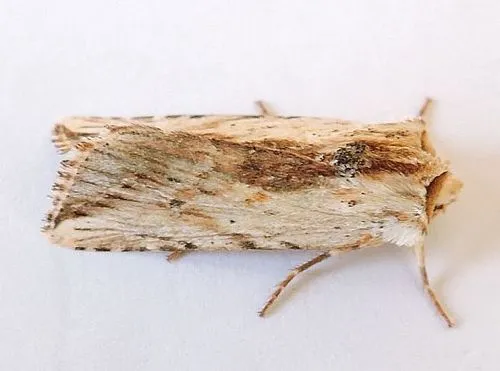
Hypotrix diplogramma - Hodges#10615
Hypotrix diplogramma
Identification: " Hypotrix diplogramma is unmistakable in appearance. The subterminal line is a diffuse series of dark streaks, so the gray shading of the terminal area, so well defined in Hypotrix ferricola , bleeds into the subterminal area in H. d
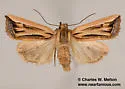
Hypotrix ferricola - Hodges#10614
Hypotrix ferricola
Identification: "Within [the] United States the boldly streaked orange and blackish-gray forewing pattern of Hypotrix ferricola is unmistakable" .
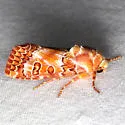
Hypotrix hueco - Hodges#10600
Hypotrix hueco
Identification: " Hypotrix hueco is superficially similar to H. alamosa , but averages larger, the medial area is pale with whitish shading that contrasts with the darker color of the basal and subterminal areas, and the postmedial line is well remov
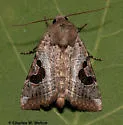
Hypotrix lunata - Hodges#10606
Hypotrix lunata
Identification: "The forewing is a hoary gray with a large entirely black crescent-shaped reniform spot that is fused posteriorly with the black orbicular spot" . This moth is unlikely to be confused with any species found north of Mexico.
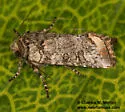
Hypotrix naglei - Hodges#10620.3
Hypotrix naglei
Identification: See original description in print references below .
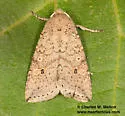
Hypotrix ocularis - Hodges#10620.1
Hypotrix ocularis
Identification: " Hypotrix ocularis can be recognized by the pale gray, or brownish-gray fore wing, the pale rounded orbicular spot with a black central pupil or 'bull's eye,' and the irregular subterminal line" .
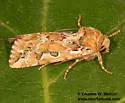
Hypotrix optima - Hodges#10604
Hypotrix optima
Identification: "The mainly orange and gray pattern is dominated by the pale yellow shading around the orbicular spot that forms a flat-bottomed wedge mark between the dark gray reniform and orbicular spots, and the yellow streak at the forewing apex
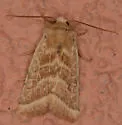
Hypotrix trifascia - Hodges#10597
Hypotrix trifascia
Identification: "Variable in forewing ground color, varying from pale yellowish buff to dark reddish orange. As the name implies, the two transverse lines and the subterminal line are prominently marked by light and dark lines and are relatively stra
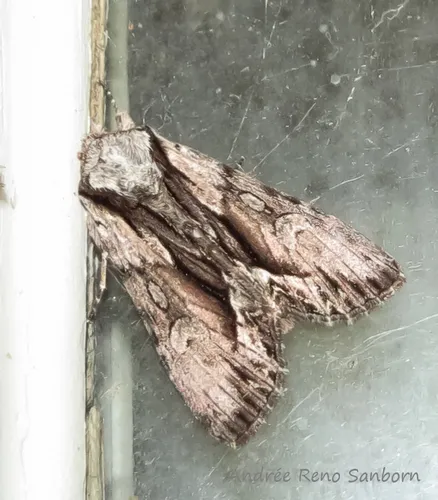
Common Hyppa - Hodges#9578
Hyppa xylinoides
Identification: Adult: antennae bipectinate with broad branches in male, simple in female; forewing gray with black AM and PM lines edged with white toward inner margin; note black basal and median dashes; brown shading just above median dash; hindwi
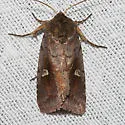
White-eyed Borer Moth - Hodges#9522
Iodopepla u-album
Identification: Adult: forewing purplish-gray with dark shading beyond subterminal line and in patch surrounding reniform spot, composed of U-shaped white marking with dark filling; AM line black, wavy or irregular; PM line similar but less distinct;
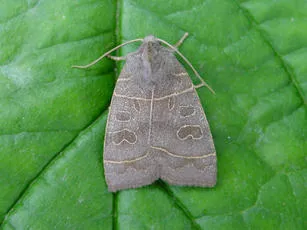
The Olive
Ipimorpha subtusa
Wingspan 27 to 30 mm. Pale olive brown forewing which is not hooked and which has very distinctive patterning. The species inhabits woodlands and marshy areas. The caterpillar spins together the leaves of its foodplants, which are Aspen and other pop
Intractable Quaker - Hodges#10502
Kocakina fidelis
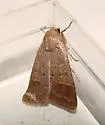
Identification: Adult: forewing grayish to reddish-brown; lines yellowish, broken; spots outlined with yellow; heavy black spot on basal line, fainter black spots on AM and PM lines near inner margin; hindwing grayish-brown, darker toward outer margi
Atlantic Arches Moth - Hodges#10297
Lacanobia atlantica
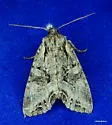
Identification: forewing pale brown with dark brown markings; subterminal line punctuated by large sharp W shape, pale in the middle, and dark brown on either side; claviform spot and basal dash dark brown and conspicuous
Nevada Arches Moth - Hodges#10296
Lacanobia nevadae
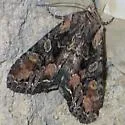
Identification: forewing a mix of dark and light brown: four areas are light-colored - patch at base of wing, orbicular spot, reniform spot, and subterminal area; a conspicuous white "W" is present halfway along the white subterminal line, with the b
Bright-line Brown-eye
Lacanobia oleracea
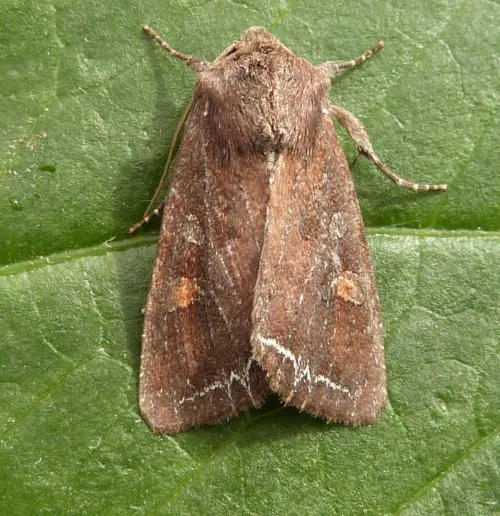
Wingspan 32-37 mm. This moth doesn't tend to vary in appearance, except perhaps in the shade of brown of the forewings. It generally flies from May to July, with an occasional second brood in the south. The larva can be found in abundance on Orache,
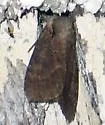
Garden Arches - Hodges#10298
Lacanobia radix
Identification: forewing brownish-gray with darker shading either beyond PM line or beyond ST line [see image links in Internet References section below]; AM and PM lines double, pale, scalloped; inner third of reniform spot with blackish shading; or
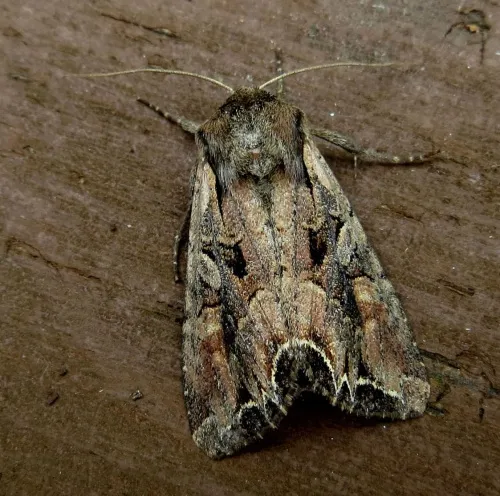
Dog's Tooth
Lacanobia suasa
It prefers lowland habitats, including estuaries, river valleys and salt marshes. It is double-brooded in the south, flying in May and June, then August and September. In the north, the single generation appears on the wing in June and July. The larv
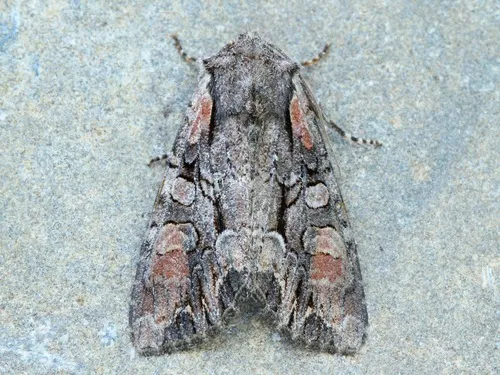
Speckled Cutworm - Hodges#10299
Lacanobia subjuncta
Identification: Adult: forewing purplish-gray with reddish-brown shading; AM and PM lines double, scalloped; black bar runs from outer end of claviform spot to PM line; basal dash black, curving toward orbicular spot at outer end; ST line with W shap
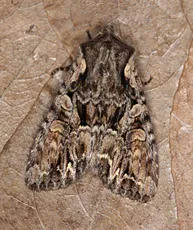
Pale-shouldered Brocade
Lacanobia thalassina
Wingspan 35-38 mm. There is some colour variation, but the species generally shows the 'pale shoulder' that gives rise to its English name. Flying in June and July, sometimes a partial second brood occurs in the south. The nocturnal larvae feed on a
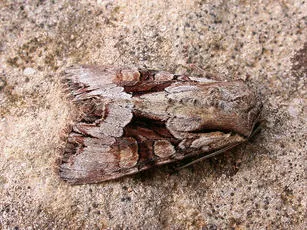
Light Brocade
Lacanobia w-latinum
This species shows a preference for calcareous soils, where it occupies rough ground and heathland. The single generation is on the wing in May and June, sometimes into July. A number of plants are used by the larvae as foodplants, including Broom an
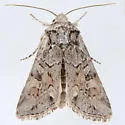
Lacinipolia acutipennis - Hodges#10394.1
Lacinipolia acutipennis
Identification: See Schmidt 2015 p. 111 Part of the Lacinipolia vicina (Grote) species complex. Highly variable. Two forms, Great Basin (formerly L. doira ) and southern California (formerly L. subalba ).
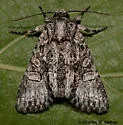
Lacinipolia aileenae - Hodges#10406.6
Lacinipolia aileenae
Identification: Selman & Leuschner description is available in PDF. The horizontal black bar near the tornus will distinguish Lacinipolia aileenae from all other North American species in the genus.
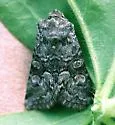
Snaky Arches - Hodges#10372
Lacinipolia anguina
Identification: Adult: forewing pale gray with darker gray median shading; lines and spots black; black dash near anal angle usually broken by pale gray or white ST line; inner half of reniform spot filled with reddish-brown; PM line with large arc n
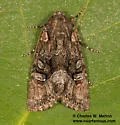
Lacinipolia basiplaga - Hodges#10396
Lacinipolia basiplaga
Lacinipolia basiplaga - Hodges#10396 (Lacinipolia basiplaga) is a species in the family Noctuidae, commonly known as owlet moths, belonging to the order Lepidoptera (Butterflies and Moths). It is classified within the subfamily Noctuinae, tribe Eriop
Lacinipolia bucketti - Hodges#10406.1
Lacinipolia bucketti
Identification: Specimen identified by Lars Crabo .
Lacinipolia comis - Hodges#10408
Lacinipolia comis
Identification: Specimens identified by DNA analysis:
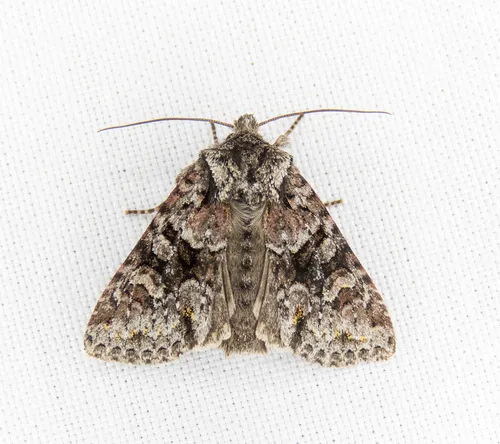
Cuneate Arches - Hodges#10371
Lacinipolia cuneata
Identification: Adult: forewing brownish-gray with large dark brown or blackish patch surrounding reniform and orbicular spots [patch is broad near costa, and narrows toward inner margin, giving overall wedge shape]; short black bar connects AM and P
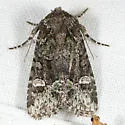
Lacinipolia davena - Hodges#10407
Lacinipolia davena
Identification: Adult: forewing dark gray to blackish to PM line; subterminal area pale gray; beyond ST line slight darker; reniform spot pale; orbicular spot and AM line dark, edged in black; hindwing brownish-gray with dark veins and discal lunule,
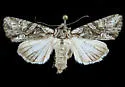
Lacinipolia dimocki - Hodges#10395.2
Lacinipolia dimocki
Identification: See Schmidt 2015 Genitalia: Part of the Lacinipolia vicina (Grote) species complex
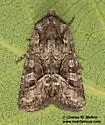
Lacinipolia fordi - Hodges#10406.4
Lacinipolia fordi
Identification: Description can be found in Selman & Louschner at link in citations below.
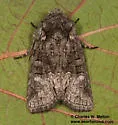
Lacinipolia incurva - Hodges#10373
Lacinipolia incurva
Identification: Superficially very similar to L. anguina . The hindwing of anguina not as light as in incurva . The median area of fore wing of anguina is usually contrastingly darker than the rest of wing, whereas this area of incurva is nearly conc
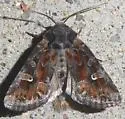
Lacinipolia lepidula - Hodges#10401
Lacinipolia lepidula
Identification: Adult: forewing orangish-brown, lighter and with more orange in subterminal area; reniform spot trapezoidal, wider at upper end, whitish with yellowish-gray shading in basal half, and black smudge in lower corner; AM and PM lines pale
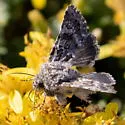
Lacinipolia leucogramma - Hodges#10392
Lacinipolia leucogramma
Identification: Smith (1891) description in PDF. ( 4 )
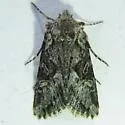
Lacinipolia longiclava - Hodges#10374
Lacinipolia longiclava
Identification: Original description online: (265) Forewing fringe appears checkered with white at the veins
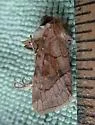
Bridled Arches - Hodges#10405
Lacinipolia lorea
Identification: Genitalia: Very similar to Polia nimbosa 10275. Polia nimbosa has a faint spiracular line but Lachinipolia doesn't. There seems to be a ridge across the back of A8 on Polia but not on Lachinipolia. The spiracles on Polia are supposed
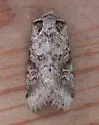
Lacinipolia lustralis - Hodges#10370
Lacinipolia lustralis
Identification: The original description as Dianthoecia lustralis Grote, is available online in the print references below. Godfrey (1972) describes the larva. ( 3 ) Determined from photo by Dr. Gerald Fauske, NDSIRC, NSDU
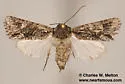
Lacinipolia martini - Hodges#10422.1
Lacinipolia martini
Identification: First described by Selman and again later by Selman & Leuschner. Detailed descriptions available at links in citations below.
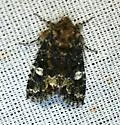
Lacinipolia mimula - Hodges#10351
Lacinipolia mimula
Identification: Grote (1883) original description as Mamestra mimula is online in the print references. "Male. Small-sized, a miniature of Adjuncta . Blackish, with an olive tinge to the ground color, recalling Glaciata . Reniform oval, yellowish whi
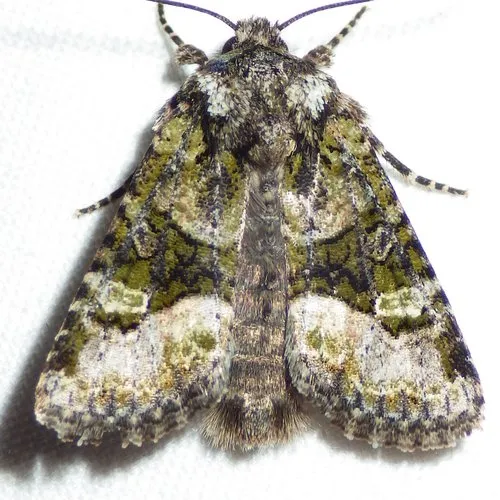
Olive Arches - Hodges#10406
Lacinipolia olivacea
Identification: An extremely variable species, more so than any other species within the genus. Adult - forewing gray tinged with yellowish-green and white; some pink shading in basal and lower subterminal areas; median area dark gray except reniform
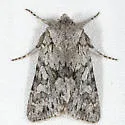
Lacinipolia patalis - Hodges#10423
Lacinipolia patalis
Identification: See Pacific Northwest Moths (PNM) in Internet References below. Specimens identified by DNA analysis:
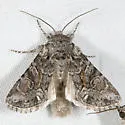
Lacinipolia pensilis - Hodges#10395
Lacinipolia pensilis
Identification: See Schmidt 2015 p. 110 Part of the Lacinipolia vicina (Grote) species complex
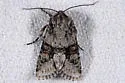
Lacinipolia quadrilineata - Hodges#10422
Lacinipolia quadrilineata
Identification: Detailed description by Selman is available at the link in citations below. Selman describes quadrilineata as a "highly variable species" and cautions his description is based on a "typical" specimen. According to Selman, the median a
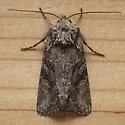
Lacinipolia sareta - Hodges#10395.1
Lacinipolia sareta
Identification: See Schmidt 2015 p. 115 Part of the Lacinipolia vicina (Grote) species complex
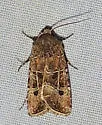
Lacinipolia spiculosa - Hodges#10400
Lacinipolia spiculosa
Identification: Smith (1891) stated "Readily distinguished by the irregular ordinary spots and the pale median lines." ( 3 )
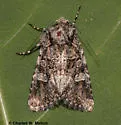
Lacinipolia stenotis - Hodges#10382
Lacinipolia stenotis
Identification: Specimen identified by DNA analysis (BOLD). ( 3 )
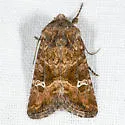
Brown Arches Moth - Hodges#10398
Lacinipolia stricta
Identification: Adult: forewing dark brown in median area, paler yellowish-brown in basal and subterminal areas; terminal area dark brown mixed with black; reniform spot pale brown, angular, with conspicuous thick white outline; hindwing dirty browni
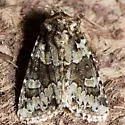
Collared Arches Moth - Hodges#10415
Lacinipolia strigicollis
Identification: Adult - mottled cream or light green and dark gray color with light-filled spots and toothed black and white lines. This is the type species of the genus Lacinipolia . The type specimens (male and female) were collected on Vancouver I
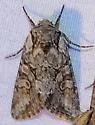
Lacinipolia teligera - Hodges#10393
Lacinipolia teligera
Identification: See Schmidt 2015 p. 109 Part of the Lacinipolia vicina (Grote) species complex
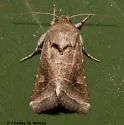
Lacinipolia triplehorni - Hodges#10403.1
Lacinipolia triplehorni
Identification: Adult - sexually dimorphic. Males much paler than females, so much so that maculation of males is very difficult to discern. Much darker females have a wavy subterminal line and a sinuate postmedial line that does not touch the renifo
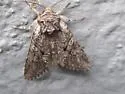
Lacinipolia vicina - Hodges#10394
Lacinipolia vicina
Identification: See Schmidt 2015 p. 107 Part of the Lacinipolia vicina (Grote) species complex
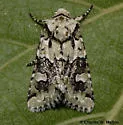
Lacinipolia viridifera - Hodges#10419
Lacinipolia viridifera
Identification: Males have a white hindwing and females are shaded darker grayish-black.
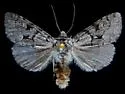
Lasionycta conjugata - Hodges#10362
Lasionycta conjugata
Identification: Description can be found in Crabo & Lafontaine at link in citations below. ]
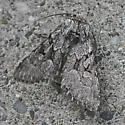
Lasionycta fergusoni - Hodges#10362.1
Lasionycta fergusoni
Identification: The description of Lasionycta fergusoni Crabo & Lafontaine is avaiable in PDF.
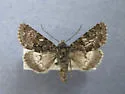
Lasionycta leucocycla - Hodges#10336
Lasionycta leucocycla
Identification: Specimen determined by DNA analysis (BOLD).
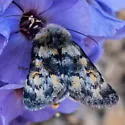
Lasionycta mono - Hodges#10340.1
Lasionycta mono
Identification: "Lasionycta mono is a distinctive species from the high Sierra Nevada and can not be confused with any other Lasionycta. The forewing is checkered dark and light gray. The ventral hindwing is whitish gray with gray discal spot and dis
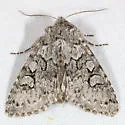
Lasionycta mutilata - Hodges#10360
Lasionycta mutilata
Identification: Forewing is gray with a large reniform spot outlined in black.
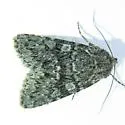
Lasionycta perplexa - Hodges#10352
Lasionycta perplexa
Identification: Detailed description can be found in Crabo & Lafontaine (2009) and at Pacific Northwest Moths at links in citations and references below. ( 3 )
Lasionycta perplexella - Hodges#10352.1
Lasionycta perplexella
Identification: Detailed description by Crabo & Lafontaine can be found at link in citations below.
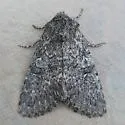
Lasionycta subalpina - Hodges#10352.2
Lasionycta subalpina
Identification: Detailed description found in Crabo & Lafontaine.
Lasionycta subdita - Hodges#10356
Lasionycta subdita
Identification: Specimen determined by DNA analysis (BOLD).
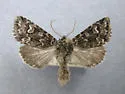
Lasionycta taigata - Hodges#10339.4
Lasionycta taigata
Identification: Specimen determined by DNA analysis (BOLD).
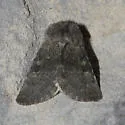
Lasionycta uniformis - Hodges#10346
Lasionycta uniformis
Identification: See Pacific Northwest Moths here Identified by Lars Crabo who has written a paper on Lasionycta.
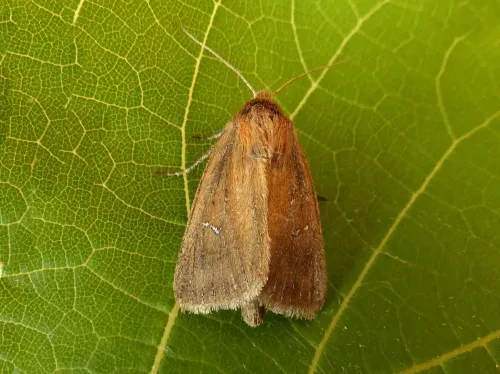
Twin-spotted Wainscot
Lenisa geminipuncta
Wingspan 27 to 32 mm. The forewing is quite broad and blunt. The shade of brown in the ground colour is variable and the kidney mark is often divided into twin spots. This is a species that favours reed beds where the larval foodplant is found i.e. C
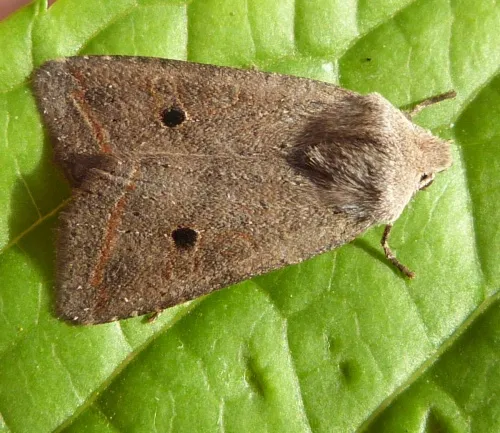
Red-line Quaker
Leptologia lota
Wingspan 33 to 40 mm. A dull brown moth with red-brown lines forming a 'V' shape towards the rear end of the wings. Frequenting open woodland, heathland and damp localities. The single generation flies in September and October, and is readily attract
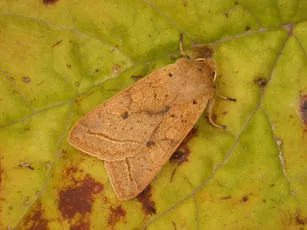
Yellow-line Quaker
Leptologia macilenta
Wingspan 32-36 mm. A reddish or yellowish buff species with an orangey yellow 'V' pattern at the wing tips. Frequenting woodland and bushy localities in the south of its range and moorland in the far north. It flies from September to November and fee
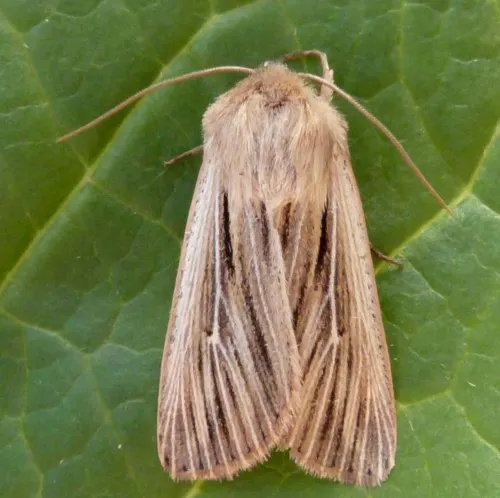
Shoulder-striped Wainscot
Leucania comma
Wingspan 32 to 37 mm. One of the more strongly marked Wainscots. The single generation flies in June and July, and is attracted to light. The caterpillar feeds by night on various grasses, especially Cock's-foot. This is a fairly common moth througho
Leucania commoides - Hodges#10447
Leucania commoides
Identification: Genitalia: Dark-lined Wainscot would be a fitting name for this species.
Leucania incognita - Hodges#10450
Leucania incognita
Identification: There are two principal North American populations, significantly different in superficial appearance. TEXAS Male FW is dirty light brown. A dark streak runs from the base of the wing to the discal dot and just beyond. Discal dot is a
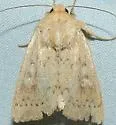
Unarmed Wainscot - Hodges#10459
Leucania inermis
Identification: Adult : FW grayish. Reniform present as a vague, pale spot with a distinct dark discal dot. Orbicular absent. PM and AM lines present, although irregular and not prominent. HW heavily suffused with gray-brown. Male prothoracic tibia w
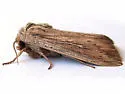
Leucania insueta - Hodges#10449
Leucania insueta
Identification: Adult: forewing light brownish-yellow with brown shading between pale veins; dark brown shading on either side of pale Cu vein and in subterminal area; postmedial (PM) line composed of several dark dots in lower three-quarters, usuall
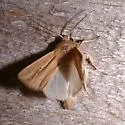
Leucania lapidaria - Hodges#10446.1
Leucania lapidaria
Identification: forewings appear striate with a white line running from the wing base to a small, black discal dot. The white line is shaded with dark brown. Hindwing is white with a few black spots along the outer margin. Genitalia:
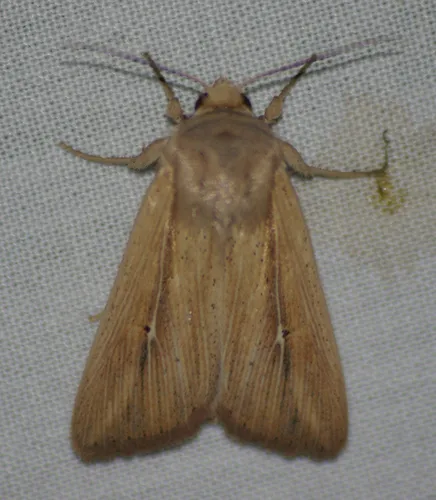
Linda Wainscot - Hodges#10445
Leucania linda
Identification: Specimens identified by DNA analysis: Genitalia:
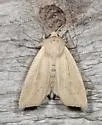
Linen Wainscot Moth - Hodges#10440
Leucania linita
Identification: Adult : Pale straw-colored FW is evenly striated with faint brown lines between veins. Darker brown central streak ends at black-edged white reniform dot. PM is a complete row of tiny dots. NOTE: In darker specimens, the discal dot is
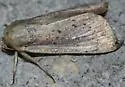
Leucania lobrega - Hodges#10451.1
Leucania lobrega
Leucania lobrega Adams, 2001 was first recorded in the US from Florida as L. opalisans by Dickel (1991).
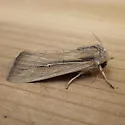
Many-lined Wainscot - Hodges#10446
Leucania multilinea
Identification: forewing light brown streaked with fine brown and blackish lines; black dot above white streak where Cu1 and M3 veins separate; PM line consists of two or three black dots; three sharp even gray lines across collar behind head (if vis
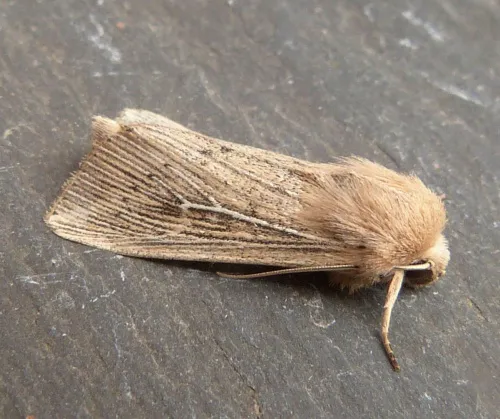
Obscure Wainscot
Leucania obsoleta
Occupying reedbeds, marshes and fenland. The adults fly from May to July, and are attracted to light. The dull, brownish caterpillars feed nocturnally on the stems of Common Reed (Phragmites australis), hiding internally in the stems during the day.
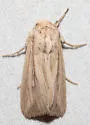
Phragmites Wainscot - Hodges#10444
Leucania phragmitidicola
Identification: Adult: forewing light tan but not uniformly-colored: an indistinct and diffuse pale band runs obliquely from apex to inner margin, surrounded on both sides by slightly darker shading; PM line composed of several dark but inconspicuous
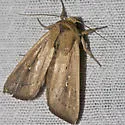
Scirpus Wainscot - Hodges#10455
Leucania scirpicola
Identification: FW flesh-colored to brownish and smooth appearance. A diffuse dark brown streak runs longitudinally from the base of the wing to the small, white discal dot where veins diverge. PM represented by a series of small, black dots. HW is h
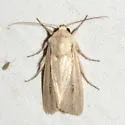
Leucania solita - Hodges#10458.1
Leucania solita
Identification: Medium sized, pale moth. Distinguished from other noctuids by its forwing pattern: a long dark dash delimited above by a white line, running from base to middle. One source discussing the species in Mexico said that the color or the w
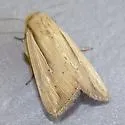
Leucania stolata - Hodges#10453
Leucania stolata
Identification: See Noctuidae of North America (nearctica.com) here Genitalia:
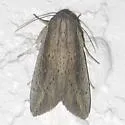
White-dotted Wainscot - Hodges#10453.1
Leucania subpunctata
Identification: Adult: forewing dark brownish-gray in male (lighter brown in female), with a diffuse dark line runs from the wing base to the white discal dot; slightly paler strip extends along length of costa but wing shows little overall contrast;
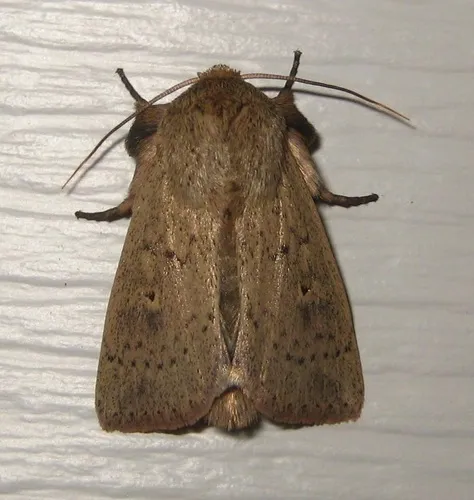
Ursula Wainscot - Hodges#10461
Leucania ursula
Identification: forewing lacks streaking seen in several other Leucania species Distinguished from L. inermis and L. pseudargyria by: 1. coarser/darker speckling on forewing 2. more distinct reniform spot, with gray area above and below it 3. more vi
Leucocnemis nivalis - Hodges#10050
Leucocnemis nivalis
Identification: The original description as Oxycnemis nivalis Smith, and the Hampson (1909) revised description are both available online in the print references below. Determined by Ed Knudson (Texas Lepidoptera Survey)
Leucocnemis perfundis - Hodges#10049
Leucocnemis perfundis
Identification: The original description as Oxycnemis perfundis Smith, is available online in the print references below.
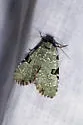
Green Leuconycta - Hodges#9065
Leuconycta diphteroides
Identification: Adult: forewing suffused with green (shade may vary from bright green to bluish-green to grayish-green) or rarely all-white; small black rectangular blotch touches costa near base, and another larger blotch half-way along costa, exten
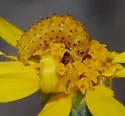
Lineostriastiria hachita - Hodges#9758
Lineostriastiria hachita
Identification: Adult: bright yellow-orange forewing with broad white median band is diagnostic; AM and PM lines black, wavy; subterminal line composed of several black spots; hindwing pale yellow-orange
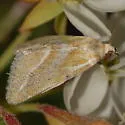
Lineostriastiria hutsoni - Hodges#9756
Lineostriastiria hutsoni
Identification: Specimen determined by DNA analysis (BOLD). ( 3 )
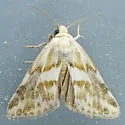
Lineostriastiria olivalis - Hodges#9757
Lineostriastiria olivalis
Identification: Original description is online as Stiria olivalis Barnes & McDunnough, 1916. (12) Wide variation on the amount of darker scales on the forewing. Females tend to be more yelloish than males -
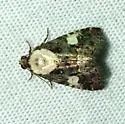
Lithacodia phya - Hodges#9055
Lithacodia phya
Identification: The off-white thorax and basal patch on the forewing are distinctive.
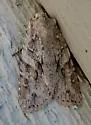
Lithophane abita - Hodges#9928.1
Lithophane abita
Identification: Most conclusively identified by male genitalia
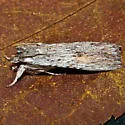
Amanda's pinion - Hodges#9891
Lithophane amanda
Identification: The original description as Xylina amanda Smith, is available in the print references below. Pacific Northwest Moths includes a detailed description of the adult. ( 3 ) Miller & Hammond (2003) describe the larva. ( 4 )