
Lasionycta mono - Hodges#10340.1
Lasionycta mono
This record describes Lasionycta mono (species). Recorded family: Noctuidae. Recorded order: Lepidoptera.
Identification and Appearance
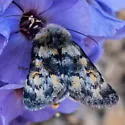
Lasionycta mono is a distinctive species from the high Sierra Nevada and can not be confused with any other Lasionycta. The forewing is checkered dark and light gray. The ventral hindwing is whitish gray with gray discal spot and distinct marginal band, and lacks a postmedial line. It is the smallest species in the sub-group (expanse 26 mm). The male valve appears to taper to a blunt terminus because it lacks a neck and the cucullus is barely wider than the adjacent valve. The digitus is cylindrical and extends well beyond the cucullus. The ventral hindwing resembles those of the L. staudingeri sub-group, but L. mono differs from this sub-group in having a long cylindrical digitus. The female of L. mono is unknown.
Classification
- Kingdom
- Animalia
- Phylum
- Arthropoda
- Class
- Insecta
- Order
- Lepidoptera (Butterflies and Moths)
- Superfamily
- Noctuoidea
- Family
- Noctuidae (Owlet Moths)
- Subfamily
- Noctuinae
- Tribe
- Eriopygini
- Genus
- Lasionycta
Imported taxonomy record. Source availability varies; see the source references and editorial policy below.
Habitat and Range
Habitat
Most likely rocky tundra
Geographic Range
The species is known only from one specimen collected near Mono Pass, CA at 12,000 feet in elevation.
Additional species information
Species notes from the sources
Etymology: "The name refers to the type locality, Mono Pass. It is appropriate because the species is known from a singleton. It is a noun in apposition."
About Butterflies and Moths: the wider group
Order-level background for Lepidoptera, the group containing Lasionycta mono. Species-specific details appear above.
Group overview
Lepidoptera includes approximately 180,000 described species of butterflies and moths. Moths outnumber butterflies roughly 10:1. The monarch butterfly's eastern population has declined by more than 80% since the mid-1990s, and the western population by over 95% since the 1980s. The IUCN lists the migratory monarch as Vulnerable.
Ecological role of the group
Butterflies and moths are essential indicators of ecosystem health. As caterpillars, they are a primary food source for birds - a single nest of blue tit chicks requires ~10,000 caterpillars. Adult moths pollinate many night-blooming plants.
Economic and practical significance of the group
Lepidoptera are critical pollinators. In Europe, grassland butterfly species have declined by almost 50% since the early 1990s. In the UK, three-quarters of butterflies are in decline. In the U.S., five butterfly species have gone extinct since 1950, with 29 listed as endangered.
Recorded sources for this group: IUCN Red List, Xerces Society, USFWS, PNAS, WWF. Imported estimates may describe particular regions or reporting periods.
Photos of Lasionycta mono - Hodges#10340.1 (3)
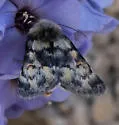
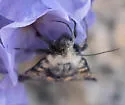
Photo credits: Contributed by Kevin Keegan; Additional contributions by Blocky
Frequently Asked Questions About Lasionycta mono - Hodges#10340.1
What is Lasionycta mono - Hodges#10340.1?
Lasionycta mono - Hodges#10340.1 (Lasionycta mono) is a species in the family Noctuidae, within the order Lepidoptera.
How big is Lasionycta mono - Hodges#10340.1?
Forewing length=16 mm (this measurement is of the single known specimen at the time the species was described in 2009)
How do you identify Lasionycta mono - Hodges#10340.1?
Lasionycta mono is a distinctive species from the high Sierra Nevada and can not be confused with any other Lasionycta. The forewing is checkered dark and light gray. The ventral hindwing is whitish gray with gray discal spot and distinct marginal band, and lacks a postmedial line. It is the smallest species in the sub-group (expanse 26 mm). The male valve appears to taper to a blunt terminus because it lacks a neck and the cucullus is barely wider than the adjacent valve. The digitus is cylindrical and extends well beyond the cucullus. The ventral hindwing resembles those of the L. staudingeri sub-group, but L. mono differs from this sub-group in having a long cylindrical digitus. The female of L. mono is unknown.
Where is Lasionycta mono - Hodges#10340.1 found?
| Feature | Details |
|---|---|
| Habitat | Most likely rocky tundra |
| Range | The species is known only from one specimen collected near Mono Pass, CA at 12,000 feet in elevation. |