
Family Underwing, Tiger, Tussock, and Allied Moths (Noctuidae)
Noctuidae is a family in the order Lepidoptera. Browse 2,425 named species recorded in this family, or open an individual profile for its available identification and natural-history information.
Species in Noctuidae (2,425)
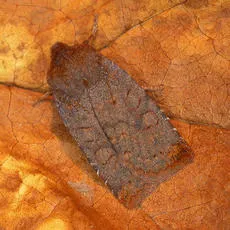
Dark Chestnut
Conistra ligula
Similar to The Chestnut ( C. vaccinii ), but can be told by the S-shaped outer edge to the forewing, which is more rounded in C. vaccinii . Woodland and more open country including farmland. It flies in October and November, and only occasionally lat
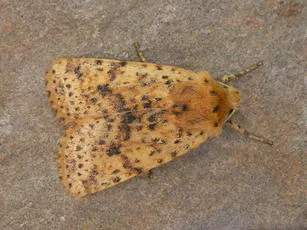
Dotted Chestnut
Conistra rubiginea
True to its name this moth has numerous dark dots on creamy chestnut wings. Flying in October and November, after which it hibernates and appears again in early spring. The foodplants are not well known in the wild, but it is thought to feed on a num
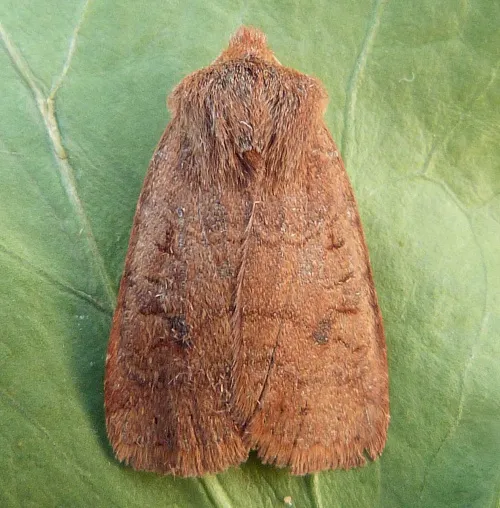
The Chestnut
Conistra vaccinii
Wingspan 28-36 mm. There are a number of variations, but all show a distinctive rounded wing shape. Broad-leaved woodland, scrub, hedgerows and gardens. Occurs in the winter, with moths appearing any time from September to May, especially in mild con
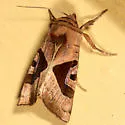
Sharp Angle Shades - Hodges#9548
Conservula anodonta
Identification: Adult: forewing medium brown in basal area, lighter brown in subterminal area, and large dark brown boomerang-shaped patch in median area; a blunt-tipped projection extends from the costa into the sinus of the "boomerang"; subterminal
Copablepharon absidum - Hodges#10690
Copablepharon absidum
Identification: Forewing yellow with varying amounts of olive-gray shading that can enhance the presence of two pale streaks that run parallel to the costa/inner margin. Most specimens have black dots along the PM line and have a black line along the
Copablepharon alaskensis - Hodges#10686.5
Copablepharon alaskensis
Identification: Forewing dull grayish yellow variably dusted with fuscous scales; more yellow and paler along costa, in fold, in ST area and at position of reniform spot; PM line represented by series of black spots; fringe pale grayish green with a
Copablepharon atrinotum - Hodges#10690.2
Copablepharon atrinotum
Identification: Forewing yellowish-green with prominent yellow streaks on costa, thru the cell and into ST area, in the fold, and along the posterior margin of wing; also fine yellow lines on veins in the ST area; black line along cubital vein; PM li
Copablepharon canariana - Hodges#10682
Copablepharon canariana
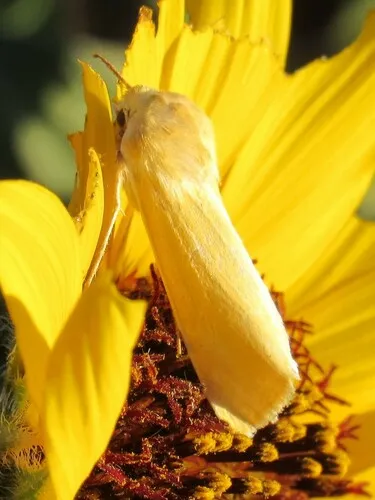
Identification: Distinct genitalia (see MONA Fascicle 27-1). Forewing of yellow ground color with contrasting white strip along edge of costa that expands to a very thin rectangular patch nearing the apex. The yellow FW can be infused with gray to va
Copablepharon columbia - Hodges#10686.4
Copablepharon columbia
Identification: Forewing ground color dark ocher with pale shading on costa, at position of reniform spot and distill to it, and along the fold; veins, especially on outer third of wing pale yellow; PM line represented by series of black spots on vei
Copablepharon flavum - Hodges#10693.2
Copablepharon flavum
Identification: Forewing chalky, pasty yellow with two pale longitudinal yellow streaks running somewhat parallel to costa and inner margin; fringe yellow. Hindwing yellowish white; fringe white. Antenna of male biserrate; female antenna filiform.
Sand-verbena Moth - Hodges#10690.1
Copablepharon fuscum
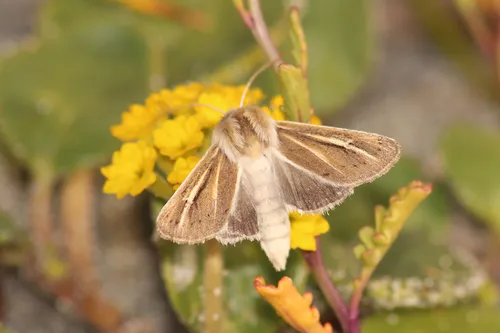
Identification: Forewing olive green to darker olive brown with contrasting yellow streaks in the cell, the fold, and as a thin line along the cubital vein; pale streak thru cell to ST area has black shading on both sides; fringe is similar to FW col
Copablepharon gillaspyi - Hodges#10686
Copablepharon gillaspyi
Identification: Forewing pale gray with pale whitish longitudinal streaks, including streaks between the veins on outer third of wing; no indication of transverse lines. Hindwing pale fuscous.
Copablepharon grandis - Hodges#10681
Copablepharon grandis
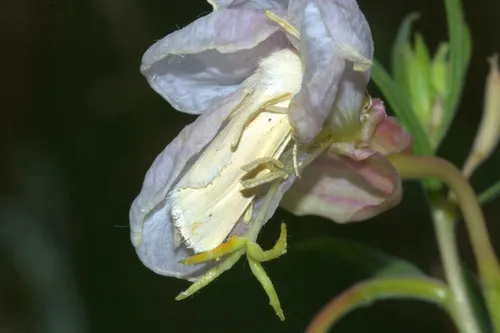
Identification: Evenly colored pale yellow forewings and fringe; hindwings white with moths from some locations exhibiting varying degrees of fuscous shading toward outer margin; male antenna beadlike. MONA Fascicle does not address forewing transver
Copablepharon longipenne - Hodges#10689
Copablepharon longipenne
Identification: Forewing ground color pale to dark yellow and overlaid with scales that give it an ocherous to greenish color; nominal form from northern Great Plains has pale shading along costa, beyond reniform and often in the fold, with some fusc
Copablepharon michiganensis - Hodges#10689.1
Copablepharon michiganensis
Identification: Forewing yellowish orange with paler yellow streaks on costa, through reniform area and in the fold; PM line represented by series of blacks spots on veins; basal half of fringe concolorous with FW and white on outer edge. Hindwing ma
Copablepharon mustelini - Hodges#10684.1
Copablepharon mustelini
Identification: Forewings and thorax pale tan to whitish tan without yellowish hue; paler creamy white longitudinal streaks thru reniform, fold and costa; occasional trace of dark dots along PM line; fringe concolorous with wing. Hindwing translucent
Copablepharon mutans - Hodges#10686.3
Copablepharon mutans
Identification: Forewing yellow or pale ocher with varying amounts of fuscous scales that create streaked appearance; black spots on veins represent AM/PM lines; enlarged yellow patch in area of reniform spot; most forms with thin dark line above cub
Copablepharon nevada - Hodges#10686.2
Copablepharon nevada
Identification: Forewing dark yellow with dark fuscous longitudinal streaks; black spots on veins represent AM/PM lines; fringe basal half pale ocher, outer half white. Hindwing dark fuscous; fringe very pale fuscous on basal half, white on outer. An
Copablepharon opleri - Hodges#10691.1
Copablepharon opleri
Identification: Small; forewing dark mottled yellow with a pasty texture, without paler longitudinal streaks; transverse lines and maculation absent; fringe yellow, concolorous with forewing or slightly paler. Hindwing fuscous with white fringe. Male
Copablepharon pictum - Hodges#10686.1
Copablepharon pictum
Identification: Forewing vividly patterned with brown and yellow streaks over ocher ground color; AM/PM lines represented by black spots on veins; fringe basal half darker brown than forewing, outer half white. Hindwing dark fuscous gray; fringe chec
Copablepharon robertsoni - Hodges#10687.1
Copablepharon robertsoni
Identification: Forewing mainly gray without yellow; blackish-gray reniform spot and AM/PM lines; thin whitish-gray streak in fold below cubital vein and wider more diffuse streak extending from AM line to reniform spot to PM line. Hindwing pale fusc
Copablepharon serrata - Hodges#10684
Copablepharon serrata
Identification: One of the least variable species in the genus. Forewing is a pale yellowish tan with some individuals exhibiting slightly paler longitudinal streaks. Hindwing is white with slight yellow tint toward outer margin. Male antenna is bise
Copablepharon serratigrande - Hodges#10684.2
Copablepharon serratigrande
Identification: Forewing even dark yellow without spots or streaks; fringe pale yellow. Hindwing white with pale fuscous wash and yellow along wing margin; fringe pale fuscous. Male antenna biserrate.
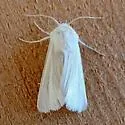
Copablepharon spiritum - Hodges#10693.1
Copablepharon spiritum
Identification: creamy white or pale yellow forewing with varying amounts of black speckling and usually with black dots on the PM line; FW fringe bicolored, yellow proximally and white distally; male antenna biserrate, female antenna filiform
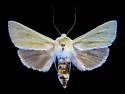
Copablepharon viridisparsa - Hodges#10687
Copablepharon viridisparsa
Identification: Most geographically variable species within the genus. MONA Fascicle 27-1 proposed 4 subspecies. Forewing ground color is generally a medium to dark gray with speckling of yellow scales that result in a greenish-gray cast. Individuals
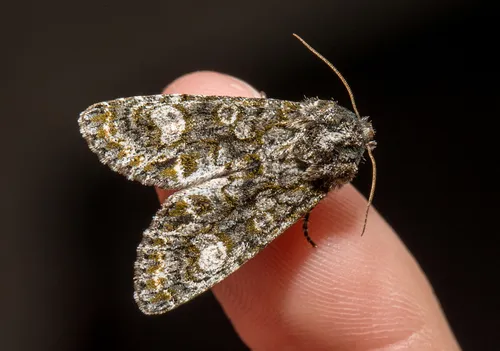
Grote's Sallow - Hodges#10021
Copivaleria grotei
Identification: Overall mottled dark gray with contrasting whitish orbicular and reniform spots and a pale "arrowhead" patch at the junction of the (folded) forewings near anal angle. Many specimens show ochre to gold or olive-brown highlights scatt
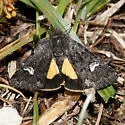
Coranarta luteola - Hodges#10332
Coranarta luteola
Identification: Adult: forewing blackish with scattered pale scales giving hoary appearance, reniform spot white with some black scales in the middle, hindwing bright yellow with broad black marginal band and white fringe with no checkering Larva: bl
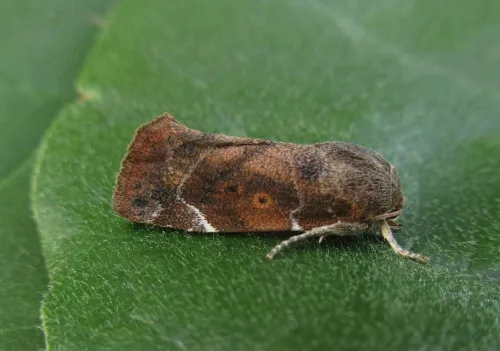
Lesser-spotted Pinion
Cosmia affinis
Wingspan 28 to 35 mm. One of three rather similar British species. Frequents woodland, gardens and hedgerows especially were the larval foodplants, English Elm and Wych Elm are present. The larval foodplants are English Elm and Wych Elm - the species
Cosmia elisae - Hodges#9814.1
Cosmia elisae
Identification: Adult: forewing light to medium gray with distinct black lines and black-rimmed spots filled with ground color; reniform spot bent into V shape; orbicular spot oval or irregular-shaped, sometimes connecting to reniform spot; claviform
Cosmia praeacuta - Hodges#9814
Cosmia praeacuta
Identification: Adult: forewing medium gray (to almost black out to subterminal line in some individuals) with distinct black lines and black-rimmed spots filled with ground color; reniform spot slightly curved (but not bent into V shape as in C. eli
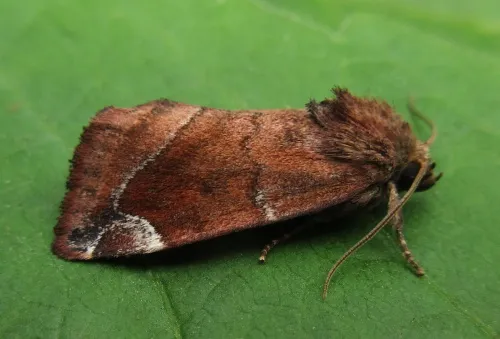
Lunar-spotted Pinion
Cosmia pyralina
Wingspan 29-34 mm. This moth resembles the Lesser-spotted Pinion but has generally broader forewings and paler hindwings. Hedgerows, woodlands, parks and sometimes gardens. It flies in July and August and is attracted to light, as well as sugar. The
The Dun-bar
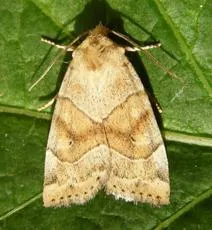
Cosmia trapezina
Wingspan 25-33 mm. A variable species, with the ground colour ranging from ochreous-yellow to dark brown, with a varyingly contrasting band on the forewing. However it is distinctly different from the other British Cosmia species, and not difficult t
Verbena Moth - Hodges#9661
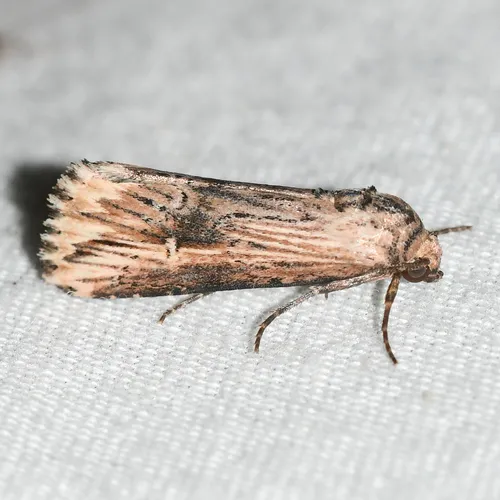
Crambodes talidiformis
Verbena Moth - Hodges#9661 (Crambodes talidiformis) is a species in the family Noctuidae, commonly known as owlet moths, belonging to the order Lepidoptera (Butterflies and Moths). It is classified within the subfamily Condicinae, tribe Leuconyctini,
The Coronet
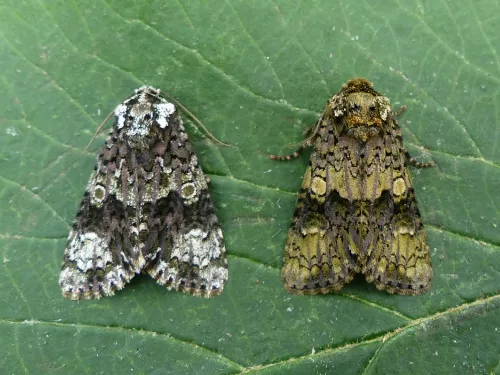
Craniophora ligustri
Wingspan 30 to 35 mm. When fresh, some individuals show an olive-green suffusion to the darker parts of the forewing. The habitat preferences are woodland, commons, downland and marshy places. The flight period is during June and July. The larval foo
Norman's Quaker - Hodges#10501
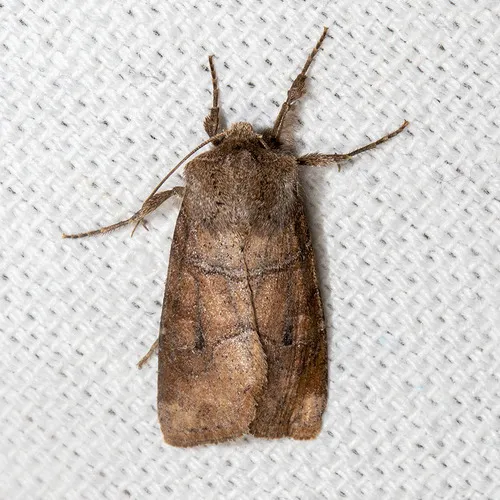
Crocigrapha normani
Identification: forewing usually dark brown but may be light or dark yellowish, orangish, reddish, or grayish; pale whitish antemedial (AM) line is fairly straight; pale postmedial (PM) line curves under reniform spot and slants up on both sides to t
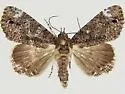
Cropia connecta - Hodges#9622
Cropia connecta
Identification: Smith original description as Chytonix connecta can be viewed online from the print references. Schaus original description as Eudipna templada : "Antennte serrate and ciliate. Primaries brown-grey, finely irrorated over a lighter gro
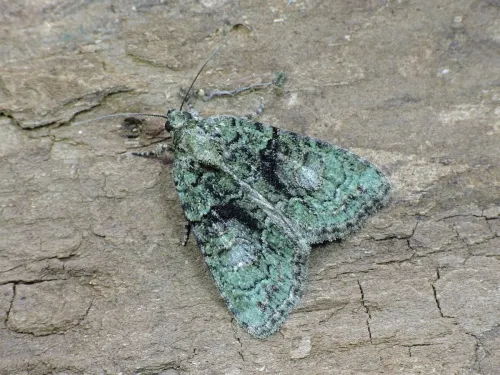
Tree-lichen Beauty
Cryphia algae
Although distinctive in appearance, photographic evidence is requested to support records for this species due to its rarity in Britain at present. A migrant that is most likely to be recorded at light. Most British records are during July and August
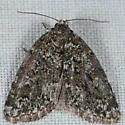
Cryphia Moth - Hodges#9292
Cryphia cuerva
Identification: Adult: thorax and abdomen slender, delicate; forewing mottled with cryptically-colored mix of black, white, bronzy yellow, and gray scales; lines and spots obscure; some specimens have an overall dark forewing, whereas others have ext
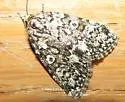
Cryphia olivacea - Hodges#9287
Cryphia olivacea
Identification: The original description as Cerma olivacea Smith, is is available in PDF or view online is available online in the print references below. Forewing is olive green with large orbicular which has a black center spot. Determined by Chuck
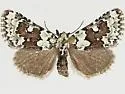
Cryphia sarepta - Hodges#9295
Cryphia sarepta
Identification: Fresh adults have a pale greenish tint.
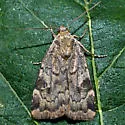
Catocaline Dart - Hodges#11012
Cryptocala acadiensis
Identification: forewing olive-green or various shades of brown with light gray costal border expanding downward to include reniform spot; median area grayish brown, bordered by sharply-scalloped AM and PM lines; pale subterminal area has wavy gray S
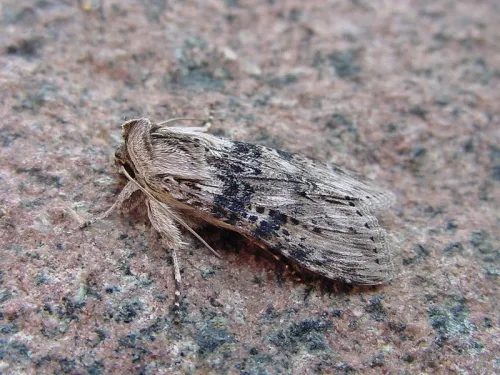
The Wormwood
Cucullia absinthii
Wingspan 32 to 40 mm. Like other members of the Cuculliinae , when at rest they have an accentuated posture with a forward-projecting tuft of hair on the thorax. Occupying waste ground, quarries, sea-cliffs and similar habitats. The larvae eat the fl
Cucullia antipoda - Hodges#10206
Cucullia antipoda
Identification: Adult: forewing brownish-gray with black shading between distinct reniform and orbicular spots, which are partially filled with black; prominent black anal dash, and heavy black streaking along inner margin; lower part of PM line form
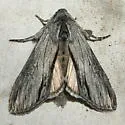
Cucullia astigma - Hodges#10214
Cucullia astigma
Identification: Two disjunct populations. Colorado and New Mexico population have forewings as uniform medium gray with reniform and orbicular spots absent. Southern California population has forewings usually shaded white with reniform and orbicular
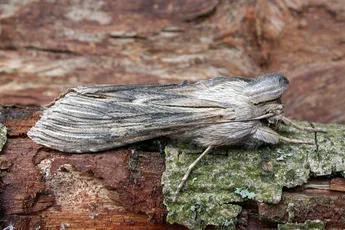
Chamomile Shark
Cucullia chamomillae
Wingspan 40 to 42 mm. Very similar to The Shark ( C. umbratica ), it can be told apart by the fringe of the hindwing, which has a darker central line running through the centre, forming a triple-banded effect. In umbratica , the fringe is all pale wi
Cucullia cucullioides - Hodges#10210
Cucullia cucullioides
Identification: Detailed description is available in MONA Fascicle 26-1 (free PDF download) and Robert Poole's Nearctica, both of which are linked in citations below.
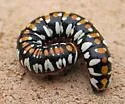
Cucullia dorsalis - Hodges#10190.2
Cucullia dorsalis
Identification: forewing is uniform gray with dark anal dash
Cucullia eccissica - Hodges#10192.1
Cucullia eccissica
Identification: Detailed description can be found in MONA Fascicle 26-1 (free PDF available) and at Robert Poole's Nearctica, both of which are linked in references and citations below.
Cucullia eulepis - Hodges#10209
Cucullia eulepis
Identification: Grote (1876) original description as Cleophana eulepis is available online in the print references. Listed as Copicucullia eulepis on the Utah checklist. ( 5 )
Gray hooded-owlet - Hodges#10197
Cucullia florea
Identification: Rfw 20.3 mm, fw blue-gray, pm line defined by promimal and distal black scales, hw fuscous darker outwardly.
Cucullia laetifica - Hodges#10191
Cucullia laetifica
Identification: Hampson described the larva. description .
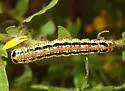
Cucullia lethe - Hodges#10191.1
Cucullia lethe
New species, described by Robert W. Poole in Fascicle 26.1 of "The Moths of North America North of Mexico".
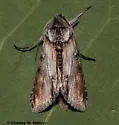
Cucullia lilacina - Hodges#10196
Cucullia lilacina
Identification: The forewing has a bright violet or lilac hue and a distinct brown patch along the costa from the reniform spot to the outer margin. ( 3 )
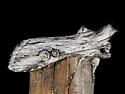
Cucullia mcdunnoughi - Hodges#10208
Cucullia mcdunnoughi
Identification: Henne (1940) original description as Copicucullia mcdunnoughi is available in the print references.
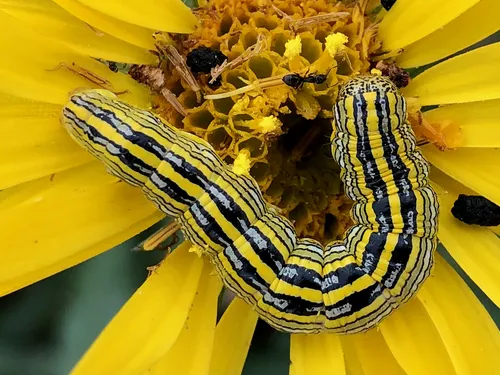
Mountain Hooded Owlet - Hodges#10201
Cucullia montanae
Identification: Adult: forewing dull grayish-brown with central and basal areas paler than leading and trailing edges; reniform and orbicular spots large, filled with light brown scales and partially outlined with black; inner margin (trailing edge o
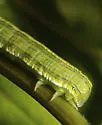
Cucullia omissa - Hodges#10199
Cucullia omissa
Identification: The original description of Cucullia omissa Dod, is available online and in PDF at the link in the print references below. ( 3 ) - Forewing is purplish gray with brown shading from the apex to the orbicular spot. The black dashes near
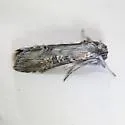
Cucullia postera - Hodges#10198
Cucullia postera
Cucullia postera - Hodges#10198 (Cucullia postera) is a species in the family Noctuidae, commonly known as owlet moths, belonging to the order Lepidoptera (Butterflies and Moths). It is classified within the subfamily Cuculliinae, superfamily Noctuoi
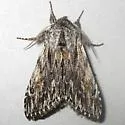
Cucullia pulla - Hodges#10180
Cucullia pulla
Identification: The original description as Lathosea pulla Grote, is available online in the print references below.
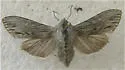
Streaked Hooded Owlet - Hodges#10183
Cucullia strigata
Identification: Adult: forewing medium gray with fine black streaks along veins in subterminal area, and two distinct sets of streaks along inner margin; reniform and orbicular spots light gray, faint but noticeable against ground color; fringe with
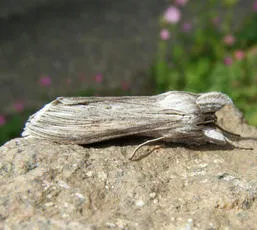
The Shark
Cucullia umbratica
Wingspan 42 to 52 mm. Similar to Chamomile Shark ( C. chamomillae ) but one distinguishing feature from that species is the fringe of the hindwing, which in the present species has two bands, one pale and one grey, whereas in C. chamomillae , there i
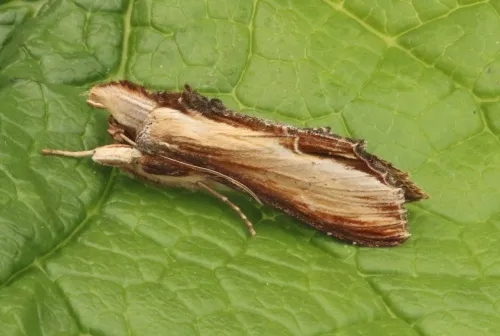
The Mullein
Cucullia verbasci
Wingspan 45-50 mm. Forewing buff with dark brown stripes along leading and trailing edges, the latter cut by a thin pale line. At rest this moth looks like a dead plant stalk. The species occupies a range of open habitats as well as gardens. The norm
Dargida aleada - Hodges#10435
Dargida aleada
Dargida aleada - Hodges#10435 (Dargida aleada) is a species in the family Noctuidae, commonly known as owlet moths, belonging to the order Lepidoptera (Butterflies and Moths). It is classified within the subfamily Noctuinae, tribe Hadenini, superfami
Olive Green Cutworm - Hodges#10428
Dargida procinctus
Identification: Adult: forewing ground color dark brown, crossed by two pale prominent intersecting lines and several smaller/shorter pale lines Larva: head reddish-brown; body varies from pale green to blackish olive green with alternating lateral s
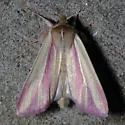
The Pink-Streak - Hodges#10434
Dargida rubripennis
Identification: Forewing yellowish-white, streaked with dull pink above and below whitish streak along main (cubital) vein; outer margin of forewing and white hindwing shaded with dull pink. [adapted from description by Charles Covell] Rare northward
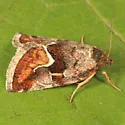
Bog Deltote - Hodges#9046
Deltote bellicula
Identification: Adult: small broad-winged gray moth with darker brown, white, and dull rusty-orange markings; forewing median and terminal areas brown, the former separated from rusty-orange subterminal area by prominent inwardly-angled white line; r
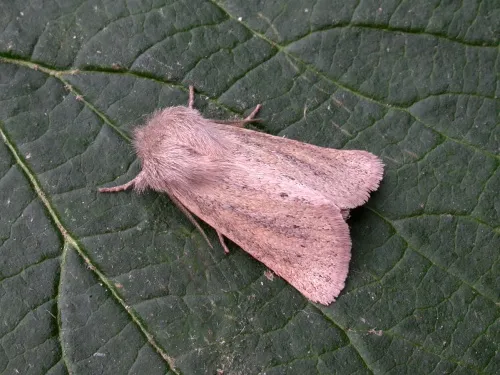
Small Wainscot
Denticucullus pygmina
Wingspan 23 to 29 mm. This species varies somewhat in ground colour, with specimens ranging from pale buff to deep reddish-brown. Found in marshy areas, wet heathland and other damp localities. The larvae feed internally in the stems of sedges. Fairl
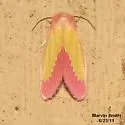
Pink Star Moth - Hodges#11055
Derrima stellata
Species complex ; true stellata is restricted to the East Coast
Green-patched Looper - Hodges#8897
Diachrysia balluca
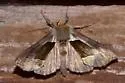
Identification: Adult - forewing with large, highly-metallic rectangular green patch bordering inner margin (may look brown or bronze under certain lighting); basal area and strip along costa light gray; reniform spot brown with pale dot on each side
Burnished Brass
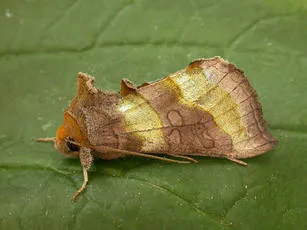
Diachrysia chrysitis
Wingspan 28-35 mm. This spectacular moth has large areas of metallic colouring on the forewings. Inhabits gardens, waste ground and marshy areas. The species is double-brooded, with moths on the wing between June and September. The larvae feed on pla
Purple Clay
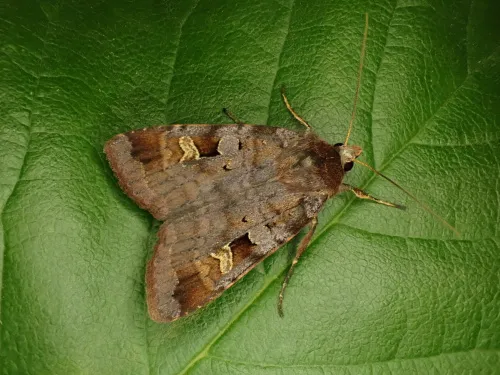
Diarsia brunnea
Wingspan 35 to 38 mm. A fairly distinctive species with a broad, brownish forewing, often with a purple tinge, and a blackish patch between the two forewing stigmata. The larval foodplants are a wide range of herbaceous plants and shrubs. Quite commo
Diarsia dislocata - Hodges#10918
Diarsia dislocata
Identification: Smith (1904) original description is available in the print references .
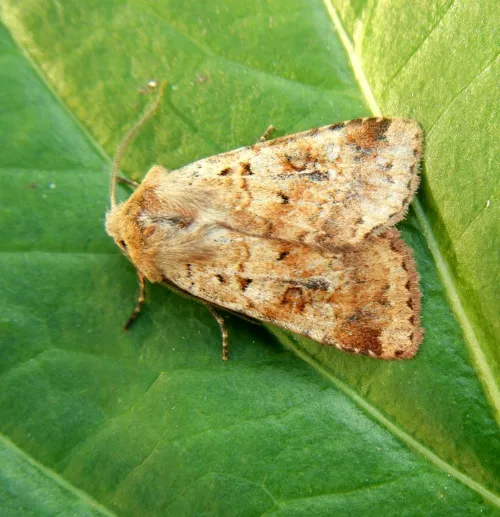
Ingrailed Clay
Diarsia mendica
Wingspan 28-35 mm. A highly variable species, ranging from rather pale individuals in the south, to much darker ones in Scotland, with some island variants in Orkney and Shetland being afforded subspecies status. Flying in a single generation from Ju
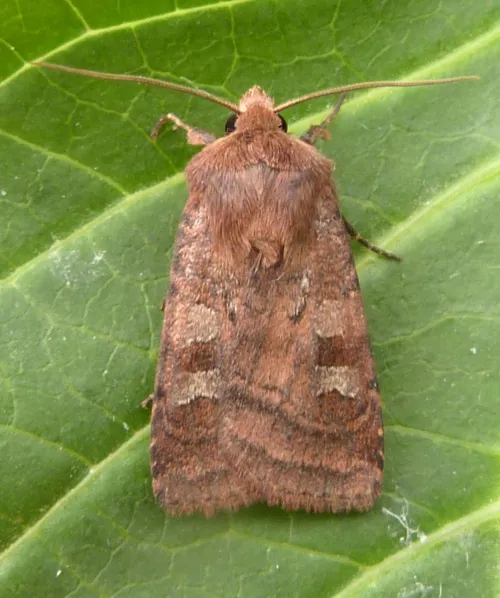
Small Square-spot
Diarsia rubi
Wingspan 28-33 mm. Usually a rich red shade of brown with the small back dot usually very noticeable Occurring in any suitable habitat but perhaps preferring damp and marshy places. South of Scotland, it is double-brooded, flying in May and June and
Red Dart - Hodges#10917
Diarsia rubifera
Identification: Larva - dorsal surface brown, mottled with white, grey below; head deep brown with pale spot on each side. ( 3 ) genitalia
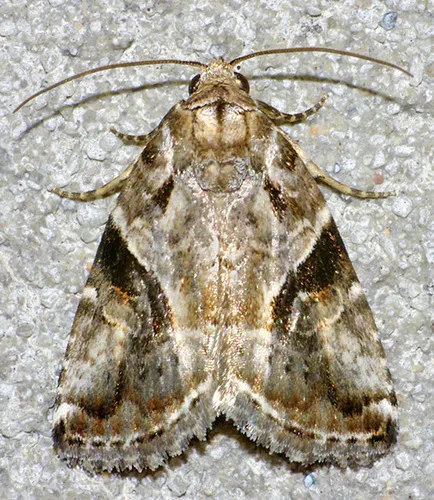
Diastema cnossia - Hodges#9068
Diastema cnossia
Diastema cnossia - Hodges#9068 (Diastema cnossia) is a species in the family Noctuidae, commonly known as owlet moths, belonging to the order Lepidoptera (Butterflies and Moths). It is classified within the subfamily Condicinae, tribe Leuconyctini, s
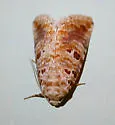
Diastema leo - Hodges#9067.1
Diastema leo
Troubridge (2020) could not find any consistent external morphological differences between Diastema leo and D. tigris . However, the two are separable by range; in the US, leo is known from FL and GA and tigris only from TX.
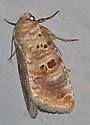
Lantana Moth - Hodges#9067
Diastema tigris
Identification: Diastema leo (below) is found in FL and GA as well as the Bahamas and likely the Greater Antilles; D. lantana occurs from Central America to central TX. The two may be morphologically indistinguishable in many or most cases except by
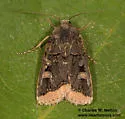
Dichagyris kyune - Hodges#10880
Dichagyris kyune
Identification: See original description in print references below .
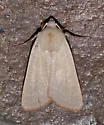
Dichagyris lobato - Hodges#10884
Dichagyris lobato
Identification: Barnes (1904) description is available online in the print references. The legs are whitish inside turning reddish on the outer side. Forewing fringe has a faint brown wavy line at the base. Hindwing is white and the inner margin has
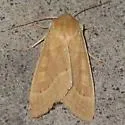
Dichagyris madida - Hodges#10885
Dichagyris madida
Identification: Adult: forewing light pinkish-brown with slightly darker median area; orbicular and reniform spots large, pale; PM line yellowish, with small dark streaks near middle where veins cross; hindwing has pale rosy sheen and distinct veins
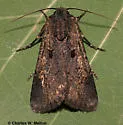
Dichagyris proclivis - Hodges#10871
Dichagyris proclivis
Identification: Smith (1887) original description as Agrotis proclivis is available in the print references. Specimen identified by DNA analysis (BOLD). ( 3 )
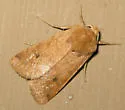
Dichagyris variabilis - Hodges#10889
Dichagyris variabilis
Identification: Forewing is a pale yellowish brown to pale pinkish orange with dark orbicular and reniform spots. Reniform spot is somewhat flattened. Hindwings are whitish.
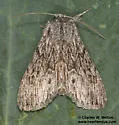
Dolocucullia dentilinea - Hodges#10188
Dolocucullia dentilinea
page creation based on Lars Crabo's identification of this image (which has since been determined to be a new species of Dolocucullia , that is very similar in appearance to dentilinea )
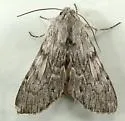
Dolocucullia poolei - Hodges#10188.1
Dolocucullia poolei
Identification: Lines more strongly zigzagged than in D. dentilinea with black spot near tornus more conspicuous. In the latter, the am. and pm. lines usually do not touch and the black spot is often absent. The BIN group for this species is BOLD:AAF
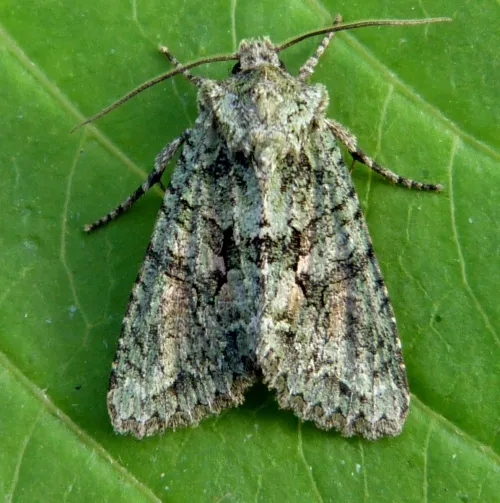
Brindled Green
Dryobotodes eremita
Wingspan 32-39 mm. Quite variable. Forewing is usually greenish or greyish and has a small pale blotch in the centre. The single generation flies in August and September, when it is readily attracted to light. The larvae feed on Oak, initially on the
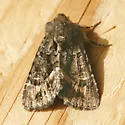
Dryotype opina - Hodges#9981
Dryotype opina
Identification: The original description as Dryobota opina Grote is available at the link in the print references below. Specimens identified by DNA analysis:
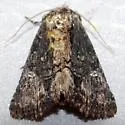
Dypterygia patina - Hodges#9561
Dypterygia patina
Identification: There are apparently two divergent color forms of this species, one mostly brown with various black streaks and crosslines, the other almost entirely blackish with just a narrow buff inner margin on the FWs.
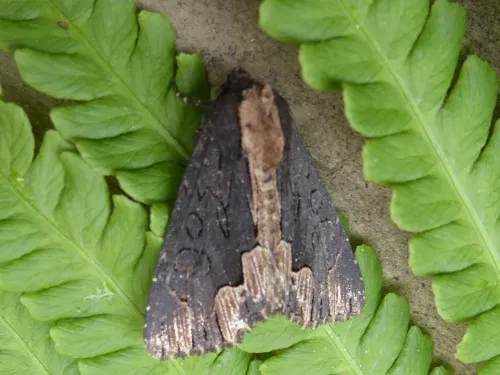
Bird's Wing
Dypterygia scabriuscula
It frequents deciduous woodland and parkland. Flies in June and July, occasionally again in autumn in the south. The larvae feed on low plants such as dock and knotgrass. Distributed mainly in the south-east of England and north Midlands, this distin
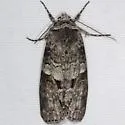
Alternate Woodling - Hodges#10517
Egira alternans
Identification: Adult : FW pale gray, shaded reddish-brown in basal and median areas. Often has thick, black bar in inner median area. Large, whitish orbicular spot is fused to pale band that extends to the inner margin. Reddish-brown reniform spot i
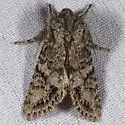
Egira cognata - Hodges#10509
Egira cognata
Identification: Adult: forewing ground color whitish with black markings and gray shading; dark blotches in median area at costa and at inner margin; AM line zigzag, with hollow triangular claviform spot; basal dash lacking; reniform spot contains sh
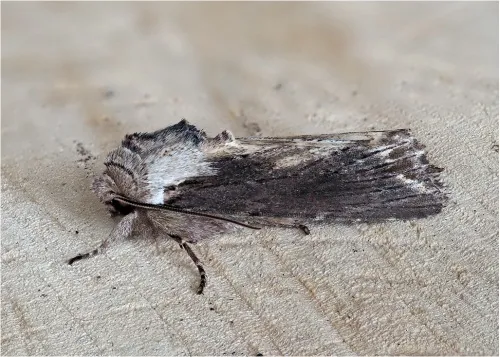
Silver Cloud
Egira conspicillaris
In view of the rarity of this species in our area a photograph is required to support records. A very local species, occurring mainly around the Severn Valley in the south-west of England. In a recent survey to determine the status of all macro moths
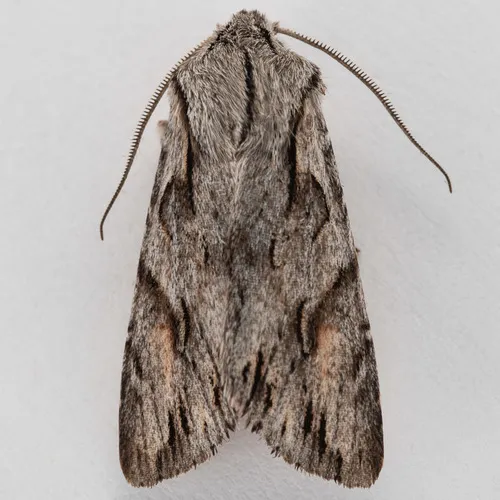
Egira crucialis - Hodges#10508
Egira crucialis
Identification: Adult: forewing light to medium gray with black basal dash and black markings on either side of orbicular spot and below reniform spot; subterminal line broken into two sets of black dashes set at slight angle to outer margin; hindwin
Egira curialis - Hodges#10511
Egira curialis
Identification: Larva - mottled red, gray, and black, with a red and white lateral band. ( 3 )
Egira hiemalis - Hodges#10505
Egira hiemalis
Identification: Adult : forewing mottled light gray, darker gray, and reddish-brown; black basal dash curves toward costa, enclosing pale basal patch; reniform spot with reddish filling; orbicular spot pale, oblique, oblong; subterminal area lighter
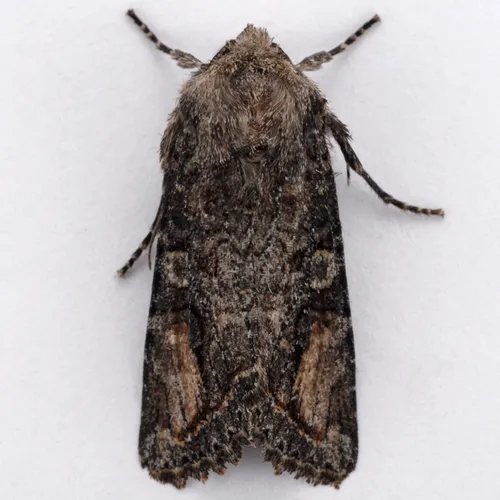
Brown Woodling - Hodges#10515
Egira perlubens
Identification: Adult: forewing mottled yellowish, brown, gray, and black with dark reddish subapical patch along costa, and whitish or pale gray orbicular spot; reniform spot with dirty yellowish or orangish filling in upper half, and black filling
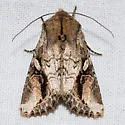
Egira rubrica - Hodges#10514
Egira rubrica
Identification: Adult: forewing a mix of pale yellow, light brown, dark brown, and black; dark brown or black area around reniform spot and descending to ST line; pale apical patch, black basal dash, and black shading in terminal area; lower end of r
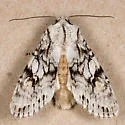
Egira simplex - Hodges#10506
Egira simplex
Identification: Specimens identified by DNA analysis:
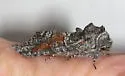
Egira variabilis - Hodges#10504
Egira variabilis
Identification: Smith (1891) original description as Stretchia variabilis is available online in the print references.
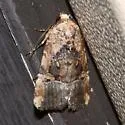
Chalcedony Midget - Hodges#9679
Elaphria chalcedonia
Identification: Adult: forewing color a mixture of white, dark gray/blackish, and dull yellow or orangish; basal and upper median areas dull yellowish to orangish; white edging along PM line varies from broad and conspicuous to thin and patchy; dark
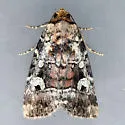
Elaphria cornutinis - Hodges#9681.2
Elaphria cornutinis
Identification: Saluke & Pogue, original description is online. - Specimen identified by DNA analysis (BOLD).