
Family Plant Bugs (Miridae)
Miridae is a family in the order Hemiptera. Browse 969 named species recorded in this family, or open an individual profile for its available identification and natural-history information.
Species in Miridae (969)
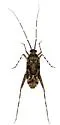
Phytocoris difformis
Phytocoris difformis
Identification: Det. Salvador Vitanza, 2023 Males and females are attracted to light. ( 3 )
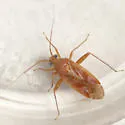
Phytocoris diversus
Phytocoris diversus
Identification: Blatchley's key : 1) Scutellum reddish-yellow each side of middle, its median line and apex distinctly paler; 2) Clavus and inner half of corium reddish or reddish-brown; 3) Cuneus with inner half rosaceous; and 4) Femora with distinc
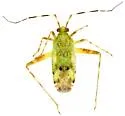
Phytocoris electilis
Phytocoris electilis
Identification: distinguished from other species ofthe plenus group by the pale green general coloration, with large fuscous spot on inner apical angle of corium, and the short first antennal segment (see couplet 1 in key) with middle third uniformly
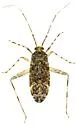
Phytocoris empirensis
Phytocoris empirensis
Identification: Very similar in appearance to Ph. relativus (J.T. Botz observation), but distinguished by lack of dark, bristlelike setae in front of the base of the left genital tubercle. Det. Jason Botz, 2023 Types: described from two spmns taken i
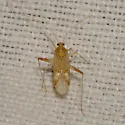
Phytocoris eurekae
Phytocoris eurekae
Identification: To distinguish from other species in the interspersus group: "Hemelytra with scattered, dark brown, simple setae particularly at apex of clavus and on corium between anal ridge and radial vein; second antennal segment uniformly browni
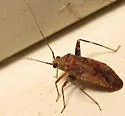
Phytocoris exemplus
Phytocoris exemplus
Identification: 1) Pronotal disk with black spots on basal margin; and 2) Apical area of corium with strong fuscous marks. Belongs to Group III of Knight's eastern species.
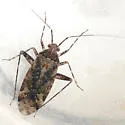
Phytocoris eximius
Phytocoris eximius
Identification: Apical half of corium and bordering the claval vein distinctly olive green . (As penipecten ) (emphasis added) - male, female Dets. Brad Barnd, 2024 - from spmns Very similar to P. buenoi and may not be reliably separable without look
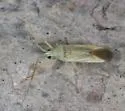
Phytocoris fuscipennis
Phytocoris fuscipennis
Identification: body size and general coloration is quite variable, ranging from small, almost uniformly pale yellow specimens to large individuals that are extensively darkened with fuscous Type Locality: described from 28 males collected in Cochise
Phytocoris geniculatus
Phytocoris geniculatus
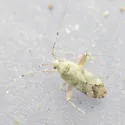
Identification: Cuneus and areolar veins tinged or marked with red distinguished from other species of the rostratus group by the pale green general coloration with red markings on the cuneus and areolar veins Type Locality: Described from 32 specime
Phytocoris heidemanni 0
Phytocoris heidemanni
Identification: Recognized by the large body size; grayish brown general coloration; strongly convex scutellum, abruptly deflexed distally; long first antennal segment Type Locality: described from Pecos, New Mexico, 23 June, 0. Heidemann.
Phytocoris hettenshawi
Phytocoris hettenshawi
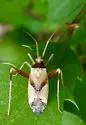
Types: described from 16 spmns coll'ed near the Hettenshaw Valley, Van Duzen Rd., Trinity Co., Calif., 4 July-15 August, 1943, 1949-1951, ex. Arctostaphylos sp., B. P. Bliven
Phytocoris hopi
Phytocoris hopi
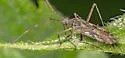
Identification: Among the species in the P. hopi group, distinguished by "antennal segment I fuscous with pale spots, ratio of length of segment to posterior width of pronotum from 1.00:1 to 1.35:1 for males and 1.55:1 to 1.80:1 for females; rostrum
Phytocoris infuscatus
Phytocoris infuscatus
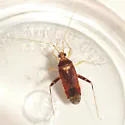
Identification: Pronotal disk with base and lateral margins dark fusco-reddish; scutellum yellow, a red mark at either side on apical half but without vittae at middle of base. (last couplet)
Phytocoris inops
Phytocoris inops
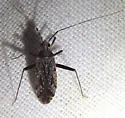
Identification: Pale annuli on front tibiae narrower than dark annuli; veins of hemelytral membrane marked or tinged with red • a much confused sp. , Phytocoris inops is extremely variable in size, body proportions, and extent of dark markings on the
Phytocoris kiowa
Phytocoris kiowa
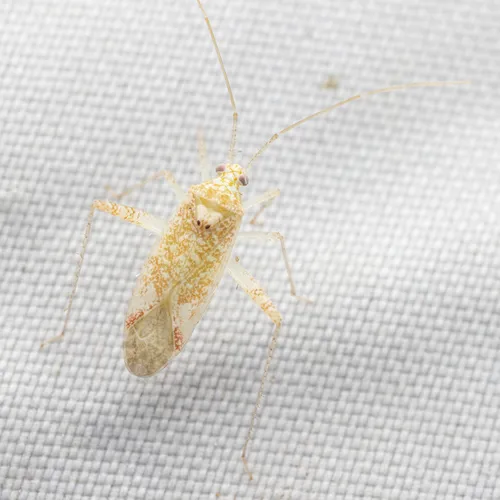
Identification: External characters to separate this species from others in the interspersus group (from Stonedahl, 1988): "Hemelytra pale yellow, moderately to extensively mottled with red or reddish orange; vestiture of hemelytra without dark brown
Phytocoris lineatus
Phytocoris lineatus
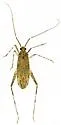
Identification: "Distinguished from other brown or grayish brown species of the rostratus group by... ratio of eye length to width of vertex less than or equal to 1.10:1 for males; pronotal disk with pale line medially; genital capsule of male with w
Phytocoris listi
Phytocoris listi
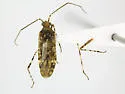
Identification: Knight noted that this species is "suggestive of carnosulus Van D., but distinguished by the longer and more horizontal head, also by the first antennal segment which is not equal to width of head." This would apply to several species
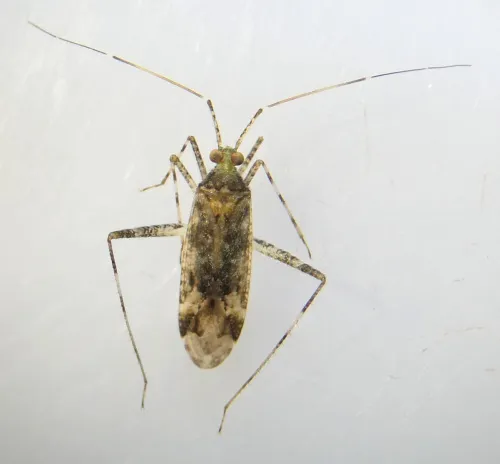
Phytocoris longipennis
Phytocoris longipennis
Length about 7 mm. Phytocoris species have a distinctive appearance due to the long hind femora and long 1st antennal segment. In Phytocoris longipennis the distribution of black on the pronotum is not sharply defined and the upperside is diffusely m
Phytocoris luteolus
Phytocoris luteolus
Identification: The key features of P. leteolus are: 1) the wing membrane never has many minute spots; 2) the length of A1 is greater than the width of the head; 3) the antennae are yellow; 4) the pronotum never has distinct four orange stripes or sp
Phytocoris maricopae
Phytocoris maricopae
Identification: From Stonedahl, omitting references to figures: "Recognized by the brownish general coloration; fuscous propleuron with apical third and median line pale; length of antennal segment I subequal to posterior width of pronotum; and by th
Phytocoris mcivor
Phytocoris mcivor
Identification: See description (mainly male characters).
Phytocoris miniatus
Phytocoris miniatus
Identification: From Stonedahl: "Distinguished from other species of the juniperanus group by... corium marked or tinged with red; scutellum mottled with red, but without distinct median line [distinguishing it from P. acaceae ]; first antennal segme
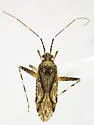
Phytocoris minituberculatus
Phytocoris minituberculatus
Identification: Propleuron pale with two transverse fuscous lines medially (last couplet) Det. Jason Botz, 2020 Females of this species have the wing membrane abbreviated and just covering the apex of the abdomen.
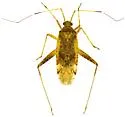
Phytocoris navajo
Phytocoris navajo
Identification: Within the interspersus species group, this species is distinguished by yellowish ground color with reddish to brown flecks (no green coloration) and the end of the second antennomere darkened.
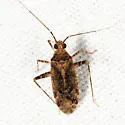
Phytocoris neglectus
Phytocoris neglectus
Identification: 1) Brownish general coloration; 2) Dorsal surface without dark scalelike setae; 3) Antennae brown or dark brown; 4) A1 > (head width); 5) A2 without medial pale ring; 6) Propleura fuscous, apical 1/3 pale; 7) Front tibiae with 3 dark
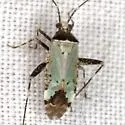
Phytocoris nigricollis
Phytocoris nigricollis
Identification: See Knight pp. 636-638 for description, and pp. 631-632 for the key where this species falls out. Pronotal disk uniformly deep black, narrow basal margin pale ; scutellum yellowish, with an oblique black mark each side of median line
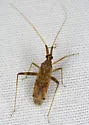
Phytocoris pallidicornis
Phytocoris pallidicornis
Identification: thickened and uniformly yellowish A1 and red markings on the scutellum. lasiomerus group
Phytocoris piceicola 0
Phytocoris piceicola
Identification: Pale and dark annuli on front tibiae similar in width; similar to fraterculus , distinguished by the paler grayish yellow general color, dorsum lightly marked with brown; antennomere 2 yellowish brown; membrane veins tinged with red;
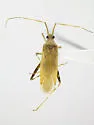
Phytocoris planituberis
Phytocoris planituberis
Identification: From Stonedahl, omitting references to figures: " Phytocoris planituberis is very similar to validus but differs by the longer first antennal segment; large flattened tubercle above base of left paramere; and more elongate sclerotized
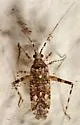
Phytocoris plenus
Phytocoris plenus
Identification: From Stonedahl: "Distinguished from other members of the plenus group by the following combination of characters: antennal segment I longer than width of head across eyes; front tibiae annulated, with apical annulus fuscous; sclerotiz
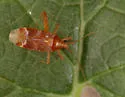
Phytocoris politus
Phytocoris politus
Identification: "Distinguished from other species of the fraterculus group by the dark reddish brown coloration, fuscous band on the posterior submargin of the pronotal disk, absence of pale annuli on the front tibiae, and structure of the male genit
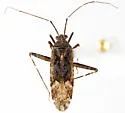
Phytocoris praealtus
Phytocoris praealtus
Identification: "Distinguished from other species of the P. fraterculus group by the large size, dark brown general coloration, long first antennal segment, greatly inflated scutellum, and structure of the male genitalia."
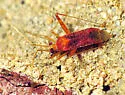
Phytocoris puella
Phytocoris puella
Identification: 1) Membrane marbled, uniformly dark brown or uniformly light colored; 2) A1 > (head width); 3) Antennae pale; 4) pronotum, scutellum, and hemelytra nearly uniformly reddish; and 5) Calli pale. Type Locality: New York ( Belfarge )
Phytocoris pulchellus
Phytocoris pulchellus
Identification: Pronotal disk brown or dark yellowish brown, sometimes lightly tinged with red, posterior submargin without tumid points; antennal segment I slightly narrower medially Type Locality: Santa Rita Mts., Arizona, alt. 4500 ft., September
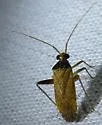
Phytocoris ramosus
Phytocoris ramosus
Identification: Brownish yellow general coloration; ratio of length of antennal segment I to width of head across eyes 0.65:1 to 0.85:1; front tibiae without dark annuli Det. J. Botz, 2020 described from seven specimens collected on creosote ( Larrea
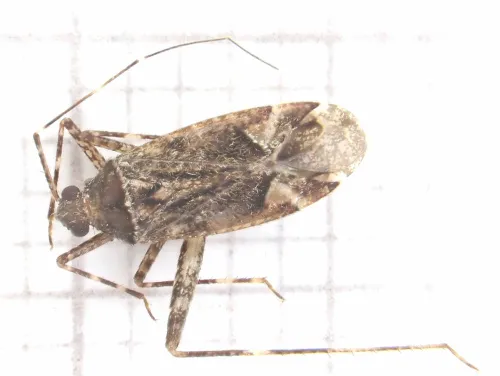
Phytocoris reuteri
Phytocoris reuteri
Length 6mm. Outer margin of forewing convex; upperside markings blackish-brown on reddish ground, collar dirty-white to rufous (from above), border of stink gland narrowly pale. A2 brownish-black, usually with two conspicuous wide white rings (≈2xA2
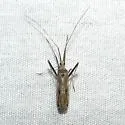
Phytocoris rileyi
Phytocoris rileyi
Identification: "Belonging to the hopi group and distinguished by the combination of the relatively large size, the overall pale-beige coloration of the hemelytra with dark brown stripes on lateral margins of the head and pronotum, the white medial l
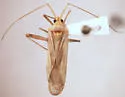
Phytocoris roseipennis
Phytocoris roseipennis
Identification: Hemelytra tinged or marked with red; ratio oflength ofantennal segment I to posterior width of pronotum from 0.90:1 to 1.10:1 for males distinguished from other species of this group by the reddish tinge on the hemelytra, especially i
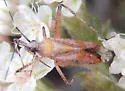
Phytocoris roseus
Phytocoris roseus
Identification: Hemelytra tinged or marked with red, sometimes almost entirely reddened "...Distinguished from other plenus group species by the red tinge or marking on the hemelytra, long first antennal segment, fuscous second antennal segment with
Phytocoris rostratus 0
Phytocoris rostratus
Identification: The wing membrane of the female is strongly abbreviated and reaches only slightly beyond the apex of the cuneus. Type Locality: Described from 68 spmns coll'ed in Nye Co. and Washoe Co., Nevada.
Phytocoris rubrimaculatus
Phytocoris rubrimaculatus
Identification: distinguished from other species of the cunealis group by the red or reddish orange mottled pattern on the pronotal disk and hemelytra Type Locality: Mt. Palomar, San Diego Co., California, 18 July 1963, R. L. Langston
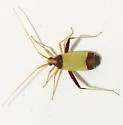
Phytocoris rubroornatus
Phytocoris rubroornatus
Identification: Pronotal disk deep ruby red, narrowly pale between calli, posterior submargin with four broadly tumid points; antennal segment I uniform in thickness Type Locality: Williams, Coconino Co., Arizona, 15 August 1930, E. D. Ball.
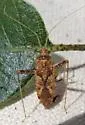
Phytocoris rufoscriptus
Phytocoris rufoscriptus
Identification: distinguished from other species of the cunealis group by the setose, fuscous spots along the posterior submargin of the pronotal disk dorsal surface mottled or reticulated with red as in rubrimaculatus , but the latter species lacks
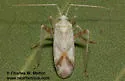
Phytocoris seminotatus
Phytocoris seminotatus
Identification: "Closely resembles hirsuticus but is distinguished by the pale yellowish brown general coloration, reddish brown markings on the hind femora, and structure of the male genitalia, particularly the narrow, erect left genital tubercle ..
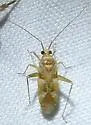
Phytocoris simulatus
Phytocoris simulatus
Type Locality: described from 24 specimens taken in s. CO and n. NM
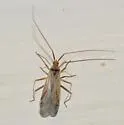
Phytocoris squamosus
Phytocoris squamosus
Identification: Antennal segment I densely set with long, pale setae on ventral surface; pronotal collar and calli tinged or marked with red or reddish brown
Phytocoris stellatus
Phytocoris stellatus
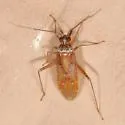
Identification: Recognized by the reddish orange to reddish brown hemelytra with red areolar veins; posterior lobe of pronotal disk mottled with reddish brown or fuscous, leaving at least limited areas pale; ratio of length of antennal segment I to w
Phytocoris stitti
Phytocoris stitti
Identification: Legs clothed with short pale setae, length of setae rarely exceeding thickness of hind tibia (last couplet) Dets. Jason Botz, male & female Adults have been collected on Franseria deltoidea, F. dumosa, Grayia spinosa, Hymenoclea monog
Phytocoris strigosus
Phytocoris strigosus
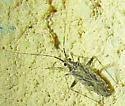
Identification: Pronotal disk with pale median line, bordered with fuscous (last key couplet) pale yellow to brownish general coloration. Phytocoris strigosus is easily recognized by the large eyes and relatively narrow vertex (see couplet 5 in key);
Phytocoris tiliae
Phytocoris tiliae
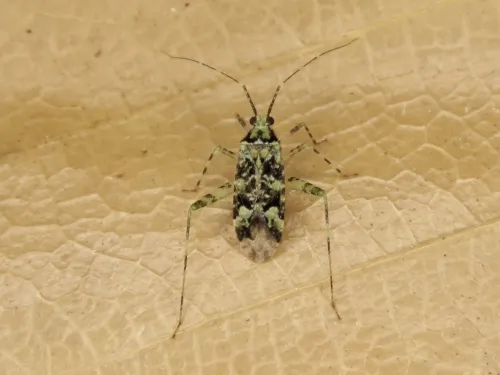
Length 6 to 7 mm. Phytocoris species have a distinctive appearance due to the long hind femora and long 1st antennal segment. P. tiliae is an attractively marked greyish-green species, which has distinct black mottling on the wings. The ground colour
Phytocoris tricinctus 0
Phytocoris tricinctus
Identification: last couplet in Stonedahl's key: Brown general coloration; abdomen without black longitudinal lines laterally Types: Described from 13 specimens collected in Pima and Pinal counties, Arizona. The male holotype and nine paratypes were
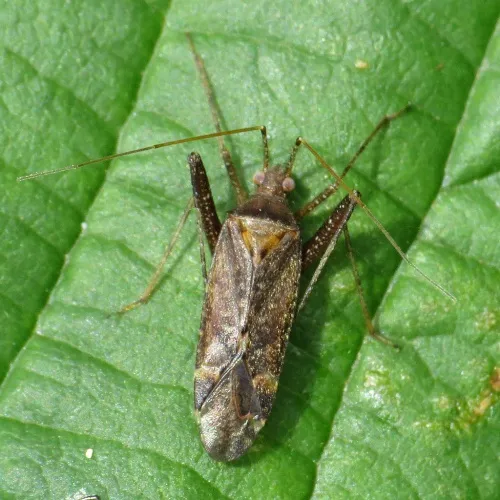
Phytocoris ulmi
Phytocoris ulmi
Length 6 to 8 mm. Phytocoris species have a distinctive appearance due to the long hind femora and long 1st antennal segment. The ground colour of P. ulmi is similar to P. varipes , but the upper surface is more uniform, lacking longitudinal markings
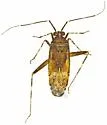
Phytocoris umbrosus
Phytocoris umbrosus
Identification: "Similar to politus in size...and general coloration, but distinguished by the pale median annulus on the second antennal segment, front tibiae with distinct pale annuli, and arm of right paramere without dorsal knoblike process."
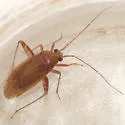
Phytocoris uniformis
Phytocoris uniformis
Identification: 1) Hemelytra translucent and uniformly colored with dusky brown; and 2) Femora reddish brown, with conspicuous white spots. Belongs to Group III of Knight's eastern species.
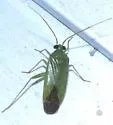
Green Creosote Bug
Phytocoris vanduzeei
Identification: Recognized by the yellowish green to bright green general coloration and short first antennal segment; ratio of segment length to width of head across eyes from 0.40:1 to 0.60:1. The left genital tubercle of the male is well developed
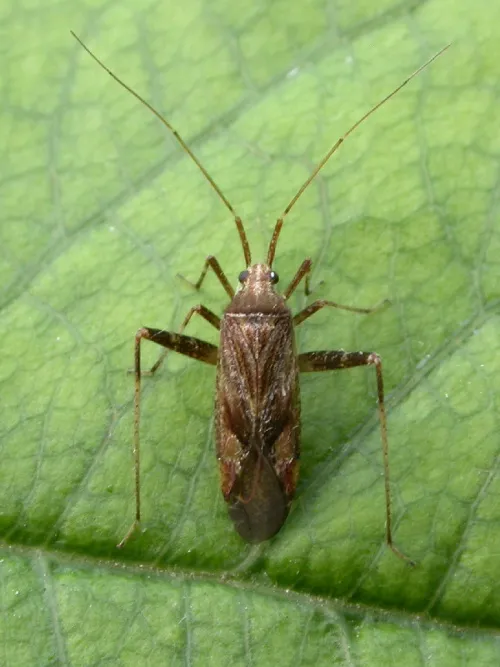
Phytocoris varipes
Phytocoris varipes
Length 6 to 7 mm. The ground colour of P. varipes varies from pale pinkish brown to red-brown and there are longitudinal markings on the upper surface. The hairs on the 1st antennal segment are shorter than its width (see below). P. ulmi is similar,
Phytocoris vau
Phytocoris vau
Identification: striking species is readily recognized by the yellowish green hemelytra with the clavus, inner apical angle of corium, and inner margin and apex of cuneus deep ruby red to dark brownish red; legs and antennae also extensively reddened
Pilophoropsidea camela
Pilophoropsidea camela
Pilophoropsidea camela (Pilophoropsidea camela) is a species in the family Miridae, commonly known as plant bugs, belonging to the order Hemiptera (True Bugs, Cicadas, Hoppers, Aphids and Allies). It is classified within the subfamily Orthotylinae, t
Pilophoropsis brachyptera
Pilophoropsis brachyptera
Identification: Clavus with two transverse silver spots on apical half.
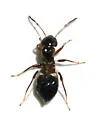
Pilophoropsis nicholi
Pilophoropsis nicholi
Identification: "Scutellum with silvery scalelike hairs; clavus with four transverse silver spots on apical half; (female) pronotum length scarcely equal to width at base." ( 3 )
Pilophoropsis texana 0
Pilophoropsis texana
Identification: recognized by the band of silvery scale-like se- tae bordering the cuneal fracture and the male genitalia Type Locality: Esperanza Ranch, Brownsville, Cameron Co., Texas
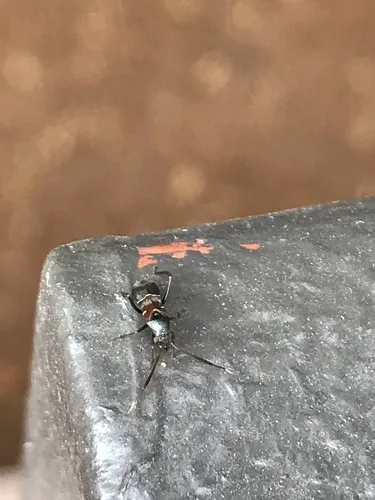
Pilophorus amoenus
Pilophorus amoenus
Identification: Pilophorus amoenus species group including amoenus , piceicola , and strobicola is recognized by the hemelytra with a uniform texture posteriad of the posterior band of scalelike setae, the A3 completely white , the flat vesica with a
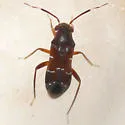
Pilophorus brunneus
Pilophorus brunneus
Identification: Pilophorus clavatus species group including 17 species (4 eastern, 11 western, and 2 common) is recognized by the hemelytra posterior to the posterior band of scalelike setae being smooth, polished, and weakly shining laterad of the r
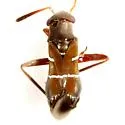
Pilophorus cembroides
Pilophorus cembroides
Identification: "Recognized among members of the exiguus group by its small size, campanulate pronotum, bicolored antennal segment 4, and the posterior band of scalelike setae not offset at the radial vein"
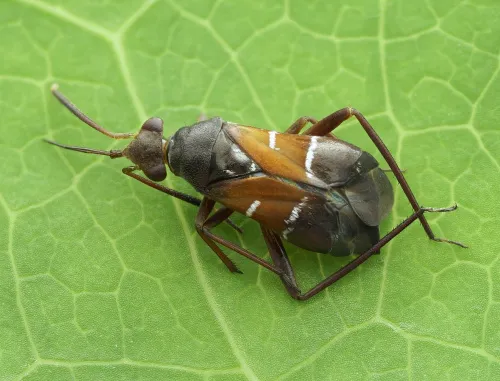
Pilophorus cinnamopterus
Pilophorus cinnamopterus
Length 4-5mm. Forewings more reddish-brown than Pilophorus perplexus and is associated with Scots Pine rather than deciduous trees. https://www.britishbugs.org.uk/heteroptera/Miridae/pilophorus_cinnamopterus.html No additional images available for th
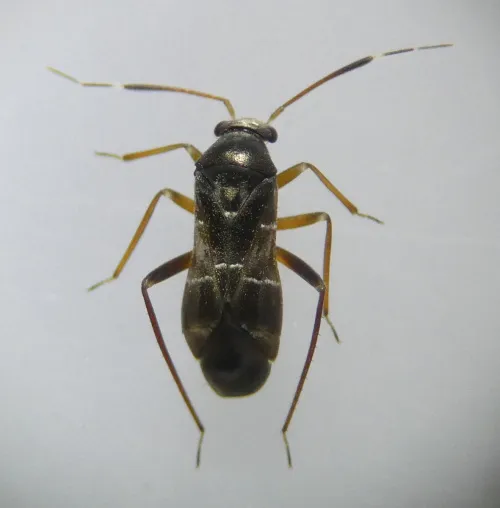
Pilophorus clavatus
Pilophorus clavatus
Length 4.5 mm. Pilophorus species are rather ant-like bugs, which feed on aphids and have silvery bands on the forewings formed by pale hairs. In P. clavatus the posterior band is not continuous across the forewings and is displaced forwards in the c
Pilophorus clavicornis
Pilophorus clavicornis
Identification: Pilophorus exiguus species group including 9 species (2 eastern, 6 western, and 1 central) is recognized by the hemelytra posteriad of the posterior band of setae smooth, polished and weakly shining laterad of radial vein and with a m
Pilophorus concolor
Pilophorus concolor
Identification: Greatly enlarged second antennal segment; neat straight posterior band of setae on hemelytra; antennal segment 1 dark dorsally, pale ventrally, segment 2 deep red proximally and castaneous distally, segments 3 and 4 white proximally a
Pilophorus crassipes
Pilophorus crassipes
Identification: "AIII is black and texture across posterior of corium appears to be uniform" Det. M. D. Schwartz, 2010
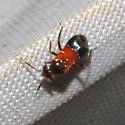
Pilophorus furvus
Pilophorus furvus
Identification: Pilophorus furvus species group including furvus , heidemanni and nasicus is recognized by the short, squat body form, the short second antennal segment, the discontinuous posterior band of scalelike setae on the hemelytra, the absenc
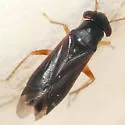
Pilophorus gracilis
Pilophorus gracilis
Identification: The only species often lacking white band.
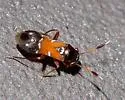
Pilophorus juniperi
Pilophorus juniperi
Identification: Pilophorus juniperi species group including juniperi and laetus is recognized by the hemelytra with a uniform polished texture posteriad of the posterior band of scalelike setae, relatively small elongate body, the A2 clavate on the d
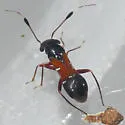
Pilophorus laetus
Pilophorus laetus
Identification: Pilophorus juniperi species group including juniperi and laetus is recognized by the hemelytra with a uniform polished texture posteriad of the posterior band of scalelike setae, relatively small elongate body, the A2 clavate on the d
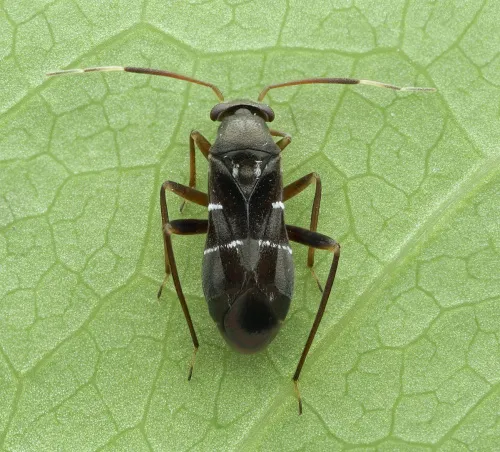
Pilophorus perplexus
Pilophorus perplexus
Length 4.5 mm. Pilophorus species are rather active and ant-like bugs, which have silvery bands on the forewings formed by pale hairs. In both common species the posterior band is continuous across the forewings. However, P. perplexus has duller brow
Pilophorus piceicola
Pilophorus piceicola
Identification: Pilophorus amoenus species group including amoenus , piceicola , and strobicola is recognized by the hemelytra with a uniform texture posteriad of the posterior band of scalelike setae, the A3 completely white , the flat vesica with a
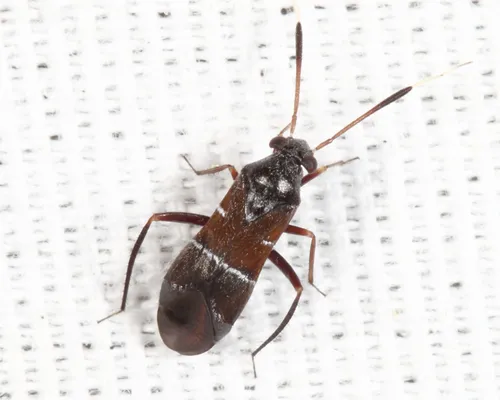
Pilophorus strobicola
Pilophorus strobicola
Identification: Pilophorus amoenus species group including amoenus , piceicola , and strobicola is recognized by the hemelytra with a uniform texture posteriad of the posterior band of scalelike setae, the A3 completely white , the flat vesica with a
Pilophorus walshii
Pilophorus walshii
Identification: Pilophorus clavatus species group including 17 species (4 eastern, 11 western, and 2 common) is recognized by the hemelytra posterior to the posterior band of scalelike setae being smooth, polished, and weakly shining laterad of the r
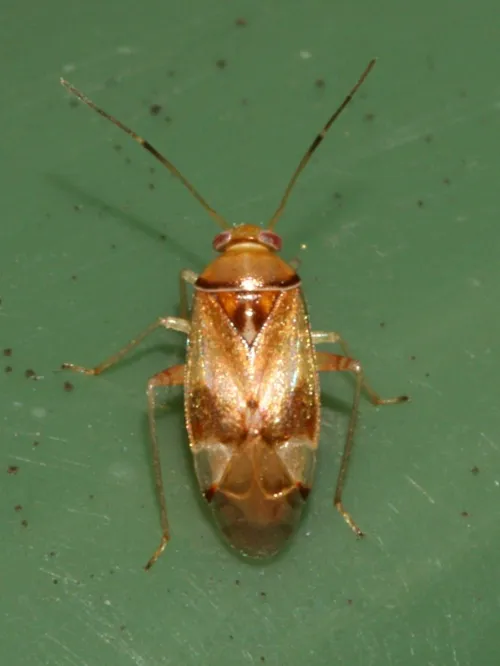
Pinalitus cervinus
Pinalitus cervinus
Length 4 mm. This genus contains several small plant bugs which are mainly associated with trees. The base of the 2nd antennal segment is always pale. P. cervinus is a very variable species which is usually pale golden-brown, but sometimes may be red
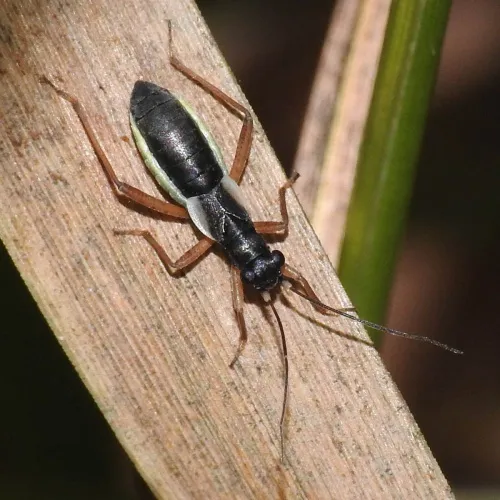
Pithanus maerkelii
Pithanus maerkelii
Length 4 to 5 mm. An unmistakable and rather ant-like bug which is almost always micropterous, although fully-winged females do occur infrequently. The connexivum, wing edges and 1st antennal segment are pale and the pronotum is swollen in the middle
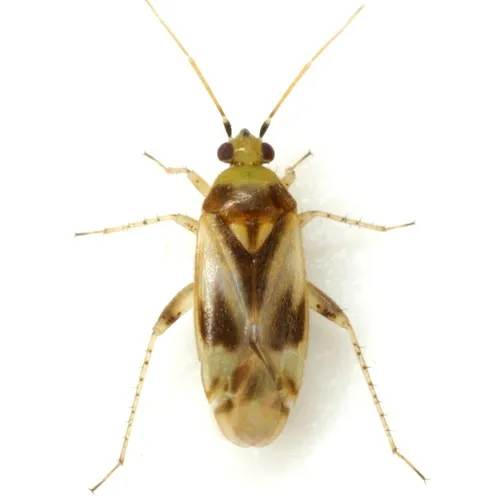
Plagiognathus albatus
Plagiognathus albatus
Identification: Coloration of dorsum white to orange, with some darker markings; dark A1 (fig. 15) like tinctus , but with scutellum often pale laterally and dark mesially. (Scutellum also sometimes entirely dark or entirely pale, fig. 5) - Fig. 5, -
Plagiognathus alboradialis
Plagiognathus alboradialis
Identification: Recognized by large size, elongate, slender body form, anterior pale portion of corium extending down radial vein , mostly pale costal vein and cuneus , and length of antennal segment 2 about 1.9 times width of head.
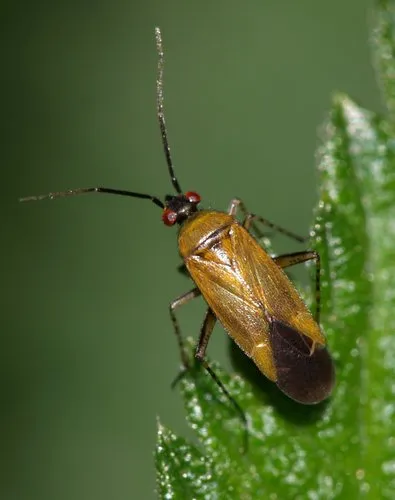
Plagiognathus arbustorum
Plagiognathus arbustorum
Length about 4 mm. Although the ground colour varies from pale olive-green to almost black, the head and front of the pronotum are usually dark, as are the 1st and 2nd antennal segments. The black line along the edge of the hind femur is absolutely d
Plagiognathus atricornis
Plagiognathus atricornis
Identification: Recognized by the relatively small size and pale coloration, entirely black antennae with A2 1.4 times as long as the width of the head, the large dark eyes, and the narrow vertex being about one-third the total width of the head.
Plagiognathus blatchleyi
Plagiognathus blatchleyi
Identification: Recognized by the relatively large size, heavy bodied appearance, pale background coloration of the dorsum, posterior lobe of the pronotum almost uniformly brown and anterior lobe pale or greenish (fig. 6), and the black antennae . So
Plagiognathus brevirostris
Plagiognathus brevirostris
Identification: Recognized by the large, heavy body, moderately shaggy vestiture, entirely black antennae, and the labium relatively short and not attaining the middle trochanters. Pattern of coloration of obscurus type, with base of corium pale and
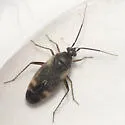
Plagiognathus brunneus
Plagiognathus brunneus
Identification: Dark A1-A2 (fig. 15), a shared character w obscurus , but distinguished from obscurus by silvery, slightly woolly appearance of dorsal vestiture and pale anterior area of corium often not extending posteriorly along clavus in males as
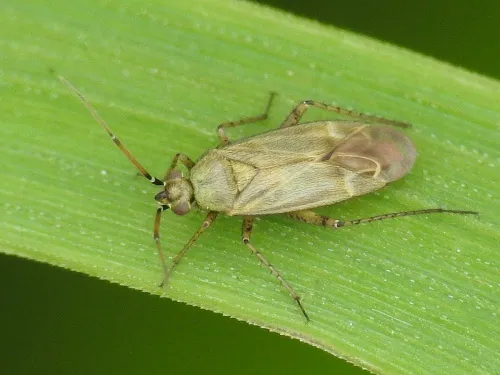
Plagiognathus chrysanthemi
Plagiognathus chrysanthemi
Length about 3.5 mm. A fairly small greenish bug with a dense covering of dark hairs on the upper surface. The tibial spines are dark and set in black spots; the hind femora are pale but also dark-spotted. The antennal pattern is characteristic. Camp
Plagiognathus cornicola
Plagiognathus cornicola
Identification: Recognized by the relatively small size, the coloration of dorsum ranging from orange to nearly black, calli darkened in lighter colored specimens, A1 almost totally black, A2 black at base and remainder of segment frequently infuscat
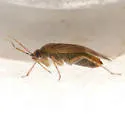
Plagiognathus delicatus
Plagiognathus delicatus
Identification: size relatively small, dorsum dominated by orange, calli usually darkened (fig, 7), scape black, pedicel usually pale (base sometimes black) (fig. 16), tibial spines with tiny dark spots at bases, tibiae pale at articulation with femu
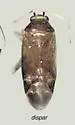
Plagiognathus dispar
Plagiognathus dispar
Identification: Recognized by the elongate body form, antennal segment 2 usually pale except at extreme base (fig. 16), castaneous coloration of the dorsum with only the posterior margin of the vertex pale, the corium narrowly pale adjacent to the ex
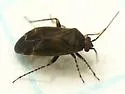
Plagiognathus fuscosus
Plagiognathus fuscosus
Identification: Antenna segment 2 with basal one quarter dark, rest pale (fig. 16). (Other species have dark base in different proportions.) Pale areas variable; the light form (fig. 8: fuscosus 1) was previously described as a different species P. a
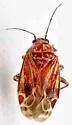
Plagiognathus grandis
Plagiognathus grandis
Identification: Recognized by the large size, very broad body, and somewhat mottled carmine coloration of the dorsum. Unlike any other Plagiognathus species in coloration and its heavy body. Det. M. D. Schwartz, 2015 Type Locality: Texas ( Belfarge )
Plagiognathus longipennis
Plagiognathus longipennis
Identification: Recognized by the very long, slender body , the somewhat exerted, anteriorly projecting head with the clypeus plainly visible from above, and the long slender femora . - male and female Dets. Jason Botz, 2022 Neotype Locality: COLORAD
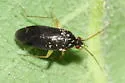
Plagiognathus longirostris
Plagiognathus longirostris
Identification: Recognized by the castaneous to nearly black, elongate body, entirely pale white legs, pale antennae with segment 1 dark only at extreme base, and rostrum reaching well onto the abdomen. Most similar in general appearance and colorati
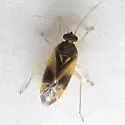
Plagiognathus maculipennis
Plagiognathus maculipennis
Identification: Recognized by the pale A1 and A2 , generally pale costal vein on hemelytra, and cuneus and basal portion of corium pale or mostly pale in contrast to much darker remainder of hemelytra, the scutellum with a dark, median, longitudinal
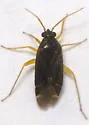
Plagiognathus modestus
Plagiognathus modestus
Identification: Recognized by the castaneous to nearly black general coloration of dorsum, entirely pale, nearly white, legs, and pale antennae except for extreme base of antennal segment 1 (figs. 10 & 17) (although segment 1 sometimes entirely dark)
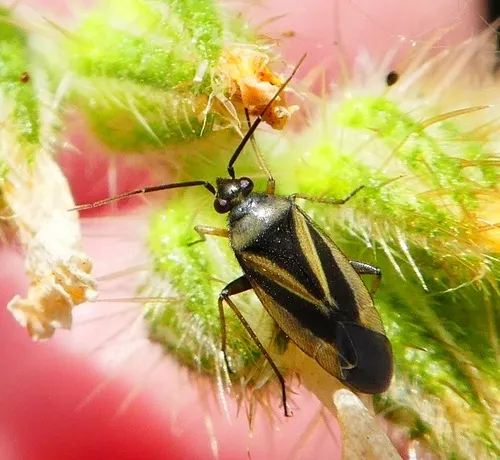
Plagiognathus moerens
Plagiognathus moerens
Identification: Recognized by the medium to large size, linear pattern of coloration with exocorium and clavus mostly opaque, pale, olive-colored, contrasting with dark endocorium, pronotum varying from entirely black to totally pale, antennae entire
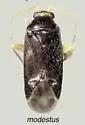
Plagiognathus negundinis
Plagiognathus negundinis
Identification: Recognized by dorsum, venter, and antennal segments 1 and 2 being entirely castaneous (figs. 10, 17), legs pale with some dark markings , and the elongate, nearly parallel-sided body form. - Fig. 10 - Fig. 17 Det. Schuh, 2001 Type Loc
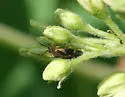
Obscure Plant Bug
Plagiognathus obscurus
Identification: Base of corium pale and at least basal portion of cuneus usually pale (fig. 10: obscurus 1, 2), a pattern of coloration also occurring in several other large, widespread, frequently collected species of Plagiognathus ; less commonly e
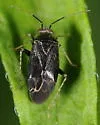
Plagiognathus politus
Plagiognathus politus
Identification: Recognized unequivocally by the serrate margin of the vesical flange; dorsum convexly rounded, pronotum declivent; and dorsum clothed with recumbent, golden, shining, simple setae. Occurring as distinctive early- and late-season color