
Phytocoris hopi
This record describes Phytocoris hopi (species). Recorded family: Miridae. Recorded order: Hemiptera.
Identification and Appearance
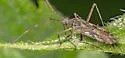
Among the species in the P. hopi group, distinguished by antennal segment I fuscous with pale spots, ratio of length of segment to posterior width of pronotum from 1.00:1 to 1.35:1 for males and 1.55:1 to 1.80:1 for females; rostrum reaching between fifth and seventh abdominal segments, length 2.95-3.58; propleura fuscous, apical third pale; pronotal disk with pale, median line, and male genitalic characters.
Classification
- Kingdom
- Animalia
- Phylum
- Arthropoda
- Class
- Insecta
- Order
- Hemiptera (True Bugs, Cicadas, Hoppers, Aphids and Allies)
- Suborder
- Heteroptera
- Superfamily
- Miroidea
- Family
- Miridae (Plant Bugs)
- Subfamily
- Mirinae
- Tribe
- Mirini
- Genus
- Phytocoris
Imported taxonomy record. Source availability varies; see the source references and editorial policy below.
Habitat and Range
Habitat
It has been collected on various shrubs in oak woodland (paraphrased from Stonedahl, 1988).
Geographic Range
AZ-NM-CO-UT
Seasonal Activity
June-October
Additional species information
Species notes from the sources
Etymology: Named for the Hopi tribe of Native Americans.
About True Bugs, Cicadas, Hoppers, Aphids and Allies: the wider group
Order-level background for Hemiptera, the group containing Phytocoris hopi. Species-specific details appear above.
Group overview
Hemiptera (true bugs) includes over 80,000 described species across cicadas, aphids, leafhoppers, shield bugs, and bed bugs. Aphids alone cost global agriculture an estimated $2.5 billion annually in crop losses.
Ecological role of the group
Many Hemiptera are essential food sources for birds and predatory insects. Cicadas provide massive nutrient pulses during emergence events - a single Brood X emergence can involve trillions of individuals across 15 states.
Economic and practical significance of the group
The brown marmorated stink bug (Halyomorpha halys) caused $37 million in apple crop losses in a single year in the U.S. Mid-Atlantic region. Bed bug infestations in the U.S. increased by 500% between 2001-2010, costing the hotel industry hundreds of millions annually.
Recorded sources for this group: USDA, EPA, University research. Imported estimates may describe particular regions or reporting periods.
Frequently Asked Questions About Phytocoris hopi
What is Phytocoris hopi?
Phytocoris hopi is a species in the family Miridae, within the order Hemiptera.
How big is Phytocoris hopi?
male: 6.3-8.3 mm; female (brachypterous): 5.5-6.8 mm
How do you identify Phytocoris hopi?
Among the species in the P. hopi group, distinguished by antennal segment I fuscous with pale spots, ratio of length of segment to posterior width of pronotum from 1.00:1 to 1.35:1 for males and 1.55:1 to 1.80:1 for females; rostrum reaching between fifth and seventh abdominal segments, length 2.95-3.58; propleura fuscous, apical third pale; pronotal disk with pale, median line, and male genitalic characters.
Where is Phytocoris hopi found?
| Feature | Details |
|---|---|
| Habitat | It has been collected on various shrubs in oak woodland (paraphrased from Stonedahl, 1988). |
| Range | AZ-NM-CO-UT |
When is Phytocoris hopi active?
Phytocoris hopi: seasonal activity - June-October.