
Family Snout and Bark Beetles (Curculionidae)
Curculionidae is a family in the order Coleoptera. Browse 1,711 named species recorded in this family, or open an individual profile for its available identification and natural-history information.
Species in Curculionidae (1,711)
Phyllobius argentatus
Phyllobius argentatus
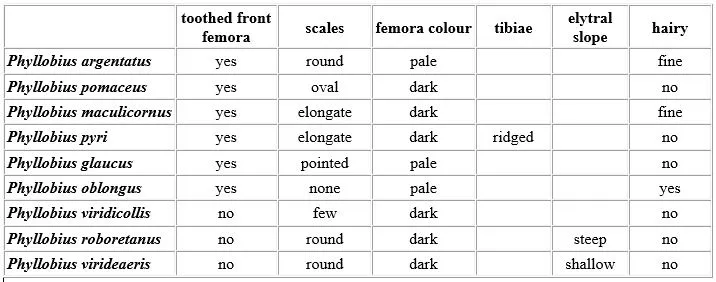
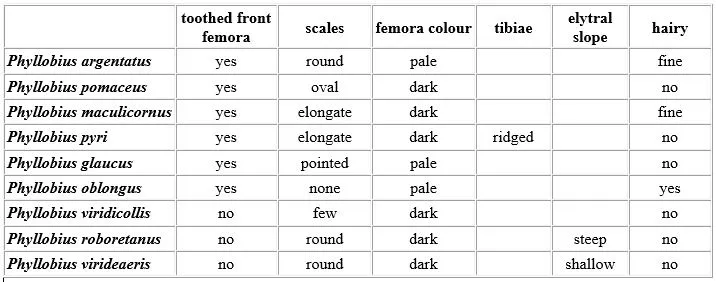
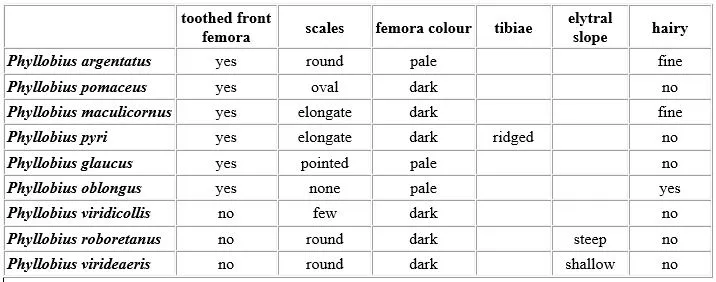
This is another of the green Phyllobius weevils, the most common of which is Phyllobius pomaceus . Phyllobius argentatus is a smaller species (Size around 4 to 6mm), and usually a brighter golden green colour. Under a lens it has round scales and is
Phyllobius glaucus
Phyllobius glaucus
7.5 to 10 mm. A large weevil, similar to P. pomaceus but the femora are pale and its scales are pointed. Phyllobius is a genus of broad-nosed weevils that are commonly found on low herbage and in trees during spring and summer. Most are covered in me
Green Leaf Weevil
Phyllobius maculicornis
One of many similar green weevils. It has elongate scales and a covering of fine, pale setae. It has a tooth on the femora which are dark coloured under the scales. The elytral striae are clearly visible (lacking scales) and the apex of the scape is
Brown Leaf Weevil
Phyllobius oblongus
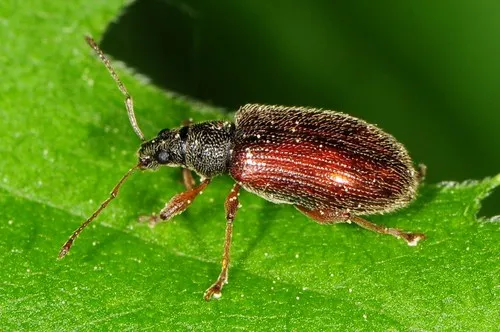
4 - 5.5 mm. Brown elytra, lacking scales but with many erect hairs. Legs pale. Head, pronotum and underside black. Phyllobius is a genus of broad-nosed weevils that are commonly found on low herbage and in trees during spring and summer. Most are cov
Nettle Weevil
Phyllobius pomaceus
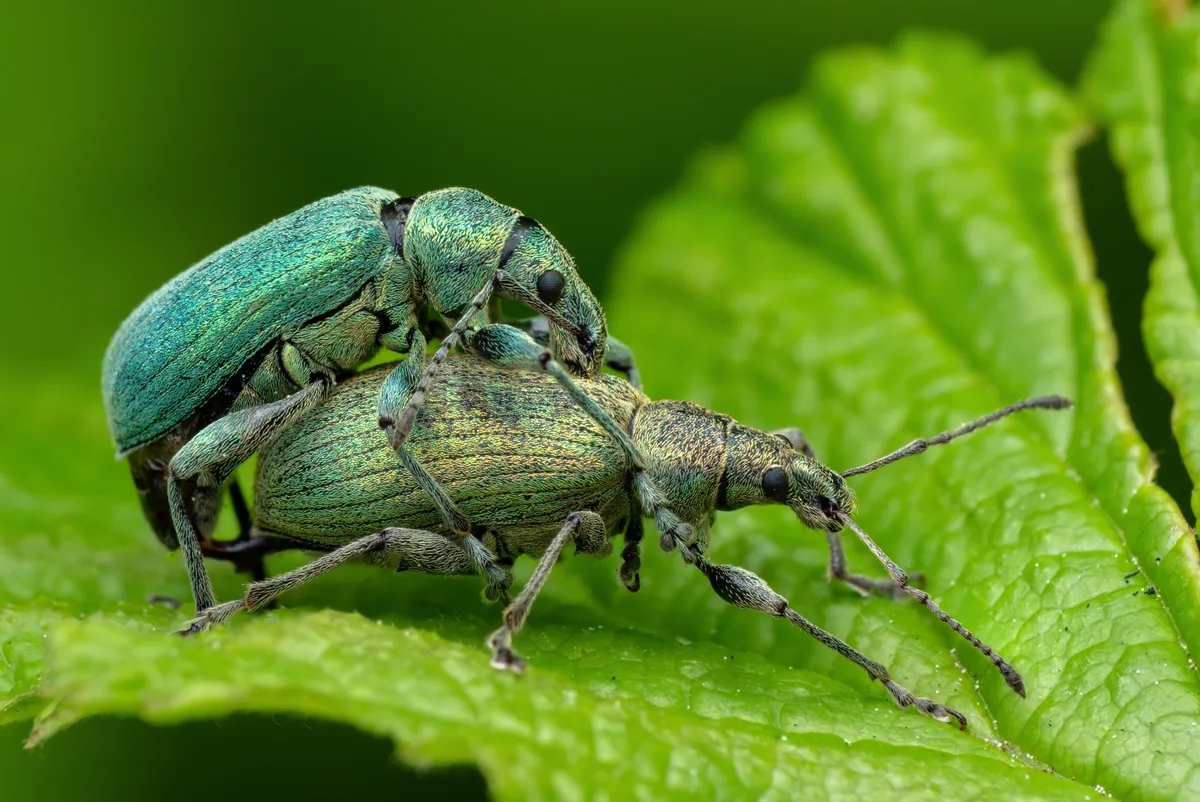
Length 7-9 mm. This beetle has a metallic green/blue covering of thin, elongate scales which are pointed apically. However the scales easily rub off and older specimens can look almost black. The front femur has a prominent tooth. The rostrum is long
Common Leaf Weevil
Phyllobius pyri
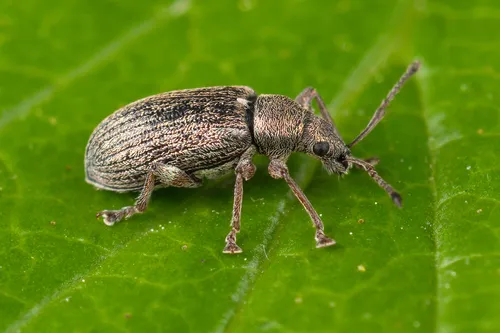
5 to 7 mm. The legs are reddish brown with a strong leg tooth. The elytra are coppery in fresh specimens becoming blacker with age and have a ribbed appearance. This is the only Phyllobius species that has blade-like ridges on its tibiae. The large l
Phyllobius roboretanus
Phyllobius roboretanus
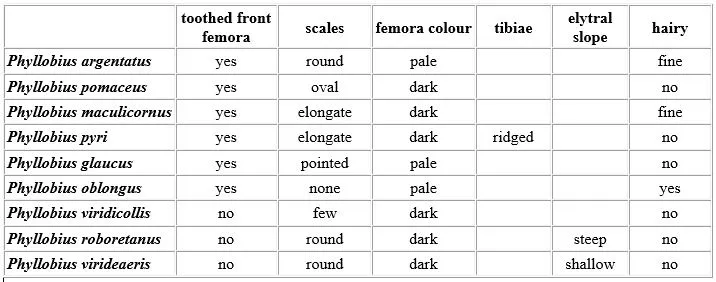
A smallish green weevil about 5 mm in length, sometimes called the Small Green Nettle Weevil. Most Phyllobius weevils have a prominent tooth on the underside of the femora, but this is not the case with Phyllobius roboretanus . It also has a very ste
Phyllobius virideaeris
Phyllobius virideaeris
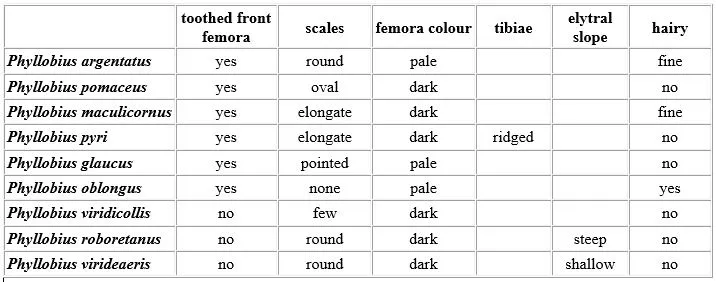
Length 4 or 5 mm. A bright metallic green or bluish nettle weevil. Phyllobius virideaeris lacks the femur teeth found on the majority of UK Phyllobius species. It can be distinguished from the similar P. roboretanus by the gently sloping rear end and
European Water Milfoil Weevil
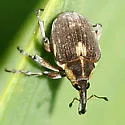
Phytobius leucogaster
Identification: Legs reddish, very slender, Rostrum relatively short. Whole body covered with scale layer, holding an air film beneath it, enabling submerged existence. Scales on midline and sides of pronotum, on underside, and a scutellar spot (whic
White Pine Weevil
Pissodes strobi
Identification: Larvae are yellowish-white, legless, and slightly longer than the adult.
Pityoborus comatus
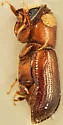
Pityoborus comatus
Pityoborus comatus (Pityoborus comatus) is a species in the family Curculionidae, commonly known as snout and bark beetles, belonging to the order Coleoptera (Beetles). It is classified within the subfamily Scolytinae, tribe Corthylini, suborder Poly
Platyomus flexicaulis
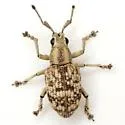
Platyomus flexicaulis
Type Locality: Esperanza Ranch, Brownsville, Texas, from branches of Acacia flexicaulis . (Schaeffer 1905) Texas considers this a "Species of Greatest Conservation Need" (SGCN) ( 4 )
Plinthodes taeniatus
Plinthodes taeniatus
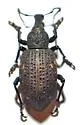
has caused extensive damage to foliage of strawberries on Vancouver Is.
Plocetes versicolor
Plocetes versicolor
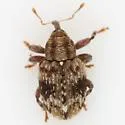
Identification: The darkest scales on the elytra form a broad v-shaped macula Type Locality: Brownsville, Texas (Esperanza Ranch) (Schaeffer 1904) Texas considers this to be a "Species of Greatest Conservation Need" (SGCN)
Pnigodes setosus
Pnigodes setosus
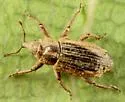
Identification: Usually coated with earthen secretion and dirt. The pale declivial marks usually concealed. (C.W. O'Brien, 29.i.2013) - pristine individual Det. C. W. O'Brien, 2013 rarely collected
Polydrusus cervinus
Polydrusus cervinus
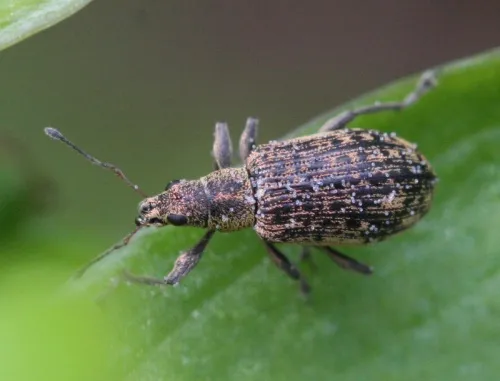
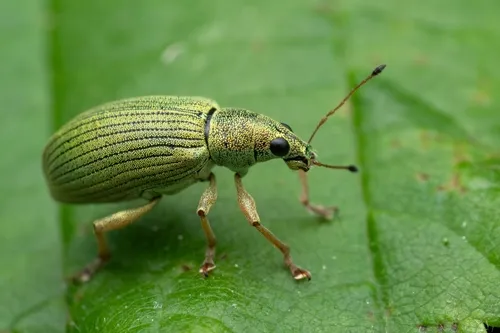
Polydrusus weevils are very similar to the Phyllobius group, but the main difference between the two is that the antennal insertions are on the side of the rostrum and not visible from above. Polydrusus cervinus is a rather pale golden green weevil w
Polydrusus formosus
Polydrusus formosus
Length 5 to 6 mm. A bright metallic green weevil with round scales, a dark club to the pale antennae and a short groove between the eyes. It does not have any setae (bristles). It has conspicuous striae on the elytra. The scales can wear off to revea
Polydrusus ochreus
Polydrusus ochreus
Identification: Notice the space between the points of insertion of the antennae is narrower than in any other North American Polydrusus . … Robert Anderson, 13 August, 2021 Type Locality: Cloudcroft, Otero Co., NM
Polydrusus partitus
Polydrusus partitus
Identification: last key couplet: Upper surface with green and brown scales; elytra obliquely fasciate (Champion, 1911) Type Locality: Mexico, Oaxaca (Hoge).
Polydrusus pterygomalis
Polydrusus pterygomalis
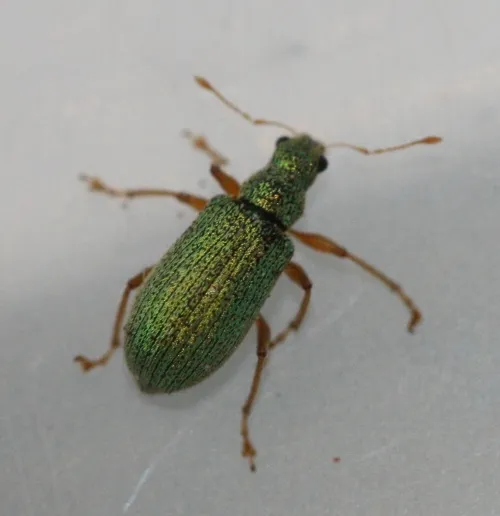
Length about 5 mm. Another of the green arboreal weevils. The identifying features are anterior femora without teeth, upperside of elytra with round scales and with pale semi-erect setae (view from side), the head has a bulge behind the eyes and it h
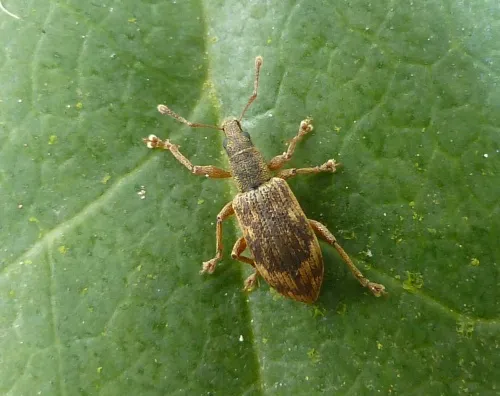
Polydrusus tereticollis
Polydrusus tereticollis
Size 4 to 6 mm. A brown species with a rather dappled appearance. Unless identified by a recognised expert, photographic evidence is required and the specimen should be examined with a microscope. In the comments box, state the key or ID method used.
Four-eyed Spruce Bark Beetle
Polygraphus rufipennis
Identification: The antennae are distinctively leaf-shaped.
Pseudocneorhinus obesus
Pseudocneorhinus obesus
Identification: Similar to P. bifasciatus , but elytra with longer spiky erect scales (in P. bifasciatus , scales are hair-like, not flattened, inconspicous and distinctly shorter than interval width). In P. obesus , the elytra are widest behind midd
Pseudopityophthorus minutissimus
Pseudopityophthorus minutissimus
Identification: Differs from other Pseudopityophthorus by the reticulate frons and prontoal disk and the uniform, short elytral setae
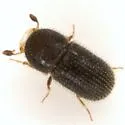
Pseudothysanoes turnbowi
Pseudothysanoes turnbowi
Identification: color very dark brown, etc. Type Locality: Bentsen-Rio Grande State Park, Hidalgo Co., TX
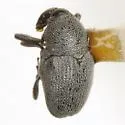
Pycnobaris squamotecta 0
Pycnobaris squamotecta
Identification: Easily distinguishable from pruinosa by the dense vestiture of broad recumbent scales. Type Locality: Texas, a single specimen.
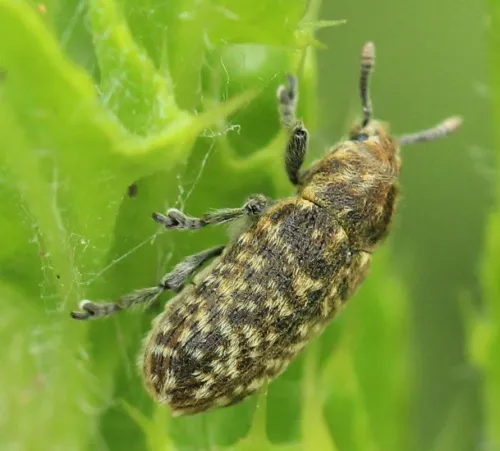
Rhinocyllus conicus
Rhinocyllus conicus
Length: 4 to 7 mm. A black weevil with a tessellated pattern of pale pubescence on the elytra. The rostrum is very short. Unless identified by a recognised expert, good photos are required that show the key ID features. Also state the beetle's size i
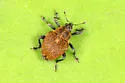
Mile-a-minute Weevil
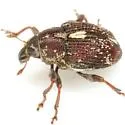
Rhinoncomimus latipes
during 2004-2007, released and established in e. US (NJ-PA-DE-MD-WV) to combat the Mile-a-minute Weed ( Persicaria perfoliata )
Smartweed Node Weevil
Rhinoncus longulus
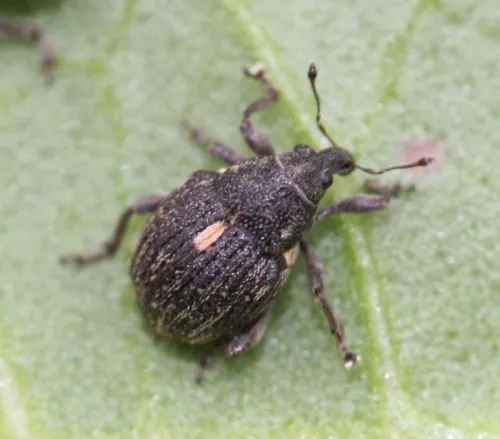
Identification: elongate form; no prothoracic tubercles; eyes round and barely touch the prothorax in repose; antecoxal ridges very strong but prosternum hardly emarginate in front • Holotype
Rhinoncus pericarpius
Rhinoncus pericarpius
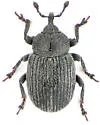
2.5-3.6mm. This is a small greyish weevil with a cream coloured blotch at the centre join of the elytra. The rostrum is relatively short and broad. The underside is covered in pale rounded scales. Legs are red-brown. Unless identified by a recognised
Root-gall Weevil
Rhinusa linariae
Approved for release as biocontrol in the US in 1995
Rhinusa neta
Rhinusa neta
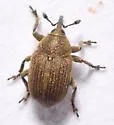
Accidentally introduced into North America in the early 1900s (1937), probably with ornamental toadflax. Regarded as possible biocontrol of toadflax. Has not been released for this purpose yet. However "frequently seen in the field, few collections a
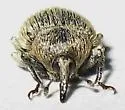
Rhinusa tetra
Rhinusa tetra
Identification: more stout than other NA spp.; posterior margin of pronotum more than twice as wide as anterior margin released to combat common mullein before 1916 ( 5 )
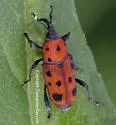
Ironweed Curculio
Rhodobaenus tredecimpunctatus
Identification: elytra and pronotum red with black spots that don't coalesce and don't form patches
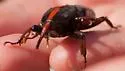
Red Palm Weevil
Rhynchophorus vulneratus
first NA detection: Laguna Beach, CA 2010 (identified as R. ferrugineus )
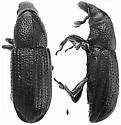
Rhyncolus minor
Rhyncolus minor
Rhyncolus minor (Rhyncolus minor) is a species in the family Curculionidae, commonly known as snout and bark beetles, belonging to the order Coleoptera (Beetles). It is classified within the subfamily Cossoninae, tribe Rhyncolini, suborder Polyphaga,
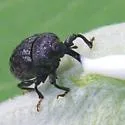
Milkweed Stem Weevil
Rhyssomatus lineaticollis
Rh. lineaticollis reduces the growth of Labidomera clivicollis and Danaus plexippus ( 8 )
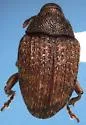
Rhyssomatus medialis
Rhyssomatus medialis
A not rare, but not common southeastern AZ species, of which I have one also from NM and from CA. (per Charles W. O'Brien, 2012)
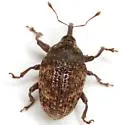
Rhyssomatus sculpturatus
Rhyssomatus sculpturatus
Identification: Very like Rhyssomatus sculpticollis [ occurs as close as nw.Mex. ], but more closely pubescent, the pubescence on the elytra often fasciculate; the elytra themselves a little more widened anteriorly (their general shape subcordate), w
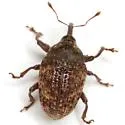
Rhyssomatus texanus
Rhyssomatus texanus
Type Locality: McLennon Co., Texas VII-25 in (ELS). Allotype: Cameron Co., Texas V-30 in (ELS). Fourteen paratypes: 1 Cameron Co., Texas V-30, 1 Brownsville, Tex. V-25-39, DJ & JNK., in (ELS); 1 Brownsville, Tex. V-25-39-, DJ & JNK., 1 Brownsville, T
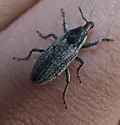
Scaphomorphus calandroides
Scaphomorphus calandroides
This, and subcylindricus Casey, 1891 (= Lixus lupinus Blatchley) the only species on the atlantic side.

Strawberry Root Weevil
Sciaphilus asperatus
This weevil, is 4.5 to 5.5 mm in length, has a very short, blunt-tipped snout, no longer than its head; a light brown to reddish-brown body with extensive black speckling and scattered white scales. The elytra have black punctate striations and short
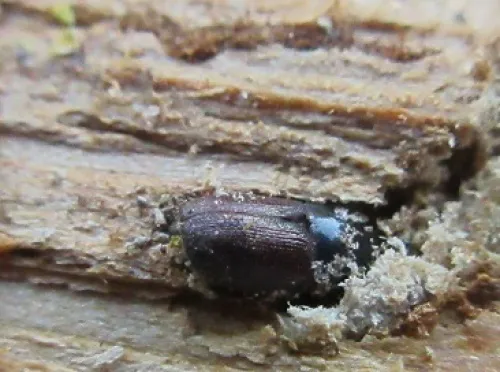
Oak Bark Beetle
Scolytus intricatus
A small (2 to 3.5 mm) beetle with reddish-brown elytra and light-brown antennae and legs. Unless identified by a recognised expert, photographic evidence is required and the specimen should be examined with a microscope. In the comments box, state th
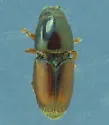
Smaller European Elm Bark Beetle
Scolytus multistriatus
Identification: prominent spine on abdominal segment 2 separates S. multistriatus from S. rugulosus , the only other hardwood-infesting western scolytid. ( UBC Forestry ) Their gallery is typically unbranched and runs parallel to the grain; this dist
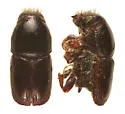
Scolytus piceae
Scolytus piceae
Identification: easily confused with S. multistriatus but in that species the tubercle on the vertical sternites touches the edge of sternite one, where this species has the tubercle centered on the sternite. The burrows differ from other eastern spe
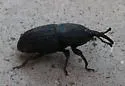
Agave Weevil
Scyphophorus acupunctatus
Identification: see important pest of cultivated agaves; larvae used as food in parts of Mexico; one of several species put into "tequila" (actually mezcal) bottles
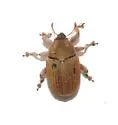
Sibinia fulva
Sibinia fulva
Merobruchus julianus (Bruchinae) was reared from A. greggii seeds attacked by S. fulva ; M. julianus occupied the centres of the large flattened seeds while S. fulva fed around the edges.
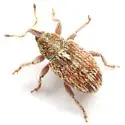
Sibinia hispida
Sibinia hispida
In w. TX and NM S. hispida is virtually always microsympatric with another bud predator S. sibinioides , and with the seed predator S. suturalis .
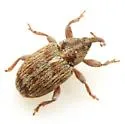
Huisache Sibinia Weevil
Sibinia inermis
Identification: See Clark (1978) to separate the spp. Type Locality: Brownsville, Texas Wickham
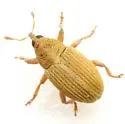
Sibinia ochreosa
Sibinia ochreosa
Identification: Det. E. G. Riley, 2009 Considered as a biological control agent for the invasive Mimosa pigra (Fabaceae)
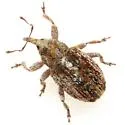
Sibinia ruidula
Sibinia ruidula
Type Locality: TEXAS: Hidalgo Co., 4 mi N Delfina, 27 March, 1970, W.E. Clark
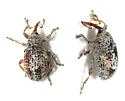
Mesquite Sibinia Weevil
Sibinia setosa
parasitized by Zatropis perdubius, Z. captitus (Pteromalidae), Eutrichosoma mirabile (Eutrichosomatidae)
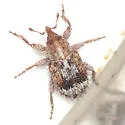
Sibinia transversa
Sibinia transversa
Identification: Dets. W. E. Clark Type Locality: AZ
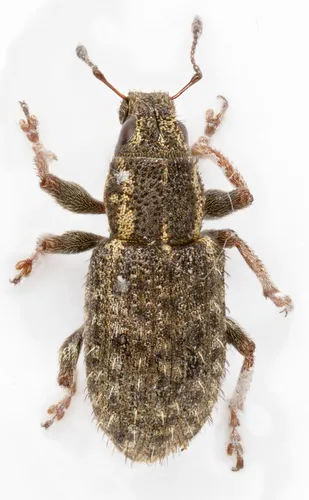
Sitona hispidulus
Sitona hispidulus
Length 3 to 6 mm. This weevil is noticeably bristly. It usually has a golden coppery or greenish metallic appearance when fresh, but when the scales rub off it appears much blacker. Unless identified by a recognised expert, good photos are required t
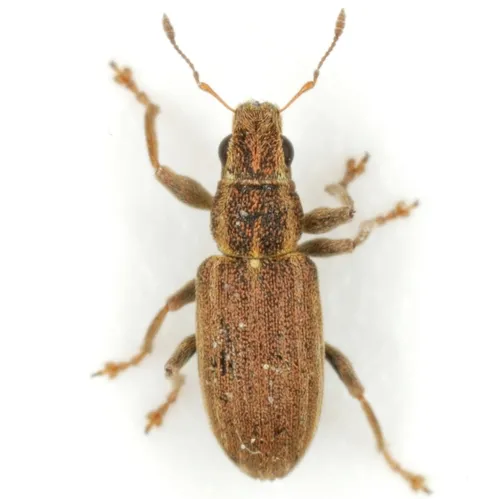
Pea-leaf Weevil
Sitona lineatus
3.4-5.3mm. This is the commonest of the Sitona weevils and has dark longitudinal stripes. Unlike many weevils, it has a very short, almost squared off rostrum or snout. Front coxae almost touch the constriction at the front margin of the prosternum (
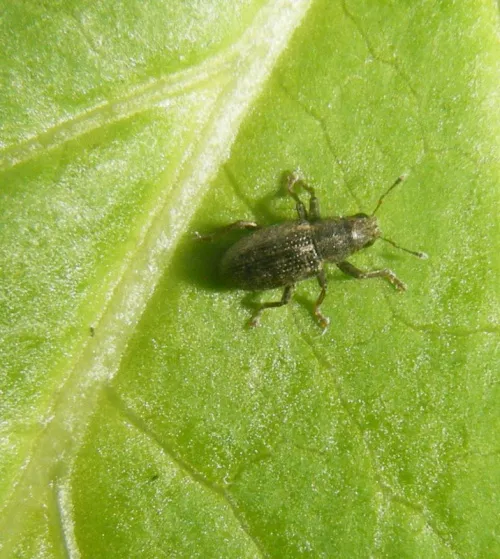
Sitona sulcifrons
Sitona sulcifrons
Length 3 to 4 mm. this is a plain brown weevil with a short rostrum (snout). Other Sitonia species. Dissection is necessary to distinguish between them. Unless identified by a recognised expert, photographic evidence is required and the specimen shou
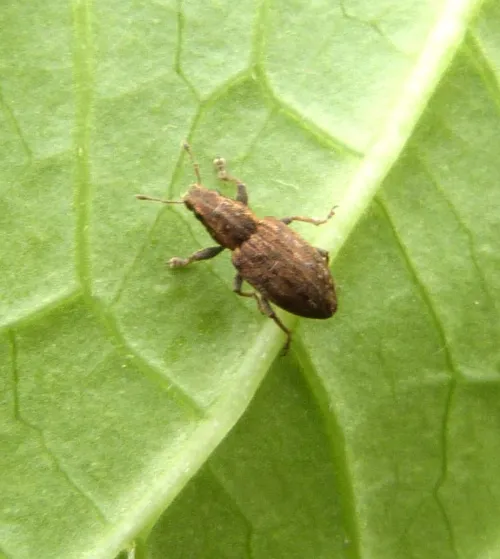
Sitona suturalis
Sitona suturalis
Length 4 or 5 mm. A brown weevil with rather a dark and light striped appearance when fresh. There are other weevils with a similar appearance and detailed examination is necessary for identification. Other Sitonia species. Dissection is necessary to
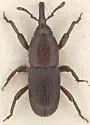
Granary Weevil
Sitophilus granarius
Identification: distinct from S. oryzae in having the hind wings reduced, the elytral intervals at least as wide as the striae, the strial punctures small and clearly separated, and the pronotal punctures distinctly elongate notorious pest of stored
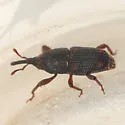
Maize weevil
Sitophilus zeamais
Identification: externally, almost indistinguishable from, and often confused with, S. oryzae (only male genitalia provide reliable diagnostic features), although tends to be larger and darker ; the two may form mixed infestations a common pest of gr
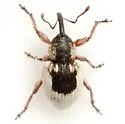
Smicronyx centralis
Smicronyx centralis
Identification: Description : Rostra of both sexes black, moderately stout, punctate from base to apex; squamose behind the antennal insertion; longer, more tapered and less roughly punctate in female. Head black to piceous, front sparsely squamose.
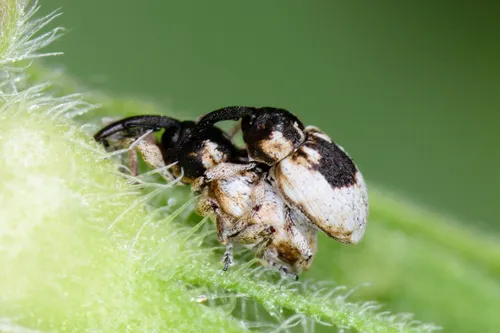
Smicronyx corpulentus
Smicronyx corpulentus
Identification: surface of antennal club rufous to ferruginous Description : Rostra of both sexes black, moderately curved, finely punctate from base to apex, sparsely squamose behind antennal insertions; slightly longer, smoother and more tapered in
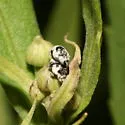
Smicronyx discoideus
Smicronyx discoideus
Identification: A distinct posterolateral macula of dark scales present on each elytron, in addition to the dark dorsal macula; surface of antennal club black or piceous Det. MJ Hatfield, 2019
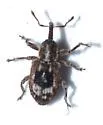
Smicronyx quadrifer
Smicronyx quadrifer
Identification: A nearly quadrate patch of dark scales present near middle (and divided by sutural line) of elytra Description : Rostra of both sexes stout, black to piceous, rugosely punctate from base to apex; closely squamose from base to near ape
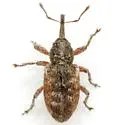
Smicronyx spretus
Smicronyx spretus
Identification: Det. M. A. Quinn, 2013 Type Locality: Ariz.
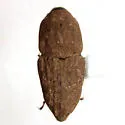
Sphenophorus bartramiae
Sphenophorus bartramiae
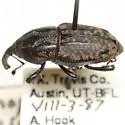
described originally from specimens taken from the crop of plovers. … Charles W. O'Brien, 10 February, 2013
Nutgrass Billbug
Sphenophorus cariosus
Identification: Adult: blackish with pale gray markings; pronotum with black diamond-shaped raised vitta in median region; elytra with large and widely-spaced fovae along striae destructive to corn in MO ( 4 ) ; can be a pest in Hawaii
Sphenophorus cazieri
Sphenophorus cazieri
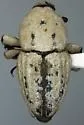
Identification: distinctive small species with hatchet-like rostrum and no spur at inner edge of protibia a rare species known from a handful of specimens; Vaurie only saw the holotype (from Corpus Cristi) and one unlabeled specimen ; i found one spe
Sphenophorus crenatus
Sphenophorus crenatus
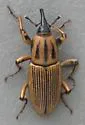
Identification: the bi-colored variant more common but all black forms exist; in the female, protibiae are sinuate, almost angulate, inside, but not so in the male
Sphenophorus maidis
Sphenophorus maidis
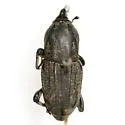
Identification: Large, robust; black or red, usually with coating in elytral interspaces; three bare pronotal stripes merging in front or nearly so; elytra with third and fifth intervals raised and bare in basal third.
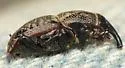
Uneven Billbug
Sphenophorus melanocephalus
Identification: Note apical expansion of the fore tibiae. ‒C.W. O'Brien, 7.iv.2010
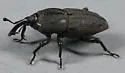
Bluegrass Billbug
Sphenophorus parvulus
Identification: Small, slender; black but usually coated with opaque gray, pronotum evenly, densely punctured all over except sometimes for median line of varying length, elytra with sinuous intervals. Differs from the similar S. minimus (that also o
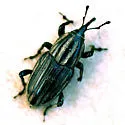
Sphenophorus robustus
Sphenophorus robustus
Identification: Pronotum with stripes well raised above interspaces, straight, nearly parallel, strongly defined
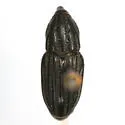
Sphenophorus striatipennis
Sphenophorus striatipennis
Identification: Elytra with alternate intervals raised and convex from base to near apex; raised parts of pronotum and elytra usually red or red and black
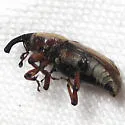
Sphenophorus venatus
Sphenophorus venatus
Identification: Small to medium; black or red, bare or coated; pronotum with three bare vittae, the median enclosing an apical depression, the laterals not reaching the apex; elytra variable, but strial punctures much larger than interval punctures
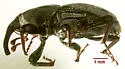
Timothy Billbug
Sphenophorus zeae
Identification: very large punctures along striae of elytra; beak humped at base
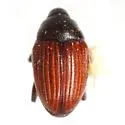
Stethobaris cicatricosa
Stethobaris cicatricosa
Identification: The prosternum is rather broadly and deeply sulcate [marked with parallel grooves]. Casey calls this a "remarkable species"
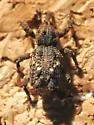
Sthereus horridus
Sthereus horridus
nocturnal; common in coastal forests ('common' for skilled collectors who beat them from trees or run berleses of forest litter; when one is found others are nearby). (C.W. O'Brien's comment here )
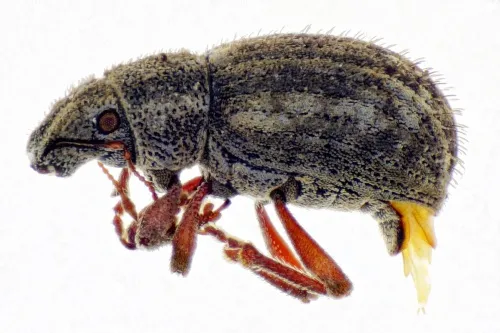
Strophosoma capitatum
Strophosoma capitatum
Measuring about 5 mm with large erect scales in punctures of striae. Details of scale patterns on elytra required. Unless identified by a recognised expert, photographic evidence is required and the specimen should be examined with a microscope. In t
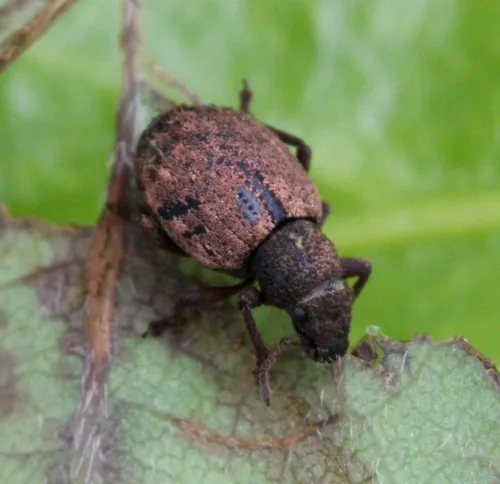
Strophosoma melanogrammum
Strophosoma melanogrammum
Length 4 to 6 mm. The elytra are blackish with a covering of bronze-brown scales, but nearer to the pronotum there is an area where these scales are thinned out or absent so that the black beneath shows through. Unless identified by a recognised expe
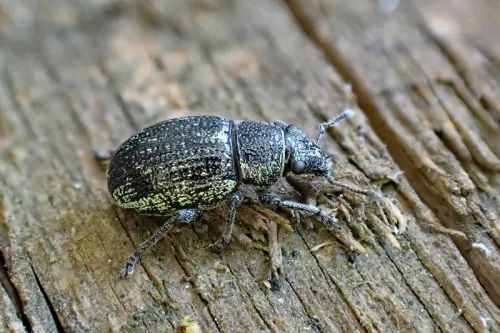
Heather Weevil
Strophosoma sus
Size 3.4 to 4.5 mm. This is predominantly a black weevil, with a dusting of white scales down the side of the elytra and onto the pronutum. Unless identified by a recognised expert, photographic evidence is required and the specimen should be examine
Tachygonus tardipes
Tachygonus tardipes
Identification: Det. E. G. Riley, 2021 Type Locality: Texas: [no specific locality data]
Thecesternus albidus 0
Thecesternus albidus
Identification: Humeral angles only slightly produced forward. Elytra at least two and a half times as long as prothorax, sides subparallel; humeral angles twice as long as in maculosus ; sete dark and white, erect. The markings of this species are d
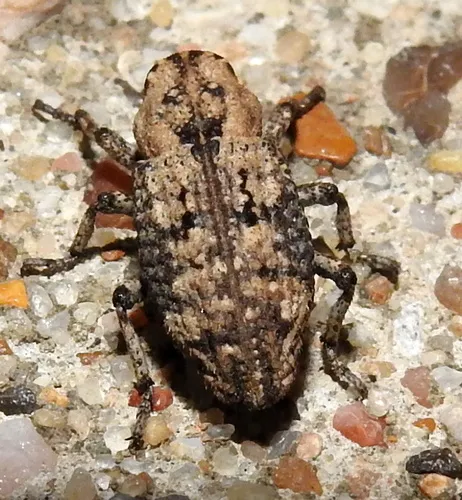
Thecesternus maculosus
Thecesternus maculosus
Identification: spmn dets. S.R. McCollum, 2011 Type Locality: Marfa, Texas
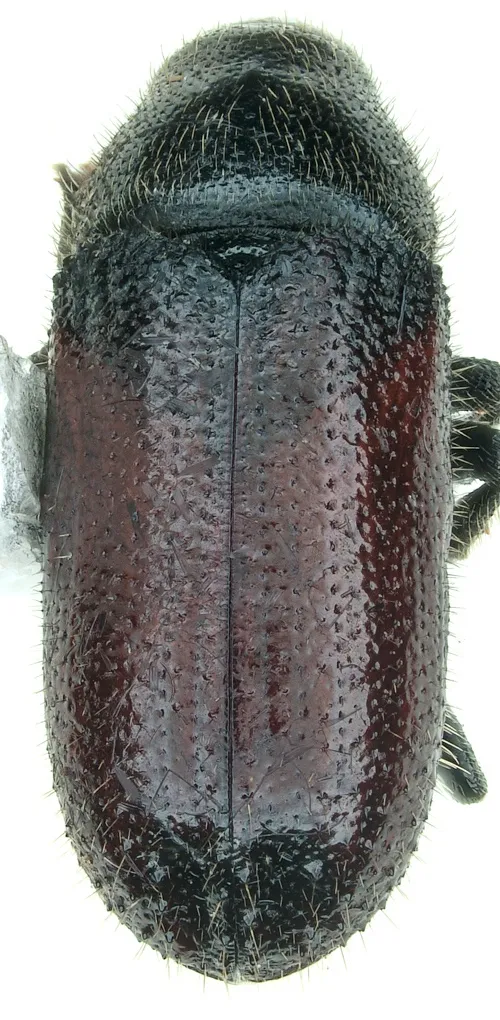
Large Pine-shoot Beetle
Tomicus piniperda
Size 3.5 to 4.8 mm. Elongate and cylindrical with the head narrowly visible from above, entirely black or very dark brown with the elytra contrastingly dark reddish-brown. Head evenly convex, finely punctured and pubescent. Unless identified by a rec
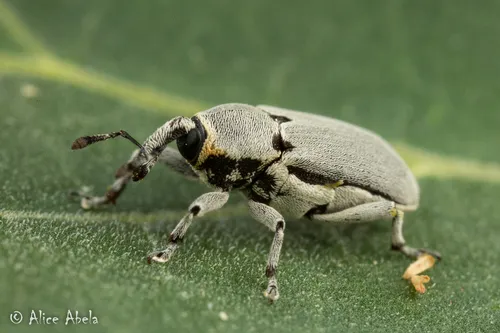
Tobacco Weevil
Trichobaris mucorea
Lee et al. examined the host-selection behaviours of two sympatric weevils, the Datura (Trichobaris compacta) and tobacco (T. mucorea) weevils in field and glasshouse experiments... Adult females of both species strongly preferred to feed on D. wrigh
Thistle Crown Weevil
Trichosirocalus horridus
Identification: Body densely covered with brownish scales, which form no definite pattern. Additionally, dorsal surface with numerous stiff, erect setae . T. horridus was imported from Italy in 1970-1972 for testing and approved for field release in
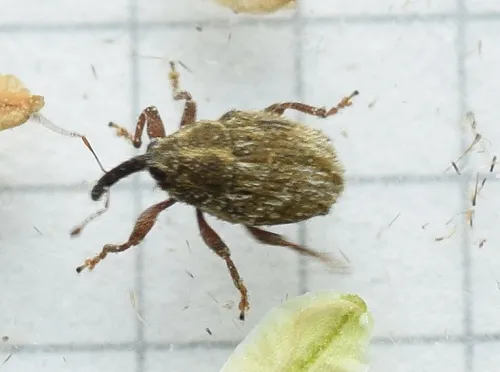
Trichosirocalus troglodytes
Trichosirocalus troglodytes
A very small weevil of about 3.5 mm length. It is pale brown (sometimes slightly reddish) with a few paler whitish markings. Orange-brown legs, brown body. Angular rear, patch of warts on rear of each wing-case. Erect oval scales on wing-cases. Rathe
Tychius cuprifer
Tychius cuprifer
Identification: front tibia with a distinct tooth ( T. meliloti males also have it, but the body is not nearly as slender) ( R.S. Anderson's comment )
Tychius picirostris
Tychius picirostris
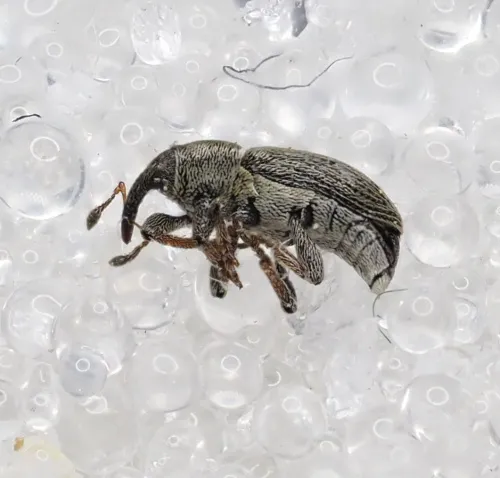
Length 1.8-2.4 mm. The upperside is covered in grey hair-like scales but if worn the black body beneath darkens the appearance. Distinguished from other species in the genus by the antennal funiculus having only 6 segments (7 in other Tychius species
Red Clover Seed Weevil
Tychius stephensi
Red Clover Seed Weevil (Tychius stephensi) is a species in the family Curculionidae, commonly known as snout and bark beetles, belonging to the order Coleoptera (Beetles). It is classified within the subfamily Curculioninae, tribe Tychiini, suborder
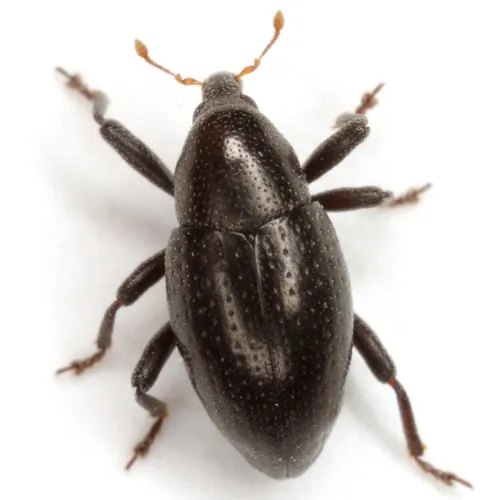
Tyloderma baridium
Tyloderma baridium
Identification: Elytral humeri very narrowly exposed at base. Oval, gradually pointed behind. Black, feebly tinged with bronze; finely alutaceous. Beak and head rather finely and deeply punctate; frontal fovea small, feeble. Thorax slightly wider tha
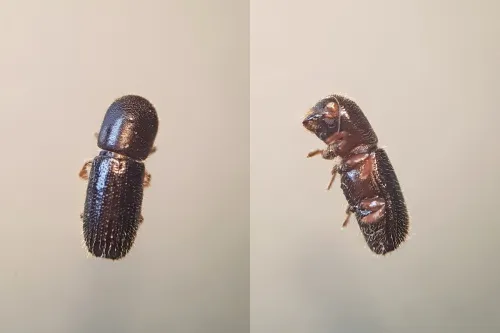
Xyleborinus saxesenii
Xyleborinus saxesenii
A small (2 to 2.4 mm), dark brown beetle with hairy elytra. Unless identified by a recognised expert, photographic evidence is required and the specimen should be examined with a microscope. In the comments box, state the key or ID method used. Note
Redbay Ambrosia Beetle
Xyleborus glabratus
Identification: Males are flightless earliest record in our area: GA 2002
Xyleborus spinulosus
Xyleborus spinulosus
Identification: color dark brown to almost black See Fig. 15: BCA ( Close-up - by Tom Atkinson, 2010) Type Locality: San Geronimo, Guatemala
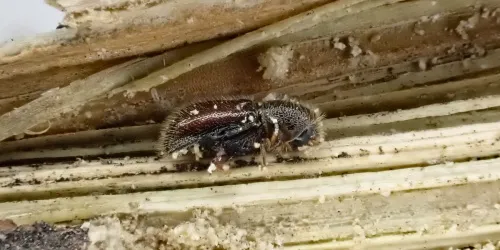
Xylocleptes bispinus
Xylocleptes bispinus
A tiny (1.8 to 3.2 mm) hairy, brown beetle associated with Clematis species, particularly Traveller's-joy ( Clematis vitalba ). Unless identified by a recognised expert, photographic evidence is required and the specimen should be examined with a mic

Meadow Cranesbill Weevil
Zacladus geranii
2.4 to 3.3 mm in length and found on large flowered geraniums, particularly Meadow Cranesbill. It is black with white/grey oval scales on the underside. The pronotum is coasely punctuated and forms a deep collar behind the head and also has a pair of
Zygobaris nitens
Zygobaris nitens
Identification: Holotype • live photo gestalt of Curculio (rostrum longer than head+pronotum); shiny black, coarsely sculptured, with scattered white scales (looks dotted, unless worn).
Acalles carinatus
Acalles carinatus
Acalles clavatus
Acalles clavatus
Acalles costifer
Acalles costifer