
Family Snout and Bark Beetles (Curculionidae)
Curculionidae is a family in the order Coleoptera. Browse 1,711 named species recorded in this family, or open an individual profile for its available identification and natural-history information.
Species in Curculionidae (1,711)
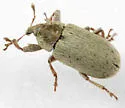
Macrorhoptus estriatus
Macrorhoptus estriatus
Adults can be found in flowers of winecups ( Callirhoe ) (comment by Robert Anderson, 28 May, 2010)
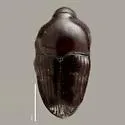
Madarellus perditus
Madarellus perditus
Identification: allied rather closely to cuneatus Casey (Range: c.TX to C. Amer.); it differs, however, in its less abbreviated and less rapidly cuneiform outline and longer elytra; in cuneatus the elytra are barely a fifth longer than wide and less
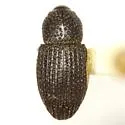
Maemactes cribratus
Maemactes cribratus
Identification: The general appearance is that of Tyloderma , but the sculpture resembles that of several species of Baris . ( 3 )
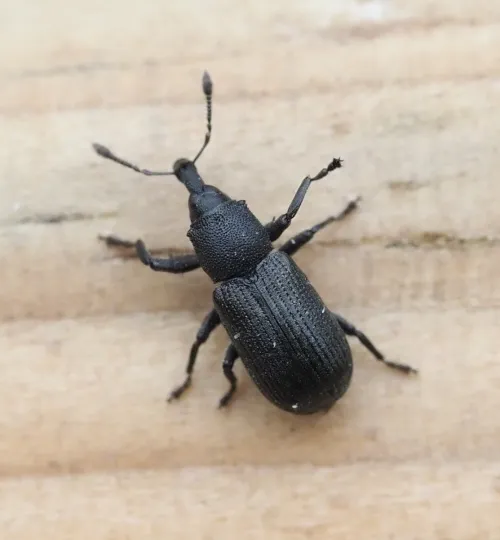
Magdalis armigera
Magdalis armigera
Length 3 to 4.5 mm. There are rows of puncturation on the elytra which are satiny, and a slate black in colour. There are quite large forward pointing projections on the shoulders of the pronotum These are larger and more forward pointing than in any
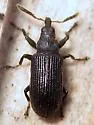
Magdalis barbicornis
Magdalis barbicornis
the only adventive NA sp. of the genus ; apparently not a serious pest
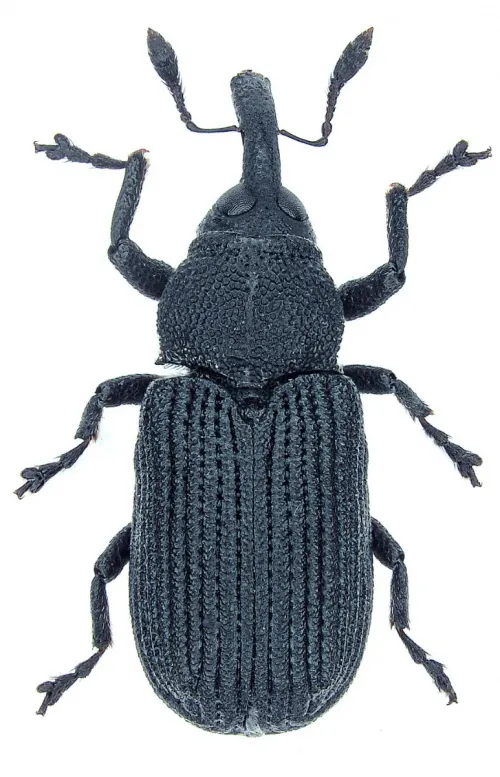
Magdalis cerasi
Magdalis cerasi
2.4 to 4.2 mm, entirely black, appears dull due to strong puncturation and microsculpture. Head dull; microsculpture strong and without puncturation. Eyes convex, discontinuous with outline of head. Unless identified by a recognised expert, photograp
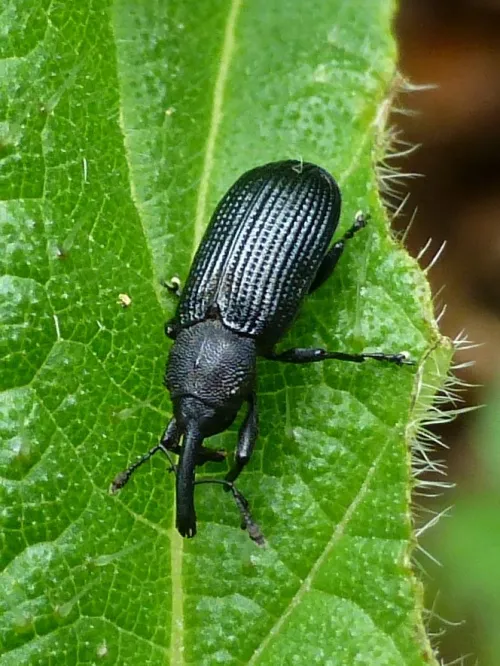
Magdalis memnonia
Magdalis memnonia
A fairly large (4.6 to 8 mm) black weevil with elbowed antennae, large teeth on femurs, flat eyes and a funnel-shaped pronotum. Unless identified by a recognised expert, photographic evidence is required and the specimen should be examined with a mic
Stem-boring Weevil
Mecinus janthinus
introduced recently to control toadflax ( Linaria spp.) ; first released in 1991 (BC), spread into WA
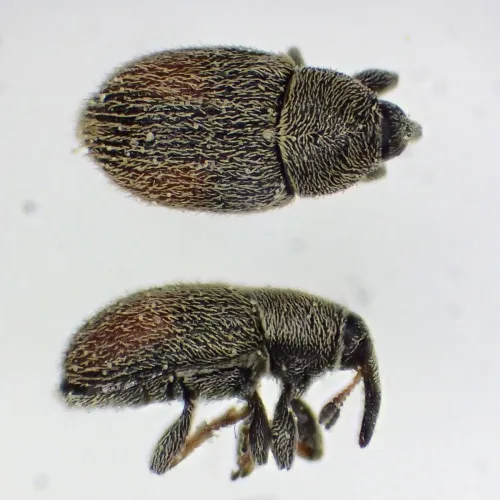
Mecinus pascuorum
Mecinus pascuorum
A small (2 to 2.5 mm) grey- brown, sometimes slightly red tinted weevil. Unless identified by a recognised expert, photographic evidence is required and the specimen should be examined with a microscope. In the comments box, state the key or ID metho
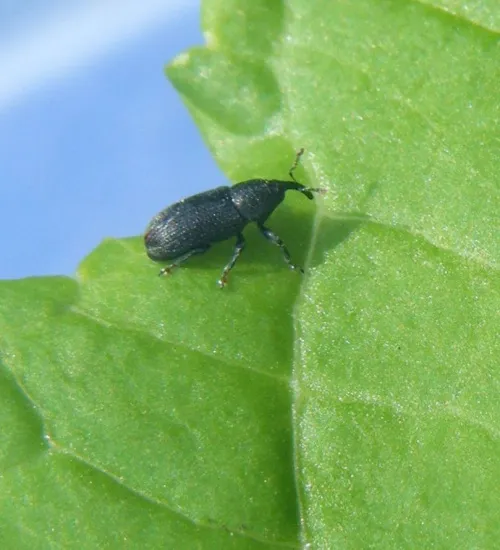
Mecinus pyraster
Mecinus pyraster
Unless identified by a recognised expert, photographic evidence is required and the specimen should be examined with a microscope. In the comments box, state the key or ID method used. Note the beetle's size and describe the identifying characters. I
Mexican Bromeliad Weevil
Metamasius callizona
M. callizona , which was first encountered in Florida in 1989 at a Ft. Lauderdale (Broward County) bromeliad nursery, is thought to have entered the state in a shipment of bromeliads imported from Veracruz, Mexico. The nursery was treated, but within
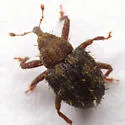
Microhyus setiger
Microhyus setiger
Identification: distinctive (small size, bristly dorsum) Black, covered with a dirty crust, and clothed with stout bristles Type Locality: Two specimens, Georgia
Puncturevine Stem Weevil
Microlarinus lypriformis
Identification: more parallel-sided than M. rhinocylloides introduced into the US as biocontrol agent in 1961 (CA, AZ)
Puncturevine Seed Weevil
Microlarinus rhinocylloides
introduced to control Puncturevine; first released in the US in 1961 (NV & CA, later in other states)
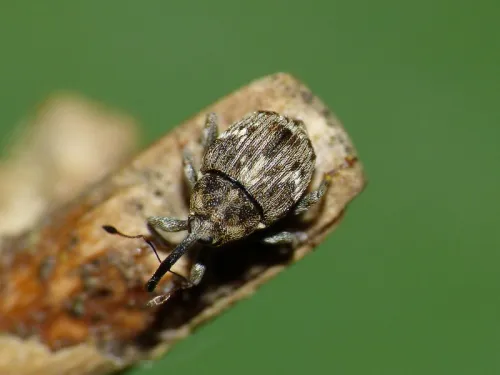
Microplontus campestris
Microplontus campestris
2.2-3.1mm. A small, light coloured weevil with distinctive markings on both the pronotum and elytra. Found on Ox-eye Daisy.. Unless identified by a recognised expert, photographic evidence is required and the specimen should be examined with a micros
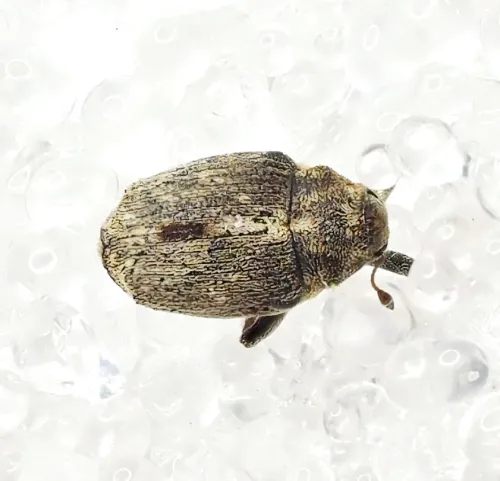
Microplontus melanostigma
Microplontus melanostigma
1.7-2.7. Body black but covered in grey, white and brown scales, mostly without forming a distinct pattern except along the elytral suture. A white arrow is behind the scutellum followed by a brownish bar. The rostrum is black. Antennae, tibia and ta
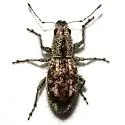
Mitostylus setosus
Mitostylus setosus
Identification: Easily separated from other described members of the genus in Texas by the larger size, and long slender, erect elytral setae. (Burke 1963)
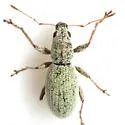
Mitostylus tenuis
Mitostylus tenuis
Identification: The color of the body scales is quite variable; they are usually bluish green with a coppery tinge but may be uniformly gray or light brown. (Burke 1963) Type Locality: Texas
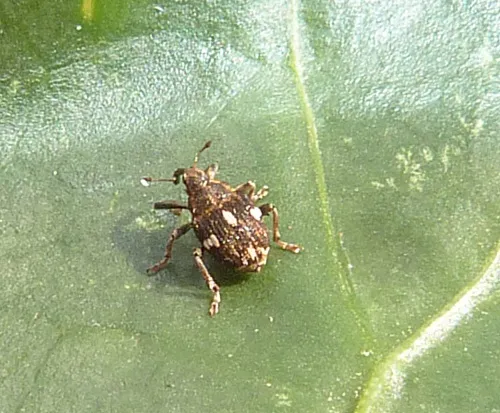
Mogulones asperifoliarum
Mogulones asperifoliarum
2.2 to 2.9 mm. A brown weevil with distinctive white blotches which are visible to the naked eye despite the weevils small size. Unless identified by a recognised expert, good photos are required that show the key ID features. Also state the beetle's
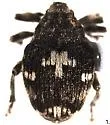
Hound's-tongue Root Weevil
Mogulones crucifer
populations in BC originated in Hungary and Serbia Introduced to control the invasive weed Cynoglossum officinale (Hound's Tongue) (Boraginaceae)
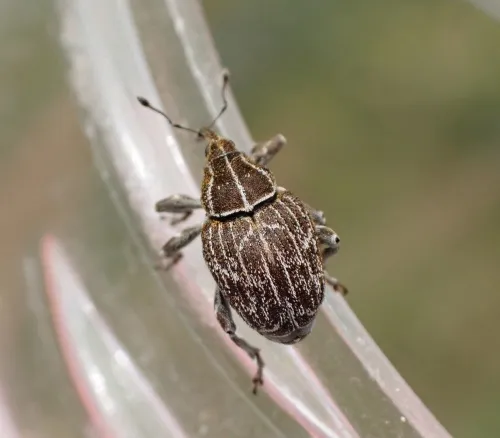
Mogulones geographicus
Mogulones geographicus
Quite a distinctive dark weevil with a white streaky appearance and an inverted V behind the pronotum. Unless identified by a recognised expert, good photos are required that show the key ID features. Also state the beetle's size in the comments box.
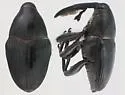
Myctides imberbis
Myctides imberbis
pest of rose apple ( Syzygium jambos ) ; first detected in FL 1976
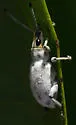
Sri Lanka Weevil
Myllocerus undecimpustulatus
Identification: similar to Artipus floridanus (native to peninsular FL) but has wider shoulders, spines on the hind femur and a yellowish tint to the head vs A. floridanus first detected in Florida in 2000 , now the most commonly seen entimine in FL
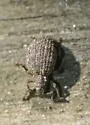
Myosides seriehispidus
Myosides seriehispidus
Identification: see Author of this species is Willem Roelofs (1822 – 1897) was a Dutch painter and amateur entomologist.
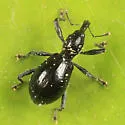
Myrmex chevrolatii
Myrmex chevrolatii
Identification: The sparsely punctured thorax, strongly arched elytra, deeply foveate front and more sparsely pilose surface, at once distinguish this species.
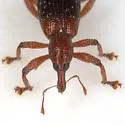
Myrmex dichrous
Myrmex dichrous
Identification: Dull ferruginous, with scattered white short hairs Det. E. G. Riley, 2009
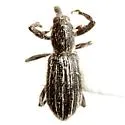
Myrmex horni
Myrmex horni
Identification: M. horni is remarkable in having the femoral tooth much smaller than any known species. (Sleeper, 1954) Type Locality: Holotype female, Morris Ranch , Gillespie Co., Texas, V-7, (in ELSC). One paratype, same data, (in ELSC). Enchanted
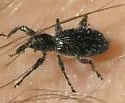
Myrmex scrobicollis
Myrmex scrobicollis
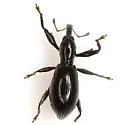
Myrmex scrobicollis (Myrmex scrobicollis) is a species in the family Curculionidae, commonly known as snout and bark beetles, belonging to the order Coleoptera (Beetles). It is classified within the subfamily Curculioninae, tribe Otidocephalini, subo
Myrmex texanus
Myrmex texanus
Identification: The form of thorax and antennal club, the frontal fovea and feeble punctuation of elytra distinguish this species. (Schaeffer 1907) Type Locality: Esperanza Ranch, Brownsville, Cameron Co., Texas (Schaeffer 1907)
Naupactus leucoloma
Naupactus leucoloma
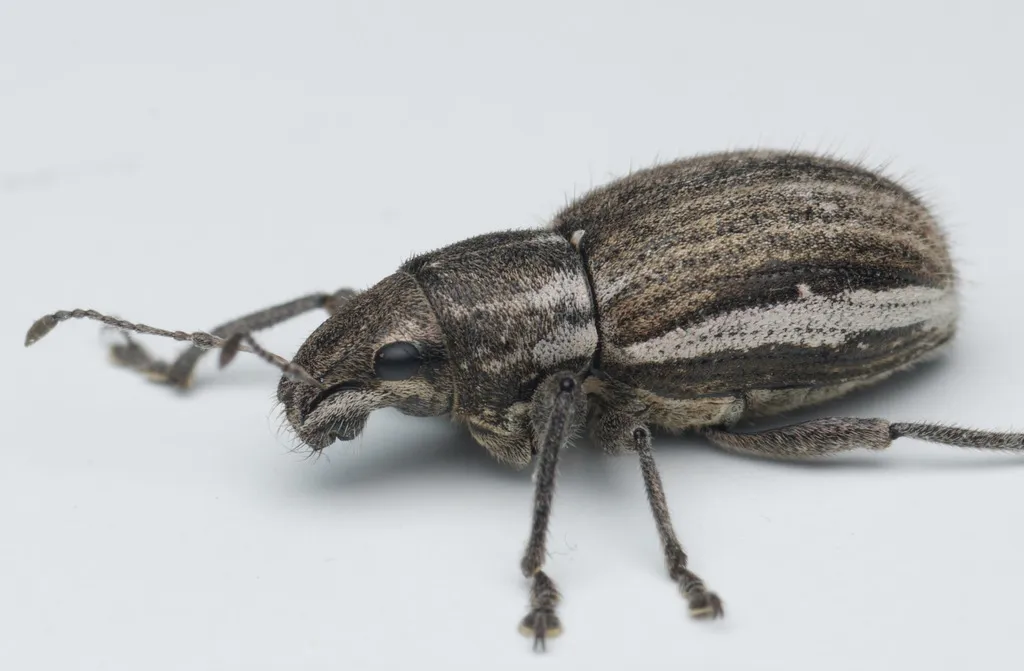
Identification: eyes slighly convex; lateral carina on rostrum distinct; rostral groove wider towards apex; setae at base of pronotum directed anterad; elytral scales elongate-oval earliest record in our area: FL 1936
Naupactus peregrinus
Naupactus peregrinus
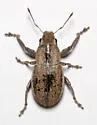
Identification: tend to be smaller, paler tan; eyes more convex; carina on rostrum less distinct; groove on rostrum does not widen toward apex; setae at base of pronotum directed posterad (unique for leucoloma-Group); elytral scales more rounded
Nedyus quadrimaculatus
Nedyus quadrimaculatus
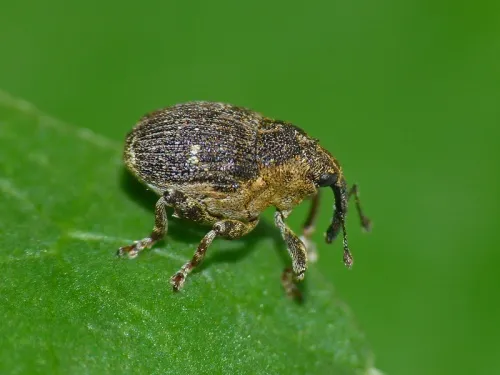
Length about 3 mm. This small dark and very convex weevil may often be rocognised by the presence of two prominent patches of pale scales on the elytra although these may be absent and the extent of pale scaling in general varies. Nedyus quadrimacula
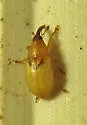
Notolomus basalis
Notolomus basalis
Identification: Testaceous, head and beak brown; elytra with an oblique dark band commencing near the base of the third interspace, and running to the suture. Type Locality: Capron, Fla [Fort Capron, St. Lucie County, Florida]
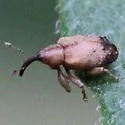
Ochyromera ligustri
Ochyromera ligustri
earliest record in our area: NC 1959 (accidentally introduced with host plant); by 2005, reached c.TX ( 7 ) ( 8 )
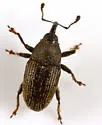
Odontocorynus falsus
Odontocorynus falsus
Identification: our only Odontocorynus with a slender body shape males easily recognized by anteriolateral pronotal tubercles:
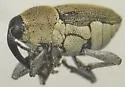
Odontocorynus pulverulentus
Odontocorynus pulverulentus
Identification: the only species with scaled elytral striae
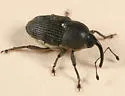
Odontocorynus salebrosus
Odontocorynus salebrosus
Identification: Most O. salebrosus are easily identifiable, except for females from se.US where O. calcarifer and O. larvatus occur. In particular, small and abraded specimens require direct comparison with typical specimens. As in O. umbellae , reli
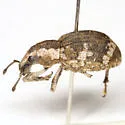
Omileus epicaeroides
Omileus epicaeroides
Identification: Det. M. A. Quinn, 2015 Type Locality: Texas
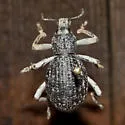
Ophryastes argentatus
Ophryastes argentatus
Identification: LeConte: One female, with the elytra nearly twice as wide as the thorax; the anterior and posterior marginal impressions of the thorax are entire and very distinct, uniting with the dorsal line; the color is more uniform than in the o
Ophryastes decipiens 0
Ophryastes decipiens
Identification: In this species there is a great deal of variation in size, shape, and degree of maculation. Some specimens are robust, convex, the body dilaited and widest behind the middle, others are flatter and more parallel, with the body widest
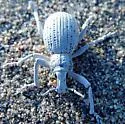
Ophryastes desertus
Ophryastes desertus
Identification: Elytra oblong oval, three times as long as the thorax, one and a-half times as long as wide, strive broad and shallow, punctures coarse and serrate, intervals feebly convex. Body beneath and legs densely covered with whitish scales. D
Ophryastes dunnianus 0
Ophryastes dunnianus
Identification: Scales light and dark gray, confusedly mottled; elytral striae impressed, finely punctate (last key couplet) This name seems to have caused considerable confusion. Casey's description of the species states that it is white, with the s
Ophryastes huachucae
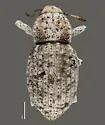
Ophryastes huachucae
Identification: head and sides of prothorax dominantly white; brown scales of pronotal disk more or less concentrated into two broad stripes, one on either side of the middle; disk of elytra clouded but mainly brown, the legs barred. Det. C. W. O.Bri
Ophryastes latirostris
Ophryastes latirostris
Identification: This species differs from [most (all?) spp.] by the obliquity of the lateral grooves of the rostrum, which is also thicker than in the other species. Type Locality: "on the Arkansas River, near the mountains."
Ophryastes nivosus
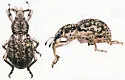
Ophryastes nivosus
Identification: The male is pure white throughout; the female is feebly mottled with faint oval annular spots, each centered on a strial puncture. In the female the median sulcus of the rostrum is longer than in the male, extending somewhat indefinit
Ophryastes ovipennis
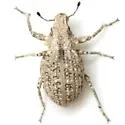
Ophryastes ovipennis
Type locality: [El] Paso del Norte, Mexico (=Ciudad Juárez)
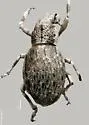
Ophryastes pilosus
Ophryastes pilosus
Identification: Color dark gray, sparingly and irregularly mottled with black, especially upon the basal portions of the second and fourth elytral intervals; pronotum bearing a blackish lateral stripe upon each side and a narrow black median line. De
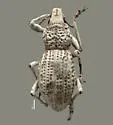
Ophryastes shufeldti
Ophryastes shufeldti
Identification: readily distinguished from tuderosus and latirostris of LeConte by the much less transverse prothorax. Det. C. W. O'Brien, 2011 Type Locality: Fort Wingate , New Mexico
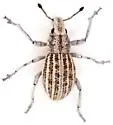
Ophryastes simulans
Ophryastes simulans
Identification: This species like others in the genus is quite variable in size and somewhat unstable as to color pattern. I have selected as types specimens of intermediate size and of the most characteristic color pattern. Some specimens are of a m
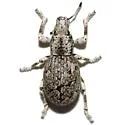
Ophryastes sordidus
Ophryastes sordidus
Identification: the brown and gray scales are intermixed and do not form any well defined spaces; the latter color predominates on the head, and the former on the elytra. Det. Charles W. O'Brien, 2009 Type Locality: One female specimen, Platte River.
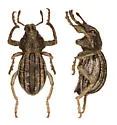
Ophryastes tuberosus
Ophryastes tuberosus
Identification: Thorax nearly twice as wide as long, constricted at apex and base, sides (tuberosities) slightly divergent and notched at middle, surface deeply punctured and very irregular. Elytra regularly oval with rows of large, deeply impressed
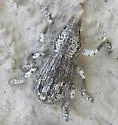
Ophryastes turbinatus
Ophryastes turbinatus
Identification: near O. dunnianus Casey (AZ-w.TX), and O. decipiens LeC. (AZ-w.TX), from both of which, it may be distinguished by the anteriorly widened prothorax. (Sharp, 1911) Det. C. W. O'Brien, 2010 Type Locality: Lampazos, Nuevo Leon, Mexico (C
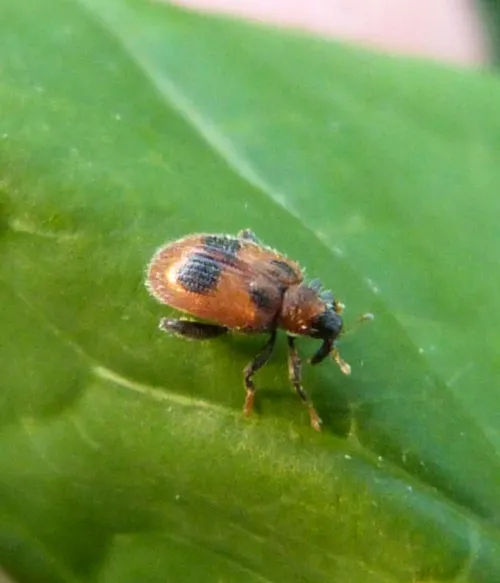
European Elm Flea Weevil
Orchestes alni
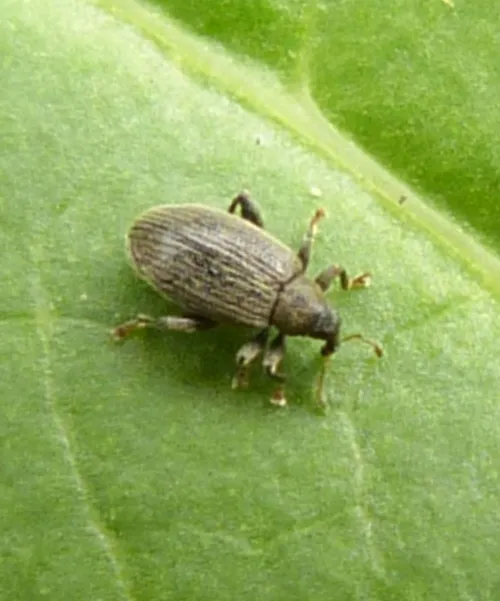
A very small (2.5 to 3.5mm) weevil. Each red/orange wing case (elytron) usually has two or more dark blotches, which gives this weevil a rather ladybird like appearance, but it is easily distinguished as a weevil by the distinctive long snout (rostru
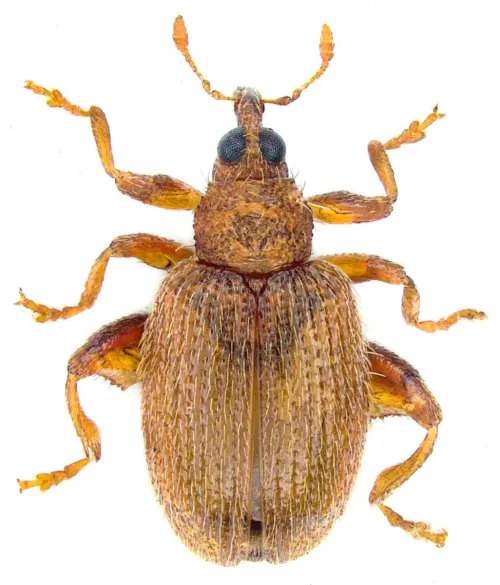
Orchestes betuleti
Orchestes betuleti
Orchestes betuleti is a very small (about 2.5mm) weevil associated with Elm. It may vary from orange-red to darker red. The unmarked elytra, head, legs and rostrum are all red. The larvae mine the mature leaves of Elm (see ‘Life History’ section belo
Orchestes fagi
Orchestes fagi
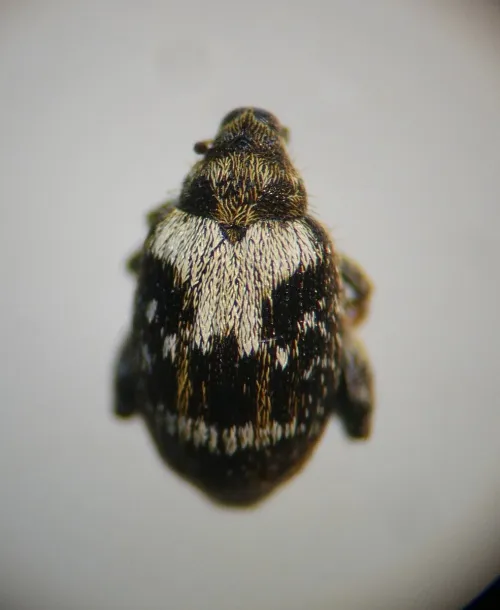
These are small (2 to 3 mm) but very distinctive weevils, black dark brown or blackish with antennae, tarsi and sometimes the extreme tip of the rostrum and tibial apices red. The larva mines the leaves of Beech. Adult : Unless identified by a recogn
Orchestes hortorum
Orchestes hortorum
The larvae mine the leaves of Oak creating a gallery along the edge of the leaf leading to a circular blotch, from which a case is cut leaving a round hole. The adult weevil is black with white markings. Mines are commonly found in English Oak, but c
Orchestes mixtus
Orchestes mixtus
Identification: hind femur slightly to moderately expanded discussion of a 2007 outbreak in Dallas of the "Elm flea weevil" - Mike Merchant, 2007
Apple Flea Weevil
Orchestes pallicornis
Identification: very hard to separate from the largely sympatric O. mixtus based on external features [do not use keys in ]; positive ID must rely on genitalia, although reliable host data work well, too hind femur moderately to markedly expanded
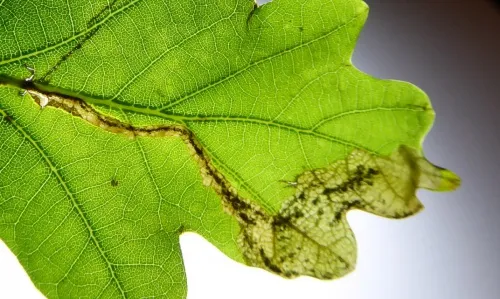
Orchestes quercus
Orchestes quercus
A small weevil of just over 3.5 mm in length, it is chestnut brown coloured and hairy. The larva mine the leaves of various oak species causing a leafmine. There is an oviposition scar in the midrib. The first part of the corridor follows the midrib,
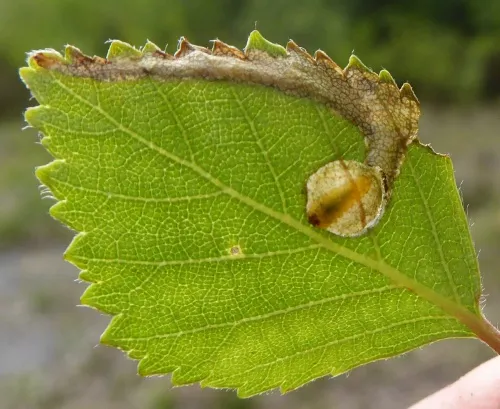
Orchestes rusci
Orchestes rusci
A tiny weevil of just over 2 mm in length. The larva mines Birch leaves, creating a broad gallery leading eventually to a hole in the leaf where the larva has cut out a circular leaf sandwich. This falls to the ground with the larva inside, and it pu
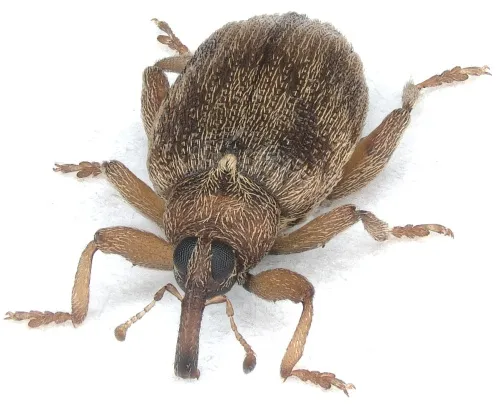
Jumping Weevil
Orchestes testaceus
The adult is 2.7 to 3.6 mm. The larva of Orchestes testaceus mines the leaves of Alder species. Initially a gallery is formed which runs towards the leaf edge from a vein or midrib. The gallery widens quickly and then becomes a blotch - a spherical c
Orchid Weevil
Orchidophilus aterrimus
the most frequently intercepted and noxious species of the genus; earliest record in our area: DC 1906
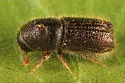
Orthotomicus caelatus
Orthotomicus caelatus
Identification: Intermediate in features between Pityokteines and Ips ; elytral declivity sexually dimorphic, with distinctly larger spines in male ( 3 )
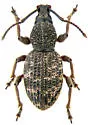
Otiorhynchus albidus
Otiorhynchus albidus
Otiorhynchus albidus (Otiorhynchus albidus) is a species in the family Curculionidae, commonly known as snout and bark beetles, belonging to the order Coleoptera (Beetles). It is classified within the subfamily Entiminae, tribe Otiorhynchini, suborde
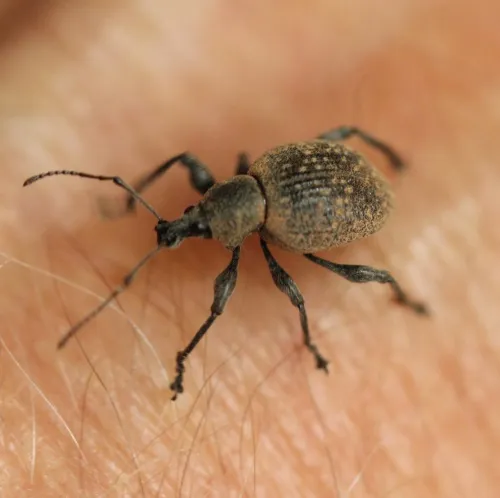
Otiorhynchus armadillo
Otiorhynchus armadillo
A very distinct weevil, the females reaching 15mm in length, it is similar to the more common Vine weevil ( Otiorhynchus sulcatus ), but O. armadillo has a broader body shape, and no tooth on the front femur. Unless identified by a recognised expert,
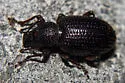
Cribrate Weevil
Otiorhynchus cribricollis
Pest of grapevine, fruit trees, olives, citrus, fig
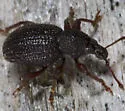
Otiorhynchus ligneus
Otiorhynchus ligneus
Identification: dorsal habitus earliest record in our area: 1917 ( 3 )
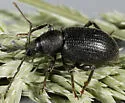
Lilac Root Weevil
Otiorhynchus meridionalis
Identification: Y-shaped carina on the rostrum diagnostic among NA spp. earliest record in our area: CA 1931
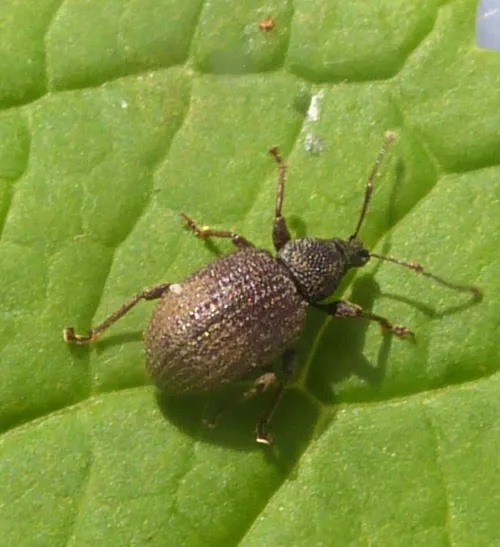
Rough Strawberry-root Weevil
Otiorhynchus rugosostriatus
A fairly large brown weevil with coarsely punctate elytra. Unless identified by a recognised expert, photographic evidence is required and the specimen should be examined with a microscope. In the comments box, state the key or ID method used. Note t
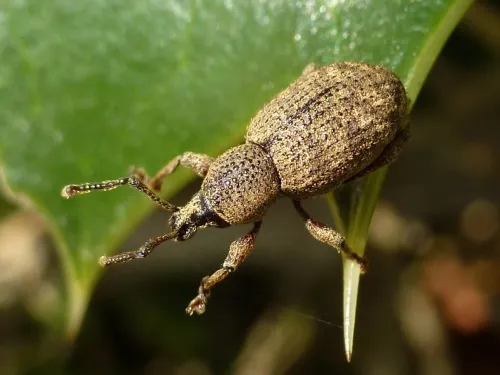
Clay-coloured Weevil
Otiorhynchus singularis
Unless identified by a recognised expert, photographic evidence is required and the specimen should be examined with a microscope. In the comments box, state the key or ID method used. Note the beetle's size and describe the identifying characters. I
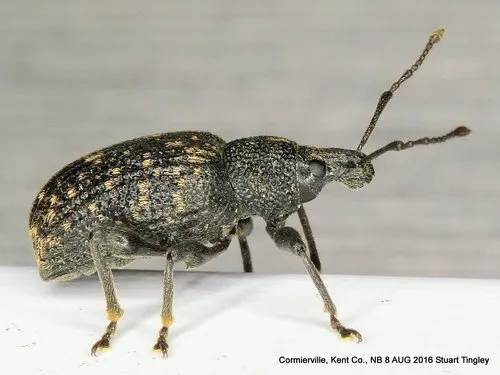
Vine Weevil
Otiorhynchus sulcatus
Length Adults about 10 mm. Elytra black mottled with small brown patches, grooved, not shiny. Antennae relatively long. Pronotum pebbly in texture. Unless identified by a recognised expert, good photos are required that show the key ID features. Also
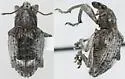
Melaleuca Leaf Weevil
Oxyops vitiosus
introduced to control its host, Melaleuca quinquenervia , an invasive weedy tree from Australia
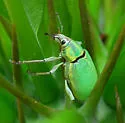
Blue-green Citrus Root Weevil
Pachnaeus litus
A native species of root weevil and a minor pest of citrus and other plants. The egg masses are easily mistaken by those of Diaprepes abbreviatus , which is an intrduced serious pest of citrus.
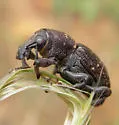
Pitch-eating Weevil
Pachylobius picivorus
Identification: Similar to Hylobius but tibiae with dilated outer apical angles
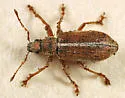
Pachyrhinus elegans
Pachyrhinus elegans
The only species of the genus in the eastern US. From there to the Pacific Coast, with many color forms. (Charles O'Brien, pers.comm., 5/22/09)
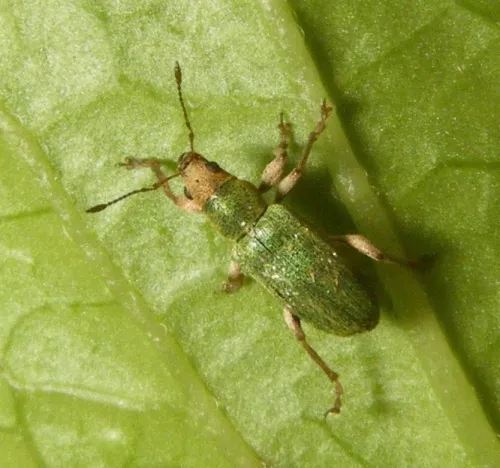
Pachyrhinus lethierryi
Pachyrhinus lethierryi
3.6 - 4.5mm. Usually bright green due to oval scales and with a domed head and wide-set eyes. It has a bare ridge across the rostrum between the eyes. Variety lostiae has a differently coloured head due to golden or pinkish scales. It is an infrasubs
Pactorrhinus grisescens
Pactorrhinus grisescens
Identification: identity unclear, likely refers to Ericydeus lautus
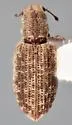
Pandeleteinus elytroplanatus
Pandeleteinus elytroplanatus
Identification: Thorax mostly light brown, indistinctly darker medially, whitish vitta along middle of sides. Elytra mostly fuscous, with base and suture light brown, some whitish scales scattered over all, especially on the sides. Howden discusses t
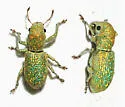
Pandeleteinus submetallicus
Pandeleteinus submetallicus
Identification: Its metallic green, gold, or blue color is unique in the Pandeleteini, and its non-metallic, sometimes vaguely maculate, tan specimens are equally as striking. Type Locality: Beaver Co., Utah
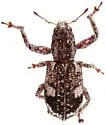
Pandeleteius buchanani
Pandeleteius buchanani
Identification: can be separated by the combination of broad subapical piceous band on elytra broadly bordered anteriorly and posteriorly with white; scales margined, granular to reticulate; dorsal surface of beak narrowed anteriorly, pregenae and se
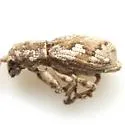
Pandeleteius cinereus
Pandeleteius cinereus
Identification: Color predominantly gray, thorax with dark fusiform vitta, and two oblique bicolored fasciae of elytra (emphasis added). Det. M. A. Quinn, 2019 Type Locality: Texas
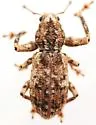
Pandeleteius hilaris
Pandeleteius hilaris
Identification: pronotum generally more boldly marked than in other Pandeleteius spp.
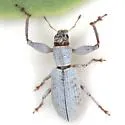
Pandeleteius longicollis
Pandeleteius longicollis
Identification: Fore femur without tibial groove or projected margin. Color beige immaculate or with a few faint brown dots on elytra and light brown median line on thorax. (last key couplet) ( 3 ) Det. E. G. Riley, 2009 fairly common via beating and
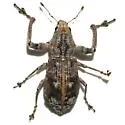
Pandeleteius robustus
Pandeleteius robustus
Identification: The large size, more robust form, and the short antennal scrobes make this an easily recognizable species Lectotype Locality: Huachuca Mountains, Cochise Co., Arizona
Pandeleteius simplarius 0
Pandeleteius simplarius
Identification: easily distinguished from other species by its distinctive habitus , truncate epistoma, short arcuate scrobe, and secondary sexual characters. It bears the maximum expression of secondary sexual characters of US species. Eight specime
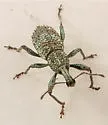
Panscopus gemmatus
Panscopus gemmatus
Panscopus gemmatus (Panscopus gemmatus) is a species in the family Curculionidae, commonly known as snout and bark beetles, belonging to the order Coleoptera (Beetles). It is classified within the subfamily Entiminae, tribe Byrsopagini, suborder Poly
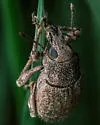
Paranametis distincta
Paranametis distincta
Identification: Apex of hind tibia with distinct, glabrous outer bevel; pronotal disc with distinctive structure of separate low nodules, each nodule with a central suberect, seta-like scale and surrounded by 5–6 distinct microfilamentous scales coll
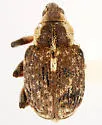
Parenthis vestitus
Parenthis vestitus
Identification: Easily recognized by elongate body, dense scaly vestiture, and very small lateral thoracic tubercles ( Dietz 1896 )
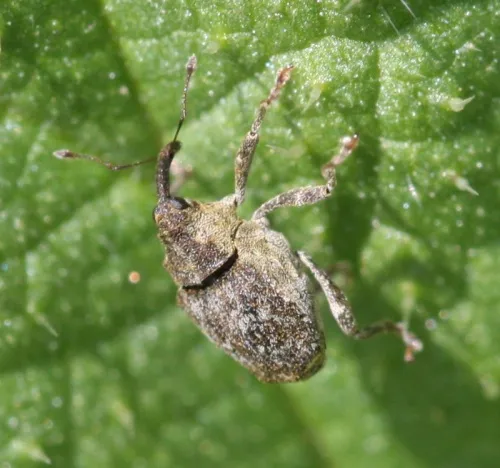
Parethelcus pollinarius
Parethelcus pollinarius
A small (3 or 4 mm) broad bodied dark brown/black looking weevil with a long snout (rostrum). Parethelcus pollinarius is broadly similar to Nedyus quadrimaculatus and both are common on nettles. The white spots on the elytra of Nedyus are usually dis
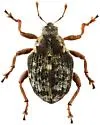
Pelenomus waltoni
Pelenomus waltoni
Identification: distinguished from native congeners by rostrum being longer than pronotum, and elytral vestiture comprised of fine, short, recumbent, metallic and shiny setae, with spots of grayish, oval scales and no velvety brown/black spot behind
Peltophorus adustus
Peltophorus adustus
Identification: The form and sculpture of the prothorax, and the color readily distinguish this species from Peltophorus polymitus seminiveus (w.TX) and Peltophorus polymitus suffusus (AZ). Det. Blaine Mathison, 2014 Type Locality: Arizona
Peltophorus polymitus
Peltophorus polymitus
Adults [move] up and down the stalks and hide in the spiny crown of leaves if disturbed. Long bottle forceps are useful in collecting them. They will fly rapidly if startled while on the flower stalk. - C.W. O'Brien, 30.vi.2010
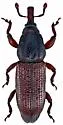
European Wood Weevil
Pentarthrum huttoni
Identification: images: 1 | 2 Dead adults often found at windows or around lights
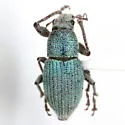
Phacepholis elegans
Phacepholis elegans
Identification: Scutellum indistinct, scales usually green, intermixed with several rows of bristles on elytral intervals. Eyes moderately convex, pronotal sides only slightly rounded.
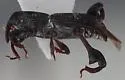
Phaenomerus foveipennis
Phaenomerus foveipennis
Identification: recognizable among all North American weevils by their small size (3–4 mm), elongate-slender body form, and especially by the distinctive elongate, ventrally toothed hind legs with the femur much greater in length than the strongly cu
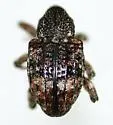
Pheloconus infector
Pheloconus infector
Pheloconus infector (Pheloconus infector) is a species in the family Curculionidae, commonly known as snout and bark beetles, belonging to the order Coleoptera (Beetles). It is classified within the subfamily Molytinae, tribe Conotrachelini, suborder
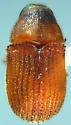
Phloeosinus dentatus
Phloeosinus dentatus
In North Carolina, working with the fungus Fomes angosus they can kill trees of all sizes. Working alone, they do not. ( 4 )
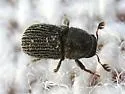
Phloeotribus dentifrons
Phloeotribus dentifrons
The fall generation of adults spend their winter in burrows in the bark; others may emerge and bore into the bark to hibernate. ( 3 ) Adults overwintering in the burrows tend to destroy the gallery patterns during the prolonged feeding period. ( 3 )
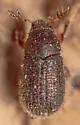
Phloeotribus pruni
Phloeotribus pruni
Identification: Very similar to P. liminaris , and may be conspecific .
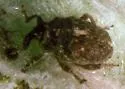
Mediterranean Sage Root Crown Weevil
Phrydiuchus tau
first released: OR 1971 to control Mediterranean sage