
Family Lady Beetles (Coccinellidae)
Coccinellidae is a family in the order Coleoptera. Browse 341 named species recorded in this family, or open an individual profile for its available identification and natural-history information.
Guides
Species in Coccinellidae (341)
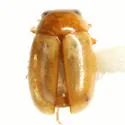
Hyperaspidius nanellus
Hyperaspidius nanellus
Type Locality: Brownsville, Cameron Co., TX, VII, Wickham
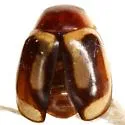
Hyperaspidius oblongus
Hyperaspidius oblongus
Identification: Gordon's figure Type Locality: El Paso, Texas. Described from four spmns.
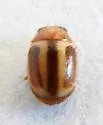
Hyperaspidius pallescens
Hyperaspidius pallescens
Identification: Form oblong, lateral margin of elytron distinctly curved. Pronotum of male yellow with indistinct yellowish brown maculation; pronotum of female uniformly yellowish brown except lateral margin narrowly yellow. Elytron with 2 broad, ye
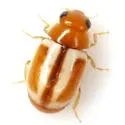
Hyperaspidius shauli
Hyperaspidius shauli
Identification: Form oblong, elongate, extremely parallel sided, strongly dorso-ventrally flattened. Pronotum of male yellow with nebulous brown maculation in basal; female pronotum mostly yellow with median brown area. Elytron brown with complete ye
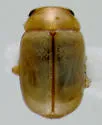
Hyperaspidius transfugatus
Hyperaspidius transfugatus
Identification: Gordon's figures Type locality: Mount Tom, Hampden, Massachusetts
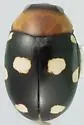
Hyperaspidius venustulus
Hyperaspidius venustulus
Identification: Gordon's Figure - Pronotum yellowish red, elytron black with 4 yellow spots. considered to be rare ( comment by Michael C. Thomas, 2008 )
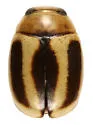
Hyperaspidius vittigerus
Hyperaspidius vittigerus
Identification: Gordon's figures Type locality: "Missouri Territory"
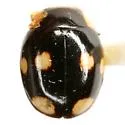
Hyperaspis aemulator
Hyperaspis aemulator
Identification: Gordon's figures Type locality: Nogales, Santa Cruz Co., Arizona
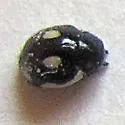
Hyperaspis bensonica
Hyperaspis bensonica
Identification: Gordon's figures Type locality: Benson, Cochise Co., Arizona
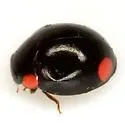
Hyperaspis bigeminata
Hyperaspis bigeminata
Identification: Gordon's figures Elytra with a large red or yellow apical spot; a large pale spot occupying entire lateral area of pronotum. One of the most common arboreal coccinellids in Oak-Juniper Woodlands of c. TX
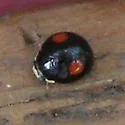
Hyperaspis binotata
Hyperaspis binotata
Identification: Gordon's figures - all from Okla. Dets. R. Gordon a common, widespread species recognized with certainty only from male genitalia
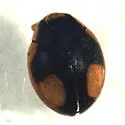
Hyperaspis bolteri
Hyperaspis bolteri
Identification: Gordon's figures - "The highly distinctive color pattern and extremely dull pronotal surface characterize this species." Type Locality: Illinois
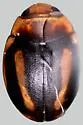
Hyperaspis brunnescens
Hyperaspis brunnescens
Identification: Gordon's figures - Pronotum of male mostly dull yellow; pronotum of female brownish black with indistinct, yellow lateral border. Elytron brownish black with 2 vittae, one complete marginal vitta and oblique discal vitta (Fig. 446 c).
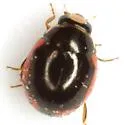
Hyperaspis caseyi
Hyperaspis caseyi
Identification: Gordon's figures Type Locality: Thurber, Erath Co., Texas
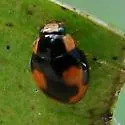
Hyperaspis connectens
Hyperaspis connectens
Identification: Gordon's figures According to Gordon (as discussed here ): Broad yellow areas on the sides of the pronotum (the part between the head and the wings) and a pair of spots on each side of the elytra. The spots are usually- but not always
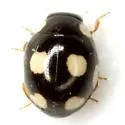
Hyperaspis conspirans
Hyperaspis conspirans
Identification: Gordon's figures Type Locality: Nogales, Santa Cruz Co., AZ
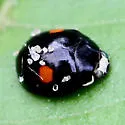
Hyperaspis conviva
Hyperaspis conviva
Identification: Gordon's figures "This is the most easily recognized species in the [Hyperaspis] signata group because of the dorsoventrally flattened, elongate form which is characteristic of most females and many of the males." Type locality: South
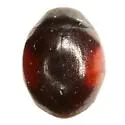
Hyperaspis cruenta
Hyperaspis cruenta
Identification: Gordon's figures - Elytron with single marginal spot of varying size Type Locality: Dallas, Texas
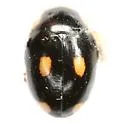
Hyperaspis disrupta
Hyperaspis disrupta
Identification: Gordon's figures Because of the different type of male genitalia, Gordon considered H. disrupta a valid species rather than a subspecies of H. bensonica
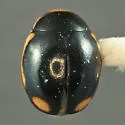
Dissolute Lady Beetle
Hyperaspis dissoluta
Identification: Gordon's figures for dissoluta Gordon's figures for nevadica
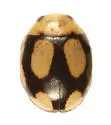
Fastidious Lady Beetle
Hyperaspis fastidiosa
Identification: Gordon's Figures - The elongate marginal spot on the elytron along with the less convex form distinguish H. fastidiosa from the other members of this group. Type locality: San Diego Co., California
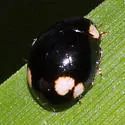
Twin-spotted Lady Beetle
Hyperaspis gemina
Identification: Gordon't figures distinctive apically bi-spotted elytra, yellow head (both sexes), and broad lateral yellow area on the pronotum (both sexes). Gordon also states that "this rarely collected species is unusual in having the clypeal ape
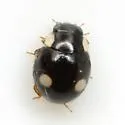
Globular Lady Beetle
Hyperaspis globula
Identification: Gordon's figures Type locality: Brownsville, Texas
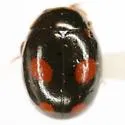
Hyperaspis haematosticta
Hyperaspis haematosticta
Identification: Gordon's Figures - The combination of elongate body and elytral color pattern makes H. haematosticta a reasonably distinctive species in the geographic region in which it occurs. Type Locality: Santa Fe, NM
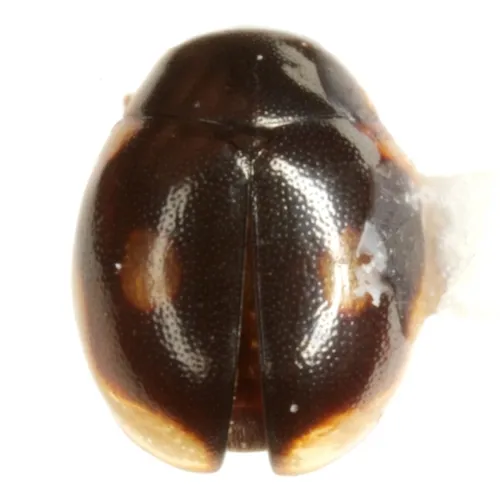
Hyperaspis imitator
Hyperaspis imitator
Identification: Gordon's Figures - Pronotum black with lateral area yellow; elytron black with discal spot and lateral yellow villa from base to apex Holotype. Male. TEXAS: Bexar Co., San Antonio, Olmos Park, 28-VI-1947, B. E. White Coll., sweeping C
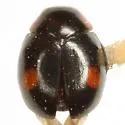
Hyperaspis inedita
Hyperaspis inedita
Identification: Gordon's figures - Pronotum with broad lateral area yellow/orange. Elytron single red spot of variable size, rarely immaculate the center of discal spots are caudad to middle of length
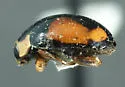
Hyperaspis jovialis
Hyperaspis jovialis
Identification: Gordon's figures - Color pattern on elytron variable from black with 2 orange spots to mostly orange with black border and enclosed black spot
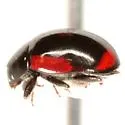
Lateral Lady Beetle
Hyperaspis lateralis
Identification: Black with 1‒3 red/yellow spots on each elytron; pattern is highly variable , but there is usually a subhumeral spot that extends from base to ~2/5 length of elytron A sizeable population almost always contains 2 or more variants. Pro
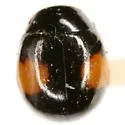
Hyperaspis leachi
Hyperaspis leachi
Identification: Gordon's figures - The orange spot on the elytron nearly reaches the lateral margin
Levrat's Lady Beetle
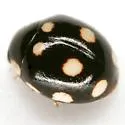
Hyperaspis levrati
Identification: Elytron with 4 or 5 spots, normally 4 but subhumeral spot often divided Gordon's Fig. 373 d Unique dorsal color pattern- each elytron w/ 3 yellow discal spots including 1 close to the scutellum. Type locality: "Mexique"
Hyperaspis lewisi
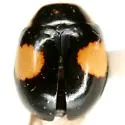
Hyperaspis lewisii
Identification: Gordon's figures - Elytron with large, yellow, discal spot extending from or near lateral margin nearly to suture
Lugubrius Lady Beetle
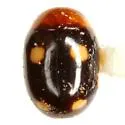
Hyperaspis lugubris
Identification: Gordon's Figures "This species is peculiar in that the male pronotum is usually entirely pale, and the female pronotal pattern would be that of the male in most other North American species of Hyperaspis ."
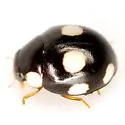
Medial Lady Beetle
Hyperaspis medialis
Identification: Gordon's figures Type locality: Brownsville, Texas
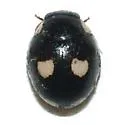
Eight-spotted Lady Beetle
Hyperaspis octonotata
Identification: Gordon's figures - Unique arrangement of elytral spots and shape of the discal spot
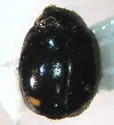
Eye-tailed Lady Beetle
Hyperaspis oculaticauda
Identification: Gordon's figures - a minature edition of H. postica , having the same dorsal color pattern but is much smaller than H. postica , the maximum observed length of H. oculaticauda being 2.40 mm, the minimum observed length of H. postica b
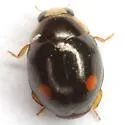
Hyperaspis oculifera
Hyperaspis oculifera
Identification: Gordon's figures "This little species is very distinctive because of the unusual toothed apical margin of the prosternum and the male genitalia which, although of the bigeminata type, have the basal lobe quite divergent from the norma
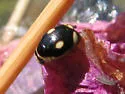
Swamp Lady Beetle
Hyperaspis paludicola
Identification: Gordon's figures Elytron black with narrow, complete lateral vitta and one discal spot Type Locality: Capron, Florida
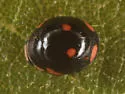
Hyperaspis pinguis
Hyperaspis pinguis
Identification: Gordon's Figures Description as for H. lateralis except pronotum of male with broad lateral area yellow; female pronotum with large, triangular lateral area yellow; elytron with subhumeral spot large, reaching humeral callus
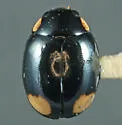
Postica Lady Beetle
Hyperaspis postica
Identification: Gordon's figures - "Elytron with single apical spot varying in size and shape"
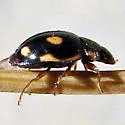
Four-eyed Lady Beetle
Hyperaspis quadrioculata
Identification: Gordon's figures Original description of fidelis : "Form slightly more broadly oval, convex, polished, black; head black (female), the pronotum with a similar lateral pale margin; elytra similarly rather strongly punctate, with a narr
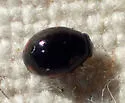
Hyperaspis querquesi
Hyperaspis querquesi
Identification: Gordon's Figures Type locality: Bird Observation Station, Marin Co., California.
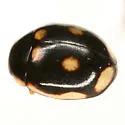
Hyperaspis revocans
Hyperaspis revocans
Identification: Gordon's Figures - The paired basal spots of the elytra, especially when united with the discal spots, make H. revocans easily recognizable. The occasional specimen that lacks both spots or has only the discal spot is more difficult t
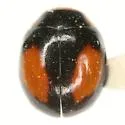
Hyperaspis rivularis
Hyperaspis rivularis
Identification: Gordon's figures - Color pattern as described for H. proba except elytron with single yellow or orange discal spot either round or elongate, often very large. female pronotal pattern is like that of many species in the bigeminata grou
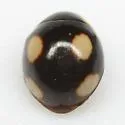
Hyperaspis rotunda
Hyperaspis rotunda
Identification: Gordon's figures Species described by Casey from a single specimen (male) collected at "St. Thomas" (now the Sabal Palm Sanctuary ), Brownsville, Cameron Co., Texas. Texas considers this to be a "Species of Greatest Conservation Need"
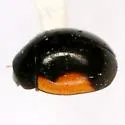
Hyperaspis schaefferi
Hyperaspis schaefferi
Identification: Gordon's figures PARATYPE Type Locality: Esperanza Ranch, Brownsville, Cameron Co., Texas, VII.30
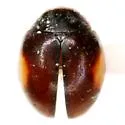
Hyperaspis significans
Hyperaspis significans
Identification: Gordon's figures - Elytron entirely black or with single spot of varying size on lateral margin The form with maculate elytra (significans) and the form with immaculate elytra (concurrens) often occur together without intergrades. Typ
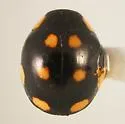
Hyperaspis triangulum
Hyperaspis triangulum
Identification: Gordon's figures this singular spmn, without a det. label, sits in Hyperaspis triangulum Casey, 1899 unit tray in the USNM/NMNH. the spots positionally, but not proportionally, are match for Gordon's H. triangulum figure, except for t
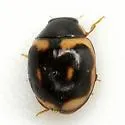
Hyperaspis trifurcata
Hyperaspis trifurcata
Identification: Gordon's figures - The elytral color pattern is somewhat variable, but always distinctive for this species. Types: One female collected by [Schaeffer] in Brownsville, Texas; another female and one male in Dietz's collection, the forme
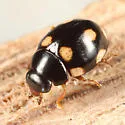
Troglodyte Lady Beetle
Hyperaspis troglodytes
Identification: Gordon's figures Det. R. Gordon, 1986 Black with 5 pale spots on each elytron (wing cover) Male with pale pronotal margin, female with entirely black pronotum Hyperaspis troglodytes is so rare in collections that the possible range of
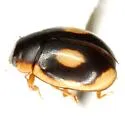
Undulate Lady Beetle
Hyperaspis undulata
Identification: Gordon's figures - Form elongate, oval, moderately convex. Elytron black with complete, irregular, lateral villa, or with vitta broken to form apical spot. Type locality: "Missouri"
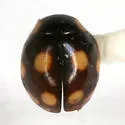
Weise's Lady Beetle
Hyperaspis weisei
Identification: Gordon's figures LECTOTYPE Described by Schaeffer from two specimens, both females, collected by Ottomar Dietz at Brownsville, Cameron Co., TX.
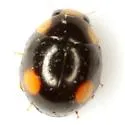
Hyperaspis wickhami
Hyperaspis wickhami
Identification: pronotum broadly yellow in both sexes - Gordon's figures Type locality: Brownsville, Cameron Co., Texas
Microweisea minuta 0
Microweisea minuta
Type Locality: on the Colorado River above Columbus, Austin Co., Texas
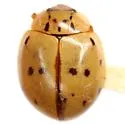
Mulsantina cyathigera
Mulsantina cyathigera
Identification: Gordon't figures - Color yellow except pronotum with median, brown, M-shaped marking; elytron with 6 brown spots (Fig. 688 f), spots sometimes reduced
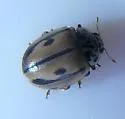
Hudsonian Lady Beetle
Mulsantina hudsonica
Identification: illustrations ; dorsal pattern variable, but the elytral vitta and the the broken M-mark on the pronotum are constant
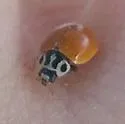
Clay-colored Lady Beetle
Mulsantina luteodorsa
Identification: Gordon's Figures - The immaculate elytron is unique within the genus except for some specimens of M. picta (widely dist.), and causes this species to resemble members of Cycloneda . PARATYPES: apparently uncommon, Joan Chapin collecte
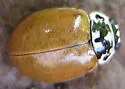
Painted Lady Beetle
Mulsantina picta
Identification: Gordon's figures "The elytral color pattern is extremely variable, but the pronotal markings are quite constant and afford an easy means of recognition." Venter (underside) distinctive: "When the underside is examined, the yellow mark
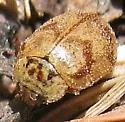
Mulsantina quinquelineata
Mulsantina quinquelineata
Identification: pronotal pattern less variable than that of the elytra. (Chapin 1985) this is a pale form of the species: Det. J. B. Chapin, 1984 (by dissection) Species not included in Gordon's publication.
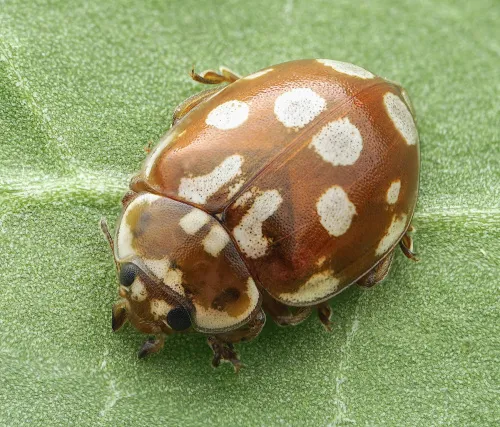
18 Spot Ladybird
Myrrha octodecimguttata
The 18-spot Ladybird is a fairly small species. The background colouration is a rich brown (Cream-spot Ladybird is slightly darker and a larger insect). ID can be confirmed by the rounded 'M' mark on the pronotum. Unless identified by a recognised ex
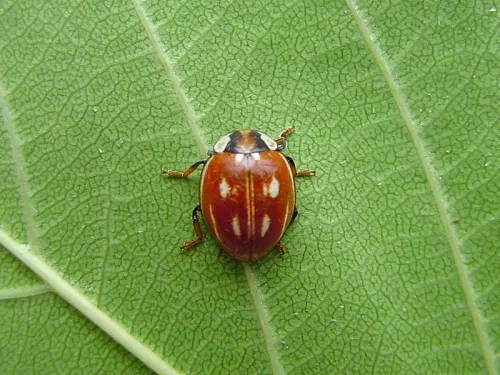
Striped Ladybird
Myzia oblongoguttata
Size 6 to 8 mm. A chestnut coloured species with cream stripes and spots. The pronotum is also white with chestnut markings. Unless identified by a recognised expert, good photos are required that show the key ID features. Also state the size in the
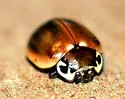
Streaked Lady Beetle
Myzia pullata
Identification: elytral pattern variable, pronotum dark brown medially, broad lateral border white with a median dark brown spot often connected to median area
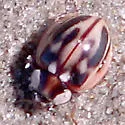
Subvittate Lady Beetle
Myzia subvittata
Identification: Gordon's figures - elytra variable, but head with dark area (at least on vertex); pronotum usually with median third black or brown
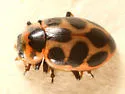
Seaside Lady Beetle
Naemia seriata
Identification: Pronotum usually with one large black spot in center, occasionally broken into two spots Single apical elytral spot Det. M. A. Quinn, 2010
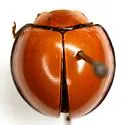
Neoharmonia marginalis
Neoharmonia marginalis
full A tray of spmns, all from Mexico, in the TAMUIC
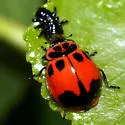
V-marked Lady Beetle
Neoharmonia venusta
Identification: Gordon's figures for N. venusta venusta ( 3 ) Gordon's figures for N. venusta ampla ( 3 ) Subspecies can be separated by range in most areas, but overlap in eastern Texas.
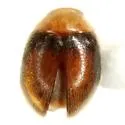
Nephaspis oculatus
Nephaspis oculatus
Identification: Gordon's figures ( 3 ) Type locality: Dunedin, Florida ( 3 )
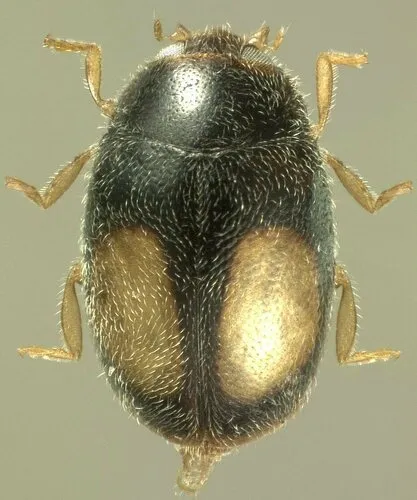
Nephus alyssae
Nephus alyssae
Identification: The small size, elytron with single golden central spot, and dorso-ventrally flattened body distinguishes N. alyssae from any other US species of Nephus . (Golia & Golia 2014) TYPE Type Locality: Holotype, female with label data “Flor
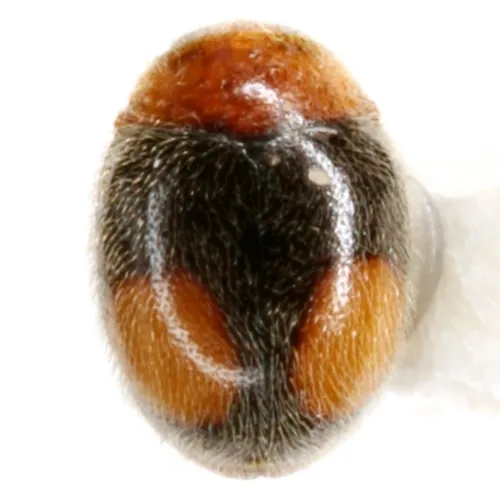
Nephus bivulnerus
Nephus bivulnerus
Identification: Gordon's figures Type Locality: Key West, FL
Nephus flavifrons
Nephus flavifrons
Identification: Gordon's figures black with red apical spots (apical spots are yellow in southmost TX) commonly collected, wide spread sp.
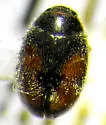
George's Lady Beetle
Nephus georgei
Identification: - Small - Elongated oval shape - Black with a peanut-shaped orange spot on each elytron (wing cover) rare in collections
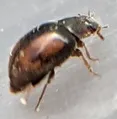
Nephus guttulatus
Nephus guttulatus
Nephus guttulatus (Nephus guttulatus) is a species in the family Coccinellidae, commonly known as lady beetles, belonging to the order Coleoptera (Beetles). It is classified within the subfamily Scymninae, tribe Scymnini, suborder Polyphaga, superfam
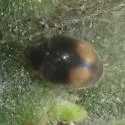
Nephus quadrarius
Nephus quadrarius
Identification: each elytron with 2 yellow spots, one on disc, one on apical thrid Type Locality: Benson, Cochise Co., Arizona
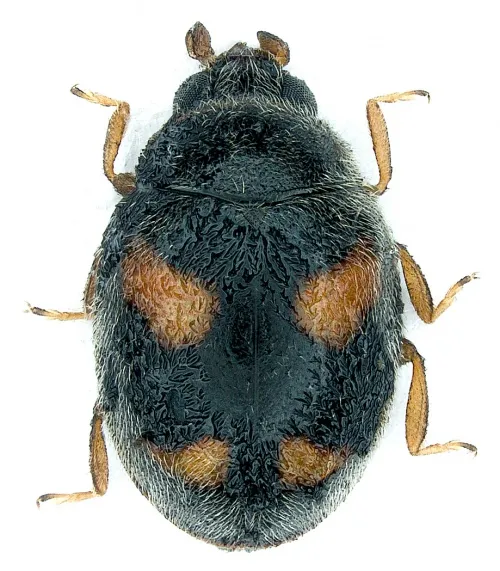
Nephus quadrimaculatus
Nephus quadrimaculatus
Length: 1.5 to 2 mm. Basic colour is black with four (two pairs) reddish-brown kidney-shaped spots, the front pair being larger than the rear pair. Pronotum and head colour is black. Leg colour: brown. Other features: hairy; abdomen has a reddish-bro
Nephus redtenbacheri 0
Nephus redtenbacheri
Identification: externally inseparable from N. ornatus naviculatus earliest record in our area: NS 2024
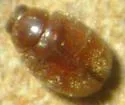
Little Brown Mealybug Destroyer
Nephus sordidus
Identification: apex of elytron with dark brown area extending forward along suture and along lateral border, sutural margin obscurely darker that rest of elytron Det. M. A. Quinn, 2016 Type Locality: California
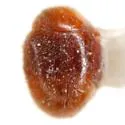
Nephus timberlakei
Nephus timberlakei
Identification: Color brownish red, elytron dark brown in basal l/2, dark brown area blended into brownish red of apical area - Gordo's figures Type series, 4 spmns from Brownsville, TX. No males were available for study, so the genitalic affinities
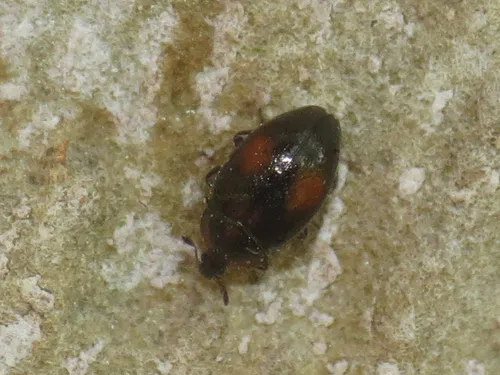
Nipus biplagiatus
Nipus biplagiatus
Identification: Gordon's figures - Form elongate, parallel-sided, abruptly narrowed posteriorly. Color piceous; large median area of elytron and anterior margin of pronotum yellow, ventral surface yellowish brown. Type locality: Los Angeles, Californ
Nipus niger 0
Nipus niger
Identification: Gordon's Figures - Form elongate, oval, gradually narrowed posteriorly. Color brownish piceous; anterior margin of pronotum yellowish brown, ventral surface brown. Type locality: Sonoma Co., California
Nipus occiduus 0
Nipus occiduus
Identification: Gordon's Figures - Color piceous; elytron with yellow spot occupying 1/2 to 2/3 of elytron, anterior margin of pronotum yellowish brown. Type locality: Wasatch, Utah
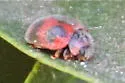
Vedalia Beetle
Novius cardinalis
Identification: Life cycle photos - Natural History of Orange Co., University of California The vedalia beetle, Rodolia cardinalis , is the most famous introduced beneficial insect in history. Introduced from Australia to control Cottony Cushion Scal
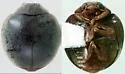
Novius circumclusus
Novius circumclusus
Identification: In living specimens the ventral abdomen is bright blood red. (Michael C. Thomas, BG comment 2008) previously known only from Honduras, Mexico, and Panama (Gordon 1972). It has now been collected from three sites in Florida: one in Por
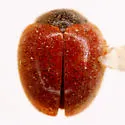
Novius koebelei
Novius koebelei
Identification: can only be diagnosed by the details of the male genitalia introduced into California from Australia in 1891, but does not exist there now, although it was thought to have been established for some time.
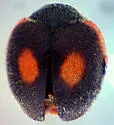
Novius virginalis
Novius virginalis
Identification: variable pattern, see Gordon's figures
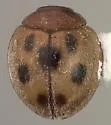
Pharoscymnus flexibilis
Pharoscymnus flexibilis
Identification: very distinctive yet variable in pattern earliest record in our area: FL 2011 It is likely that it was transported on scale-infested plants from Asia or Brazil.
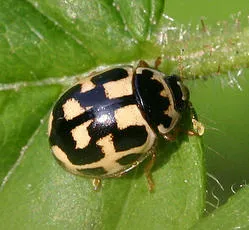
14 Spot ladybird
Propylea quattuordecimpunctata
A common yellow and black ladybird, though there is variation in the amount of each colour and the shape of the spots. This species is relatively easy to identify and is unlikely to be confused with anything else. However photos are always helpful to
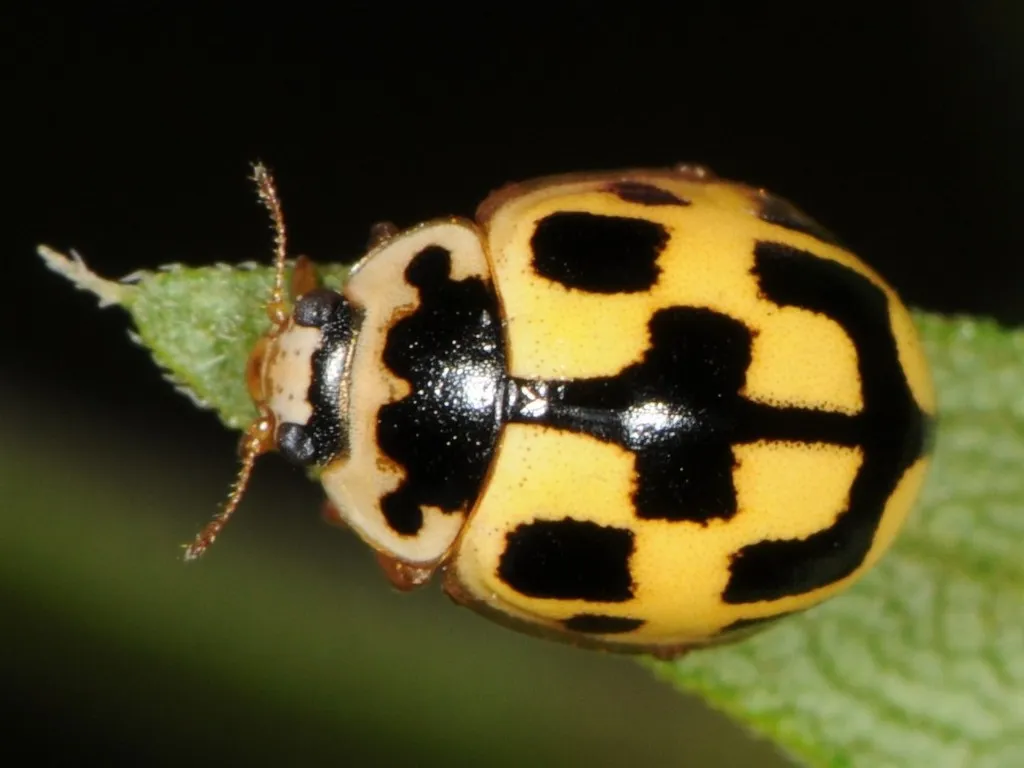
Fourteen-spotted Lady Beetle
Propylea quatuordecimpunctata
Identification: Gordon's Figures Larva: Black with white markings. White "face" and leg joints. Most important ID feature is small pointed projection from last abdominal segment: Repeated introduction attempts prior to the 1960s were unsuccessful. Th
Psyllobora borealis
Psyllobora borealis
Identification: Gordon's figures - "The robust form and elytral color pattern will separate P. borealis from P. vigintimaculata which it most nearly resembles." Type locality: Coeur d'Alene, Idaho
Psyllobora nana
Psyllobora nana
Identification: Color pattern as described for P. vigintimaculata except elytral spots less coalescent, one spot on suture at apical 1/3 united with mate on opposite elytron, subapical spot near suture free, large (see Gordon's figures) Type locality
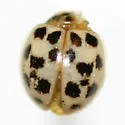
Psyllobora parvinotata
Psyllobora parvinotata
Identification: Gordon's figures White to light brown with brown or black spots Small spots, usually not joined together Sometimes has no spots on pronotum - other Psyllobora species always have spots on pronotum
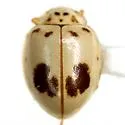
Psyllobora plagiata
Psyllobora plagiata
Identification: Gordon's figures Some of the spots near suture or side margin may be absent or very faint but the large postmedian patch is always present. (Schaeffer 1908) Type locality: Huachucha Mts., Arizona
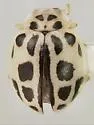
Psyllobora schwarzi
Psyllobora schwarzi
first collected in Florida at Fort Lauderdale, Broward County, February 2012. Since then, it has been collected at three other localities in Miami-Dade County (Key Biscayne, Miami, and North Miami). Collections were in August and October 2012. It app
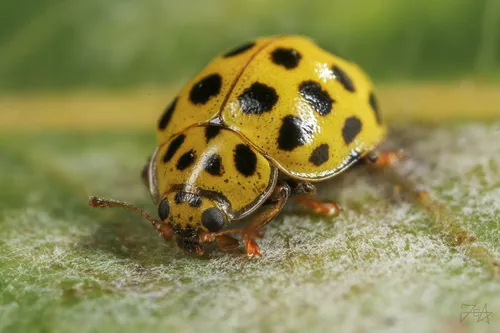
22 Spot Ladybird
Psyllobora vigintiduopunctata
The brightest of the yellow British ladybirds, it always has 22 spots, which rarely join up. It is a small ladybird at 3 to 4.5 mm. There are two colour varieties, one where the pronotum is yellow, the other where it is white. This species is relativ
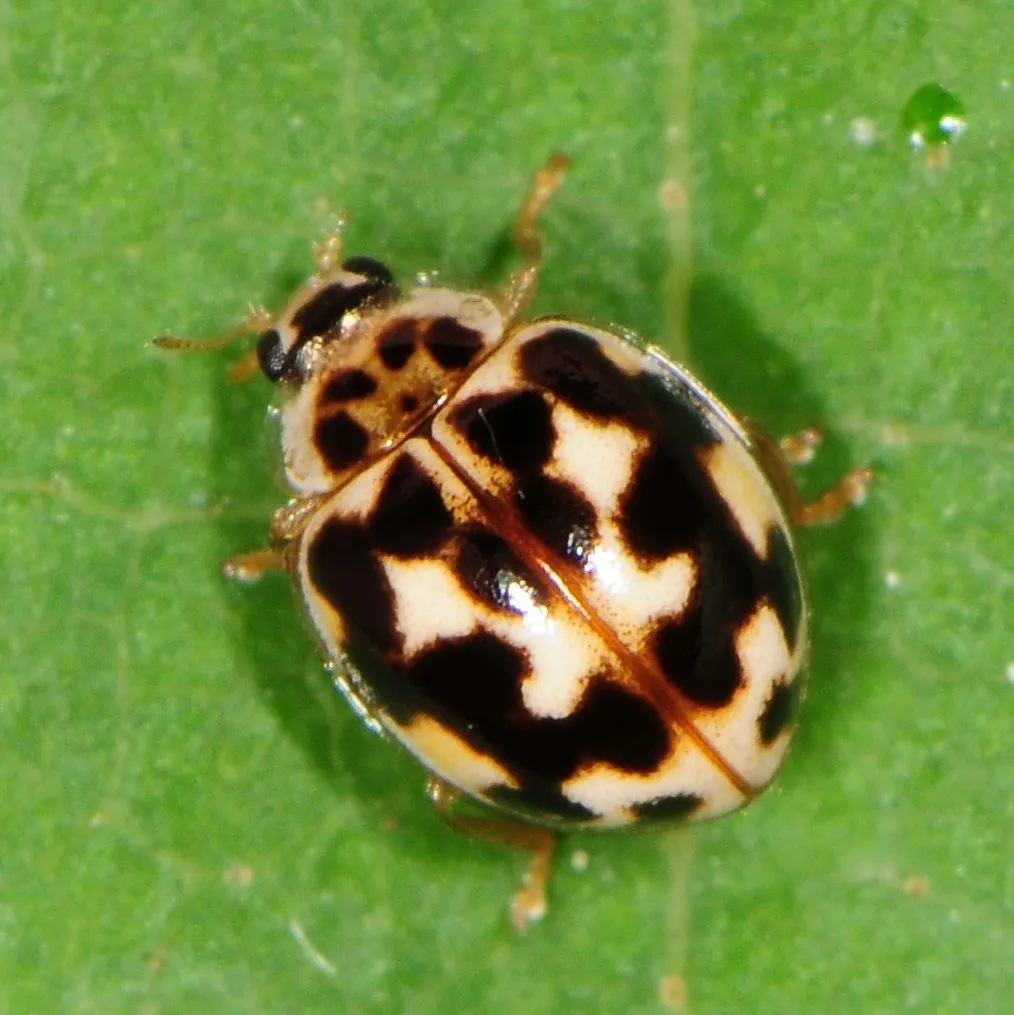
Twenty-Spotted Lady Beetle
Psyllobora vigintimaculata
Identification: Gordon's Figures Pronotum with 4 dark spots; elytron usually with 9 spots, spots partially confluent, pattern variable; the dorsal pattern will usually separate this species from other nearctic spp. The base color is always pale (whit
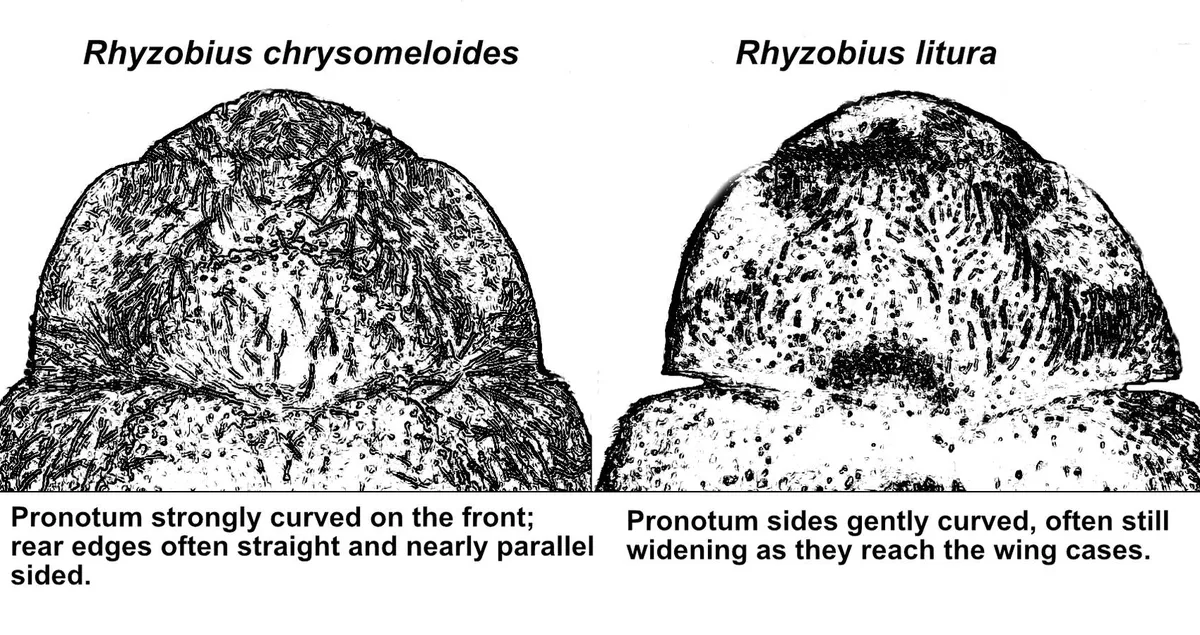
Rhyzobius chrysomeloides
Rhyzobius chrysomeloides
2.3 to 3.5 mm. A hairy species typically with dark marking that forms a shield shape with two vertical lines reaching near the top corner, an anchor shape in the lower centre and a pair of tooth shaped marks. Detailed examination is needed to separat
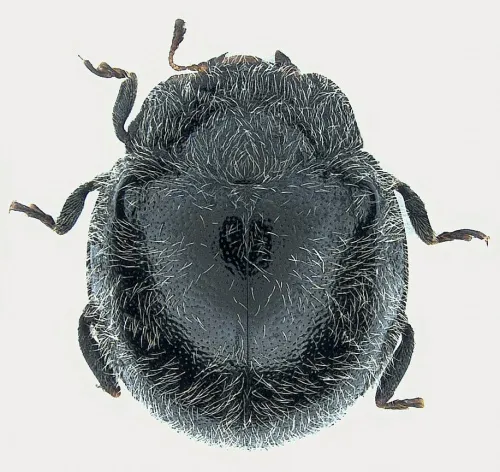
Rhyzobius forestieri
Rhyzobius forestieri
Fairly small, about 3.2 mm long and 2.3 mm wide (slightly smaller than a 22 Spot Ladybird). The head, prothorax and elytra are very dark brown to black, and covered in short pale hairs which can give it a rather silvery appearance. It is strongly dom
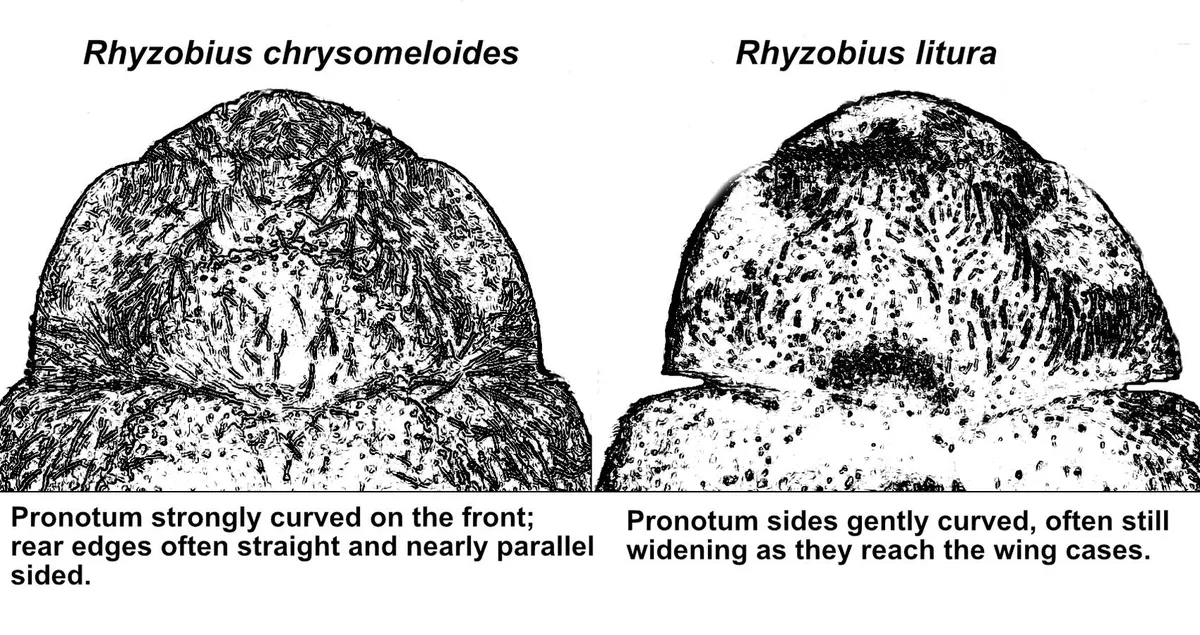
Rhyzobius litura
Rhyzobius litura
This ladybird is not often seen or even recognised as a ladybird. Some specimens lack dark markings. Often has a dark U-shape marking on the rear wing cases with one vertical line extending half way up each wing case. Variable dark patch at the top o
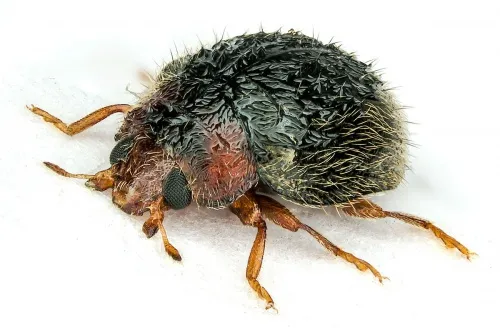
Rhyzobius lophanthae
Rhyzobius lophanthae
Rhyzobius lophanthae is a small ladybird with a length between 1.7 and 2.8 mm. The head and prothorax are dull orange or reddish-brown, as are the legs and underside. The elytra (wing cases) are dark with a metallic bronze sheen. The entire dorsal su
Apicanus Lady Beetle
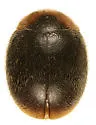
Scymnus apicanus
Identification: Scymnus a. apicanus : no spmns examined w/ pronotum mostly black, the median black spot is somewhat var. in size Scymnus a. borealis : median black pronotal spot often approaches the anterior margin of the pronotum. the diff. betw. ap
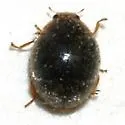
Scymnus ardelio
Scymnus ardelio
Identification: limited red on the lateral edge of the pronotum per the type spmn , see also frontal head shot of type For detailed description, and discussion see Gordon Type - MCZ, Harvard
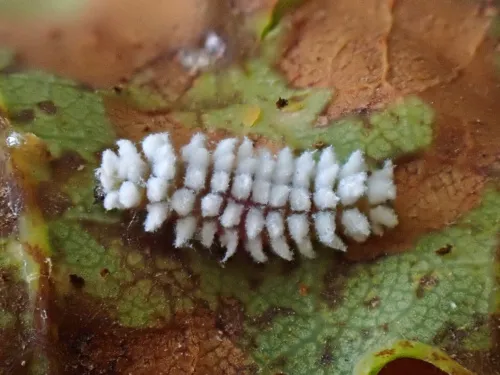
Scymnus auritus
Scymnus auritus
Length 2-2.5mm. A small, mostly black ladybird with reddish-brown legs. Males have an orangey-red face and front edge to the pronotum, females lack the red colour at the front. The distinctive feature is the red tip to the rear abdomen. This can some