
Family Longhorn Beetles (Cerambycidae)
Cerambycidae is a family in the order Coleoptera. Browse 935 named species recorded in this family, or open an individual profile for its available identification and natural-history information.
Species in Cerambycidae (935)
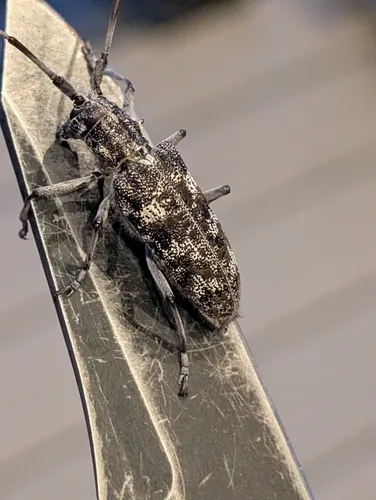
Spotted Pine Sawyer
Monochamus clamator
The Spotted pine sawyer (Monochamus clamator) is a species of beetle in the family Cerambycidae. It was described by LeConte in 1852.
Spotted Pine Sawyer
Monochamus maculosus
Identification: similar to M. carolinensis (strong, dense elytral punctation) but darker, with white pubescence more concentrated on lateral pronotal projections and scutellum, no white band on pronotal dorsum
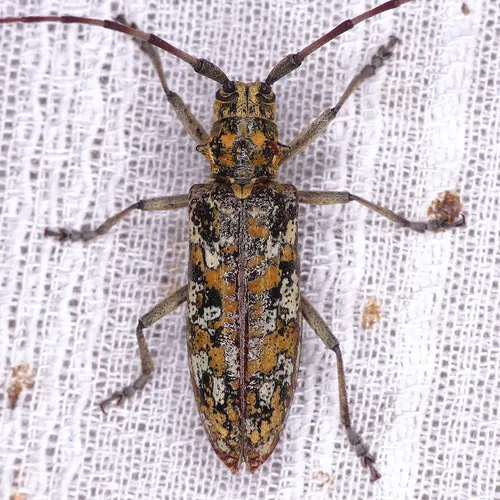
Balsam Fir Sawyer
Monochamus marmorator
Comments on original guide page: How these beauty sings When i captured this bug, it was in a "ziploc" bag and it sang for me. I do have a little movie of this performance, and i would love to know if i could add it to this site, as reference informa
Southern Pine Sawyer
Monochamus titillator
Identification: Adult: brown with irregular pale grayish patches on elytra; legs gray; apical elytral margin meets sutural tooth at right angle; tip of elytral suture with distinct spines:
Nathriobrium methioides
Nathriobrium methioides
Type Locality: Lake Corpus Christi State Park, San Patricio County, Texas. The entire type series (12 spmns) was reared from small branches of Texas Ebony gathered from slash piles at the south edge of Corpus Christi State Park . ( 3 )
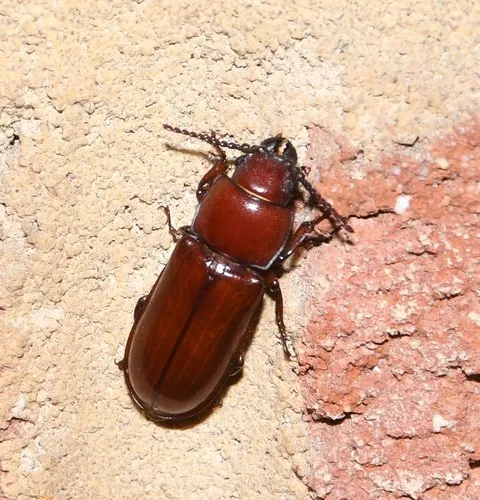
Pole Borer
Neandra brunnea
The N. brunnea is a species of the longhorn beetle family, subfamily Parandrinae. Its common names include pole borer and longhorned beetle. The longhorned beetle grows between 8 and 20 mm (0.79 in) and is yellowish-brown or reddish-brown in colour.
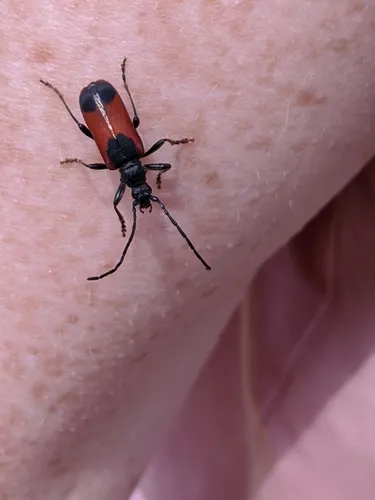
Neanthophylax mirificus
Neanthophylax mirificus
Neanthophylax mirificus is a species of Long-Horned Beetle in the beetle family Cerambycidae. It is found in North America, Costa Rica, and Mexico.
Neoalosterna capitata
Neoalosterna capitata
Neoalosterna capitata (Neoalosterna capitata) is a species in the family Cerambycidae, commonly known as longhorn beetles, belonging to the order Coleoptera (Beetles). It is classified within the subfamily Lepturinae, tribe Lepturini, suborder Polyph
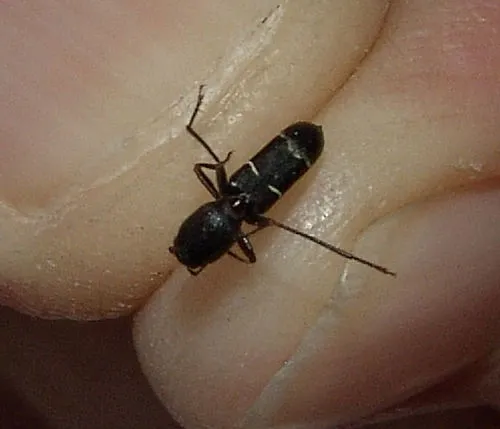
Neoclytus jouteli
Neoclytus jouteli
Identification: Neoclytus j. simplarius Blatchley Det. M. A. Quinn, 2016 both subspp./ color forms are uncommon ( 6 )
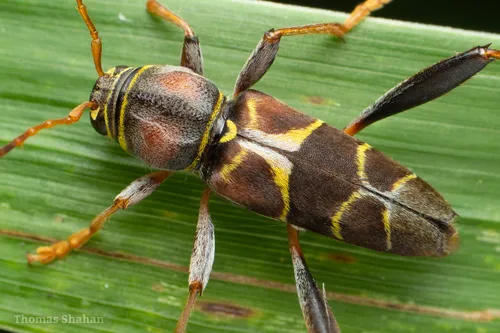
Neoclytus mucronatus
Neoclytus mucronatus
Identification: Pronotum (thorax) Reddish-brown in central area, darkening toward all margins. Yellow stripe outlines all borders of thorax. Elytra (wings) Reddish-brown. Yellow slanted L-shape covers first 1/3 of elytra. Wide sideways U-shape on low
Neoclytus scutellaris
Neoclytus scutellaris
Identification: Elytra have gray bases. Pronotum has yellow band.
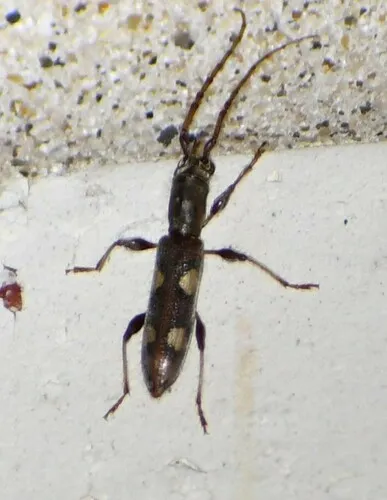
Rio Bravo Longhorn
Neocompsa bravo
A great deal of confusion has existed on what it should be called. We believe it has been previously listed as Neocompsa intricata Martins, 1970 by Hovore et. al.; Neocompsa alacris (Bates, 1885) by Linsley, Linsley and Martin and Schaeffer (1903, 19
Neocompsa puncticollis
Neocompsa puncticollis
Identification: note elytral setae in rows Neocompsa puncticollis orientalis Martins & Chemsak Det. F. Skillman a single spmn of orientalis coll'ed by Vogt at lights in Pharr, Hidalgo Co., TX in August tentatively ID'd as Neocompsa puncticollis orien
Poplar Twig Borer
Oberea delongi
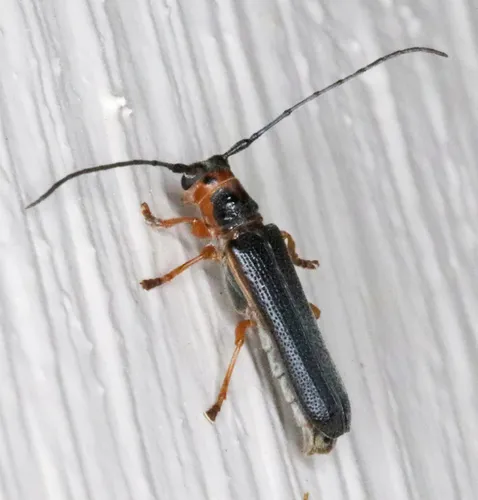
Identification: Mostly black except for legs and usually last one-two ventrites which are pale reddish yellow Venter of pronotum partially pale. Legs bright orange. Pronotum shiny. Det. J.N. Knull, 1941 Type Locality: Type, allotypc and two paralyses
Leafy Spurge Stem Boring Beetle
Oberea erythrocephala
Introduced in 1980 to control Euphorbia esula (Leafy Spurge.
Sumac Stem Borer
Oberea ocellata
Identification: Orange head and pronotum (save for pronotal spots), all orange below Syn: Oberea ocellata plagiata Casey - Range: NC, FL - Pronotal spots fused and enlarged: - Cerambycidae of Florida - Michael Thomas Syn: Oberea ocellata plagiata Cas
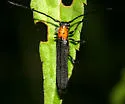
Raspberry Cane Borer
Oberea perspicillata
Identification: Markings variable, usually mostly black, pronotum orange with two black spots and black band at the base, which is sometimes reduced to a spot.
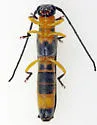
Oberea praelonga
Oberea praelonga
Identification: quite variable in coloration: the elytra sometimes are paler down the middle, the antenna are sometimes paler toward the tip, the legs are often pale, the basal pronotal spot is sometimes reduced or missing, the head is sometimes pale
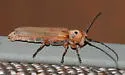
Oberea pruinosa
Oberea pruinosa
Identification: Per Lingafelter, Oberea pruinosa Casey 1913 is morphologically identical to and a potential synonym of Oberea schaumii LeConte 1852 the descriptions of Oberea schaumii, caseyi, pruinosa in Lingafelter and Yanega are in disagreement wi
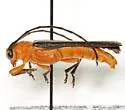
Sassafras Borer
Oberea ruficollis
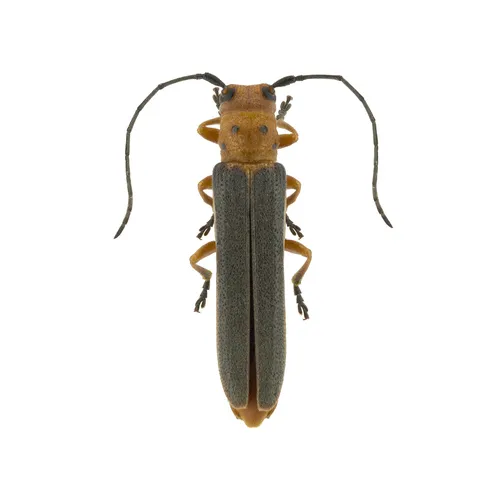
Identification: Elytra gray-brown to black, rest of body (save feet & ant.) orange
Oberea schaumii
Oberea schaumii
Identification: Per Lingafelter, first two or three abdominal sternites nearly completely dark (at least at center), remainder pale yellow or testaceous, rear top of head usually dark, posterolateral pronotal spot usually larger than the central spot
Dogwood Twig Borer
Oberea tripunctata
Identification: pronotum with a pair of black calli and a basal black spot near the scutellum, underside mostly dark, and outer margin of mandibles nearly straight
Obrium glabrum
Obrium glabrum
Described from a unique female labeled Davis Mountains, TEXAS, July 10. ( 3 ) Obrium glabrum is rare in collections, only 8 specimens, all from the Davis Mountains, had been collected by the time of Hovore & Chemsak's (1979) publication.
Obrium mozinnae
Obrium mozinnae
"This tiny, bicolored species is often abundant on blossoms of leguminous trees and shrubs and is also attracted to lights."
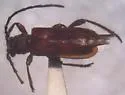
Obrium rubidum
Obrium rubidum
Identification: largest and darkest of the three eastern spp.; shape distinctive Type Locality: Pennsylvania
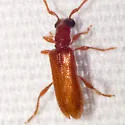
Obrium rufulum
Obrium rufulum
Identification: uniformly pale, shining; pronotum with lateral tubercles; shape distinctive comes to lights
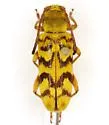
Ochraethes citrinus
Ochraethes citrinus
several old spmns labelled only as having come from Hidalgo or Cameron County ( 7 ) , though a modern record exists from west of Ciudad Victoria, Tamps, Mex. ( 8 )
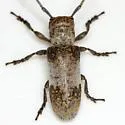
Twig Girdler
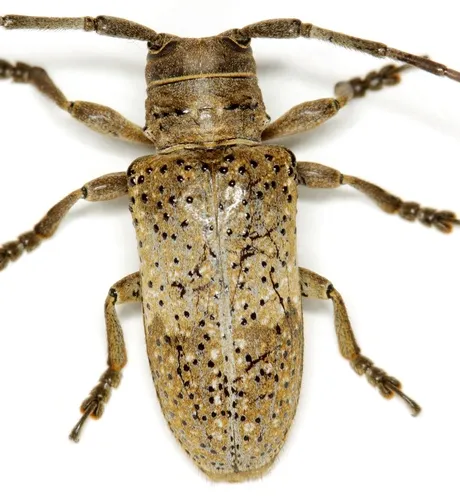
Oncideres cingulata
Twig Girdler (Oncideres cingulata) is a species in the family Cerambycidae, commonly known as longhorn beetles, belonging to the order Coleoptera (Beetles). It is classified within the subfamily Lamiinae, tribe Onciderini, suborder Polyphaga, superfa
Huisache Girdler
Oncideres pustulata
Huisache Girdler (Oncideres pustulata) is a species in the family Cerambycidae, commonly known as longhorn beetles, belonging to the order Coleoptera (Beetles). It is classified within the subfamily Lamiinae, tribe Onciderini, suborder Polyphaga, sup
Mesquite Girdler
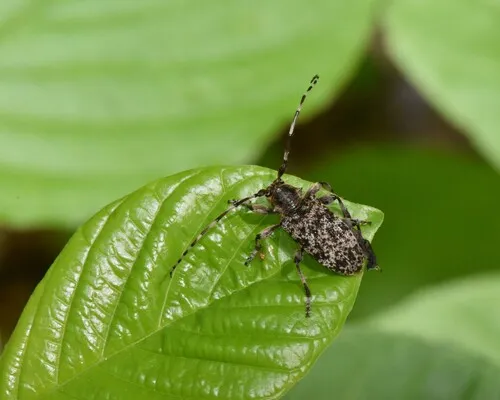
Oncideres rhodosticta
Identification: Distinguished from O. cingulata by three black dots on thorax, O. pustulata by much smaller size. Det. M. A. Quinn, 2017 widespread and common girdler of mesquite ( Prosopis juliflora )
Oplosia nubila
Oplosia nubila
Oplosia nubila is a species of beetle in the family Cerambycidae. It was described by John Lawrence LeConte in 1862.
Orthochoriolaus chihuahuae
Orthochoriolaus chihuahuae
Holotypes ♂, ♀ collected Pinos Atos, Chihuahua, Mexico in (BMNH) British Museum Natural History, London, UK.
Ortholeptura valida
Ortholeptura valida
Identification: male, female Type Locality: Shoalwater Bay, near the Columbia River, Oregon
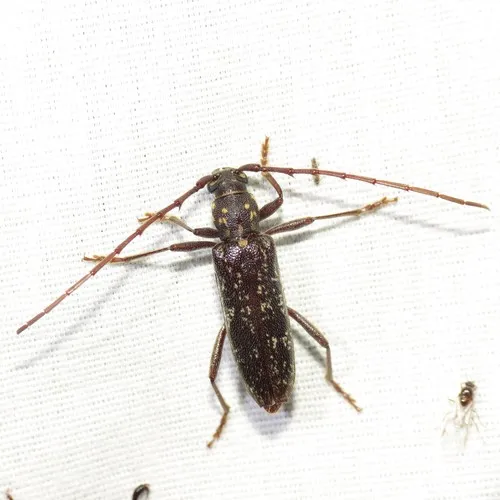
Orwellion gibbulum
Orwellion gibbulum
Orwellion gibbulum is a species of beetle in the family Cerambycidae. It was described by Bates in 1880.
Osmidus guttatus
Osmidus guttatus
Identification: Det. S. W. Lingafelter Type Locality: Cabo San Lucas, Baja California, Mexico
Cabbage Palm Longhorn
Osmopleura chamaeropis
Identification: Unique can be locally abundant ( 4 )
Oxymerus aculeatus
Oxymerus aculeatus
earliest record in our area: Miami-Dade County, FL 2003 ( 3 )
Pachyta armata
Pachyta armata
Identification: "Broad-shouldered, strongly tapering posteriorly, and black with mostly yellow elytra" .
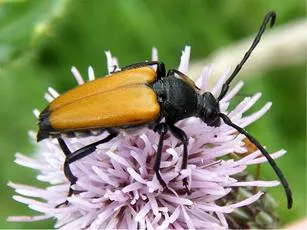
Tawny Longhorn Beetle
Paracorymbia fulva
Paracorymbia fulva is a large longhorn beetle, 9-14 mm long. Its golden brown elytra (wing cases) are tipped with black. It also has black legs and antennae. It is usually found near to the coast in the southern half of England, from Norfolk round to
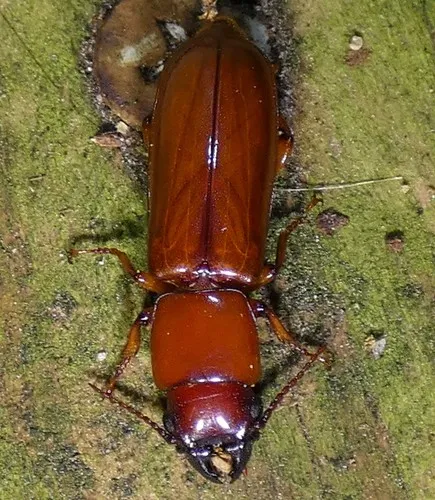
Parandra polita
Parandra polita
Parandra polita (Parandra polita) is a species in the family Cerambycidae, commonly known as longhorn beetles, belonging to the order Coleoptera (Beetles). It is classified within the subfamily Parandrinae, suborder Polyphaga, superfamily Chrysomeloi
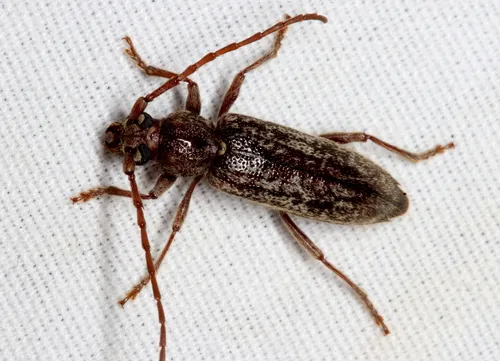
Parelaphidion incertum
Parelaphidion incertum
Parelaphidion incertum (Parelaphidion incertum) is a species in the family Cerambycidae, commonly known as longhorn beetles, belonging to the order Coleoptera (Beetles). It is classified within the subfamily Cerambycinae, tribe Elaphidiini, suborder
Pentanodes dietzii
Pentanodes dietzii
Unique holotype and allotype collected at Brownsville, TX (no further data); no add'l specimens collected for some 80 years , until Downie coll'ed 25 spmns near La Gloria, Starr Co., TX on whitebrush - Aloysia gratissima (Verbenaceae), which was in f
Peritapnia fabra
Peritapnia fabra
Type Locality: Arizona, south of Tucson. (Horn 1894)
Phaea monostigma
Phaea monostigma
Phaea monostigma (Phaea monostigma) is a species in the family Cerambycidae, commonly known as longhorn beetles, belonging to the order Coleoptera (Beetles). It is classified within the subfamily Lamiinae, tribe Tetraopini, suborder Polyphaga, superf
Phymatodes amoenus
Phymatodes amoenus
Identification: note red head and enlarged red femora to separate from most other Phymatodes spp. ( 3 ) pale abdomen below separates this sp. from Phymatodes lengi Joutel (Rare) can be locally common ( 6 )
Phymatodes blandus
Phymatodes blandus
Phymatodes blandus is a species of longhorn beetle in the family Cerambycidae. It is found in the United States.
Phymatodes huetheri
Phymatodes huetheri
Identification: Similar to P. fulgidus but differs by the punctures on pronotum and sides of prothorax distinctly denser and metatarsomere I about as long as II-III together
Phymatodes lengi
Phymatodes lengi
Identification: Note: Dark Abdomen Det. T. H. Atkinson, 2012 rare
Phymatodes nigrescens
Phymatodes nigrescens
Identification: " Phymatodes nigrescens is in fact distinct from these dark forms of P. vulneratus as well. It can be separated from both bicolored and unicolored forms of P. vulneratus by the coarsely punctate apical one-half of the elytra; the over
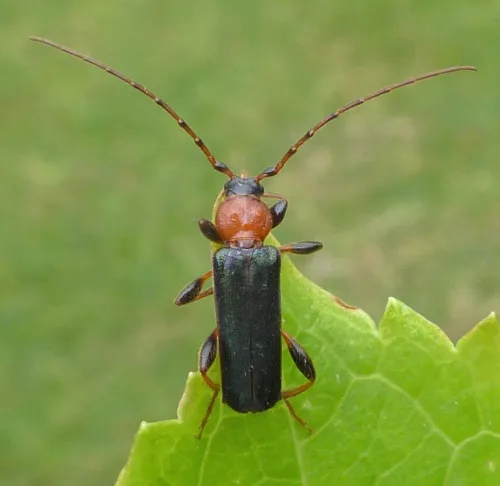
Tanbark Borer
Phymatodes testaceus
Length 8 to 13mm. Very variable in colour from golden brown, through reddish to a deep blue-black. A common form has the thorax reddish and the elytra deep blue. The adults are active nocturnally and will come to light but are rarely seen otherwise u
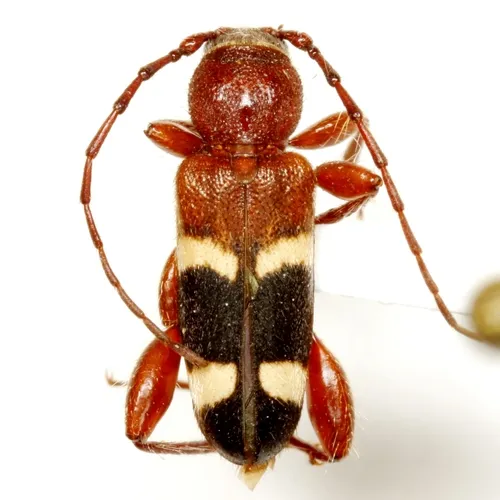
Phymatodes varius
Phymatodes varius
Phymatodes varius is a species of beetle in the family Cerambycidae.
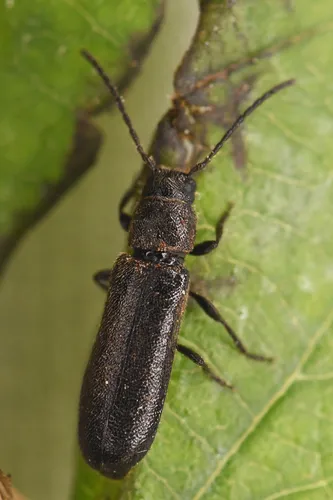
Phymatodes vilitatis
Phymatodes vilitatis
Phymatodes vilitatis is a species of longhorn beetle in the family Cerambycidae. It is found in the United States.
Elm Bark Borer
Physocnemum brevilineum
Identification: Det. Guy A. Hanley, 2010 uncommon ( 6 )
Physocnemum violaceipenne
Physocnemum violaceipenne
P. violaceipenne is usually 11-13 mm in size and is associated with "white" oaks, but perhaps other oaks. I have a nice series from NJ, and single specimens from Oklahoma, Arkansas and Missouri. Larvae feed in dead branches. (D. Heffern, pers. comm.
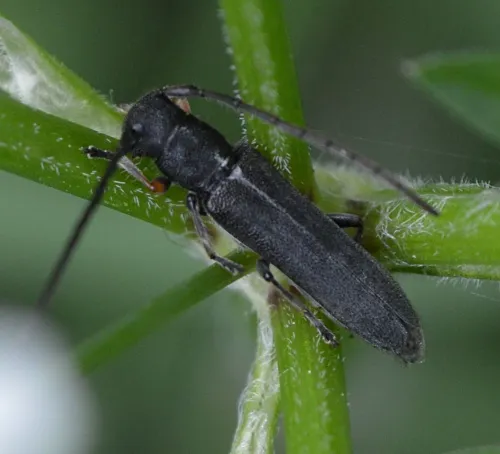
Phytoecia cylindrica
Phytoecia cylindrica
Length 6 to10 mm. Completely dark leaden grey to black but for the front legs which are almost entirely orange or yellow. Elytra with dense recumbent fine grey pubescence. Adults are active in hot sunshine on or around umbellifers. Although they are
Pidonia aurata
Pidonia aurata
Pidonia aurata (Pidonia aurata) is a species in the family Cerambycidae, commonly known as longhorn beetles, belonging to the order Coleoptera (Beetles). It is classified within the subfamily Lepturinae, tribe Pidoniini, suborder Polyphaga, superfami
Pidonia densicollis
Pidonia densicollis
Identification: the bulbous, dark pronotum, elytra dull with stripes, and pubescence eliminate the other possibilities (the pubescence is crucial) --Doug Yanega, pers.comm. to =v= 1.vi.2011
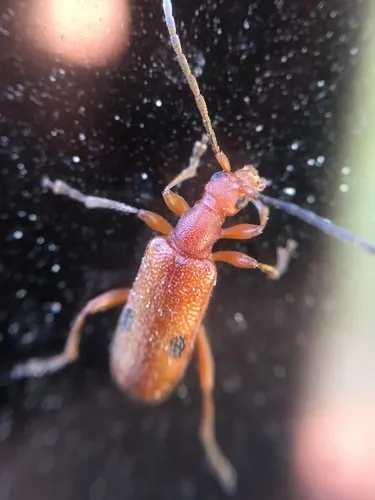
Pidonia (Thesalia) gnathoides
Pidonia gnathoides
Pidonia gnathoides is a species of beetle in the family Cerambycidae. It was described by John Lawrence LeConte in 1873.
Pidonia (Ceratopidonia) quadrata
Pidonia quadrata
Identification: P. gnathoides is similar but with the pronotum and elytra more distinctly punctate. -T.C. MacRae, 18.i.2008
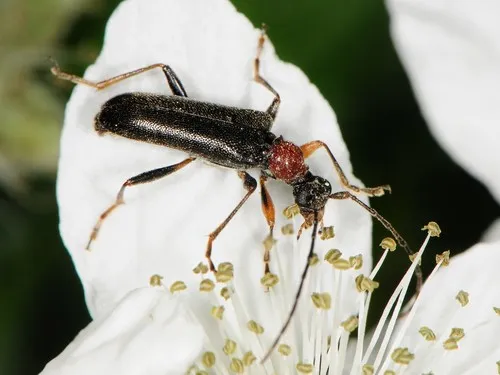
Stripe-legged Long-horned Beetle
Pidonia ruficollis
Pidonia ruficollis is a species of beetle in the family Cerambycidae. It was described by Say in 1824.
Pidonia vibex OR nitidicollis
Pidonia vibex
Identification: In the male, the deep concavity of the last ventrite and impressed penultimate ventrite separate vibex from ruficollis , which has the last ventrite shallowly concave and the penultimate not impressed. Additionally, ruficollis does no
Piezocera monochroa
Piezocera monochroa
Identification: Det. E. G. Riley, 2009 Type coll'ed by Townsend at Brownsville, Cameron Co., Texas
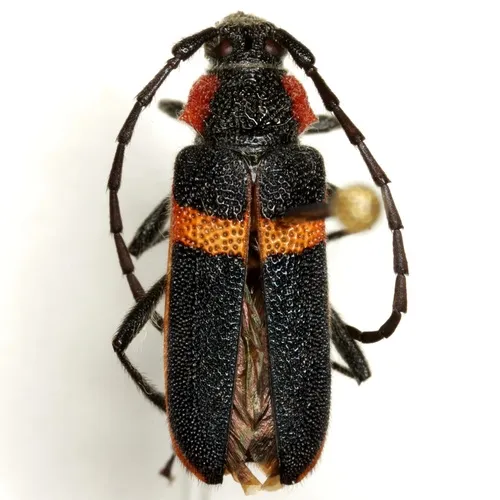
Pilostenaspis lateralis
Pilostenaspis lateralis
over 30 spmns of this normally rare beetle were collected at the US Hwy 385 Rest Stop, 28 mi S Fort Stockton, Glass Mtns, Pecos Co., Texas, over 20 were collected at this site in mid March
Mesquite Borer
Placosternus difficilis
Mesquite Borer (Placosternus difficilis) is a species in the family Cerambycidae, commonly known as longhorn beetles, belonging to the order Coleoptera (Beetles). It is classified within the subfamily Cerambycinae, tribe Clytini, suborder Polyphaga,
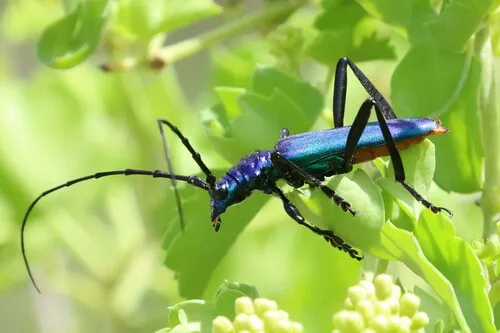
Tamaulipan Bumelia Borer
Plinthocoelium schwarzi
Identification: black femora Det. D. Heffern, 2009 Type Locality: McAllen, Hidalgo Co., Texas Described from four specimens, two females and two males, received from D. K. McMillan with the following note, "Collected May 22, 1909, on the blossoms of
Bumelia Borer
Plinthocoelium suaveolens
Identification: Large, metallic green, bronze, or blue (highly variable). Reddish femora . - red form is least common Adults are attracted to UV lights and rarely to bait.
Plionoma rubens
Plionoma rubens
Identification: The length of the antennae of the males varies considerably, but the lateral punctation of the pronotum and elytra is fine and dense in all of the examples seen by Linsley (1942)
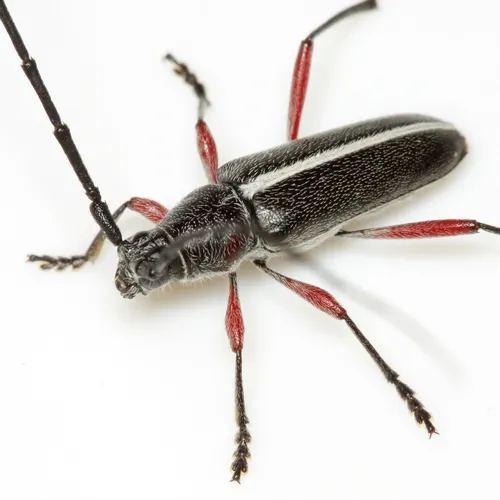
Plionoma suturalis
Plionoma suturalis
Identification: pronotum red (s.CA to w.TX) or black (in the rest of TX): Type Locality: Rio Grande Valley, Texas
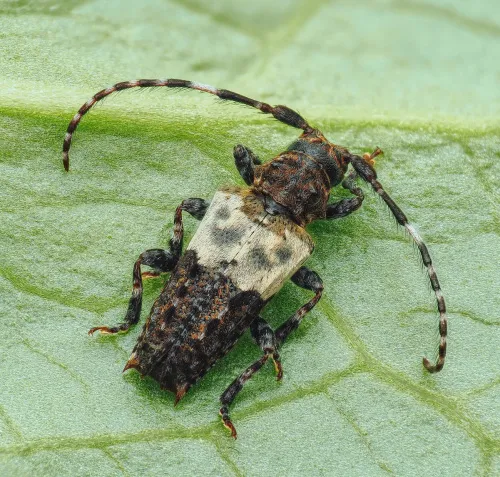
Greater Thorn-tipped Longhorn Beetle
Pogonocherus hispidulus
Length 5 to 8 mm. Similar to P. hispidus but generally larger and with longer teeth at the tip of each elytron. This species has white marked antennae and a white band on the scutellum. Well camouflaged on trees and shrubs by its lichen like appearan
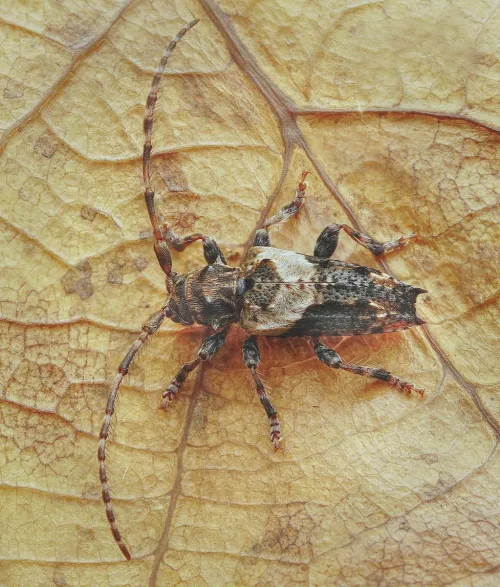
Lesser Thorn-tipped Longhorn Beetle
Pogonocherus hispidus
A small (6 or 7 mm) longhorn beetle said to be camouflaged to resemble a bird dropping, but looking quite handsome for all that. It is distinguished by a thorn like tooth at the tip of each elytron. Scutellum all black (c.f. Pogonocherus hispidulus).
Pogonocherus penicillatus
Pogonocherus penicillatus
Identification: The angled white basal band and longitudinally-arranged tufts of black setae are distinctive. … Ted C. MacRae, 21 June, 2007
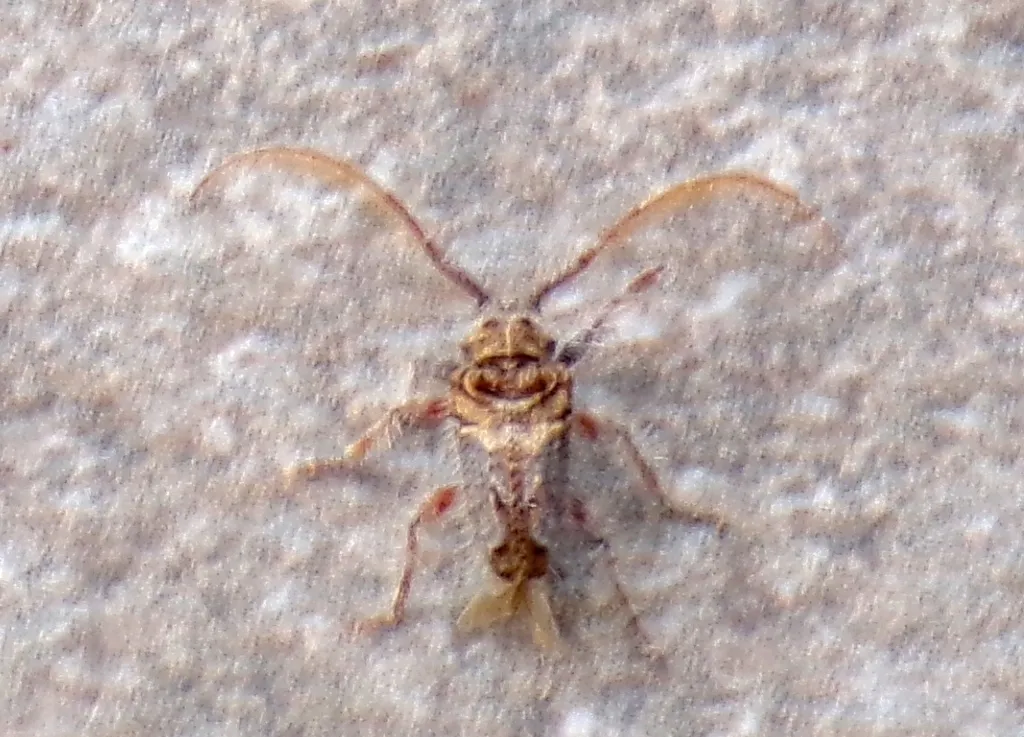
Poliaenus volitans
Poliaenus volitans
Poliaenus volitans is a species of beetle in the family Cerambycidae. It was described by John Lawrence LeConte in 1873. It is known from Guatemala and Mexico.
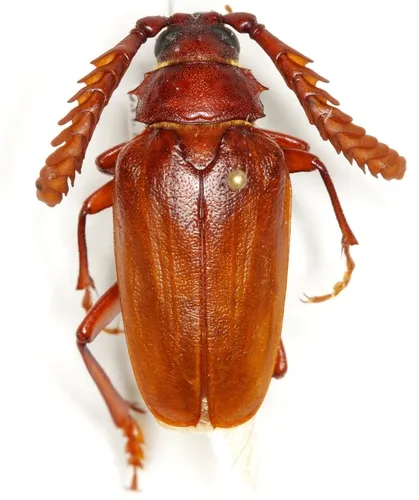
Prionus arenarius
Prionus arenarius
Identification: Distinctive from all other Homaesthesis by the broad, flattened posterior tarsi with conspicuous setal fringes , modifications for walking on sand , Described from Monahans Sandhills State Park in western Texas Texas considers this a
Prionus emarginatus
Prionus emarginatus
Identification: Hairy "neck" distinguishes this species from other North American species in the genus. This species has localized populations, and adults can emerge in great numbers after heavy summer rains.
Prionus fissicornis
Prionus fissicornis
Identification: at least 25 antennomeres, often over 30
Prionus geminus
Prionus geminus
Identification: differs from P. emarginatus by the: imbrication of antennomeres in males slightly emarginated at apex (distinctly bifurcated in emarginatus ); last antennomere in males simple or slightly complex (distinctly complex in emarginatus );
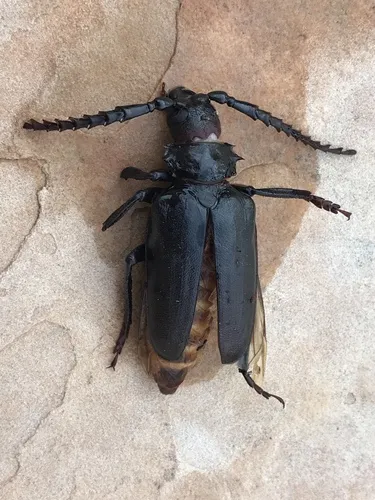
Prionus heroicus
Prionus heroicus
Prionus heroicus is a species of long-horned beetle in the family Cerambycidae. It is found in North America.
Tile-horned Prionus
Prionus imbricornis
Identification: Antennae with 16–23 segments in ♂, 15–21 in ♀ On mid-summer nights, these hit lighted windows so hard at my house in Durham, NC, that I fear the glass will break. Mostly males come to lights.
Prionus pocularis
Prionus pocularis
Identification: Similar to P. laticollis . More brown, base of pronotum narrower, elytra more punctate, eyes more closely spaced. Metasternum of female is hairy, smooth in laticollis .
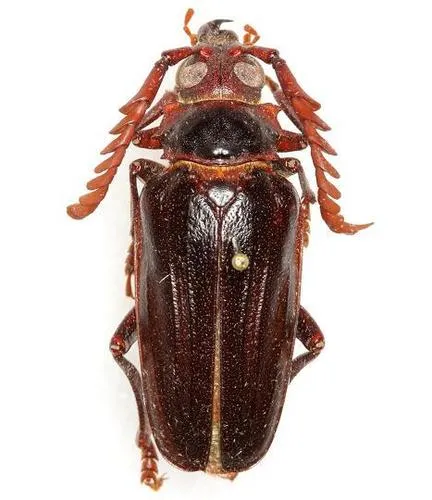
Prionus spinipennis
Prionus spinipennis
Identification: Prionus (H.) spinipennis may be distinguished from all other known Homaesthesis by the combination of 12-segmented antennae, expanded tarsi, dark-brown to piceous integument with wholly reddish antennae, and spinose sutural angle of t
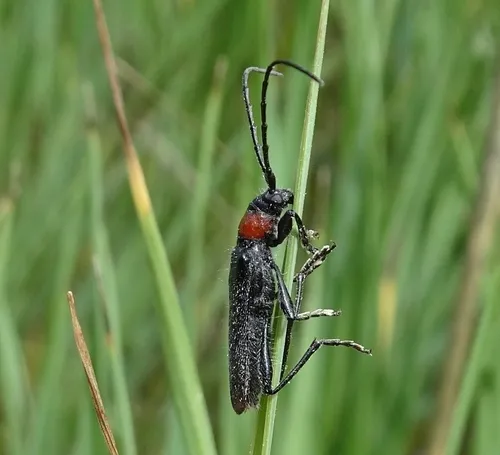
Pronocera collaris
Pronocera collaris
Identification: Distinguished from the similar appearing Phymatodes testaceus by the more densely punctate elytra and polished pronotum without calli.
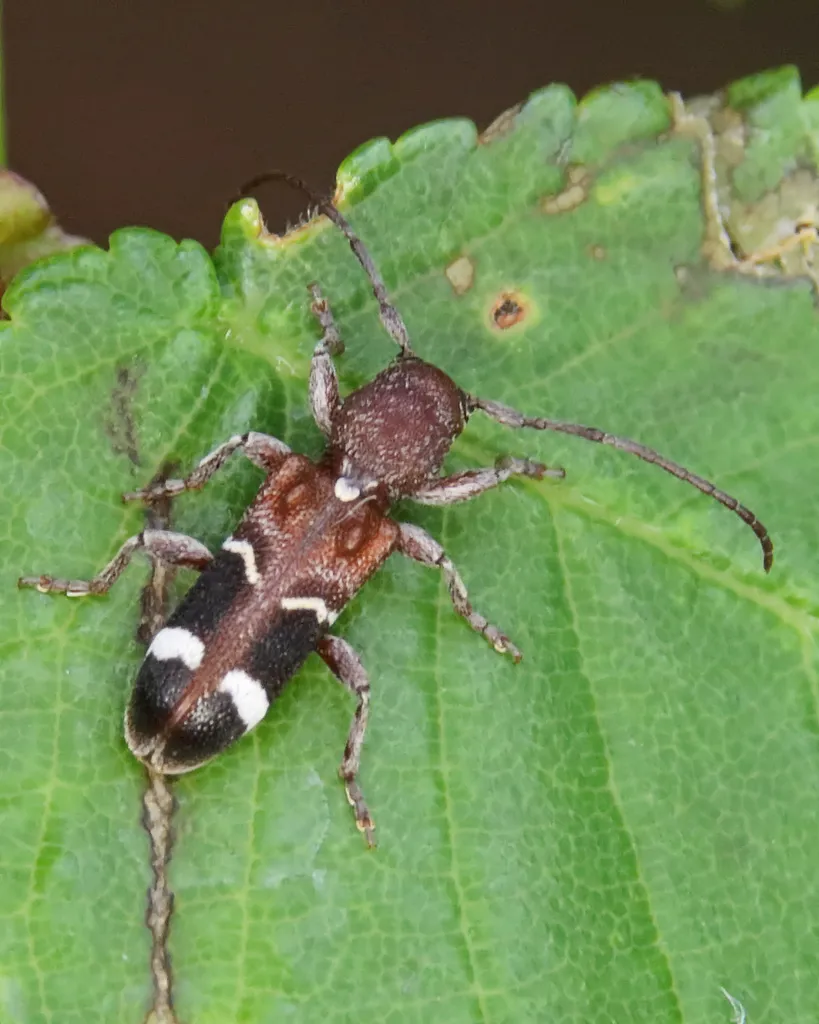
Currant-tip Borer
Psenocerus supernotatus
Psenocerus supernotatus is a species of beetle in the family Cerambycidae, and the only species in the genus Psenocerus. It was described by Say in 1823.
Pseudastylopsis pini
Pseudastylopsis pini
Type Locality: Carr Peak, Huachuca Mountains, Cochise Co., Arizona. Beaten from pines at an elevation of 9,000 feet.
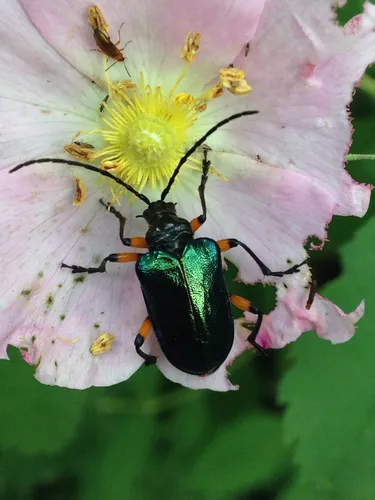
Pseudogaurotina cressoni
Pseudogaurotina cressoni
Pseudogaurotina cressoni is a species of the Lepturinae subfamily in the long-horned beetle family. This beetle is distributed in Canada, and the United States.
Pseudostrangalia cruentata
Pseudostrangalia cruentata
Identification: distinctive elytra with red margins and pointed tips, bilobed base (Linsley & Chemsak 1976) Det. D. J. Heffern 1993. Type Locality: Pennsylvania ( 3 ) Attracted to lights ( 6 )
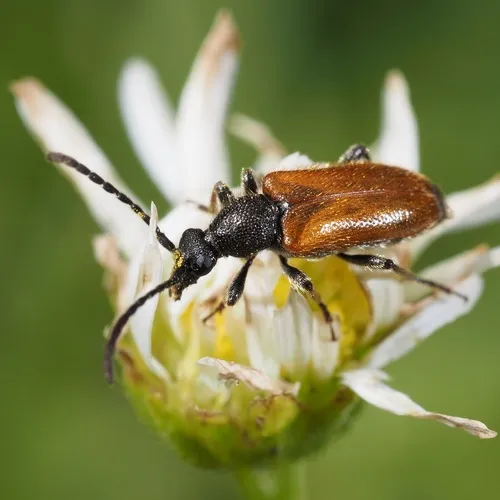
Pseudovadonia livida
Pseudovadonia livida
Might be mistaken for Alosterna , especially as they may occur together in the field, but Pseudovadonia livida is broader and has extensively dark legs. Good close up photographs required please. Frequents open and sunny situations such as meadows an
Psyrassa brevicornis
Psyrassa brevicornis
Identification: Det. D. Heffern, 2010 Type Locality: Brownsville, Cameron Co., Texas
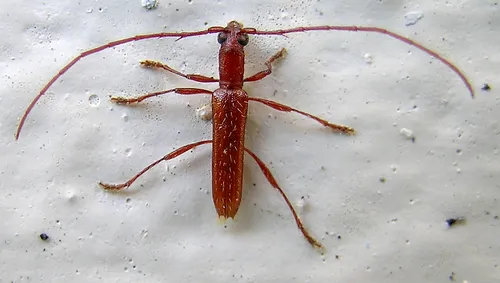
Spined Twig Girdler
Psyrassa pertenuis
Psyrassa pertenuis is a species of beetle in the family Cerambycidae.
Branch Pruner
Psyrassa unicolor
Identification: uniformly orange to reddish-brown body, legs, and antennae; eyes black; body long, slender, and cylindrical; pronotum same width as head but almost twice as long; elytra nearly parallel-sided, slightly wider than pronotum and 3-5 time
Purpuricenus opacus
Purpuricenus opacus
Identification: distinguished from other N. Amer. Purpuricenus by its brunneus to dull-orange elytra with at most the apical one-third black Rare in dry years ; a large series collected in fermenting bait traps placed in a dry oak/juniper/pine woodla
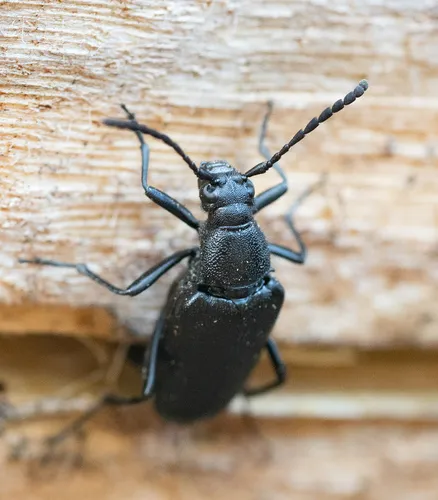
Pygoleptura brevicornis
Pygoleptura brevicornis
Pygoleptura brevicornis is a species of flower longhorns in the family Cerambycidae. It is found in North America.
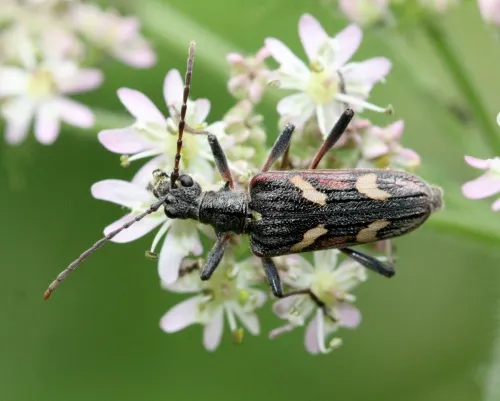
Two-banded Longhorn Beetle
Rhagium bifasciatum
A large species of longhorn beetle that may reach 22 millimetres long and can be distinguished by the two prominent pale yellow bands on each elytron. The adults are commonly found on tree trunks, often in woodland and occasionally on low vegetation.
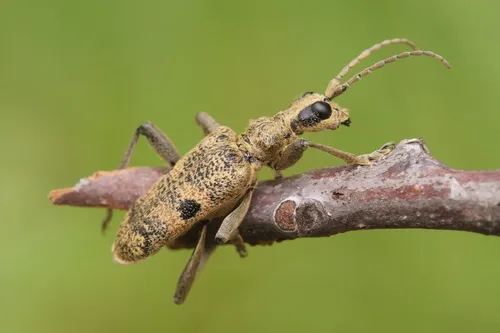
Rhagium mordax
Rhagium mordax
This is a yellow beetle with brown and black mottling and two eye-like spots on its wing-cases. For a 'long-horn' beetle, it has relatively short antennae. The adult favours open-structured flowers, particularly Hawthorn and umbellifers where it feed
Rhopalophora angustata
Rhopalophora angustata
Type Locality: Esperanza Ranch, Brownsville, Cameron Co., Texas
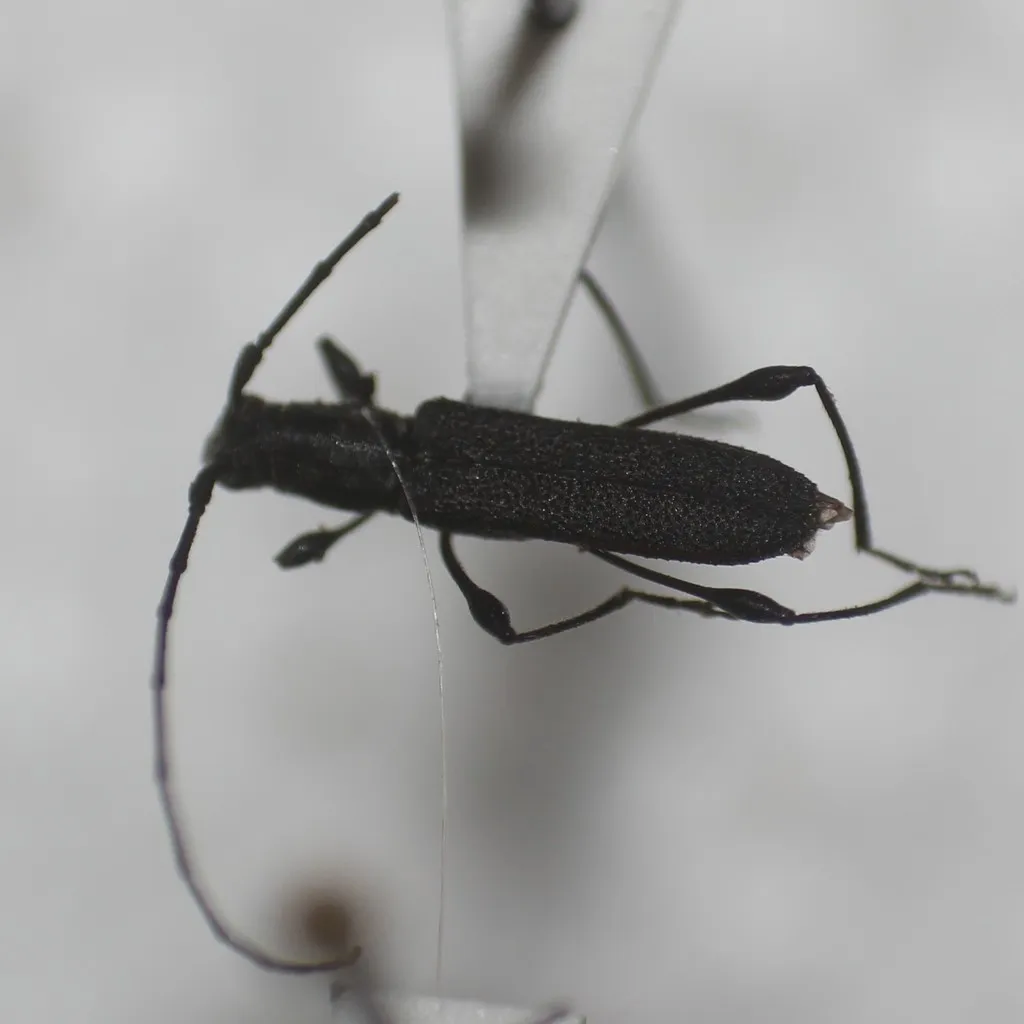
Rhopalophora bicolorella
Rhopalophora bicolorella
Identification: Resembling Rhopalophora longipes Say in size; color varying from entirely fuscous to red pronotum, some of the dark forms have slight traces of lighter areas on bases of elytra. Type Locality: Palmerlee, Cochise Co., Arizona, July 15
Rhopalophora longipes
Rhopalophora longipes
Identification: Weak lateral pubescent stripes Det. M. A. Quinn, 2012 common eastern sp.
Rhopalophora meeskei
Rhopalophora meeskei
Identification: Det. M. A. Quinn, 2013 Type Locality: Las Vegas, San Miguel Co., New Mexico
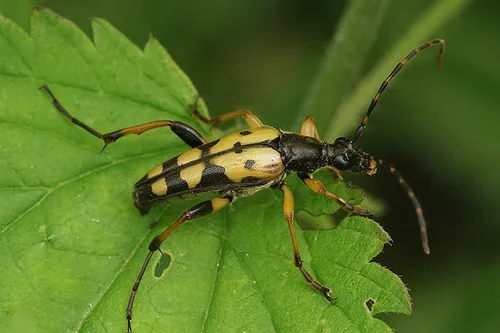
Rutpela maculata
Rutpela maculata
This is a large but well-marked longhorn beetle with a variable pattern of black and yellow markings. Usually found along hedgerows and woodland margins where the adults are most often seen on Hawthorn or umbel flowers. The larvae live in rotten wood
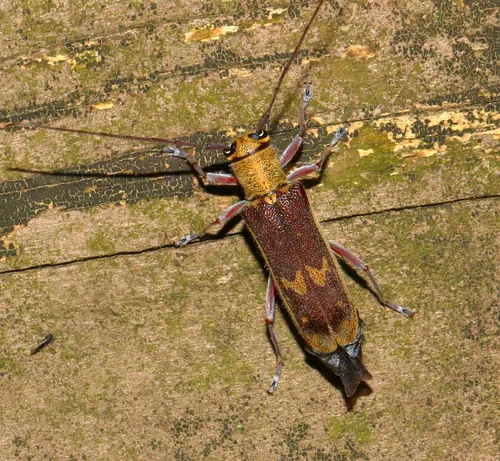
Hickory Saperda
Saperda discoidea
Identification: Remarkably dimorphic This species is remarkable in having the sexes so unlike that one unacquainted with it would certainly consider them distinct species. In a long series of males, however, there will be found individuals having the
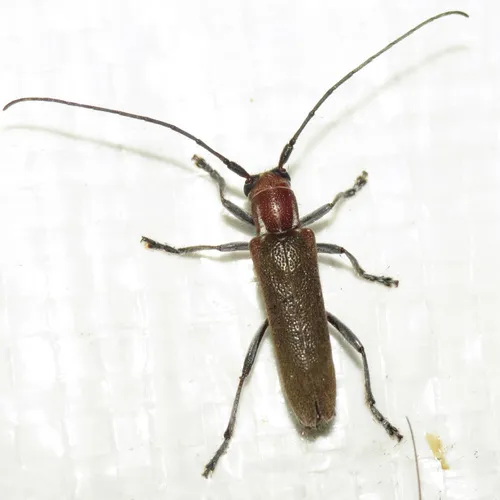
Saperda fayi
Saperda fayi
Identification: Markings often quite reduced in males