
Family Longhorn Beetles (Cerambycidae)
Cerambycidae is a family in the order Coleoptera. Browse 935 named species recorded in this family, or open an individual profile for its available identification and natural-history information.
Species in Cerambycidae (935)
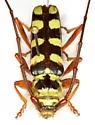
Six-banded Longhorn Beetle
Dryobius sexnotatus
Identification: pattern distinctive: (recently collected in e. TX; state record) Uncommon/rare ; widely scattered, populations are sparse ; listed as rare or threatened by several states, e.g. considered a SGCN by AR, LA, and VA Dury noted that D. se
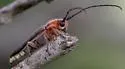
Dylobolus rotundicollis
Dylobolus rotundicollis
Identification: pale elytral sutural line can be present or absent Type Locality: Texas
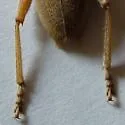
Eburia haldemani
Eburia haldemani
Identification: Highly variable and anomalous forms do occur Det. S. Vitanza, 2015 comes to lights and fermenting molasses ( 3 )
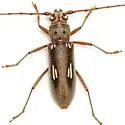
Eburia ovicollis
Eburia ovicollis
Identification: Det. M. A. Quinn, 2011 Adults come to lights
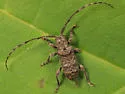
Ecyrus dasycerus
Ecyrus dasycerus
Identification: Variable in size and color, but the combination of body shape and the dark, inverted arc-like (although sometimes faint) marking at the elytral base is distinctive among eastern longhorns comes to lights
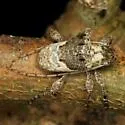
Ecyrus penicillatus
Ecyrus penicillatus
Identification: uncommon sp. resembles a bird dropping when resting on dead twigs or in a death-feigning posture (legs and antennae drawn tight to the body) on the beating sheet ( 4 ) attracted to lights ( 4 )
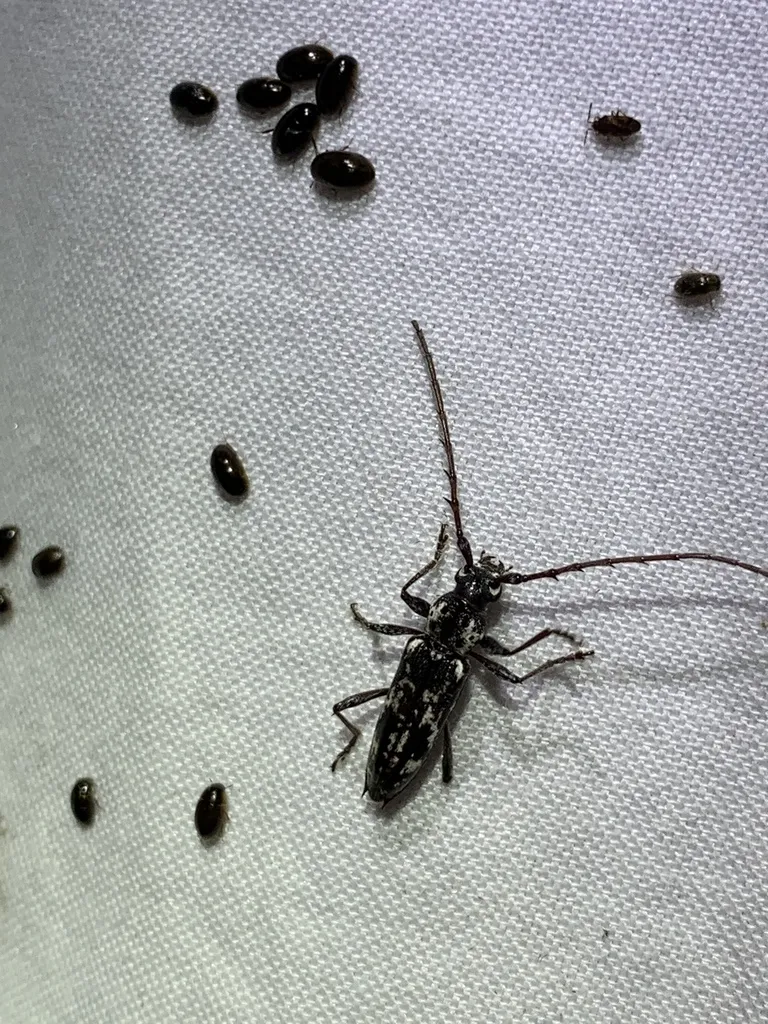
Elaphidion cryptum
Elaphidion cryptum
Elaphidion cryptum is a species of beetle in the family Cerambycidae. It was described by Linsley in 1963.
Elaphidion linsleyi
Elaphidion linsleyi
Identification: resembles E. mucronatum , but the apical spines on inside of meso- and metfemora are broad (acute in E. mucronatum )
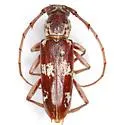
Elaphidion mimeticum
Elaphidion mimeticum
Identification: has white on the lower sides of the pronotum SYNTYPE Taken at molasses bait and attracted to lights ( 3 ) Types, two males and two females, Brownsville, Texas, Esperanza Ranch. (Schaeffer 1905)
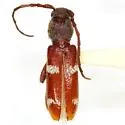
Elaphidionopsis fasciatipennis
Elaphidionopsis fasciatipennis
Type Locality: Devil's River near Del Rio, Val Verde Co., Texas "Very rare in collections"
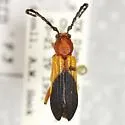
Elytroleptus divisus
Elytroleptus divisus
long series (12 spmns) in the UTIC coll'ed in April from Dimmit Co. in s. TX ( 5 )
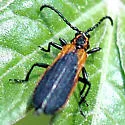
Elytroleptus floridanus
Elytroleptus floridanus
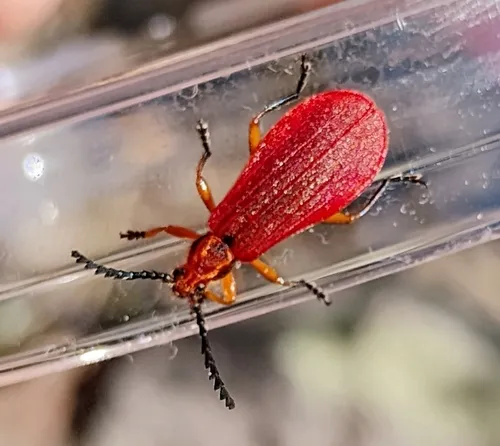
Elytroleptus floridanus (Elytroleptus floridanus) is a species in the family Cerambycidae, commonly known as longhorn beetles, belonging to the order Coleoptera (Beetles). It is classified within the subfamily Cerambycinae, tribe Trachyderini, subord
Elytroleptus limpianus
Elytroleptus limpianus
Elytroleptus limpianus is a species of beetle in the family Cerambycidae. It was described by Skiles & Chemsak in 1982.
Enaphalodes archboldi
Enaphalodes archboldi
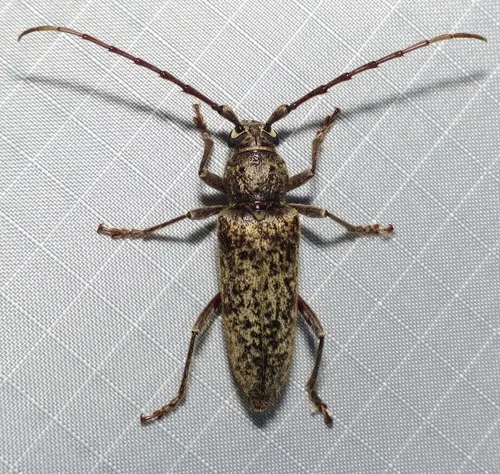
Identification: conspicuous uniform appressed fulvous pubescence that densely covers elytral surface Type Locality: Archbold Biological Station, Highlands Co., FL
Enaphalodes atomarius
Enaphalodes atomarius
Enaphalodes atomarius is a species of beetle in the family Cerambycidae. It was described by Dru Drury in 1773 from New York City.
Enaphalodes niveitectus
Enaphalodes niveitectus
Identification: Det. S. Lingafelter, 2013 Type Locality: Miller Canyon, Huachuca Mountains, Cochise County, Arizona
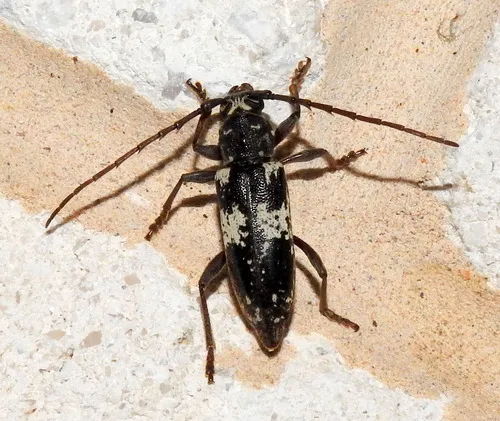
Enaphalodes taeniatus
Enaphalodes taeniatus
Identification: generally lacks white on the top edges of the pronotum, see: Cerambycidae Catalog Det. M. J. Heiman, 2011 taken at lights Type Locality: Between Laredo and Ringgold Barracks, [Starr Co.,] Texas
Essostrutha laeta
Essostrutha laeta
Identification: variable ( Cerambycidae Catalog ) US record based on one specimen: TX: Hidalgo Co., Mission, June, 1982. It was captured in flight at a golf course ( 3 )
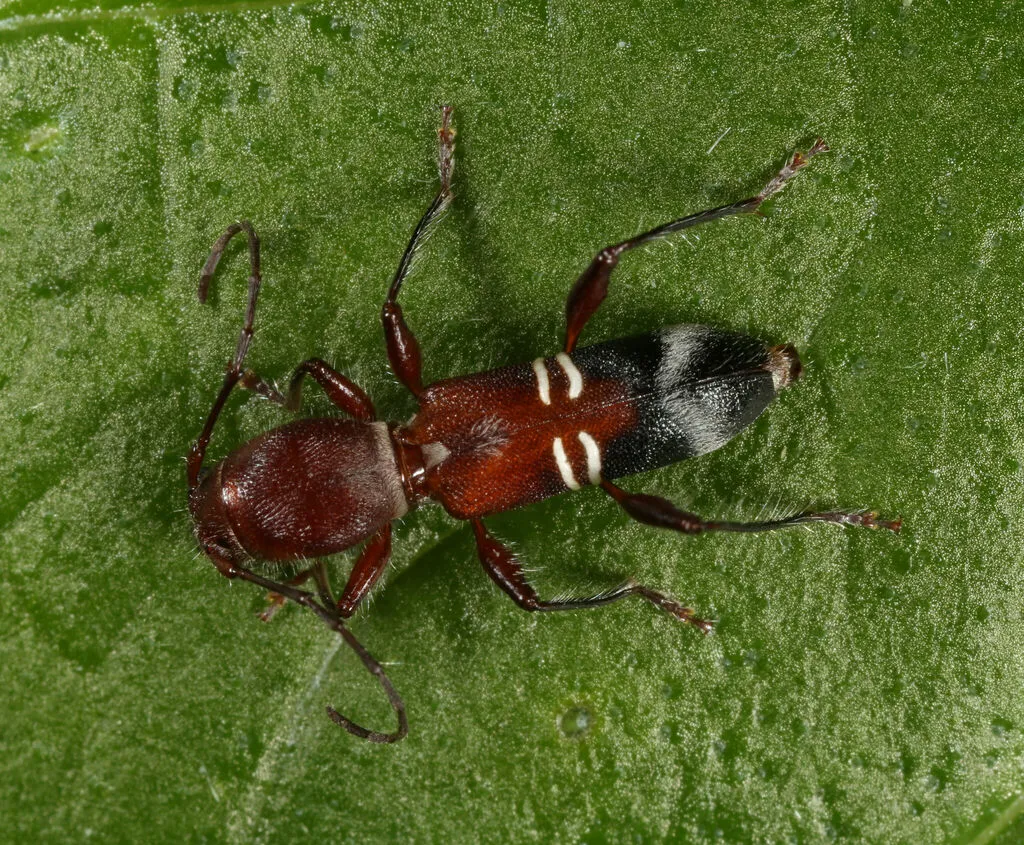
Euderces bicinctus
Euderces bicinctus
Euderces bicinctus is a species of beetle in the family Cerambycidae. It was described by Linsley in 1935.
Euderces picipes
Euderces picipes
Identification: pronotum with distinct, longitudinal rugae [striae]; ivory callus of elytron nearly always [slightly] oblique [vs. at right angle] (couplet 118) - uncommon red forms, mostly present in the Gulf states
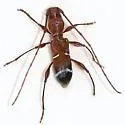
Euderces pini
Euderces pini
Identification: ant mimic; the only eastern sp. with post-median elytral fasciae in deep grooves (median fascia oblique in E. picipes , transverse in E. reichei ) --T.C. MacRae, 21.iv.2008 - uncommon black form Det. M. Quinn, 2010 - Det. Michael C. T
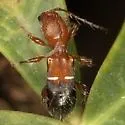
Euderces reichei
Euderces reichei
Identification: granulate pronotum w/o defined longitudinal rugae, ivory elytral lines nearly always transverse [at right angle to elytral edge] - no black form
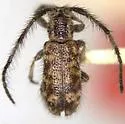
Eupogonius fulvovestitus
Eupogonius fulvovestitus
Type Series: Three specimens from Brownsville, Texas: Esperanza Ranch, Las Boragos, and Tolusa.
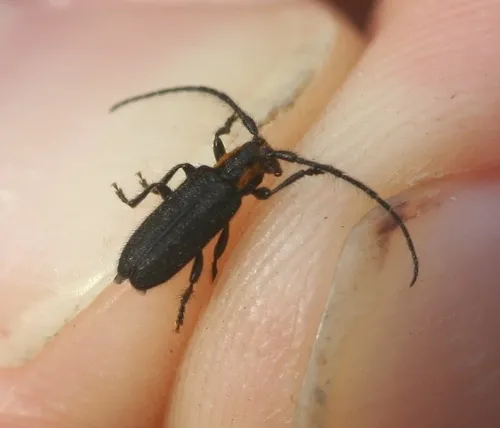
Eupogonius subarmatus
Eupogonius subarmatus
Eupogonius subarmatus is a species of beetle in the family Cerambycidae. It was described by LeConte in 1859. It is known from eastern North America.
Eupogonius tomentosus
Eupogonius tomentosus
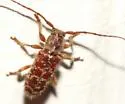
Identification: reddish brown integument, w irregular patches of tawny pubescence on eltyra Det. M. A. Quinn, 2010 Attracted to UV lights
Eutrichillus neomexicanus
Eutrichillus neomexicanus
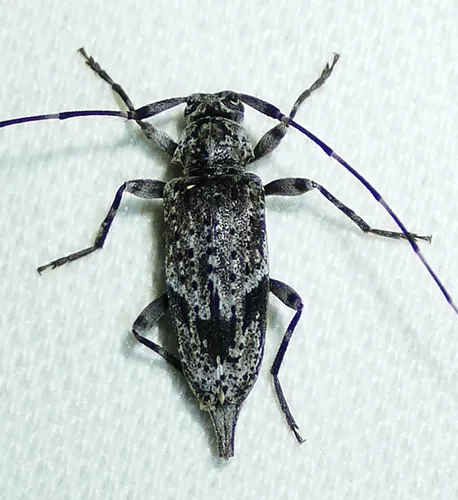
Eutrichillus neomexicanus is a species of longhorn beetles of the subfamily Lamiinae. It was described by Champlain and Knull in 1925.
Gaurotes cyanipennis
Gaurotes cyanipennis
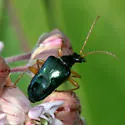
Identification: Comes in 2 color phases, smooth metalic purple or green. Legs yellow. Elytra smooth, pronotum tapers gradually.
Geropa concolor
Geropa concolor
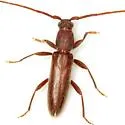
Identification: Det. E. G. Riley, 2010 Was abundant on 2-yr dead Acacia trees at Welder refuge in May and Oct ( 3 )
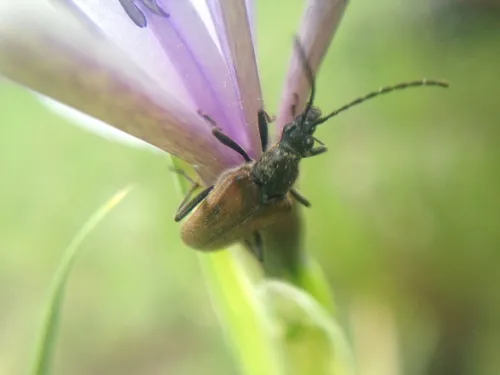
Gnathacmaeops pratensis
Gnathacmaeops pratensis
Gnathacmaeops pratensis is a species of the Lepturinae subfamily in the long-horned beetle family. This beetle is distributed in Austria, Belarus, Bosnia and Herzegovina, Bulgaria, Canada, Croatia, Czech Republic, Estonia, Finland, France, Germany, H
Goes fisheri
Goes fisheri
Identification: this rather rare sp. is distinguished from pulcher by the grayish pubescence of the elytra. Type Locality: Uvalde, Uvalde Co., Texas
Goes novus 0
Goes novus
Described from a series of six examples taken by Mr. Poling at Alpine, Texas, June-July, 1926. The type is a male bearing date July 15-30.
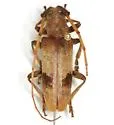
Living-hickory Borer
Goes pulcher
Identification: Broad banded markings are distinctive. Uncommon ( 5 )
Oak sapling borer
Goes tesselatus
Identification: Scattered spots of pale pubescence on elytra. Very similar to the more southern Goes tumifrons . See Yanega ( 3 ) for details. Lingafelter's (2007) ( 4 ) key couplet on pg. 103 says the mid-elytral "suture with brighter white pubescen
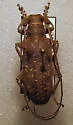
Goes tumifrons
Goes tumifrons
Identification: Similar to G. tesselatus , but more robust, pubescence is uniform (somehwat striped in tesselatus ), very thick, face more bulging, and lower eye lobes are nearly circular
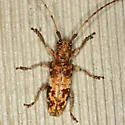
Goes variegatus
Goes variegatus
Identification: White pubescence of elytra restricted primarily one-third section antemedially, and sometimes extending along suture - varigatus Most of basal half of elytra with mottled white pubescence - debilis resembles G. debilis but has stronge
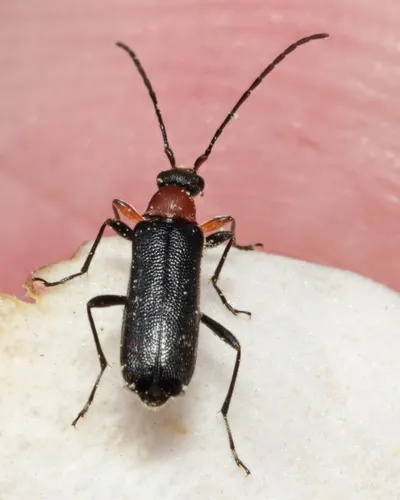
Grammoptera haematites
Grammoptera haematites
Identification: Typical form has dark elytra, orange pronotum and front femora. Yanega notes "head is black except for the clypeus, and the basal antennal segments and legs are mostly reddish (scape reddish beneath)". That source also notes the pale
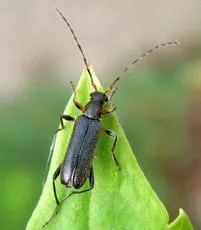
Grammoptera ruficornis
Grammoptera ruficornis
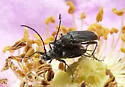
3-7mm - one of our smallest longhorn beetles. It is brownish or dark grey with silky hairs on the wing cases, giving it a sheen. It has long red/black banded antennae, where the 2nd segment is elongate - features which distinguish it from the other t
Grammoptera subargentata
Grammoptera subargentata
Identification: dorsal pubescens entirely dark (may be somewhat silvery on the pronotum); body always black but legs, antennal bases, and clypeus sometimes reddish ; see comment here
Graphisurus despectus
Graphisurus despectus
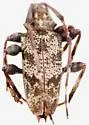
Identification: elytra ground color pale gray or brownish, covered by heavy dark speckling and crossed by irregular blackish band about two-thirds distance from base; elytral apices truncate but not emarginate (concave); scutellum glabrous (smooth; h
Graphisurus triangulifer
Graphisurus triangulifer
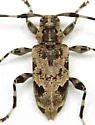
Identification: elytra with a large, irregular dark triangle beyond the middle, running from the outer margin to near the suture; and a small one near the apex. Det. M. A. Quinn, 2012 comes to UV lights
Hebestola pullata
Hebestola pullata
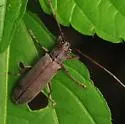
Identification: uniform, dull brown/gray (incl. ant.) plus elongate shape and unspined pronotum comes to lights (MV may work better than blacklight)
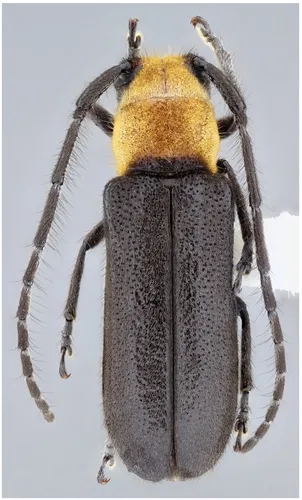
Hemierana rileyi
Hemierana rileyi
Identification: pronotum entirely orange on wide anterior area. HOLOTYPE Type Locality: Texas: Jeff Davis Co., Davis Mountain Preserve, Mount Livermore, Mount Livermore Road (2,400–2,500 m; 30.63467º N / 104.16899º W (± 350 m)), 17.VI.2014, E. G. Ril
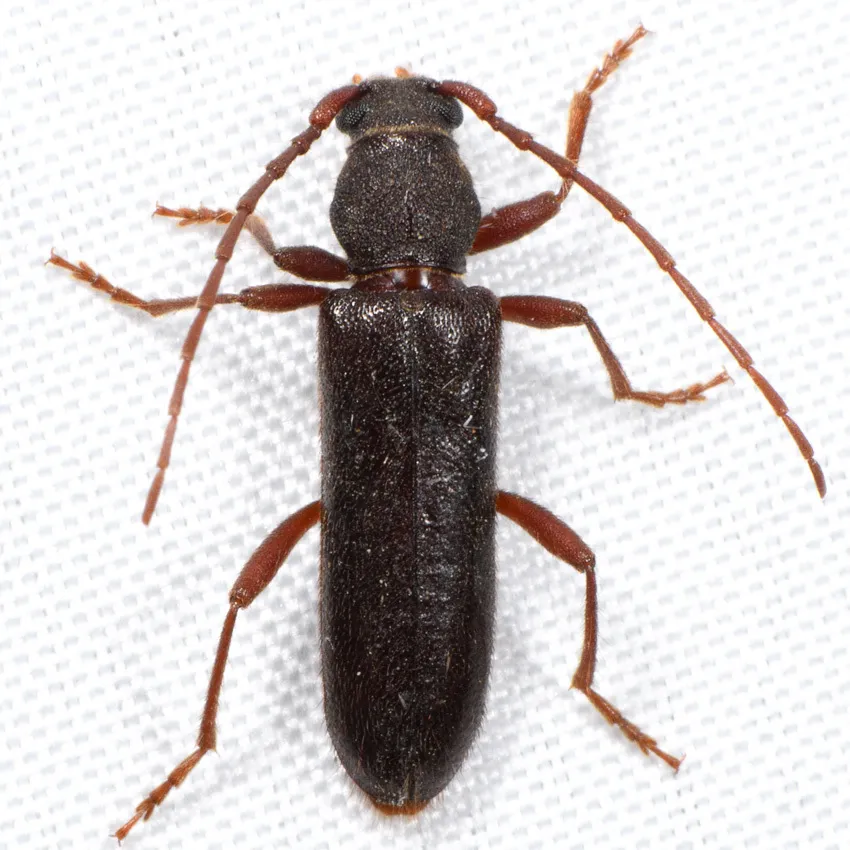
Hesperanoplium antennatum
Hesperanoplium antennatum
Hesperanoplium antennatum is a species of beetle in the family Cerambycidae. It was described by Linsley in 1932.
Hesperophanes pubescens
Hesperophanes pubescens
Hesperophanes pubescens (Hesperophanes pubescens) is a species in the family Cerambycidae, commonly known as longhorn beetles, belonging to the order Coleoptera (Beetles). It is classified within the subfamily Cerambycinae, tribe Hesperophanini, subo
Heterachthes nobilis
Heterachthes nobilis
not common in collections, mostly collected at lights or on decadent mesquite
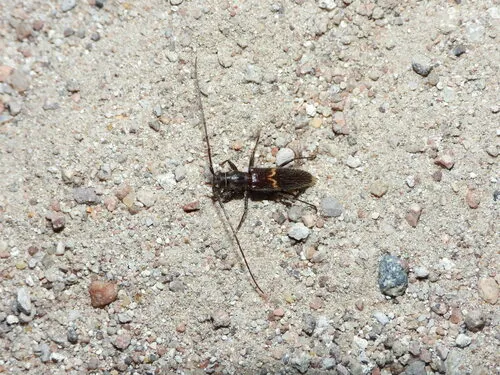
Heterachthes polingi
Heterachthes polingi
Type Locality: Described from a series of eight specimens, all taken by Mr. O. C. Poling in the Baboquivari Mts., Arizona.
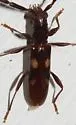
Heterachthes quadrimaculatus
Heterachthes quadrimaculatus
Heterachthes quadrimaculatus (Heterachthes quadrimaculatus) is a species in the family Cerambycidae, commonly known as longhorn beetles, belonging to the order Coleoptera (Beetles). It is classified within the subfamily Cerambycinae, tribe Ibidionini
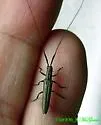
Hippopsis lemniscata
Hippopsis lemniscata
Identification: striped pronotum and long, thin antennae readily attracted to UV lights ( 5 )
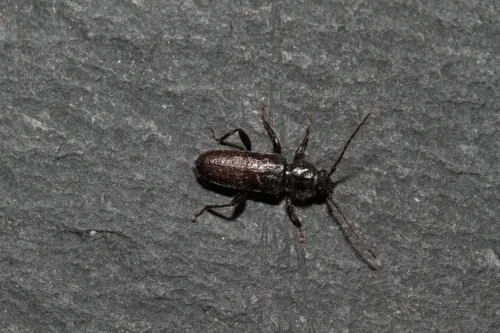
Old House Borer
Hylotrupes bajulus
This beetle is around 15 mm long and brown to black, sometimes appearing greyer because of a fine grey furriness on most of the upper surface. On the pronotum two conspicuously hairless tubercles are characteristic of the species. Unless identified b
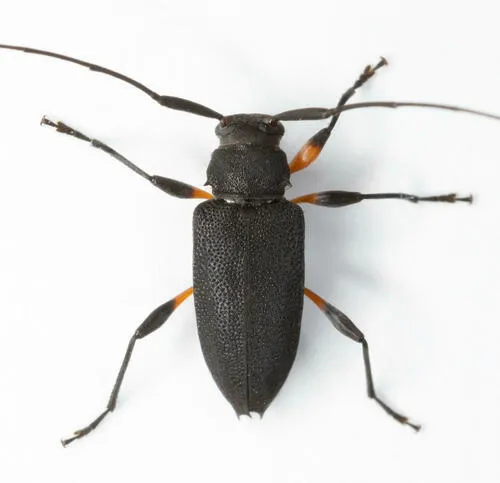
Hyperplatys femoralis
Hyperplatys femoralis
Hyperplatys femoralis (Hyperplatys femoralis) is a species in the family Cerambycidae, commonly known as longhorn beetles, belonging to the order Coleoptera (Beetles). It is classified within the subfamily Lamiinae, tribe Acanthocinini, suborder Poly
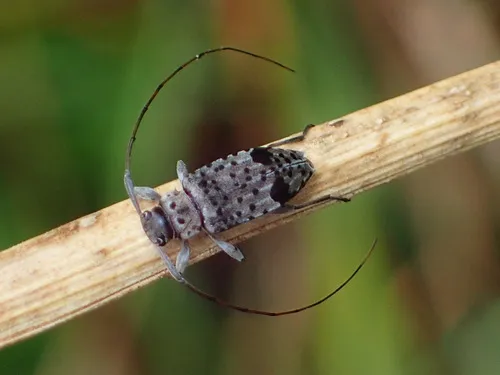
Hyperplatys maculata
Hyperplatys maculata
Identification: quite variable, numerous small black elytral spots, usually has pale elytral stripes, dark lateral stripe (often not visible from above), and always has large posterior spots Det. Marlin E. Rice, 2020
Hypexilis pallida
Hypexilis pallida
Identification: Det. M.A. QUinn, 2011 common at lights
Idiopidonia pedalis
Idiopidonia pedalis
Identification: dull, pubescent pronotum w narrow shiny midline Hind tibia distinctly longer than hind femur; long first hind tarsal segment Type Locality: Lake Superior
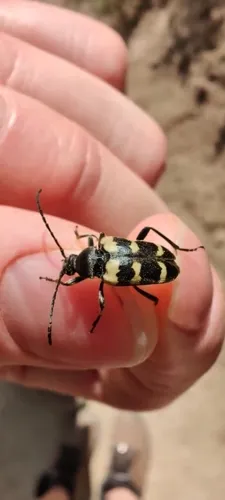
Black-banded Long-horned Beetle
Judolia gaurotoides
Judolia gaurotoides is a species of beetle in the family Cerambycidae. It was described by Casey in 1893.
Judolia instabilis
Judolia instabilis
Identification: Rather variable, with elytral patterns ranging from all-black to pale yellow with black spots (see Internet References below for photos of type specimen).
Judolia montivagans
Judolia montivagans
Identification: Pronotum black. Elytra black with cream to pale yellow marks. Wide cream stripe from base to about mid wing, lower border jagged and with 2 or 3 black oval marks through the middle – may vary. 2nd cream stripe on lower wings, both top
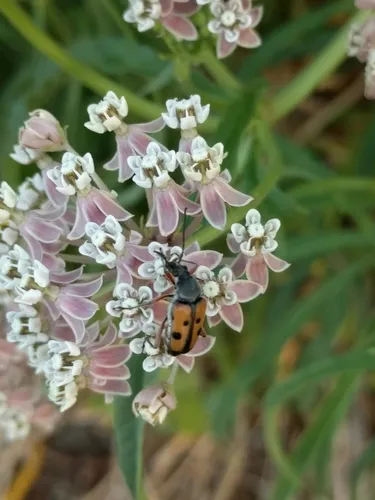
Judolia swainei
Judolia swainei
Judolia swainei is a species of beetle in the family Cerambycidae. It was described by Hopping in 1922.
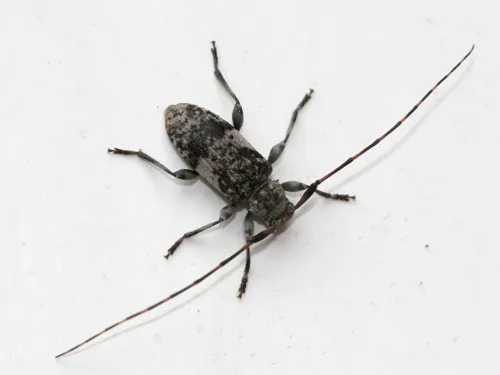
Black-clouded Longhorn Beetle agg.
Leiopus nebulosus agg.
In recent years Leiopus nebulosus has been split into two sibling species - namely Leiopus nebulosus and Leiopus linnei, which are best separated by examination of the genitalia. We have therefore treated the records below as an aggregate as it has n
Leptorhabdium pictum
Leptorhabdium pictum
Leptorhabdium pictum (Leptorhabdium pictum) is a species in the family Cerambycidae, commonly known as longhorn beetles, belonging to the order Coleoptera (Beetles). It is classified within the subfamily Lepturinae, tribe Xylosteini, suborder Polypha
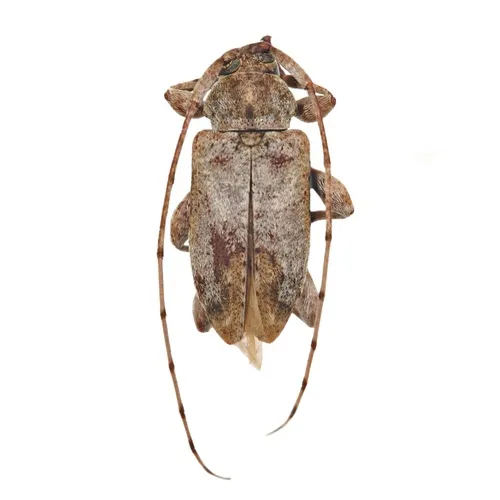
Leptostylus cretatellus
Leptostylus cretatellus
Identification: Leptostylus cretatellus Bates Det. E. G. Riley, 2009 Since 1989, numerous specimens have been taken in and near the Sabal Palm Grove Sanctuary, Brownsville, Cameron Co., TX by beating dead branches and rearing from dead branches of Te
Leptostylus transversus
Leptostylus transversus
Identification: Highly variable common, comes to lights
Leptura abdominalis
Leptura abdominalis
Identification: Large, coloration variable, from orangish to all black. Pronotum usually has two black spots. Antennae banded. Elytral tips spined. uncommon (BG data)
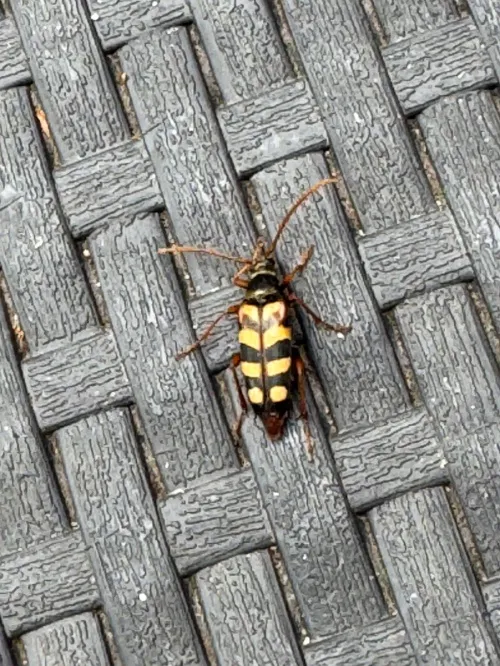
Leptura aurulenta
Leptura aurulenta
A large (up to 25mm) and striking longhorn beetle resembling the more frequent L. quadrifasciata . The yellow/orange markings on the elytra are usually a deeper orange and the pronotum has zones of yellow/orange hairs along the anterior and posterior
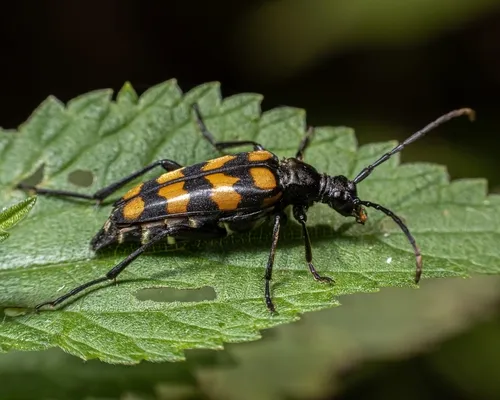
Four-banded Longhorn Beetle
Leptura quadrifasciata
Length 11 to 20 mm. Although the patterning varies it is a distinctive species, with the four yellow bands running across its elytra. It is associated with old woodland but can also be seen on flowers such as umbellifers. Most regularly encountered d
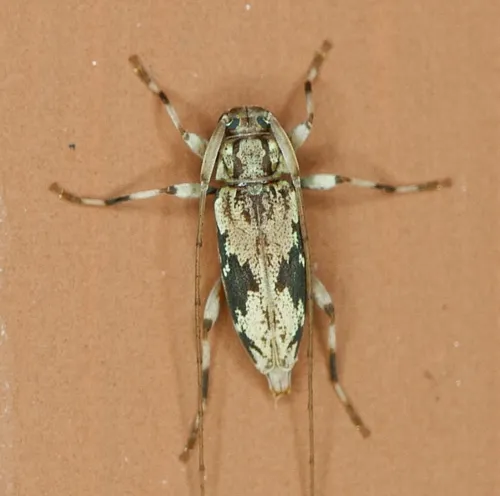
Lepturges angulatus
Lepturges angulatus
Lepturges angulatus (Lepturges angulatus) is a species in the family Cerambycidae, commonly known as longhorn beetles, belonging to the order Coleoptera (Beetles). It is classified within the subfamily Lamiinae, tribe Acanthocinini, suborder Polyphag
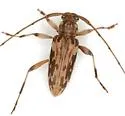
Lepturges infilatus
Lepturges infilatus
Identification: Det. E. G. Riley 2009 comes to lights ( 3 )
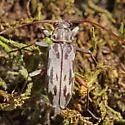
Lepturges pictus
Lepturges pictus
Identification: Elytra with dark markings incomplete and divided over lateral margin: Uncommon
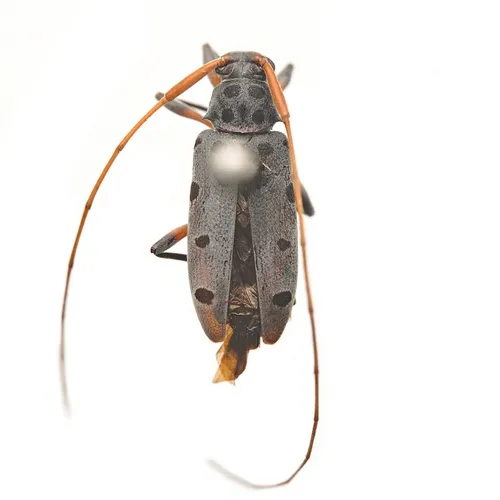
Large-spotted Buckeye Borer
Lepturges regularis
Identification: densely clothed with very short ash-colored pubescence; thorax with four rounded spots arranged in a square; elytra adorned with about 6 dark spots; antennae and femora tawny, the latter black at the tips; elytra rounded at the tips;
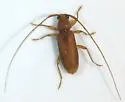
Lepturges yucca
Lepturges yucca
Type Locality: Palmerlee, Cochise Co., Arizona (Schaeffer 1905)
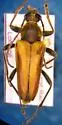
Lepturobosca chrysocoma
Lepturobosca chrysocoma
Identification: The very dense, appressed, metallic golden pubescence is distinctive
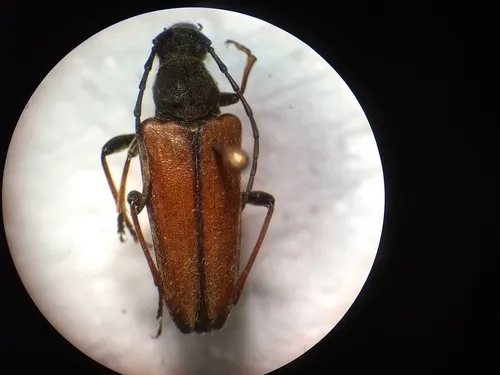
Lepturobosca nigrolineata
Lepturobosca nigrolineata
Lepturobosca nigrolineata is a species of beetle in the family Cerambycidae. It was described by Bland in 1865.
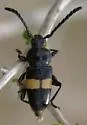
Lissonotus flavocinctus
Lissonotus flavocinctus
Adults have been taken at lights and in pitfall traps
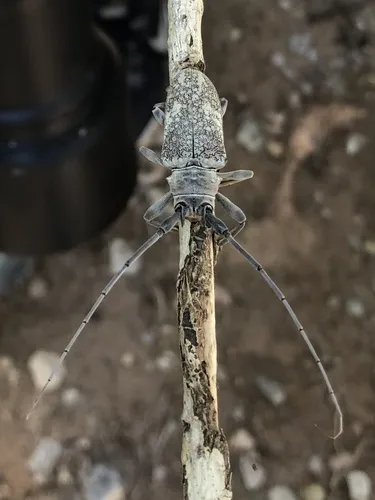
Southwestern Marbled Longhorn
Lochmaeocles marmoratus
Lochmaeocles marmoratus is a species of beetle in the family Cerambycidae. It was described by Casey in 1913. It is known from the United States and Mexico.
Lycochoriolaus lateralis
Lycochoriolaus lateralis
Identification: Two color forms, paler form uncommon Uncommon ( 4 )
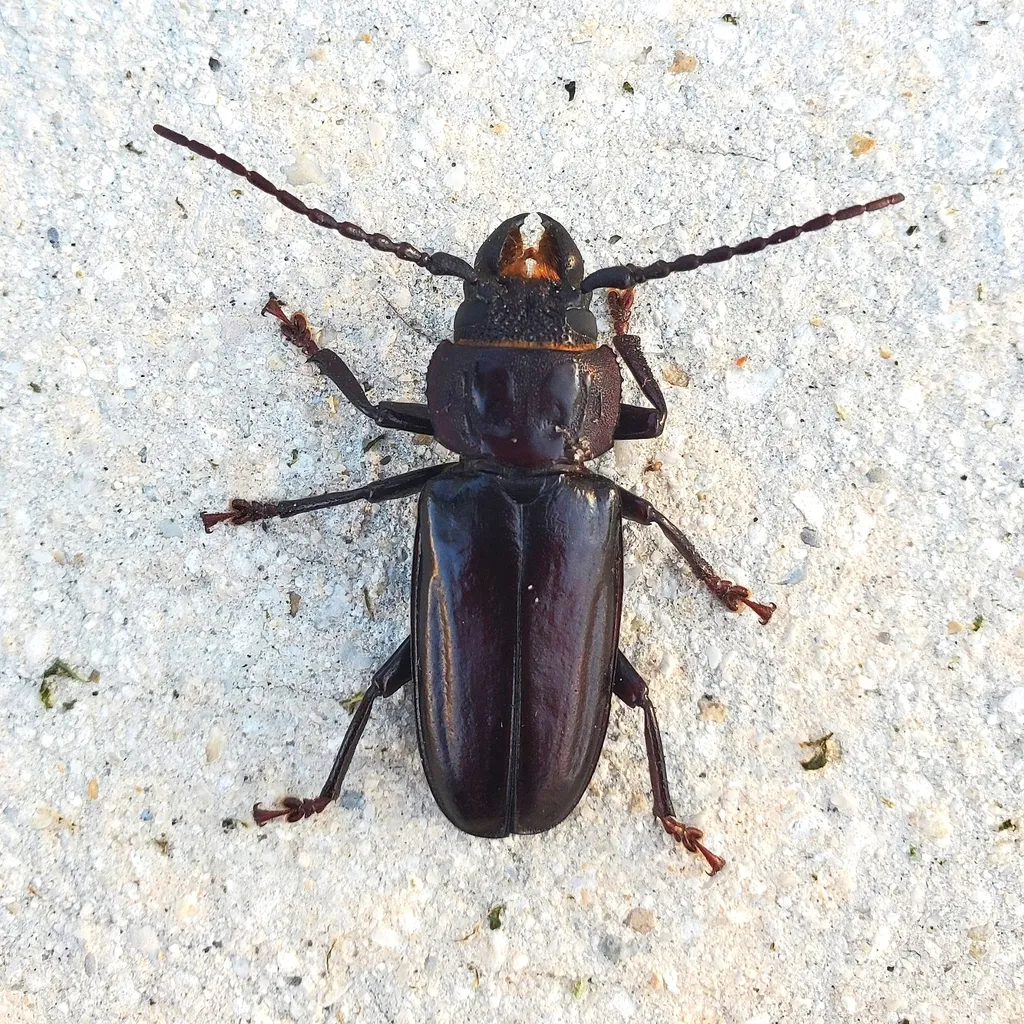
Hardwood Stump Borer
Mallodon dasystomus
Identification: Tubercles at the base of the antennae acute; mandibles nearly horizontal, prolonged in male, more or less carinate above, most bidentate and pubescent internally.
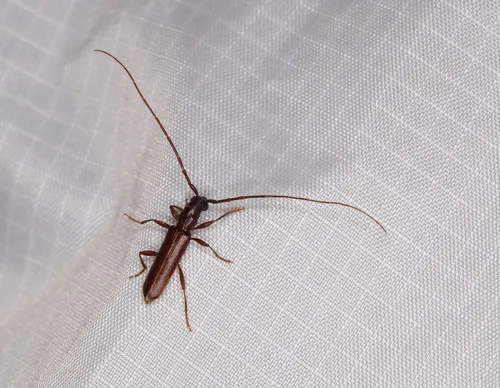
Malobidion brunneum
Malobidion brunneum
Malobidion brunneum is a species of beetle in the family Cerambycidae. It was described by Schaeffer in 1908.
Mecas bicallosa
Mecas bicallosa
Identification: bicallused pronoturm and abbreviated distal antennal segments
Mecas cana
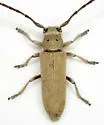
Mecas cana
Identification: pronotum w two small glabrous spots Det. M. A. Quinn, 2011
Mecas cineracea
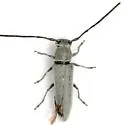
Mecas cineracea
Identification: Uniformly pale pubescence, tarsal claw teeth of unequal length Almost identical to the slightly larger M. confusa (KS-TX; possibly further east) in which tarsal claw teeth are of equal length Many historical records of ‘ M. inornata ’
Golden Aster Borer
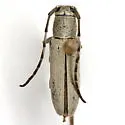
Mecas confusa
Identification: Note: tarsal claws with inner tooth almost as long as outer Det. L. E. Bezark, 1992 Type Locality: Luling, Gonzales Co., Texas
Mecas femoralis
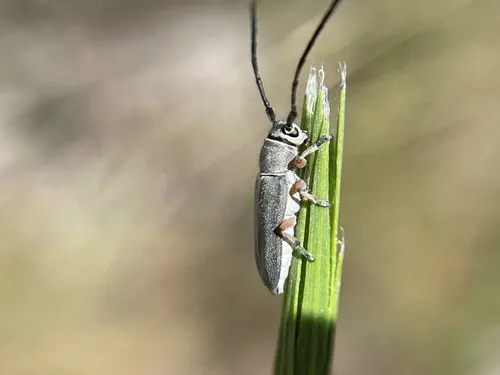
Mecas femoralis
Identification: small size, rather uniform pubescence, lack of pronotal calluses, and reddish femora rare in collections
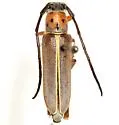
Mecas linsleyi
Mecas linsleyi
Type Locality: Bentsen-RGV State Park , Mission, Hidalgo Co., TX Type male and allotype female and paratypes collected on the foliage of Mexican devil-weed ( Aster spinosus Benth.) in Bentsen Rio Grande State Park, Hidalgo County, Texas, March 26, 19
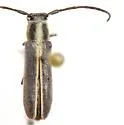
Mecas marginella
Mecas marginella
Identification: The absence of pronotal calluses [glabrous spots] and the distinctive yellowish pubescent pronotum and elytral longitudinal bands make this species easily recognizable. Det. M. A. Quinn, 2014
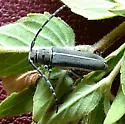
Mecas menthae
Mecas menthae
Identification: distinctive in the rather uniform grayish pubescence and the narrow bands of dense apperssed pubescence along the lateral and sutural margins
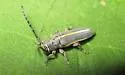
Mecas pergrata
Mecas pergrata
Identification: The five glabrous pronotal spots, the densely pubescent pale suture and lateral elytral margins, and the reddish femora will readily distinguish this species. In certain parts of the range, the elytra tend to be reddish down the disk
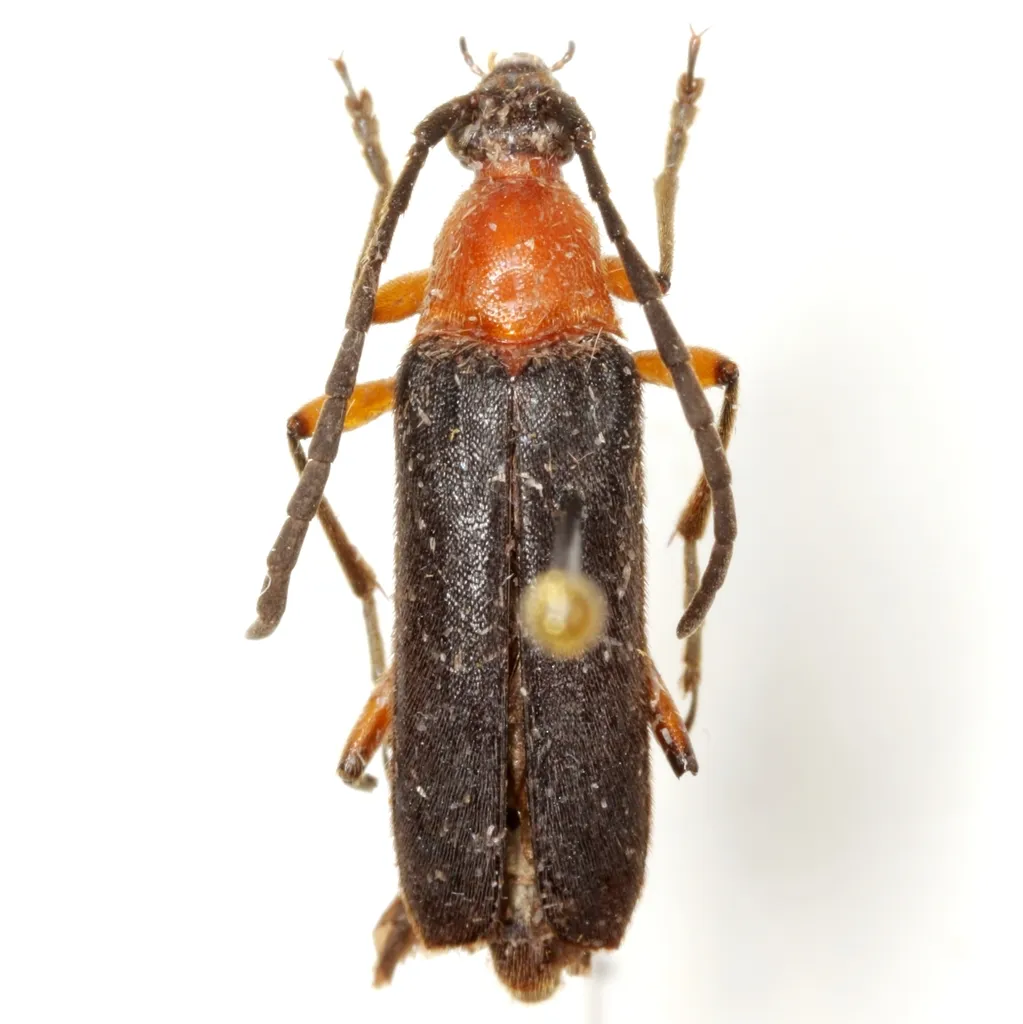
Megachoriolaus texanus
Megachoriolaus texanus
Identification: Key to spp. Giesbert & Hovore 1998 Described from one female specimen collected in the Davis Mountains, Texas, July 3, 1940, by D.J. and J.N. Knull. (Knull 1941)
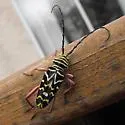
Hickory Borer
Megacyllene caryae
Identification: elytral bands typically narrow and alternating white & yellow ; metepisternum with white or yellow pubescence divided at middle comes to lights
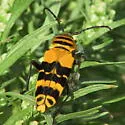
Amorpha Borer
Megacyllene decora
Identification: Extremely variable basal yellow bands mostly fused (left)
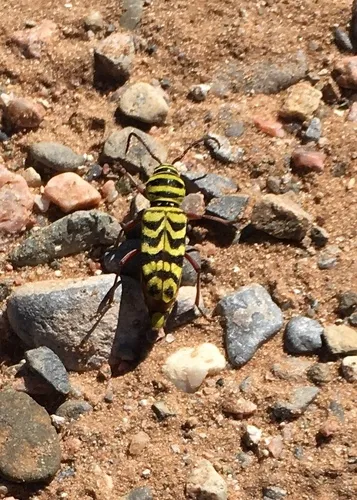
Megacyllene snowi
Megacyllene snowi
Megacyllene snowi is a species of beetle in the family Cerambycidae. It was described by Casey in 1912.
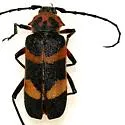
Texas Canyon Longhorn Beetle
Megapurpuricenus magnificus
Adult appear to emerge in response to summer "monsoon" rains. Adult daily activity largely restricted to 9 a.m. to 12 noon. Largest flights occur on warm sunny mornings following rain, decreasing each dry day but increasing again after additional rai
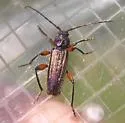
Meriellum proteus
Meriellum proteus
Hanley collected several specimens of this species in 2014 in a stand of Colorado Spruce trees in Minot, North Dakota. The trees had been inundated by floodwaters in 2011 and had been in decline since that flood, and were subsequently removed. no oth
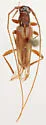
Methia aestiva
Methia aestiva
Identification: Combination of the following characters: no longitudinal ridge on stridulatory plate; eyes nearly contiguous on vertex of head; elytra nearly as long as abdomen. The genus Methia consists of a number of species difficult to determine.
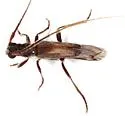
Methia arizonica
Methia arizonica
Identification: Det. Bruce Tilden, 2024 Type Locality: Rincon Mountains, Pima Co., Arizona
Michthisoma heterodoxum
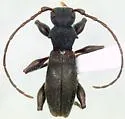
Michthisoma heterodoxum
Identification: body shape and sculpture unique rare
Micranoplium unicolor
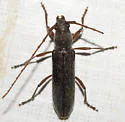
Micranoplium unicolor
Identification: The combination of truncate elytral apices without spines, the lack of spines on the antennomeres, the evenly distributed pubescence with none in patches, and the pronotum without callosities, characterize this species. - Robert Andro
Microclytus compressicollis
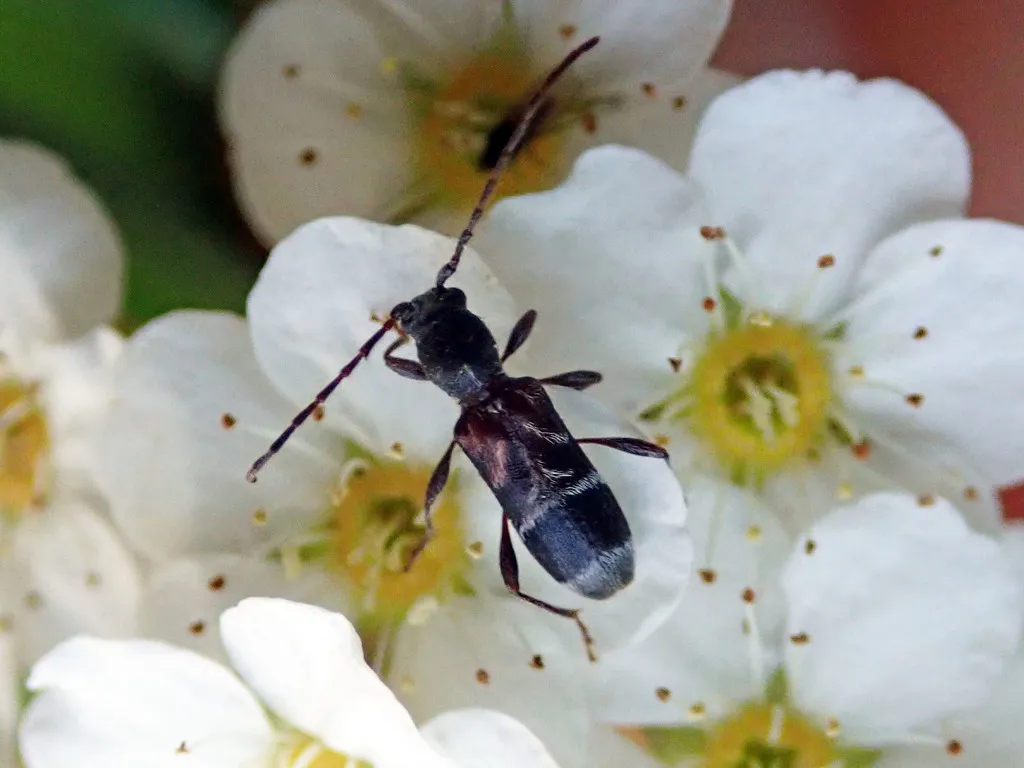
Microclytus compressicollis
Microclytus compressicollis is a species of longhorn beetle in the Cerambycinae subfamily. It was described by Laporte and Gory in 1835. It is known from northeastern North America.
Molorchus longicollis
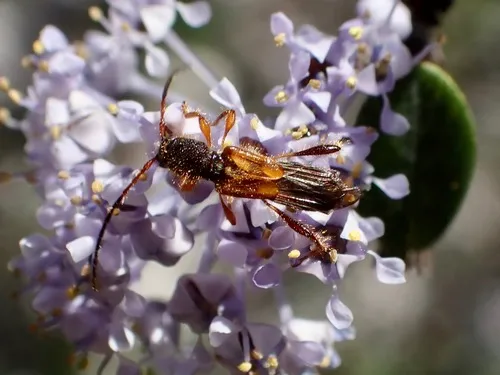
Molorchus longicollis
Molorchus longicollis is a species of beetle in the family Cerambycidae. It was described by John Lawrence LeConte in 1873.
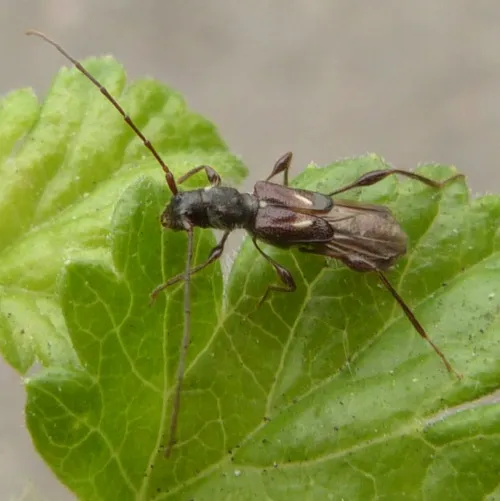
Molorchus minor
Molorchus minor
One of two British longhorns with the elytra very short, leaving the hind wings extensively exposed, and swollen tips to the femorae. The other is Glaphyra umbellatarum. M. minor averages larger (up to 16mm long) with a reddish elytra bearing a pair
Moneilema armatum
Moneilema armatum
Identification: pronotal spines smaller than antennomere 9, but note variation shown here
Moneilema blapsides
Moneilema blapsides
Identification: can be all black: Cerambycidae Catalog Type Locality: Texas