
Balsam Fir Sawyer
Monochamus marmorator
This record describes Monochamus marmorator (species). Recorded family: Cerambycidae. Recorded order: Coleoptera.
Identification and Appearance
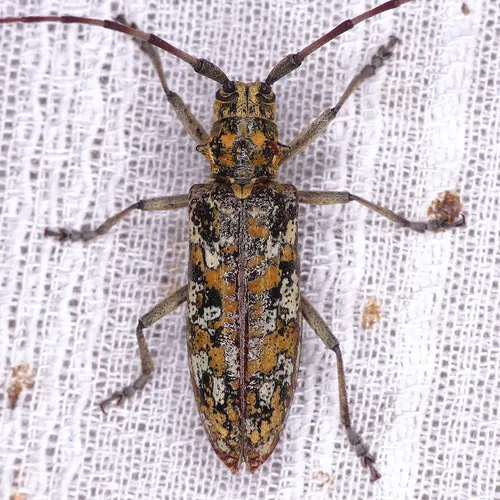
Comments on original guide page: How these beauty sings When i captured this bug, it was in a ziploc bag and it sang for me. I do have a little movie of this performance, and i would love to know if i could add it to this site, as reference information, and if yes, how? Also, anyone could explain to me this singing phenomenon? Does all the Cerambycidae sing? … Ayla01, 27 June, 2007 - 3:06pm Cellulose digestion for Monochamus marmorator I thought this information could prove useful to many. Larvae of the balsam fir sawyer, Monochamus marmorator Kby.^(Coleoptera, Cerambycidae), contain midgut digestive enzymes active against hemicellulose and cellulose.^Cellulases from larvae fed on balsam fir wood infected with the fungus, Trichoderma harzianum Rifai (Deuteromycetes, Moniliales, Moniliaceae), were found to be identical to those of the cellulase complex produced by this fungus when compared using chromatography, electrophoresis, and isofocusing.^When larvae are maintained on a fungusfree diet, their midgut fluids lack cellulolytic activity, and they are unable to digest cellulose.^Cellulolytic capacity can be restored by feeding the larvae wood permeated by fungi.^We conclude that the enzymes which enable M. marmorator larvae to digest cellulose are not produced by the larvae.^Instead, the larvae acquire the capacity to digest cellulose by ingesting active fungal cellulases while feeding in fungus-infected wood. reference: http://www.osti.gov/energycitations/product.biblio.jsp?osti_id=7058239 … Ayla01, 27 June, 2007 - 3:02pm
Classification
- Kingdom
- Animalia
- Phylum
- Arthropoda
- Class
- Insecta
- Order
- Coleoptera (Beetles)
- Suborder
- Polyphaga
- Superfamily
- Chrysomeloidea
- Family
- Cerambycidae (Longhorn Beetles)
- Subfamily
- Lamiinae
- Tribe
- Monochamini
- Genus
- Monochamus (Sawyers)
Imported taxonomy record. Source availability varies; see the source references and editorial policy below.
About Primitive Winged Insects: the wider group
Order-level background for Coleoptera, the group containing Monochamus marmorator. Species-specific details appear above.
Group overview
Coleoptera is the largest order of insects with over 400,000 described species, representing ~25% of all known animal species and ~40% of all insects. In the U.S. alone, nearly 30,000 beetle species have been identified.
Ecological role of the group
Beetles are prominent decomposers, especially in forests, breaking down dead wood and recycling nutrients. As predators, they reduce populations of pest insects. Many species are also important pollinators of flowering plants.
Economic and practical significance of the group
Beetles have major economic significance: leaf beetles (Chrysomelidae) and weevils (Curculionoidea) are among the most destructive agricultural pests globally, costing billions annually, while predatory species like ladybugs provide natural pest control.
Recorded sources for this group: Britannica, Smithsonian, NCSU Entomology. Imported estimates may describe particular regions or reporting periods.
Photos of Balsam Fir Sawyer (2)
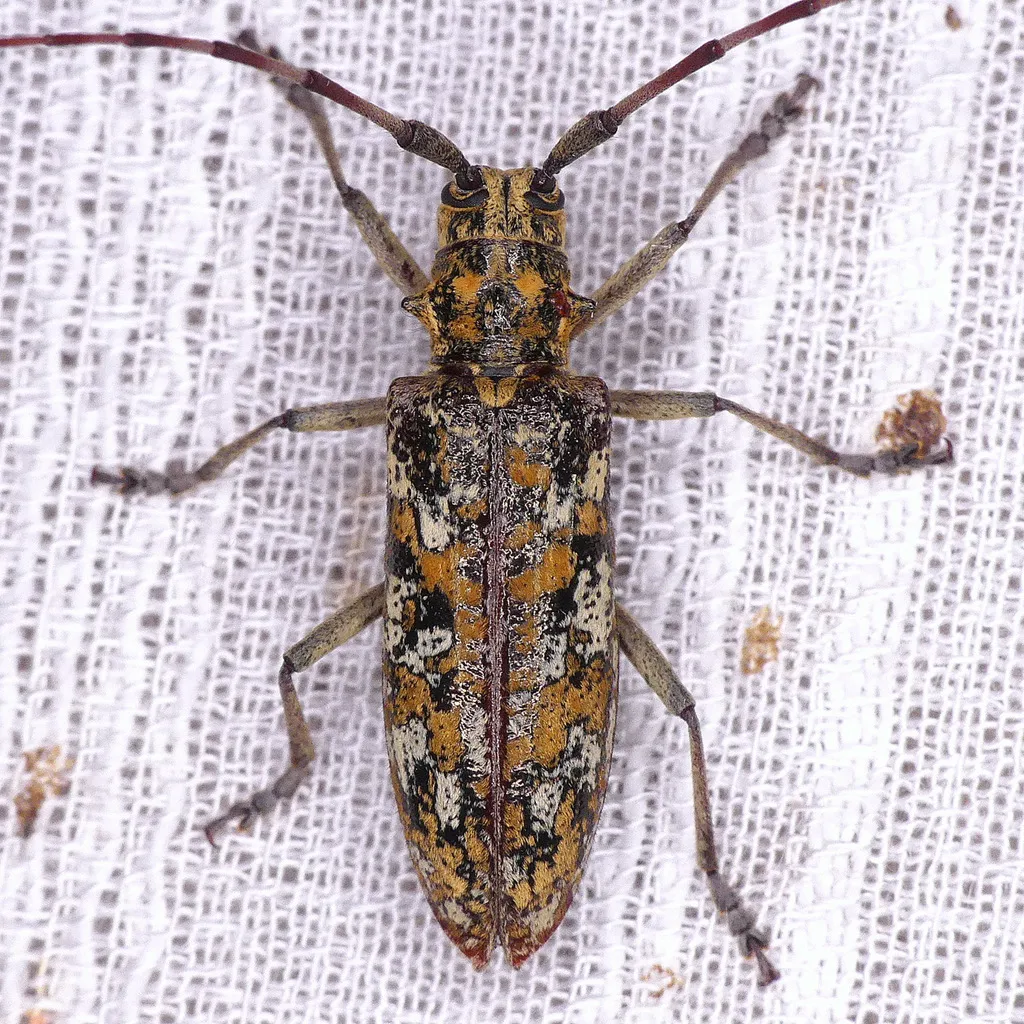
Photo credits: Contributed by john and jane balaban; Additional contributions by cotinis