
Family Tortricid Moths (Tortricidae)
Tortricidae is a family in the order Lepidoptera. Browse 1,247 named species recorded in this family, or open an individual profile for its available identification and natural-history information.
Species in Tortricidae (1,247)
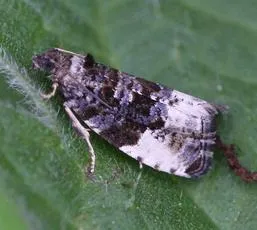
Plum Tortrix
Hedya pruniana
Wingspan 15-18 mm. This species closely resembles H. nubiferana but can be distinguished by the difference in position of the two blackish dots on the white of the forewing. The larvae feed on various forms of Prunus including Blackthorn and Plum. Fa
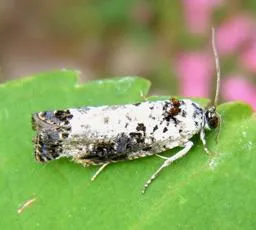
Hedya salicella
Hedya salicella
Wingspan 19-24 mm. A large and distinctive Hedya species, showing large areas of white and a distinctive chestnut and grey crest on the thorax. Various habitats and especially where the food plants are present. The moth flies from June through August
Pink-washed Leafroller - Hodges#2860
Hedya separatana
Identification: Head and palpi black, antenna fuscous, legs grayish-white, banded. Forewing: outer two-fifths pale lilaceous-white, with four pale fuscous costal streaks and a shade of the same color before termen. A small black dot in middle of wing
Henricus edwardsiana - Hodges#3797
Henricus edwardsiana
Identification: Adult - see original description in Print References. Also see Razowski.
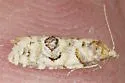
Henricus infernalis - Hodges#3799
Henricus infernalis
Identification: The original description as Commophila infernalis Heinrich, is available in PDF , and online in the print references below. Also see Razowski.
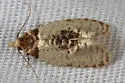
Henricus umbrabasana - Hodges#3801
Henricus umbrabasana
Identification: Adult - see original description in Print References. Specimens identified by DNA analysis:
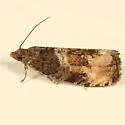
Impudent Hulda - Hodges#2747
Hulda impudens
Identification: Adult - see original description in Print References.
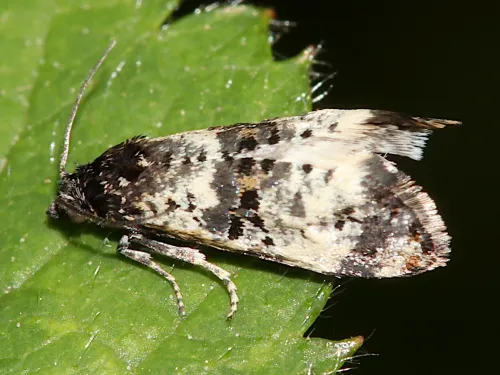
Hysterophora maculosana
Hysterophora maculosana
Wingspan 10 to 14 mm. Although the sexes are superficially similar, the hindwings of the males are whitish, whereas those of the female are dark. Occupying woodland habitat especially bluebell woods. The adults fly in May and June, the larvae subsequ
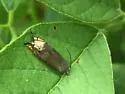
Hystrichophora loricana - Hodges#3397
Hystrichophora loricana
Identification: Adult - recognized by the projecting apex, prominent orange markings, and strong metallic reflections of the forewing. ( 4 )
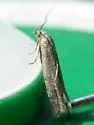
Hystrichophora stygiana - Hodges#3391
Hystrichophora stygiana
Identification: Adult - variable, nearly black to gray, light tan to whitish. ( 3 )
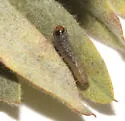
Hystrichophora taleana - Hodges#3395
Hystrichophora taleana
Heinrich did not include this species in his revision of Eucosminae as he found it "impossible to recognize from the description." ( 4 )
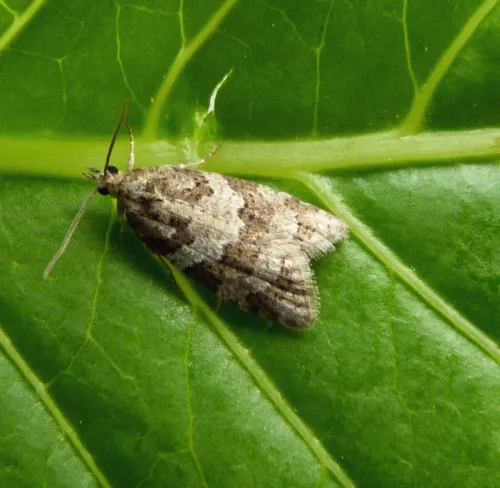
Isotrias rectifasciana
Isotrias rectifasciana
Wingspan 11 to 16 mm. This species is sexually dimorphic, with the males being generally larger and with less distinct forewing markings. The adult moths fly in May and June, from dusk onwards. The life history of the early stages is imperfectly know
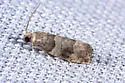
Larisa's Tortrix - Hodges#3423
Larisa subsolana
Identification: FW length is approximately 2.8 X width; ground color of upper side brown; basal patch sharply delineated; middle cross-band grayish brown, grading apically to darker brown, a thin brown line centrally from costa to dorsum; distal thir
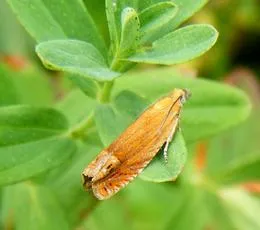
Lathronympha strigana
Lathronympha strigana
Wingspan 14-18 mm. A distinctive species with bright orange-rufous forewings and several greyish metallic markings towards the rear of the wing. It frequents open woodland and similar areas. The adults fly at sunrise and later from dusk onwards. They
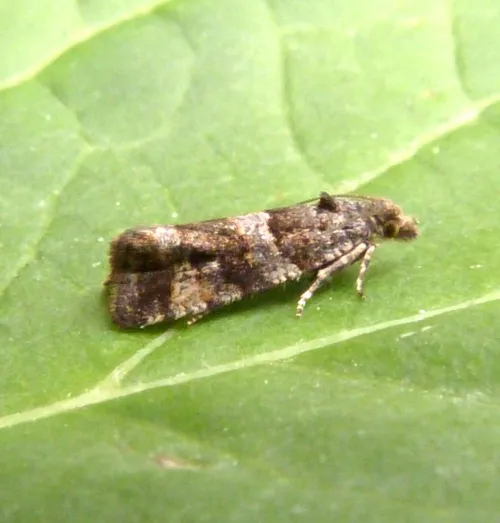
Lobesia abscisana
Lobesia abscisana
Wingspan 10-13 mm. A smallish moth with brown and white markings and darker than related species. Rough grassland where Creeping Thistle is present. The adults fly in May and again in July and August. Flying from dusk onwards, they are attracted to l
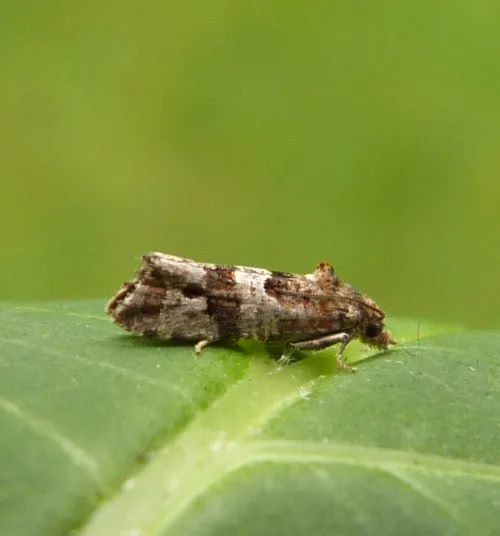
Lobesia littoralis
Lobesia littoralis
Generally a coastal species, this moth can also be found inland in gardens, due to its foodplant preference for Thrift. The species has two generations, with moths emerging in June and July, and again in September. The adults can be seen in late afte
Lobesia spiraeae - Hodges#2729
Lobesia spiraeae
Lobesia spiraeae (McDunnough, 1938), described as a subspecies of Lobesia bicinctana (Duponchel, 1843), extralimital (Palearctic), is raised to full species in Gilligan et al..
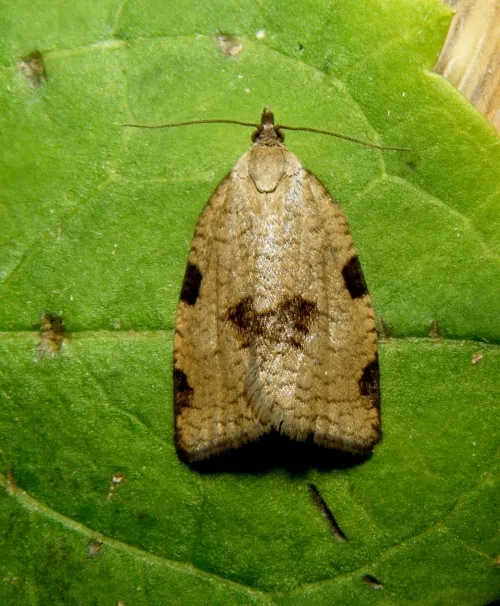
Lozotaenia forsterana
Lozotaenia forsterana
Wingspan 20-29 mm. This is one of the largest of the Tortricidae and has boldly spotted grey-brown wings. Mainly suburban habitats such as parks and gardens The adults fly at night during June and July The larvae feed on a variety of trees and shrubs
Lozotaenia hesperia - Hodges#3673
Lozotaenia hesperia
Identification: Adult - grey with fine dark grey lines throughout. Median band is distinctive, but is obliterated near the middle of the wing. Dark grey marking on the costa in the post median area. The hindwing is light grey with slightly darker gre
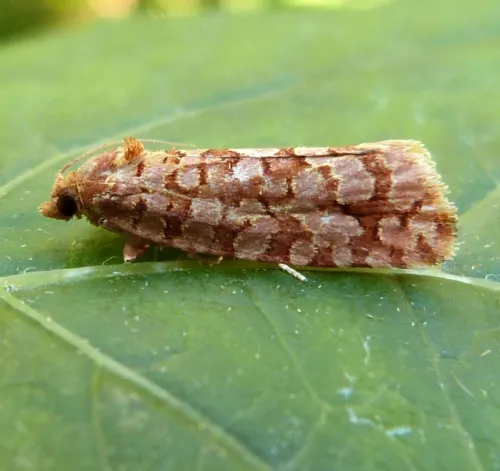
Lozotaeniodes formosana
Lozotaeniodes formosana
Wingspan 20-26 mm. A distinctive and very attractive species. Shows a preference for Scots Pine woodland. It flies from dusk onwards between June and August, and is attracted to light. Mainly recorded in the southern half of Britain. In the Butterfly
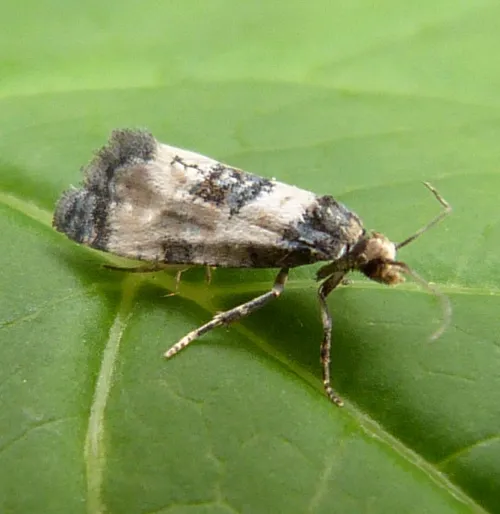
Neocochylis dubitana
Neocochylis dubitana
Wingspan about 13 mm. It can be distinguished from two similar relatives by the white head and blackish thorax. Most likely to be encountered where the larval foodplants are plentiful. It seems to prefer dry limestone areas in some regions. This spec
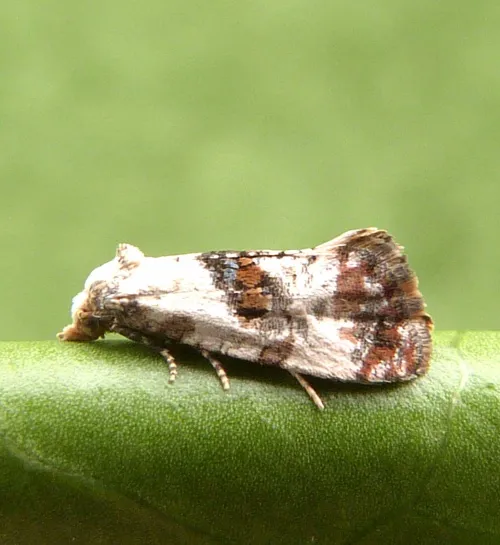
Neocochylis hybridella
Neocochylis hybridella
Wingspan 12 to15 mm. This species has a whitish thorax when fresh, which can be used to separate it from similar Cochylis species. Flying in July and August, the moths are on the wing from dusk onwards. The larvae feed within the seedheads of ox-tong
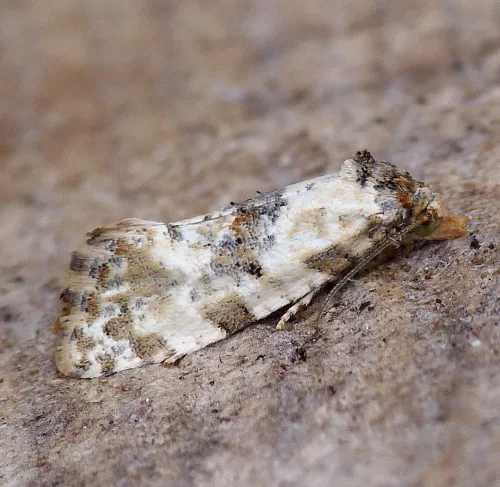
Neocochylis molliculana
Neocochylis molliculana
Forewing length 6 to 8 mm. Head and thorax are yellowish brown mottled darker brown. Forewing is creamy with pale orangey brown and pale greyish brown suffusion, especially before termen; a broad oblique cross band from the dorsum at one half. Variou
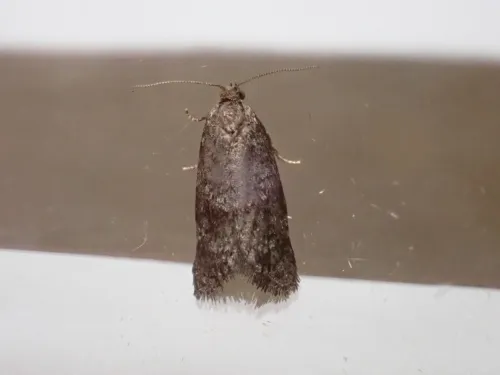
Neosphaleroptera nubilana
Neosphaleroptera nubilana
Wingspan about 14 mm. A rather nondescript-looking species. Determination by gen det may be needed for this species. It inhabits gardens and hedgerows, where the foodplants Hawthorn and Cherry occur. It also sometimes feeds on Apple. The adult moths
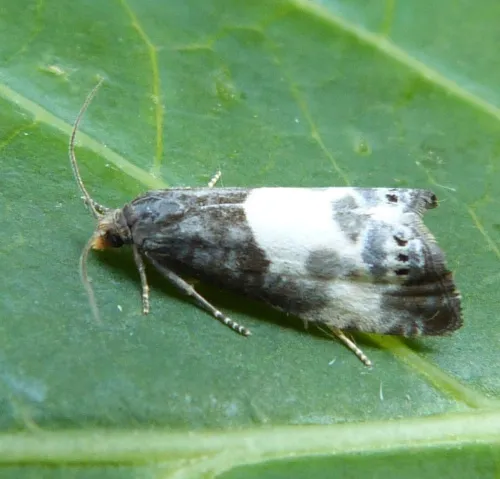
Notocelia cynosbatella
Notocelia cynosbatella
Wingspan 16-22 mm. The yellow labial palps of this moth readily distinguish it from several quite similar species. Flies, mainly at night, from May to July, but can easily be disturbed during the day. The larvae feed mainly on a variety of wild and c
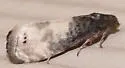
Notocelia illotana - Hodges#3210
Notocelia illotana
Identification: Male genitalia: see Heinrich (1923: fig.281) ( 3 ) .
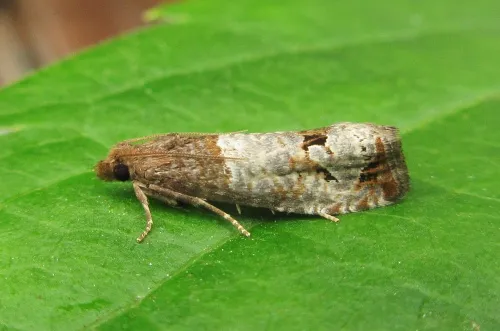
Notocelia roborana
Notocelia roborana
Gardens, parks and other areas where rose species are found. Moths are at large between June and August. The larva feeds mainly on Rose (Rosa), forming a spinning amongst the leaves or shoots. It is fairly common and well distributed through the Brit
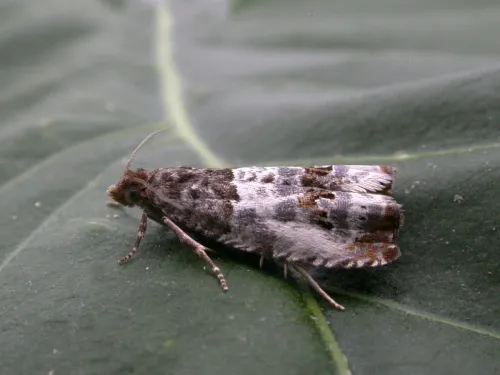
Notocelia rosaecolana
Notocelia rosaecolana
Wingspan 16 to 20 mm. One of three very similar species, also including E. trimaculana and E roborana. It is generally larger than trimaculana and has broader wings and a more strongly curved costa. The dark area at the base of the wing is less dark
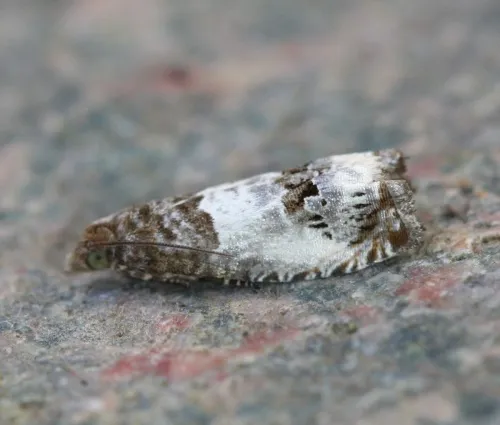
Notocelia trimaculana
Notocelia trimaculana
Wingspan 15-17 mm. Another of the very similar Epiblema species, the distinctive tawny markings towards the outer part of the forewing help to identify this moth. ALERT: It has been highlighted very recently that the identification of Notocelia trima
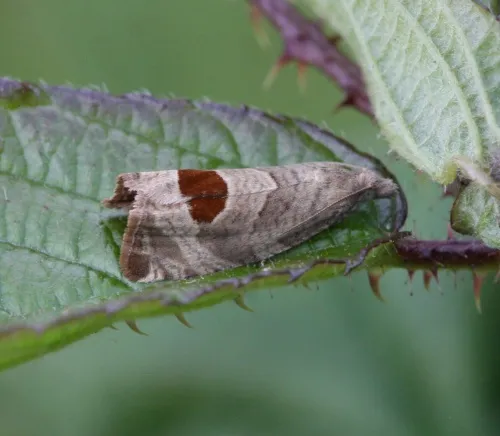
Bramble Shoot Moth
Notocelia uddmanniana
Easily distinguished by the chocolate-brown blotch on the forewing, contrasting with a greyish brown ground colour. Woodland and hedgerows where Bramble occurs. Adults are on the wing in June and July. The food plants are Bramble, and other Rubus spe
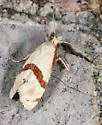
Nycthia pimana - Hodges#3852
Nycthia pimana
Identification: Specimen identified by DNA analysis:
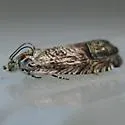
Ofatulena duodecemstriata - Hodges#3444
Ofatulena duodecemstriata
Identification: Adult - see original description in Print References. Ofatulena luminosa can be separated by color and pattern. However, there are three BINs at BOLD for O. duodecemstriata and O. luminosa : AAD3346 - Ofatulena duodecemstriata AAD3348
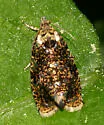
Olethreutes albiciliana - Hodges#2832
Olethreutes albiciliana
One of several Nearctic Olethreutes s. l. species with iridescent spots on the forewings: [missing] [missing] [missing] astrologana coruscana ferrolineana metallica nordeggana sordidana galaxana [missing] sider
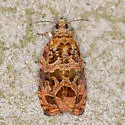
Olethreutes appalachiana - Hodges#2797
Olethreutes appalachiana
Identification: Similar to Olethreutes hippocastanum but browner in appearance. See comment for below:
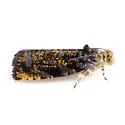
Gold-headed Leafroller - Hodges#2830
Olethreutes auricapitana
Identification: Adult - Except for gold edging along the apex and lustrous blue-gray interfascial scaling, the forewing appears black. ( 3 ) . DNA analysis at BOLD indicates there are two species going under this name. It appears that true auricapita
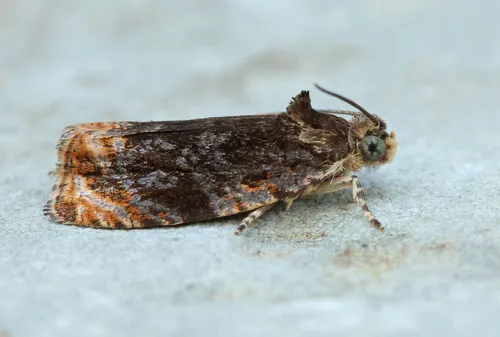
Olethreutes concinnana - Hodges#2822
Olethreutes concinnana
Olethreutes concinnana - Hodges#2822 (Olethreutes concinnana) is a species in the family Tortricidae, commonly known as tortricid moths, belonging to the order Lepidoptera (Butterflies and Moths). It is classified within the subfamily Olethreutinae,
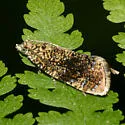
Olethreutes coruscana - Hodges#2838
Olethreutes coruscana
One of several Nearctic Olethreutes s. l. species with iridescent spots on the forewings: [missing] [missing] [missing] astrologana coruscana ferrolineana metallica nordeggana sordidana galaxana [missing] sider
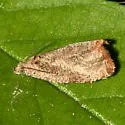
Olethreutes corylana - Hodges#2805
Olethreutes corylana
Identification: The original description as Eccopis corylana Fernald is available online in the print references below. Dark brown subapical spot. Fringe is purple mixed with brownish gray.
Olethreutes diallacta - Hodges#2798
Olethreutes diallacta
Identification: See Heinrich (1926) ( zelleriana ) and Zeller (1875) ( nitidanum ). Locally common
Olethreutes exaeresimum - Hodges#2825
Olethreutes exaeresimum
Identification: Specimen identified by DNA analysis (BOLD). ( 3 )
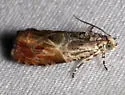
Olethreutes fagigemmeana - Hodges#2809
Olethreutes fagigemmeana
Olethreutes fagigemmeana - Hodges#2809 (Olethreutes fagigemmeana) is a species in the family Tortricidae, commonly known as tortricid moths, belonging to the order Lepidoptera (Butterflies and Moths). It is classified within the subfamily Olethreutin
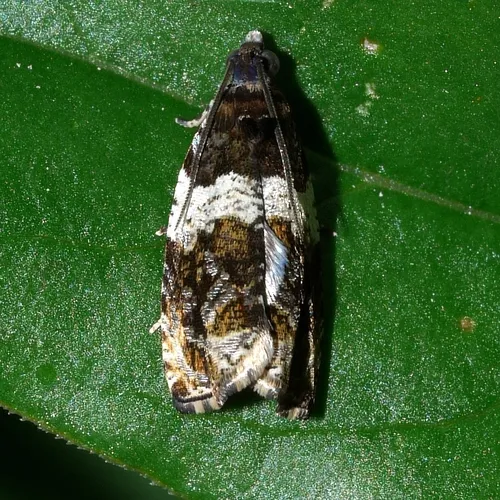
Banded Olethreutes Moth
Olethreutes fasciatana
Olethreutes fasciatana is a moth of the family Tortricidae. It is known from North America, including Alabama, Illinois, Maryland, Massachusetts, New Jersey, New York, North Carolina, Ohio, Oklahoma, Pennsylvania and Wisconsin.
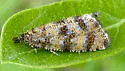
Olethreutes galaxana - Hodges#2835
Olethreutes galaxana
One of several Nearctic Olethreutes s. l. species with iridescent spots on the forewings: [missing] [missing] [missing] astrologana coruscana ferrolineana metallica nordeggana sordidana galaxana [missing] sider
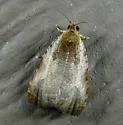
Inornate Olethreutes - Hodges#2788
Olethreutes inornatana
Identification: Adult - forewing pale yellowish or silvery-gray with scattered black speckling; dark shading around perimeter (along outer margin and mid-way along costa) may extend inward to cover more of wing surface in some individuals; thorax che
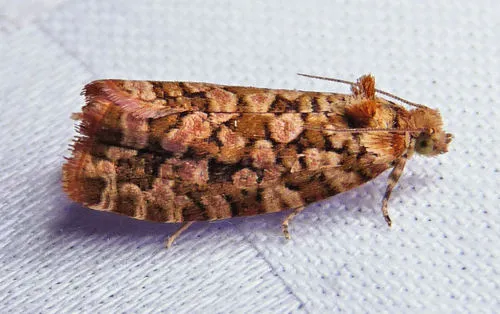
Olethreutes monetiferanum - Hodges#2774
Olethreutes monetiferanum
Olethreutes monetiferanum - Hodges#2774 (Olethreutes monetiferanum) is a species in the family Tortricidae, commonly known as tortricid moths, belonging to the order Lepidoptera (Butterflies and Moths). It is classified within the subfamily Olethreut
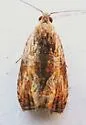
Variable Nigranum - Hodges#2800
Olethreutes nigranum
Identification: Adult - highly variable. Kearfott curated specimens as four separate species that Heinrich combined based on genitalia. Genitalia:
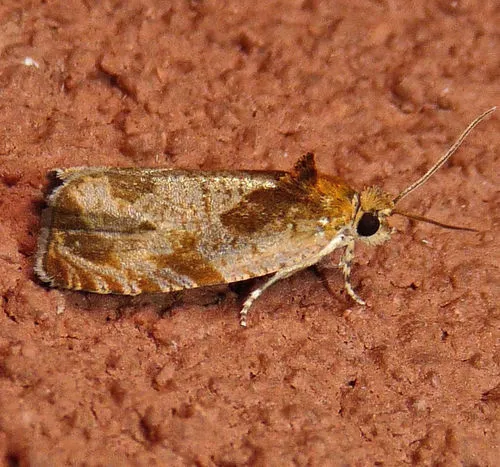
Olethreutes ochrosuffusanum - Hodges#2806
Olethreutes ochrosuffusanum
Olethreutes ochrosuffusanum - Hodges#2806 (Olethreutes ochrosuffusanum) is a species in the family Tortricidae, commonly known as tortricid moths, belonging to the order Lepidoptera (Butterflies and Moths). It is classified within the subfamily Oleth
Olivaceous Olethreutes - Hodges#2778
Olethreutes olivaceana
Identification: Adult - forewing variably greenish-yellow to overall brownish with greenish cast; noticeable greenish-yellow patch midway along inner margin; AM band slight paler than ground color but shows little contrast against it; several short o
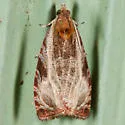
Olethreutes quadrifidum - Hodges#2794
Olethreutes quadrifidum
Identification: Adults - olivaceous brown in color with somewhat darker apical and mid costal patches.
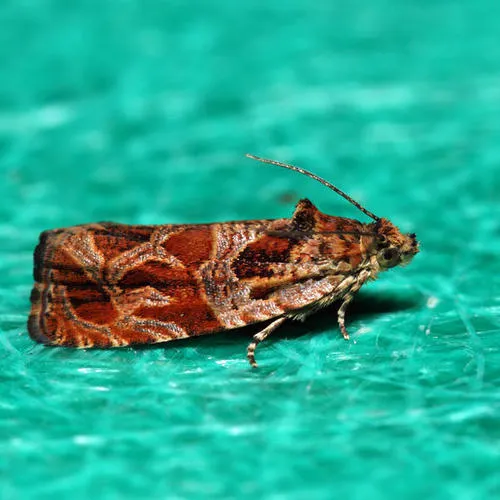
Olethreutes sericoranum - Hodges#2810
Olethreutes sericoranum
Pohl, et al. (2016) list O. myricana as a synonym. However, there is taxonomic confusion with those names and baccatana , and synonymization may be unwarranted (M. Sabourin, pers. comm.) For now, I have placed my specimens reared from bayberry ( Myri
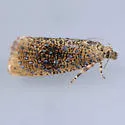
Olethreutes sordidana - Hodges#2834
Olethreutes sordidana
Identification: McDunnough, 1922) original description, "Size and general maculation of glitranana Kft. but of a much darker appearance, due to the fact that the pale areas between the dark bands are only slightly lighter in color than the bands them
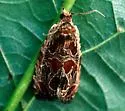
Basswood Olethreutes - Hodges#2795
Olethreutes tilianum
Identification: Miller (1987) has forewing and genitalia illustrated. ( 4 )
Olethreutes turfosana - Hodges#2851
Olethreutes turfosana
For over 120 years known as O. intermistana (Clemens) in North America. Synonymy with O. turfosana (Herrich-Schäffer) in Jalava & Miller (1998).
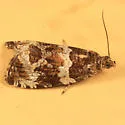
Olethreutes valdanum - Hodges#2812
Olethreutes valdanum
Identification: Adult - easily recognized by the narrow, clear white antemedian and postmedian areas bordering the broad median fuscous band.
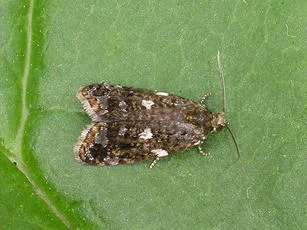
Olindia schumacherana
Olindia schumacherana
Wingspan 11 to 16 mm. A characteristically-patterned species which cannot easily be mistaken for any other, although the extent of the markings does vary somewhat. The adults are on the wing in June and July, the males flying in sunshine, the females
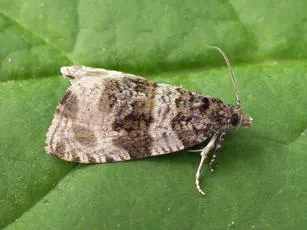
Orthotaenia undulana
Orthotaenia undulana
The moths emerge between May and July, occasionally later, and can be disturbed from the foliage, or attracted to light at night. It is a polyphagous species and the larvae are known to feed on a wide range of trees and plants. The species is distrib
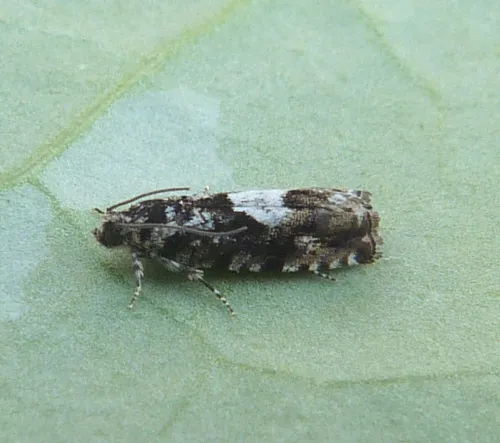
Pammene argyrana
Pammene argyrana
Gen det may be required, or good photographs of the moth and the hindwing. A relatively early spring species, the moth is at large during April and May. The larva lives in a gall, often that of another hymenopterous insect, feeding internally. Locall
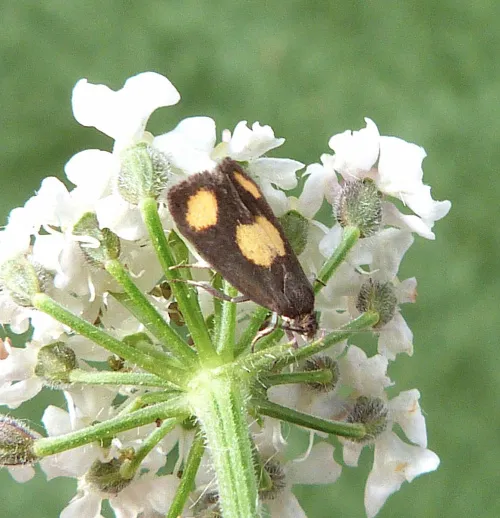
Pammene aurana
Pammene aurana
Wingspan 9-13 mm. A very distinctive species, having two orange blotches on a chocolate brown forewing. Hedgerows, rough ground and woodland edges, favouring Hogweed. Flying in June and July, the moths can be found in the afternoons on the flowers of
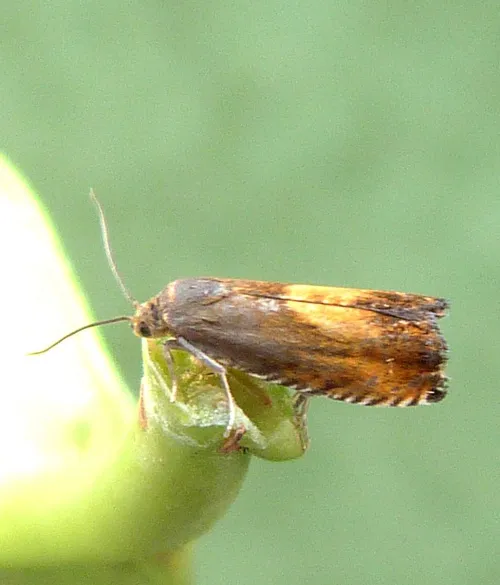
Pammene aurita
Pammene aurita
The adult moths are on the wing in July and August, from late afternoon onwards, and are most often encountered at light. The larvae feed inside the seeds of sycamore (Acer pseudoplatanus), and their presence is sometimes betrayed by small exit holes
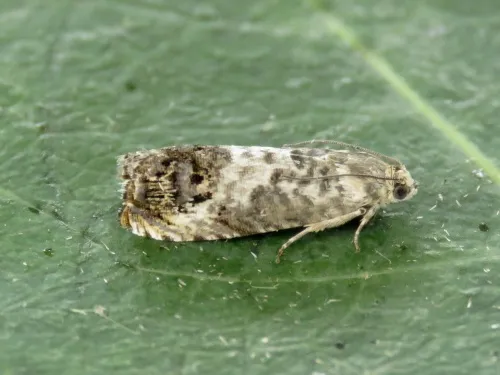
Pammene fasciana
Pammene fasciana
Wingspan 13-17 mm. An attractive species which, when fresh, shows a series of bluish metallic and tawny markings with a rosy flush to the whitish ground colour. Various habitats, particularly well wooded areas containing Oak or Sweet Chestnut. The mo
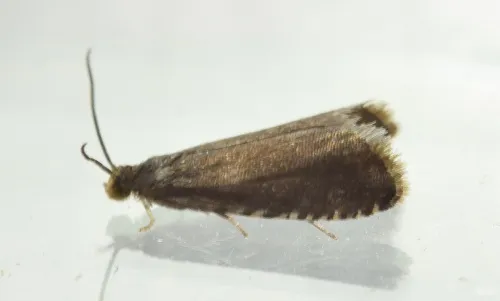
Pammene germmana
Pammene germmana
Wingspan about 12 mm. This species, despite its dull appearance, is relatively easy to recognise. It has a dark brown quite plain appearance, with a series of creamy-coloured strigulae along the costa, interspersed with occasional bluish-metallic str
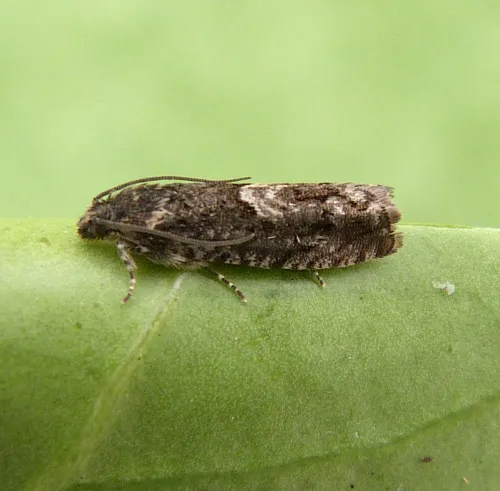
Pammene giganteana
Pammene giganteana
Wingspan about 15 mm. This species is distinctive for its rather long and narrow forewings, with a horseshoe-shaped whitish blotch on the dorsum. The hindwings are whitish with a dark border. Unless identified by a recognised expert, a photo is requi
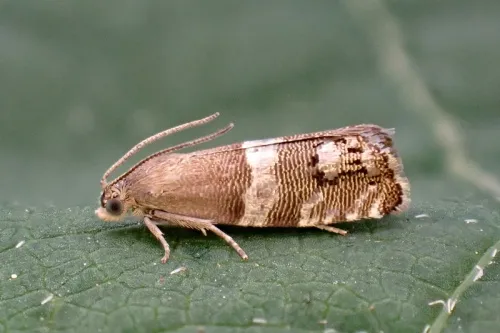
Pammene juniperana
Pammene juniperana
Wingspan about 8 mm. A very small Tortrix which may initially appear a rather plain brown, but actually has a very distinctive banding pattern with highly reflective scales which under magnification show this to be a very attractive moth. In view of
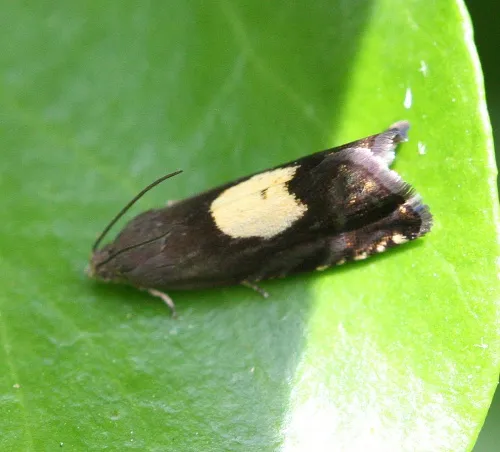
Pammene regiana
Pammene regiana
Wingspan 13 to 16 mm. A rich dark brown moth with a large yellow dorsal blotch. On the wing from May to July. The adults fly from late afternoon into the night, and can be attracted to light. The larvae feed inside the seeds of Sycamore, and pupate i
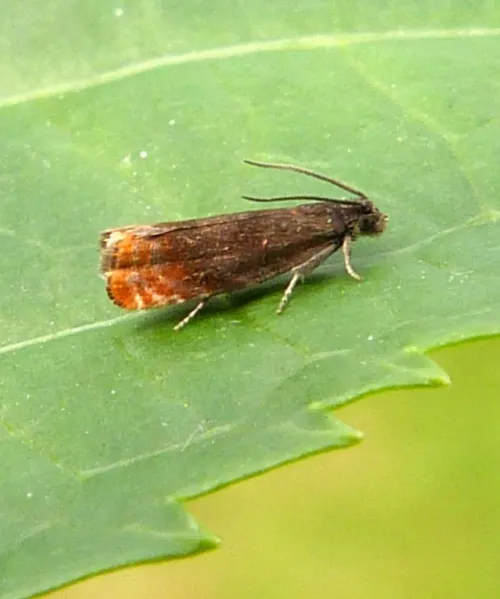
Fruitlet Mining Tortrix
Pammene rhediella
Wingspan 11 mm. Predominantly a mix of chestnut and darker browns. Around areas containing Hawthorn or fruit trees. The adult moths fly from late April until June, especially in warm sunshine, around the tops of its host trees. The larvae feed in the
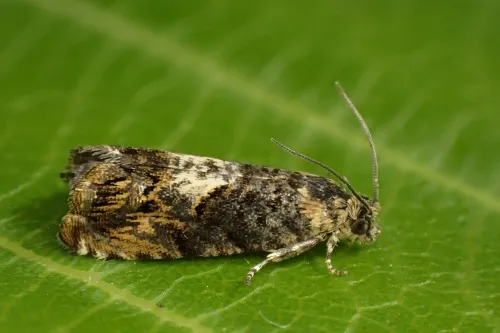
Pammene suspectana
Pammene suspectana
Very similar to several other of the Pammene genus, gen det is required to confirm identification. Areas with Ash trees – the larval foodplant. May and June. It may be attracted the FUN Pheromone lure. Until very recently there were very few records
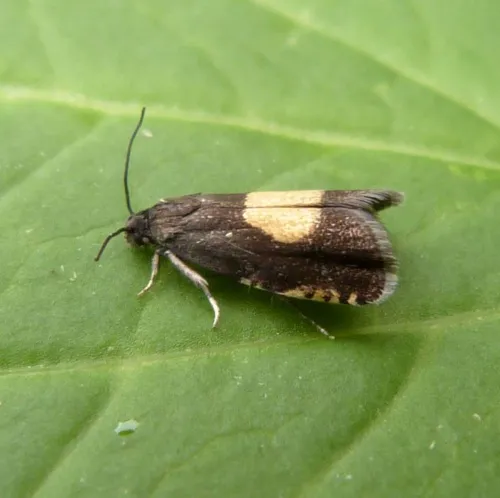
Pammene trauniana
Pammene trauniana
Wingspan 10 to 13 mm. Similar to Pammene regiana, but the medio-dorsal blotch of the forewing is pale yellow and subquadrate, its outer edge nearly straight to dorsum near the tornus, and the costal strigulae interspersed with thick wedges of pale ye
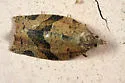
Green Aspen Leaftier Moth - Hodges#3595
Pandemis canadana
Identification: Adult - see original description in Print References.
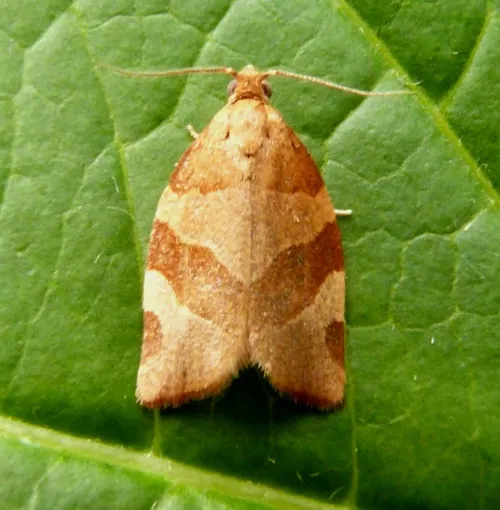
Barred Fruit-tree Tortrix
Pandemis cerasana
Wingspan 16-25 mm. This is one of several quite similar 'Tortrix' moths which hold their wings in a flattened, bell-shape posture when at rest. It is to be found in gardens, orchards and other woodland areas. Flies from June to August from dusk into
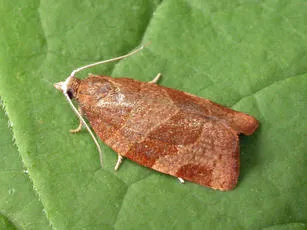
Pandemis cinnamomeana
Pandemis cinnamomeana
Wingspan 18 to 24 mm. It can resemble Dark Fruit-tree Tortrix but there are subtle differences. Males in particular have a whitish forehead. Adults can be found on the wing from Late June through July. The larvae feed on the leaves of a range of deci

Chequered Fruit-tree Tortrix
Pandemis corylana
Wingspan 18-21 mm. The reticulations on the forewing of this species give rise to its English name, although the intensity of these varies somewhat. The larvae feed on a wide variety of deciduous trees, rolling the leaves in a manner characteristic o
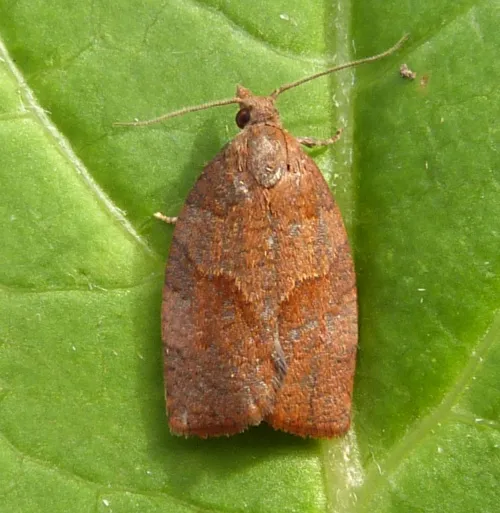
Dark Fruit-tree Tortrix
Pandemis heparana
This species flies between June and August, later in the North. Sometimes called 'leaf-rollers', the larvae of many of this family live in 'spinnings' where a leaf is rolled around and attached together with silk. The larvae feed on various fruit and
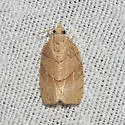
Woodgrain Leafroller - Hodges#3593
Pandemis lamprosana
Identification: A chunky moth with broad-based almost rectangular wings; forewing has 3 medium-to-dark brown areas: a large basal patch crossing the wing, a broad oblique band running from mid-costa to inner margin near anal angle, and a small patch
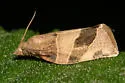
Three-lined Leafroller - Hodges#3594
Pandemis limitata
Identification: Adult - forewing varies from light to dark brown with prominent dark brown markings. The basal, median and upper postmedian lines are distinct and sharply defined with pale edging. The hindwing is white, often with the lower half grey
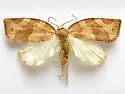
Pandemis Leafroller Moth - Hodges#3596
Pandemis pyrusana
Identification: Adult - see original description in Print References.
Paralobesia aemulana - Hodges#2722
Paralobesia aemulana
Identification: Specimen identified by DNA analysis (BOLD).
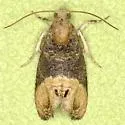
Paralobesia cyclopiana - Hodges#2727
Paralobesia cyclopiana
Identification: The original description as Polychrosis cyclopiana Heinrich, is available in PDF and online at the link in the print references below.
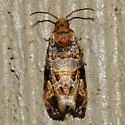
Tulip-tree Leaftier Moth - Hodges#2711
Paralobesia liriodendrana
Identification: Inner half of front wing uniformly lilac or leaden-blue, crossed by well-defined narrow brown lines. Ground color of outer half of front wing rich ochreous-brown.
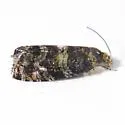
Paralobesia piceana - Hodges#2721
Paralobesia piceana
Identification: Larva - Head yellowish, usually with black lateral bar; pinacula D1 and SD1 on abdominal segment 9 adjacent or merged; thoracic shield and legs usually dark brown (MacKay, 1959).
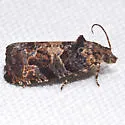
Grape Berry Moth - Hodges#2712
Paralobesia viteana
Identification: Inner half of front wing uniformly lilac or leaden-blue, crossed by well-defined narrow brown lines. Ground color of outer half of front wing pale yellowish-brown. Genitalia: ♂ There is a narrow sclerotized lobe projecting from the ba
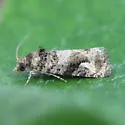
Paralobesia yaracana - Hodges#2717
Paralobesia yaracana
Identification: Adult - see original description in Print References.
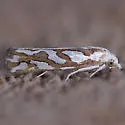
Pelochrista agassizii - Hodges#3026
Pelochrista agassizii
The use of 3026 for the Hodges number is contingent. As of 10/22/2015 MPG seems to erroneously states "Eucosma aemulana (Schlager, 1849) replaces Eucosma agassizii (Robinson, 1869)." The two do not appear to be closely related nor do they look simila
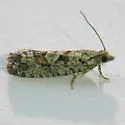
Eucosma biquadrana - Hodges#3137
Pelochrista biquadrana
Eucosma biquadrana - Hodges#3137 (Pelochrista biquadrana) is a species in the family Tortricidae, commonly known as tortricid moths, belonging to the order Lepidoptera (Butterflies and Moths). It is classified within the subfamily Olethreutinae, trib
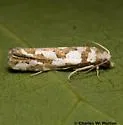
Pelochrista bolanderana - Hodges#3029
Pelochrista bolanderana
Pelochrista agassizii , P. bolanderana , and P. gilletteana are all closely related based on BOLD. As of 2015, the BIN cluster here , containing P. agassizii , also contains samples identified as P. bolanderana , and P. gilletteana . The nearest BIN
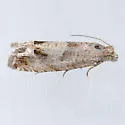
Pelochrista canana - Hodges#3141
Pelochrista canana
Identification: The original description as Eucosma metariana Heinrich, is online. Specimen identified by DNA analysis (BOLD) This page was originally created for Pelochrista metariana , which was synonymized with P. canana in Wright and Gilligan - M
Pelochrista canariana - Hodges#3013
Pelochrista canariana
Identification: Adult - see original description in Print References.
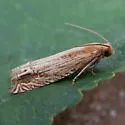
Solidago Pelochrista - Hodges#3142
Pelochrista cataclystiana
Identification: Adult: forewing mostly orangish-brown with short pale oblique streaks along costa, and pale whitish T or Y shape projecting from outer margin into subterminal area near anal angle; hindwing pale gray.
Pelochrista comatulana - Hodges#3041
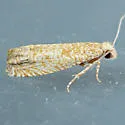
Pelochrista comatulana
At BOLD there are at least 5 BIN groups for P. derelicta , P. vagana , P. watertonana , P. nandana , and P. comatulana as follows: BOLD:AAA9420 contains 146 P. derelicta , 3 P. vagana , 1 juncticiliana BOLD:AAC2220 contains 24 P. comatulana , 4 P. va
Pelochrista conspiciendana - Hodges#3143
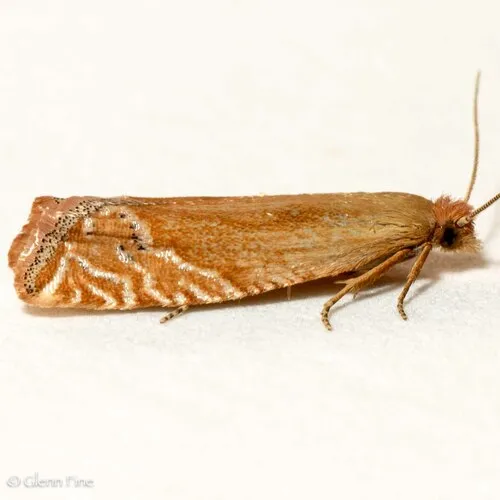
Pelochrista conspiciendana
Pelochrista conspiciendana - Hodges#3143 (Pelochrista conspiciendana) is a species in the family Tortricidae, commonly known as tortricid moths, belonging to the order Lepidoptera (Butterflies and Moths). It is classified within the subfamily Olethre
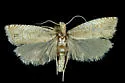
Pelochrista costastrigulana - Hodges#3040
Pelochrista costastrigulana
Identification: Specimen determined by DNA analysis (BOLD). ( 4 )
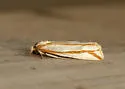
Pelochrista crambitana - Hodges#3011
Pelochrista crambitana
Identification: "Broad costal, medial and dorsal silver stripes, the median one unbroken from base to apex" ( 3 ) .
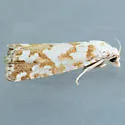
Pelochrista curlewensis - Hodges#3061.1
Pelochrista curlewensis
Identification: The forewing is white with variable orange-brown to blackish-brown markings that can usually be distinguished from the two similar species listed below. The northern population are usually the lighter orange-brown color.
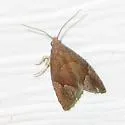
Derelict Pelochrista - Hodges#3120
Pelochrista derelicta
Identification: Adult - forewing has diagonal line from mid-costa to anal angle, with dark brown shading on proximal side, and light brown on distal side (some individuals have a tooth mid-way along the line); many fine squiggly lines cross the wing;
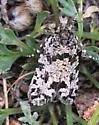
Pelochrista dodana - Hodges#3081
Pelochrista dodana
Identification: Photo of specimen from Colorado: Appears to be mostly diurnal.
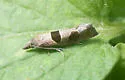
Triangle-backed Pelochrista - Hodges#3116
Pelochrista dorsisignatana
Identification: Adult: forewing ash-gray to brown with faint whitish lines; dark brown patch on inner margin near base; larger paler brown median patch bordered by costa and PM line; markings reduced or absent in some specimens [description by Charle
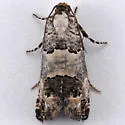
Pelochrista eburata - Hodges#3085
Pelochrista eburata
Identification: The original description of Eucosma williamsi Powell, is available in PDF or view online in the print references below. Specimen identified by DNA analysis (BOLD).
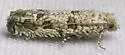
Pelochrista exclusoriana - Hodges#3093
Pelochrista exclusoriana
Valerie Bugh first identified this species at our place in Camp Wood. I sent specimens to Jason Dombroskie after his visit in the spring of 2016 and he has now identified a specimen from the same location as P. exclusoriana. None of them are the sa
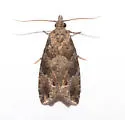
Pelochrista fiskeana - Hodges#3129
Pelochrista fiskeana
Identification: Adult - see original description in Print References. ( 3 )
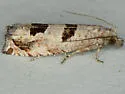
Pelochrista floridensis - Hodges#3132.6
Pelochrista floridensis
Identification: Adult : Distinguished by the wine-red color of the postmedian band, and the pinkish tint to the distal one-half of the FW. Interfascial areas pale gray brown, variably suffused with white and pale reddish brown. Subbasal and pretornal
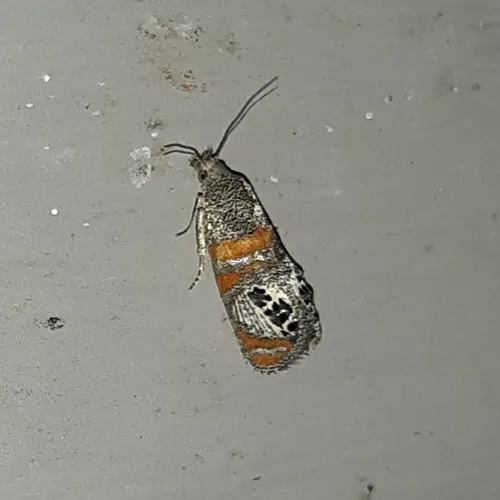
Pelochrista fratruelis - Hodges#3152
Pelochrista fratruelis
Identification: From original description: Superficially like scintillana Clemens (= Pelochrista scintillana - Hodges 3151) except that the wings are much broader in proportion to their length, a little more than half as long as broad; their ground c