
Family Tortricid Moths (Tortricidae)
Tortricidae is a family in the order Lepidoptera. Browse 1,247 named species recorded in this family, or open an individual profile for its available identification and natural-history information.
Species in Tortricidae (1,247)
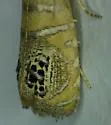
Pelochrista fraudabilis - Hodges#3053
Pelochrista fraudabilis
Identification: Quoting original description : "Like fratruelis Heinrich in size and general appearance, but much paler. Ground color of fore wing buckskin yellow, with straight narrow antimedian and a similar median fascia; fuscous dusting in fore w
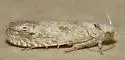
Pelochrista galenapunctana - Hodges#3045
Pelochrista galenapunctana
Identification: Kearfott's original description is available in PDF. A more detailed discussion of the complexities of this species and its relatives can be found in the Wright & Gilligan MONA fascicle.[cite:1636722] NOTE (3/11/2022): The majority (a
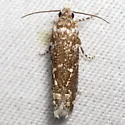
Speckled Pelochrista moth - Hodges#3009.2
Pelochrista guttulana
Identification: Blanchard (1979) original description in PDF .
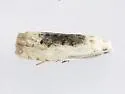
Pelochrista heathiana - Hodges#3033
Pelochrista heathiana
Identification: The black suffusion along the dorsal margin of an otherwise whitish forewing is diagnostic. ( 5 )
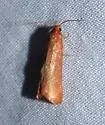
Pelochrista immaculana - Hodges#3063
Pelochrista immaculana
Identification: Adult - Forewing uniformly pinkish-ochraceous.
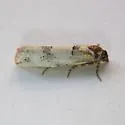
Pelochrista invicta - Hodges#3083
Pelochrista invicta
Identification: Adult - see original description in Print References and footnoted re-description by Wright (2007). ( 3 )
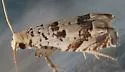
Pelochrista matutina - Hodges#3091
Pelochrista matutina
Identification: Adult - Head and FW whitish with, scattered dark scales. Basal patch incomplete, with scattered dark costal scales. Middle brownish band continued with distinct edges marked by blackish scales. The succeeding whitish underspace is con
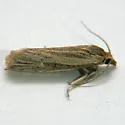
Pelochrista mediostriata - Hodges#3104
Pelochrista mediostriata
Identification: Adult - see original description and Wright redescription in Print References. ,
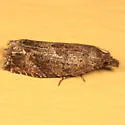
Pelochrista milleri - Hodges#3170.2
Pelochrista milleri
Females much more likely to be attracted to UV light.
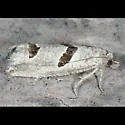
Pelochrista mirosignata - Hodges#3138
Pelochrista mirosignata
Pelochrista mirosignata - Hodges#3138 (Pelochrista mirosignata) is a species in the family Tortricidae, commonly known as tortricid moths, belonging to the order Lepidoptera (Butterflies and Moths). It is classified within the subfamily Olethreutinae
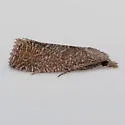
Pelochrista nandana - Hodges#3112
Pelochrista nandana
Identification: Adult - see original description in Print References.
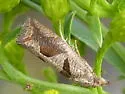
Coastal Pelochrista - Hodges#3116.2
Pelochrista oraria
Identification: Similar to Pelochrista dorsisignatana and Pelochrista similiana , dark mark in median area of forewing is separated from dark subbasal facia but reaches apex.
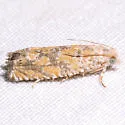
Pale-faced Pelochrista - Hodges#3153
Pelochrista pallidipalpana
Identification: Adult - see original description in Print References.
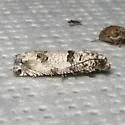
Pelochrista persolita - Hodges#3090
Pelochrista persolita
Identification: Original description is available online in PDF.
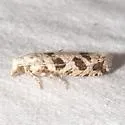
Pelochrista reversana - Hodges#3157
Pelochrista reversana
Pelochrista reversana - Hodges#3157 (Pelochrista reversana) is a species in the family Tortricidae, commonly known as tortricid moths, belonging to the order Lepidoptera (Butterflies and Moths). It is classified within the subfamily Olethreutinae, tr
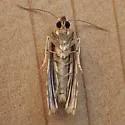
Snakeweed Borer - Hodges#3014
Pelochrista ridingsana
Identification: Robinson (1869) original description as Conchylis ridingsana is online and linked in the print references.
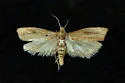
Pelochrista russeola - Hodges#3056
Pelochrista russeola
Identification: Heinrich original description is online in PDF. Heinrich also states "An easily recognized species resembling in color Kearfott's immaculana , but with narrower fore wing, paler hind wing, and quite different genitalia." Specimen dete
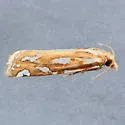
Pelochrista sandiego - Hodges#3023
Pelochrista sandiego
Pelochrista sandiego - Hodges#3023 (Pelochrista sandiego) is a species in the family Tortricidae, commonly known as tortricid moths, belonging to the order Lepidoptera (Butterflies and Moths). It is classified within the subfamily Olethreutinae, trib
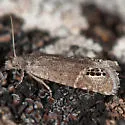
Pelochrista scintillana - Hodges#3151
Pelochrista scintillana
Identification: Wings: Front wings pale yellowish on male, grayish-brown on female. Large black spotted area (ocellic spot) with 3 rows of 5 spots and a few silver lines. Next to ocellic spot is a large area of fine reticulated (net-like) silver and
Pelochrista shastana - Hodges#3095
Pelochrista shastana
Identification: Eucosma shastana has a broader pretornal patch than Eucosma biquadrana . The postmedian band connects to the apical spot. The overall color is reddish-brown compared to the brown of Eucosma biquadrana .
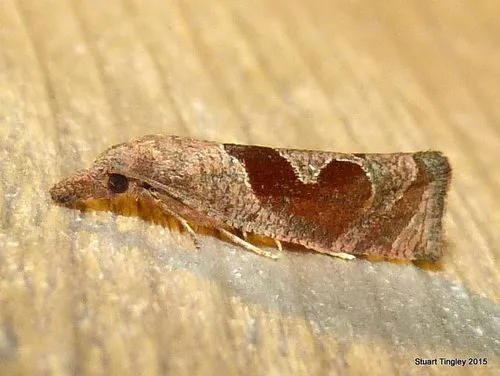
Pelochrista similiana - Hodges#3116.1
Pelochrista similiana
Identification: Adult: forewing brown with dark brown L-shaped marking with curved edges, beginning at inner margin in AM area and becoming paler toward center of wing; large faint "tooth" (sometimes broken) in subterminal area pointing toward anal a
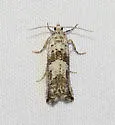
Pelochrista snyderana - Hodges#3087
Pelochrista snyderana
Identification: Adult - see original description in Print Preferences and footnoted re-description by Wright.
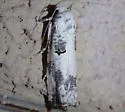
Pelochrista subinvicta - Hodges#3086
Pelochrista subinvicta
Identification: Adult - see original description in Print References and footnoted re-description by Wright.
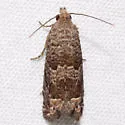
Pelochrista womonana - Hodges#3169
Pelochrista womonana
Identification: Adult - forewing pattern is very similar to that of P. rorana , but the interfascial areas are more suffused with brown and gray, resulting in a darker overall appearance. ( 4 )
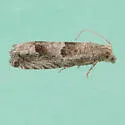
Pelochrista zomonana - Hodges#3168
Pelochrista zomonana
Identification: Adult - see original description in Print References. Specimen identified by DNA analysis (BOLD).
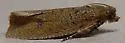
Phaecasiophora inspersa - Hodges#2773
Phaecasiophora inspersa
Identification: See Heinrich (1931) in print references below.
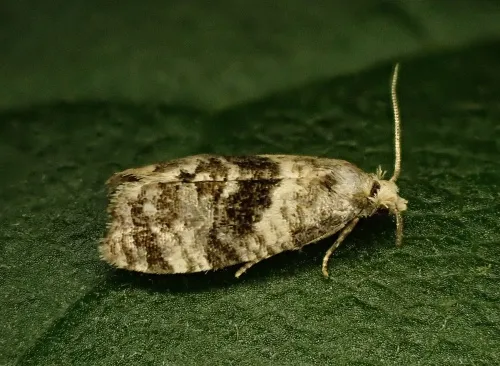
Phalonidia manniana
Phalonidia manniana
It inhabits river banks, ditches and the margins of streams. Adult moths fly from evening into the night, and are on the wing typically in June and July. The larvae feed on Water Mint (Mentha aquatica) and Gypsywort (Lycopus), living inside the stem,
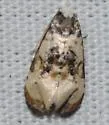
Phalonidia memoranda - Hodges#3808
Phalonidia memoranda
Identification: Adult - see original description in Print References.
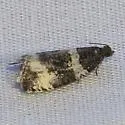
Phiaris glaciana - Hodges#2847
Phiaris glaciana
Identification: Specimen identified by DNA analysis (BOLD) Transferred from genus Olethreutes by Gilligan et al..
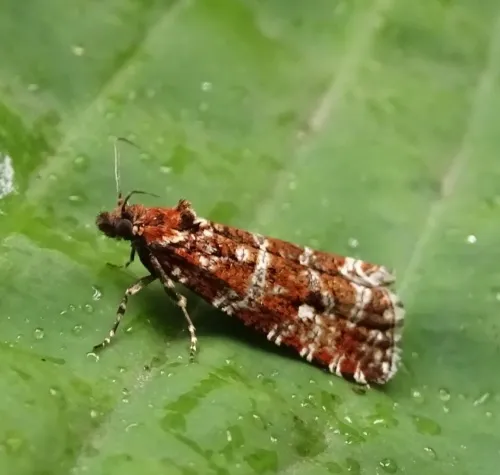
Phiaris schulziana
Phiaris schulziana
Good photograph required. Please retain the moth until identification is confirmed. A moorland species associated with Heather and Crowberry. Flying from June to August, it is easily disturbed during the day from the heather, and flies in the late af
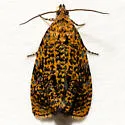
Phiaris siderana - Hodges#2833
Phiaris siderana
One of several Nearctic Olethreutes s. l. species with iridescent spots on the forewings: [missing] [missing] [missing] astrologana coruscana ferrolineana metallica nordeggana sordidana galaxana [missing] sider
Phtheochroa aureoalbida - Hodges#3811
Phtheochroa aureoalbida
Identification: Adult - see original description in Print References.
Phtheochroa huachucana - Hodges#3817
Phtheochroa huachucana
Identification: Adult - see Kearfott's original description in Print References.
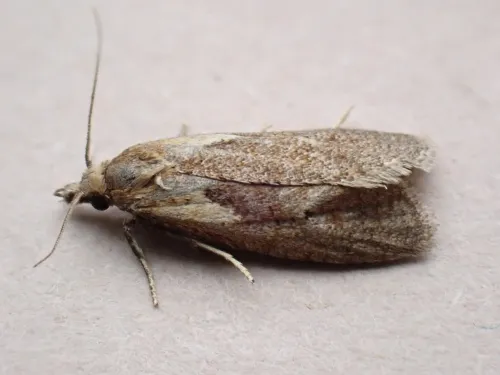
Phtheochroa inopiana
Phtheochroa inopiana
Wingspan 17 to 22 mm. A sexually dimorphic species, the females being generally plainer than the males. Unless identified by a recognised expert, photographs are required and it is advisable to retain the specimen until the County Recorder has accept
Modest Phtheochroa moth - Hodges#3819
Phtheochroa modestana
Modest Phtheochroa moth - Hodges#3819 (Phtheochroa modestana) is a species in the family Tortricidae, commonly known as tortricid moths, belonging to the order Lepidoptera (Butterflies and Moths). It is classified within the subfamily Tortricinae, tr
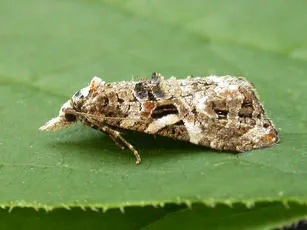
Phtheochroa rugosana
Phtheochroa rugosana
Wingspan 16-20 mm. It is noticeable for a number of 'tufts'. It is on the wing during May and June and flies around dusk. During the day it relies on camouflage, taking on the appearance of a bird-dropping. The larvae feed on White Bryony. Distribute
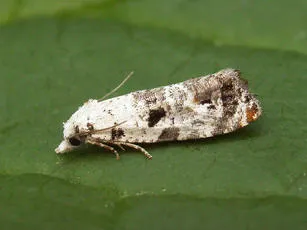
Phtheochroa sodaliana
Phtheochroa sodaliana
Wingspan about 15 mm. A fairly distinctive Tortrix species with its white ground colour and red-brown apical spot combined with blackish and metallic grey markings. This species occurs mainly on calcareous soils. The adult moths can be found on the w
Phtheochroa villana - Hodges#3824
Phtheochroa villana
Identification: The Busck original description as Hysterosia villana is available online in the print references below.
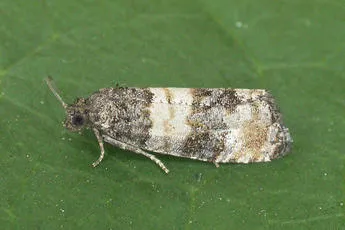
Piniphila bifasciana
Piniphila bifasciana
The normal flight time for the adults is from dusk onwards, when it is attracted to light. They are on the wing in June and July. The larvae feed in a silken gallery among the young shoots and male flowers of Scots Pine. Maritime pine is also a foodp
Phalonidia campicolana - Hodges#3829
Platphalonidia campicolana
Identification: Hindwing is dark gray. ( 5 ) Platphalonidia , has been synonymized with Phalonidia by Razowski, 2011: "Remarks: Platphalonidia was described for Phalonia felix Walsingham, 1895 and over 10 other species from the New World. Unfortunat
Platphalonidia lavana - Hodges#3833
Platphalonidia lavana
Identification: The original description as Phalonia lavana Busck, is available online in the print references below. Platphalonidia , has been synonymized with Phalonidia by Razowski, 2011: "Remarks: Platphalonidia was described for Phalonia felix W
Platphalonidia plicana - Hodges#3835
Platphalonidia plicana
Walsingham, L.T.d.G., 1884. X. North American Tortricidae. Transactions of the Entomological Society of London, 1884: 131 .
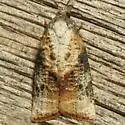
Platynota blanchardi - Hodges#3738.1
Platynota blanchardi
Described from 19 males; female unknown. Six specimens from the central plateau of Mexico are likely this species.
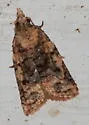
Platynota cf-exasperatana-oklahoma-species
Platynota cf-exasperatana-oklahoma-species
BOLD:ABY7899 All but one of the OK specimens have >1% sequence divergence from all the TN and NC specimens, forming two branches to the phylogenetic tree. The Appalachian specimens diverge from each other by up to ~0.75%.
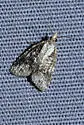
Exasperating Platynota - Hodges#3743
Platynota exasperatana-complex
Identification: Adult - forewing pale gray, shaded with darker gray to blackish in median and basal areas, and marked with traces of black lines; pale blotches may be present along costa in median area; diffuse gray spot usually visible in subtermina
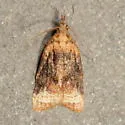
Black-shaded Platynota Moth - Hodges#3732
Platynota flavedana
Identification: ♂ ♀ Larva - Early instars are yellowish with a black head. Older larvae are green with a light brown or amber head (Hull et al., 1995). BOLD:AAC4322
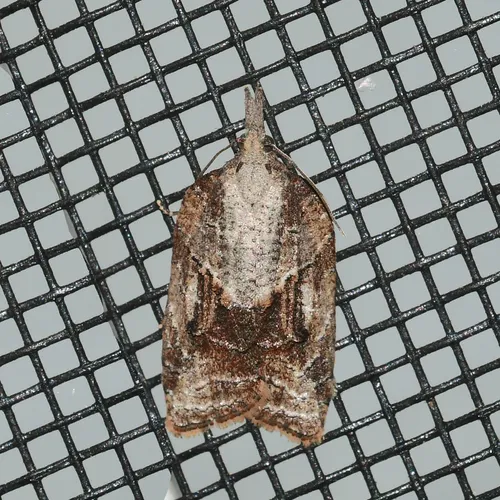
Tufted Apple Bud Moth
Platynota idaeusalis
The tufted apple bud moth (Platynota idaeusalis) is a moth of the Tortricidae family. It is found in eastern North America, from Ontario, south to Florida, west to Oklahoma.
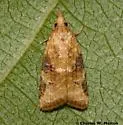
Platynota labiosana - Hodges#3738
Platynota labiosana
Platynota labiosana - Hodges#3738 (Platynota labiosana) is a species in the family Tortricidae, commonly known as tortricid moths, belonging to the order Lepidoptera (Butterflies and Moths). It is classified within the subfamily Tortricinae, tribe Sp
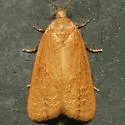
Platynota larreana - Hodges#3735
Platynota larreana
Identification: Adult - rust brown. Larva - bright green. BOLD:AAL4765
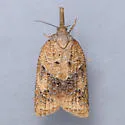
Platynota nigrocervina - Hodges#3737
Platynota nigrocervina
Identification: ♂ ♀ BOLD:AAH5566 (OK, CO)
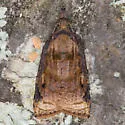
Omnivorous Platynota Moth - Hodges#3745
Platynota rostrana
Identification: ♂ ♀ Four BINs form a clade within Platynota : BOLD:AAB6119 (FL) BOLD:AAC4170 (OK, TX, Yucatan, Jamaica) BOLD:ACZ4871 (Mexico (Jalisco)) BOLD:ABA5666 (TX) Additionally, the following two sister species ar
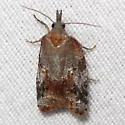
Platynota semiustana - Hodges#3741
Platynota semiustana
Identification: ♂ ♀ BOLD:ABY7900
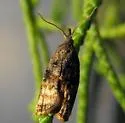
Omnivorous Leaf-roller - Hodges#3736
Platynota stultana
Identification: ♂ ♀ Larvae - mature larvae are translucent, cream colored, and approximately 12-15mm long. The head and prothoracic shield are yellowish brown to dark brown. Pupae - Fully developed pupae are dark brown
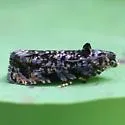
Pristerognatha agilana - Hodges#2831
Pristerognatha agilana
Identification: DNA confirmed but as of 4/2017 BOLD still uses the name Pristerognatha fuligana which is extralimital. The species page includes two BIN groups with one being strictly new world and the other old world. The new world group refers to P
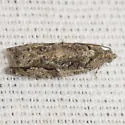
Maple Twig Borer Moth - Hodges#3230
Proteoteras aesculana
Identification: Adult - forewing mottled brown or gray and yellowish (often with greenish tint in fresh specimens); irregular blackish crescent-shaped marking begins mid-way along costa and either breaks in subterminal area or terminates in a dark bl
Black-crescent Proteoteras - Hodges#3233
Proteoteras crescentana
Identification: Adult: forewing light to medium brown with conspicuous blackish crescent-shaped marking that begins midway along costa and terminates at apex; marking is very heavy from costa inward to middle of wing, then bends smoothly toward outer
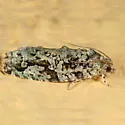
Gray-flanked Proteoteras - Hodges#3235
Proteoteras moffatiana
Identification: Adult - "When fresh, it is immediately distinguishable from most other members of the Tortricidae family by its green forewings" [Lynn Scott]. An irregular blackish line begins about mid-way along costa and extends in an arc to a poin

Proteoteras naracana - Hodges#3234
Proteoteras naracana
Identification: Adult - see original description in Print References. Genitalia: ♂
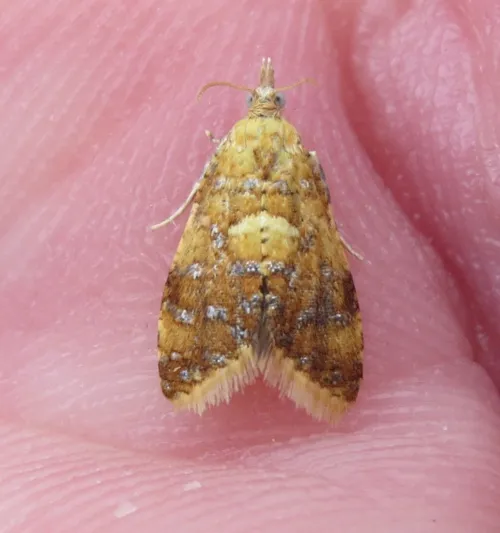
Pseudargyrotoza conwagana
Pseudargyrotoza conwagana
Wingspan 11-15 mm. With a wingspan of approximately 13 mm, it is one of the smaller Tortricidae . The conspicuous yellow blotch identifies this colourful moth when at rest. Wide range of habitats, including hedgerows and gardens. Flying during May to
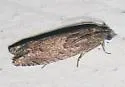
Shagbark Hickory Leafroller - Hodges#3246
Pseudexentera cressoniana
Identification: Adult - forewing brownish-gray with slightly darker patch covering basal third of wing; several short oblique dashes along costa; overall color is more uniform than in other species of Pseudexentera ; hindwing light grayish-brown, wit
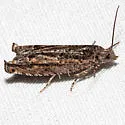
Pseudexentera faracana - Hodges#3253
Pseudexentera faracana
Identification: The original description as Proteopteryx faracana Kearfott, is available online in Print References. A revised description by Miller, is available online in PDF. Determined by Jim Vargo.
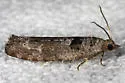
Pseudexentera habrosana - Hodges#3256
Pseudexentera habrosana
Identification: Specimen determined by DNA analysis (BOLD). ( 3 )
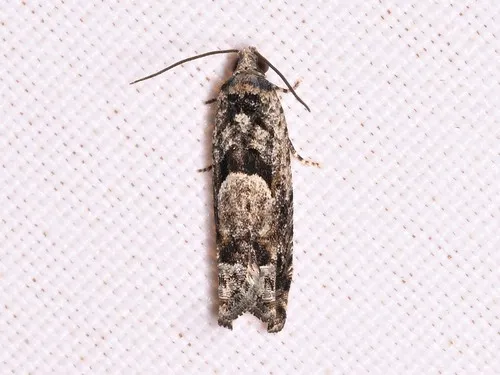
Pseudexentera hodsoni - Hodges#3257.1
Pseudexentera hodsoni
Identification: Mark Dreiling's photo # 341803 , BOLD MDOK-1109 , was formerly posted at MPG as Pseudexentera spoliana following the determination at BOLD. All specimens from north of Mexico in BOLD:AAA3121 form a branch representing hodsoni . The s
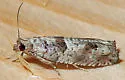
Pseudexentera kalmiana - Hodges#3255
Pseudexentera kalmiana
Identification: The original description of Pseudexentera kalmiana McDunnough, is available online in PDF. A revised description by Miller, is available online in PDF.
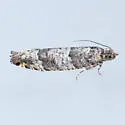
Pseudexentera maracana - Hodges#3254
Pseudexentera maracana
Identification: Kearfott original description as Proteopteryx maracana is available online in the print preferences. Miller revised description is available in PDF. Specimen identified by DNA analysis. (BOLD)
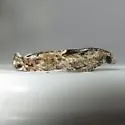
Pseudexentera nr. hodsoni - Hodges#3252.21
Pseudexentera nr-hodsoni
Identification: Pseudexentera nr. hodsoni is a cryptic species from Florida with DNA barcode placement near Pseudexentera hodsoni Miller, 1986.
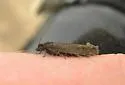
Pseudexentera oregonana - Hodges#3248
Pseudexentera oregonana
Identification: Adult- variable, uniformly dark gray to having weakly defined median and subterminal bands. ( 3 )
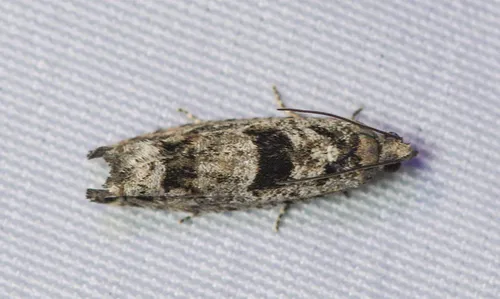
Bare-patched Oak Leafroller - Hodges#3251
Pseudexentera spoliana
All identifications in Pseudexentera based on photo should be considered tentative. Mark Dreiling's photo # 341803 , BOLD MDOK-1109 , was formerly posted at MPG as Pseudexentera spoliana following the determination at BOLD. All specimens from north
Pseudexentera virginiana - Hodges#3258
Pseudexentera virginiana
Identification: Adult - forewing light brownish-gray with dark speckling and large dark brown to black semicircular patch half-way along costa; basal area slightly darker than remainder of wing; hindwing gray with white fringe.
Pseudococcyx posticana
Pseudococcyx posticana
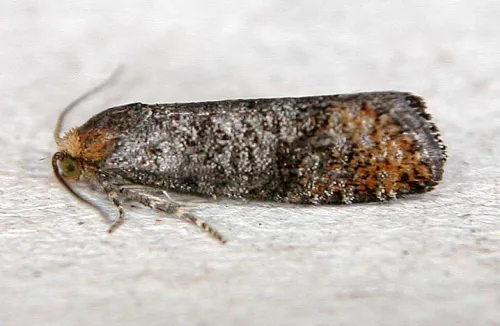
The colouration of this moth is a mix of silvery grey and chestnut brown. Pseudococcyx posticana is a pine loving species. On the wing during May and June. It becomes active towards evening, resting among the foliage by day. The larvae attack the sho
Pseudosciaphila branderiana
Pseudosciaphila branderiana
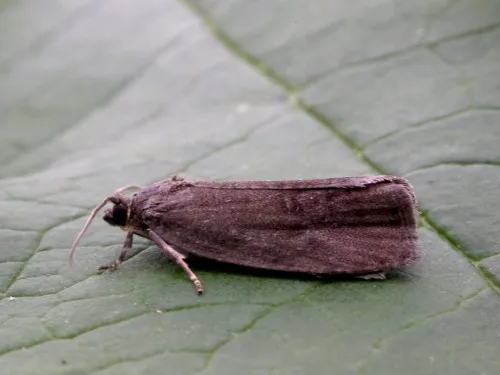
Wingspan 21 to 27 mm. One of the largest in its family, the typical form of this species is relatively plain in appearance. There is a 'banded' form, wahlhomiana however, which is quite common. The larvae feed on Aspen either rolling a leaf or spinni
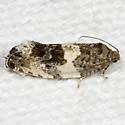
Poplar Leafroller - Hodges#2769
Pseudosciaphila duplex
Identification: Adult - forewing of typical form resembles a bird dropping -- dark gray in basal, medial, and terminal areas, and whitish in antemedial (AM) and postmedial (PM) areas; dark medial patch is widest at inner margin, tapering with irregul
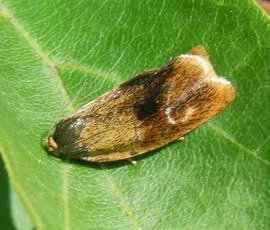
Ptycholoma lecheana
Ptycholoma lecheana
Wingspan 16-20 mm. Quite a distinctive species with a dark brownish ground colour, variously suffused with yellowish scales and patches of metallic silver. The larvae feed inside the rolled leaves of a variety of trees and shrubs. It is distributed t
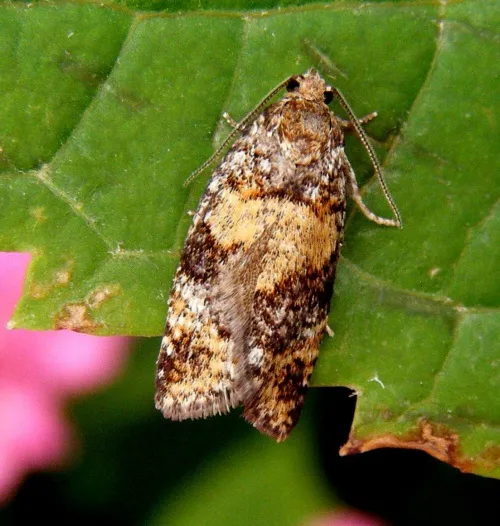
Ptycholomoides aeriferana
Ptycholomoides aeriferana
Wingspan 17 to 21 mm. This can be quite a beautiful species with rich red-browns and gold. Various habitats especially areas where the larval food plant is present. The moths fly in July and August, and are attracted to light. The food plant is Europ
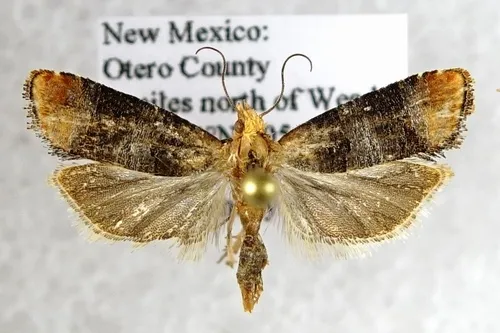
Retinia edemoidana - Hodges#2897
Retinia edemoidana
Identification: Dyar (1903) original description as Eucosma(?) edemoidana . "Resembles Lord Walsingham's figure of Semasia bucephaloides , but it is smaller, the head and thorax marked in yellow and brown. Palpi ocherous brown; head light ocher, brow
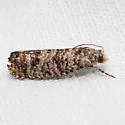
Minute Pitch-blister Moth - Hodges#2902
Retinia houseri
Identification: The dark gray bar across the front of the head and the dark scales around the bases are absent in some specimens. The dark gray abdomen has dirty white scales along the sides. The braconid, Agathis pini is an important parasite of thi
Retinia metallica - Hodges#2894
Retinia metallica
Identification: The original description as Evetria metallica Busck, 1914 is available online in the print references below.
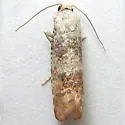
Retinia nr-metallica - Hodges#2894.85
Retinia nr-metallica
Identification: This is BOLD JMMMB035-11 (Sample ID: BIOUG00847-C11 ), the only member of BIN BOLD:AHQ5223 . DNA barcode places this BIN a cluster with BOLD:AAN3305 (a BIN with specimens erroneously identified as sabiniana ; 98.78% match) and BOLD:AH
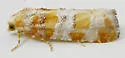
Retinia sabiniana - Hodges#2896
Retinia sabiniana
Retinia sabiniana - Hodges#2896 (Retinia sabiniana) is a species in the family Tortricidae, commonly known as tortricid moths, belonging to the order Lepidoptera (Butterflies and Moths). It is classified within the subfamily Olethreutinae, tribe Euco
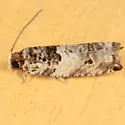
Dietz's Rhopobota - Hodges#3277
Rhopobota dietziana
Identification: Adult - see original description in Print References. Genitalia: ♀ ♂
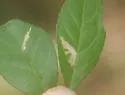
Rhopobota finitimana - Hodges#3278
Rhopobota finitimana
Identification: Pupa - characteristic with large, protruding orange yellow spiracles. Male genitalia: Female genitalia: This is the smallest of the North American Rhopobota .
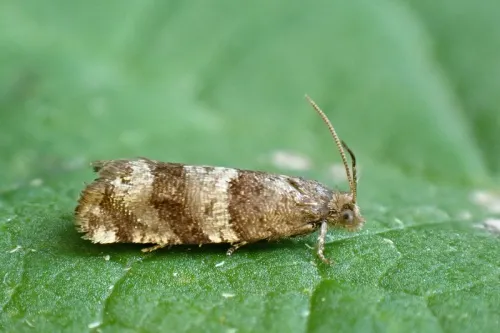
Rhopobota myrtillana
Rhopobota myrtillana
Unless identified by a recognised expert, a photo is required. If the photo doesn't show the key ID features, then in the comments box describe the size and identifying characters you have observed. A moorland and heathland species found in areas whe
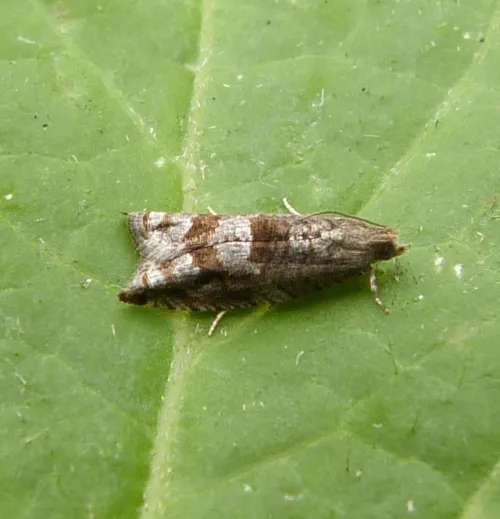
Holly Tortrix
Rhopobota naevana
Wingspan 12-16mm. The shape is quite distinctive. Occupies a wide variety of habitats but often near to Holly. The adults are quite variable and fly between July and September, frequently coming to light. The larval foodplants include Holly and Bilbe
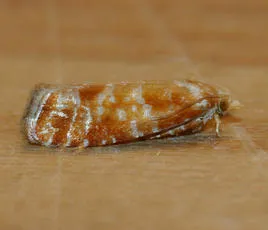
Pine Shoot Moth
Rhyacionia buoliana
Wingspan 16-24 mm. Attractive moth which is a light brick-red streaked with paler colours. Pine woodland, coniferous woodland, plantations and nurseries. The adults fly between June and August, when they can be attracted to light, though they are slu
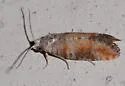
Red Pine Tip Moth - Hodges#2879
Rhyacionia busckana
Red Pine Tip Moth - Hodges#2879 (Rhyacionia busckana) is a species in the family Tortricidae, commonly known as tortricid moths, belonging to the order Lepidoptera (Butterflies and Moths). It is classified within the subfamily Olethreutinae, tribe Eu
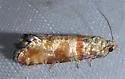
Rhyacionia bushnelli - Hodges#2883
Rhyacionia bushnelli
The adults is indistinguishable from the Nantucket pine tip moth ( R. frustrana ), altho it tends to be larger. It is believed this species is separate because of its overwintering habit and size. ( 5 ) - See also Miller's taxonomic review.
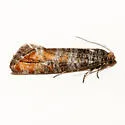
Rhyacionia granti - Hodges#2879.1
Rhyacionia granti
Identification: Superficially, R. granti resembles R. zozana (Kearfott), R. fumosana Powell, R. jenningsi Powell, R. adana Heinrich, R. blanchardi Miller, and its sibling, R. busckana. Structurally, it most resembles the last. The two species differ
Rhyacionia jenningsi - Hodges#2878
Rhyacionia jenningsi
Rhyacionia jenningsi - Hodges#2878 (Rhyacionia jenningsi) is a species in the family Tortricidae, commonly known as tortricid moths, belonging to the order Lepidoptera (Butterflies and Moths). It is classified within the subfamily Olethreutinae, trib
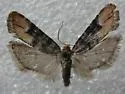
Southwestern Pine Tip Moth - Hodges#2873
Rhyacionia neomexicana
Identification: The original description as Evetria neomexicana Dyar, is available online in the print references below. There are many online references with information on the pest status of Rhyacionia neomexicana .
Rhyacionia pinicolana
Rhyacionia pinicolana
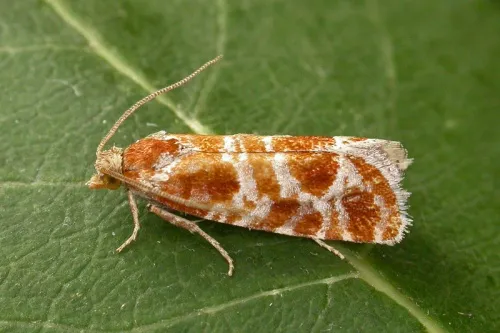
Wingspan 16 to 23 mm.This species bears a close resemblance to R. buoliana, but has generally slightly stronger markings on the forewing and a shallower 'V' marking towards the rear. In difficult cases it may be necessary to refer to genitalia dissec
Spotted Shoot Moth
Rhyacionia pinivorana
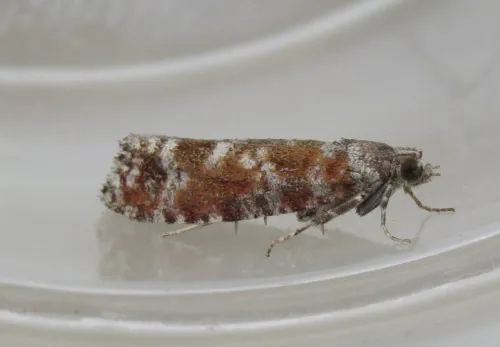
The adults fly from May to July and are normally found at night when they are attracted to light. However, they do sometimes fly during the day. Like other members of the genus Rhyacionia, the foodplant of this species is Scots pine Pinus sylvestris,
Rhyacionia salmonicolor - Hodges#2874
Rhyacionia salmonicolor
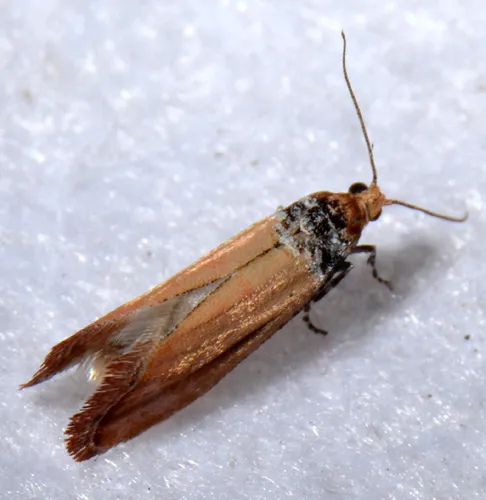
Identification: Forewings salmon-colored with a thin dark longitudinal streak through the cell .
Rhyacionia sonia - Hodges#2884
Rhyacionia sonia
The adult is indistinguishable from R. frustrana and R. bushnelli
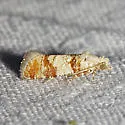
Subtropical Pine Tip Moth - Hodges#2869
Rhyacionia subtropica
Identification: The original description of Rhyacionia subtropica Miller, is available online in PDF. - A variable species that can be difficult to distinguish from Rhyacionia rigidana where the ranges overlap. Forewing costa is brown with 10-12 whit
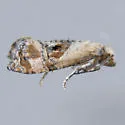
Kearfott's Rolandylis Moth - Hodges#3838
Rolandylis maiana
Identification: See Pogue, 2001, in Print References below.
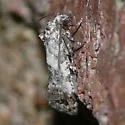
Black-tipped Rudenia Moth - Hodges#3839
Rudenia leguminana
Rudenia leguminana is a complex, see Brown et al. (2011) in Print References below. As of 11/28/2018, BOLD shows 9 BINs forming a single branch in the taxon tree as follows: BOLD:ACF0688 - 26 specimens from AZ, NM, CA BOLD:AAA9782 - 22 specimens from
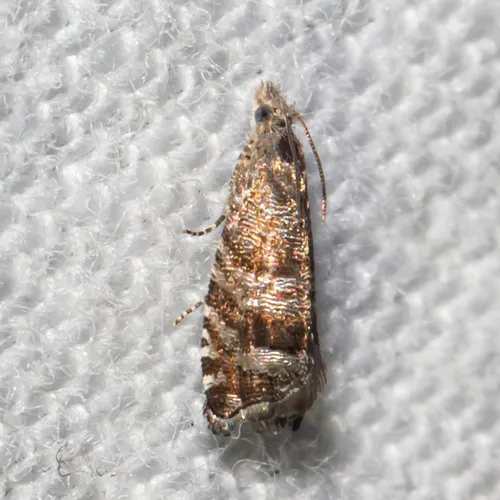
Southern Pine Catkinworm Moth - Hodges#3415
Satronia tantilla
Identification: Adult : Palps, face and head dirty white ● FW grayish fuscous ground ● Pair of moderately broad, outwardly curved, leaden metallic bands with faint dusting of white between, from costa before middle to mid-dorsum ● Four short, faint w
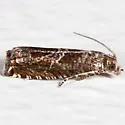
Canadian Sonia - Hodges#3219
Sonia canadana
Identification: Adult - forewing medium to dark brown, especially dark in lower AM and PM patches along inner margin; lower median area noticeably paler than the dark patches on each side; lower PM patch approximately triangular, forming a large dark
Constricted Sonia Moth - Hodges#3218
Sonia constrictana
Identification: Adult - outer margin of the FW is more concave between veins MI and CUI and the apex is pointed. There is a small ocellus-like spot near the apex of the FW. On the better marked specimens, this spot is blackish and surrounded with yel
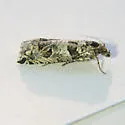
Sonia vovana - Hodges#3220
Sonia vovana
Identification: Kearfott original description is available in Print References. Busck description as Hendecaneura fraternana is available online in the Print References. ID confirmed by Chuck Harp.