
Ramosiana insignis
This record describes Ramosiana insignis (species). Recorded family: Pentatomidae. Recorded order: Hemiptera.
Identification and Appearance
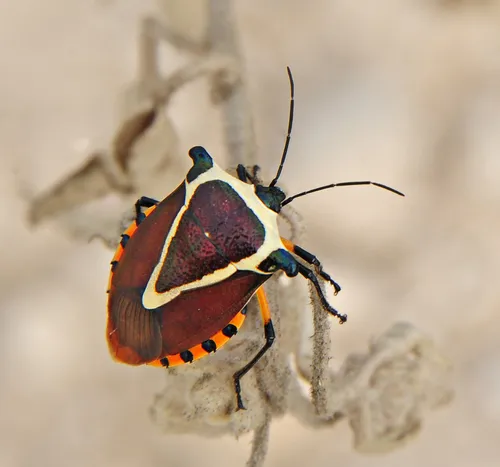
Given that Schoepfia schreberi apparently doesn't occur in s. TX, are there any potential alternate hosts? In the continental US, the genus Schoepfia is only found in Florida Apparently, the only other member of the Olax Family (Olacaceae) present in the US is Tallow wood - Ximenia americana which is endemic to Peninsular Florida. Some (but not USDA ) consider Schoepfia to be a member of the newly erected family, Schoepfiaceae . Following that taxonomic split, the only genus of the family in the US is Schoepfia (in Florida). Having said all that, note that the closely related pentatomid, Vulsirea violacea , also hosts on Schoepfia schreberi , and has also been recorded in Texas (as a stray?).
Classification
- Kingdom
- Animalia
- Phylum
- Arthropoda
- Class
- Insecta
- Order
- Hemiptera (True Bugs, Cicadas, Hoppers, Aphids and Allies)
- Suborder
- Heteroptera
- Superfamily
- Pentatomoidea
- Family
- Pentatomidae (Stink Bugs)
- Subfamily
- Pentatominae
- Tribe
- Pentatomini
- Genus
- Ramosiana
Imported taxonomy record. Source availability varies; see the source references and editorial policy below.
Habitat and Range
Geographic Range
s TX (one BG record), Mexico (Tamps to Chiapas) , also reported from Costa Rica (Nielsen et al. 2004)
Diet and Behavior
Diet: feeds on flower buds, fruits, and vegetative structures of gulf graytwig ( Schoepfia schreberi , Olacaceae) host ranges from n. Mex to Venezuela, Caribbean, and Peninsular Florida
Life History
large egg masses are usually arranged in a rhomboid shape maternal care is restrained to the egg mass and first instar nymphs, and their behavior seems to be directed to deter parasitoids and predators. Nymphs hatched mainly in October and the middle of November. Nymphs always left the egg mass collectively. As with most pentatomids, first instar nymphs do not feed. Soon after they moulted to the second instar they began to disperse, usually during November and December. They reached the adult stage by the end of February or beginning of March. After the fruiting season of S. schreberi at the end of March, adults aggregated in specific trees and stayed almost without movement until the end of June, when the rainy season started. predators include Euthyrhynchus floridanus (L.) (Hemiptera: Pentatomidae: Asopinae) found feeding on first and second-instar nymphs when the mother was absent. - Range: se US to Brazil
About True Bugs, Cicadas, Hoppers, Aphids and Allies: the wider group
Order-level background for Hemiptera, the group containing Ramosiana insignis. Species-specific details appear above.
Group overview
Hemiptera (true bugs) includes over 80,000 described species across cicadas, aphids, leafhoppers, shield bugs, and bed bugs. Aphids alone cost global agriculture an estimated $2.5 billion annually in crop losses.
Ecological role of the group
Many Hemiptera are essential food sources for birds and predatory insects. Cicadas provide massive nutrient pulses during emergence events - a single Brood X emergence can involve trillions of individuals across 15 states.
Economic and practical significance of the group
The brown marmorated stink bug (Halyomorpha halys) caused $37 million in apple crop losses in a single year in the U.S. Mid-Atlantic region. Bed bug infestations in the U.S. increased by 500% between 2001-2010, costing the hotel industry hundreds of millions annually.
Recorded sources for this group: USDA, EPA, University research. Imported estimates may describe particular regions or reporting periods.
Photos of Ramosiana insignis (2)
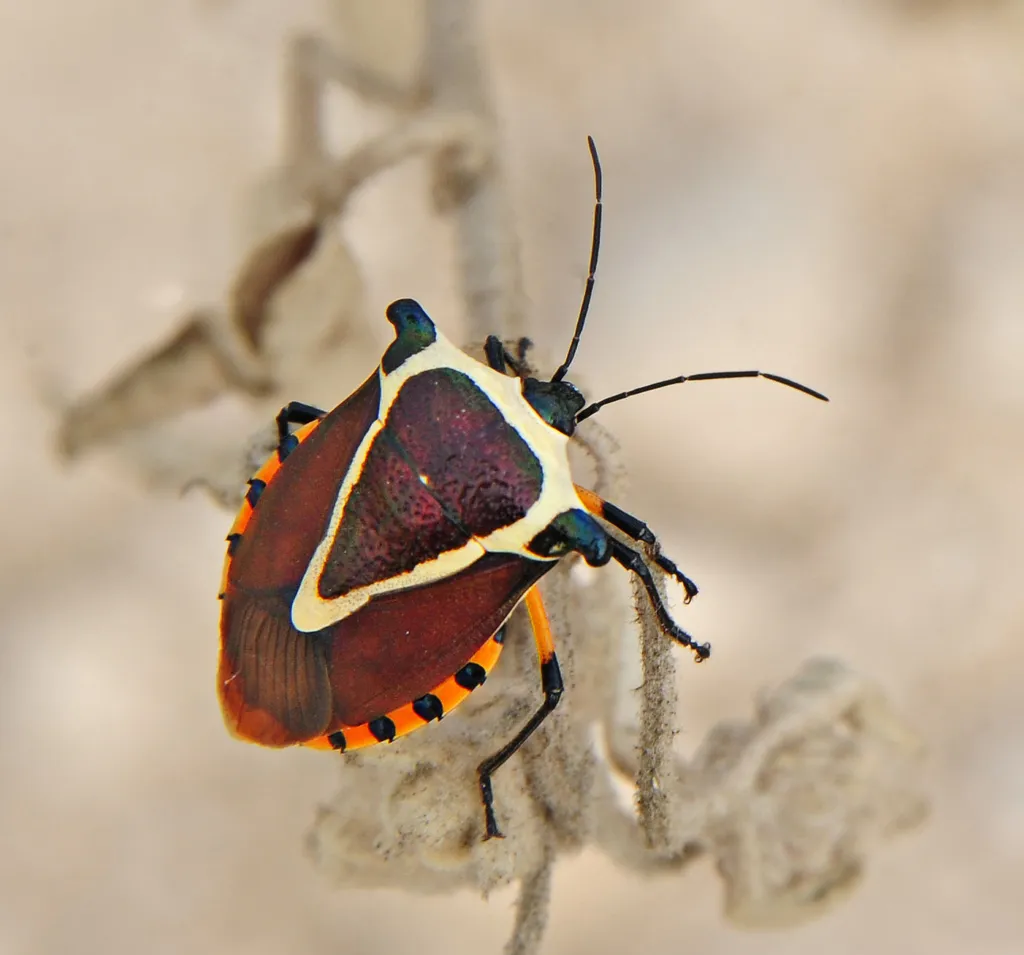
Photo credits: Contributed by v belov; Additional contributions by Mike Quinn
Frequently Asked Questions About Ramosiana insignis
What is Ramosiana insignis?
Ramosiana insignis is a species in the family Pentatomidae, within the order Hemiptera.
How big is Ramosiana insignis?
21-25 mm
Where is Ramosiana insignis found?
Range: s TX (one BG record), Mexico (Tamps to Chiapas) , also reported from Costa Rica (Nielsen et al. 2004)
What does Ramosiana insignis eat?
The diet of the Ramosiana insignis includes feeds on flower buds, fruits, and vegetative structures of gulf graytwig ( Schoepfia schreberi , Olacaceae) host ranges from n. Mex to Venezuela, Caribbean, and Peninsular Florida.
What is the life cycle of a Ramosiana insignis?
large egg masses are usually arranged in a rhomboid shape maternal care is restrained to the egg mass and first instar nymphs, and their behavior seems to be directed to deter parasitoids and predators. Nymphs hatched mainly in October and the middle of November. Nymphs always left the egg mass collectively. As with most pentatomids, first instar nymphs do not feed. Soon after they moulted to the second instar they began to disperse, usually during November and December. They reached the adult stage by the end of February or beginning of March. After the fruiting season of S. schreberi at the end of March, adults aggregated in specific trees and stayed almost without movement until the end of June, when the rainy season started. predators include Euthyrhynchus floridanus (L.) (Hemiptera: Pentatomidae: Asopinae) found feeding on first and second-instar nymphs when the mother was absent. - Range: se US to Brazil