
Anchor Stink Bug
Stiretrus anchorago
This record describes Stiretrus anchorago (species). Recorded family: Pentatomidae. Recorded order: Hemiptera.
Identification and Appearance
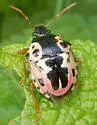
markings/color highly variable • distinguishable from other predatory pentatomids by the large scutellum almost reaching the tip of abdomen; profemora with strong tooth Nymphs
Classification
- Kingdom
- Animalia
- Phylum
- Arthropoda
- Class
- Insecta
- Order
- Hemiptera (True Bugs, Cicadas, Hoppers, Aphids and Allies)
- Suborder
- Heteroptera
- Superfamily
- Pentatomoidea
- Family
- Pentatomidae (Stink Bugs)
- Subfamily
- Asopinae
- Genus
- Stiretrus
Imported taxonomy record. Source availability varies; see the source references and editorial policy below.
Habitat and Range
Habitat
on a wide variety of herbaceous plants
Geographic Range
e.NA (NB‒FL to MN‒TX) to Colombia ( 3 )
Diet and Behavior
Diet: feeds on beetle larvae and caterpillars, incl. many pest spp. (notably Mexican Bean Beetle and Japanese Beetle) prey is primarily beetle larvae and caterpillars: attacks monarch larvae: A predator of Chlosyne lacinia , tends to attack III/IV-instar larvae and may destroy the entire brood preying on Labidomera clivicollis larvae:
Life History
see • eggs typically take a week to hatch; nymphal phase (5 instars) takes 25‒35 days
Additional species information
Species notes from the sources
Etymology: Stiretrus anchorago ( Fabricius 1775)
About True Bugs, Cicadas, Hoppers, Aphids and Allies: the wider group
Order-level background for Hemiptera, the group containing Stiretrus anchorago. Species-specific details appear above.
Group overview
Hemiptera (true bugs) includes over 80,000 described species across cicadas, aphids, leafhoppers, shield bugs, and bed bugs. Aphids alone cost global agriculture an estimated $2.5 billion annually in crop losses.
Ecological role of the group
Many Hemiptera are essential food sources for birds and predatory insects. Cicadas provide massive nutrient pulses during emergence events - a single Brood X emergence can involve trillions of individuals across 15 states.
Economic and practical significance of the group
The brown marmorated stink bug (Halyomorpha halys) caused $37 million in apple crop losses in a single year in the U.S. Mid-Atlantic region. Bed bug infestations in the U.S. increased by 500% between 2001-2010, costing the hotel industry hundreds of millions annually.
Recorded sources for this group: USDA, EPA, University research. Imported estimates may describe particular regions or reporting periods.
Photos of Anchor Stink Bug (5)
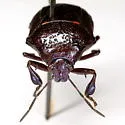
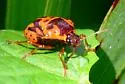
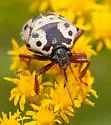
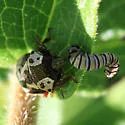
Photo credits: Contributed by Stephen_WV; Additional contributions by cotinis , Hannah Nendick-Mason , Beatriz Moisset , Chuck Entz , Mike Quinn , David Ferguson , v belov
Frequently Asked Questions About Anchor Stink Bug
What is Anchor Stink Bug?
Anchor Stink Bug (Stiretrus anchorago) is a species in the family Pentatomidae, within the order Hemiptera.
How big is Anchor Stink Bug?
7‒9 mm
How do you identify Anchor Stink Bug?
markings/color highly variable • distinguishable from other predatory pentatomids by the large scutellum almost reaching the tip of abdomen; profemora with strong tooth Nymphs
Where is Anchor Stink Bug found?
| Feature | Details |
|---|---|
| Habitat | on a wide variety of herbaceous plants |
| Range | e.NA (NB‒FL to MN‒TX) to Colombia ( 3 ) |
What does Anchor Stink Bug eat?
The diet of the Anchor Stink Bug includes feeds on beetle larvae and caterpillars, incl. many pest spp. (notably Mexican Bean Beetle and Japanese Beetle) prey is primarily beetle larvae and caterpillars: attacks monarch larvae: A predator of Chlosyne lacinia , tends to attack III/IV-instar larvae and may destroy the entire brood preying on Labidomera clivicollis larvae:.
What is the life cycle of a Anchor Stink Bug?
see • eggs typically take a week to hatch; nymphal phase (5 instars) takes 25‒35 days