
Family Plant Bugs (Miridae)
Miridae is a family in the order Hemiptera. Browse 969 named species recorded in this family, or open an individual profile for its available identification and natural-history information.
Species in Miridae (969)
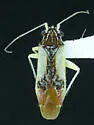
Ephedrodoma multilineata
Ephedrodoma multilineata
Identification: Det. M.D. Schwartz, 2017 Type Locality: Nevada, Clark Co., Mount Charleston 5500”, VII-19-82, J. T. Polhemus.
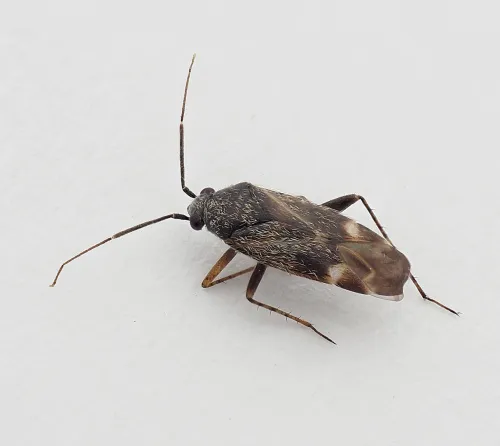
Europiella artemisiae
Europiella artemisiae
A small (c. 3mm) greyish bug found on Mugwort ( Artemisia vulgaris ). The basal segments of the antennae are black, and there is a pale mark on the cuneus. The dorsal surface has pale hairs. The tibial spines arise from dark spots. Europiella decolor
Eurychilopterella brunneata
Eurychilopterella brunneata
Identification: large size and uniform dark coloration Recognized by the large body size, uniformly brown to fuscous general coloration, posterodorsal margin of head not noticeably carinate, long labium , distinctly rugulose hemelytra (emphasis added
Eurychilopterella luridula
Eurychilopterella luridula
Identification: Recognized by the extensive pale areas on the pronotum, scutellum and hemelytra; head slightly shorter than wide; bicolored second antennal segment; and structure of the male parameres and vesica. Type Locality: D.C.
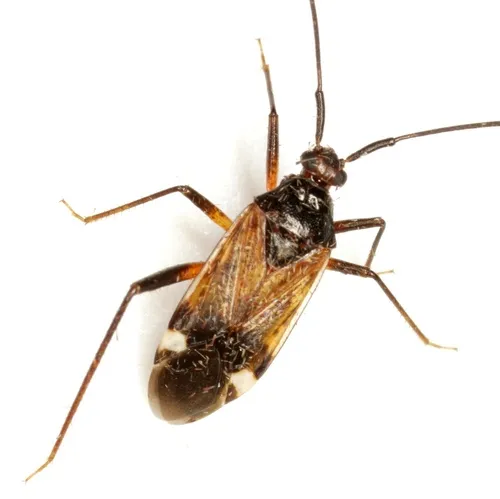
Eustictus albomaculatus
Eustictus albomaculatus
Identification: eyes smaller than knighti , but wider apart; short erect hairs on the hind tibia Det. M. A. Quinn, 2023 E. albomaculatus was the last US sp. of Eustictus to be described , and Johnston only lists E. knighti as being similar to it in T
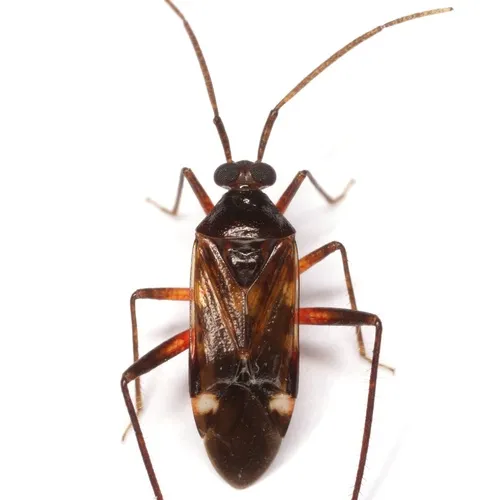
Eustictus knighti
Eustictus knighti
Identification: "Hind tibiae covered with very long erect hairs, also a few long erect hairs on apex of hind femora." (the long hairs on the hind legs are clearly visible in the enlarged thumbnail) - coll'ed at UV light near type locality (same count
Eustictus pilipes
Eustictus pilipes
Identification: Coloration nearly as in spinipes , but head, antennae, and legs of deeper red. Spines on basal half of hind tibiae replaced by long hairs several of which in length are equal to three times thickness of tibia. Femora also bearing long
Fulvius anthocoroides
Fulvius anthocoroides
Identification: A2 mostly brown with at least the distal ⅓ pale, scutellum uniformly dark brown, hemelytron dark brown with the basal third of the corium and clavus pale and a large white spot (often tinged with orange) at the apex of the corium bord
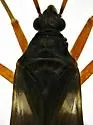
Fulvius atratus
Fulvius atratus
Identification: Black; corium with a subbasal transverse whitish fascia terminating at centre of outer claval margin; cuneus testaceous, inner basal angle and apex black; membrane blackish, its apical half pale fuscous; femora brownish ochraceous, wi
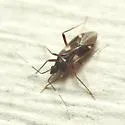
Fulvius imbecilis
Fulvius imbecilis
Identification: Third (?) segment of antennae is black on its proximal half, white distally, with sharp contrast between. In the northeastern US and eastern Canada, the only other species present is F. slateri , in which that segment is typically ent
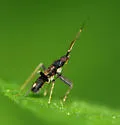
Fulvius slateri
Fulvius slateri
Identification: Third (?) segment of antennae is extensively pale without sharp contrast. In the northeastern US and eastern Canada, the only other species present is F. imbecilis , in which that segment is black on its proximal half, white distally,
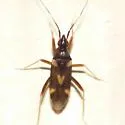
Fulvius subnitens
Fulvius subnitens
Identification: Distinguished by the basally brown A2 with the distal one half to two thirds pale or white, the uniformly dark brown scutellum, and the dark brown hemelytron, including the uniformly dark brown cuneus, with the base of the corium, the
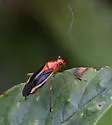
Ganocapsus filiformis
Ganocapsus filiformis
Identification: "Color pale sanguineous, elytra black, commissural and costal margins and legs pale yellowish."
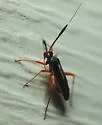
Garganus fusiformis
Garganus fusiformis
Identification: Striking color pattern and slightly swollen second antennal segment that is hairy and black.
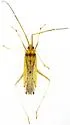
Gracilimiris rubrolineatus
Gracilimiris rubrolineatus
Identification: "Superficially similar to G. litoralis and G. strigosus in having distinctly dark-spotted hemelytra with scattered, black, bristlelike setae, but differs from both species in the smaller size, the more sparsely spotted and less-dense,
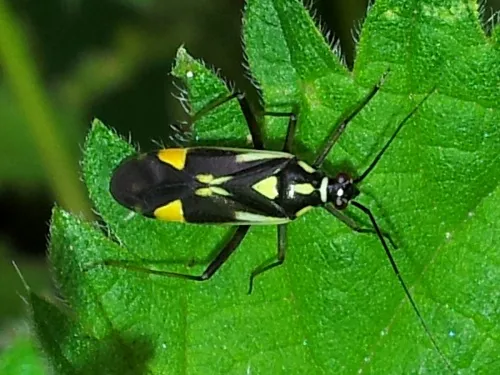
Grypocoris stysi
Grypocoris stysi
Length 6-8 mm. A conspicuous bug. The chequered pattern of light yellow-white areas and striking orange-yellow cuneus make confusion with other species unlikely. Usually on Nettles in woodland, and sometimes umbellifers and White Bryony. Eggs hatch i
Hadronema bispinosa 0
Hadronema bispinosa
Identification: Recognized by the dark head above with a central pale stripe and two yellowish spots adjacent to eyes (fig. 2); the mostly yellowish pronotum, with black calli (fig. 2); the mostly yellowish scutellum (fig. 2); the yellowish orange fe
Hadronema echinata 0
Hadronema echinata
Identification: Recognized by the nearly straight, rounded, lateral margins of the pronotum (fig. 38A); the prominent transverse posterior protuberance near the posterior margin of pronotum (fig. 38A); the weakly curved mesotibia in males
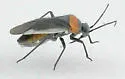
Hadronema pictum
Hadronema pictum
Identification: Recognized by the orange-red posterior lobe of pronotum (fig. 2); the similar length of antennal segments II and III Det. M. A. Quinn, 2013 Lectotype: Garden of the Gods, Colorado city, El Paso Co., Colorado [38.86778uN 104.89056uW],
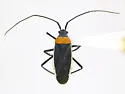
Hadronemidea echinata
Hadronemidea echinata
Identification: From Forero: "Recognized by the nearly straight, rounded, lateral margins of the pronotum...; the prominent transverse posterior protuberance near the posterior margin of pronotum...; the weakly curved mesotibia in males, covered with
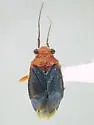
Halticotoma andrei
Halticotoma andrei
Identification: For females, a useful character to separate H. andrei from H. valida is the length of the second antennomere. It's longer than the distance between eyes in the former, and shorter than the distance between eyes in the latter. Det. Jas
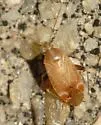
Hamatophylus guttulosus
Hamatophylus guttulosus
Identification: Det. WonGun Kim, 2012 " Hamatophylus guttulosus is not restricted to Quercus virginiana . In Mexico, it is also known from Q. polymorpha and Q. mircrolepis , among others, and Wheeler found it on Q. illicifolia in Pennsylvania. Nevert
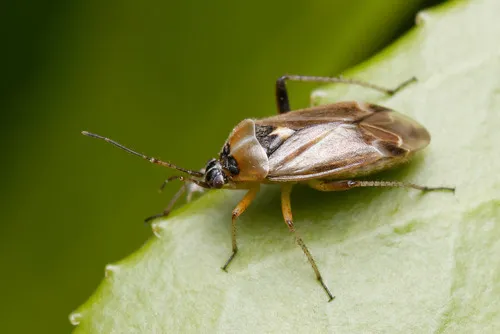
Harpocera thoracica
Harpocera thoracica
Length about 6 mm. A handsome bug. The sexes are dimorphic and very different in appearance; males are more elongate in shape, with longer tibiae and a distinctive inflated 2nd antennal segment. Adults appear in the spring and are short-lived (partic
Henrylygus ultranubilus
Henrylygus ultranubilus
Identification: Similar to H. nubilus , but distinguished by 1) posterior margin of eye reflexed posteriorly; 2) apex of clavus white; 3) overall coloration yellow brown with black markings; and 4) base of cunues white.
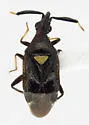
Hesperophylum arizonae
Hesperophylum arizonae
Only a few specimens have been collected (and only one male) ( 3 )
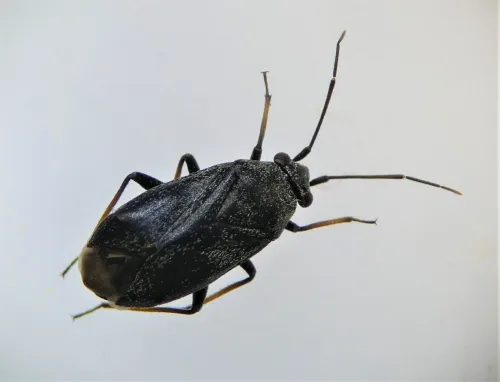
Heterocordylus tibialis
Heterocordylus tibialis
A medium-sized (4.5 to 5.5 mm) black mirid bug covered in flattened scale-like pale hairs which may appear golden. There are two very similar species but they use different host plants, and for that reason it is very important to state the host plant
Heterotoma planicornis
Heterotoma planicornis
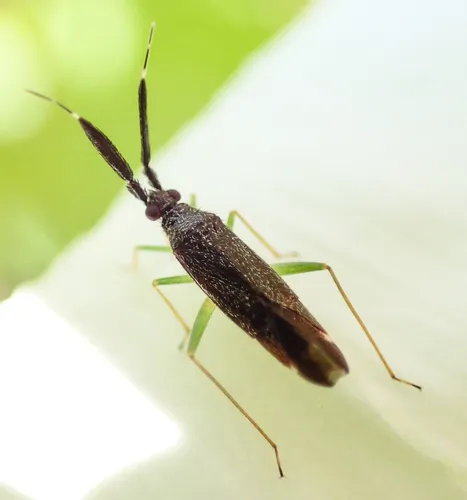
Length 4.5-5.5 mm. The broad and flattened 2nd antennal segment, dark ground colour and contrasting greenish legs make this species unmistakeable. On various plants and trees, in particular nettles. Both adults and the reddish nymphs feed on small in
Hoplomachus thunbergii
Hoplomachus thunbergii
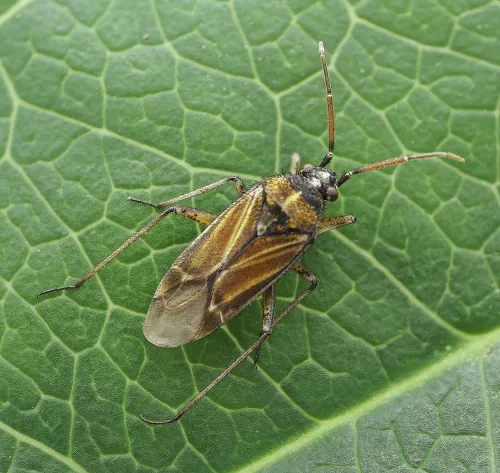
Length 4mm. A distinctively marked plant bug. The upper surface is covered in dark hairs. Feeds on Mouse-ear Hawkweed in dry grassland habitats. https://www.britishbugs.org.uk/heteroptera/Miridae/Hoplomachus_thunbergi.html No additional images availa
Hyaliodes brevis
Hyaliodes brevis
Identification: A1 is nearly equal to or greater than head width, and the body is shorter and more nearly ovate as compared with H. vitripennis
Hyaliodes harti
Hyaliodes harti
Identification: Adults are elongate, hyaline or glassy in appearance, with long slender legs and large reddish eyes. Kelton key features: Collar and calli black. Scutellum black at base. Apical margin of corium red Knight other features: Median prono
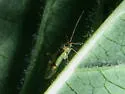
Hyaliodes vitripennis
Hyaliodes vitripennis
Identification: Collar and calli pale green. Scutellum mostly pale green. Apical margin of corium black. H. harti has black collar, red apical margin of corium, and longer first antennomere
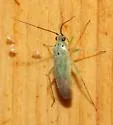
Ilnacora arizonae
Ilnacora arizonae
Identification: Paraphrasing Knight: Overall appearance similar to I. stali , but first antennomere uniformly black except narrowly pale at the base and apex (in stali , center of the first antennomere is lightened). Structure of the male genitalia,
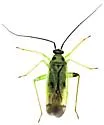
Ilnacora nicholi
Ilnacora nicholi
Identification: Paraphrasing Knight: This is one of the species with larger black spots on the pronotum; and head, thorax beneath, and venter all black. Structure of the male genitalia, especially the right clasper, will conclusively distinguish this
Ilnacora nigrinasi 0
Ilnacora nigrinasi
Identification: color pale green, the green on the elytra segregated, leaving clear places (emphasis added); first antennal joint biannulate with black, the apex of the head conspicuously black (e.a.). The annulated first antennal joint and the remar
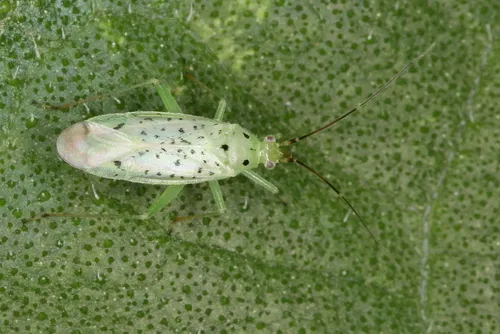
Ilnacora stalii
Ilnacora stalii
Identification: Adult: light green above, with sparse dark green speckling on leathery portion of forewing; pronotum has two black widely-spaced spots on either side of midline; scutellum has small black medial spot at base; cuneus has small dark blo
Ilnacora vittifrons 0
Ilnacora vittifrons
Identification: Paraphrasing Knight: As with I. divisa , this species has a trident pattern of black lines on the frons, but the first antennomere is uniformly black (in divisa , center of the first antennomere is lightened). Structure of the male ge
Keltonia pallida
Keltonia pallida
Identification: Overall coloration pallid to dull greenish white; clavus and corium uniformly pale, without spots (cuneus and embolium sometimes with a few indistinct spots) Keltonia pallida is one of the most distinct species in the genus and can be
Keltonia tuckeri
Keltonia tuckeri
Identification: 1) Hemelytral spots coalescing to form a conspurcate brown cloud or solid dark area through middle of corium and apex of clavus; 2) Dorsum dull yellow; 3) Femora pale, with small brown spots; and 4) Cuneus, embolium, and corium with d
Labopidea cepula
Labopidea cepula
Identification: General color yellow green; pronotum, scutellum, and hemelytra with erect and semierect dark bristlelike setae, intermixed with recumbent, silvery sericeous setae. (Henry 1982) Females may be brachypterous (Henry 1982) Holotype: Bastr
Labopidea geminata
Labopidea geminata
Identification: Small species (3-4 mm), mix of pale and somewhat brownish setae on dorsum, 4th antennal segment much longer than 1st, and male genitalia help distinguish this species.
Labops burmeisteri
Labops burmeisteri
Identification: Hemelytra entirely black without light coloration along the lateral margin of the corium.
Largidea grossa 0
Largidea grossa
Identification: Antennal segment II somewhat flattened, broadly lanceolate; length of segment I just equal to width of segment II; length 6.0 mm (last couplet) described from California, where a single female was taken on Jeffrey Pine, alt. 7000 ft,
Largidea nevadensis 0
Largidea nevadensis
Identification: Largidea , Key to the Species, couplet 2 : Femora black, without visible dots; length 4.7 mm nevadensis , n. sp. Femora reddish brown, one or two rows of fuscous dots visible through the red color; length 4.2 mm rubida Uhler
Largidea rubida 0
Largidea rubida
Identification: Largidea , Key to the Species, couplet 2 : Femora black, without visible dots; length 4.7 mm nevadensis , n. sp. Femora reddish brown, one or two rows of fuscous dots visible through the red color; length 4.2 mm rubida Uhler Type Loca
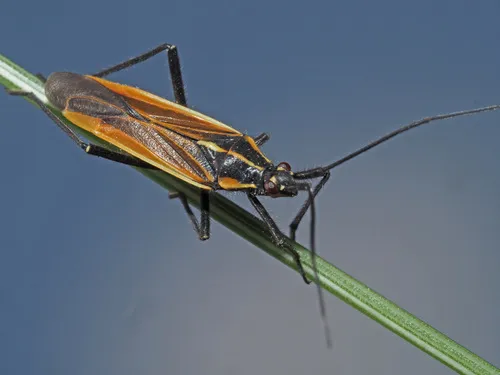
Meadow Plant Bug
Leptopterna dolabrata
Length 8.0-8.5 mm. Leptopterna species are large and common grass bugs which often have reddish or orange-yellow forewings. They have a transverse furrow between the eyes and the legs and antennae are covered in long dark hairs. There are two very si
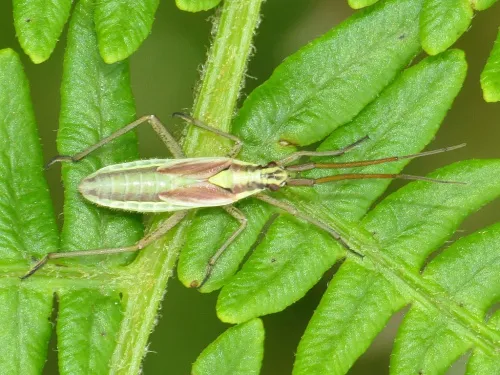
Leptopterna ferrugata
Leptopterna ferrugata
Length: 7.0 to 8.5 mm. This large, sexually dimorphic grass bug has a transverse furrow between the eyes and the legs and antennae are covered in long dark hairs. It often has reddish or orange-yellow forewings, hence the Latin name, however care mus
Lidopus heidemanni
Lidopus heidemanni
Identification: easily recognized by extremely convex pronotum and color pattern
Lineatopsallus biguttulatus
Lineatopsallus biguttulatus
Identification: " L. biguttulatus is distinguished from L. slateri by the larger size, more distinct fuscous lines on the antennal segments and legs, and the larger, more distinct, subapical, fuscous spot on the posterior surface of the meso- and met
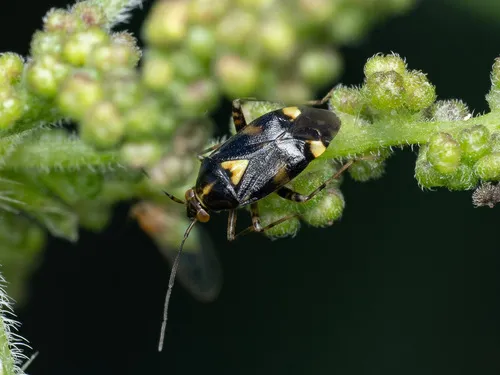
Common Nettle Bug
Liocoris tripustulatus
Length 4-5 mm. A variable but distinctive species, the colour of the scutellum and cuneus ranges from cream to deep yellow and the pale legs are striped with black rings. Short dark spines are present on the tibiae. Head width = 1/2 pronotum width, l
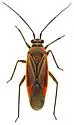
Lopidea apache
Lopidea apache
Identification: "Very similar to heidemanni , distinguished by the presence of a well developed sensory lobe, the short medial flange of the right paramere and its southwestern distribution." (Hopefully, someday we'll have entries for L. heidemanni f
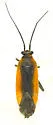
Lopidea confluenta
Lopidea confluenta
Identification: slightly more ovate and robust than robiniae , is frequently very similar in coloration but usually more orange or reddish. It has frequently been labeled robiniae in collections and the only certain way of determining the yellow form
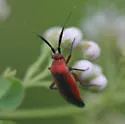
Lopidea instabilis
Lopidea instabilis
Identification: from the thick and short second antennal segment and the red femora. … WonGun Kim, 23 February, 2009
Lopidea intermedia 0
Lopidea intermedia
Identification: Bright red with fuscous and blackish as exhibited in media , shorter and more compact, the antennae shorter also; second antennal segment linear, in length (1.31 mm.) less than the width of the pronotum (1.48 mm.) at the base. Similar
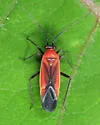
Lopidea media
Lopidea media
Identification: Det. Brad Barnd, 2013, ID'd from specimen
Lopidea pteleae 0
Lopidea pteleae
Type Locality: Inks Lake State Park, Burnet Co., Texas, 17 Apr 1966 (J. C. Schaffner)
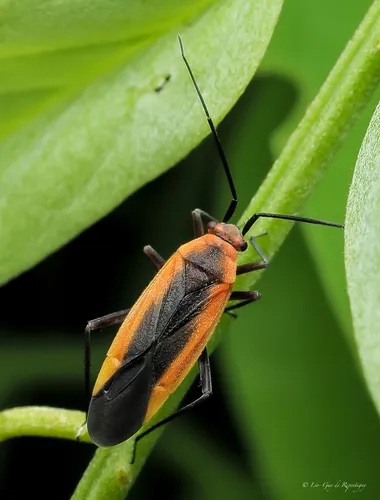
Lopidea robiniae
Lopidea robiniae
Identification: distinguished from the pale forms of confluenta (=confluens) only by the genital claspers Type Locality: MD
Lopidea robusta 0
Lopidea robusta
Identification: spmn from Tahoe City has the black spot on the callosities extended back across the disk nearly to the hind margin of the pronotum. Type Locality: Mexico
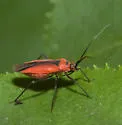
Lopidea staphyleae
Lopidea staphyleae
Identification: There are a dozen or so species listed for Illinois, but this is the only one reported from that particular plant genus. Male.-Length 6.50, width 2.05. Antennae, first segment, length 0.71, thickness 0.15; second, 2.48, thickness 0.10
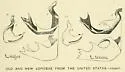
Lopidea texana 0
Lopidea texana
Identification: Very similar to major in size and general structure, but in color more orange red than carmine; male genital claspers distinctive of the species. Lopidea major (L), Lopidea texana (R) Type Locality: Austin, Texas (C. T. Brues) Allotyp
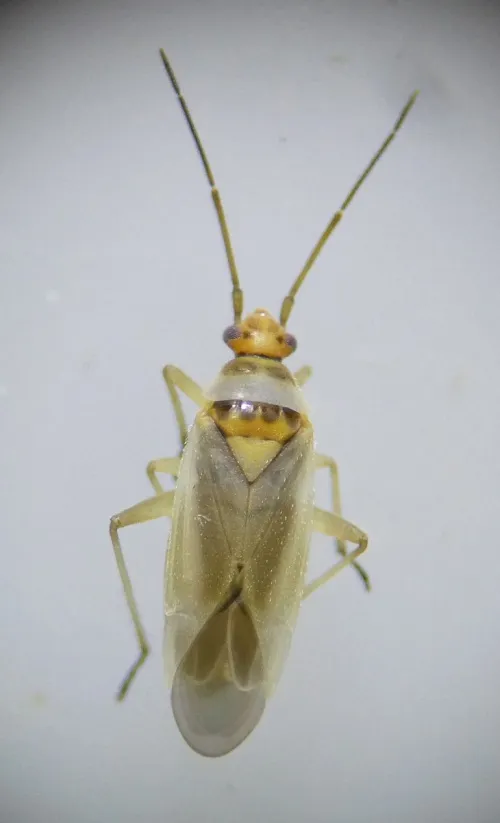
Lopus decolor
Lopus decolor
Length 4 to 5 mm. A fairly small greyish-yellow bug which is elongate oval in shape. The head has two darker marks bordering the eyes and the tarsi are entirely dark. There are other, very similar species and care is needed with identification. Quite
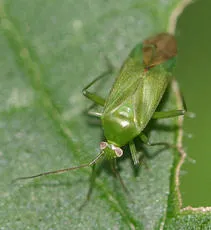
Common Green Capsid
Lygocoris pabulinus
Length 5-6.5 mm. Lygocoris species can be distinguished from similar green bugs by the very fine and inconspicuous pale brown tibial spines and at high magnification, the break in the keel between the eyes. The pronotum is rather straight-sided. In L
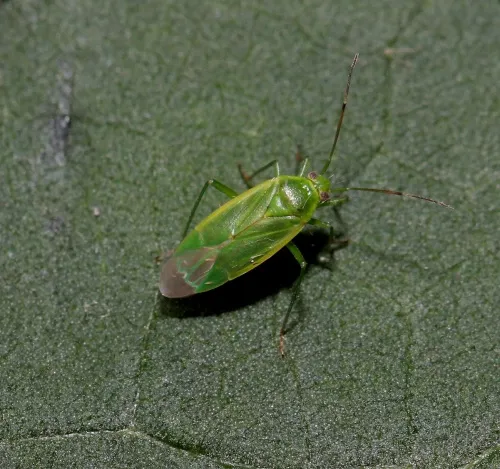
Lygocoris rugicollis
Lygocoris rugicollis
Length 5.5 to 7.0 mm. Lygocoris species can be distinguished from similar green bugs by the very fine and inconspicuous pale brown tibial spines and at high magnification, the break in the keel between the eyes. The pronotum is rather straight-sided.
Western Tarnished Plant Bug
Lygus hesperus
Identification: Recognized by long A2 and A3, long labium, always reaching the base of the abdomen, dense, long hairs, dense punctation, sometimes overall reddish-cast, and usually red apex of the tibiae, especially the metatibia of otherwise pale fe
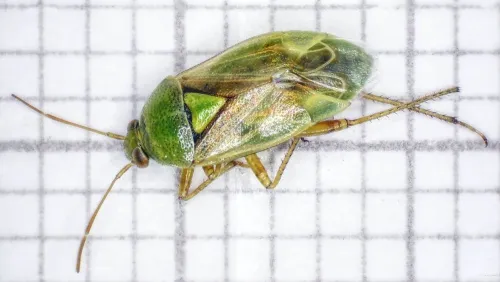
Lygus maritimus
Lygus maritimus
5 to 6 mm. Markings variable but colour predominantly green, pronotum often rose-tinged in the posterior half. Pubescence on middle of corium sparse; lateral spacing of the hairs generally greater than hair length. Punctures on middle of corium widel
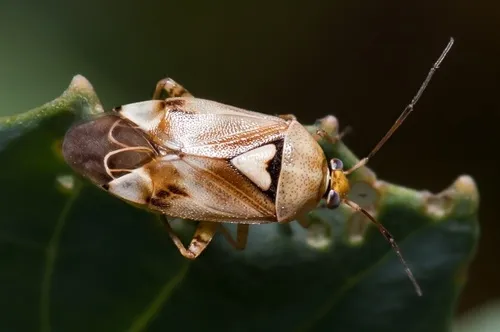
Lygus pratensis
Lygus pratensis
Length 6-7 mm. This genus is one of the most problematic Mirid groups to identify. The five UK species can overlap considerably in colour, markings and size; some specimens cannot be determined. The most reliable identification features concern the f

Tarnished Plant Bug
Lygus rugulipennis
Length 5 to 6 mm. This genus is one of the most problematic mirid groups to identify. The five UK species can overlap considerably in colour, markings and size; some specimens cannot be determined. The most reliable identification features concern th
Macrolophus brevicornis
Macrolophus brevicornis
Identification: A1 is less than width of head across the eyes; apical ¼ of A2 black; basal ⅔ of corium without fuscous points at bases of hairs except one row bordering claval suture
Macrolophus mimuli
Macrolophus mimuli
Identification: Very similar in appearance to two other species, M. lopezi (known from Baja California) and M. saileri (southern AZ, Mexico). Distinguished from M. lopezi "by the larger size, and length of first antennal segment greater than width of
Macrolophus rubi
Macrolophus rubi
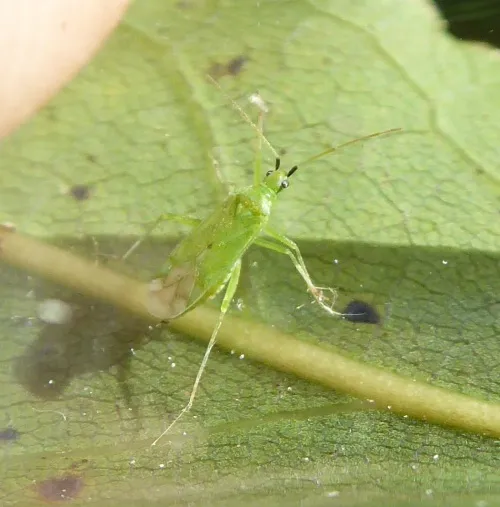
A small (4 mm) green bug, usually found on bramble. Macrolophus species can be recognised by the dark bar between the rather small eyes and the pronotum. This species can be separated from the scarcer Macrolophus pygmaeus by the relative length of th
Macrolophus separatus
Macrolophus separatus
Identification: Antennal segment 1 is wholly black.
Macrotylus paykulli
Macrotylus paykulli
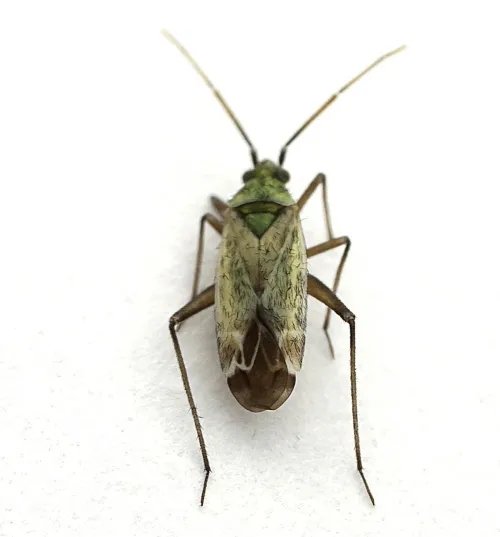
Length 3 to 4 mm. A parallel-sided grey-green species, characterised by a dense covering of coarse, dark hairs on the forewings and a distinctive wing membrane pattern with an irregular black mark at apex of membrane cells. The tibial spines are fine
Macrotylus solitarius
Macrotylus solitarius
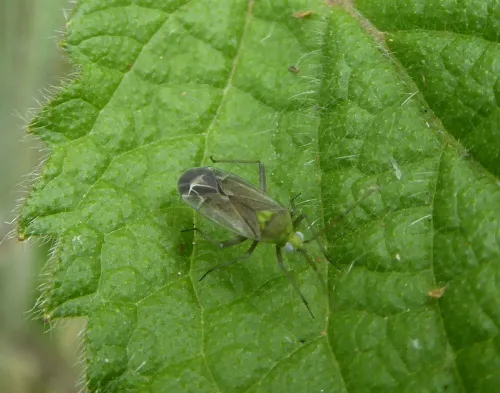
Length 5 mm. A distinctive genus comprising three rather parallel-sided grey-green species, characterised by a dense covering of coarse, dark hairs on the forewings and a striking wing membrane pattern. The tibial spines are fine and inconspicuous. I
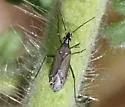
Macrotylus tristis
Macrotylus tristis
Identification: "Dull slaty-black...Two minute pale spots on the vertex and there may be two more on the callosities and two on the basal and two on the apical lobe of the scutellum; the membranal nervures, basal margin of the cuneus and commissural
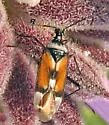
Macrotylus vanduzeei
Macrotylus vanduzeei
Identification: Distinguished from allied species by the truncated and slightly enlarged tips of the erect black bristles on dorsum; corium, except apex and the outer half of clavus, orange-colored. (Knight, 1932)
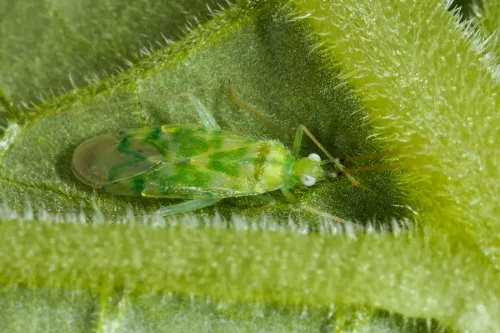
Delicate Apple Capsid
Malacocoris chlorizans
Length 3 to 4 mm. The rather forward set eyes and green mottled forewings are distinctive. This species can be identified with care but there are similar species that it could be confused with. This small bug may be found on a range of deciduous tree
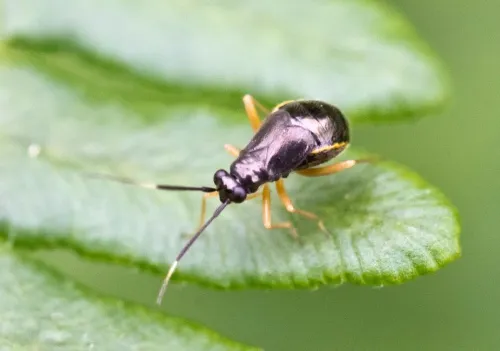
Mecomma ambulans
Mecomma ambulans
Length 2.5 to 4.5 mm. Mecomma species are sexually dimorphic; males are macropterous and females usually brachypterous. Male M. ambulans are separated from the more local M. dispar by the entirely dark antennae and by the pronotum, which is clearly w
Mecomma angustata
Mecomma angustata
Identification: "This species differs markedly from the other Mecomma in the rounded head and the tumid calli on the pronotum." The second antennal segment is linear in males and clavate in females.
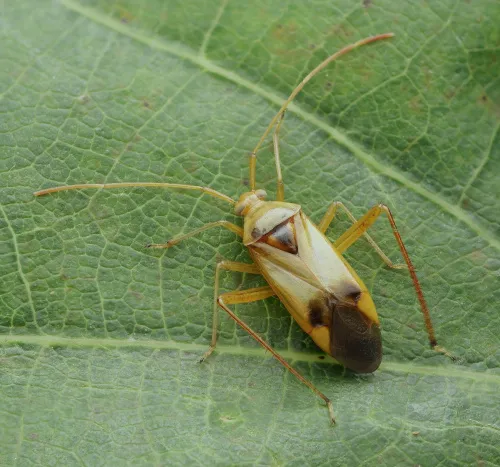
Megacoelum infusum
Megacoelum infusum
Length about 7 mm. A striking orange-brown bug with long legs and antennae. The upperside is smooth and almost completely hairless. The rear of the corium is usually dark and the cuneus entirely orange. The tibial spines in this species are roughly e
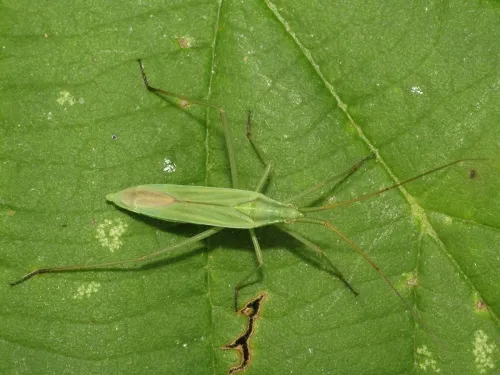
Megaloceroea recticornis
Megaloceroea recticornis
Length 8 to 10mm. This is an elongate grass bug with extremely long antennae and long slender hind legs which differentiate it from the similar-looking Stenodema species. Its colour varies from green to straw yellow in the adult, whilst nymphs are gr
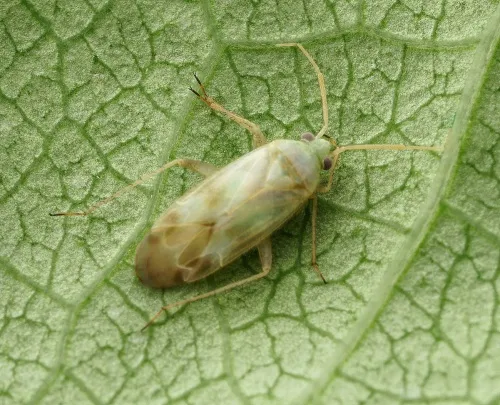
Megalocoleus molliculus
Megalocoleus molliculus
Length 4.5 mm. There are two species in this genus, both of which are fairly distinctive. The tibial spines are wider than the tibial width and the apical segment of the tarsi is dark. Megalocoleus molliculus is pale blue-green in colour, mottled wit
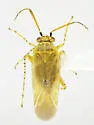
Megalopsallus brendae
Megalopsallus brendae
Identification: "Recognized by generally pale greenish coloration of dorsum contrasting with dark antennal segment 1."
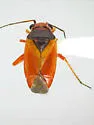
Megalopsallus ephedrae
Megalopsallus ephedrae
Identification: Red-tinged pale to bright red hemelytra, contrasting with dark scutellum and pronotum; femora and tibiae more or less unicolorous ( M. froeschneri looks similar in other respects, but has distal portion of femora and all of tibiae pal
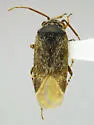
Megalopsallus humeralis
Megalopsallus humeralis
Identification: "Recognized by frequently dark coloration of most of dorsum and femora, or at least dark coloration of head, pronotum, scutellum, and femora, with pale hemelytra. Most easily confused with nigrofemoratus on basis of size, coloration,
Megalopsallus nicholi
Megalopsallus nicholi
Identification: "Recognized by castaneous head, pronotum, and scutellum contrasting with pale corium, clavus, and membrane, and cuneus always at least weakly darkened and reddish."
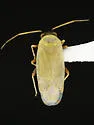
Megalopsallus nigricaput
Megalopsallus nigricaput
Identification: "Recognized unequivocally by the dark head, first antennal segment, coxae, femora, and thoracic sternum in contrast to otherwise almost white to weakly greenish coloration."
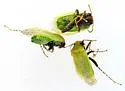
Megalopsallus pictipes
Megalopsallus pictipes
Identification: "Recognized by generally pale green coloration of dorsum and strongly contrasting deep red, often mottled, color of antennal segment 1 and all femora. Not easily confused with any other species."
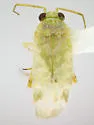
Megalopsallus rubropictipes
Megalopsallus rubropictipes
Identification: Recognized by relatively large size, pale green coloration, red eyes, and reddish femora... Similar to nuperus in general appearance and lack of strong sexual dimorphism (except in some populations of rubropictipes ), but distinguishe
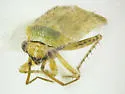
Megalopsallus sparsus
Megalopsallus sparsus
Identification: "Recognized among small, at least partly greenish, Megalopsallus species by gray to black eyes and frequently dark head, anterior lobe of pronotum, and mesoscutum. Thoracic pleuron and venter and abdominal venter infuscate in male, pa
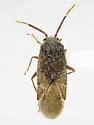
Megalopsallus teretis
Megalopsallus teretis
Identification: "Recognized by totally blackish brown coloration and spindle-shaped antennal segment 2 in female."
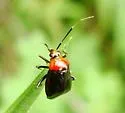
Wild Onion Mirid
Metriorrhynchomiris dislocatus
Identification: exceedingly variable; in some specimens entire forewing black, except costal margin and base of radial vein
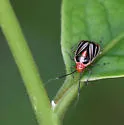
Metriorrhynchomiris illini
Metriorrhynchomiris illini
Identification: A2 clavate, embolium white, and cuneus rose colored. Type Locality: Illinois
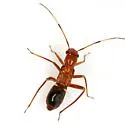
Mexicomiris texanus
Mexicomiris texanus
Type Locality: Ft. Sam Houston, Bexar Co., Texas, 6.IV.1953, B.J. Adelson; 2 males, 1 female; NMNH.
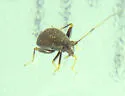
Garden Fleahopper
Microtechnites bractatus
Identification: Minute, black; antennomere 1 and often the middle of the second and the base of the third pale; patches of silvery scale-like hairs on the front wing. Both macropterous and brachypterous morphs present: males always macropterous, whil
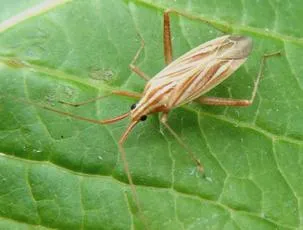
Miridius quadrivirgatus
Miridius quadrivirgatus
Length 9 to11 mm. A large and long-legged species with a long 1st antennal segment and diagnostic markings; unbroken orangey-red and cream stripes run the full length of the head, pronotum and scutellum. The red cuneus is variable. It is associated w
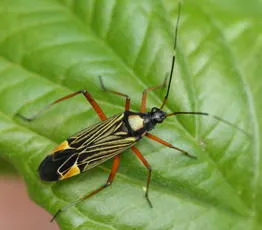
Fine Streaked Bugkin
Miris striatus
Length 9-11 mm. A distinctively large and well-marked species, which should be unmistakable. The cuneus varies from yellow to orange-red, but is never black-tipped. The rather ant-like nymphs are dark with yellow markings and reddish-brown legs. Rhab
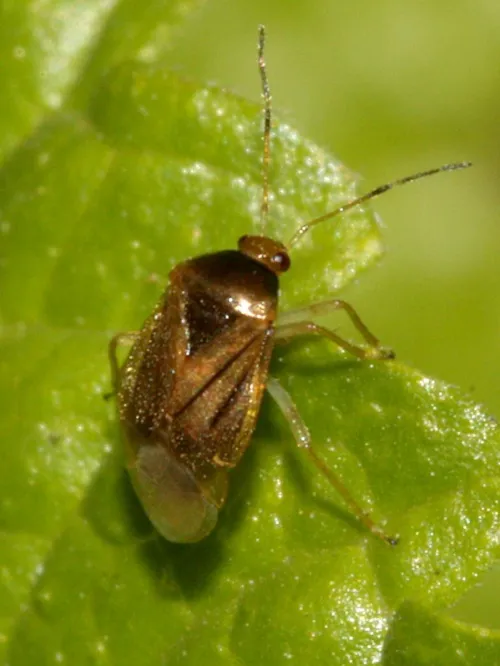
Bracken Bug
Monalocoris filicis
A small bug (length only 2 to 3 mm). The rich brown colouring and the orange head are quite distinctive. This species is always macropterous. Feeds primarily on the sporangia of ferns. Local but sometimes abundant where found. No additional images av
Monalocorisca maculata 0
Monalocorisca maculata
Type Locality: Brownsville, Texas, April 26, 1937 (H. J. Crawford)
Monalocorisca rostrata 0
Monalocorisca rostrata
Identification: antennomere 2 short, scarcely equal to width of head through eyes; rostrum slightly surpassing apex of metacoxae, and lateral pronotal carinae
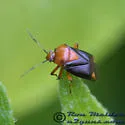
Neocapsus leviscutatus
Neocapsus leviscutatus
Identification: "Form and size of cardinalis ; elytra mostly deep blue-black; head, pronotum, scutellum and cuneus pale or sanguineous. Length 6 mm." (Van Duzee, 1912) - image from Dallas Co., TX Det. v belov, 2017 common at lights in Texas, nearly 5
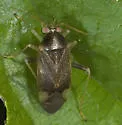
Hickory Plant Bug
Neolygus caryae
Identification: 1) Pronotum, scutellum, and hemelytra uniformly black or dark brown; 2) Cuneus pale; and 2) A2 brown to dark brown.