
Family Ichneumonid Wasps (Ichneumonidae)
Ichneumonidae is a family in the order Hymenoptera. Browse 581 named species recorded in this family, or open an individual profile for its available identification and natural-history information.
Species in Ichneumonidae (581)
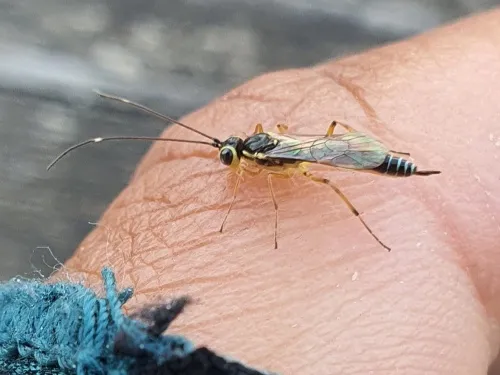
Oedemopsis scabricula
Oedemopsis scabricula
Unless identified by a recognised expert, a photo is required and the specimen should be examined with a microscope. In the comments box, state the key or ID method used and describe the size and identifying characters. Feeds on the larvae of certain
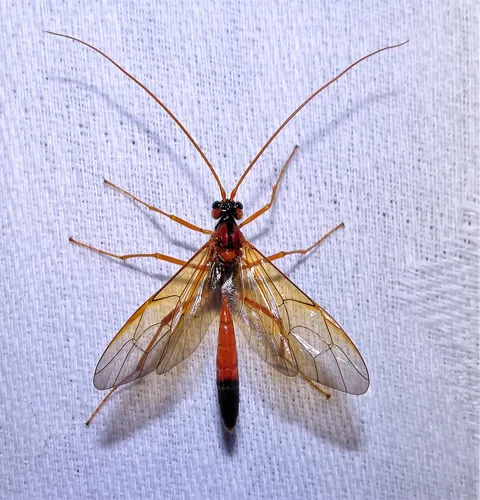
Opheltes glaucopterus
Opheltes glaucopterus
This is a large species. The legs, antennae and most of the abdomen are orange, but the last sections of the abdomen are black as are the sides of the thorax and an area above the waist. The wings are slightly orange shaded. Crepuscular or nocturnal
Ophion idoneus
Ophion idoneus
Identification: Typically recognized by the combination of small size and the lack of a ramellus in the forewing (or nearly so). Further, the flagellum has 51-57 flagellomeres, the anterior transverse carina of the propodeum is weakly convex, and the
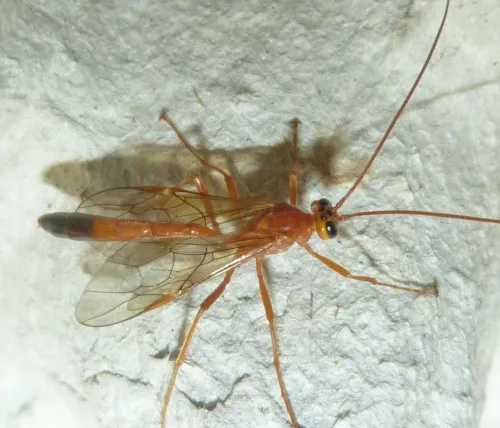
Ophion longigena
Ophion longigena
A mainly orange species, with some darkening towards the rear of the abdomen. Unless identified by a recognised expert, a photo is required and the specimen should be examined with a microscope. In the comments box, state the key or ID method used an
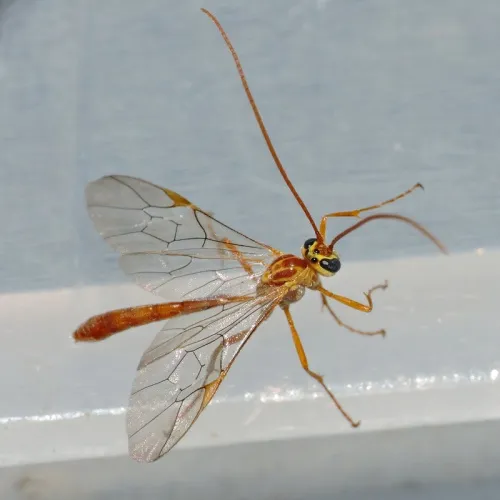
Ophion minutus
Ophion minutus
Quite similar in appearance to some other Ophion species, but smaller (around 10 mm). Unless identified by a recognised expert, a photo is required and the specimen should be examined with a microscope. In the comments box, state the key or ID method
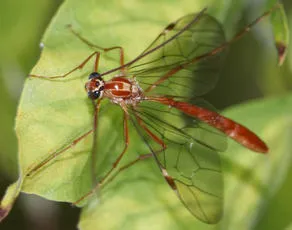
Ophion obscuratus agg.
Ophion obscuratus agg.
Length: 15 to 22 mm. Ophion obscuratus is identified the pale stripes on the thorax and by pale corners of the 'stigma' (the dark mark on the leading edge of the forewing). Many species of Ophion look similar therefore field identification is difficu
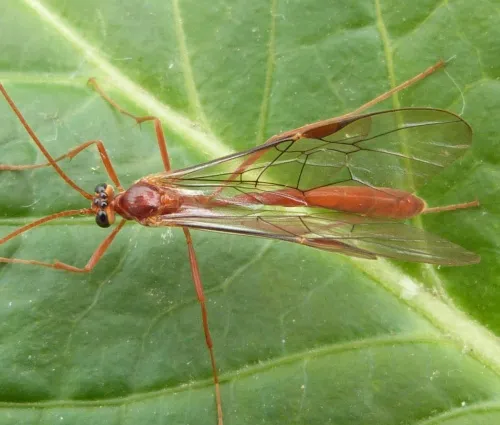
Ophion scutellaris
Ophion scutellaris
Length 14 to 20 mm. An orange brown Ichneumon, similar to others in the group such as O . obscuratus but with a very thin hind femur and lacking the thoracic yellow markings. The scattered records for this species are mostly from England.
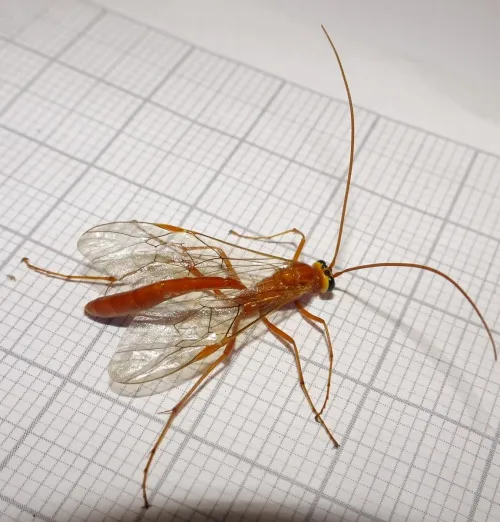
Ophion slaviceki
Ophion slaviceki
Ophion slaviceki is a large orange species (forewing 14‒17 mm); head with large ocelli usually touching, or almost touching, inner margin of compound eye; temple in female slightly shorter; male usually with temples more or less yellow. Unless identi
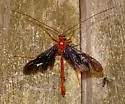
Ophion slossonae
Ophion slossonae
Identification: Noted as a large ophionine with often very dark wings and a contrasted fulvous (brownish-orange) pterostigma. The ocelli are especially large and prominent, further separated than in many other species. Per Marla Schwarzfeld: " Ophion
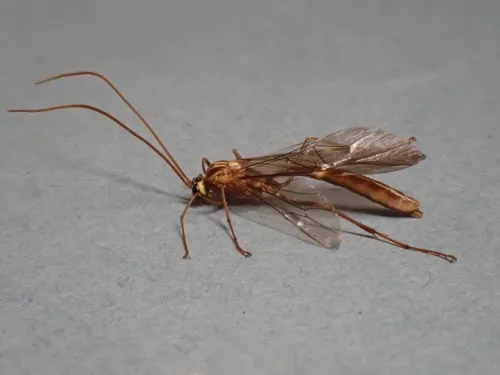
Ophion variegatus
Ophion variegatus
Length 15-22 mm. Identified the pale stripes on the thorax and by pale corners of the 'stigma' (the dark mark on the leading edge of the forewing). Many species of Ophion look similar therefore field identification is difficult. When viewed dorsally
Pachysomoides stupidus
Pachysomoides stupidus
Identification: "Ornate, black-and-white insect with orange legs" (Bug Eric)
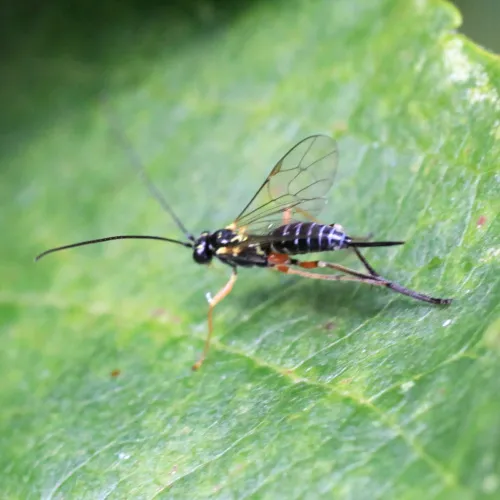
Phytodietus polyzonias
Phytodietus polyzonias
A medium sized (Body length 10-12mm) mainly black bodied ichneumon wasp with orange legs. The margin of each abdominal tergite is delineated in white and there are cream markings to the scutellum and the inner ocular orbits. The hind legs are orange
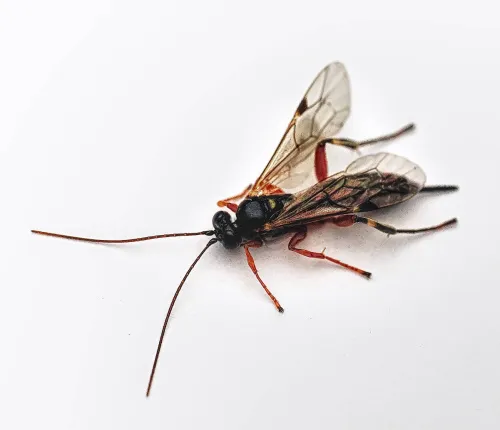
Pimpla insignatoria
Pimpla insignatoria
The body is entirely shiny black, including a solid black face with no white or yellow markings; legs are predominantly bright orange. Females have a thick, prominent, and completely straight ovipositor projecting from the rear. It lacks the downward
Pimpla maura
Pimpla maura
Identification: Body and legs black with restricted white markings (no ferruginous or fulvous); female with wings strongly infustate and male with wings moderately infuscate.
Pimpla pedalis
Pimpla pedalis
Identification: "Among North American Pimpla species, this color pattern is distinctive: black hind tibia in combination with the ferruginous hind femur, hind coxa, and mid coxa." -- Bob Carlson
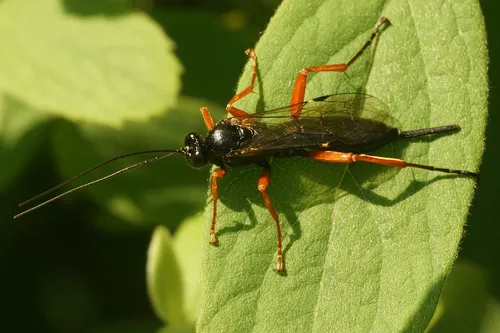
Pimpla rufipes
Pimpla rufipes
Length about 15 mm. A mainly black species, but with bright orange legs, the hind pair of legs being only slightly larger than the other pairs. The ovipositor of the female is quite thick and short and the 'waist' between the thorax and abdomen is al
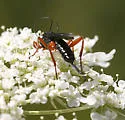
Pimpla sanguinipes
Pimpla sanguinipes
" erythropus and sanguinipes might really be two separate species, judging from the fact that they occupy different habitats: sanguinipes in arid areas and erythropus in forested areas. Townes even had differences in punctation for the two. His con
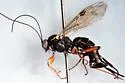
Pimpla turionellae
Pimpla turionellae
Introduced in North America and recovered a few times in Canada from several species of invasive Lepidoptera but not known to be established.
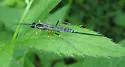
Podoschistus vittifrons
Podoschistus vittifrons
"Species of Podoschistus and Neoxorides are parasitoids of wood-boring beetles of the families Cerambycidae, Buprestidae and (less commonly) Curculionidae in both conifers and broad-leafed trees (Townes & Townes, 1960)." -- Gauld and Wahl
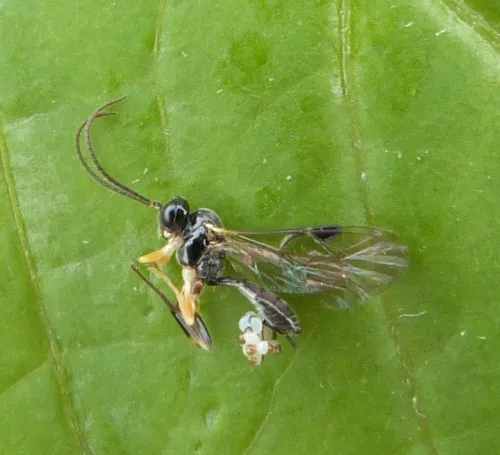
Polyblastus wahlbergi
Polyblastus wahlbergi
Forewing length about 7 mm. The thorax and body of this species is dark blackish, but the legs show quite a lot of yellow. The wings have a dark stigma. Various habitats including hedgerows and well wooded areas. May to October and may be attracted t
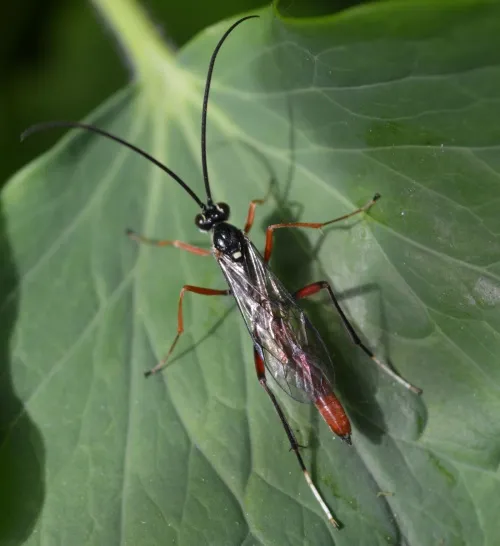
Polytribax perspicillator
Polytribax perspicillator
Although this wasp is largely red and black the extent of the white on the rear legs is important in determining the species. No additional images available for this species.
Protopelmus atrocaeruleus
Protopelmus atrocaeruleus
Identification: Very large for an ichneumonid wasp. The female is entirely black with metallic blue reflections, while the male has conspicuous pale markings, particularly on the scutellum, legs, T1-T3. ♀ ♂
Pseudorhyssa nigricornis
Pseudorhyssa nigricornis
Identification: This is the only species in our area with a ridged mesoscutum not within subfamily Rhyssinae . This species can be separated by the larger areolet, "fore wing with vein cu-a joining at the bifurcation of M and Cu", complete occipital
Rhynchophion flammipennis
Rhynchophion flammipennis
Identification: Body black, wings strongly orange with black at the apex and base, antennae variably yellow to black. Probably a mimic of certain Pepsini (tarantula-hawk wasps and allies)
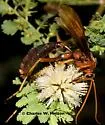
Rhynchophion woodi
Rhynchophion woodi
Identification: Body reddish-brown, wings orange with black at the apex and base, antennae yellowish-brown Suggested to potentially be a mimic of Polistes canadensis :
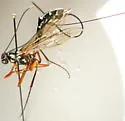
Rhyssa alaskensis
Rhyssa alaskensis
Identification: the only Rhyssa with the posterior orbits (area directly behind the eyes) entirely black, vs markings there ―see figs. from Townes (1960) . Original description
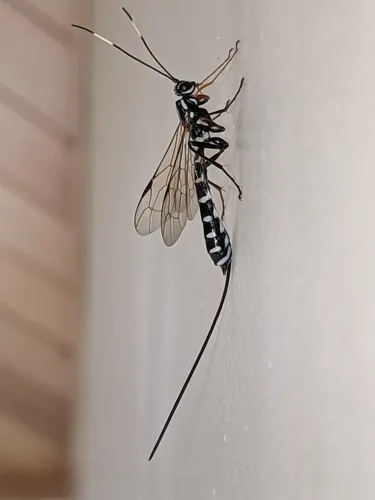
Rhyssa crevieri
Rhyssa crevieri
Identification: Rhyssa crevieri is one of only two rhyssine species in our area with white bands on the antennae. It lacks a white dorsobasal spot on the hind coxae (the ground color is dark). The metapleuron has a smaller, notched-to-"triangular" wh
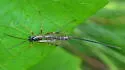
Rhyssa howdenorum
Rhyssa howdenorum
Identification: Rhyssa howdenorum is the only eastern member of its genus with a banded rather than spotted abdomen.
Rhyssa lineolata
Rhyssa lineolata
Identification: Rhyssa lineolata is one of only two rhyssine species in our area with white bands on the antennae. It additionally has a white dorsobasal spot on the hind coxae (the ground color is often orange but may be darker). The metapleuron has
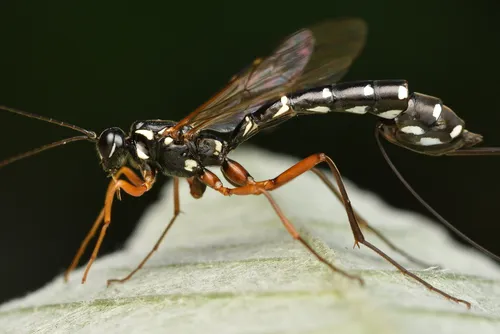
Sabre Wasp
Rhyssa persuasoria
Sometimes called the Giant Ichneumon, this is the largest ichneumon in Britain and one of the largest in Europe (10–40 mm). An easy species to identify due to the striking pattern of small white spots along the entire length of the thin, black body (
Rhyssa ponderosae
Rhyssa ponderosae
Identification: Rhyssa ponderosae is the only western species with the hind coxae entirely black. It also has more reduced spots on the abdomen.
Rhyssella humida
Rhyssella humida
Identification: Identified as Rhyssinae by the ridged mesoscutum and lack of anterolateral grooves on T2 of the abdomen and as Rhyssella by the smaller size, lack of a median tooth on the clypeus, basal fusing of the first sternite and tergite, gener
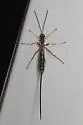
Rhyssella nitida
Rhyssella nitida
Identification: Identified as Rhyssinae by the ridged mesoscutum and lack of anterolateral grooves on T2 of the abdomen and as Rhyssella by the smaller size, lack of a median tooth on the clypeus, basal fusing of the first sternite and tergite, gener
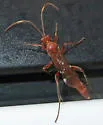
Rubicundiella annulicornis
Rubicundiella annulicornis
Identification: Males are readily distinguished from all other members of the genus by the combination of a white annulus on the flagellum and ferruginous scutellum.
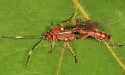
Rubicundiella mucronata
Rubicundiella mucronata
Identification: Males are readily distinguished from all other members of the genus by the combination of a white annulus on the flagellum and yellow-white scutellum.
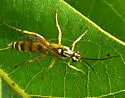
Setanta compta
Setanta compta
Identification: Females have white bands on the antennae and often narrower yellow bands on the abdomen while males have entirely black antennae and often wider yellow bands on the abdomen. ( 3 ) The subspecies have historically been identified as fo
Setanta parsimonica
Setanta parsimonica
Identification: Very similar to S. compta . "The main difference is the females have a predominantly yellow mesosoma (black in S. compta) and the basal part of the antenna is reddish-brown." - Brandon Claridge
Simophion excarinatus
Simophion excarinatus
Identification: Clypeus concavely truncate, more than twice as broad as long. Posterior tangent of eyes bisecting posterior ocelli. Mostly dark brown but the orbits so broadly yellowish white as to make the head appear largely of that color
Sphecophaga vesparum
Sphecophaga vesparum
Has been introduced into New Zealand as a biological control of wasps.
Stauropoctonus bombycivorus
Stauropoctonus bombycivorus
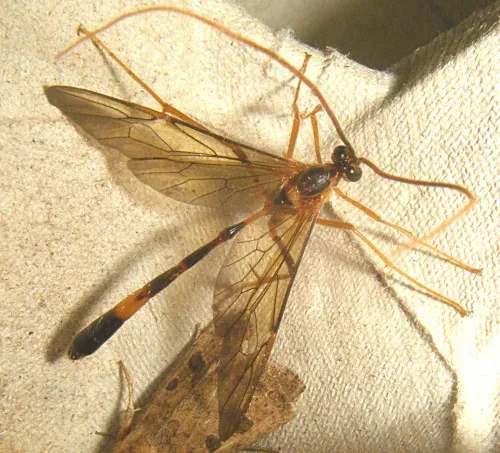
A striking, large ichneumon with exceptionally long, orange antennae and orange legs. The abdomen is black and orange. Various habitats in search of its host species. It is a parasitoid of the Lobster Moth. It could be also be attacking other suitabl
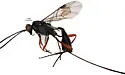
Stenarella domator
Stenarella domator
Identification: Distinguished from related Osprynchotina by black color with brownish-red legs, ovipositor at least 2.9 times metasomal length, and small cell 1+2Rs in fore wing. Parasitoid of wasps and bees with mud nests.
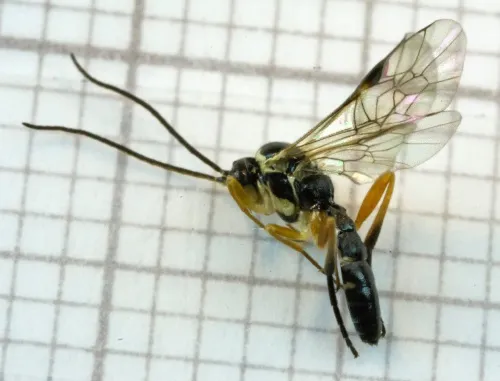
Syrphoctonus tarsatorius
Syrphoctonus tarsatorius
Diplazontinae wasps are recognized from their three-toothed (tridentate) mandibles with a notched upper tooth, a box-like first abdominal segment). The upper tooth of the mandibles is wide and notched, making the mandibles look three-toothed. The cly
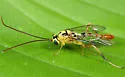
Syzeuctus comptus
Syzeuctus comptus
Identification: In the original description, distinguished from Meniscus elegans (now Syzeuctus elegan ) by the red hind femora.
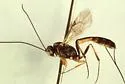
Temelucha interruptor
Temelucha interruptor
Palearctic species introduced to control the European Pine Shoot Moth ( Rhyacionia buoliana ) . However, research subsequently showed the species to be cleptoparasitic upon the braconid Orgilus obscurator , also introduced to control R. buoliana .
Temelucha sinuata
Temelucha sinuata
Identification: Noted particularly for its large size, brilliant coloration, and sinuate ovipositor
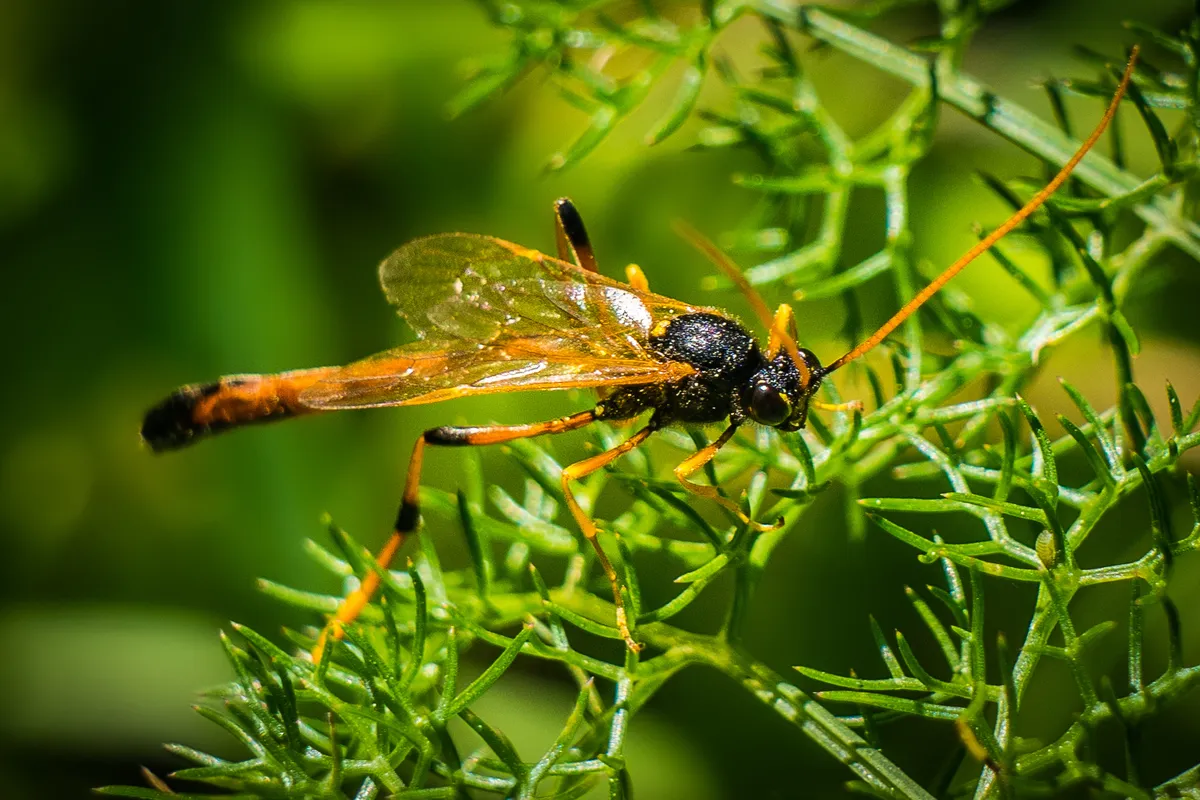
Therion circumflexum
Therion circumflexum
Identification: Very large size. Coloration: head black (female with only orbits and central stripe yellow, male with face entirely yellow), thorax black with at most some red spots, wings light brown, coxae black, trochanters red, first 3 abdominal
Therion petiolatum
Therion petiolatum
Identification: A small species. Coloration: Head black with orbits marked with red and yellow, thorax black with restricted red spots on the mesopleuron, wings dark brown, costal vein black, pterostigma dark, coxae black, trochanters red, hind femur
Theronia hilaris
Theronia hilaris
Identification: Tawny or orangish species with the following parts black: head, antennae, apical tarsomere of hind leg, and ovipositor sheath. The latter is about as long as the hind tibia. Wing venation Note that the picture in Marshall captioned as
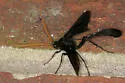
Thyreodon atricolor
Thyreodon atricolor
Identification: A very distinct and large species with a black body, black wings, and orange-yellow antennae. Distinguishable as an Ophioninae by the laterally compressed abdomen with a distinct, circular "knob" between the first and second segments.
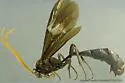
Thyreodon rivinae
Thyreodon rivinae
Identification: The salient diagnostic features are its enlarged ocelli (which almost touch the compound eyes laterally), yellow flagellum, and black fore wing with a large hyaline blotch in the discocubital and 2nd discoidal cells. (Porter, 1980) Ty
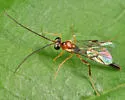
Trathala extensor
Trathala extensor
Identification: One of the characters, at least for the male of the species is that there is no space between the lateral ocelli and the eyes.
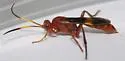
Trogomorpha arrogans
Trogomorpha arrogans
Identification: Pale transverse band on forewing distinguishes from Trogomorpha trogiformis , but it is not certain the two are distinct species.
Trogomorpha trogiformis
Trogomorpha trogiformis
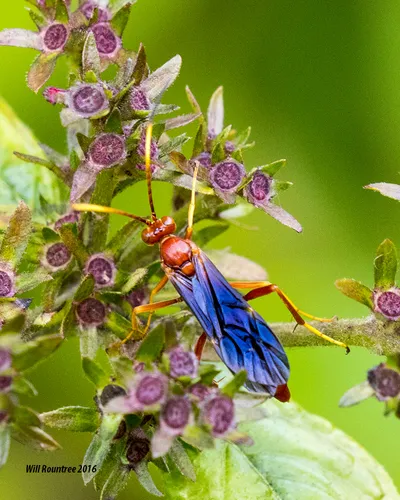
Identification: Noted for its uniformly red body, broad white to yellow bands (annuli) on the antennae, and very dark, somewhat iridescent, blackish wings. The abdomen, typical of this genus, has distinctively beadlike segments, noticeably bulging ou
Trogus crustosus
Trogus crustosus
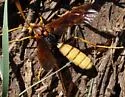
Identification: T. crustosus is a western black-and-yellow species. It is identified by the following combination: temples wide, genae convex, scutellum with a dull point and vertical, thorax robust, T3 with punctation but no rugulae; thorax generall
Trogus edwardsii
Trogus edwardsii
Here is an 1878 description of T. edwardsii by Cresson .
Trogus flavipennis
Trogus flavipennis
Identification: T. flavipennis is a western black-and-yellow species. It is identified by the following combination: temples narrower, genae not convex, scutellum sharp and curved posteriorly, thorax not particularly robust, T3 with both punctation a
Trogus vulpinus
Trogus vulpinus
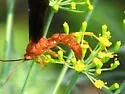
Identification: T. vulpinus is an eastern, red species. Most images here were previously lumped under Trogus pennator . T. vulpinus is identified by the following combination: high, conical scutellum (generally); supra-antennal area with two develope
Tromatobia lineatoria
Tromatobia lineatoria
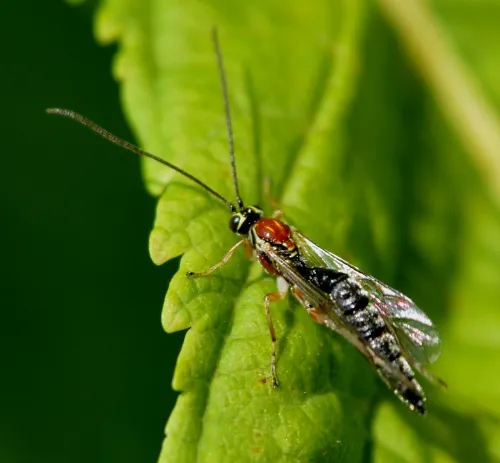
Length 7 to 10 mm. A black bodied wasp with yellowy-brown legs. Unless identified by a recognised expert, a photo is required. If the photo doesn't show the key ID features, then in the comments box describe the size and identifying characters you ha
Tromatobia ovivora
Tromatobia ovivora
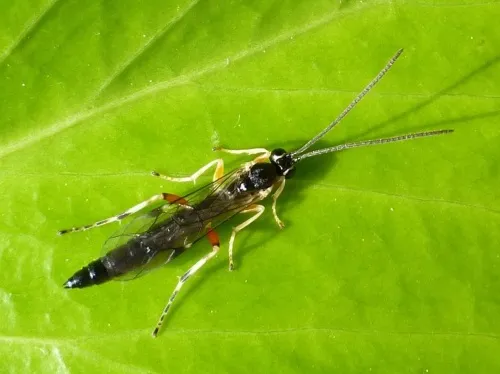
Very little information about this species is available to us at present, but, based on images available, the main characteristics of the species seem to be a black abdomen and paler legs. The status and distribution in Britain are not known due to t
Vulgichneumon brevicinctor
Vulgichneumon brevicinctor
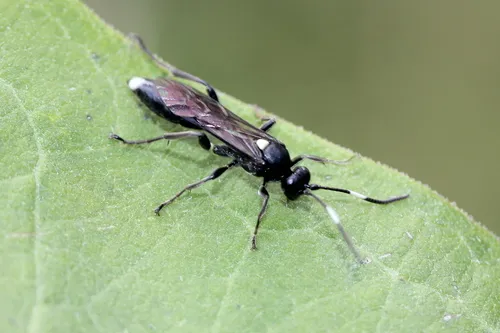
Identification: Black with the following parts white: band on flagellum, scutellum, "anal marks" on terga 6 and 7, and hind trochanter in female (not male). The white band on antenna is closer to the base in the female than the male. ♀: ♂: One of the
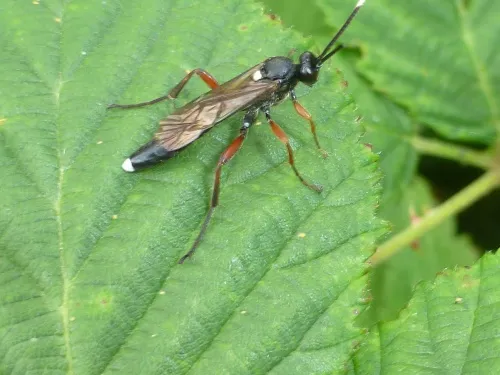
Vulgichneumon saturatorius
Vulgichneumon saturatorius
It has a white spot at the base of the thorax and another at the tip of the abdomen but is otherwise mainly black with red legs. The antennae have a broad white band at about halfway. Woodland and hedgerows or nectaring on Hogweed. Larvae feed on the
Vulgichneumon terminalis
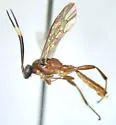
Vulgichneumon terminalis
Identification: Head black; antennae with white annulus; thorax black to reddish with white scutellum; abdomen tricolored reddish, black, and white; legs with coxae reddish, hind femora ranging from black-tipped in the south to entirely black in the
Xorides humeralis
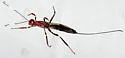
Xorides humeralis
Identification: Temple area with extensive striae, central lobe of mesoscutum with a broad median longitudinal groove, and the second trochanter of the foreleg with a small pre-apical spine. (Porter, 2005) The latter character is unique to this speci
Xorides stigmapterus
Xorides stigmapterus
head and thorax mostly black in specimens from the north, red in material from se.US (MD‒FL along the Coastal Plain) ‘X. stigmapterus’ may be a species complex
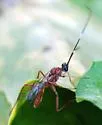
Zagryphus nasutus
Zagryphus nasutus
Zagryphus nasutus (Zagryphus nasutus) is a species in the family Ichneumonidae, commonly known as ichneumonid wasps, belonging to the order Hymenoptera (Ants, Bees, Wasps and Sawflies). It is classified within the subfamily Tryphoninae, tribe Oedemop
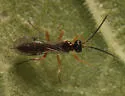
Zatypota anomala
Zatypota anomala
Identification: Scutum dark brown with yellow stripes along notauli; flagellum with 16 segments in female, 14 in male; T3 0.55 length-to-width
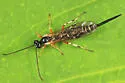
Acropimpla alboricta
Acropimpla alboricta
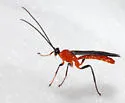
Acrotaphus fuscipennis
Acrotaphus fuscipennis
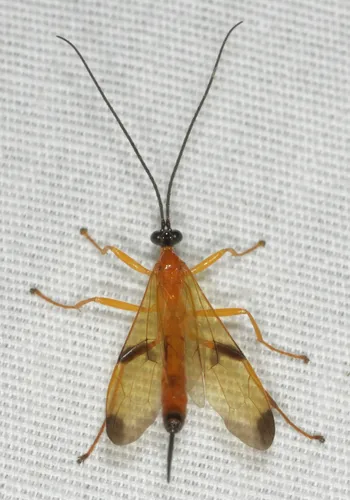
Ichneumon Wasp -A. wiltii
Acrotaphus wiltii
Acrotomus succinctus
Acrotomus succinctus
Aethecerus parvus
Aethecerus parvus
Agathilla bradleyi
Agathilla bradleyi
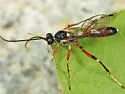
Agrothereutes cimbcivorus
Agrothereutes cimbcivorus
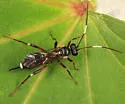
Agrothereutes lophyri
Agrothereutes lophyri
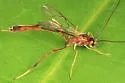
Agrypon flaveolatum
Agrypon flaveolatum
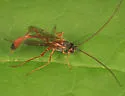
Agrypon prismaticum
Agrypon prismaticum
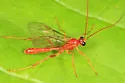
Alexeter canaliculatus
Alexeter canaliculatus
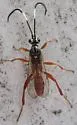
Ambloplisus ornatus
Ambloplisus ornatus
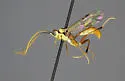
Anisotacrus spatiosus
Anisotacrus spatiosus
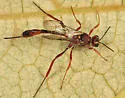
Anomalon ejuncidum
Anomalon ejuncidum
Anomalon reticulatum
Anomalon reticulatum
Aoplus confirmatus
Aoplus confirmatus
Aoplus pseudovelox
Aoplus pseudovelox
Aoplus thujarum
Aoplus thujarum
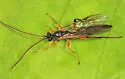
Aoplus velox
Aoplus velox
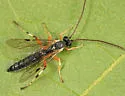
Apechthis annulicornis
Apechthis annulicornis
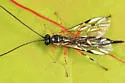
Apechthis ontario
Apechthis ontario
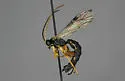
Apechthis picticornis
Apechthis picticornis
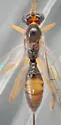
Aperileptus bellulus
Aperileptus bellulus
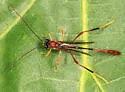
Aphanistes rheumapterae
Aphanistes rheumapterae
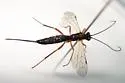
Apophua simplicipes
Apophua simplicipes
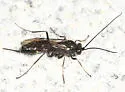
Arenetra nigrita
Arenetra nigrita
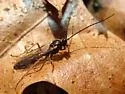
Arenetra rufipes
Arenetra rufipes
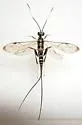
Arotes amoenus
Arotes amoenus
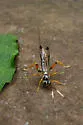
Arotes decorus
Arotes decorus
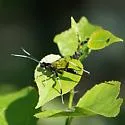
Arotes maurus
Arotes maurus
Asthenolabus canadensis
Asthenolabus canadensis
Asthenolabus scutellatus
Asthenolabus scutellatus
Astiphromma splenium
Astiphromma splenium
Banchus inermis
Banchus inermis