
Andrena scotica
This record describes Andrena scotica (species). Recorded family: Andrenidae. Recorded order: Hymenoptera.
Identification and Appearance
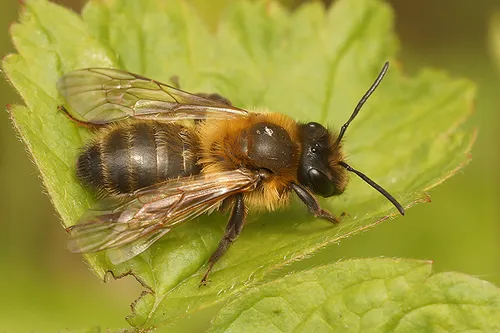
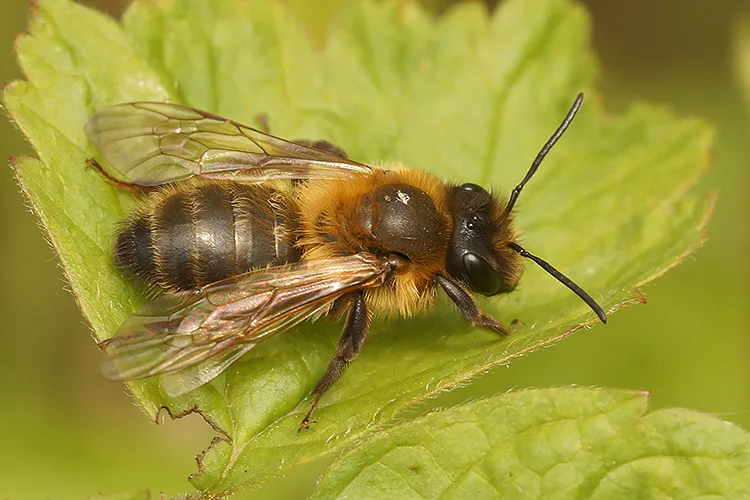
Andrena scotica is a mining bee and at 10 to 14 mm is one of the larger species, the male being slightly smaller than the female. The abdomen is all dark with no red markings and with pale upright hairs along the tergite margins. Tergite 1 has clear microsculpture when viewed with magnification. The hairs of the pollen brush are all dark and the flocci is of modest density with pale hairs. We will accept records identified by a recognised local or national expert, or that have been identified via the BWARS’ Facebook noting the name of the person/organisation identifying the record (e.g. ‘Stuart Roberts, BWARS Facebook’). They especially enjoy firm sandy soils with no overgrowing plants to smother the nest, for this reason they are often found near to pathways. Mid March to late June - peaking late April and May. Females share a common entry during nesting. Underground however each female takes care of her own chamber. Using the same entrance without being a real structured community is called communal. Because many chambers share one exit, fresh animals meet each other in this exit while trying to get out for the first time in spring. Males try to mate immediately, so in many cases the females have been fertilised even before seeing daylight. One of the most common Andrena species, with most British records coming from southern, central and north-eastern England.
Wikipedia reference for Andrena scotica: http://en.wikipedia.org/wiki/Andrena_scotica.
Classification
- Kingdom
- Animalia
- Phylum
- Arthropoda
- Class
- Insecta
- Order
- Hymenoptera
- Family
- Andrenidae
- Genus
- Andrena
Imported taxonomy record. Source availability varies; see the source references and editorial policy below.
Habitat and Range
Habitat
They especially enjoy firm sandy soils with no overgrowing plants to smother the nest, for this reason they are often found near to pathways.
Seasonal Activity
Mid March to late June - peaking late April and May.
Diet and Behavior
Life History
Females share a common entry during nesting. Underground however each female takes care of her own chamber. Using the same entrance without being a real structured community is called communal. Because many chambers share one exit, fresh animals meet each other in this exit while trying to get out for the first time in spring. Males try to mate immediately, so in many cases the females have been fertilised even before seeing daylight.
Additional species information
Recorded status
One of the most common
About Flies: the wider group
Order-level background for Hymenoptera, the group containing Andrena scotica. Species-specific details appear above.
Group overview
Hymenoptera includes over 150,000 described species of ants, bees, wasps, and sawflies. Earth harbors approximately 20 quadrillion (20×10^15) ants, with a combined biomass of ~12 megatons of dry carbon - exceeding the combined biomass of all wild birds and mammals (PNAS, 2022).
Ecological role of the group
About 35% of the world's food crops depend on animal pollinators. The chocolate industry, valued at over $100 billion, depends on pollinating flies and midges. Ants are the dominant soil engineers in most terrestrial ecosystems, turning more soil than earthworms in many habitats.
Economic and practical significance of the group
Pollinators contribute $235-577 billion worth of annual global food production (FAO). In the U.S., bee pollination alone benefits crops valued at $18 billion annually, and honey bees are responsible for $5.4 billion in agricultural productivity. Between April 2023-2024, 55.1% of managed honey bee colonies were lost. The U.S. bee population dropped from 5 million to 2.5 million.
Recorded sources for this group: FAO, USDA, EPA, PNAS (2022), US Fish & Wildlife Service. Imported estimates may describe particular regions or reporting periods.
Photos of Andrena scotica (3)
Frequently Asked Questions About Andrena scotica
What is Andrena scotica?
Andrena scotica is a species in the family Andrenidae, within the order Hymenoptera.
How big is Andrena scotica?
9.5-10.5mm
Where is Andrena scotica found?
Habitat: They especially enjoy firm sandy soils with no overgrowing plants to smother the nest, for this reason they are often found near to pathways.
When is Andrena scotica active?
Andrena scotica: seasonal activity - Mid March to late June - peaking late April and May..
What is the life cycle of a Andrena scotica?
Females share a common entry during nesting. Underground however each female takes care of her own chamber. Using the same entrance without being a real structured community is called communal. Because many chambers share one exit, fresh animals meet each other in this exit while trying to get out for the first time in spring. Males try to mate immediately, so in many cases the females have been fertilised even before seeing daylight.